Speaking of Spanish

Every once in a while, I get an urge to try to learn to speak, or at least read Spanish. Recently, Men in Black was on the Telemundo broadcasting network. I tried to watch it but gave up after a few minutes. The dubbing was disappointing because the actors don’t speak Spanish and the dialogue sounds weird.

I enjoyed my basic Spanish courses in my freshman year of college at Huston-Tillotson University (then Huston-Tillotson College). I think I impressed my teachers simply because I could mimic the sound of Spanish. That’s only because our family lived next door to a Spanish-speaking family. As a child, I got so used to hearing it that I must have absorbed the sounds and cadence.

That didn’t help me in actually learning to speak Spanish in college, though. My teacher, Dr. Whitby, gave me a book of jokes and funny stories titled “Risas Y Sonrisas.” I think he gave it to me because I did my homework and, at least on paper, did well on written exams. I found a book with the same name on Amazon that was originally published in the late 1940s. The title can be translated as “Smiles and Laughter.” My teacher translated it more loosely as “Giggles and Grins.” I kept the book for many years, but it got lost in a move. Toward the latter part of the first semester, Dr. Whitby invited a native Spanish-speaker who was a senior to class one day. The idea was for us to use what language skills we had tried to learn to communicate with her. None of us could even bring ourselves to say Como Esta used! I was extremely shy and embarrassed.

When I was working as a consulting psychiatrist, I always used a translator service that health professionals could access by telephone. It was a little awkward, but handy when a Spanish-speaking translator was not available in person.

There are free Spanish lessons on the web and other ways to learn that cost money. I’m leery of both. If I could find a course in Spanish that didn’t cost an arm and a leg, I would consider trying it.

Then I could say some of my favorite Men in Black quotes in Spanish. I found out Tommy Lee Jones (who plays Agent K) actually can speak Spanish. I have to use the Google Translate application:

Men in Black quote:

Edwards: Why the big secret? People are smart. They can handle it.

Agent K: A person is smart. People are dumb, panicky dangerous animals and you know it. Fifteen hundred years ago everybody knew the Earth was the center of the universe. Five hundred years ago, everybody knew the Earth was flat, and fifteen minutes ago, you knew that humans were alone on this planet. Imagine what you’ll know tomorrow.

Men in Black quote in Spanish:

Edwards: ¿Por qué el gran secreto? La gente es inteligente. Pueden manejarlo.

Agent K: Una persona es inteligente. Las personas son animales peligrosos, tontos y asustados, y tú lo sabes. Hace mil quinientos años todo el mundo sabía que la Tierra era el centro del universo. Hace quinientos años todo el mundo sabía que la Tierra era plana y hace quince minutos sabíamos que los humanos estábamos solos en este planeta. Imagínate lo que sabrás mañana.

Falling Leaves

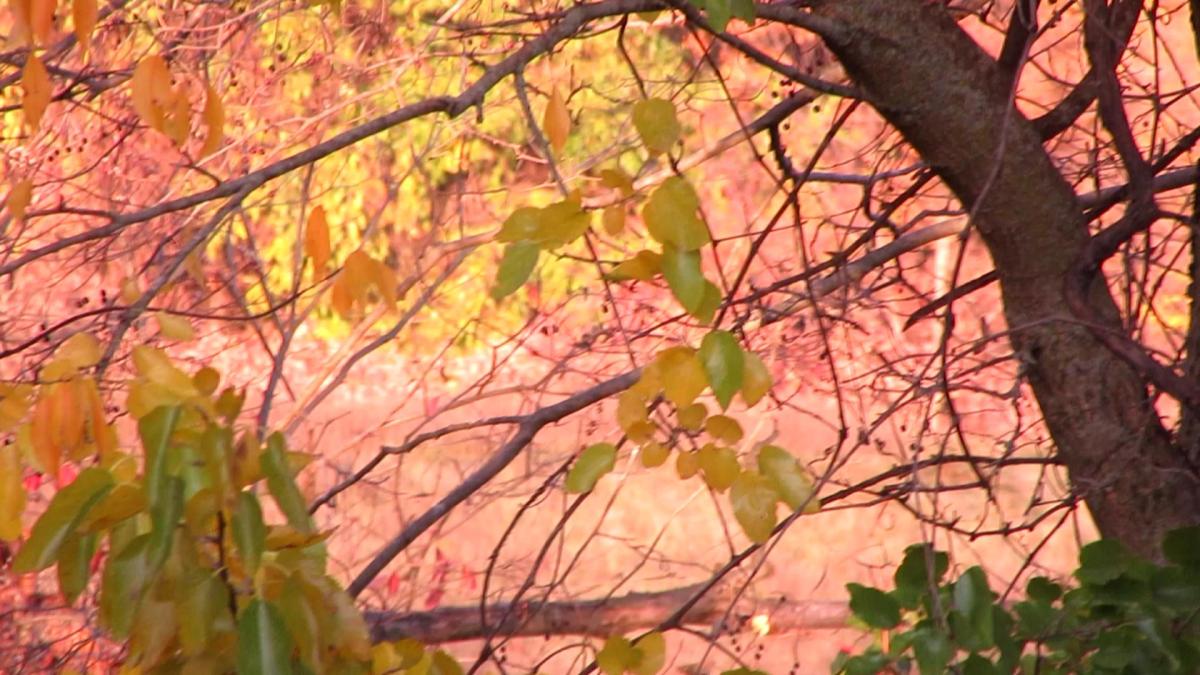
The leaves are falling everywhere, including our back yard. Just watching them drop like a snowfall is mesmerizing. It feels like it’s going to snow. Temperatures have been low enough for frost and freeze warnings around here. The mowers were bundled up, wearing stocking caps and gloves yesterday.

Fall is Sena’s favorite season. Temperatures are cooler and the changing colors of the leaves makes us wonder how the trees know when it’s time to drop them.

When I was a kid, I and a lot of neighborhood kids jumped off a small cliff at a park into a huge pile of leaves. It was a big deal to take the leap. We felt like we were flying. The bits of dry, brown leaves got in your hair and down your back under your shirt, making you itch.

I remember raking leaves in an old guy’s yard once. I got blisters on my hands and he didn’t pay me much. I didn’t like that part of fall and still don’t.

That’s why spring is my favorite season.

Kindness Is Still Out There

The other day, Sena and I were talking about growing up in Mason City, Iowa. As kids, both of us were the ones who lugged the groceries home. That was back in the days of paper sacks and, for me and her, food stamps. The food stamp program got started during the Great Depression. The goal was to keep people from starving and farmers from going under. In other words, it was kindness.

Food stamps were a sign of hard times and I don’t think that has changed much, except now I think you get a debit card instead of stamps.

I did grocery shopping at Fareway Store, which got its start in Boone, Iowa. Sena did hers at Grupps Food Center.

When it comes to shopping, I followed what my mother put on a list. I got the items and paid with food stamps. I can’t remember ever coming up short. I think I just gave them the cashier the stamps and they took what was needed to cover the price. I walked to Fareway and then I just walked home carrying two or three paper sacks of groceries. It was about a mile trip up and a mile back. My arms were pretty sore when I got home.

On the other hand, Sena came up short on stamps one day. It was embarrassing enough to have to pay using food stamps. But it was awkward as hell when you didn’t have enough to pay. At that time, the cashier was a guy named Bud Grupp. Bud was Carl Grupp’s son. Carl bought the store in the early 1960s.

Bud counted out the stamps and had to tell Sena that there wasn’t enough. She didn’t know what to say. People were lined up behind her and they could probably tell something was wrong. Bud just said “We’ll put you on credit,” and that was that. He sacked all of the groceries like there was nothing out of the ordinary. Sena didn’t know what was done about the balance on credit, whether it was ever settled or it became just a running bill that never got paid off.

Sena also had to walk home carrying bags of groceries. One winter day during a light snowfall, she dropped all of the bags in the snow. They got wet and all torn up. A woman saw it, came out of her house with some bags and helped Sena get the groceries sacked up again. She got home alright.

About a year ago, Sena was in line waiting to check out groceries. An elderly woman was ahead of her and came up short on money to pay for her few items. She fished in her purse and looked embarrassed and pathetic. Sena was thinking about paying for them herself but just before she could, a guy behind her handed the cashier his credit card and told her he would cover it.

Regardless of what you see in the news, kindness is still out there. Our Christmas cactus is already blooming.

Butch Haircut Fixes the Bozo Effect

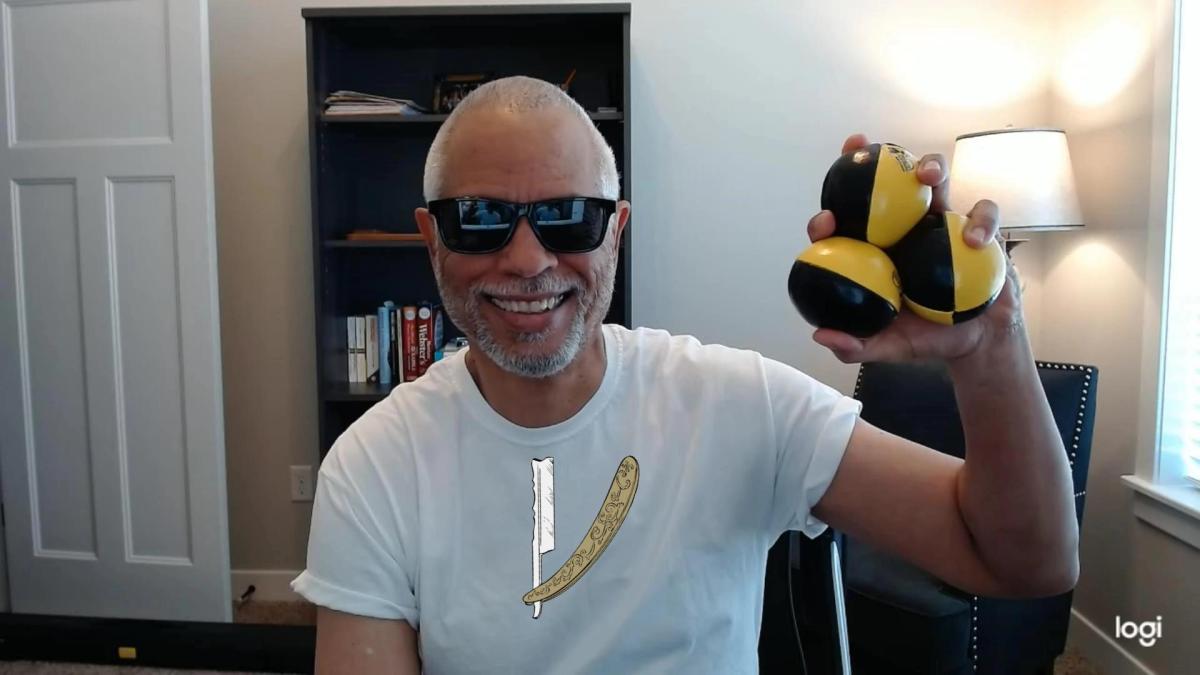
Sena gave me a butch haircut the other day. What led up to that?

About a month ago, I got a haircut at a local shop. Usually Sena cuts my hair (she’s been doing it for decades), but I occasionally go out for a haircut. I was pretty impressed with the guy who asked me if I was getting the bozo effect.

I immediately knew what he meant. I’m going bald on top and Sena sometimes may not cut the sides a little shorter to offset that—which I didn’t consider until the barber mentioned that bozo thing.

You might not know about the bozo effect unless you’re old enough to remember Bozo the clown. If you ever find a picture of him, he’s bald on top and has big, bright orange wings of hair sticking out from the sides of his head. When I was a kid, I got to sit in the studio audience once to watch his show. I remember there was a TV cartoon show segment which I couldn’t see because the TV set was way too small from where I sat in the bleachers. That was the technology back then.

Anyway, I was really happy with the haircut the guy at the shop gave me. It was the first time in my life I ever gave a tip to a hair stylist or barber.

It was time for another haircut and I had decided that I was going to get my haircuts at the shop. I tried to get an appointment at the same place. I found out the hard way that you can’t telephone to schedule appointments, you’re not entitled to see the same stylist every time, and the on-line check in system was out of order at both of the two shops in town. The wait time was 2 hours. The waiting areas were the size of many walk-in closets.

Sena was very sure that she could do just as good a job, though. She got a new hair cutting kit with all the different colored clipper guards and followed the instructions. She was scared at first and I was a little nervous. As it turns out, she gave me a great butch cut, which I haven’t had since I was old enough to watch Bozo the Clown.

I think it looks pretty good.

Dr. Igor Galynker and The Suicidal Crisis Syndrome

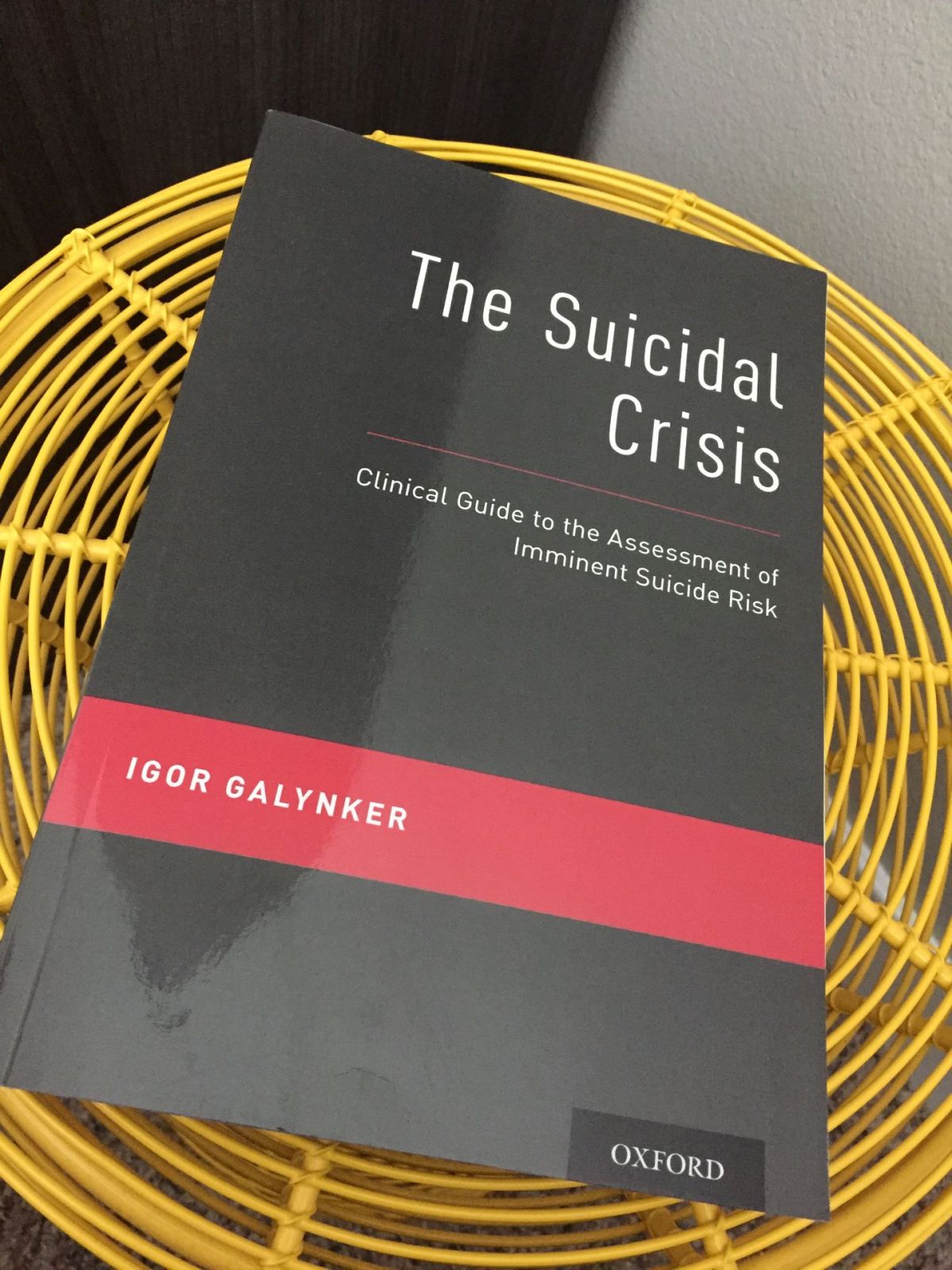
I was looking at my bookshelves and found the copy of the book, “The Suicidal Crisis: Clinical Guide to the Assessment of Imminent Suicide Risk.” It was written by Dr. Igor Galynker. It’s a fit topic for this month because September is National Suicide Prevention Month.

This brings back memories. I still have a gift from Dr. Galynker. It’s a stuffed animal called Bumpy the Bipolar Bear.

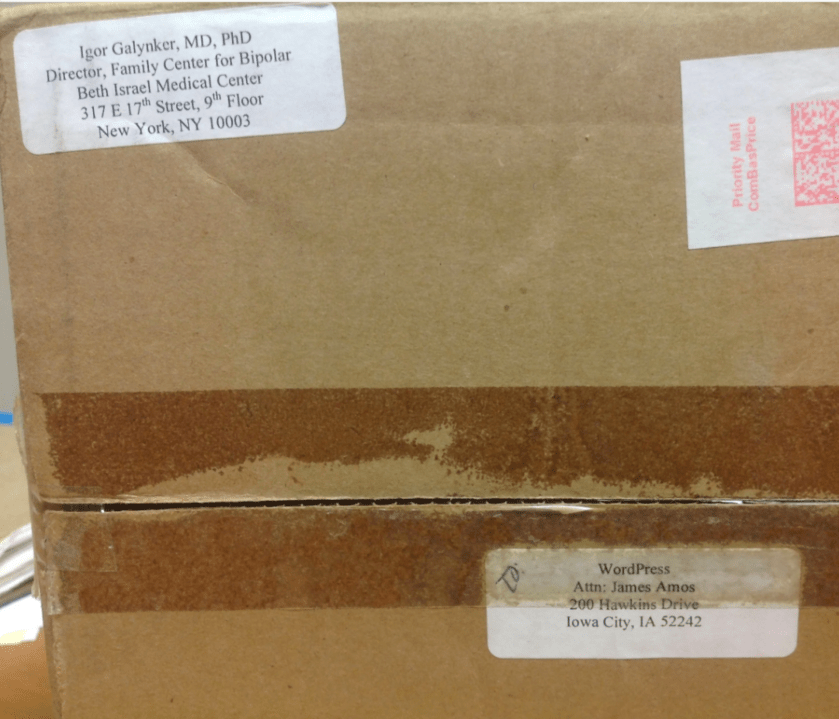
It arrived at my office at The University of Iowa Hospitals & Clinics in 2011. It was in a box addressed to:

WordPress

Attn: James Amos

200 Hawkins Drive

Iowa City, IA 52242

 I’m still not entirely sure why he sent me Bumpy. There was no letter of explanation. I was writing a blog at the time called “The Practical Psychosomaticist” and I might have posted something about some research he published on suicide risk assessment.

I bought a copy of his book a few years ago. I barely had time to skim a few of the chapters because I was too busy conducting suicide risk assessments in the emergency room, the general hospital, and the clinics in my role as a psychiatric consultant. In fact, I think it’s an excellent resource.

I also found a YouTube video (posted about a month ago) in which he describes his suicide crisis syndrome assessment. You can find the actual set of questions for the assessment here and in a link posted in the description below the YouTube.

Thoughts on Jack Trice

I was outside doing yard work the day before yesterday and my neighbor across the street walked over to say hello. We got to talking about sports and football came up. His wife stopped watching football because it was so violent—but then switched to watching hockey. He wondered when the Iowa Hawkeye vs Penn State game was going to be on. No, I’m not going to discuss that any further.

Anyway, that led to my mentioning how brutal college football was back in 1923 when Jack Trice, Iowa State University’s first black athlete was killed on the field during a game with the University of Minnesota. My neighbor was incredulous. He’s in his 80’s and he’s never heard the story.

In fact, I had just learned about the whole Jack Trice story and commemoration event in his honor the day before that, only because Sena told me about it.

All this year long there has been a 100-year anniversary commemoration of Jack Trice, Iowa State University’s first African-American athlete. The program will culminate on October 8, 2023 with the closing ceremony.

Football was a rough game in that era—but rougher still because Trice was black. Many believe his injuries were deliberately and maliciously inflicted because of his race. It’s more than plausible. In 1997, the football stadium was renamed Jack Trice Stadium. It’s the only major college football stadium named for an African-American.

Sena and I moved to Ames in 1981 so that I could enroll in Iowa State University. I was so immersed in my studies that I never gave a thought to Jack Trice. I don’t remember the football field being named Jack Trice Field in 1984.

As I looked through the commemoration website, I wondered how it was possible for me to have ignored the story of Jack Trice while I was there.

I think it’s for the same reason I never knew anything about James Alan McPherson, the first African American to win the Pulitzer Prize for fiction and who was teaching at the Iowa Writers Workshop during the entire time I was in medical school, residency and a faculty member at The University of Iowa Hospitals & Clinics.

I was working hard. I finally found out about McPherson after reading a news item about a neighborhood park being named after him in 2021.

I should pay more attention. Anyway, Iowa State University did a tremendous job putting this commemoration event together.

This is National Suicide Prevention Week

Thanks to Dr. H. Steven Moffic for his Psychiatric Times article, “A Psychological Autopsy on My Only Patient Who Died by Suicide.” In it he describes his own experience with a patient who committed suicide. He also reminded us that this is National Suicide Prevention Week. It’s also National Suicide Prevention Month.

The quote I’m familiar with about psychiatrists and patients who die by suicide Moffit is by forensic psychiatrist, Robert Simon:

“There are two kinds of psychiatrists—those who have had a patient die by suicide and those who will.”

I have been through that experience. It led me to focus on my role as an educator to psychiatry residents and other trainees to learn as much as I could about the process of suicide risk assessment.

On the other hand, my first experience with someone who died by suicide happened long before I became a psychiatrist. It was in the early 1970s and I was working for a consulting engineer company. I was just a kid, learning on the job to be a drafter and surveyor’s assistant.

One of my teachers was a man I would come to respect a great deal. Lyle was a land survey crew chief and part time photographer. He was gruff, but kind and had a great sense of humor. We all liked him.

He was so tough that, while perched high in a tree and trimming a large branch to enable a line of sight for the instrument man running a theodolite (used to measure vertical and horizontal angles)—he accidentally cut a significant gash in his hand. We on the ground were aghast because blood was dripping from his hand.

He just laughed and said, “I don’t sweat the small stuff.”

One day, he told me and another survey crew member that his girlfriend left him, saying she was tired of picking up after him. He was crying. We felt sorry for him and didn’t know what to say. We never saw him cry before. This image was strikingly different from the tough guy persona he usually had.

As I look back on it, I wondered why he didn’t think the breakup was just more “small stuff.”

The next day, one of the leaders of the company made a short announcement, saying that Lyle had “passed away,” the night before, by suicide. A little later, the rest of the story gradually emerged. Lyle had shot himself in the chest. One of the guys said that it took a long time for him to die, that somebody found him early the next morning, and all Lyle could say was “It hurts.” At first, I thought he meant physical pain. Later, I wondered if he meant physical and emotional pain.

About a week later, one of the survey crew members was planning to pick me up and drive us to Lyle’s funeral. He never showed up.

Of course, I could not have foreseen Lyle’s suicide based on his being so upset about a breakup with his girlfriend. I was just a kid.

When I became a psychiatrist, I saw this quite a lot. I learned, a few times the hard way, how to make the best judgments I could about what might happen to a patient describing physical and emotional pain.

22nd Anniversary Commemoration of 9/11 Attacks

The 22nd Anniversary Commemoration of the 9/11 attacks and the 1993 World Trade Center will be observed today.

I remember where I was on September 9, 2001. I was climbing the stairs at the hospital on my way back to my office. I was on duty on the psychiatry consultation service. I happened to glance at the television in the lobby from the landing. A news story was showing one of the Twin Towers on fire.

I couldn’t believe my eyes. The rest of the day there was talk of the attack on America.

We visited New York City in 2017 and viewed the Memorial & Museum Plaza. We saw the Survivor Tree, the Callery Pear.

It seems like there is almost nothing else to remember about the date except the disaster and the tragedy.

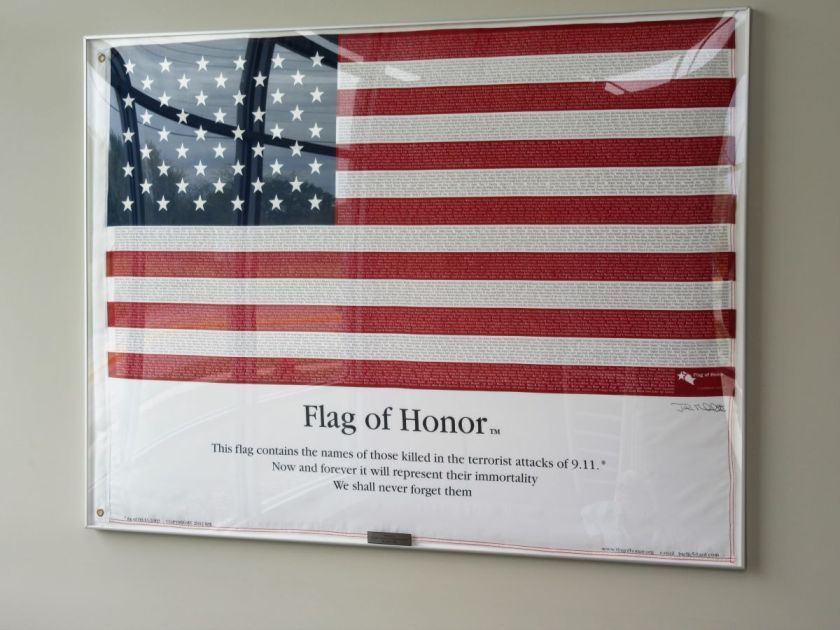
But one of the local fire stations not far from our house has a Flag of Honor on the wall. It honors those killed in the terrorist attacks on 9/11.

Even if we can’t go to the Memorial in New York City, we can remember it and honor the brave.

Should Doctors Be Funny?

I ran across an interesting Medscape article, “Should Doctors Be Funnier? These MDs Are Real Comedians.” I don’t know if they should be funny, but it probably wouldn’t hurt.

I think a sense of humor is a good thing for anyone to have and it’s probably not that hard to develop. There’s even a Wikihow article on how to develop a sense of humor.

I usually look for the funny edge in most things that happen to me. I was always very nervous about presenting Grand Rounds when I was on staff at the hospital. I would try to come up with a good case example illustrating both medical and psychiatric features. It was pretty challenging.

I often used humor to help me get through my stage fright. I didn’t tell jokes, but I did clown around a bit. One day, I arrived too early for the Psychiatry Dept. Grand Rounds and accidentally walked in on another scheduled event in the conference room that was obviously not for psychiatrists—only not immediately obvious to me. I got a few chuckles from the audience just from having to back out. Later, during the real Grand Rounds I clowned about my mistake as a sort of opener to my presentation.

Unfortunately, I then had to stumble through my PowerPoint slides (every presenter’s worst nightmare) because I evidently had not organized them correctly. I survived by joking about it. That resulted in a digital award from the residents for being “Improviser of the Year.”

Humor can get you through some pretty sticky situations.

Another Blast from the Past

Today is Labor Day, and I was looking at some of my old blog posts from my previous blog The Practical Psychosomaticist. I found one that I think I haven’t reposted on my current blog called “Going from Plan to Dirt.”

It’s a funny post, at least I think so. It draws a comparison between blue collar and white collar work, similar to what I did the other day (“Why Can’t I Wear Blue After Labor Day?”).

I wrote it in 2011, when I was on a hospital committee to improve detection and prevention of delirium in the general hospital.

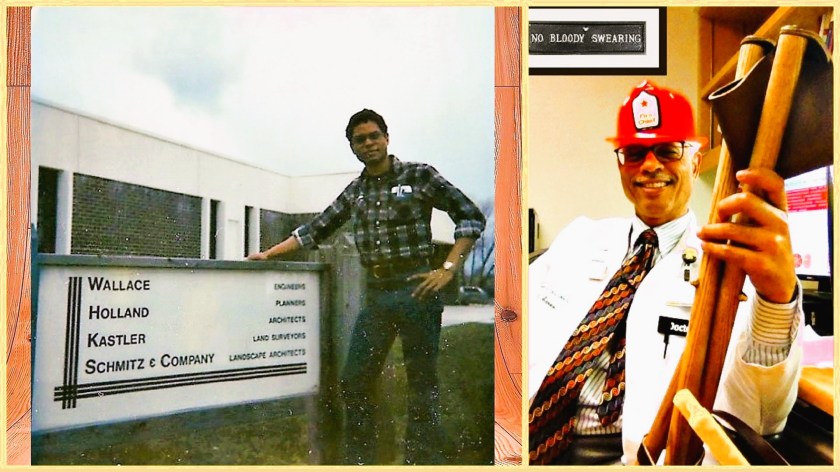
“Our work on the Delirium Early Detection and Prevention Project reminds me of my early formative experiences working as a draftsman and land survey technician starting in 1971 with an engineering company, Wallace Holland Kastler Schmitz & Co. (WHKS & Co.) in Mason City, Iowa. I remember being amazed at how a drawing on paper could be turned into a city street, highway, bridge, or airport runway. They have a website now. I can now find written there what was modeled for me then:

“WHKS & Co. is committed to the continuous improvement of the quality of service provided to our clients.”

Then and now WHKS & Co. worked hard to create the infrastructure that we depend on and then put it into the world in a “safe, functional, and sustainable” way. Out in the field we sometimes joked about how a designer’s drawing was flawed if we couldn’t go from plan to dirt.

It’s common to believe that engineers and land surveyors deal with complex mathematical formulas, structural materials, things instead of people—an applied science in which the emotions and motivations of people play a small role. Nothing could be further from the truth.

I was 16 years old when WHKS & Co. hired me. I had no idea what engineers and land surveyors did, had no experience, and I was at a crossroads in my life. They didn’t hire me because I had any talent or asset they needed. They hired me because they were as committed to the people in the community, not just to things.

And if you think land surveying doesn’t have anything to do with people’s emotions, consider property line disputes. The survey crew I was attached to had been sent out to find the property corners of two neighbors. This involves locating iron pins that mark the corners of the lots that houses sit on. Little maps or “plats” are used as guides and let me tell you, often enough we found the map is not the territory.

Anyway, while we were out there in the back yard of one of the neighbors, they both came outside. One of them was a diminutive elderly lady and the other was a tall, big-boned elderly man. They started arguing about the boundaries of their lots and it got pretty heated. Pretty soon they were yelling in each other’s faces and the lady reached down in the garden in which we were all standing. She picked up the biggest, juiciest rotten tomato she could find and it was clear to us what she planned to do with it. They were both pretty old and neither one of them could move very fast. My crew chief, sensing that something violent was about to happen, moved in between them (a decision I still can’t fathom to this day).

What followed seemed to happen in slow motion, in part because the combatants were so old. The man could see the lady was about to hurl the rotten tomato at him. Ducking must have been beyond his power, probably because of a stiff back. He bent his knees and leaned forward. She cocked the tomato as far back as she could and let fly, screeching, “You’re nothing but an old Norwegian!” My crew chief probably caught a seed or two. Amazingly, the tomato only grazed the top of the man’s head.

I think the altercation took a lot of both of them. They both went back in their houses after that.

It’s not hard for me to see the connection between my past and the present. WHKS & Co. was and still is committed to continuous improvement. And they were and still are all about finding a practical way to do it. If we’re going to improve the quality of care we provide patients and we propose to do it by preventing delirium, we’re going to have to use the same principles that my first employer used. And we’re going to have to be just as practical about how to go from plan to dirt.

We’re still trying to refine the charter for our delirium detection and prevention project, which is a kind of map, really. And even though the map is not the territory, it’s still a necessary guide to remind us of the goal.”