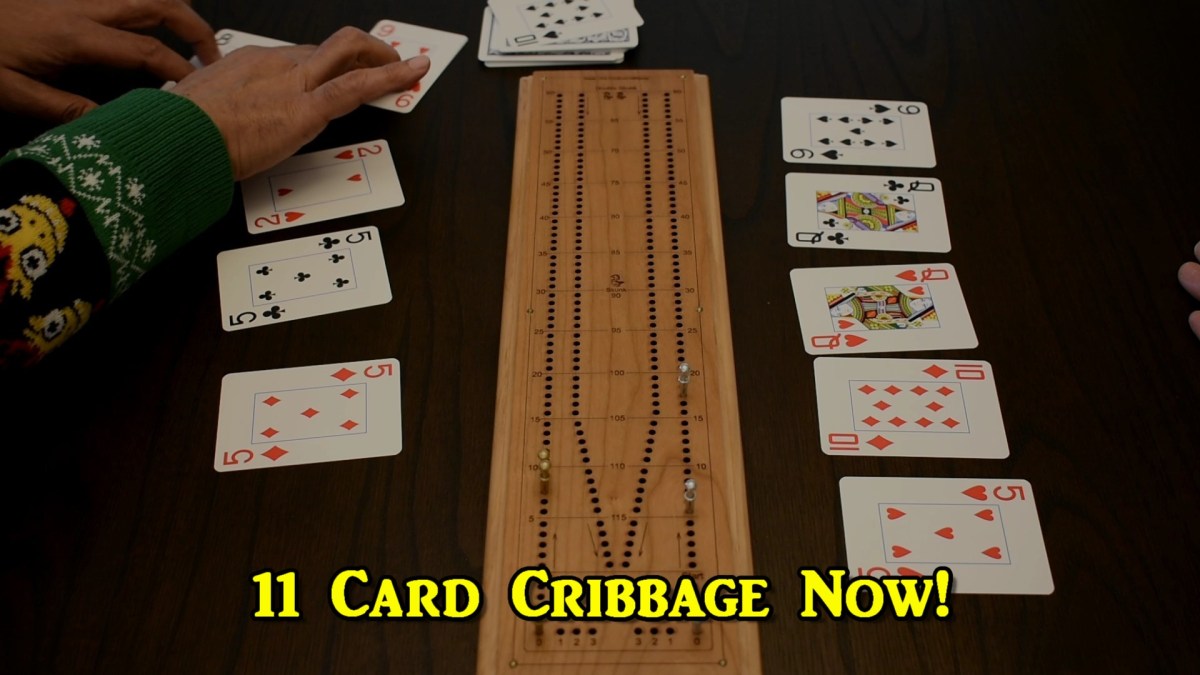
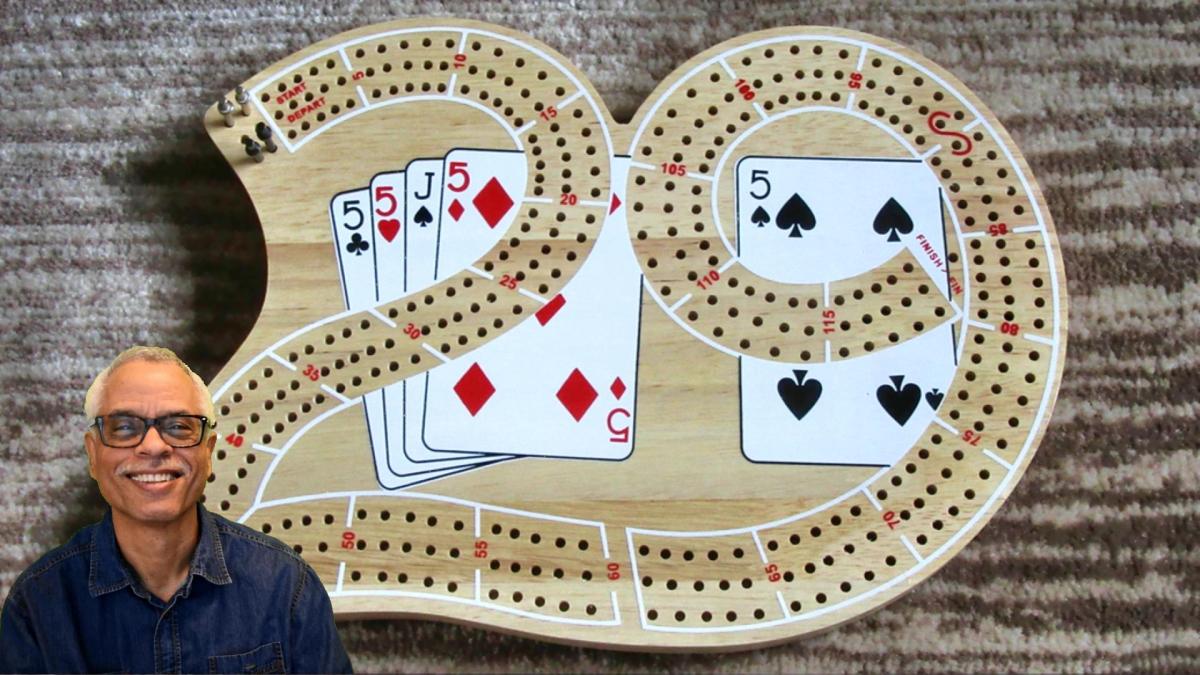
Crib Wars: The King of Calvinball Crib!

Sena asked me the other day if I had checked back on the price of a fancy Canadian cribbage board, Cribbage Rumble. I had not, so of course since that was my assignment, I looked on the Michaud Toys website and found that the high tariff price had disappeared, apparently. There were no alarming notes in red type with multiple exclamation points. And the price was $89.95.

However, as I noted yesterday, they replaced the message that U.S. orders are subject to a 35% tariff and a 25% UPS brokerage fee paid before delivery!

That is too high.

This led to a search for more information about Cribbage Rumble, which sounds a lot like Crib Wars (or Cribbage Wars, if you prefer since I think these games are all the same animal). In fact, it didn’t surprise me very much to find a Facebook post from Michaud Toys enthusiastically advertising “Cribbage Wars” 7 months ago for the low, low price of $89.95.

That’s right; they called it Cribbage Wars just 7 months ago although they call it Cribbage Rumble nowadays. Why is that? I’m glad you asked.

I began to wonder just what exactly is Crib Wars, is that different from Cribbage Wars, and why in blazes does the sight of the game board always prompt people to exclaim that it reminds them of Snakes and Ladders or Chutes and Ladders?

There’s this convoluted and confusing story about Chutes and Ladders and Snakes and Ladders. I think it’s partly because the Crib Wars board layout sort of reminds people in my age group of the layout of Chutes and Ladders. There’s this convoluted and sometimes contradictory history of the name of Snakes and Ladders being changed to Chutes and Ladders (some writers reverse them) to make it less scary for kids.

I think the story of the origin of the game has something to do with teaching morals to children in India. Some web articles say the original game from India was called Snakes and Ladders. Some people make things even worse by calling the game “Shoots and Ladders.” In modern times, the way you played the Chutes and Ladders was to spin a dial and move up a ladder or down a chute and you were supposed to try to be the first to reach the final goal. The morality theme was abandoned and—you know where that left all of us.

Milton-Bradley changed the name from Snakes and Ladders to Chutes and Ladders in 1943 because they thought snakes scared kids.

Where was I? Oh, the Crib Wars and Cribbage Wars game are probably the same, as I said earlier. When I try to search the term http://www.cribwars.com (a suggested search term), I just get an error message. When I search for “cribbage wars” I end up at a game supply store called Ebonwood and they’re located in Appleton, Wisconsin—which is a very nice place. I interviewed for a position in a private practice psychiatry clinic there years ago.

Ebonwood sells the Crib Wars game for $210. You can find the rules on their web site. The board they sell doesn’t put much in the way of markings on it, not even numbers. A reviewer on BoardGameGeek site reviews it and shows a very nice photo of the board. All of them look pretty much like that.

I think the origin of Crib Wars is fascinating. Recall that Michaud Toys in Ontario, Canada has produced and is marketing a Cribbage Rumble board (which is really just another Crib Wars board). It turns out that the two inventors of Crib Wars are from Ontario, Canada as well. One of them is Norm Ackland, an Elvis Tribute Artist, and Robert J. Prettie. They patented the game in the late 1990s.

On the other hand, you can buy a copy of the game for about $30 at Amazon or Walmart and be cursing your luck for hours over a game which many people play only once or twice. It can take hours to play.

That pretty much makes it just another Calvinball crib game, thanks to the Calvinball Cribbage Crowd (CCC). I’m on to their tricks—and they know it.

Svengoolie Show Movie: The Valley of Gwangi!

I watched the Svengoolie show 1969 movie, “The Valley of Grungi” on Saturday. Sorry, that’s Gwangi. That was a pretty good day for TV. I saw “Men in Black” on cable, which is rare. We also saw the Iowa Hawkeye vs Oregon Ducks football game. Too bad they lost, and by only 2 points.

Anyway, “The Valley of Gwangi” was released in 1969, was directed by Jim O’Connolly, and featured the stop motion wizardry of Ray Harryhausen. It starred James Franciscus as Friar Tuck (oops, different movie), I mean Tuck Kirby, Gila Golan as T.J. Breckenridge, and Laurence Naismith as paleontologist Professor Bromley. Franciscus and Bromley both won Academy awards for “Whitest Teeth on the Planet.” Sena watched the show intermittently while flipping channels but noticed the brilliant white teeth.

But really white teeth were not the only bright spots in the film. I’ll let you know if I think of any others.

The main idea of the story is that Tuck and T.J. have this dysfunctional relationship based on Tuck’s inability to settle down and stop being a jive hustler, which happens to also be T.J.’s problem, frankly. T.J. is in this decaying wild west rodeo show which barely supports a living and Tuck is chasing a dream of a ranch in Wyoming and wants T.J. to team up with him.

But they get distracted by a paleontologist, a little horse (Eohippus) from the dinosaur age millions of years ago, and a valley containing giant lizards like an Allosaurus, a Styracosaurus, and a Pteranodon.

But they left out the dinosaur the remains of which were recently found in Montana: the dreaded dome-headed dinosaur, Brontotholus harmoni, a frequent combatant in mud-wrestling contests with Fred Flintstone.

But Bromley has his eyes set on capturing the Eohippus for scientific study (hah!), scheming to raise a corral full of Eohippi (is that the plural?), apparently to sell to people like Tuck and T.J. who have a fixation on ranches and wild west shows but can’t get along with each other long enough to run a lemonade stand.

Most of the action involves cowpokes falling off their horses while attempting to rope the dinosaurs with lariats clearly not strong enough to hold a 2-ton Allosaurus. Yet they manage to subdue it and drag it back to the wild west show arena where they make it dance to the tune Putting on the Ritz, which it apparently hated.

One of the characters in the movie is a boy named Lope, who is smart enough to stay out of some trouble than the boy Juanito in the movie “The Black Scorpion” but still manages to get nabbed by the Pteranodon, from which he has to be rescued. He is also pretty much cut from the same cloth as Tuck and TJ in that he’s a clever hustler and a matchmaker as well. Later, both Juanito and Lope team up in the combination sequel to both of these movies, “Misfit Monkeyshines and the Dome-Headed Dinosaur.” More stop action magic that you should not miss!

This movie is just a bit better than fair and I give it a 3/5 shrilling chicken rating.

Shrilling Chicken Rating 3/5

Where is the Hideout of the Calvinball Cribbage Crowd?

Today we went back to playing standard 6-card cribbage and it was a relief! After all of the Calvinball cribbage variations we’ve been muddling through, getting back to a standard game felt great.

I thought of a name for an imaginary group that comes up with all of the cribbage variations (whether they exist or not): the Calvinball Cribbage Crowd (CCC). The name “Calvinball crib” came from a Reddit thread contributor who replied to someone who posted an inquiry if anyone had ever played 10 card cribbage. The answer was “Yes, there have been many many posts of Calvinball crib.”

Actually, there’s another instance of the Calvinball name applied to cribbage on Reddit. It occurred on a different topic with a lot of comments about how to teach cribbage to someone else: “Cribbage is basically Calvinball.”

If you just google the term “Calvinball cribbage” you’ll find my blog posts using it in the titles in the last week.

As a reminder, the word “Calvinball” comes from the Calvin and Hobbes comic strip series which ran in the papers between 1985-1995. It’s even defined in the Oxford English Dictionary. The word is used mainly in North America. The definition as it relates to cribbage is that it refers to the creation of a so many different rules made by different cribbage players that it ultimately leads to a sense of chaos in that there seems to be no consistent set of rules at all.

Anyway, as we played some of the cribbage variations that include increasing numbers of playing cards, I began to wonder why there isn’t a 12-card cribbage ever listed. That’s because the so-called 11 and 13 card variants are listed on the American Cribbage Congress (ACC) website, yet there’s no mention of a 12-card variant.

What gives? Is this a ploy to confuse the public about cribbage? Is the CCC a secret splinter group of the ACC? And is the CCC attempting to subvert the effort to maintain the supremacy of the classic standard 6-card game?

Let’s hope so (I’m only kidding). But this line of thought probably led to Sena asking if the United Kingdom has a national cribbage organization like the ACC in North America. I googled it for the first time today. In 2017, the United Kingdom Cribbage Association (UKCA) was formed to address the declining popularity of cribbage in the country, which actually got started there by Sir John Suckling in the 17th century. Recall the ACC got started in 1980.

Naturally, that prompts the question of how common is Calvinball cribbage in the UKCA? You knew I was going to say that and don’t try to deny it. It’s difficult to answer. It looks like they prefer the 6-card game to 121 also although, admittedly, I didn’t investigate it thoroughly. They seem to be more conservative. So far, I don’t see any evidence (yet) for a UK chapter of the CCC. Of course this leads to the conspiracy theory (why not?) of the UK colluding with the Canadians to create the secret CCC in an effort to undermine the popularity of standard cribbage in northwestern and northeastern U.S. (where cribbage is very popular) and instead promote a collection of Calvinball crib variations to preoccupy Americans with counting endless complicated scoring combinations that prevent the completion of any games which typically last several hours and lead to starvation, exhaustion, confusion (did you say there are 40 fifteens for two or 142?), hemorrhoids from sitting too long, and the dreaded cankles.

In case you think I’m exaggerating, try to answer this question: Why is there no information whatsoever on 12-card cribbage? Don’t include AI instructions because they are confabulated.

Big Mo Pod Show: “The Dark Side of Legacy”

This was a fascinating episode of the pod show for more than one reason. The title is interesting if only in the sense that it might a reference to B.B. King—who wasn’t on the playlist either last night or the song selection for today’s podcast. Briefly, what we learned was that B.B. King had a lot of heirs (17 was the number of dependents) to his fortune when he died and that led to conflict over his estate. This came up during the conversation about Mud Morganfield.

One song that I couldn’t find on the Big Mo Blues Show playlist was “Floating Bridge” a 1937 classic by Sleepy John Estes and I couldn’t remember hearing it last night. It’s a deeply personal story of his own near-death experience when he nearly drowned but was saved by a friend. Eric Clapton covered it in 1981.

Another thing we learned about was the double neck guitar, which came up in the conversation about the tune “Blue Guitar” by Earl Hooker. Earl Hooker was famous for playing the double neck guitar, a heavy instrument with two necks, in this case a six string and a 12 string. I found a very long and deep web article about multi-neck guitars and they appeared in the late 17th century.

As Big Mo and Noah pointed out, there were other musicians who played double necks, among them Jimmy Page of Led Zeppelin (“Stairway to Heaven”).

Big Mo mentioned the word “mambo” while talking about Mud Morganfield, who sang “Big Frame Woman.” I had to look up mambo and I think he might have meant a latin dance of Cuba? On the other hand, I found a reference that the word has African origins as well. Maybe some of you have ideas about that?

Big Mo Pod Show: “Across the Blues Universe”

I heard the Big Mo Blues Show last night and the Big Mo Pod Show today. The podcast song selection was part of the Lunch with Chuck portion of the show, which I don’t know a whole lot about. The Lunch with Chuck thing I’ve heard Big Mo talk about and I think it involves a real guy named Chuck who talks music with Big Mo sometimes, although I’ve not heard an actual live Lunch with Chuck program during the blues show. And it might be another Big Mo running joke.

The other thing I want to mention is that I heard Big Mo talk last night just before the Lunch with Chuck thing about something like a “fish psychic”. I think it’s a new comedy bit like MayRee’s Hand-Battered Catfish and Shorty’s Adult Diapers. I can’t remember the whole fish psychic bit, but I’m pretty sure he’ll do it again, maybe even next Friday. I think it’s another faux advertisement, and it might be about some kind of fish psychic who can help you catch lunker bass and the like.

Anyway, I learned something from the pod show today. I’d never heard of something called “race records” which is one term Lightnin Hopkins song “Mojo Hand” led to. Race records were 78-rpm phonograph records marketed to black people back in the days of the victrola, between the years of the 1920s to the 1940s, well before my time.

The other term new to me is the title of Hopkins’ song, “Mojo Hand.” The podcast discussion mentioned that mojo hand referred to African American voodoo charms, one of which happened to be a lucky charm, possibly a dried monkey’s paw. The song is actually about using voodoo to keep a lover from being unfaithful. The song means more now that I know that.

Another thing I learned today was that the song “Feel So Bad” (recorded in 1966) by Little Milton has a lyric in it, “feel like a ball game on a rainy day” that was repeated by boxer Muhammad Ali when he found out he had to wait 6 weeks before the Rumble in the Jungle match in 1974. That was because Foreman had to heal up first because he suffered a laceration above his right eye during a sparring match.

What I also didn’t know was that the Rumble in the Jungle had political overtones. There is an article entitled “Remembering the Rumble in the Jungle” subtitled “The 1974 Rumble in the Jungle was freighted with symbolism regarding American racial politics and the pan-African struggle in the context of the Cold War.”

One more thing I learned from the podcast is related to the song “Wine O’Clock” by Shemekia Copeland. He called this song a women’s support tune and, unlike my disagreement about this issue in last week’s podcast, I tend to agree with this song being about women supporting each other or at least understanding their burdens in a society marked by gender role disparity.

What helped me reach this understanding is an article entitled “What makes up wine o’clock…” published in 2022.

Wright CJC, Miller M, Kuntsche E, Kuntsche S. ‘What makes up wine o’clock? Understanding social practices involved in alcohol use among women aged 40-65 years in Australia. Int J Drug Policy. 2022 Mar;101:103560. doi: 10.1016/j.drugpo.2021.103560. Epub 2021 Dec 29. PMID: 34973490.

The abstract reminds me of the discomfort with the idea of women (or anyone regardless of gender) using alcohol to cope with socially designated roles.

“Think I’ll have another glass; the world can kiss my ass; tick tock, it’s Wine O’Clock.”

I sometimes learn a lot more than I expect from the Big Mo Pod Show.

What’s Up with the Van Meter Iowa Visitor?

OK, so last night I watched Don Wildman’s Van Meter Visitor (supposedly a mysterious Van Meter, Iowa cryptid) episode first seen over 100 years) from his show Beyond the Unknown. The season 3 episode first aired in October 9, 2021, and I’d never seen it before.  

Wildman said that somebody investigated the history of this creature who was spotted in 1903 in Van Meter, Iowa and concluded that the 8-foot-tall monster with a huge shining beak was actually a great hornbill—a pretty big bird but hardly 8 foot tall (more like 3-4 foot).

Supposedly, according to some experts, this big bird escaped from an exotic pet enthusiast. It’s never seen in America and is native to India or Southeast Asia.

I can’t find anything on line that says anything about this explanation. By most accounts, the Van Meter Visitor is a cryptid that is unexplained to this day. I think there’s still an annual festival for it in Van Meter.

The cast of Expedition X (season 4, episode 2) also did a TV episode about the Van Meter Visitor on September 9, 2021. I might have seen it, but I don’t remember the conclusion. I’m pretty sure the team didn’t think it was just a big bird. I don’t know why the Expedition X episode appeared about the same time as the Beyond the Unknown episode. Maybe Don Wildman and Josh Gates joked about the Van Meter monster over lunch one day and decided they’d both do a show about it.

Hey, I’m open to the great hornbill explanation, but so far, I can’t find any links to web articles that agree with it. Heck, even AI says “There is no connection between the great hornbill and the Van Meter Visitor.” I didn’t ask AI; it just pipes up because I can’t block it.

If any readers know about the great hornbill explanation for the Van Meter Visitor, drop a comment!

Learning to Use the Komati Basin Water Authority  (KOBWA) Egg Flipper!

I’ll deal with the silly KOBWA acronym later. Sena bought some new kitchen utensils and she got these egg flippers (one red and one black). They’re supposed to make it easier to flip fried eggs. I think a regular person who knows how get around a kitchen would do better than I did this morning to handle this tool.

On the other hand, I think I have a legitimate point to make about the egg flipper. I usually break yolks when I try to flip eggs, so they end up not looking pretty.

The egg flipper is a combination of a spatula and tongs. The tong set is above the spatula and you just squeeze the flexible handle to close them over the egg when you’re ready to flip them over.

I’m not sure how to make sure the yolk is out of the way. I hope others besides me notice that unless you position this instrument just right, you’d end up with crushed yolks. This doesn’t make much of a difference to me because I usually find a way to crush the yolks anyhow.

Sena found an interesting article about the inventor of the spatula, although I didn’t actually see that one; she just mentioned it. I think I found it later, though. The writer often doesn’t get credit for the original article but wrote another article in which he says his first one is often misquoted and leaves out his byline. His name is George Billions. For what it’s worth, the line under his name on his blog says “writes fiction and other lies.” Just sayin’.

There was one comment on Billion’s’ original article who requested a reference to support what he wrote about John Spaduala. For complicated reasons, a reference is hard to come by, and I think I’ll just add a reference to Billions’ article out of respect:

“John Spaduala: Inventor of the Spatula.” Spatula Planet. Spatula Planet, 3 Feb. 2014. Web. 10 Feb. 2014.

I don’t know why he calls himself Mike because the name of his blog is George Billions.

I don’t usually pay much attention to Artificial Intelligence (AI) from the internet, but sometimes they are too intrusive to ignore. AI essentially says there was no such person as John Spaduala and that the story is a recurring anecdote. It’s an urban legend.

What lends weight to the AI judgment is a web article purporting to be an interview with John Spaduala himself, even though the guy lived in the 19th century and the interview was conducted in 2017 by Jason Denness who entitled it “Fake Interview: John Spadula.” Denness thanks George Billions for being the “victim of this interview.” While Denness credits George Billions by saying “He is the creation of John Spaduala…” I suspect that’s a typo and maybe what he meant was that Billions is the “creator” of John Spaduala.

That said, the question is who invented the egg flipper? It wasn’t John Spaduala. Technically, even though I have no right to make any judgments about this, there might not be any specific person identified as the inventor of the egg flipper. As near as I can tell, a spatula can be a “turner,” (also called a flipper) but a turner isn’t necessarily a spatula.

The name or acronym applied is KOBWA, which I suspect is not the inventor’s name, but the name of the company that markets the egg flipper spatula. The only thing I found on my admittedly cursory search is the Komati Basin Water Authority, which has no connection to any kitchen utensil. You can find kitchen gadgets with the name Kobwa (or KOBWA), though. However, there are other weird trademark related names for the egg flipper as well. I don’t know why.

I’m pretty sure they weren’t invented by any descendants of John Spaduala—if he had any. You’re welcome.

Huston-Tillotson University News!

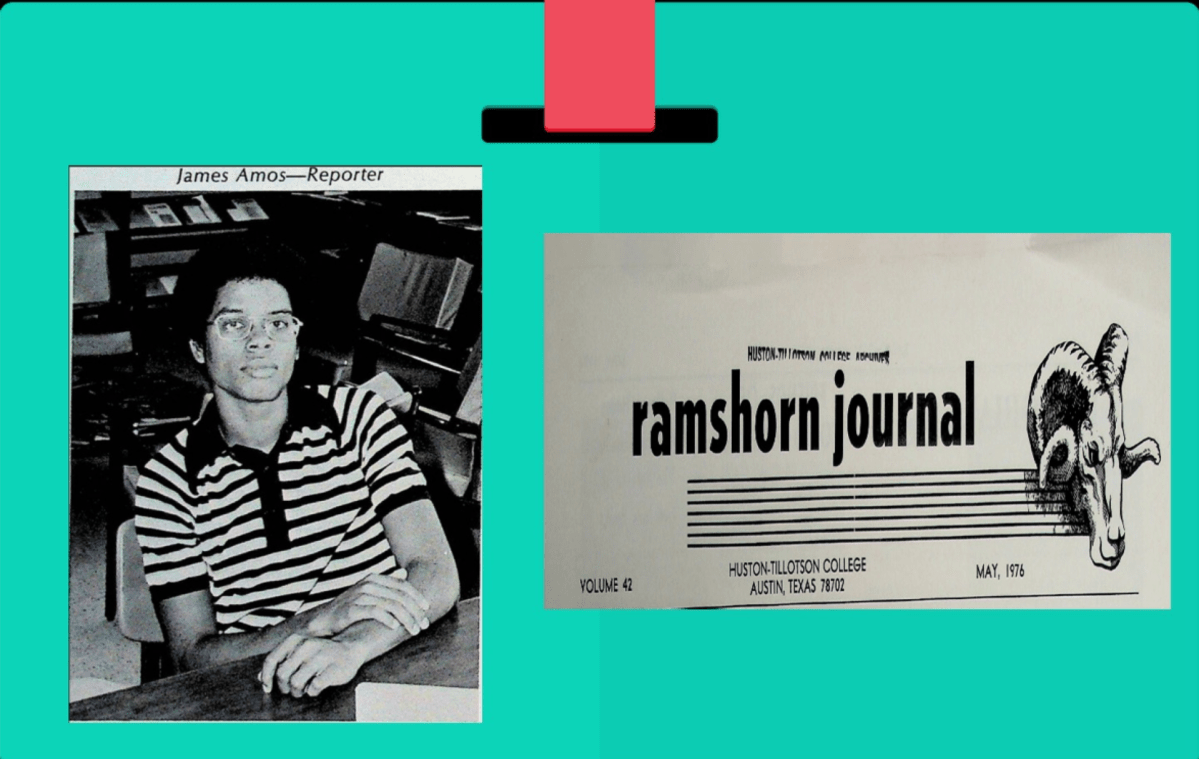
I feel like I should put on my Huston-Tillotson College (H-TC) news reporter press tag for this brief announcement, which you can get pretty much anywhere on the web anyway. Just a reminder, I was a reporter for the Ramshead Journal back in the 1970s for H-TC (now H-T University).

The breaking news is that the Moody Foundation recently gave H-TU a large gift of $150 million. It’s the largest gift to a single Historically Black College and University (HBCU) in history. Furthermore, the philanthropist MacKenzie Scott gave a $70 million gift to the United Negro College Fund recently to be divided among the 37 HBCUs. H-TU will also get a piece of that.

For more details about these donations, see the pbs story.

As an aside, the Jackson-Moody Humanities building on campus was named after the Moody Foundation, which covered the financial cost of construction. E.W. Jackson was a former trustee and donor. I took my English, Literature, and Spanish classes there.

picture is in the public domain

The other news is that H-TU rose in the National rankings and is now the #1 private HBCU in Texas for 2026.

A big congratulations to Huston-Tillotson University!

Big Mo Pod Show: “Planting Seeds”

The Big Mo Pod Show title is about planting seeds in a metaphorical way. One of the seeds Big Mo sows is his comedy bit on MayRee’s hand-battered catfish. It’s just one of his hilarious faux sponsor routines that he frequently tweaks, and the subtle changes are difficult to catch if you don’t listen to his show every Friday night. It evolves, kind of like a shaggy dog story joke. My lame imitation from my crippled memory is below:

You see, MayRee’s hand-battered catfish is better because it’s battered, cooked to perfection with manic delight, packed with nitrates at her shack which you can find at the corner of Highway 6 and Snowflake Drive, and if you tip her and give her a wink, she’ll set you up with a mason jar of her famous kickin’ mule’ not sure if it’s all the way legal, but it comes in 3 flavors, Classic Clear, Golden Grabass, and just right for the holidays, Pumpkin Spice, that’s Mayree’s hand-battered catfish; it’s better because it’s battered.

You get the idea. I’m still trying to sell him on my design for a MayRee’s hand-battered catfish tee shirt. Don’t know why he’s not biting that hook. The catfish could be a fire truck red color, just sayin’.

So, the pod show title is “Planting Seeds” and that’s related to the idea of fundamental, historically important basic elements of blues music, specifically in the case of Jessie Mae Hemphill’s song “Jump, Baby, Jump.” Both Big Mo and Producer Noah agree that this example of North Mississippi hill country folk trance or hypnotic griot music (or grio, pronounced Gree-oh; a kind of West African traditional oral folklorist) which serves as the seed or basis for building on other layers (instrumental or otherwise). That’s just what I picked up from the internet.

Big Mo distinguishes this from “production” style music you hear a lot of nowadays on the radio and I get his disparaging tone about it.

Anyway, that’s the rich music history part of the pod show, which you can get by listening to KCCK on your radio dial at 88.3 or click on the Listen Now to hear by internet.

Now, what is also great about the show is Big Mo’s own historical perspective on music. That’s what you get by growing older. And that’s why my favorite song from last night from the Big Mo Blues Show was Curtis Salgado’s “The Longer That I Live.” I can identify with the lyrics.

University of Iowa Physician Wins Lasker Award!

How about some good news? This just in, University of Iowa Physician-Scientist, Dr. Michael Welsh, wins the 2025 Lasker Award for his research on cystic fibrosis.

His work and the work of two other researchers with whom he’ll share the award set the stage for the development of new drugs which saves the lives of those who suffer from cystic fibrosis.

I learned from the article that the cystic fibrosis gene was discovered in 1989; I was a second-year medical student then. Since then, the development of new treatments has meant that many people who died in early adulthood now can live into their 80s.

Congratulations to Dr. Welsh and colleagues!