Today, I read Dr. George Dawson’s blog post, “How I ended up in a high-risk pancreatic cancer risk screening clinic.” As usual I was impressed with his erudition, scientific literacy, and rigorous objectivity, even as it pertained to a deadly disease which runs in his family genetic history. I couldn’t help admiring his courage.
And, whether this is a random connection or not, this somehow led to my remembering Dr. George Winokur, a giant in the scientific study (including genetics) of psychiatric diseases, especially mood disorders. He died of pancreatic cancer shortly after he was diagnosed with it in the spring of 1996.
Dr. Winokur was chair of the University of Iowa Department of Psychiatry from 1971 to 1990. He remained on faculty, actively involved in research and teaching up until the day of his death in October of 1996.
I was a resident in psychiatry at University of Iowa from 1992-1996 and I have a clear recollection of meeting with Dr. Winokur in his office during my last year, when I was preparing for job interviews. I knew he had been diagnosed with pancreatic cancer.
He had been actively recruiting me to accept a position in the department and did so even as we spoke briefly. I remember noticing that he gripped an electrical conduit on the wall next to his desk so tightly that I wondered if he were in pain.
He was the main reason I stayed in Iowa. He had a great sense of humor. All of us residents loved him. There was even a list of his “commandments” all new residents received when they began their residencies at Iowa.
Winokur’s 10 Commandments
Thou shalt not sleep with any UI Psychiatry Hospital patient unless it be thy spouse.
Thou shalt not accept recompense for patient care in this center outside thy salary.
Thou shalt be on time for conferences and meetings.
Thou shalt act toward the staff attending with courtesy.
Thou shalt write progress notes even if no progress has been made.
Thou shalt be prompt and on time with thy letters, admissions and discharge notes.
Thou shalt not moonlight without permission under threat of excommunication.
Data is thy God. No graven images will be accepted in its place.
Thou shalt speak thy mind.
Thou shalt comport thyself with modesty, not omniscience.
I never got the impression that George Winokur recruited me because I was black, although it was pretty obvious to me that I would be the first black University of Iowa psychiatry department faculty member. He had too much class to make that an issue.
I’ve known a few classy psychiatrists. Maybe the connection is not so random.
I was thinking about what to write for the first day of Black History Month, which starts today on February 1, 2023.
As usual, I started to reminisce about my time at Iowa State University (ISU) in Ames, Iowa. I usually don’t talk about my undergraduate days. In fact, I had a little trouble finding my diploma. It was in storage in the first place I should have looked. I graduated from ISU in 1985.
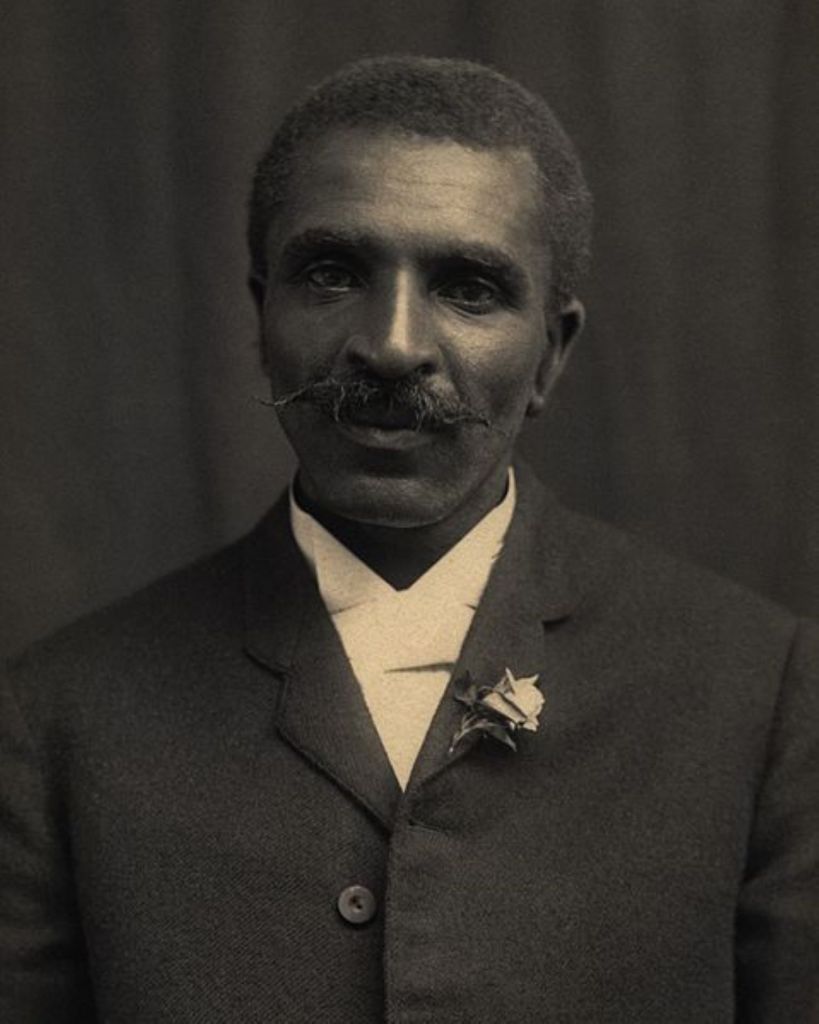
The Iowa State Daily ran a story, “Black scientists from Iowa State,” published on February 4, 2021, obviously in honor of Black History Month. Of course, it featured ISU’s most illustrious graduate, George Washington Carver, who earned his graduate degree in 1894. Carver also loved poetry and painting, which I didn’t know.
This work is in the public domain in the United States because it was published (or registered with the U.S. Copyright Office) before January 1, 1928
Carver was a scientist and put it to practical use. It fits with the ISU motto, which was short and to the point: “Science with Practice.”
I transferred credit to ISU in the mid-1970s from one of the country’s Historically Black Colleges and Universities (HBCUs), Huston-Tillotson College (now Huston-Tillotson University). I submitted a poem to the college’s annual student poetry contest sponsored by one of the English Professors, Dr. Jenny Lind Porter-Scott. My poem didn’t make the cut, but many students got their work published in the little book, Habari Gani (Swahili for “What’s Going On”), which published the best poems.
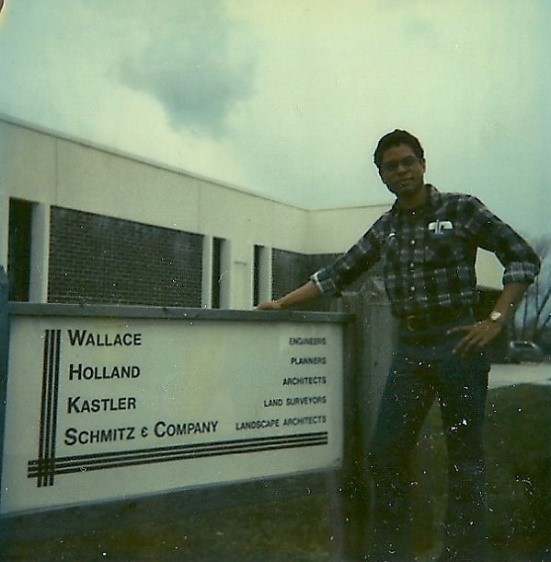
Part of the reason I went to ISU was the encouragement I got from my bosses at WHKS &Co, consulting engineers. I was a surveyor’s assistant and drafter. I was the only African-American employee working there.
The idea behind going to ISU initially was to pursue a degree in engineering. That didn’t happen because frankly, I didn’t have a head for the mathematics. On the other hand, I got interested in biology, chemistry, and zoology and finally ended up in medical school at The University of Iowa in Iowa City. The rest is history, as they say, which allows the usual cover up of a multitude of sins.
At the time Sena and moved to Ames in the early 1980s, it was a quiet little town, except during VEISHEA, an annual spring celebration on campus. The event got out of hand many times and it was finally banned in 2014.
Back in the days of George Washington Carver, African American students were not allowed to room with other students who did not have black skin on campus. By the time we moved to Ames, the most uncomfortable racial incident I can recall personally was being the butt of a “nigger” joke at a barbershop. I had to find another place to get my hair cut.
I still had a lot of science to digest at ISU after switching my major from engineering to the life sciences. I remember a chemistry professor who looked like the typical hippie who demonstrated how electrons get excited by stacking chairs on top of the counter in front of the chalkboard (which teachers were still using) and climbing to the top and nervously doing a shaky little dance showing what an excited electron he was. I think all of us collectively held our breath, waiting for him to tumble to the floor.
I really had a tough time learning organic chemistry. You had to draw diagrams showing how the molecules and atoms connected after each reaction. I will never forget an Asian Teacher’s Assistant who patiently tutored me, despite my having a very bad cold and a bad attitude to boot.
I graduated and then returned to get more credits to try getting into medical school after finding it very difficult to find employment with my Bachelor of Science degree. It took about 9 months before I finally landed a job in the clinical lab at one of the hospitals in Des Moines. The lab director worked there for a very short time while I was there, and then left to go to medical school.
That was my cue. I think it worked out for the best. By the way, the engraved crystal in the featured image is an appreciation gift from The University of Iowa for my years of service.
And I guess that’s about enough reminiscence for now.
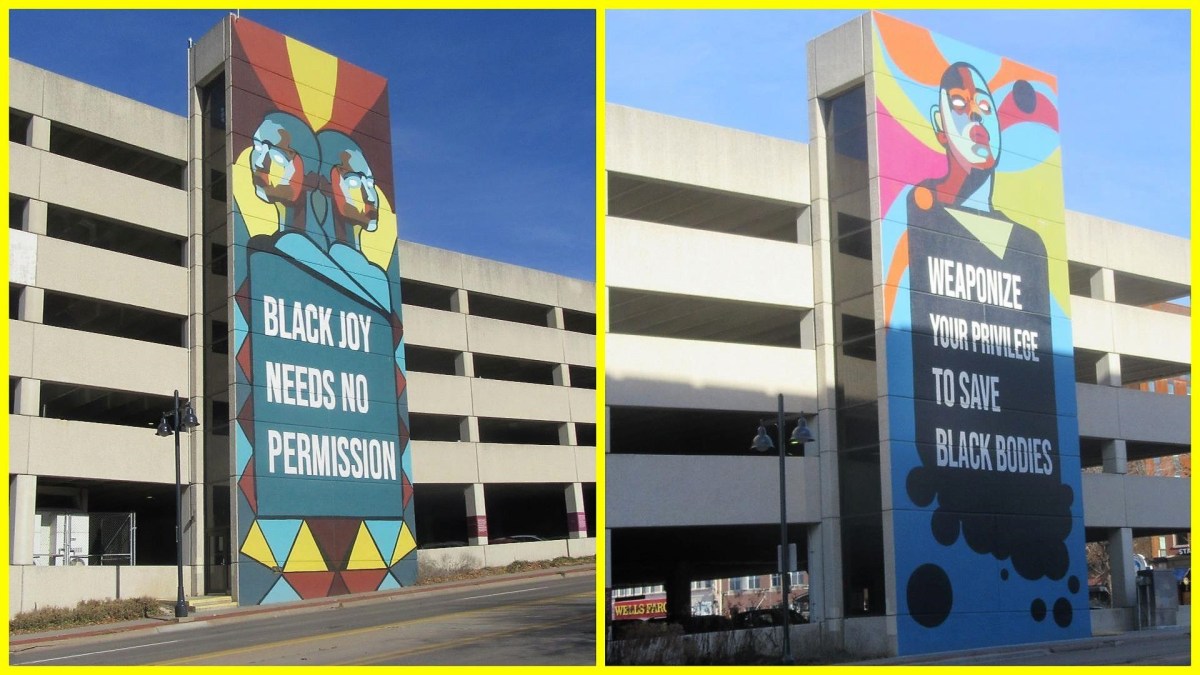
Back in November 2022, while on our way to the Stanley Museum of Art, we saw the two murals on the East Burlington Street Parking Ramp. It was the first time we saw them in person although photos were available last fall. The Little Village article published an article about them on September 30, 2021. It’s the Oracles of Iowa mural project, conceived by Public Space and the Center for Afrofuturist Studies partnered with the artists, Antoine Williams and Donte K. Hayes. The artists sought to stimulate a conversation in the community about how black and white people relate to each other.
The murals are painted on parking ramp at two locations along East Burlington Street. One says “Black Joy Needs No Permission” and the other says “Weaponize Your Privilege to Save Black Bodies.”
The Little Village article points out that a survey of public perception of the murals revealed that 64 percent of white respondents supported the murals while only 40-50 percent of minority respondents supported them. The stickler for minorities was the use of the word “weaponize” and the phrase “Black bodies,” which were thought to raise impressions of “violence” and dehumanization.
Because I’m a writer, retired psychiatrist, and a writer, the word “weaponize” made me wonder what other word might have been chosen in this context. The only definition of “weaponize” that I can find which makes sense to me is from Merriam-Webster: “to adapt for use as a weapon of war.”
I’m a retired physician, so I have a perspective on the “privilege” to “save” lives, and by extension to enhance health and well-being. I’m also Black. I grew up in Iowa and I can recall getting bullied and being called a “nigger.” I can remember my psychiatry residency days, which includes a memory of a patient saying “I don’t want no nigger doctor.” I didn’t have the option to switch patients with another resident. When I saw the patient on rounds, I did my best and every time the “nigger” word erupted, I left the room. It was one of a few episodes which were marked by frank racist attitudes.
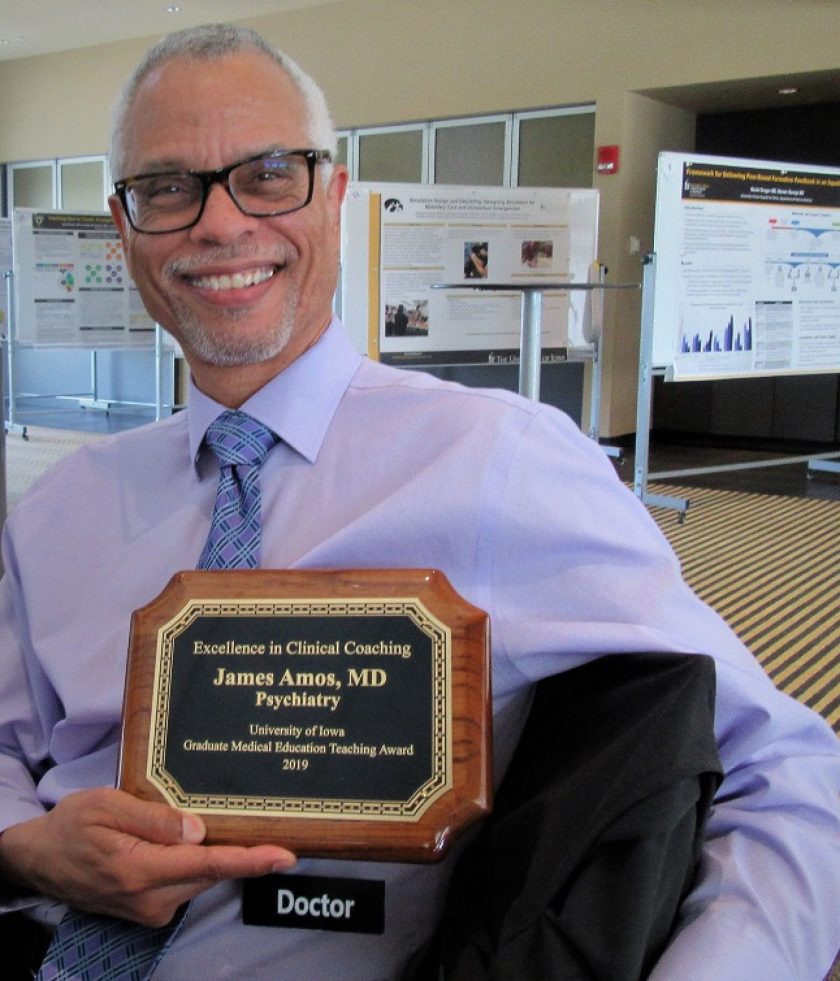
I was given the University of Iowa Graduate Medical Education Excellence in Clinical Coaching Award in 2019, one of several esteemed colleagues to be honored in this way. Many of those who nominated me were white. It was one of many joyful experiences I had before my retirement in 2020, when the pandemic and other upheavals in society occurred, including the murder of Black persons, resulting in many consequences prompting the creation of the murals.
I have other memories. I was privileged to be given a scholarship to attend one of the Historically Black Colleges and Universities (HBCU) in this country, Huston-Tillotson College (now Huston-Tillotson University). It’s one of the oldest schools and is the oldest in Austin, Texas. The scholarship was supported by one of the local churches in my home town of Mason City. I don’t think it had any black members. Although I didn’t take my undergraduate degree from H-TU, it was one of the most valuable learning experiences in my life. It was the first time I was ever not the only Black student in the class. It was marked by both joy and a struggle to learn where I belonged.
The murals did for me what the artists hoped it would do. It stimulated me to reflect on the meaning of racializing life. They stir me to seek perspective on whether joy has any color and why anyone needs permission for it. And I believe I would rather exercise my privilege to respect and care for others than to weaponize anything, including my sense of humor.
I just found out about the National Day of Racial Healing, which is today. It follows the National MLK Day, which this year was yesterday. The annual National Day of Racial Healing was started in 2017. The website tells what the event is about:
“The National Day of Racial Healing is a time to contemplate our shared values and create the blueprint together for #HowWeHeal from the effects of racism. Launched on Jan. 17, 2017, it is an opportunity to bring ALL people together in their common humanity and inspire collective action to create a more just and equitable world.”
Read more about the origins of the National Day of Racial Healing here.
I first saw a photo of the sculpture honoring Dr. Martin Luther King Jr and Coretta Scott King, called “The Embrace” a couple of days ago. I remember my first impression being that it would have been nice to see a full sculpture of the couple rather than disembodied arms.
Sena mentioned it today because it was unveiled at Boston Commons. This was just before my mindfulness meditation, so I just told her that I saw the picture of it and said I would have to think about it some more.
As I sat in meditation, it occurred to me that “The Embrace” expressed what I think is a basic abstract idea, which is the challenge for us to embrace the notion that we’re all humans who ought to accept each other, and be kind and generous to one another.
That’s what I think the Kings did. That’s why Dr. King won the Nobel Peace Prize.
You could make a sculpture of the King as a couple embracing each other after he won the Nobel Prize. It would have been beautiful. On the other hand, you could make a sculpture which tries to do more than that. How difficult would it be to make a representation of what it might look like if all of us embraced our humanity—and each other?
It sounds too difficult. Yet the artist managed to do just that. Anyway, that’s my two cents.
Here’s another vintage post from around a decade ago after my former Psychiatry Dept chairperson, Dr. Robert G. Robinson and I published our book, Psychosomatic Medicine: An Introduction to Consultation-Liaison Psychiatry” in 2010.
Blog: Who Gets The Credit?
When I think about peak moments, I remember this guy back in junior high school who decided to try to break the Guinness Book of World Records for skipping rope. I don’t remember his name but the school principal and his teachers all agreed to let him do it during class hours. They marked out a little space for him in our home room. He was at it all day. And he was never alone because there was always a class in the room throughout the day. We didn’t get much work done because we couldn’t keep our eyes off him. It was mesmerizing. The longer he jumped, the more we hoped. We were very careful about how we encouraged him. We didn’t want to distract him and make him miss a jump. And so, we watched him with hope in our hearts. It was palpable. As he neared the goal, we were all crowded around him, teachers and students cheering. He was exhausted and could barely swing the rope over his head and lift his knees. When he made the time mark, we lifted him high above our heads and you could have heard us yelling our fool heads off for miles. Time stood still. He was a hero and we were his adoring fans. It didn’t occur to us to be jealous. His achievement belonged to all of us.
Another peak moment occurred more recently, when my colleagues and I published a book this summer. It’s my first book. It’s a handbook about consultation-liaison psychiatry which my department chairman and I edited, and the link is available on this page. This time, the effort was collaborative with over 40 contributors. The work took over 2 years and often, being an editor felt like herding cats. But we worked on it together. Many of the contributors were trainees working with seasoned psychiatrists who had much weightier research and writing projects on their minds, I’m sure. Like any first book, it was a labor of love. The goal was to teach fundamental concepts and pass along a few pearls about psychosomatic medicine to medical student, residents, and fellows. The book grew slowly, chapter by chapter. And when it was finally complete, this time the achievement was ours and again it belonged to all of us.
I made a lot of long-distance friends on the book project and occasionally get encouragement to do something else we could work together on. I suppose one thing everyone could do is to propose some kind of delirium early detection and prevention project at their own hospitals and chronicle that in a blog to raise awareness about delirium—sort of like what I’ve been trying to do here. We could share peak moments like:
Getting the Sharepoint intranet site up and going so that group members can talk to each other about in discussion groups about how to hammer out a proposal, which delirium rating scale to use, or which management guidelines to use—and avoid the email storms.
Being invited to give a talk about delirium at a grand rounds conference or regional meeting.
Talking with someone who is interested in funding your delirium project (always a big hit).
That way if one of us falters, we always know that someone else is in there pitching. Copyrighting ideas and tools are fine. Hey, everybody has a right to protect their creative property. I’m mainly talking about sharing the idea of a movement to teach health care professionals, and patients about delirium, to help us all understand what causes it, what it is and what it is not, and how to prevent it from stealing our loved ones and our resources.
“It is amazing what you can accomplish if you do not care who gets the credit”-Harry Truman, Kansas Legislature member John Solbach, Ronald Reagan, Charles E. Montague, Benjamin Jowett, a Jesuit Father, a wise man, Edward T. Cook, Edward Everett Hale, a Jesuit Priest named Father Strickland.
I thought I’d re-post something from my previous blog, The Practical Psychosomaticist, which I cancelled several years ago. The title is “Face Time versus Facebook.” I sound really old in it although it appeared in 2011.
I’m a little more comfortable with the concept of social media nowadays and, despite how ignorant I was back then, I later got accounts in Facebook, Twitter, and LinkedIn. I got rid of them several years later, mainly because all I did was copy my blog posts on them.
The Academy of Psychosomatic Medicine (APM) to which there is a link in the old post below, later changed its name to the Academy of Consultation-Liaison Psychiatry (ACLP), which made good sense. I still have the email message exchange in 2016 with Don R. Lipsitt, who wrote the book “Foundations of Consultation-Liaison Psychiatry: The Bumpy Road to Specialization.” It’s an excellent historical account of the process.
Don liked a post I wrote, entitled “The Time Has Come for ‘Ergasiology’ to Replace ‘Psychosomatic Medicine?” It was a humorous piece which mentioned how many different names had been considered in the past for alternative names for Psychosomatic Medicine. I was actually plugging his book. I don’t think ergasiology was ever considered; I made that part up. But it’s a thing. It was Adolph Meyer’s idea to invent the term from a combination of Greek words for “working” and “doing,” in order to illustrate psychobiology. Don thought “…the Board made a big mistake…” naming our organization Psychosomatic Medicine. He much preferred the term “consultation-liaison psychiatry.” We didn’t use emoticons in our messages.
The Don R. Lipsitt Award for Achievement in Integrated and Collaborative Care was created in 2014 to recognize individuals who demonstrate “excellence and innovation in the integration of mental health with other medical care…”
I don’t think the ACLP uses Facebook anymore, but they do have a Twitter account.
I also included in the old post a link to the Neuroleptic Malignant Information Service (NMSIS). I used to call the NMSIS service early in my career as a consultation-liaison psychiatrist. I often was able to get sound advice from Dr. Stanley Caroff.
Blog: Face Time versus Facebook
You know, I’m astounded by the electronic compensations we’ve made over the years for our increasingly busy schedules which often make it impossible to meet face to face. Frankly, I’ve not kept up. I still think of twittering as something birds do. If you don’t get that little joke, you’re probably not getting mail from the AARP.
The requests for psychiatric consultations are mediated over the electronic medical record and text paging. Technically the medical team that has primary responsibility for a patient’s medical care contacts me with a question about the psychiatric management issues. But it’s not unusual for consultation requests to be mediated by another consultant’s remarks in their note. The primary team simply passes the consultant’s opinion along in a request. They may not even be interested in my opinion.
I sometimes get emails from people who are right across the hall from me. I find it difficult to share the humor in a text message emoticon. And I get more out of face-to-face encounters with real people in the room when a difficult case comes my way and I need to tap into group wisdom to help a patient. These often involve cases of delirium, an acute confusional episode brought on by medical problems that often goes unrecognized or is misidentified as one of the many primary psychiatric issues it typically mimics.
The modern practice of medicine challenges practitioners and patients alike to integrate electronic communication methods into our care systems. And these methods can facilitate education in both directions. When professionals are separated geographically, whether by distances that span a single hospital complex or across continents, electronic communication can connect them.
But I can’t help thinking there are some messages we simply can’t convey with emoticons. By nature, humans communicate largely by nonverbal cues, especially in emotionally charged situations. And I can tell you, emotions get involved when physicians and nurses cue me that someone who has delirium is just another “psych patient” who needs to be transferred to a locked psychiatric unit(although such transfers are sometimes necessary for the patient’s safety).
So, when do we choose between Face Time and Facebook? Do we have to make that choice? Can we do both? When we as medical professionals are trying to resolve amongst ourselves what the next step should be in the assessment and treatment of a delirious patient who could die from an occult medical emergency, how should we communicate about that?
As a purely hypothetical example (though these types of cases do occur), say we suspect a patient has delirium which we think could be part of a rare and dangerous medical condition known as neuroleptic malignant syndrome (NMS). NMS is a complex neuropsychiatric disorder which can be marked by delirium, high fever, and severe muscular rigidity among other symptoms and signs. It can be caused very rarely by exposure to antipsychotic drugs such as Haloperidol or the newer atypical antipsychotics. The delirium can present with another uncommon psychiatric disorder called catatonia, and many experts consider NMS to be a drug-induced form of catatonia. Patients suffering from catatonia can display a variety of behaviors and physiologic abnormalities though they are often mute, immobile, and may display bizarre behaviors such as parroting what other people say to them, assuming very uncomfortable postures for extended periods of time (called waxy flexibility), and very rapid heart rate, sweating, and fever. The treatment of choice is electroconvulsive therapy (ECT) which can be life-saving.
Since NMS is rare, many consulting psychiatrists are often not confident about their ability to diagnose the condition. There may not be any colleagues in their hospital to turn to for advice. One option is to check the internet for a website devoted to educating clinicians about NMS, the Neuroleptic Malignant Syndrome Information Service at www.nmsis.org. The site is run by dedicated physicians who are ready to help clinicians diagnose and treat NMS. Physicians can reach them by telephone or email and there are educational materials on the website as well. I’ve used this service a couple of times and found it helpful. The next two electronic methods I have no experience with at all, but I find them intriguing.
One might be a social network like Facebook. In fact, the Academy of Psychosomatic Medicine (APM) has a Facebook link on their website, www.apm.org. Psychosomaticists can communicate with each other about issues broached at our annual conferences, but probably not discuss cases. Truth to tell, the Facebook site doesn’t look like it’s had many visitors. There are 3 posts which look like they’ve been there for a few months:
Message 1: We have been thinking about using Facebook as a way to continue discussions at the APM conference beyond the lectures themselves. Would anyone be interested in having discussions with the presenters from the APM conference in a forum such as this?
Message 2: This sounds great!
Message 3: I think it’s a very good idea
It’s not exactly scintillating.
Another service could be something called LinkedIn, which I gather is a social network designed for work-at-home professionals to stay connected with colleagues in the outside world. Maybe they should just get out more?
Email is probably the main way many professionals stay connected with each other across the country and around the world. The trouble is you have to wait for your colleague to check email. And there’s text messaging. I just have a little trouble purposely misspelling words to get enough of my message in the tiny text box. And I suppose one could tweet, whatever that is. You should probably just make sure your tweet is not the mating call for an ostrich. Those birds are heavy and can kick you into the middle of next week.
But there’s something about face time that demands the interpersonal communication skills, courtesy, and cooperation needed to solve problems that can’t be reduced to an emoticon.
The Martin Luther King, Jr. Celebration of Human Rights Week 2023 begins January 16, 2023. See the University of Iowa Healthcare list of events, which will be updated.
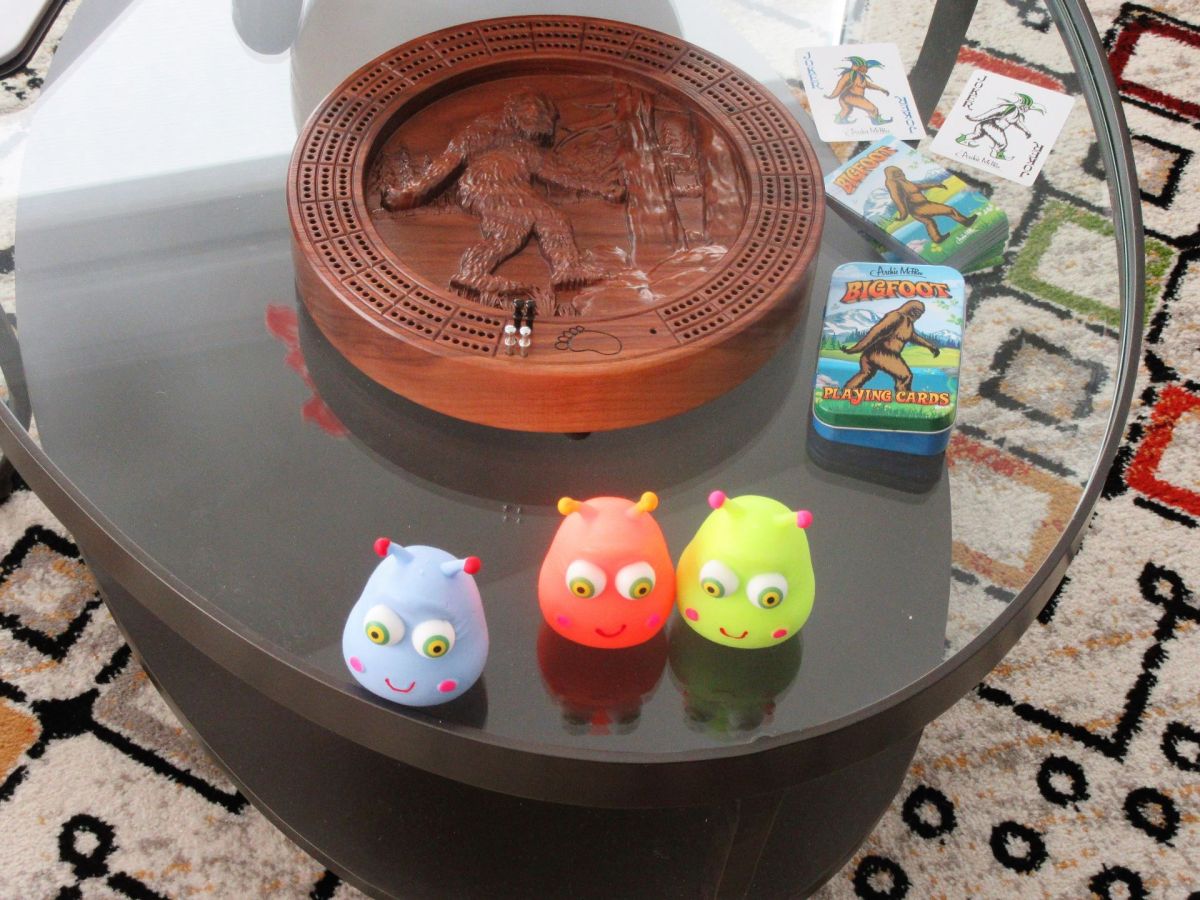
We got our Sasquatch playing card deck! The images of Bigfoot are strikingly similar to the carved image on our new Sasquatch cribbage board. And they both resemble the image of Patty, the female Bigfoot supposedly captured on 16mm film back in 1967 by Bob Gimlin.
That’s the legendary Patterson-Gimlin video of Bigfoot. There are two opposing views on the existence of Bigfoot which I think are probably influenced by Patty.
The TV show, The Proof Is Out There, aired an episode of experts who talked a lot about evidence for Bigfoot. I watched the show, which ran on December 3, 2021. The Daily Mail UK ran a big story about it. I honestly can’t remember what they decided.
On the other hand, there are a few people who claim to know for a fact that a guy has admitted that he put on a stinky monkey suit and played the part of Patty—and said he’s blowing up the whole thing because he never got paid for doing it. That was way back in 2004, and the story is all over the internet.
I tend to be skeptical about most things like Bigfoot and extraterrestrials. I’m not exactly saying they don’t exist.
But why can’t anyone find a corpse, roadkill, or a definite fossil of Sasquatch? Is that why people are starting to call Bigfoot an interdimensional being, coming and going through a wormhole vortex? And why does everybody still pay attention to the tale?
I think it’s because just about everybody likes a good story—which is what Bigfoot has always been.
Because I’m running on a tight schedule today, I’ll have to write this holiday flower-oriented post with lightning speed. There could be minor mistakes and you’ll just have to live with them.
First, we need to talk about the meaning of the usual Christmas holiday flowers. One of them is the Amaryllis, about which I’ve already given the important details in a previous post.
The other flower is the poinsettia, properly pronounced “flower.” Sena brought one home yesterday and it’s a beauty. The lore surrounding this holiday favorite is a bit convoluted. An angel ordered a peasant woman named Maria to gather roadside weeds. Maria was a little hard of hearing and thought the angel said “weed,” so she dug up a lot of marijuana growing wild in the ditches.
She took them to a little church, where the members of the congregation and the preacher lit them up with a little fire at the altar. The smoke got a little thick and everybody got a little confused and really hungry. They giggled a lot and their eyes burned a little, making everything look like it had a reddish color, including the “weeds.” Somebody knocked over the altar, spilling them all over the floor, which everybody swore they could feel through their shoes.
The poinsettia was known by the Aztecs who originally called it “Cuetlaxochitl,” which means “flower you can feel through your shoes, dude!”
There’s another version of the origin of the name of poinsettia. Some botanist in South Carolina named Poinsett (get that, har!) called it the “Mexican flame thrower,” probably because there was a legend in Mexico that extraterrestrials brought a plant with them that shot fire from its flowers, scorching all of the weed for miles.







 Go Retire Psychiatrist