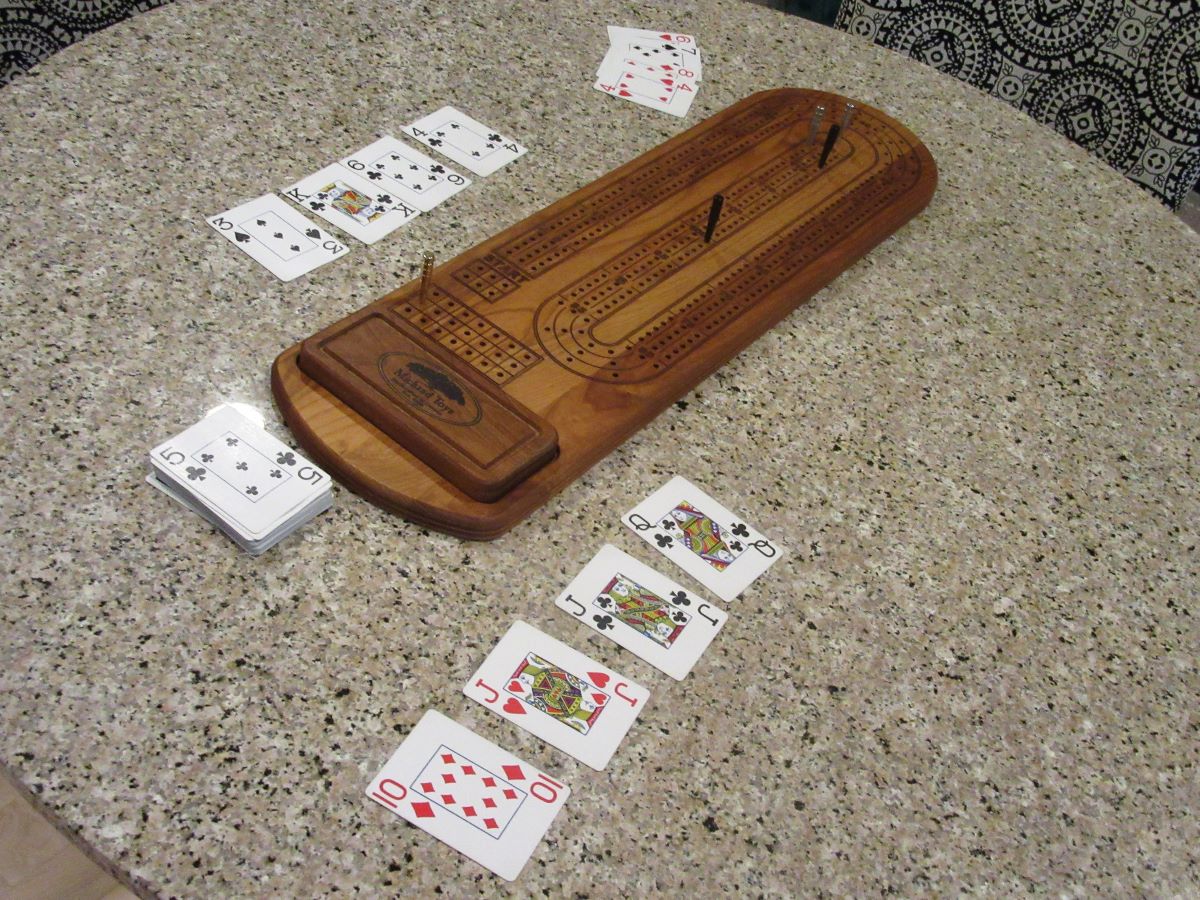
Cribbage Classic on the Web

I’ve been playing an on-line version of the cribbage game called Cribbage Classic for a short while. This is a short review. I’m far from an expert. Sena and I play cribbage fairly often. We just played a set of 3 games not long ago and we both played very well, I thought. I had picked up a few pointers from Cribbage Classic, but didn’t do much better than I usually do. In fact, we usually play 2 or 3 games, the 3rd to break the tie in order to be the “best of the best of the best—sir!” I lost the 3rd game but had so much fun playing I didn’t mind.

Anyway, Cribbage Classic is a no-nonsense web-based cribbage game which teaches you not only the fundamentals of the game, but also analyses your play with respect to the two features over which you have a modicum of control: the discard to the crib and pegging. It critiques your discards and pegging play and it tracks your improvement (or lack thereof) over the number of games you play.

Cribbage Classic also has a discard analyzer, which allows you to look at large numbers of possible crib discards while the computer tells you the optimal discard for each hand.

There are 3 levels of play, Easy, Standard, and Pro. It allows you to count your hands manually and even play Muggins along with that. One of the most helpful features is the setting which warns you of suboptimal crib discards—and allows you to try again! There’s a hint button setting for all levels.  

Best of all, it’s free! Ads are minimal. And if your internet service goes out, you could download the game from Microsoft Store, also for free. It gets only a 3-star rating, though. I guess that’s why I haven’t downloaded it. There are many more reviews (over 600 when I checked recently) for this game on line than the two other cribbage games I’ve downloaded. Many critics say it favors the computer opponent. That hasn’t been my impression so far from the on-line version, though I haven’t played at the Pro level.

The graphics are simple. There are no cute character opponents, no sounds, and the card and background selection options are not fancy. It’s advertised for Windows 10 and it works fine on my computer which has Windows 11.

I’ve tried fancy cribbage games and it seems I either win every game or lose all of them—which is not realistic. Cribbage Classic is realistic, meaning on average you’ll win about half the time. That means when I make crappy crib discards, I sometimes win in spite of them and when I make great discards using the hint button as a crutch, I sometimes lose anyway.

I make lousy crib discards so much, it’s a little embarrassing. On average, I make about 5 or more bad tosses to the discard pile every game. I guess some players would contest the computer suggestions. The points the computer says you lose on some discards can amount to only a couple of tenths of a point, which I think I can ignore.

I’ll consider trying the download version of Cribbage Classic and let you know if I think it’s really different from the web-based product. In the meantime, if you like cribbage, why not try Cribbage Classic on the web and let me know what you think?

Cribbage Tee Shirts!

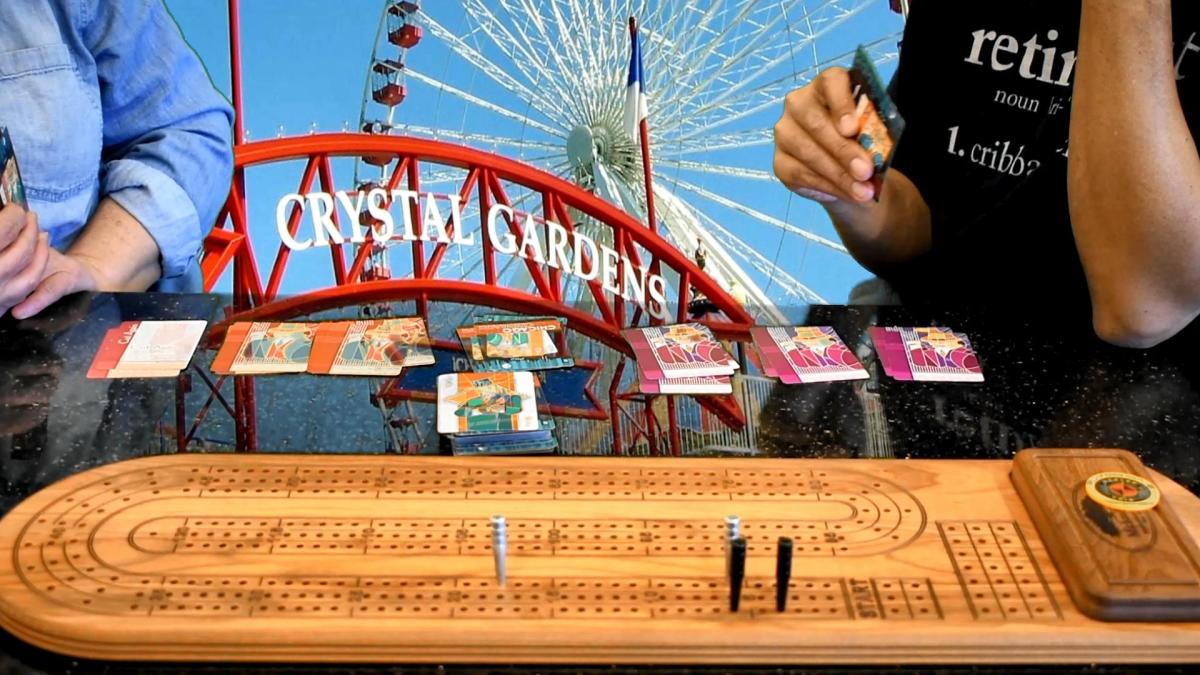
Sena got me a couple of cribbage themed T-shirts and they arrived yesterday. One of them is perfect for a retiree like me. The other has an image of the perfect 29 hand. It’s also perfect for me, not because I’ve ever had a 29 hand, but because I’ll take any lucky talisman I can get.

They’re extra-large because they’re 100 per cent cotton—not because I have an Arnold Schwarzenegger chest. They’ll shrink some, but we won’t leave them in the dryer very long.

One or both should be lucky for me, so I might wear them when we play. Usually, the winner is whoever wins 2 out of 3 games. We don’t use the skunk rule and we don’t play muggins. In fact, we help each other count our scores.

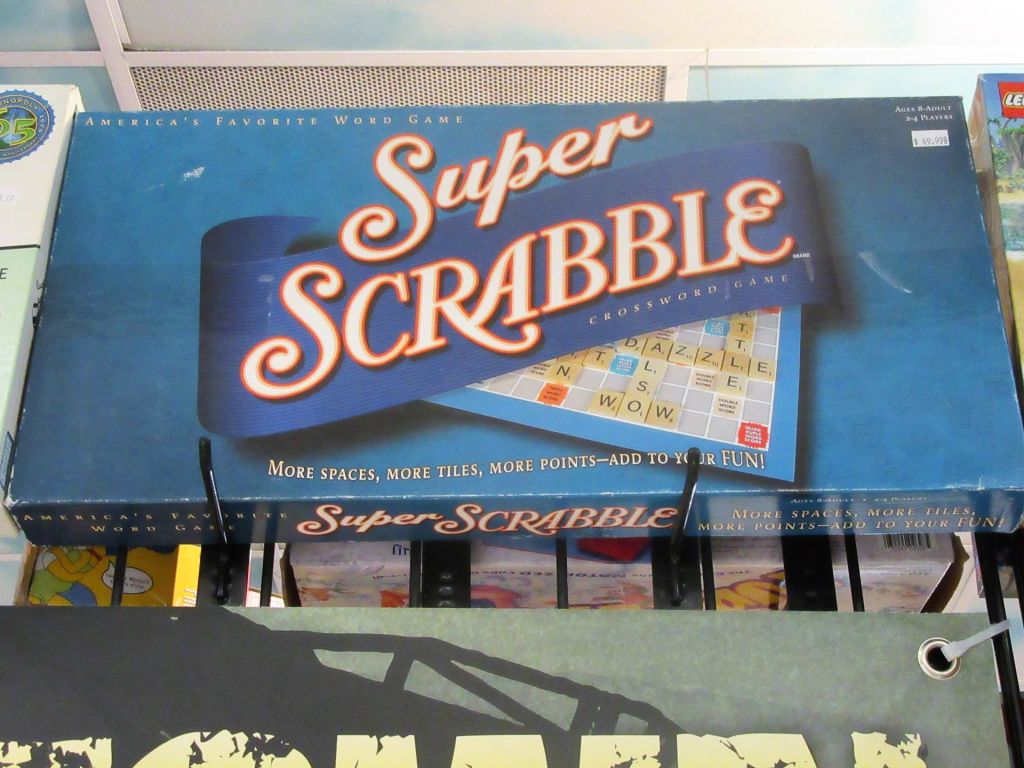
We switch off between playing Scrabble or cribbage. I usually lose the Scrabble games. The other day she played “um.” I looked at her and said “Um?” She just said, “Challenge me.”

I decided not to challenge and was glad. I still lost. I looked it up later in the Scrabble dictionary and it’s in there. It means to hesitate or pause speaking. Believe it or not, “ummed,” “umming,” and “ums” are also legal.

“Ummification” is not legal.

Cribbage scoring is more straightforward than that, and if you can count to 31, you’re generally OK.

Kickball Challenge in June!

The annual Kickball challenge between University of Iowa Department of Psychiatry Residents and Faculty is coming up in June. You know what that means.

Losers suspend the winners’ trophy in Jello. Somebody did that when we played Matball several years ago. If you need a recipe:

Matball was the forerunner of Kickball in the department. I think the Kickball rules are here. Federal law says you have to play in 95-degree heat with insane humidity driving the perceived temperature to slightly above that on the surface of the sun. Other rules:

If the ball melts, faculty wins.

For every point the residents score, faculty automatically score 5.

Faculty may tackle the base runner at any time.

If it rains, faculty win by 10 points.

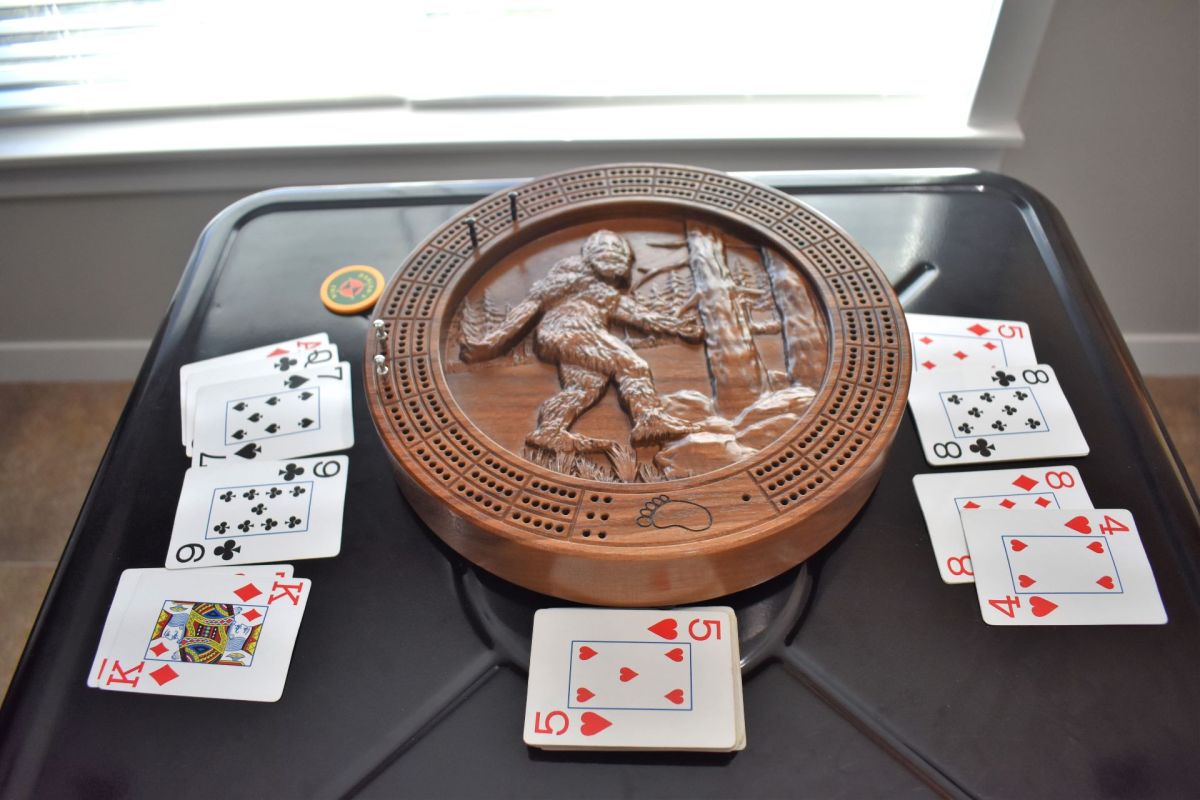
The thing to do is to recruit Sasquatch for your side, who will always boot the ball into the next county. Bring many replacement balls. Sasquatch will bring the beef jerky.

The games are fun to watch. Residents jumping over faculty; Faculty collapsing from heat stroke.

I never played.

I’m trying to recall whether faculty ever won a game. I don’t think we ever did. I think that’s why the trophy ended up in Jello.

CrossCribb Marathon Rookies

We finally started making a video of us playing CrossCribb. It took a while, partly because it takes more time to finish a game than we thought it would. If we’re playing it right, each hand or round takes about 8-10 minutes including scoring. We figure you’re supposed to play to 31, according to the rules. We played and filmed 6 rounds before our camera’s battery had to be recharged. We were 30-29 at that point with me leading.

Later when the battery was recharged, we played the 7th round. I won by a nose.

I’m not sure that making an hour long CrossCribb video will win any academy awards so I might plan this as a series of videos, one per round.

Playing it is a lot of fun! No wonder it has won awards. Knowing how to count cribbage points in cards gives you a leg up on playing and scoring.

You can find the rules on the web site.

Practicing CrossCribb and Kings Cribbage

We’ve been practicing CrossCribb and Kings Cribbage. They don’t play anything like regular cribbage, but they’re both really fun.

CrossCribb plays faster than Kings Cribbage so we played it first. Although we weren’t sure what the rule meant by saying one way to win is by “15 points or less” in a game that goes only to 31 points, we still thought it made us think about our strategy—for blocking each other.

What confused us at first is which side of the board each of is supposed to play on. In the two-player version, you sort of sit kitty corner, catty corner, or kattywumpus to each other, depending on what part of the United States you’re from. This is because one person faces the columns marked with circles and the other faces the columns marked with diamonds. That’s what the instructions tell you.

Like in regular cribbage, you choose the dealer by cutting the deck and low card gets the deal. Deal 14 cards each face down and no peeking. Non-dealer cuts and dealer turns over the cut card as usual, but places it in the center of the board.

Non-dealer leads by playing a card to anywhere on the board, which is divided into 5×5 grid, which will give 5 hands to each player to score after cards are played to each rectangular spot. You alternate play but you have to remember to toss two of your cards to the dealer’s crib, which are placed under the very handsome Dealer’s Crib chip, which reminds you of Las Vegas.

The idea is to strategically place your cards to build high scoring cribbage hands while blocking your opponent from doing the same.

The center row and column will score the Nob Jack point for you if you play a card on one of those spots. Remember, the cut card is in the center and if it’s a Jack, the dealer scores two points. However, these are not scored until after all the hands are formed on the board.

You win if you get to 31 first, which is marked in a little schematic of a cribbage scoring board on the scoresheet. However, you also win if:

You win by 15 points or less (we confess we’re not sure yet how that works)

You win by 16 points or more, which is a skunk

You win by 31 points, which is a double skunk

We each won a game, if we played it right. We’ll get this sorted out before we make a video—we hope.

Kings Cribbage is a slower game. We played for what felt like almost an hour and a half. It seemed a little more difficult to get the hang of it, even though we play Scrabble, and Kings Cribbage is a marriage of Scrabble and Cribbage. You form cribbage hands instead of words.

The tiles are made of wood, with two different colors to represent two different suits so you can’t peek when you pick your five tiles. The tiles represent cards. First you each pick tiles to see who plays first. Low tile gets first play and can play two to five tiles anywhere on the board as long as they make valid cribbage hands. After that you can play from one to five tiles, replenishing after each play.

The board rotates so you can see what you’re doing. The first player gets a 10-point bonus right off the bat—which helped me. Normally, I lose about every Scrabble game we play, but I won this time, even without the bonus. You can only play cribbage hands that are at most five tiles long.

Those of you who know how to play each of these games can check our work. We’d appreciate it if you commented on any mistakes you find.

Cribbage Board Games Arrive!

Kings Cribbage and CrossCribb are here! I had a quick look at the rules for both and they don’t look complicated. We’re ahead because we already know how to score cribbage hands.

The packages contained everything you need and nothing was broken. CrossCribb even has a handsome medallion to identify who’s the dealer and gets the crib.

We may put together a video pretty soon, after we’ve played a few games.

Cribbage Revival!

I ran across this article in the Portland Press Herald the other day about the renaissance of cribbage since the pandemic began a couple of years ago. It was about that time that Sena and I began again to play cribbage (in November of 2019 to be exact) after about 20 years hiatus.

We picked up the basic rules fairly quickly. It takes a while to master the game though. We are by no means masters.

In the story there is speculation that they can tell that there has been about a 20% increase in interest in cribbage because that’s about the rate at which new cribbage boards are being purchased. It’s assumed that once you have a cribbage board you don’t really want or need another one.

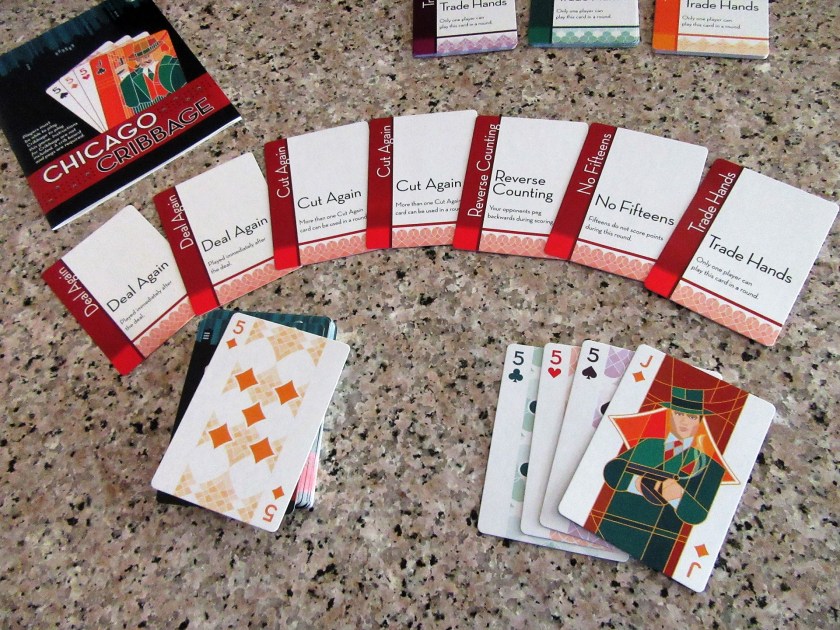
That’s not the case with me and Sena. We’ve purchased about a half a dozen over the last two years. To be sure, they’re not all boards. The Chicago Cribbage game variant doesn’t have a board with it but has several modifications of the rules as well as handsome cards. And we’re going to get a couple of cribbage board games, Kings Cribbage and CrossCribb.

The comments are very interesting below the story. One person claimed that his grandfather abruptly stopped teaching him cribbage when he got 29 scores in both the hand and the crib. Another commenter pointed out that this was mathematically impossible since you’d have to have more than 7 fives in the deck. Another commenter indicated that it was possible. I’m not sure what to say about the knowledge base of some cribbage players.

The story quotes David Aiken, a board member of the American Cribbage Congress (ACC) and editor of Cribbage World. He said that cribbage has been an older person’s game, for the most part. A lot of the cribbage clubs that had sponsored tournaments stopped hosting them. But that’s starting to turn around.

The story also says that cribbage takes a long time to learn and that it’s about equal parts luck and skill.

That got me to searching around on the web for other stories about cribbage and it finally led me to a story about a guy named Rollie Heath.

Rollie says the game is about 90% luck and about 15 percent skill. That’s pretty darn close to what another cribbage master said about the breakdown of luck and skill, Frank Lake. Rally mentioned the Theory of 26. This was invented by another cribbage master named DeLynn Colvert. I have Colvert’s book but have not read the chapter on the Theory of 26. Nor do I plan to, anytime soon. The gist of it is that luck controls most of the game and skill revolves around each player fighting over the 10 or so points that can actually be controlled by how you play the cards you’re dealt—I think.

Okay, okay, so I’ll read a little bit about Colvert’s 26 Theory to you. Colvert says, per hand that the non-dealer will peg on average 10.2 points. The dealer will peg 16.2 points per hand on average. Every two deals the average points add up to 26.4. Colvert goes on to say:

“The cribbage law of averages dictates that the dealer will win the game by scoring his crib hand on the 9th deal. The non-dealer will be about five (5.2) points short after counting first on the ninth hand. And this crucial five points will, on the average, caused the non-dealer to lose 56 games of 100 (skill levels being equal, of course). These averages are the foundation of the “Twenty Six Theory.”

I could probably sound real smart here by saying that nobody plays a purely statistical average game. But I’m not going to cop out. I’m just not smart enough to use the 26 Theory. More than anything, Sena and I play cribbage just for fun. I think that’s what most of us do.

On the other hand, Rollie Heath has been inducted into the ACC Hall of Fame. Maybe we should ask Rollie whether you can have 29 scores in both your hand and your crib.

New Cribbage Board Games Shipped!

We have a couple of new cribbage board games shipping early. They might arrive as early as tomorrow. These aren’t just cribbage boards.

One of them is Kings Cribbage. It’s kind of a cross between Scrabble and cribbage. Great, another game Sena can win nearly every time. Tiles correspond to cards. There are only two suits, light and dark brown. You have to try to make the highest scoring cribbage hand. You can score in multiple rows and columns at the same time. They have to be standard cribbage scores. I couldn’t find a YouTube instructional video per se, but the rules are on the web.

I did find a couple of reviews that were interesting and informative, though. It sounds like gameplay can make for complicated strategy building. And like the Tile Lock Scrabble game, the board has rails to keep the tiles in place. You can also spin the board around. The 6 and the 9 tiles are interchangeable. The

The other game is CrossCribb. The rules are also the web. The idea is to peg 31 points on your scorecard before your opponent cab do so. Two players to four players build hands perpendicular to each other.

They sound like fun variations on cribbage. We can’t wait to play!

Featured image picture credit: Pixydotorg.

Cribbage 29 Board Rematch!

Today Sena and I held the Cribbage 29 board rematch and it was unparalleled in the history of the universe! We shot a video of it and posted it on YouTube. It’s about 28 minutes long and we had a blast playing the game.

The last time we played on the 29 board was a couple of years ago. We posted it to YouTube and it has over 700 views so far—and it’s still getting views. I won the first game. You’ll have to watch the video to find out who won today.

The odds of getting a 29-score hand in cribbage is 1 in 216,580. Needless to say, neither of us got one. It’s pretty much a once in a lifetime thing. When it happens, it usually gets reported to local newspapers.

Pegging Around Wisconsin

We played a game on our new Wisconsin cribbage board. We made some miscounts I’m sure, but it was because we had so much fun talking. We lived in Madison for a short time many years ago and managed to see quite a few sights in the south-central region of the state. And even after we moved back to Iowa, we made return trips to visit Wisconsin because there’s a lot to do there.

Madison itself is the capital of Wisconsin. One of my first impressions is that a number of fascinating people live there. I remember we were walking west on State Street, and I saw a guy walking in the middle of the street wearing a live rattlesnake coiled on his head. Sena missed that for some reason. He was moving carefully and slowly, probably to avoid rattling his headgear.

I don’t think the sculpture of Harry Dumpty is still standing in Madison, but for several years it was a distinctive bronze sculpture in front of the Madison Municipal Building just south of the intersection of Martin Luther King Jr. Boulevard and East Doty Street. I can’t see it on Google Maps nowadays.

I never knew the sculpture was Harry Dumpty. It sat above a large concrete wall with an inscription on it which I just assumed was connected to the sculpture and probably still sits there although we couldn’t find it in 2012 when we returned for a visit:

“David James Schaefer, 1955-2004
was a phenomenal phenomenon. Though plagued by the progressive debilities of cerebral palsy, “Schaefer” was an uncomplaining and generous friend to many. Disability Rights Specialist for the City of Madison in three different settings, his death of a heart attack in September 2004 made a hole in our community which cannot ever be filled.
Erected by the Friends of Schaefer at private expense.”

It turns out Harry Dumpty has no connection to David James Schaefer. In fact, Harry is one of several similar sculptures created by artist Brent George, who made him in 1997, saying he’s Humpty’s brother. If you look closely at the book sitting open next to Harry, it’s entitled “Harry Dumpty.” Brent George’s name is below it. Brent’s phone number is on the front of the wall. Evidently somebody called him and asked about the sculpture. Brent says there’s no connection between the sculpture and the inscription.

On the subject of art, the Madison Museum of Contemporary Art (on State Street) is a place to see. Although the art works are free to view on the web, they’re copyrighted and you can’t reproduce them without permission of the artists. However, at the time we were there in 2012 we saw Typewriter Eraser by Claes Oldenburg. I think it’s OK to share our picture of the giant one we saw in Washington, D.C. In 2015.

Typewriter Eraser in Washington, D.C.

One of the more relaxing times we had was having pizza for lunch at Paisan’s in Madison. We were outside and had that breathtaking view of Lake Monona, the breeze was coming off the water, cooling and refreshing—like the Moose Drool brown ale, which is not a Wisconsin brew; it’s made in Montana.

Wisconsin is known for its beer, among many other virtues. New Glarus Brewing Company is famous. I tried a few of the brews. One of them was Stone Soup. It had oil of clove in it and my lips got numb.

We took a dinner train ride at the Mid-Continent Railway Museum in North Freedom. It was great food and great company.

One of the more interesting stories about Monroe, Wisconsin is The Great Limburger Cheese War, which I mangled during the heat of the game. I first heard about it on a TV show; it seemed to me it was on Mysteries at the Museum, but when I googled it, I couldn’t find it.

We had a great time in Wisconsin. Maybe someday we’ll go back for a visit.