Get Your Tin Foil Hats Out for the Total Lunar Eclipse Tomorrow

I just found out this morning that there’s a total lunar eclipse that will be visible starting tomorrow morning. We saw the one in May this year, and we’re excited—about getting up early in the morning around 4:00 AM.

Although you don’t need to wear special eye protection for a lunar eclipse, you will need to get your tin foil hats on. This is to protect you from the extraterrestrials who will be looking for hapless earthlings who are distracted by the eclipse, and hypnotize them into cooking Thanksgiving turkey and dressing for them.

Since the event will be in the wee hours of tomorrow morning, we plan on getting up early to try to get some pictures. Good luck!

See the World’s Largest Dinosaurs Exhibit at the Science Center of Iowa!

You can see the world’s largest dinosaurs exhibit at the Science Center of Iowa in Des Moines, Iowa from October 15, 2022 to April 16, 2023. It’s a traveling exhibit, so see it before it thunders off!

Here We Go Again About Antidepressants

Back in August, my colleagues, Drs. George Dawson, MD and Ronald Pies, MD wrote a rejoinder in Psychiatric Times to a review article published in Molecular Psychiatry by J. Moncrieff, Mark Horowitz and others (Moncrieff J, Cooper RE, Stockmann T, Amendola S, Hengartner MP, Horowitz MA. The serotonin theory of depression: a systematic umbrella review of the evidence. Mol Psychiatry. 2022 Jul 20. doi: 10.1038/s41380-022-01661-0. Epub ahead of print. PMID: 35854107.)

The idea that most psychiatrists subscribe to the so-called “chemical imbalance” theory of depression has arisen again in an article by Mark Horowitz on October 7, 2022. Sena alerted me to the article which is getting a lot of attention. There were well over 600 comments and counting about it when we read it on October 7th.

I would like to refer readers to the Dawson and Pies article, “The Serotonin Fixation: Much Ado About Nothing New,” published August 3, 2022. Since the issue about emotional blunting from SSRIs resurfaced again on October 7th, it wouldn’t hurt to review their September 26, 2022, Psychiatric Times article, “Antidepressants Do Not Work by Numbing Emotions.”

Scouts Food Drive Pickup Today

Today is the bag pickup day for the Scouts food drive. Bags were distributed October 1-5. They’ll be picked up between 9:00 AM to noon. According to the Scouting for Food website,

On average, the Scouting for Food Drive typically collects over 93,387+ pounds of food from Cedar Rapids, Iowa City and its neighboring areas. This translates to over 77,823+ meals that will be served for those who need it most during the winter season.

Maybe We Need a Dose of Humor

Sena and I were listening to the Mike Waters morning radio show (KOKZ 105.7) this morning and his invitation to listeners was to call in and quote their favorite dumb question. One of the callers recited something which was actually a George Carlin joke. Neither one of us thought we heard it right, but it’s the same framework as the joke I found on the web (only the numbers were changed):

“If you’ve got 24 odds and ends on the table and 23 of them fall off, what’ve you got? An odd or an end?”

This is an example of his wordplay humor.

Carlin’s humor was also marked by satire on American culture and politics, the latter of which has gotten pretty rough. You’ll also find references on the web to Carlin’s past history of substance use, which reportedly included psychedelics.

That reminds me of an opinion piece published in the September issue of Current Psychiatry, by the journal’s editor, Henry A. Nasrallah, MD (From neuroplasticity to psychoplasticity: Psilocybin may reverse personality disorders and political fanaticism. Current Psychiatry. 2022 September, 21(9): 4-6 | doi: 10.12788/cp.0283).

I was a little surprised at Dr. Nasrallah’s enthusiastic endorsement of psilocybin for treatment of personality disorders and political extremism. He acknowledges the lack of any studies on the issue. In the last paragraph of his essay is a sweeping endorsement:

In the current political zeitgeist, could psychedelics such as psilocybin reduce or even eliminate political extremism and visceral hatred on all sides? It would be remarkable research to carry out to heal a politically divided populace. The dogma of untreatable personality disorders or hopelessly entrenched political extremism is on the chopping block, and psychedelics offer hope to splinter those beliefs by concurrently remodeling brain tissue (neuroplasticity) and rectifying the mindset (psychoplasticity).

While I’m not so sure about how effective psilocybin would be for this, I’m all for trying something to reduce the “visceral hatred on all sides.”

Maybe humor could be part of the solution. It doesn’t have to be exactly like that of George Carlin. Both parody and satire have been used by many writers for this.

I like the distinction between parody and satire in one article I found on the web. One recent example of satire (or parody; the distinction is sometimes hard to make since the story was listed as “Iowa Parodies”) was in the news and it apparently fooled at least a few people. It was about the Iowa football coaching staff. The title was “Brian Ferentz Promoted to University President To Avoid Having to Fire Him (Satire): The move was deemed ‘a way easier conversation than having him fired’ by the athletic director. It was written by Creighton M, posted September 5, 2022.

I think the story was originally printed without the word “Satire” in the title. I can’t recall seeing the heading “Iowa Parodies” either. A later version of the story added the word “Satire.”

The story might have been about nepotism in the hiring of Brian Ferentz (he’s the son of head coach Kirk Ferentz) as offensive coach. On the other hand, under Iowa law, it was not illegal to hire Brian Ferentz, who in any case reports to athletic director Gary Barta, not Kirk Ferentz.

I suspect the joke had more to do with negative public attitudes about the performance of the Iowa football offense early in the season.

Is it funny? I guess it depends on your perspective. The Iowa football coaching staff probably didn’t chuckle over it. But it more or less fits the definition of satire. It uses humor to expose flaws in the way we behave. And it avoids direct and nasty confrontation, which usually triggers antagonism rather than collaboration. Will it change the Iowa football program? I doubt it. They’re actually doing pretty good so far.

But satire as a strategy to inform and maybe change the public opinion will endure. The Hitchhiker’s Guide to the Galaxy by Douglas Adams is one of my favorite books and it satirizes governments and the foolishness of people. I first learned about The Onion newspaper while we were in the process of relocating to Wisconsin (a short adventure). It satirizes the Associated Press news style.

One of the most uproarious examples of parody is a TV show which is no longer available on cable television but still offered on a streaming service (I think), Mountain Monsters. It’s a hilarious sendup of all the Bigfoot hunter shows.

The added benefit of parody and satire and other such forms of humor is that they are safer than psychedelics—unless your target was born without a funny bone.

Look on the Bright Side

Yesterday was the first day of Autumn. Happy Autumn! Was that too cheerful? You know, I used to watch the show Monty Python’s Flying Circus years ago. I thought it was outrageously funny.

What reminded me of the show was Sena telling me that on Wednesday night, a member of the Flying Circus cast, Eric Idle, was on The Masked Singer, one of her favorite shows. I didn’t watch it. He was Hedgehog and sang the Beatles number, “Love Me Do.” Eric said something about how you should look on the happy side of life. He mentioned there was song with that title.

We looked it up and found “Look on the Bright Side of Life.” It’s a catchy tune and reminded me of Monty Python’s Flying Circus attitude. I guess Eric Idle wrote the song and sang it on The Life of Brian.

While the song seemingly is about looking steadily on the bright side of life, it has that slightly edgy, ironic attitude to it which was typical of the Flying Circus.

While some think that the Covid-19 pandemic is over (not mentioning names), there’s probably a more balanced way of looking at that and other challenges in life. The PennStateExtension published an article on June 12, 2020, “Realistic and Optimistic: Managing Mindset in Challenging Times,” by Suzanna Windon, Ph. D, Assistant Professor, Youth and Adult Leadership, and Mariah Stollar, Former Part-Time Research Assistant, Penn State University.

Their list of ways to look on the bright side while being mindful of potential pitfalls attributable to things like overweening pride and fantasy are good to remember in these trying times (see original article by the authors for full details):

  • Practice mindfulness. 
  • Observe and adjust your patterns of thinking.
  • Believe in yourself, but do not underestimate challenges. 
  • Look forward to the future, but be realistic things may not quickly change. 
  • Keep yourself informed, but limit media intake.
  • Reflect on messages you are sending to employees, volunteers, and loved ones. ” 

    In other words, look on the bright side but don’t kid yourself.

    ‘ay, this here be international talk like a gentleman o’ fortune day

    The title of this post is a translation of “Hey, This is International Talk Like a Pirate Day.” I used a Pirate Speak translator to generate it.

    Sena reminded me about this holiday, which got started back in 1995 by a couple of guys from Albany, Oregon.

    She says she heard about it on the Mike Waters radio show this moring, Waters Wake-Up on the Iowa radio station KOKZ 105.7. Sena either heard Waters call it National Pirates Day or she misheard him. She also said that Waters denied that any pirates ever said “Arrr,” back in the heyday of pirates.

    I beg to differ, arrr, Matey! The Wikipedia entry says that the dialect was real and probably was based on the dialect of sailors from West Country in the southwest corner of Britain.

    Sena and I couldn’t find any holiday called National Pirates Day. I did find National Meow Like a Pirate Day, which, interestingly, is also a holiday today. It got started in 2015.

    But the main event be international talk like a gentleman o’ fortune day—which I darn nearrr forgot!

    I have a dim memory of writing a blog post using the pirate translator several years ago. It was on a different blog, which I canceled in 2018. I didn’t keep that particular post. I think the topic was teaching internal medicine doctors and medical students about delirium so that they would know when they actually need consultation from a psychiatrist.

    So, in honor of International Talk Like a Pirate Day, I’m going to post a piratical translation of one of my similar posts from way back in 2011:

    “Do ye ‘ave to be interested in psychiatry to volunteer fer the delirium prevention project?”

    “I’ve been thinkin’ about what a couple o’ the medical students said when I broached the idea o’ some o’ them volunteerin’ to participate in the multicomponent intervention o’ the delirium prevention project.

     they said that there the first an’ second yearrr students might want to volunteer—especially the ones interested in pursuin’ psychiatry as a career.

     now think about that there a minute. Why would ye necessarily need to be interested in psychiatry? ‘ere be a few facts:

    1.Delirium be a medical emergency; it just ‘appens to mimic psychiatric illness because it’s a manifestation o’ acute brain injury.

     2.The most important treatment fer delirium be not psychiatric in nature necessarily; the goal be to find an’ fix the medical problems causin’ the delirium.

     3.Many experts in delirium ain’t psychiatrists; the authors o’ the new book “delirium in critical care”, valerie page an’ wes ely, ain’t psychiatrists—they’re intensivists.

     4.Some o’ the best teachers about delirium be geriatric nurse specialists an’ geriatricians.

     I thought that there by reachin’ aft further into a physician’s trainin’ career, I would find people less biased toward thinkin’ o’ delirium as a primary mental illness. It turns out that there bias runs deep in our medical education system.

     it isn’t that there psychiatrists shouldn’t be interested in studyin’ an’ ‘elpin’ to manage delirium. Psychiatrists, especially them specializin’ in psychosomatic medicine, be among the best qualified to inform other medical an’ surgical disciplines about the importance o’ recognizin’ delirium fer what it is—a medical problem that there threatens the brain’s integrity an’ resilience, raises the risk o’ mortality by itself regardless o’ the medical problems causin’ it, prolongs medical ‘ospitalization, an’ makes discharge to long term care facilities more likely, especially in the elderly.

     delirium be a problem fer doctors, not just psychiatrists. So it makes sense fer all medical students, regardless o’ their goals fer career specialty, to be interested in learnin’ about delirium.

     delirium be also a problem fer nurses, who frankly ‘ave led the way in education about delirium fer many years now. You’ll find few experts pointin’ to the american psychiatric association practice guidelines fer the treatment o’ delirium as the ultimate authority these days—because they’ve not been updated formally since 1999. All one ‘as to do be spell out “delirium prevention guidelines” in web browser search bars an’ choose from several sets o’ free, up-to-date guidelines that there be supported by the research evidence base in the medical literature to within a yearrr or two o’ the present day. Some o’ the best ones be authored by nurses.

     so maybe the pool o’ volunteers fer the delirium prevention multicomponent intervention might be nursin’ students.

     on the other ‘and, from what pool does the ‘ospital elder life program (help) recruit volunteers? an’ the australian resource center fer ‘ealthcare innovation multicomponent program, revive (recruitment o’ volunteers to improve vitality in the elderly, ‘ow do they do it?

    they think outside the box an’ include people who care about people. That’s the really the key criterion, not whether one wants to be a psychiatrist or not.”

    ‘appy international talk like a gentleman o’ fortune day, arr, matey!

    Ever See Bigfoot Splooting?

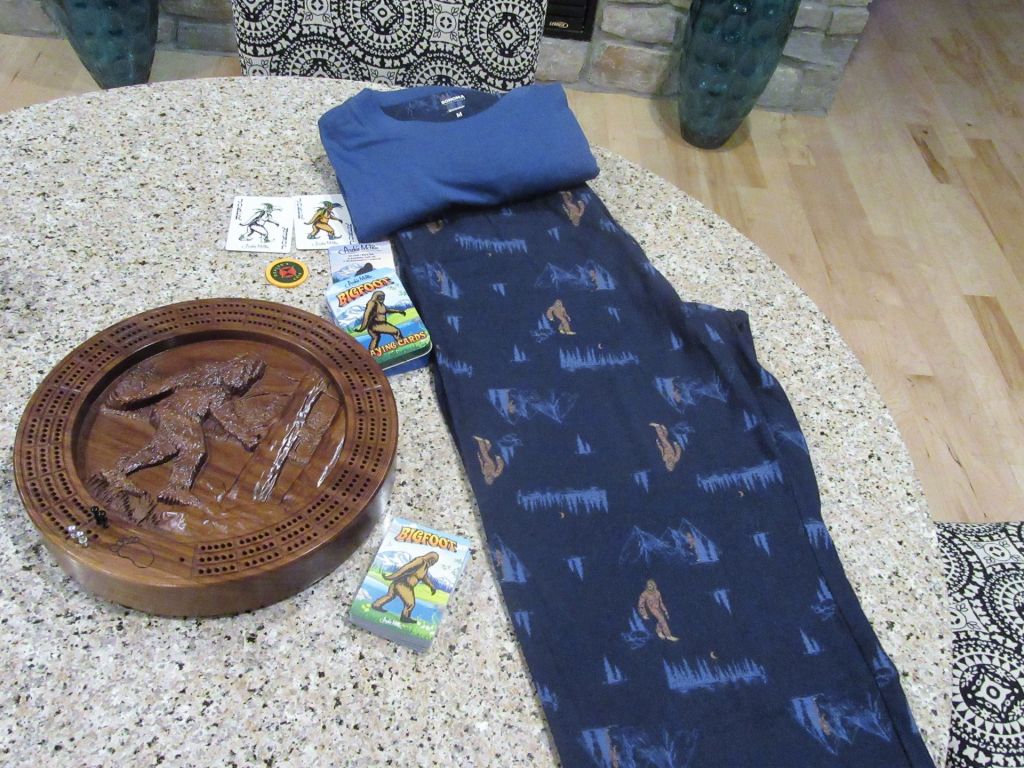
    I wonder if anyone ever got a picture of Bigfoot splooting? Why not? It’s a large furry animal which has no way of cooling off other than by panting or lying on its belly with its limbs splayed out, which is the definition of “splooting.”

    I found a news item about splooting squirrels and quickly found other examples of animals who sploot including but not limited to bears, dogs, and rabbits.

    The word “sploot” turns up on a web site called Language Log, devoted to people who study word etymology.

    And words definitely do matter, according to the authors of an opinion piece recently published in the Annals of Clinical Psychiatry (Black DW, Balon R. Words matter. Ann Clin Psychiatry. 2022 Aug;34(3):145-147. doi: 10.12788/acp.0072. PMID: 35849767).

    I agree with Drs. Black and Balon. I dislike the word “issue,” for the same reason the authors do. It’s too vague. I have the same problem with “address” which I see in many news items headlines. which doesn’t give me a clue about what kind of action is being taken to solve a problem—other than just paying attention to it.

    The word “sploot” drives my spell checker crazy. It’s not in the Merriam-Webster Dictionary. Neither is it in the Scrabble Dictionary. But it’s in the Collins English Dictionary, listed as British English.

    Why “sploot” is any better than “splayed” is beyond me. If you have a picture of a splooting Bigfoot, let me know.

    Featured image credit: Pixydotorg.

    Thoughts on Doctors Going On Strike

    I read Dr. H. Steven Moffic’s two articles in Psychiatric Times about the strike by mental health workers at Northern California Kaiser Permanente (August 16 and 26, 2022). So far, no psychiatrists have joined the strike.

    However, this piqued my interest in whether psychiatrists or general physicians have ever gone on strike. I have a distant memory of house staff voicing alarm about a plan by University of Iowa Hospital & Clinics to reduce health care insurance cost support many years ago. It led to a big meeting being called by hospital administration to discuss the issue openly with the residents. The decision was to table the issue at least temporarily.

    It’s important to point out that the residents didn’t have to strike. I don’t recall that it ever came up. But I think hospital leadership was impressed by the big crowd of physician trainees asking a lot of pointed questions about why they were not involved in any of the discussions leading to the abrupt announcement that support for defraying the cost of house staff health insurance was about to end.

    That’s relatively recent history. But I did find an article on MedPage Today written by Milton Packer, MD (published May 18 2022) about what was called the only successful strike by interns and residents in 1975 in New York. I don’t know if it included psychiatric residents; they weren’t specifically mentioned.

    In 1957, the Committee of Interns and Residents (CIR) in New York City and voted to unionize to improve appalling working conditions. They won the collective bargaining agreement, the first ever to occur in the U.S. because they went on strike, which hamstrung many of the city’s hospitals. Medical faculty had to pitch in to provide patient care.

    After 4 days, the hospitals agreed to the residents’ demands. However, the very next year, the National Labor Relations Board ruled that residents were classifiable as “students,” not employees, which meant they weren’t eligible to engage in collective bargaining. This led to a reversal of the gains made by the strike.

    Residents who are unionized voted to strike at three large hospitals in California in June of this year. They reached a tentative contract deal at that time. The news story didn’t mention whether there were any psychiatrists in the union.

    There has never been a union of residents at The University of Iowa Hospitals & Clinics. I was a medical student and resident and faculty member for 32 years. I saw changes in call schedules and work loads that were the norm for the exhausting schedules that led to horrors like the Libby Zion case in New York.

    Even as a faculty member on our Medical-Psychiatry inpatient unit, the workload was often grueling. I co-attended the unit for years and during the months I was scheduled to work there I shared every other night call with an internist for screening admissions. I was sometimes scheduled for several months at a time because it was difficult to find other psychiatrists willing to tackle the job.

    If residents had wanted to unionize and voted to strike then, my internist colleague and I probably could have filled in for them.

    But I would never have considered going on strike myself. It would have been next to impossible to find any other psychiatrist to fill in for me. And if other psychiatrists had gone on strike? We might have won a better deal—but only by hurting the patients and families who needed us.

    I suspect my attitude is what underlies the impressions shared in Robert G. Harmon’s article, “Intern and Resident Organizations in the United States: 1934-1977,” in the 1978 issue of the Milbank Quarterly.

    The house-staff choice of unionization as a formal process has disturbed some health professional leaders. One has pointed out that for a house officer to don another hat, that of striking union member, in addition to those of student, teacher, administrator, investigator, physician, and employee, may be a regrettable complexity that will further erode public confidence in physicians (Hunter, 1976). Others have seriously questioned the ethics and morality of physician strikes (Rosner, 1975). -Milbank Memorial Fund Quarterly/Health and Society, Vol. 56, No. 4, 1978.

    When I graduated from medical school, I believed in the cultural view of the physician as a professional. My first allegiance was to the patient and family. I paid dearly for holding that stance. Sena reminds me of the times my head nearly dropped into my soup when I was post call. And I did struggle with burnout.

    But I retired because I thought it was time to do so. I don’t think of it as a permanent strike. I hope things turn out all right.

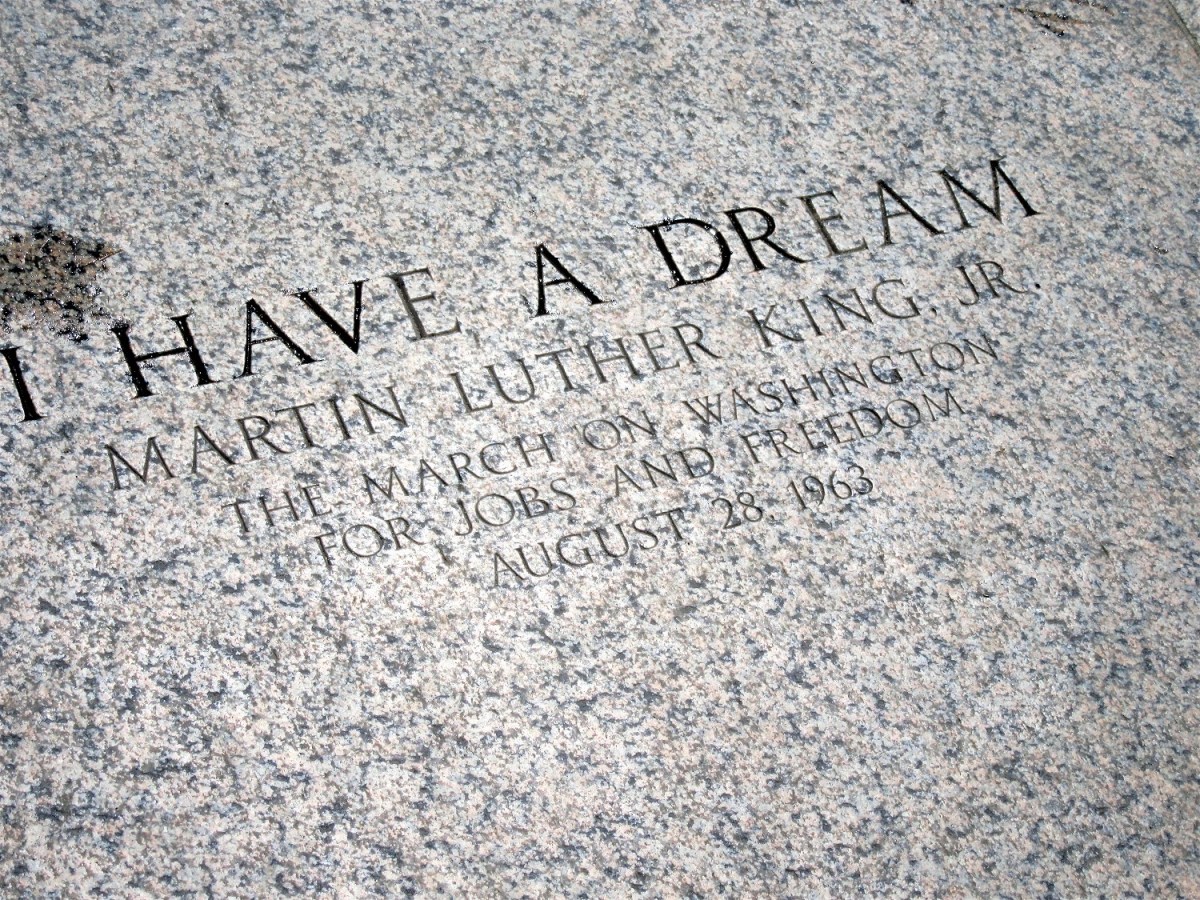
    59th Anniversary of MLK’s “I Have a Dream” Speech on August 28, 1963

    Sena reminded me that today is the 59th Anniversary of Reverend Martin Luther King Jr’s “I Have a Dream” speech in Washington, D.C. After she reminded me about it, I found this anniversary mentioned in only a few headlines on the web.

    But that’s no excuse. It doesn’t matter that I was just a small child on August 28, 1963. And when I hear the speech, it still makes the hair on the back of my neck stand up.