


The frigid weather has led to updates in the events for the MLK Celebration. Among them is the postponement of the Unity March and Community-wide Celebration. This is planned for February.
Category: current events
Martin Luther King Day About Peace and Unity

I noticed that Iowa City and Huston-Tillotson University in Austin, Texas have a couple of things in common regarding the celebration of the Martin Luther King holiday this week—one is inclement weather. The other thing is hope for peace and unity.
I was a student at Huston-Tillotson (one of the HBCUs) back in the 1970s. I saw it snow there once. It turns out that one of the MLK events will be postponed to January 27, 2024, and that’s the Austin MLK March. It’ll be too cold, with a chance for freezing rain. The event is billed as the MLK CommUnity March. The MLK Festival and Food Drive has been rescheduled to January 27th as well, and that will be at Huston-Tillotson University. The emphasis is on unity.
In Iowa City, the MLK Peace March on January 15, 2024 will instead be a vehicular parade because of the really cold weather we’ve been having recently. The emphasis is on peace. The parade will start at 9:30 AM.
All of my life I’ve admired Dr. Martin Luther King for his efforts to unite everyone in peace. Despite the world’s current events, I still have hope that the effort will continue.
We all have a lot in common, and it’s not just the weather.

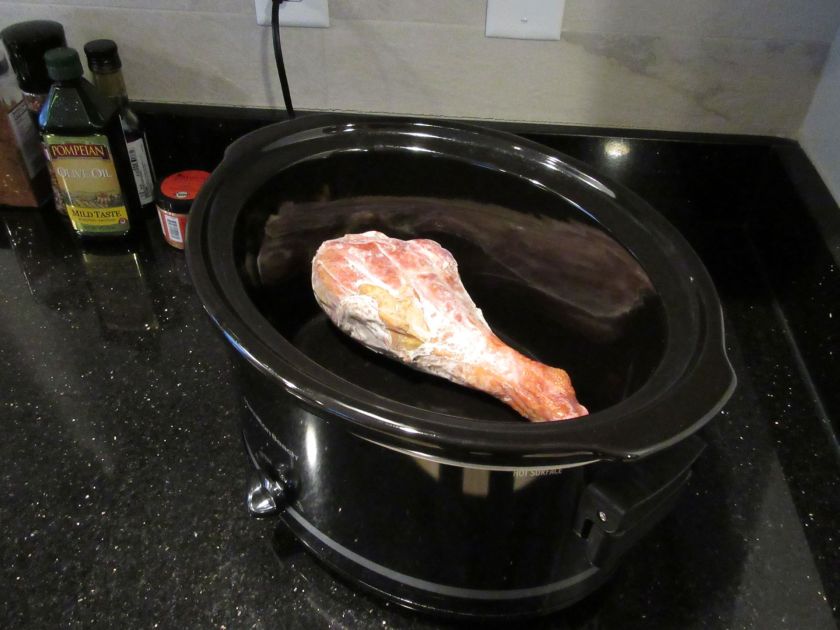
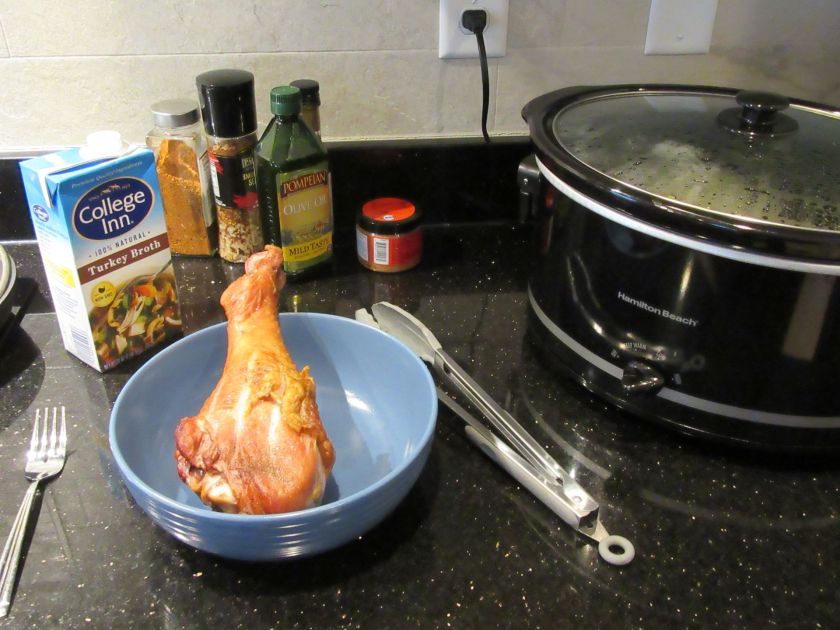
Smoked Turkey Soup vs Blizzard!

January is National Soup Month and Sena made a smoked turkey soup in honor of the occasion. This is the counterbalance to the winter storm and blizzard warnings this month.
This morning we shoveled—and shoveled—and shoveled. It was the Sisyphean labor all over again, only this time with Winter Storm Gerri.
And then we went back out in the afternoon into the arctic dimension and shoveled some more. We could have just stayed out there until the blizzard warning took effect. As it was, we were out for an hour and a half, about to quit—and the city plow roared by and scraped a wall of snow boulders plug in our driveway. We had to stay out for an extra half hour. Thank you.
Anyway, during our morning break from shoveling, we got “near genius” level on a quiz about soups. Our answers were lucky guesses. How about a couple of turkey jokes?
Q: What’s the most musical part of a turkey? A: The drumstick.
Q: Why did the turkey refuse dessert? A: He was stuffed.
Soup wins! We were not so stuffed we couldn’t have cherry cobbler for dessert.






Iowa Winter Storms One Two Punch January 2024!

I just got the update on what I think is Winter Storm Gerri. The National Weather Service has now upgraded this catastrophe in our area to a Blizzard Warning.
Iowa is getting a one, two punch from winter storms Finn and Gerri. We hardly got a break from Finn’s left hook before Gerri’s right cross connected.
This morning we scraped off less than an inch of new snow that fell last night. We might get from 8-12 inches of new snow. Wind gusts could be up to 50 mph with dangerous wind chills over the next several days. The party gets started late tonight.
If you want to drive anywhere, I suggest a Big Wheel race around your living room.
Winter Storm Finn Defines A Sisyphean Ordeal

Okay, we got about 14 inches of snow from Winter Storm Finn, but that doesn’t begin to convey the human meaning of it.
I’m going to call digging out from all that snow a Sisyphean labor. You don’t hear that term much, but it means a chore that never seems to end while you’re doing it. The short story about Sisyphus comes from Greek mythology.
Sisyphus was the king of Corinth. Just to be clear, it generally doesn’t snow in Corinth. One day, King Sisyphus saw a splendid, mighty eagle carrying a beautiful maiden to a nearby island (where it also does not snow). A river god named Asopus told him that his daughter had been abducted, but not by extraterrestrials. Sisyphus suspected Zeus, who had never seen a snow shovel, if you can imagine that. Like a fool, Sisyphus asked Zeus to help him find her. Because Zeus hated nosy mortals who aren’t supposed to know what the boss god is up to, he banished Sisyphus to Hades where he had to roll a giant rock uphill which always rolled back downhill (Hamilton, Edith. 1942. Mythology. New York: Little Brown and Company).
Anybody who knows what it’s like to try to shovel walks and driveways during a horizontal snowstorm knows that for every shovelful of snow you remove, twice that amount refills the space you empty almost immediately. You’d have to stay out in the snowstorm forever to keep up. It’s the definition of a Sisyphean labor.
And that’s why Sena and I left about a third of our driveway uncleared last night because we were exhausted. We’d been out in that storm shoveling all day since early morning. We ached everywhere and didn’t have much to show for it.
This morning we were up early again, anticipating trying to clear the driveway and again shovel all the walks, the curb ramp, the trees and whatnot.
The driveway had been cleared, probably sometime during the night, by a good Samaritan we’ll probably never know for sure. We could tell by the telltale friction wheel tracks, and the perfectly circular mark of the machine’s turning radius. A path to our curbside mailbox had also been cleared.
We are grateful. The only big job left was to clear the curb ramp, across which was a hip high mountain range of snow left by the city plow. It was also blocked by a large pickup truck. The driver must have seen us and he hurried over from where he was working with a crew building a house. He was more than happy to move it—although I was not so happy when I found out how hard we had to work to clear the curb ramp. If you start from the top, the snow spreads out over the mountain. If you start from the bottom, the snow from the top falls down. I would call that Sisyphean labor.

Anyway, we’re waiting for the next disaster, which I think the meteorologists are calling Winter Storm Gerri. They’re promising 4 inches of new snow by Friday. It almost sounds like light duty.
Winter Storm Finn and the One-Eyed Snowball Juggler!

Holy horizontal, heavy, wet, driving snow. At least you could make great snowballs for juggling! I got up around 4 in the morning to shovel. Sena came out a little later and we took shifts a couple of times. I still had to run back out again in the mid-afternoon to clear away what’s probably going to turn out to be better than a foot of snow.
The plows plugged our driveways whenever they felt like it. But we took a break so I could make the best snowballs ever and juggled them. I wore a balaclava which got all twisted on my head so that I ended up able to see out of just my right eye—the one I had surgery on for a torn retina.
I don’t know how I saw well enough to juggle.


The Intergalactic Angle on Your Point of View

I finally watched the movie “The Hitchhiker’s Guide to the Galaxy” the other night. It was released in 2005 and based on Douglas Adams’ book of the same title. In fact, he co-wrote the screenplay. A lot of it was not in the book. I thought a couple of scenes were noteworthy and pretty funny. I made connections to Dr. Martin Luther King, Jr. annual observance, which is this month.

One of them was the Point of View Gun. It’s probably unfortunate that the main prop was a gun, but hey, it was a ray gun. It didn’t kill anyone and in fact, it caused the person “shot” with it to be able to understand the perspective of another person. It was just temporary, but for a short while it enabled persons or extraterrestrials to understand another’s point of view. It was designed by the Intergalactic Consortium of Angry Housewives to influence their husbands to understand them better.
One of Dr. Martin Luther King’s main points was how important it is to try to understand and validate someone else’s point of view.
One drawback of the Point of View gun (besides the obvious associations with gun violence) was that the effect was specific to whoever was using it. So, when the ultra-maladjusted robot Marvin mowed down a gang of Vogons (hideous and cruel extraterrestrial bureaucrats who destroyed Earth in order to make room for an intergalactic bypass), they all collapsed from depression.
The other scene I thought was funny was the Vogon planet’s slap-happy encounter between the heroes and the creatures shaped like spatulas that popped out of the ground and smacked anyone in the face who had an idea.
I didn’t think the movie was nearly as good as Adams’ book. But I wonder if you could cross the spatula creatures with the Point of View gun that would take the perspective-taking power of the gun and give it to the spatula creatures who would slap you silly whenever you failed to even try to understand another’s point of view. I could use that kind of a slap sometimes.
It’s remarkable the connections you could make between Dr. Martin Luther King, Jr and The Hitchhiker’s Guide to the Galaxy.
 Go Retire Psychiatrist