


How about some good news? The CDC Respiratory Virus Data Channel reports decreasing respiratory virus activity as of January 26, 2024.
Category: current events

Make or Break Escape Plan When Your Car is in a Flood

Sena and I saw a Weather Channel segment on how to escape your car if it is sinking during a flood. It’s mainly a reminder to turn around, don’t drown. However, there were a couple of interesting things about it. One was the quiz, in the format of a “how would you survive?” quiz with 3 choices: Fasten the seat belt securely, shatter the window, or call 911. The right answer is to break the window and I’ll have more on that because there was no guidance at all about how to break the window. We thought that was an important omission.
The interesting thing about the video clip is that I thought I recognized it from a paranormal TV show, The Proof is Out There with Tony Harris. Most of the time, the conclusions tend to lean toward skepticism regarding paranormal explanations, but in this one, Tony called it a “Possible Miracle.”
In both the Weather Channel and The Proof is Out There, the vehicle was red and looked like it was bigger than a compact or standard size car. The way it moved in the flood water was very similar in both. The YouTube on The Proof is Out There was from Season 3 and it was posted on October, 2023. I’m pretty sure I saw it long before that. The video on the Weather Channel looks like a clip from the full video, and it stops early before the rest of the action.
In fact, there are a few news report videos (from the same news agency, the archives of which no longer have the video for some reason) of the incident, which happened in 2006 and which involves a woman in a red SUV in Pueblo, Colorado who drove into flood waters. The SUV sank, but not before attracting the attention of rescuers, reporters and camera crews. The SUV went underwater with windows rolled up and when it was later pulled out, the windows were still rolled up, unbroken, and all the doors were closed. It has never been clear how she escaped, although many speculated that it was a miracle.
Sena noticed that the windshield wipers were still working, something I had missed. A couple of YouTube viewers (in The Proof is Out There video) mentioned it, but nobody responded to the implication that the electric controls to the lower the windows might still have temporarily worked as the vehicle went under. That still doesn’t explain how they got rolled back up.
It’s also noteworthy that, despite the news story mentioning the driver’s name, where she worked, and that she had called her brother while the SUV was sinking, there doesn’t seem to be any record of anyone asking her how she’d gotten out of the vehicle.
This post is going to contain several YouTube videos, but I’m trying to keep them to the relevant minimum. I think, in all fairness to The Weather Channel about omitting how to shatter the vehicle window in order to escape sinking and drowning (during the TV episode mentioned above), they have posted a video in the past which does provide excellent guidance.
In this video, they mention something Sena knew about but which I was not familiar with—the little tool called a seat belt cutter and glass breaker. You can buy them just about anywhere, often for less than $20. The AAA web site has clear instructions for what to do in situations where this tool would come in handy. In that same web page, there’s a link to the AAA research study done in 2019 about these tools, which contains more helpful advice, such as that the spring-loaded tools work better than the hammer type, and that they work on tempered glass, not laminated glass.
In any case, we’re sold on the glass breaker and it’s on order. However, we would prefer to turn around, don’t drown.
Old Doctors vs Young Doctors
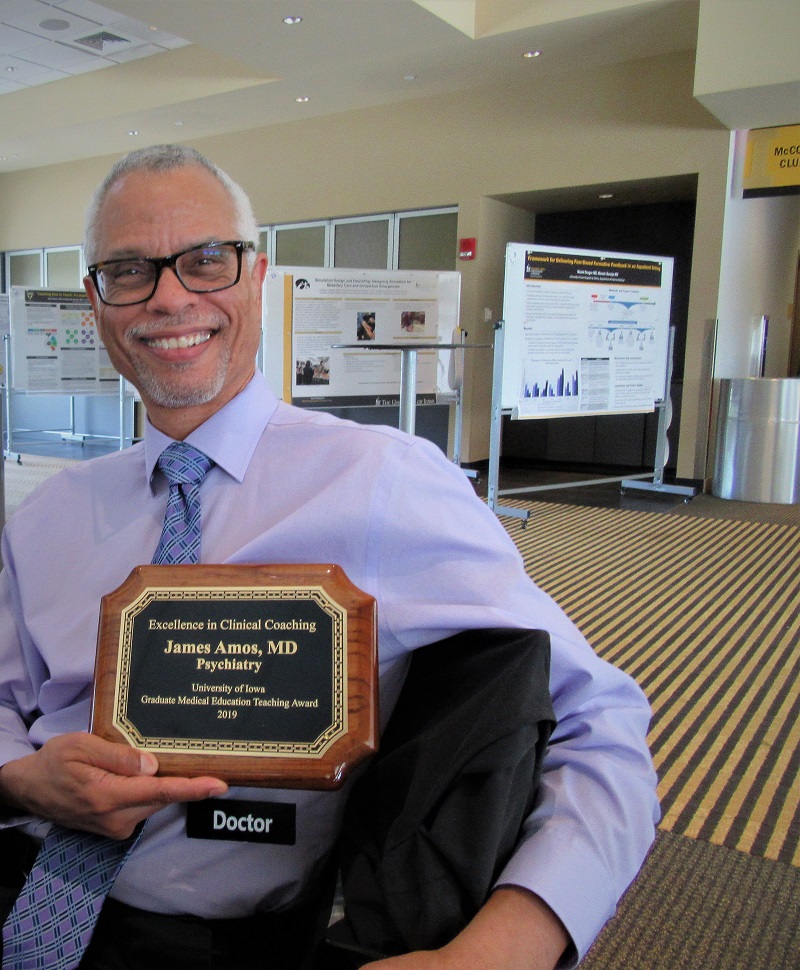
I ran across a recently published web article that originated from the Wall Street Journal (WSJ), to which I don’t have access because I’m not a subscriber. The title is “Do Younger or Older Doctors Get Better Results?” and it’s in the form of an essay by Pete Ryan.
It’s been picked up by over 130 news outlets and is actually based on an open access study published in the British Medical Journal (BMJ) in 2017, (BMJ 2017;357:j1797): Tsugawa Y, Newhouse J P, Zaslavsky A M, Blumenthal D M, Jena A B. Physician age and outcomes in elderly patients in hospital in the US: observational study BMJ 2017; 357:j1797 doi:10.1136/bmj. j1797.
I had a quick look at the rapid response comments. A couple resonated with me. One was from a retired person:
“I did not see specific patient age statistics vs physician age groupings. Wouldn’t older patients, whose risk of dying soon was higher, want to see their own older doctors? Lots of uncontrolled variables in this study… I also agree with one of the other comments that a patient who knew the end of their life was near would seek care from an older physician that would tend to be more empathetic with a patient of their own age.”
Another was from an emergency room physician, Dr. Cloyd B. Gatrell, who entered the comment on June 8, 2017. Part of it echoed my sentiments exactly:
“The authors’ own statements call their conclusion into question: “Our findings might just as likely reflect cohort effects rather than declining clinical performance associated with greater age….”
I suspect most of the web articles spawned by the study didn’t really talk about the study itself. They probably were mainly about your attitude if the doctor who entered the exam room had gray hair or not.
The study involved internal medicine hospitalists and measured mortality rates comparing physicians were in different age ranges from less than 40 years to over 60.
It got me wondering if you could do a similar study of younger and older psychiatrists. Maybe something like it has been done. I’m not sure what an appropriate outcome measure might be. If you focus on bad outcomes, completed suicides are probably too rare and can involve psychiatrists of any age. The quote that comes to mind:
“There are two kinds of psychiatrists—those who have had a patient die by suicide, and those who will.”
Robert Simon, MD, forensic psychiatrist
I doubt they would fall into any particular age category more often than any other.
Anyway, on the subject of physicians who are getting older and required to retire at a specific age, recent news revealed that Scripps Clinical Medical Group agreed to pay almost $7 million to physicians to settle an age and disability discrimination charge filed with the U.S. Equal Opportunity Commission over a policy requiring them to retire at age 75.
And this reminds me of an article in Hektoen International A Journal of Medical Humanities: Jean Astruc, the “compleat physician.” He was a doctor in the Age of Enlightenment and was a geriatrician. An excerpt from the article:
Jean Astruc had a special interest in geriatrics and in 1762 gave a series of lectures that were taken down by one of his students. He described how in old age the skin becomes thick and hard, the hair and teeth fall out, there becomes need for glasses, respiration becomes labored, urine escapes, there is insomnia, and people forget what they have done during the day but remember every detail of what they have done in the distant past. He recommended diet, some wine to help the circulation, exercise, long sleep, and “a life from bed to table and back to bed.”
I think there is a contradiction in Astruc’s recommendations.
I retired voluntarily a little over 3 years ago. It just so happens that one of the reasons was the Maintenance of Certification (MOC) program, which the BMJ study authors mentioned in the first paragraph of the introduction:
“Interest in how quality of care evolves over a physician’s career has revived in recent years, with debates over how best to structure programs for continuing medical education, including recent controversy in the US regarding maintenance of certification programs.”
That reminds me that I got an email a few days ago from Jeffrey M. Lyness, MD, the new President and CEO of the American Board of Psychiatry and Neurology (ABPN) in January of 2023, replacing Larry Faulkner, MD. It was a letter explaining how I could recertify. I decided not to renew several years ago and I’m not thinking of coming out of retirement. I have always been an opponent of the MOC.
Maybe he sent me the letter because he found the Clinical Chart Review Module on delirium that a resident and I made in 2018. As of January 24, 2024 you can still find the module on the web site just by typing in the word “delirium” in the search field. It could be the only document about delirium on the ABPN web site, although that’s difficult to believe.
On the other hand, it’s one of two modules that are labeled as approved although valid through December 31, 2023. Maybe it’s headed for retirement.
Making My Own Race Card
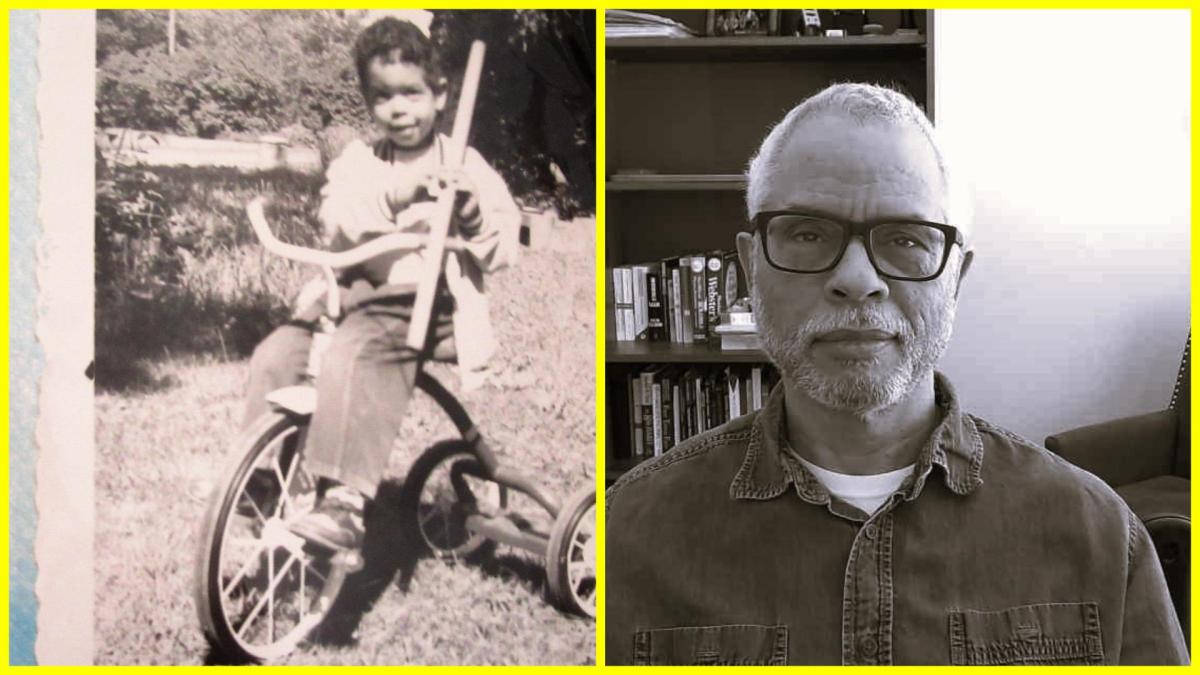
Tomorrow’s schedule for the Martin Luther King Jr. Celebration of Human Rights Week has Michele Norris presenting the MLK Distinguished Lecture, “Our Hidden Conversations.” It’s based on her Race Card Project which produced her new book “Our Hidden Conversations: What Americans Really Think About Race and Identity.”
Sena and I probably are not going to make it to Michele Norris’s lecture tomorrow, mostly because of the bad weather.
The Race Card Project involved people sending in cards with just six words on it which described their experience with race and identity and much more than that. I didn’t learn of the project until this month.
If I were to send in a card, it would say, “Everyone changed but Jim.” What’s important about that is who said it, because it wasn’t me. It was somebody who was my best friend in grade school. I lost touch with Dan, who was white, for a while when we were kids.
When I caught up with him while we were still pretty young, he had changed. He seemed much older than our real age. He used to have a great sense of humor, despite his life being a little difficult. Our lives were both hard, in many ways that didn’t involve race. We both grew up in relative poverty.
But after only a few years of not seeing each other, he seemed cynical, which was very different from how I remembered him.
I don’t recall how I found him, but I met with him at his school. I expected to find the same guy who made me laugh. But he didn’t seem glad to see me. I must have mentioned it, and I probably pointed out that he had changed.
And that’s when Dan said, without looking at me, “Everyone changed but Jim.” The meeting was brief. I left and never saw him again.
Friends were tough to find for me. I didn’t have any black friends. My father was black and my mother was white. They separated when my younger brother and I were little, and we lived with mom. Despite what some people may or are rumored to think, racism has always been a part of living in America.
Black people tended to live in different zip codes, not the one in which I grew up. I was often the only black kid in school, and this story was and is still common. I didn’t have black friends because I didn’t live in the zip codes where black people lived.
Dan wasn’t the only friend I had. There was only one other; he was white too. Like me and Dan, Tim and I didn’t stay friends.
A lot happened after that, which is always a part of coming of age. And I guess that’s because a lot of things changed—including me.
Generosity, kindness, and love, especially the love from my wife, saved me from lifelong bitterness, for which I’m grateful. I think a sense of humor was also important. And even though definitions differ about what friendship is—I have friends.
Tegeler Wrecker and Crane is the Heavy Rescue Team in Eastern Iowa

We saw the KCRG news item about Tegeler Wrecker & Crane getting almost 10,000 calls for help after the big snowstorms last week. They’re a big towing and wrecker service which reminded me of the Weather Channel shows Highway Thru Hell and Heavy Rescue 401. Tegeler pretty much does everything they do, including heavy duty towing and recovery, air cushion recovery, roadside assistance, and more. You can see their operation on Facebook. They go pretty much everywhere, including Iowa City.
We don’t have anything like the Coquihalla here, but I-80 was all but impassable around Iowa City last week. One similarity is that many drivers didn’t pull off the road to someplace safe to ride it out. I guess that’s how similar Americans are to Canadians.
We’re not out of the arctic blast just yet. We’re supposed to get a January thaw early next week.
Kurten, A. (2024, January 16). Towing company receives almost 10,000 calls for help after winter storm. KCRG.com. Channel 9 ABC. https://www.kcrg.com/2024/01/17/towing-company-receives-almost-10000-calls-help-after-winter-storm/
Heed Warnings About Risk for Frostbite

I just saw an article in the Daily Iowan about the importance of knowing how to avoid frostbite during wind chill advisory and warning periods. As a consulting psychiatrist in the general hospital, I saw what can happen to people who suffered frostbite injuries. They were treated on the Burn Unit.
The risk for frostbite will continue to be high for the next few days with wind chills as low as minus 30 below zero, according to the National Weather Service.
The University of Iowa Hospital has a frostbite education web page worthing reviewing. There is also a compelling story posted in 2022 about how two patients were treated for severe frostbite injuries.

Balaclava Beats the Blizzard Blast

The arctic blast continues with temperatures well below zero and cautions about going outside—if you dare.
I have a balaclava, which is a combination scarf, hat, and extraterrestrial two-way radio. I wore it on the first day of the snowstorm last week, when the snow was great for juggling snowballs. I somehow got it twisted and my left eye got covered up. I didn’t know I could be a one-eyed juggler.
I’m not sure if I finally figured out how to don the balaclava correctly or not. But I did it my way. There are models without antennae, which might cut down on extraterrestrial abductions.
Actually, you probably should stay indoors for the next few days while the big wind chill grips the area.
 Go Retire Psychiatrist