Today, Sena “suggested” that we try make up our own version of the 11-card cribbage rumor. Recall that I picked up the idea from the American Cribbage Congress (ACC) web site that two of the many variations of cribbage are the 11 and 13 card games. I had e-mailed the ACC on Friday (two days ago) about the rules for them.
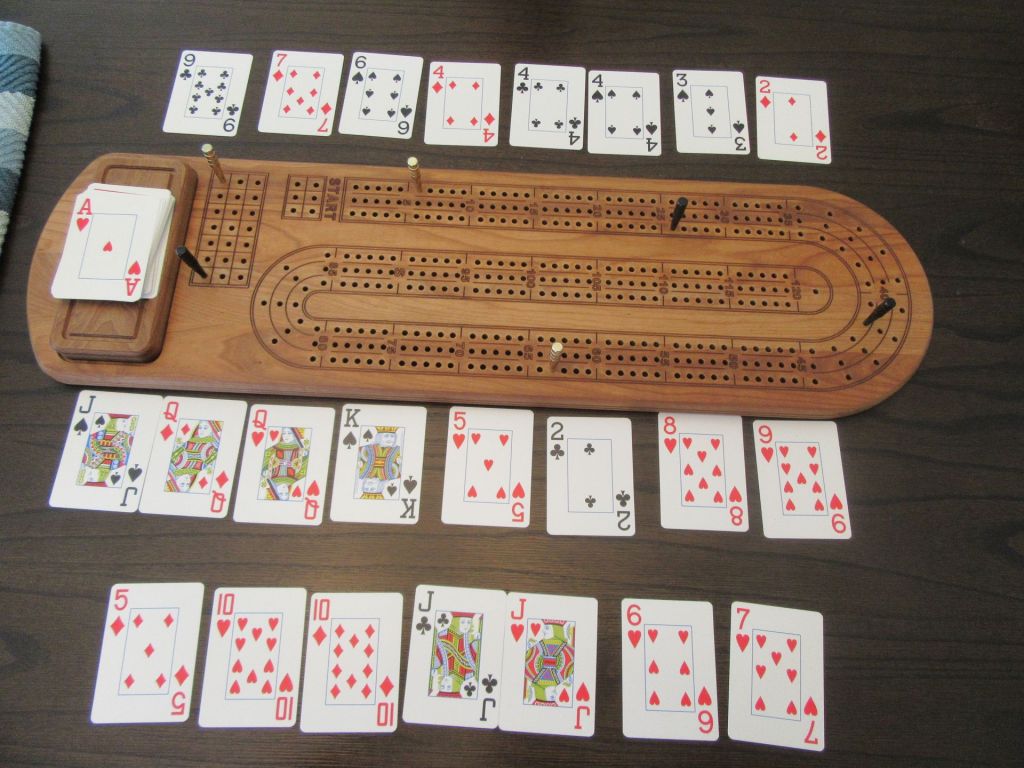
Based on the other oddball variants we’ve experimented on since last week (see my post, “Oddball Cribbage Variants Marathon Today and a Catatonic Squirrel!”), we dealt 11 cards, threw one card to the dealer’s crib, inspected our hands and tossed 3 more cards to the crib, making the crib 7 cards. That left 8 cards in our hands.
Predictably, pegging was not a big event, but counting the outrageously high hands and crib was. We had to use the cribbage scorer program developed by someone pitching the 9-card cribbage game on a Reddit cribbage thread.
It works sometimes but there is a hiccup with it not allowing input of face cards, which leads to problematic scoring. But for the most part, it works.
The short story is that we scored so high that we played only 3 hands before Sena won! Did that make the game faster? No, of course not. We spent over an hour trying to count our hands and cribs and that includes manual counting and giving up and resorting to the scorer program.
Sena’s 1st hand was 58 points according to the scorer: fifteens for 40 points; runs were 12; pairs were 6. Her cards are above the board (she was pone) and my 8-card hand and 7 card crib are below the board. The 2nd and 3rd hand were also horrendous. Sena won.
When we finished, I noticed that the ACC expert had answered my email. He had just got back from a big ACC tournament in Reno, Nevada. He asked several cribbage pros about the 11 and 13 card variants. Nobody had even heard of them, much less played them. He even asked the editor of Cribbage World magazine, his usual contact for questions like ours. He’s never heard of either one of the variants. This is despite their being mentioned on the ACC Article Library, quoted below:
“Did you know that there are at least 18 variations to the BASIC game of cribbage? There is the basic 2 or 4 handed game, and then there are the 5 card, 7 card, 11 card and 13 card cribbage games.”
I think that settles the question about the 11 and 13 card variations. They are part of the fascinating mythology of cribbage. I’m sure there’s more.
I’m going to take a chance and mention tariffs in this post because it figures importantly in our cribbage game pastime. We have several cribbage boards we’ve bought over the years and one of them is from Ontario, Canada.
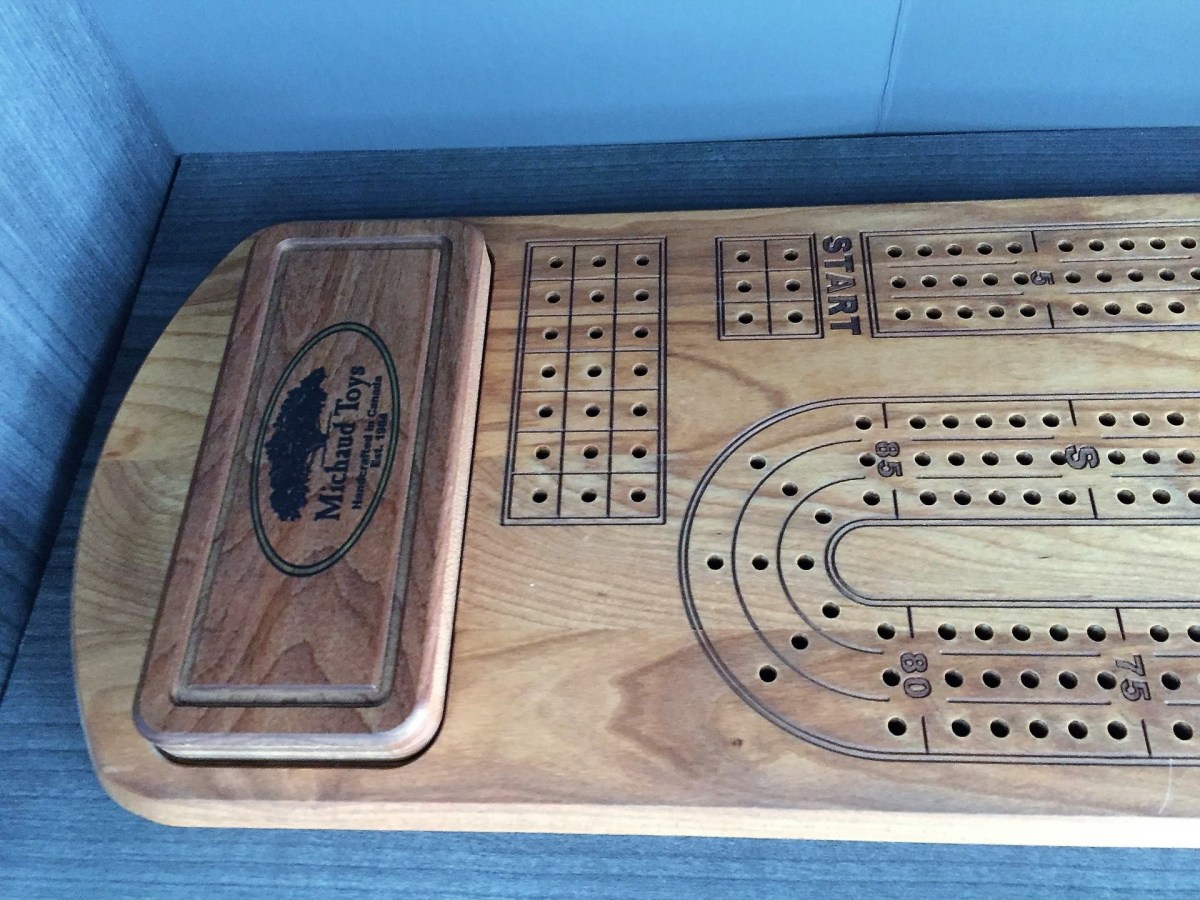
Michaud Toys is a company in Ontario which makes very nice wooden toys, many of them board games. It’s a small, family-owned craft shop in Ontario not far from the Niagara area. They are well-known for making excellent wooden toys, games, and puzzle boxes. A little over 6 years ago, we bought a jumbo cribbage board from them at a reasonable price. I think it was about $70.
It came with a nice storage bag, some metal pegs (2 inches long), a deck of cards, and a set of very accurate rules. It’s 27 ½” long and 8” wide. It’s great fun to play on. We feature it in several of our cribbage game YouTube videos.
It has a handy little cubby on the board which can hold the card deck, pegs, and rule booklet. This is covered by a cap which fits snugly over the hole and is secured by “powerful rare earth magnets.” They work. I can turn the board upside down and shake it—nothing pops out.
This is a novelty board which is sold as Cribbage Rumble although the web link has “cribbage wars” in it. That should ring a bell to anyone who has heard of the game with the name “Cribbage Wars.” We’ve never played Cribbage Wars but Cribbage Rumble resembles it. Cribbage War sells for about $20 or so. Cribbage Rumble is prettier—but it costs a lot more.
We’ve been playing several cribbage game variants lately. We were looking for yet another one, checked out the price of Cribbage Rumble and found out it includes a high tariff, which the company tells you about in bold red type with exclamation marks after it. It doesn’t use the word “tariff.”
I don’t know much about tariffs except that they’re taxes. The last time I interviewed President Trump, he was pretty enthusiastic about them (satire).
Tariffs work both ways. I don’t really know anything else about them. But they’re going to delay our purchase of Cribbage Rumble.
I wonder if a Cribbage Rumble match could be arranged between President Trump and Prime Minister of Canada Mark Carney to settle this tariff business? I won the Cribbage Pro match with President Trump (satire). If President Trump wins, I get the Cribbage Rumble game free. If Prime Minister Carney wins—it stays on the shelf at Michaud Toys.
All morning long today we played the oddball cribbage variants and we are wiped out! It’ll drive me to drink!
Sena is to blame for this. She “suggested” we play all 4 of the new multi-card weird cribbage variants we learned just in the last few days: 7-card, 8-card, 9-card, and 10-card. What did we learn from this? We learned one of the reasons why 6-card cribbage is the American Cribbage Congress (ACC) choice for their big grand national tournaments. Talk about needing to be able to play a cribbage in 15 minutes!
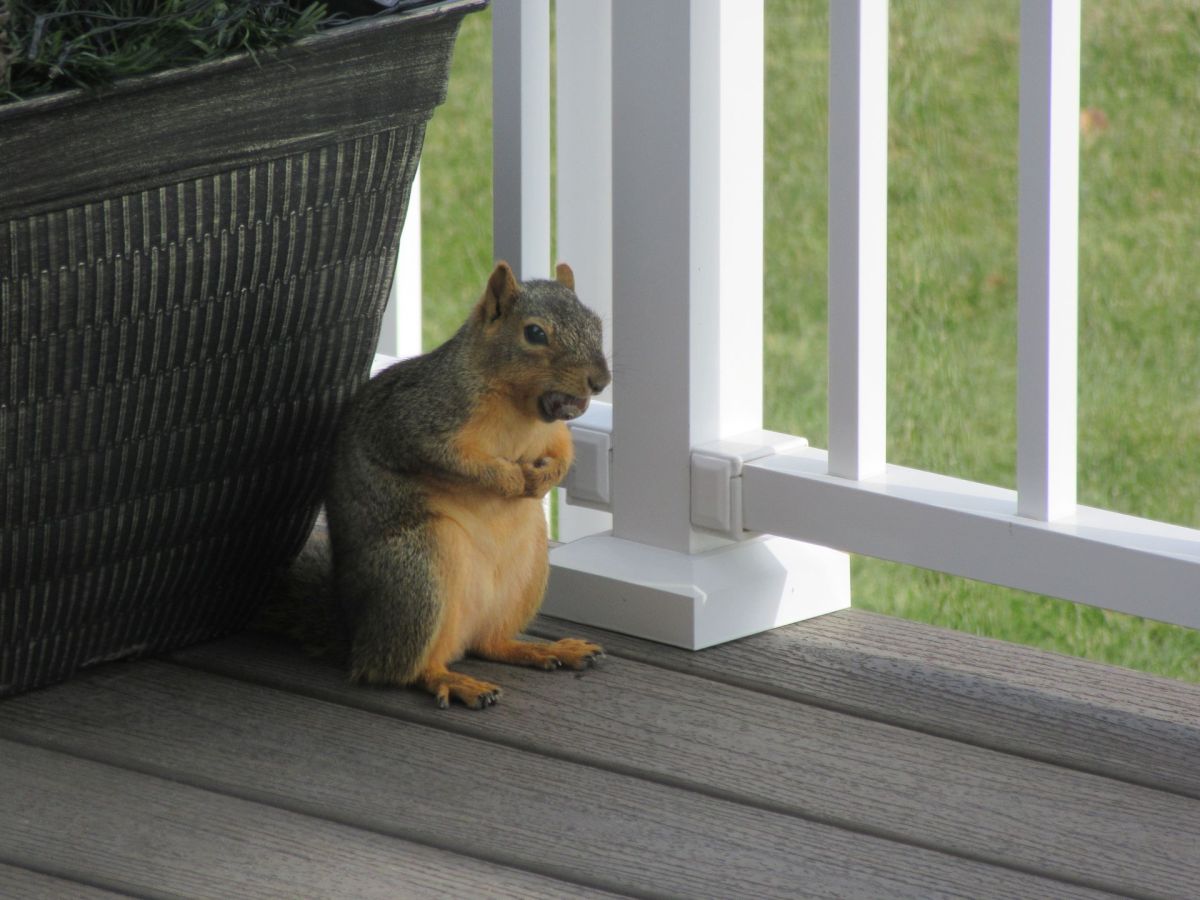
I won the 7, 8, and 9 card games and Sena won the 10-card game. We caught a squirrel on camera watching us who seemed catatonic probably because it couldn’t fathom why two people would subject themselves to this mind-bending ordeal.
You can spend an hour just trying to figure out your score for one hand in 9-card cribbage. If we had not had that cribbage scorer I found from a guy on a Reddit cribbage thread, we would not have been able to manage scoring a couple our hands. I know I said it didn’t work consistently—but it works well enough when you’re faced with scores as high as 36 and more! According to AI, the most common scores in 6-card cribbage are 4 and 2. Most cribbage scorers available on line or for smartphones are designed for 6-card cribbage, meaning you can’t enter more than 4 cards for the hand and one for the starter.
9 card cribbage hands
Thank goodness there is no information on the web for the rules of 11-card and 13-card cribbage, despite the ACC saying they are two of the many cribbage variations. If anybody asks me, “But Jim, what about the 12-card cribbage variant?” I will politely change the subject and talk about catatonic squirrels.
Sena is starting to warm up to the 8-card variant, although I’m doing my best to ignore her. It’s amazing the 10-card game is actually faster than the others and the hands are easier to count.
The only reason to play the 9-card variant is if you are tired of living. There should be a public service announcement about this game warning of the need for supplemental oxygen and K-rations because you won’t have time to do anything but mumble through the endless scoring rituals.
“OK, how many 15s for 2 do you see?”
“ZZZZZ…”
I would not play any of these variants past the 121 hole on a standard board, if you value your sanity. We agreed to play them that way. If you can’t persuade your spouse, friend, or catatonic squirrel to do that, you should consider resorting to thumb-wrestling, best 2 out of 3 falls. Seriously, playing 9-card cribbage to 363 should be considered a health hazard.
Short List of the Oddball Cribbage Variants with rules and comments (all are presumed to be for 2 players):
7-card: Deal 7 cards to each player, one to the dealer’s crib. Then look at your cards and throw 2 more cards to the dealer’s crib. There should be 5 cards in the crib and 5 cards in each player’s hand. The starter card makes 6 cards for your hand. Flushes are allowed: 4, 5, and 6 card flushes are allowed. In 4 and 5 card flushes all the cards should be in your hand. The highest score is 46 (4,4,5,6,6). I think this game has the smoothest play, but there will be hands that are difficult to score. There are 8 three-card runs for 24 points, 8 fifteens for 2 for 16 points, and 3 pairs for 6 points. Note, I found out the hard way that I can’t use the double run rule to count the runs and the pairs together to come up with the 30 points you have in pairs and 3-card runs. I missed two 3-card runs (6 points) and I could find them only by taking pictures of the double run counts including the pairs. In order to avoid missing them, it’s best to count all the runs and all the pairs separately and add them. Then add the 15 for 2 points (16).
8-card: Deal 8 cards to each player and each throw two cards to the dealer’s crib. Choose 4 cards to keep and two to the bottom of the deck. Each player then has 4 cards in their hands and uses the starter card to score with their hands. Play standard cribbage as usual to 121. This felt a little clunky at first, but you get used to it.
9-card: Carefully consider whether you really want to torture yourself with this variant—then go ahead and deal 9 cards to each player and throw 3 cards to the dealer’s crib. Play to 121. Scores will be high and challenging to count. There is one scoring program available which seems to work OK. I couldn’t put in J for Jack and make it work, but other initials like K for King seem to work. Numbers alone work best. Get the link from the Reddit thread:
10-card: This one is fun. Deal 10 cards each and two to the dealer’s crib. Divide your remaining 8 cards into 2 separate 4 card hands. Use one for pegging and both for the show (means scoring your hands). Play to 121. You get big scores but they’re more manageable.
OK, so Sena and I have been experimenting with a few cribbage variants in the last few days and I ran into this Calvinball comment on a Reddit cribbage thread about 10-card cribbage. Yes, people play that! I’m afraid to look on the web for 11-card cribbage although Sena asked about it.
Briefly, 10-card cribbage is usually a two-player game. Deal 10 cards each; 2 cards from each player go to the dealer’s crib; each player divides the remaining 8 cards into 2 four card hands, one for pegging and either one or both for the show.
As an aside, the Reddit thread person who started the thread about 10 card cribbage asked if anyone else ever played it. One commenter facetiously replied “Yes, there have been many many posts of Calvinball crib.”
You have to know where that term “Calvinball” comes from. I’m pretty sure it’s from another social media forum which plays a game called Calvinball—which is a whimsical, forever evolving game which has nothing to do with playing cards, is based on the comic Calvin & Hobbes and has no real rules whatsoever. Participants make it up as they go along. So, I think what the commenter might have meant was that 10-card cribbage is yet another of the many proliferating variants (some better than others) of the more well-established game, usually identified as 6-card cribbage.
Anyway, we found out later that there are two sets of rules for 10-card cribbage. The intent is to make the game play faster and yield higher scores.
Given that context, we played it both ways to 121. In the one set according to AI, you deal each player 10 cards and both throw 2 cards to the dealer’s crib. Each player divides the remaining cards into hands of 4 cards each. You play one hand only during the pegging phase and the other for the show (scoring the hand). It was pretty slow and didn’t yield high scores, partly because we used only the four card hand for the show.
And then there’s a Wikipedia article which says you peg with one hand and score both for the show. We got higher scores all around, the game was faster, and we both enjoyed it much more.
As a reminder follow up to the post about the 9-card and 8-card cribbage games, Sena still likes the 9-card variant but doesn’t care for the 8-card (neither do I) because it seems clunkier, probably because you need to bury cards under the deck. The 9-card variant has an on-line scorer which didn’t work consistently. We seemed to fare pretty well without it for the most part. The suggestion to play to 323 (up, back, and there again on a 121-hole board) seems like overkill. I’m retired but not that retired.
We’re still getting used to the 7-card cribbage game and guess what Sena asked me today?
“Is there an 8-card cribbage?”
So, I looked it up on the web and, sure enough, there was a Reddit thread a year ago with only one relevant entry. It was from someone asking if anybody else played 8-card cribbage. That person went on to admit uncertainty if it was a thing or not and wondered if they just made it up. I would vote for the latter. Two commenters didn’t shed any further light on the subject.
The rules for 8 card cribbage are that it’s played like 6-card cribbage except each player is dealt 8 cards, each chooses 4 cards to keep in the hand, tosses 2 cards to the dealer’s crib and the remaining 2 cards get buried at the bottom of the deck.
We gave 8-card cribbage a spin and it felt a little clunky, maybe because of the added motion of burying a couple of cards under the deck along with the extra cards—yet despite that we ended with 4 card hands and played to 121. So, it felt much like regular 6-card cribbage.
We both prefer 7-card cribbage. Even though it doesn’t have a lot of documentation about it, it feels less like word-of-mouth and a little more streamlined. The scores are more challenging to count. Anybody else out there ever heard of 8-card cribbage? Anybody else ever play 7-card cribbage?
We’ve been working pretty hard today trying to teach ourselves how to play 7 card cribbage. There’s not a lot of information on the web about the game. The gist of it is that you play to 181 and each player gets 7 cards with 5 cards to the dealer’s crib. You can have 4, 5, and 6 flushes but the 4 and 5 card flushes have to be in your hand. We found out about it on a website called Masters Traditional Games.
We’re not used to playing past the 121 hole in cribbage. We struggled over it until Sena finally got the idea that it must mean we just go back to the starting hole when you get to 121. We’re not sure why the goal is 181 points to win. Other goals are to play to 151, 121, or play to 61 three times.
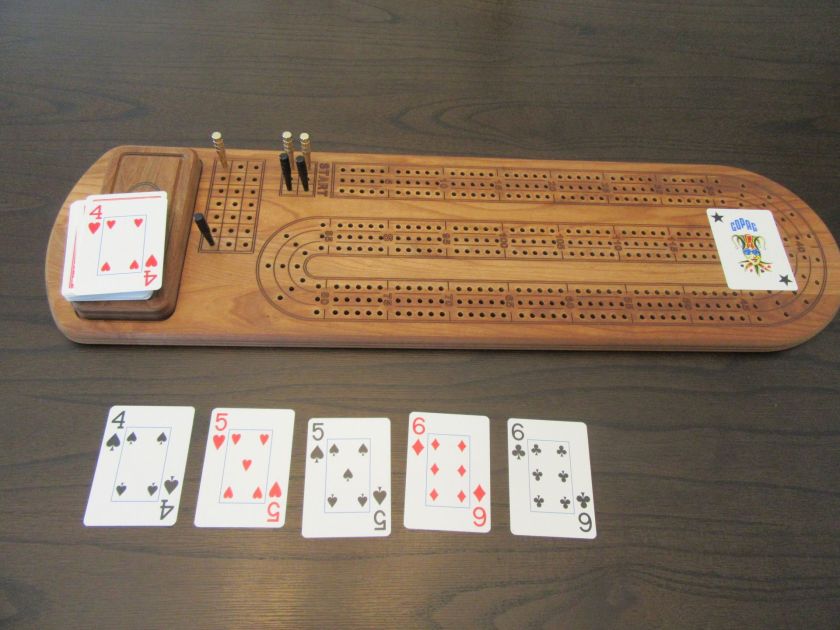
The opportunity for big scores is higher in 7 card cribbage and they can be difficult to count. The highest score is 46 with cards 4,4,5,5,6,6 which includes the starter card. It took me a while to count it. One person said it was easier for him to get that than a 29 score in the 6-card cribbage game—which is very rare.
We also got new long sleeve cribbage shirts for the occasion. Mine says “That’s What I Do, I Play Cribbage And I Know Things.”
I’m not sure how often we’ll play 7 card cribbage. The games should play pretty fast because the scores tend to be higher than in the 6-card version. On the other hand, you can get pretty bogged down figuring out your score!
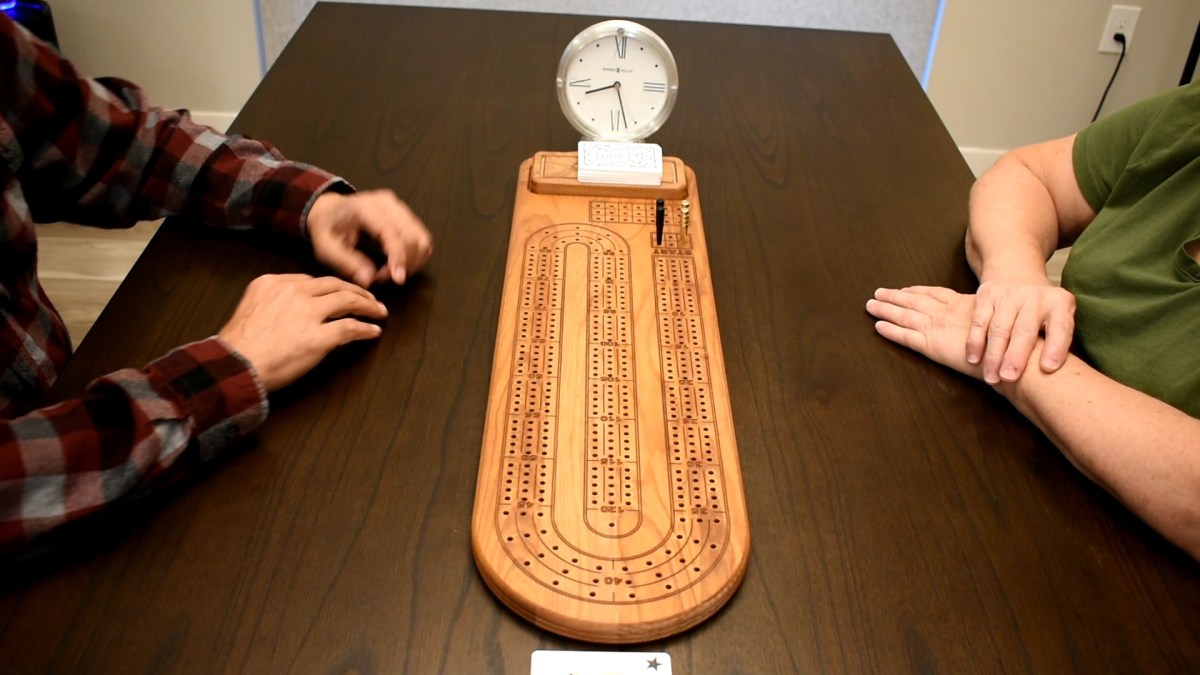
Today we filmed our cribbage game with a goal of completing a game in 15 minutes. We managed to do it, although I played out of turn on the last pegging phase. Sena got skunked today, but that’s rare!
You have to pay attention to the clock on the table in the video, showing we essentially made the 15-minute mark that cribbage tournament rules require for playing a game. We also decided to shuffle a few times every deal so as to try to mix the cards enough.
This is better than the time we usually take to play a typical game, which is generally 20 minutes. It’s hard to shave just 5 minutes off the game. I get pretty jittery trying to stay that focused, but today we did it. We helped each other, which doesn’t happen in tournaments. And there’s not the distraction of hundreds of other players in a giant auditorium all crammed together cheek by jowl and talking at once.
I just saw an article that working on your cognitive skills might make you less susceptible to dementia. There are some websites that help you, but I think some, like BrainHQ, could cost you money.
On the other hand, there is some evidence that playing card games can help protect your brain. I think cribbage could be one of them, although it’s tough to find specific studies on it.
I checked around and found a few studies about how playing games like solitaire and hearts could help keep you sharp. On the other hand, when I was a young man, I worked on a land survey crew. We played hearts over lunch hour and when it rained. I consistently lost.
But for the last several years, Sena and I have regularly played cribbage, a card game that calls for some math skills, concentration, attentiveness, and strategy.
The one problem I see with picking cribbage as one of your main sources of cognitive stimulation is that many people see it has an old person’s game. They should try playing cribbage with someone who really knows how to play.
Cribbage players tend to be older; many tend to be over 50. The American Cribbage Congress (ACC) is the major organization for cribbage and they hold lots of tournaments, both local (called grass roots clubs) and national. They always welcome new and younger players. In general, you need to be able to play a game in 15 minutes in tournaments.
We have tried to finish a cribbage game in 15 minutes, but we can’t seem to do it in less than 20 minutes. I always know when Sena wants to play. She like to use the automatic card shuffler (I like to shuffle manually) and whenever I hear the card shuffling machine (which is loud enough to hear from all over the house), I know it’s time for a game!
I made a new YouTube Channel trailer today since it’s been a couple of years since I made the previous one. Thanks for watching!
James Amos, MD (who prefers to be called Jim but his YouTube handle is @JamesAmosMD) is a retired psychiatrist who graduated from the University of Iowa College of Medicine, did his residency, practiced and taught at University of Iowa Health Care (UIHC) in Iowa City, Iowa for about 24 years. Since retirement in 2020, he’s enjoyed bird-watching, taught himself to juggle, and plays cribbage. He co-edited and published a book with former UIHC psychiatry chair Bob Robinson, “Psychosomatic Medicine: An Introduction to Consultation-Liaison Psychiatry” in 2010 which is still available for purchase. Bob passed away in 2024 and all who knew and learned from him remember him fondly. Jim and his wife have made Iowa City their home for over 3 decades. Jim’s been blogging since about 2011 and you can read his current blog at Go Retire Psychiatrist. He’s mainly a humorist and has a certificate from Dad-joke University of Humour (DUH), even though he’s never been a dad and doesn’t really tell jokes per se.
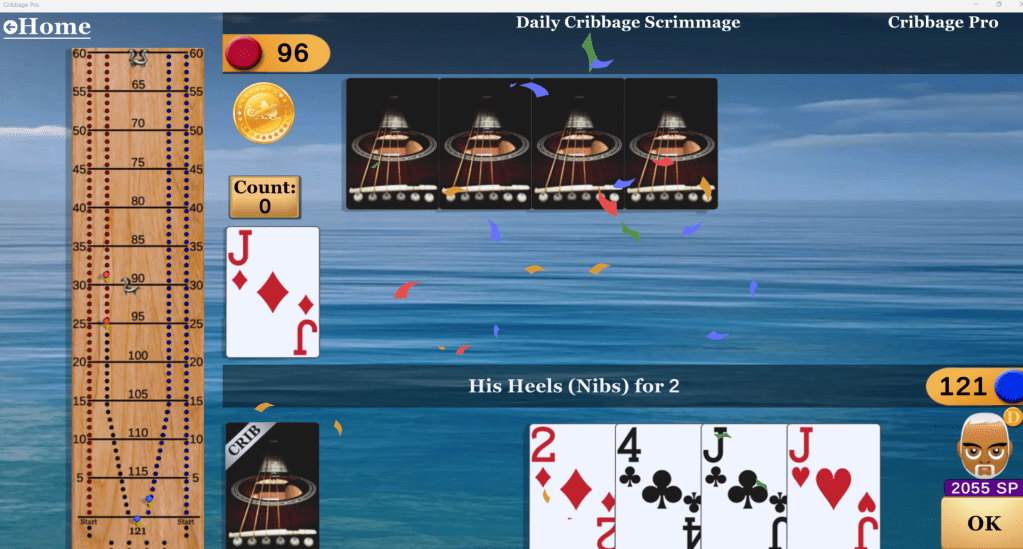
I got a 28 hand in Cribbage Pro scrimmage today against Brutal (the most difficult level). I also won the game. The odds of getting a 28 hand in cribbage is about 1 in 15,028. It’s the second highest hand score in cribbage. The highest score is a 29 hand and the odds of getting that is 1 in 216,580. There are different ways to calculate the odds which yield different results which involve crazy difficult statistics that I can’t explain, but you can find the details here.











 Go Retire Psychiatrist