Thoughts on Down Time Activities for Land Survey Technicians

I was just thinking about the old-time land survey crews. When I was getting on the job training as a survey technician, the typical land survey crews were at least 2-3 persons. One rodman, one instrument man, and a crew chief who organized the job, which could be property or construction jobs.

Nowadays, you get by sometimes with one man doing the jobs using a theodolite that measures angles and distances. You don’t always need a physical measuring tape; you can use something they call “total stations.”

It’s cheaper for engineering companies to use one man survey outfits. On the other hand, one disadvantage is the lack of mentoring for learners who want to become land surveyors or civil engineers.

Mentoring from surveyors on the survey back in the day not only taught me such skills as how to throw and wrap a surveyor’s steel tape—it also taught me how to work well with others as a team. Of course, this was transferrable to working on the psychiatry consultation-liaison service in a big hospital as well.

It’s well known that playing cards in the truck while waiting for the rain to stop was an essential skill. I don’t know how they manage downtime nowadays. We didn’t play cards on the consultation service during downtime, partly because we didn’t have much downtime.

Anyway, as I mentioned in a recent post, we played Hearts in the truck on rain days. I always sat in the middle. At the time, I was a terrible card player in general. It was a cutthroat game and I had trouble remembering which cards had been played.

When you consider that the strong suit of engineers and surveyors is math ability, you’d think that survey crews would have figured out a way to play Cribbage during downtime. You can have a Cribbage game with 3 or 4 people although I’ve never played it that way. If there are 3 players, it can still be cutthroat.

The one problem I can see is that, the guy sitting in the middle would have to set the board on his lap. You’d almost need a special, custom-made board which would have a space for placing the cards to keep track of what’s been played. I think that might have made things easier for me.

The other drawback to one man survey crews is that pretty much the only card game you can play is solitaire.

Consultation-Liaison Psychiatry as a Supraspecialty

I just rediscovered this old blog post below from 2010 in my files. The literature citations are dated, of course. I just wanted to reminisce about how I used to think through issues in consultation-liaison psychiatry. The post is old enough to contain the former term for the field-Psychosomatic Medicine.

“At the annual Academy of Psychosomatic Medicine (APM) meeting this year held on Marco Island, Florida, I heard Dr. Theodore Stern call Psychosomatic Medicine (PM) a “supraspecialty”. Usually it’s described as a subspecialty.  I couldn’t find the word in Webster’s although “supra” comes from the Latin for “above, beyond, earlier”. One of the definitions is “transcending”.  I tried to Google “supraspecialty” and came up empty. So I guess it’s a neologism. The context was a workshop on how to enhance resident and medical student education on Psychosomatic Medicine services. Dr.  Stern coined the term while talking about the scope of practice of PM. As he went through the long list, it gradually dawned on me why “supraspecialty” as a title probably fits our profession. It’s mainly because it makes us, as psychiatrists, accountable for aspects of general and specialty medical and surgical care above and beyond that of Psychiatry alone.

As a member of this supraspecialty, we wrestle with some of the most intriguing questions about the core competencies of clinical care, interpersonal and communication skills, professionalism, medical knowledge, systems-based practice, and practice-based learning and improvement. These core competencies are a set of commandments, as it were, that teachers and learners are supposed to quantitatively assess in the service of producing competent doctors.  While acknowledging the importance of qualitative assessment of the core competencies, Dr. Stern had the courage to criticize the assumption that quantitative assessment is even practicable. A qualitative assessment would probably be more practical.

For example, how would one assess a trainee’s ability to digest, critically evaluate, communicate about, and integrate into local practice systems the small but growing knowledge about psychopharmacologic prevention of delirium? I am a bit surprised at the general enthusiasm among PM practitioners about pretreating patients with antipsychotics in an effort to prevent postoperative delirium. One of the more recent examples of a very small set of studies is the randomized controlled study by Larsen et al which showed that using Olanzapine prevented delirium in elderly joint-replacement patients[1].  The caveat that everyone seems to ignore is that the patients who got Olanzapine endured longer and more severe episodes of delirium.  Dr. Sharon Inouye (who designed the Confusion Assessment Method or CAM for diagnosing delirium) has quoted George Washington Carver, “There is no shortcut to achievement”, cautioning against oversimplifying non-pharmacologic approaches to preventing delirium[2].  By extension, I’m suspicious of any recommendation that would reduce an intervention for preventing a syndrome as complex in etiology and pathophysiology as delirium to the administration of a single dose of a psychiatric drug either pre-op or post-op or both.  Given the complexity of this issue, is there a quantifiable assessment method for core competencies that suffices? What I’d really like to see is how a trainee thought through the complex issues involved.

One other issue that would influence our ability to assess core competencies is the recent appearance of evidence which seems to show that selective serotonin reuptake inhibitors (SSRIs) when given with beta-blockers may increase mortality in heart failure patients[3]. The bulk of the research evidence in the last couple of decades impels psychiatrists and cardiologists alike to have a low threshold for prescribing SSRIs to patients with heart disease in order to prevent depression. Again, in this context, is there a suitable quantifiable assessment for gauging whether or not a trainee has mastered the core competencies adequately? I would rather hear or read a trainee’s reflections on how to decide for oneself what the safest course of action would be under particular circumstances, and then how to convey that to our colleagues in Cardiology.

And is there a reliably quantifiable way to assess how a PM consultant (trainee or not) evaluates and recommends treatment for an ICU patient who develops catatonia postoperatively in the context of abrupt withdrawal of previously prescribed benzodiazepine, in the face of recent evidence that Lorazepam is an independent predictor of delirium in the ICU[4, 5]?

These situations tax the medical and psychiatric knowledge, treatment and communication skills and wisdom of master and learner alike. Is it possible to mark a check box on a rating scale to assess performance? And would that give us and our patients the ability to tell whether a doctor has the wherewithal to discern what kind of disease the patient has and what kind of patient has the disease, to do the thing right and to do the right thing?

 All of these examples make me wonder whether or not quantifiable assessment of every core competency in the supraspecialty of PM is realistic or even desirable.

1.            Larsen, K.A., et al., Administration of olanzapine to prevent postoperative delirium in elderly joint-replacement patients: a randomized, controlled trial. Psychosomatics, 2010. 51(5): p. 409-18.

2.            Inouye, S.K., et al., NO SHORTCUTS FOR DELIRIUM PREVENTION. Journal of the American Geriatrics Society, 2010. 58(5): p. 998-999.

3.            Veien, K.T., et al., High mortality among heart failure patients treated with antidepressants. Int J Cardiol, 2010.

4.            Brown, M. and S. Freeman, Clonazepam withdrawal-induced catatonia. Psychosomatics, 2009. 50(3): p. 289-92.

5.            Pandharipande, P., et al., Lorazepam is an independent risk factor for transitioning to delirium in intensive care unit patients. Anesthesiology, 2006. 104(1): p. 21-6.”

Old Blog Post on Decisional Capacity Assessment

I just found a blog post I wrote about assessing decisional capacity. It’s over 13 years old and you can tell I was a little frustrated when I wrote it. It was back in the days when consulting psychiatrists were called psychosomatic medicine specialists. Here’s to another blast from the past.

Blog from 2011: Thoughts on Assessment of Medical Decision-Making Capacity

Listen very carefully to what I’m about to say. A patient’s ability to make decisions about her medical or surgical treatment does not depend on knowing her surgeon’s name.

Let me put it differently. Simply because you can recall your surgeon’s name doesn’t mean you have the decisional capacity to give or not give informed consent to have surgery.

If that’s too obvious to most of you, then maybe I can stop worrying that it isn’t to so many doctors, who sometimes misunderstand or are simply unaware of the basic principles of assessing decisional capacity regarding medical treatment. Believe it or not, some physicians actually believe the above is part of an adequate decisional capacity assessment.

Psychosomaticists are frequently called to assess decisional capacity to participate in the informed consent discussions that are such an important part of the doctor-patient relationship today.  Many non-psychiatric doctors simply don’t feel confident that they can do it themselves. And when they try, their description of the process often indicates an alarming deficit in their medical school education about this basic skill.

In order to give informed consent, you need to have enough information from your doctor, be able to voluntarily make a decision without undue pressure from others (including your doctors), and be competent to decide. Exceptions to obtaining informed consent include but are not limited to “incompetence” (the inability to decide) and medical emergencies.

In a nutshell, the basic elements of assessing decisional capacity are:

  1. Any physician can do it; a psychiatric consultation is not obligatory though it may be helpful in difficult cases in which delirium or other mental illness may be substantially interfering with decision-making.
  2. The patient’s ability to understand her medical condition and the risks and benefits of the main and alternative medical interventions proposed as treatment.
  3. The patient’s appreciation of the nature of her medical condition and the potential consequences of the treatment options or no treatment in the context of her values and wishes.
  4. The patient’s ability to reason through her choices regarding treatment.
  5. The patient’s ability to express a choice.

Notice that nowhere in the above list is recall of the surgeon’s name even mentioned. Remembering your surgeon’s name may be flattering but it’s not essential to the assessment of decisional capacity.

There are several reasons to assess decisional capacity including but not limited to an abrupt change in the patient’s mental status. This is commonly caused by delirium, which by definition is an abrupt change in affect, cognition, and behavior that fluctuates and is by definition related to medical causes.

Any physician can conduct a decisional capacity evaluation, yet a psychiatric evaluation is frequently requested.  The reason for that may arise from the assumption that the Psychosomaticist is a sort of “informed consent technician”[1]:

  1. “Efficiency model” scenario
    1. Incompetence is presumed.
    1. Psychiatric consultant is expected to remove legal barriers expeditiously to obtain a surrogate decision maker.
  2. “Pseudoconsultation” scenario
    1. Consultation requestor lacks the patience, interest, or time to do an assessment.
  3. “Persuasion” scenario
    1. Psychiatric consultant is expected to persuade the patient to reverse his refusal of needed treatment.
  4. “Protection” scenario
    1. Psychiatric consultant is expected to provide documentation to protect against potential litigation.
  5. “Punishment” scenario
    1. Stigma associated with psychiatric evaluation is used unconsciously to punish treatment refusal behavior.

In all fairness, psychiatrists are sometimes just as guilty of this buck-passing; for example, when we request a cardiology consultation to “medically clear” a patient for electroconvulsive therapy to treat life-threatening depression.

In an ideal world, a decisional capacity evaluation would be requested in and accepted in “the true spirit of dialogue as the result of a genuine evaluation of the patient’s mental state as a whole”[1].

We don’t live in an ideal world. So when a doctor is truly stuck and needs help with decisional capacity evaluations, she can confidently call a practical Psychosomaticist in the true spirit of collaboration as a result of the genuine appreciation of the importance of the patient’s medical and psychiatric care as a whole.

1.            Zaubler, T.S., M. Viederman, and J.J. Fins, Ethical, legal, and psychiatric issues in capacity, competency, and informed consent: an annotated bibliography. Gen Hosp Psychiatry, 1996. 18(3): p. 155-72.

Another Look at the C-L Psychiatry Pecha Kucha

Back in 2018, one of my emergency room staff physicians asked me to do a Pecha Kucha on what a consultation-liaison psychiatrist does. If you know what a pecha kucha is, you can understand why it was challenging for me to put it together and present it.

Although you may have seen the video I made of the pecha kucha 5 years ago on this blog, I think it’s OK to present it here again.

Briefly, PechaKucha is Japanese for “chitchat.” It’s a presentation format using 20 slides displayed for 20 seconds each. It took a while to rehearse to get it right.

I think it’s also worth emphasizing because most of the ideas in it are still relevant to consultation-liaison psychiatry. See what you think.

Submitted My Two Cents on Centers for Medicare and Medicaid Services Proposal to Minimize the Importance of the Delirium Diagnosis Code

I found out that the Centers for Medicare and Medicaid Services (CMS) is planning to reclassify the diagnosis code for delirium, making it less serious than encephalopathy. Many clinicians are challenging it and organizations of consultation-liaison psychiatrists and the like, including me, don’t understand or agree with the plan.

Even though I’m a retired C-L psychiatrist, I put my two cents in as a comment. I told them what I used to tell others who were either my colleagues or my trainees—that delirium is a medical emergency. I support classifying delirium as a major complication or comorbidity (MCC).

Since CMS asked for supporting documents, I included a pdf of Oldham’s article:

Oldham MA, Flanagan NM, Khan A, Boukrina O, Marcantonio ER. Responding to Ten Common Delirium Misconceptions With Best Evidence: An Educational Review for Clinicians. J Neuropsychiatry Clin Neurosci. 2018 Winter;30(1):51-57. doi: 10.1176/appi.neuropsych.17030065. Epub 2017 Sep 6. PMID: 28876970.

As the authors say, “Delirium always has a physiological cause.”

Thoughts on Copyright Issues Related to Consultation Psychiatry and Dad Jokes

I want to gas; I mean talk about copyright as it relates to consultation psychiatry or telling dad jokes. By the way, those aren’t the same.

 I used to teach medical students and residents how to do certain quick bedside cognitive tests for delirium and dementia. Over the years the instructions about how to administer them (and the restrictions over using them at all) have changed slightly. The major point to make is that they have been copyrighted, which usually means you have to pay to play.

One of them, the Mini Cog, despite being copyrighted, does not require you to pay for the privilege of using it. The video below shows part of it. I didn’t do a comedy bit about the short term recall of 3 objects. The video also flickers when I show the delirium order set; just pause it to stop the flickering.

There used to be a cognitive assessment called the Sweet 16, which started off being non-copyrighted, but then became copyrighted. At first the Sweet 16 mysteriously just disappeared from the internet. You can now download it from the internet, but it’s clearly marked as copyrighted.

The reason the Sweet 16 became unavailable is because a company called Psychological Assessments Resource (PAR) acquired the copyright and then started enforcing it. I found out about this when I could not obtain the PAR version of a cognitive assessment very similar to the Sweet 16 called the Mini Mental State Exam (MMSE) unless I forked over at least $100.

I then started teaching trainees how to use the Montreal Cognitive Assessment (MoCA) because it was free to use without any strings attached. Then it also was copyrighted although you can use it under certain conditions.

Moving right along to telling dad jokes, I found out that dad jokes (and indeed, any joke) can be copyrighted, at least in theory. In fact, it’s hard to enforce the copyright on jokes, even when you can prove originality. Here’s an example of a dad joke I think I made up:

What do you get when you cross marijuana with a Mexican jumping bean? A grasshopper.

Note: this joke may become more important now that the DEA, according to news agencies, plans to reclassify marijuana from Schedule I to III in the near future.

Sena thought it was funny (the joke, not the DEA), which probably means it’s not, technically, a dad joke. That’s according to the authority about dad jokes, Dad-joke University of Humour, (DUH). I’m far from a joke teller at all, as Sena (and anyone else who knows me) would assert. On the other hand, I did graduate from DUH and have a diploma to prove it. You can now give me money.

Furthermore, I also investigated whether something called anti-jokes can be copyrighted. According to the internet, the answer seems to be no. Here’s my attempt of the anti-joke:

Knock, knock.

Who’s there?

The doorbell salesman.

See what I did there? In case you didn’t know, experts say that Knock-Knock jokes are among the hardest to copyright for reasons I suggest you look up later. If you also frame the Knock-Knock joke as an anti-joke (stay with me here), the literalness and mundanity of the so-called punch line makes it virtually impossible to copyright. And, like the dad joke, it’s usually not funny—although there can be exceptions.

Just for the sake of incompleteness, I’ll mention the concept of copyleft, which is not the same as open-source. Although this is usually applicable to computer software, you could broaden it to include dad jokes—I think. Copyleft could mean you can use or modify a dad joke (or anti-joke), spread it freely at parties and whatnot as long as it’s bound by some condition. This includes paying me (no personal checks, please).

What pet do inventors have a love-hate relationship with? A copycat.

You’re welcome.

The Dirty Dozen on Delirium in WordPress: A Shortcode Presentation

When I was a consultation-liaison psychiatrist I taught trainees in different ways. One of them was what I called the Dirty Dozen slide sets. They were on various basic topics that are important for psychistrists to know. I tried to put the most important points on only a dozen powerpoint slides.

After I started blogging about C-L Psychiatry around 13 years ago, the WordPress blogging platform started offering a way to post slide presentations using what is called shortcode. Presumably, you didn’t really have to know anything about coding language but the instructions weren’t very helpful.

I think I started trying to make slides using shortcode shortly after it was first introduced around 2013. I had to contact WordPress support because I couldn’t learn shortcode. A lot of bloggers had the same problem.

I think my main reason for getting interested in shortcode was so I could cut down on how many powerpoint slides I had to convert to images, which can take up a lot of space on a blog site after a while.

Anyway, in the past few days I tried to pick up the shortcode but couldn’t get the hang of it again. I finally found a WordPress help forum in which I found a blogger’s solution. She made it so clear.

Anyway, the Dirty Dozen on Delirium is below. A few pointers: click in the lower right hand corner of the slide if you want to view the slides full size. Use the directional arrows on your keyboard to click through the slides. You can also just use the arrow handles on the slides if you don’t want to see them full size. . When you click the URLs on the delirium websites, right click and open them in a new tab.

This slideshow could not be started. Try refreshing the page or viewing it in another browser.

The Changing Role of the Psychiatrist in Managing Depression with Medical Illness

This post is mainly a reminiscence about my days as a consultation-liaison psychiatrist. I often evaluated patients who had chronic hepatitis C. The liver disease itself and the treatment (interferon alfa) often led to patients struggling with depression.

The impetus for this came from noticing a couple of items. One is the recent l blog post about treatment of depression by George Dawson, MD (“Are Medication Trials for Depression Too Long in Duration?”). The other is a Psychiatric Times article about the Star-*D depression treatment study published in Psychiatric Times (“Star*D: It’s Time to Atone and Retract” by Nicolas Badre, MD and Jason Compton, MD).

Back in the day, I thought it made sense to use depression rating scales in my clinic practice. I use the term “clinic practice” reservedly because in actual practice I was too often running the hospital psychiatry consultation service to see outpatients regularly.

There has been a recent call to retract the Star*D study. I wasn’t involved in the study, of course. I was too busy running around the hospital responding to consultation requests. I noticed the criticism in the Psychiatric Times article by Badre and Compton of the specific depression rating scale, the QIDS-SR (which stands for Quick Inventory of Depressive Symptomatology (Self-Report).

I tried to integrate into my practice the QIDS-SR as well as the Clinically Useful Depression Outcome Scale (CUDOS). The latter was designed by psychiatrist Dr. Mark Zimmerman around 2008. I believed in the principle of measurement-based assessment of psychiatric symptoms and did my level best to integrate them into my practice.

It was very difficult to do. My patients were typically suffering from both medical and psychiatric illness. Often, they had physical symptoms that you could attribute to either the medical problem itself or “depression”—or both. This is a common challenge in consultation psychiatry.

Returning to my experience with patients who had chronic hepatitis C, in my early career, some of them who were on interferon alfa would not uncommonly develop depressive symptoms during treatment. Sometimes that meant stopping the treatment. Moreover, they sometimes had other side effects including thyroid function abnormalities, which can also cause mood disturbance.

There have been debates about whether to count physical symptoms in depression because of the overlapping symptoms: fatigue, appetite loss, trouble sleeping and the like. There’s also what has been called the “fallacy of good reasons.” Wouldn’t you be depressed too if you were sick and tired of being sick and tired? This could lead to undertreatment of depression. Some diagnostic models suggested counting all symptoms regardless of etiology.

Some randomized controlled trials of antidepressants in the past showed antidepressants were effective in the medically ill with depression. Others showed they were not better than placebo.

Nowadays there is a new pharmacologic approach to treating hepatitis C and those are in the category of direct-acting antivirals (DAA). According to fairly recent literature, the DAAs offer a better chance of cure of hepatitis C and less psychiatric side effects. That doesn’t mean psychiatrists are no longer needed. The common issues such as comorbid substance use and cognitive disorders, highlighting the ongoing need for collaborative care between medicine and psychiatry.

The FDA Announcement on Kratom

Just in case you missed it, the FDA posted an announcement about Kratom in February this year. According to the FDA:

“Kratom is a tropical tree (Mitragyna speciosa) that is native to Southeast Asia. Products prepared from kratom leaves are available in the U.S. through sales on the Internet and at brick-and-mortar stores. Kratom is often used to self-treat conditions such as pain, coughing, diarrhea, anxiety and depression, opioid use disorder, and opioid withdrawal.”

The other day as we were driving home on Highway 1 through Iowa City, I saw a sign advertising Kratom on a small store. I thought that might be illegal, but when I checked the Iowa Office of Drug Control and Policy, I found out it’s currently legal in the state.

Opinions vary about risks of using Kratom. The DEA tried to place in on the Schedule I, but the American Kratom Association and other supporters apparently prevented that simply by protesting it. The pharmacist who wrote the article (link above) raised a note of irony by questioning why marijuana is still regulated as a Schedule I drug.

The legality of Kratom also varies across the country. There is a very detailed review article about it that attempts to examine the use of Kratom from both the medical practitioner and patient points of view.

Picture Credit: By Psychonaught – Own work, Public Domain, https://commons.wikimedia.org/w/index.php?curid=8255742

Remember The Calling

I recommend Dr. George Dawson’s recent posts on seeing the practice of medicine as a calling and his passing a big milestone with 2 million reads on his blog.

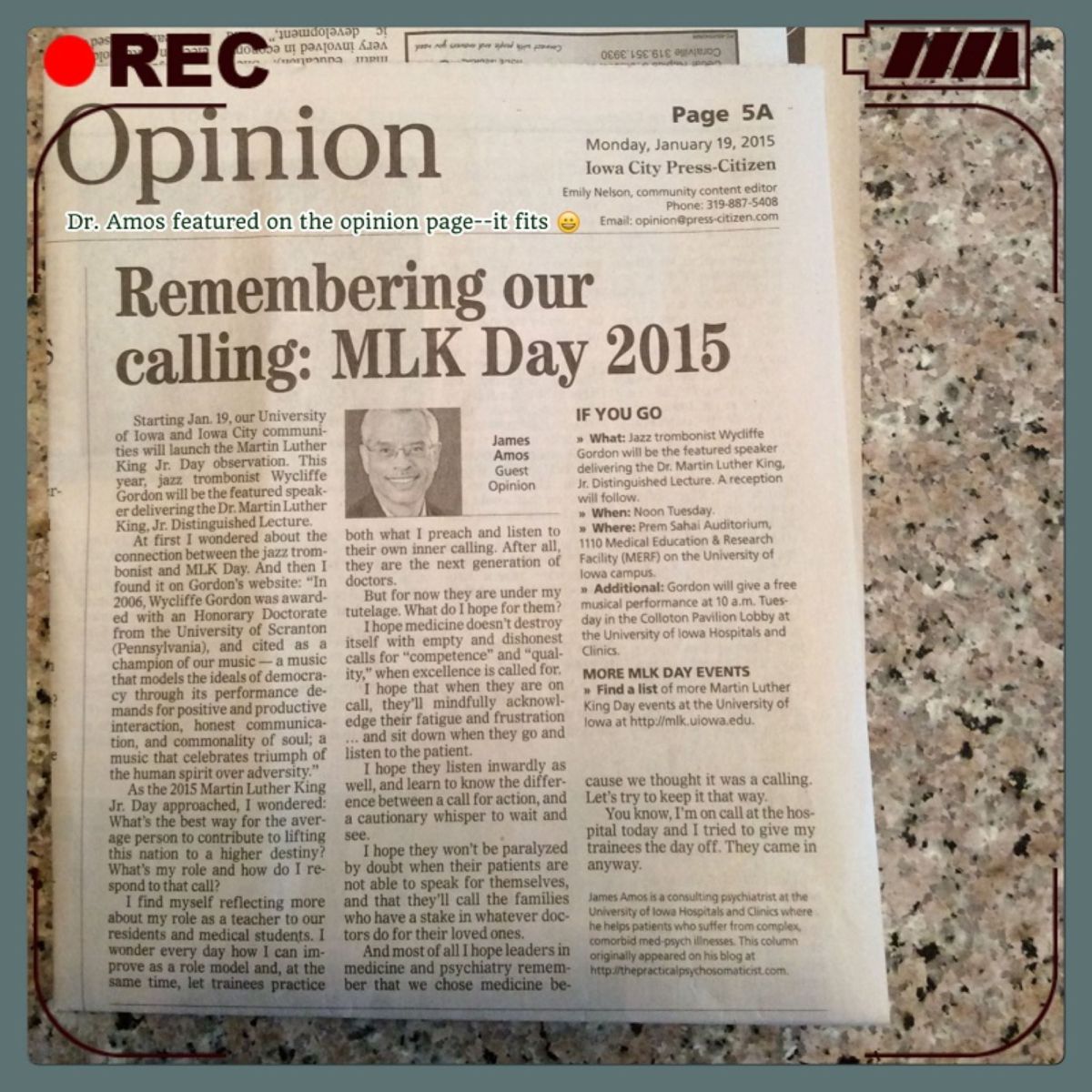
I wrote a post entitled “Remembering Our Calling: MLK Day 2015.” It was republished in a local newspaper, the Iowa City Press-Citizen on January 19, 2015. And I reposted it in 2019 on this blog.

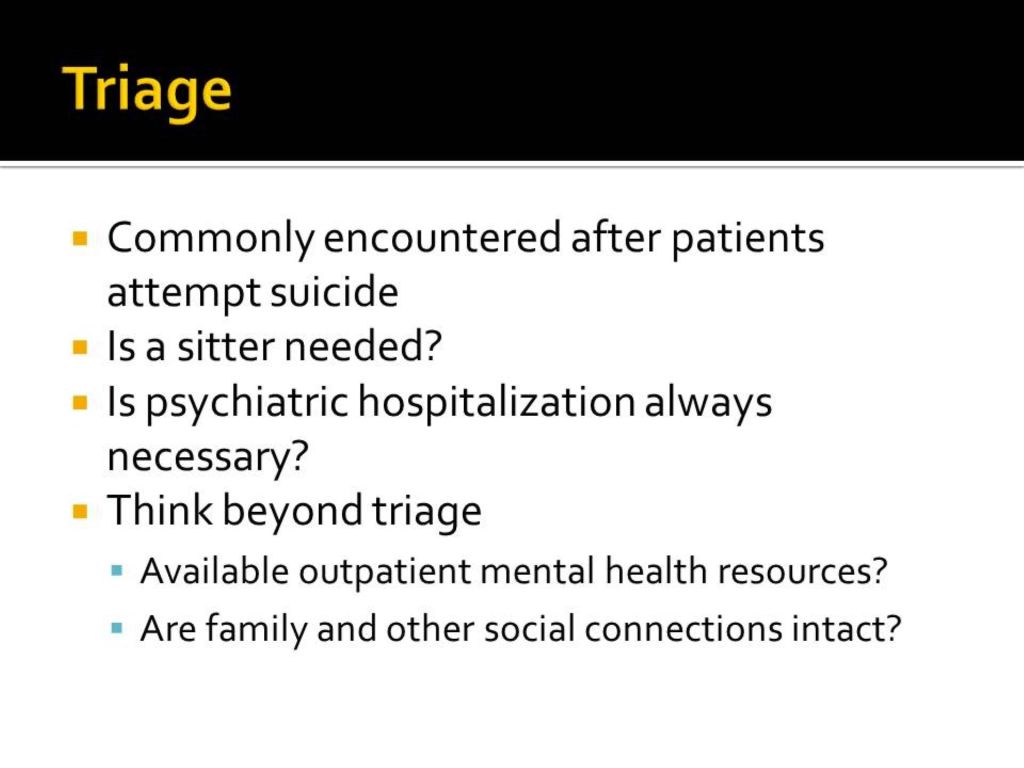
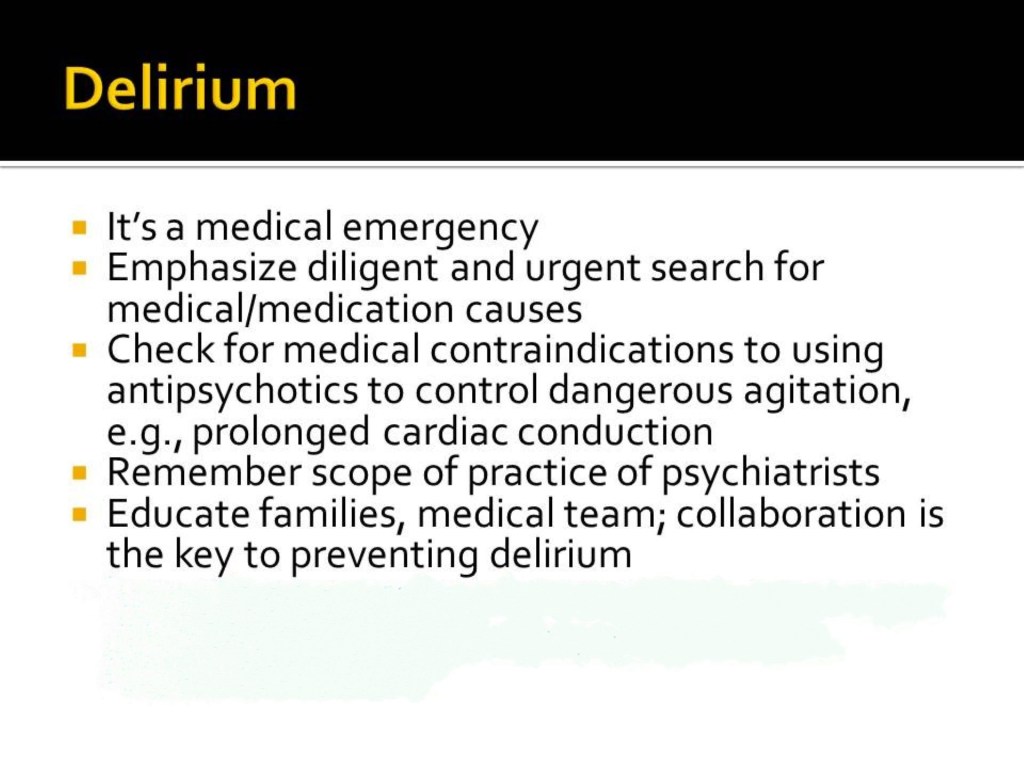
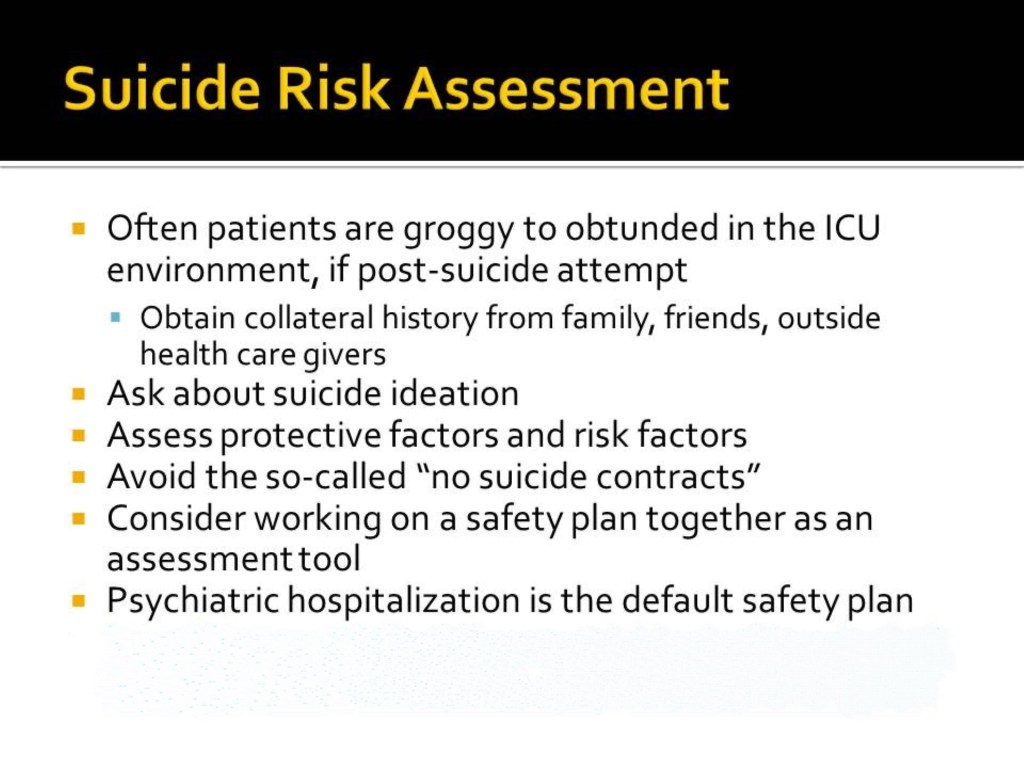
The trainees I taught also taught each other about psychiatry and medicine when they rotated on the consultation-liaison service at the hospital. We put them into the format of short presentations. I called mine the Dirty Dozen. The trainees and I also presented the Clinical Problems in Clinical Psychiatry (CPCP).

There were many of those meetings, which were necessarily short and to the point because the service was busy. We got called from all over the hospital. We answered those calls and learned something new every time.

I posted a lot of the trainees’ presentations in my previous blog, The Practical C-L Psychiatrist, which was replaced by this present blog. I haven’t posted the presentations partly because I wanted to give the younger teachers their due by naming them as they did on their title slides. But I would want to ask their permission first. They are long gone and far flung. Many are leaders now and have been for many years. I still have their slides. I’m very proud of their work. When they were called, they always showed up.

So, you’ll just have to put up with my work and my cornball jokes.