


The FDA announced today that the meeting to discuss Pfizer’s request for authorization of Pfizer-BioNTech COVID-19 Vaccine for children 6 months through 4 years of age, originally scheduled February 15, 2022, will be postponed. This will give Pfizer time to evaluate a third dose of the vaccine in this age group.
Author: James Amos
I'm a retired consult-liaison psychiatrist. I navigated the path in a phased retirement program through the hospital where I was employed. I was fully retired as of June 30, 2020. This blog chronicles my journey.





Our Impressions of University of Iowa Free Webinar Yesterday: The Stories That Define Us”

We were overall delighted with yesterday’s presentation, University of Iowa Free Webinar: “Breaking Barriers: Arts, Athletics, and Medicine (1898-1947).” It’s one in a series of 4 virtual seminars with two more scheduled this month, which you can register for at this link.
February 15: Endless Innovation: An R1 Research Institution (1948–1997)
February 22: The Next Chapter: Blazing New Trails (1998–2047)
The moderator was university archivist and storyteller, David McCartney.
Presenters include:
- Lan Samantha Chang (93MFA), Iowa Writers’ Workshop director and acclaimed author
- Quinn Early (87BA), Hawkeye football star and film producer
- Patricia Winokur (88R, 91F), professor of internal medicine–infectious diseases
Yesterday’s presentation was recorded and will be uploaded to The University of Iowa Center for Advancement YouTube site at a later date.
McCartney did an excellent job as moderator, although got stumped from a question from a viewer about who was the first African American faculty member in the College of Medicine. He’s still working on tracking that down. It wasn’t me. I’m not that old and I am not risen from the dead, as far as I can tell; but to be absolutely clear, you should ask my wife, Sena. I was able to google who was the first African American graduate of the University of Iowa law school: Alexander Clark, Jr. McCartney thinks he might have been the first University of Iowa alumnus, although he couldn’t confirm that.
On the other hand, I could have been the first African American consulting psychiatrist (maybe the only African American psychiatrist ever) in the Department of Psychiatry at UIHC—but I can’t confirm that. Maybe McCartney could work on that, too.
There are a few words about me in the department’s own history book, “Psychiatry at Iowa: The Shaping of a Discipline: A History of Service, Science, and Education by James Bass: Chapter 5, The New Path of George Winokur, 1971-1990:
“If in Iowa’s Department of Psychiatry there is an essential example of the consultation-liaison psychiatrist, it would be Dr. James Amos. A true in-the-trenches clinician and teacher, Amos’s potential was first spotted by George Winokur and then cultivated by Winokur’s successor, Bob Robinson. Robinson initially sought a research gene in Amos, but, as Amos would be the first to state, clinical work—not research—would be Amos’s true calling. With Russell Noyes, before Noyes’ retirement in 2002, Amos ran the UIHC psychiatry consultation service and then continued on, heroically serving an 811-bed hospital. In 2010 he would edit a book with Robinson entitled Psychosomatic Medicine: An Introduction to Consultation-Liaison Psychiatry.” (Bass, J. (2019). Psychiatry at Iowa: A History of Service, Science, and Education. Iowa City, Iowa, The University of Iowa Department of Psychiatry).”
And in Chapter 6 (Robert G. Robinson and the Widening of Basic Science, 1990-2011), Bass mentions my name in the context of being one of the first clinical track faculty (as distinguished from research track) in the department. In some ways, breaking ground as a clinical track faculty was probably harder than being the only African American faculty member in the department.
I had questions for Lan Samantha Chang and for Dr. Patricia Winokur (who co-staffed the UIHC Medical-Psychiatry Unit with me more years ago than I want to count.
I asked Dr. Chang what role did James Alan McPherson play in the Iowa Writers Workshop. She was finishing her presentation and had not mentioned him, so I thought I’d better bring him up. She had very warm memories of him being her teacher, the first African American to win a Pulitzer Prize for fiction, and a long-time faculty member at the Workshop.
She didn’t mention whether McPherson had ever been a director of the Workshop, though she went through the list of directors from 1897 to when she assumed leadership in 2006. You can read this on the Workshop’s History web page. I have so far read two sources (with Wikipedia repeating the Ploughshares article item) on the web indicating McPherson had been acting director between 2005-2007 after the death of Frank Conroy. One source for this was on Black Past published in 2016 shortly after his death, and the other was a Ploughshares article published in 2008. I sent an email request for clarification to the organizers of the zoom webinar to pass along to Lan Samantha Chang.
I asked Dr. Winokur about George Winokur’s contribution to the science of psychiatric medicine. Dr. George Winokur was her father and he was the Chair of the UIHC Psychiatry Department while I was there. She mentioned his focus on research in schizophrenia and other accomplishments. I’ll quote the last paragraph from Bass’s history on the George Winokur era:
“Winokur, in terms of research, was a prototype of the new empirical psychiatrist. Though his own research was primarily in the clinical realm, he was guided by the new neurobiological paradigm (perhaps in an overbalanced way) that was solidifying psychiatry with comparative quickness. New techniques in imaging and revelations of the possibilities in genetic study and neuropsychopharmacology lay ahead. George Winokur had helped the University of Iowa’s Department of Psychiatry—and American psychiatry as a whole—turn a corner away from subjectivity and irregularity of Freudian-based therapies. And once that corner had been turned there was no going back.”
George Winokur was the department chair at University of Iowa Hospitals and Clinics from 1971 to 1990 and had a unique and memorable style. George also had a rough sense of humor. He had a rolling, gravelly laugh. He had strict guidelines for how residents should behave, only slightly tongue-in-cheek. They were written in the form of 10 commandments. Who knows, maybe there are stone tablets somewhere:
Winokur’s 10 Commandments
- Thou shalt not sleep with any UI Psychiatry Hospital patient unless it be thy spouse.
- Thou shalt not accept recompense for patient care in this center outside thy salary.
- Thou shalt be on time for conferences and meetings.
- Thou shalt act toward the staff attending with courtesy.
- Thou shalt write progress notes even if no progress has been made.
- Thou shalt be prompt and on time with thy letters, admissions and discharge notes.
- Thou shalt not moonlight without permission under threat of excommunication.
- Data is thy God. No graven images will be accepted in its place.
- Thou shalt speak thy mind.
- Thou shalt comport thyself with modesty, not omniscience.
Quinn Early has a lot of energy and puts it to good use. His documentary of the sacrifices of African American sports pioneers, including “On the Shoulders of Giants” (Frank Kinney Holbrook) is impressive.
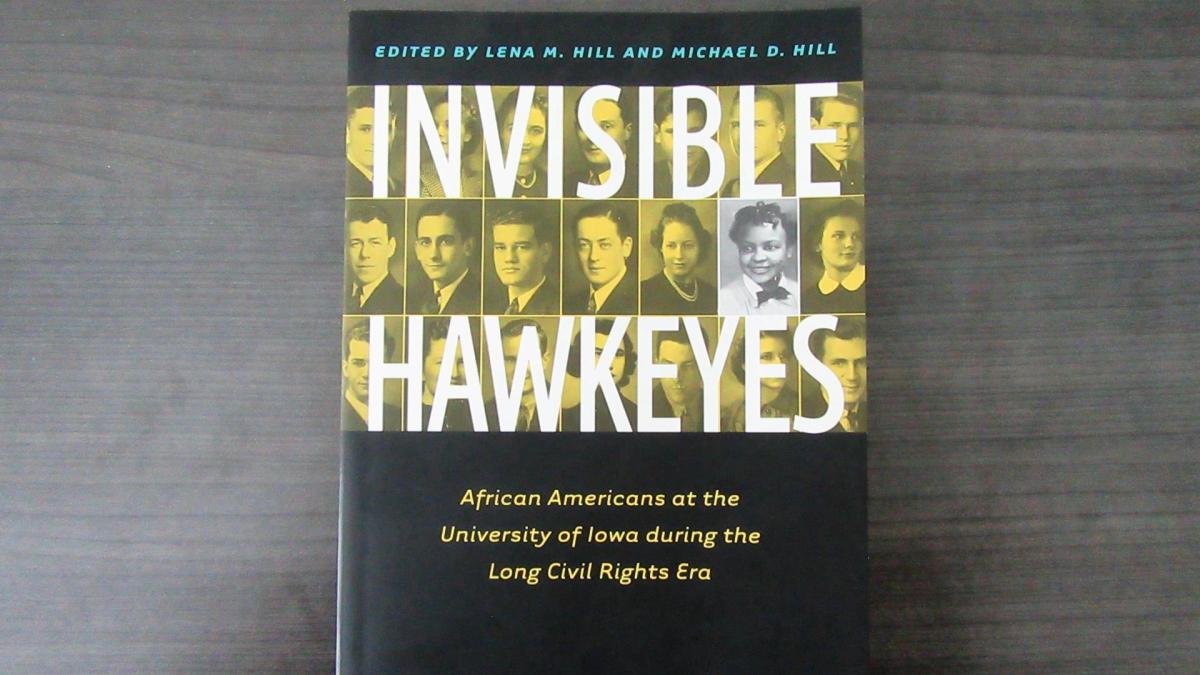
There was a good discussion of the importance of the book “Invisible Hawkeyes: African Americans at the University of Iowa during the Long Civil Rights Era”, edited by former UI faculty, Lena and Michael Hill.
Sena and I thought yesterday’s presentation was excellent. We plan to attend the two upcoming webinars as well. We encourage others to join.
University of Iowa Free Webinar Tonight: The Stories That Define Us”
We just found out that the University of Iowa is presenting a free webinar this evening from 4:30—5:30 PM. It’s a zoom meeting and the title is “Breaking Barriers: Arts, Athletics, and Medicine (1898-1947)”. It’s part of a 4-part series that started February 1, 2022, “Uncovering Hawkeye History: The Stories That Define Us.”
Presenters include:
- Lan Samantha Chang (93MFA), Iowa Writers’ Workshop director and acclaimed author
- Quinn Early (87BA), Hawkeye football star and film producer
- Patricia Winokur (88R, 91F), professor of internal medicine–infectious diseases
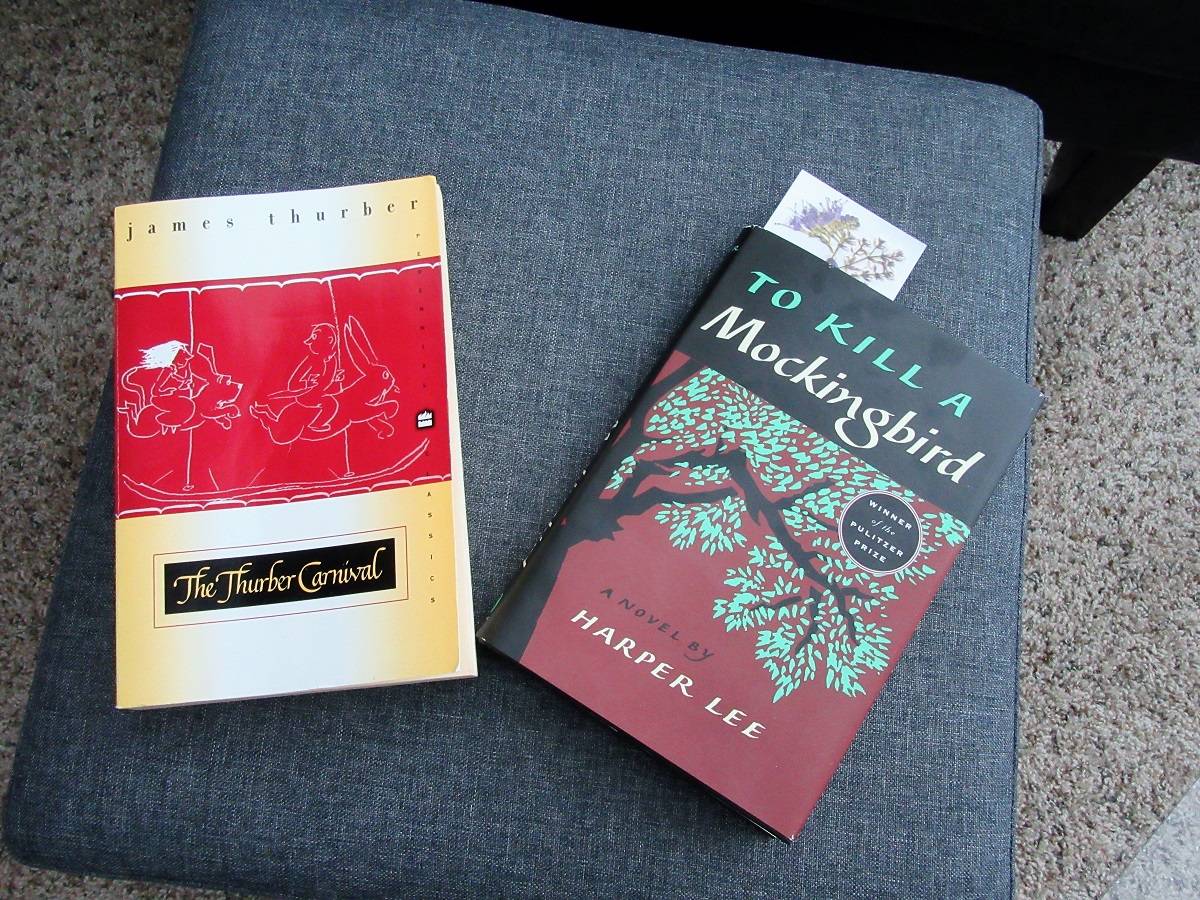
We discovered this presentation after a long, spirited conversation about race relations generally this morning over breakfast. Authors mentioned included Ralph Ellison, author of “Invisible Man” and James Alan McPherson, long time faculty and director of the Iowa Writers Workshop, author of first African American to win a Pulitzer Prize winner for fiction with his collection “Elbow Room.”
There were several cross threads in our conversation. One of them was my memory of a visiting professor (whose name, however, I can’t remember) who gave a presentation about being Black in America at Huston-Tillotson College (now Huston-Tillotson University; one of the HBCUs in America) in Austin, Texas. He said something I’ll never forget. I mentioned this in a book review published over 20 years ago in the American Journal of Psychiatry:
A guest lecturer (who, as I recall, had also written a book about being black in America) told us that the white man would never allow a black man to be a man in America. He had only three choices: he could be a clown, an athlete, or a noble savage. These corresponded to the prominent and often stereotyped roles that blacks typically held in entertainment, sports, and black churches. It begged the question of what on earth could we hope to accomplish— JAMES J. AMOS, M.D., Iowa City, Iowa (2000). “Being Black in America Today: A Multiperspective Review of the Problem.” American Journal of Psychiatry 157(5): 845-846.
This is related to another memory, that of the quasi-character Rinehart in Ellison’s “Invisible Man.” The name refers to the multiple perspectives from which a black person (or any person, really) can look himself. You can look at the word itself as compound, containing two words, “rind” and “heart.” Understood as metaphors, you can readily see how it could apply to anyone. We can have a surface personality socially, and we can have an inner core, a heart that is hidden and which can truly define who we are. We’re always changing, inside and out, backwards and forwards.
On the subject of hidden stories, I am also reminded of the book “Invisible Hawkeyes: African Americans at the University of Iowa during the Long Civil Rights Era”, edited by former UI faculty, Lena and Michael Hill. The book describes the mixed reactions of African Americans to the interracial climate in Iowa City and at the University of Iowa during that era. Not all felt welcome, although James Alan McPherson did. Indeed, the Hills often highlight the fluidity of the interactions, which makes me think of Rinehart.
David McCartney, the university archivist, is joining the presentation. He led the drive to rename Johnson County in Iowa for Dr. Lulu Merle Johnson, an accomplished University of Iowa alumna, by putting up an on-line petition which gathered 1,000 signatures. We’re looking forward to this evening’s presentation.
Links to Ozymandias

Sena and I took a walk down Scott Boulevard today. The weather was practically balmy, compared to how cold it has been. Forty degrees above zero compared to 9 degrees below feels miraculous.
We walked past the Harvest Preserve entry. Across the street is what we’ve just learned is an old building that is known as the “Haunted Barn” (photo taken in August 2021).

We passed the 20-foot-tall, 110-ton Sitting Man sculpture, now on the west side of Scott Boulevard after it was moved from the east side of the road in July, 2020.

Today was the first time we trekked past the Sitting Man to Rochester Avenue and beyond. If we hadn’t, we would not have noticed a fascinating, blindingly white abstract sculpture mounted on a concrete block which we initially believed was on the Harvest Preserve property at the northwest corner of the intersection. Sena said it looked like a person, noting the head, arms, and body. I didn’t notice that.
After we got back home, I couldn’t find out anything about it on the web, no matter how much I connected the search terms to Harvest Preserve, the Sitting Man and so on. I found only one item with a photo and it was an announcement about a tour on Harvest Preserve in 2018. The impression is that the sculpture is on the property.
I sent an email inquiry to Executive Director of the Harvest Preserve Foundation, Inc., Julie Decker, whose email address is available on the website.
Ms. Decker informed me that the sculpture is technically not on Harvest Preserve property. She knew the sculpture is entitled “Family,” and the artist’s name was Eugene Anderson, who died in 2008. That’s all she knew.
It turns out that what little she knew led to an astonishing story that was even deeper and more engaging than we imagined. You can read the obituary of the Iowa City artist Eugene Anderson on legacy dot com. The highlights are that he started his career in architecture, was the University of Iowa Hospital and Clinics (UIHC) architect for 25 years, and then began creating original art work to display in the hospital to comfort patients. He later became a full-time sculptor, and was on the board of directors for “Arts Iowa City.”
I was a medical student, resident, faculty member and a consulting psychiatrist at UIHC, a career starting in 1988 and ending with my retirement in June of 2020. It’s possible I saw some of Anderson’s work while I was galloping around the hospital.
In 1994 he created the “Family Group” series of sculpture which have been displayed at Chait Galleries in Iowa City, Des Moines Art Center, and the Brunnier Art Museum in Ames, Iowa. The piece we saw might have been one of those. Unfortunately, I couldn’t find anything on the web about the series.
And what is more intriguing, Anderson also traveled extensively, even to Egypt where he cruised on the Nile and took a sunrise balloon ride over the pyramids.
How is it possible that so little of Eugene Anderson’s life and work are not better known? Come to think of it, I guess time can erase the memory of our accomplishments.
This little story reminded me of the poem “Ozymandias” by Percy Bysshe Shelley. I’ve forgotten all of my college freshman English Literature but a web search indicates that Ozymandias was based on Ramesses II, a king of ancient Egypt. Ozymandias was a great ruler of a vast empire. His sculptor built a huge monument in the desert and gave it the oft-quoted inscription, “Look on my works, ye Mighty, and despair!”
Ozymandias
Percy Bysshe Shelley-1792-1822
I met a traveller from an antique land
Who said: “Two vast and trunkless legs of stone
Stand in the desert . . . Near them, on the sand,
Half sunk, a shattered visage lies, whose frown,
And wrinkled lip, and sneer of cold command,
Tell that its sculptor well those passions read
Which yet survive, stamped on these lifeless things,
The hand that mocked them, and the heart that fed:
And on the pedestal these words appear:
‘My name is Ozymandias, king of kings:
Look on my works, ye Mighty, and despair!’
Nothing beside remains. Round the decay
Of that colossal wreck, boundless and bare
The lone and level sands stretch far away.”
Today we searched for links on the web to find out more about a mysterious sculpture. We found links of a different kind, links to a stranger and to the near and the ancient past. Anderson’s sculpture, “Family,” is still standing, tall, clean, and bright for all to see.

Return to the Sun Room
We have a sun room again. We moved into this house a little over a year and half ago. It has taken a little time to get it comfy. For the last couple of weeks, I’ve been sitting in there on Friday nights listening to the KCCK Jazz Radio ‘da Friday Blues show hosted by John Heim, aka Big Mo. I used to do that regularly but we’ve not lived in a house with a sun room for several years. The Big Mo blues show has been a favorite of mine for a long time.
I suppose I could have listened to it in another room in the other homes we’ve lived in. But it wouldn’t have felt right. I connect sun rooms with ‘da Friday Blues on KCCK 88.3.
It’s hard to believe Big Mo is still doing the show. He suffered an accidental neck injury a few years ago that left him paralyzed from the neck down. He was hospitalized at the University of Iowa and went to rehab from there. He still sounds great. He retired from teaching in 2004. He hasn’t retired from having a good time and helping others enjoy music and life. There’s a lesson in that for us all.
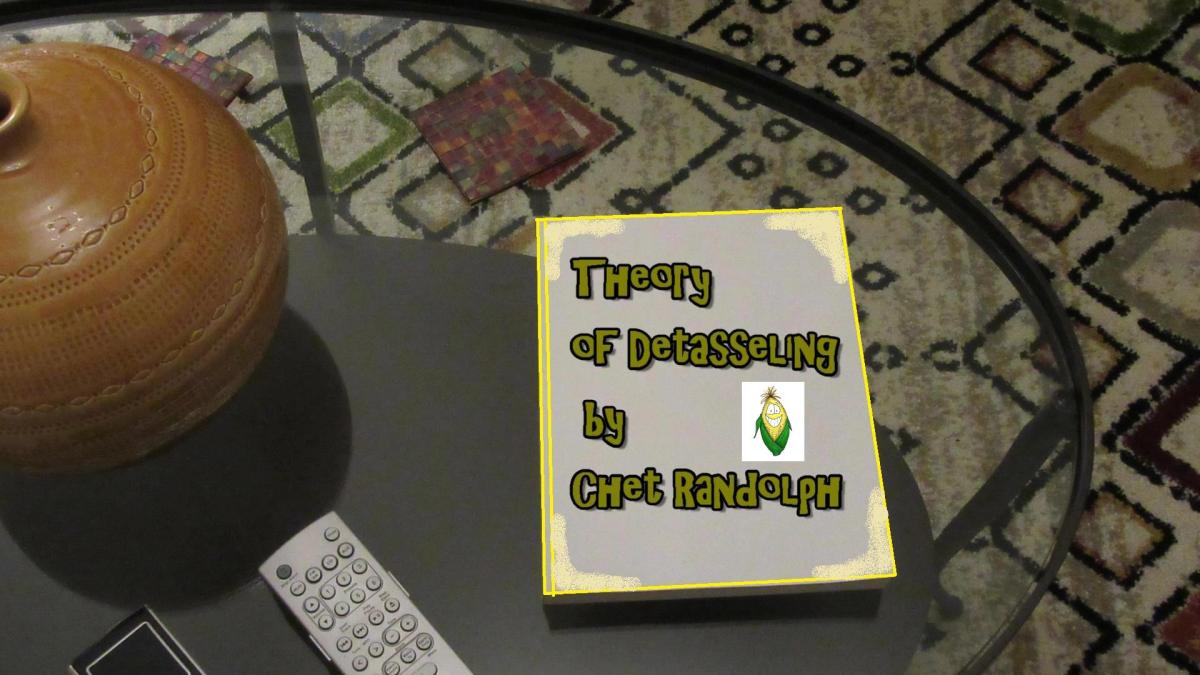
Anyway, we have a great sun room again. We have a nice coffee table in there, with the mandatory coffee table book. Chet Randolph really didn’t write that book, Theory of Detasseling—but he could have.
Here’s a tune from tonight’s show that fits the season.
 Go Retire Psychiatrist