


I heard the Big Mo Blues Show last night and the Big Mo Pod Show today. The podcast song selection was part of the Lunch with Chuck portion of the show, which I don’t know a whole lot about. The Lunch with Chuck thing I’ve heard Big Mo talk about and I think it involves a real guy named Chuck who talks music with Big Mo sometimes, although I’ve not heard an actual live Lunch with Chuck program during the blues show. And it might be another Big Mo running joke.
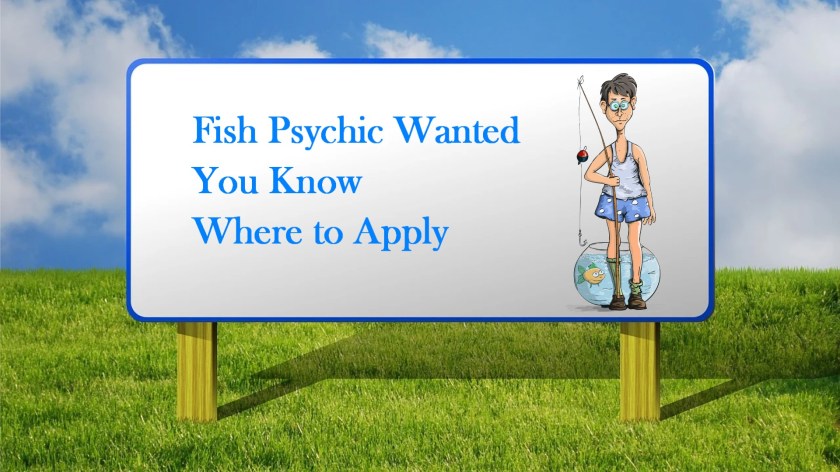
The other thing I want to mention is that I heard Big Mo talk last night just before the Lunch with Chuck thing about something like a “fish psychic”. I think it’s a new comedy bit like MayRee’s Hand-Battered Catfish and Shorty’s Adult Diapers. I can’t remember the whole fish psychic bit, but I’m pretty sure he’ll do it again, maybe even next Friday. I think it’s another faux advertisement, and it might be about some kind of fish psychic who can help you catch lunker bass and the like.
Anyway, I learned something from the pod show today. I’d never heard of something called “race records” which is one term Lightnin Hopkins song “Mojo Hand” led to. Race records were 78-rpm phonograph records marketed to black people back in the days of the victrola, between the years of the 1920s to the 1940s, well before my time.
The other term new to me is the title of Hopkins’ song, “Mojo Hand.” The podcast discussion mentioned that mojo hand referred to African American voodoo charms, one of which happened to be a lucky charm, possibly a dried monkey’s paw. The song is actually about using voodoo to keep a lover from being unfaithful. The song means more now that I know that.
Another thing I learned today was that the song “Feel So Bad” (recorded in 1966) by Little Milton has a lyric in it, “feel like a ball game on a rainy day” that was repeated by boxer Muhammad Ali when he found out he had to wait 6 weeks before the Rumble in the Jungle match in 1974. That was because Foreman had to heal up first because he suffered a laceration above his right eye during a sparring match.
What I also didn’t know was that the Rumble in the Jungle had political overtones. There is an article entitled “Remembering the Rumble in the Jungle” subtitled “The 1974 Rumble in the Jungle was freighted with symbolism regarding American racial politics and the pan-African struggle in the context of the Cold War.”
One more thing I learned from the podcast is related to the song “Wine O’Clock” by Shemekia Copeland. He called this song a women’s support tune and, unlike my disagreement about this issue in last week’s podcast, I tend to agree with this song being about women supporting each other or at least understanding their burdens in a society marked by gender role disparity.
What helped me reach this understanding is an article entitled “What makes up wine o’clock…” published in 2022.
Wright CJC, Miller M, Kuntsche E, Kuntsche S. ‘What makes up wine o’clock? Understanding social practices involved in alcohol use among women aged 40-65 years in Australia. Int J Drug Policy. 2022 Mar;101:103560. doi: 10.1016/j.drugpo.2021.103560. Epub 2021 Dec 29. PMID: 34973490.
The abstract reminds me of the discomfort with the idea of women (or anyone regardless of gender) using alcohol to cope with socially designated roles.
“Think I’ll have another glass; the world can kiss my ass; tick tock, it’s Wine O’Clock.”
I sometimes learn a lot more than I expect from the Big Mo Pod Show.

 Go Retire Psychiatrist