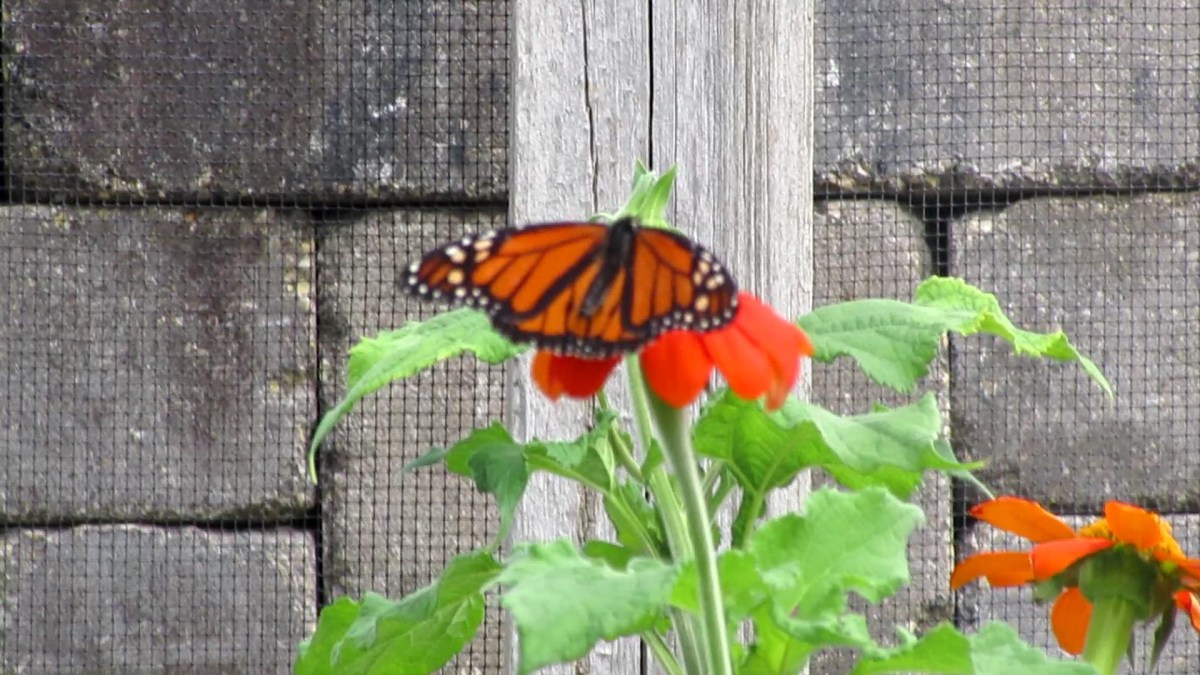
Sena went over to ForeverGreen, a popular landscaping and garden center locally, to see the butterfly house. She got pictures and video clips which showed the monarch butterfly management operation they have. They have quite a conservation program, including a large monarch butterfly house enclosure along with demos of life cycle stages. The butterfly house is just part of the deal and it’s open to the public. It opened in June of this year and runs until September 14th. The schedule shows there’ll be a big release then and possibly even tagging prior to that. You might want to call ahead and check to see if they’re still going to tag the monarchs.
I think this is also a good way to rehabilitate Bigfoot’s image because they could be sort of like ranch hands tending to the monarch as they go through their life cycle. The monarchs migrate to Mexico every fall. You can learn more about the monarch watch program and why many people believe the monarchs are at risk of extinction.
Today, the Big Mo Pod Show was about how blues music can you help you “exorcise your demons” as Big Mo himself put it today. Isn’t that what it’s always about? And I can’t explain how that even works.
After a short break during the Thanksgiving holiday your hosts are back at it again with another episode! This week features the usual mix of blues eras you’ve come to expect along with a few Californian artists, tune in to see which ones! Songs featured in the episode: Solomon Hicks – “Further On Up The … Continue reading
But I don’t always understand how it works. I’m going to admit I’m not sure at all how one song last night by Toranzo Cannon would help anybody, and that’s “I Hate Love.” Of course, it’s contradictory and ironic. I’m not going to pretend I know what blues music is all about and how it can sometimes heal your inner soul pain.
But a lot of people believe that blues can help you get past the pain and it seems that it works paradoxically. I don’t always get it. But I’ve been listening to the Big Mo Blues Show for years.
That reminds me. We had a couple of guys install motorized window shades yesterday and one of them was a blues musician. He plays bass guitar and I gather he plays in local bands. He wore the best hat; it’s a fedora! Sena and I sort of ribbed him about it, but I had a fedora like that once, decades ago. It was gray with a narrow leather band. I don’t have it anymore.
I told him that I wore it while I was interviewing for residency. I wore it to dinner in a hotel in St. Louis, Missouri and a woman passing through the hotel restaurant looked at me and said with a grin, “Wear that hat!”
Sena reacted as if she’d never heard that story before. The fedora guy thought it was funny. Fedora man had that style to him that I think is fairly common in musicians. They look and may act in a way that makes you notice them. I don’t think you can always tell what somebody does just by the way he or she dresses. But when he told us he was a musician who liked the blues, that didn’t surprise us.
What did surprise us was that he didn’t recognize the name of a prominent blues musician in Iowa and a lot of other places—Kevin Burt. But he did have a sense of humor.
I think most blues musicians have a kind of slant sense of humor. It probably comes out in some of the music. I’m more drawn to blues music that makes me chuckle. On the other hand, I liked one song on the blues show last night they didn’t discuss today on the pod show. It’s not funny and I had a hard time finding the lyrics for it. It’s “I’ll Always Remember You” by the Robert Cray Band. I found a couple of sites I think got the lyrics below wrong and didn’t make sense. The way I heard the song the lines went like this:
“Old clothes and worn-out shoes Empty bottles and a book that’s way past due.”
The line I keep finding that I think is wrong is the second one, which is often written as “Empty bottles and I put this way past due.”
I think the line “a book that’s way past due” makes more sense because it conveys a sense of regret, waste and loss and promises not kept and opportunities lost and probably a half-dozen other ideas that you probably can’t easily encapsulate. It evokes sorrow that is only partly fixed by the letter’s promise— “I’ll always remember you.”
That may not completely heal you, but it’s a little like something I read about kintsugi. It’s about mending broken pottery with gold in a literal sense. In a metaphorical sense, it’s about repairing what might be broken emotionally broken in us and, despite not being the same as we were before we were broken, we’re somehow still functional and healed though not perfect. A psychiatry resident blogger wrote about that.



 Go Retire Psychiatrist