First of all, if you looked up Saint therapy for depression, you might have accidentally found information on Saint Dymphna, the Catholic patron saint of those living with mental illness.
Actually, SAINT stands for Stanford accelerated intelligent neuromodulation therapy. It’s a personalized protocol for using transcranial magnetic stimulation (TMS) to treat severe depression. The University of Iowa is the first academic center to offer it in the Midwest.
This is a big step forward from the days many years ago when we were starting use right unilateral electrode placement for applying electroconvulsive therapy (ECT) to treat depression because it was thought to lead to fewer cognitive problems post-treatment.
SAINT is a game changer according to Dr. Nicholas Trapp, MD, assistant professor of psychiatry, who describes it as a method to pinpoint the best location in each patient’s brain to target with TMS to treat major depressive disorder. The procedure is quick and recovery from depression can be sustained for months.
Kudos to The University of Iowa. And maybe thanks to Saint Dymphna.
I read Dr. Moffic’s column today about the challenge in finding a rational solution to the objections many psychiatrists have to diagnosing President Donald Trump with a psychiatric disorder, despite the Goldwater Rule against doing that in any public forum.
Dr. Moffic points out that the high emotions aroused on both sides of the political aisle by the president has resulted in proposed legislation by Minnesota republican lawmakers to create a novel psychiatric diagnosis, Trump Derangement Syndrome (TDS), which may justify revising the Goldwater Rule, allowing psychiatrists to go public with diagnoses of President Trump.
I suspect that the TDS law was provoked by the conflict between democrats and republicans about the president. In fact, one of the Minnesota lawmakers has basically admitted that the bill was a prank by calling it “…tongue in cheek…” On the other hand, if this is just frustration between politicians, then I would expect that the whole thing might have been dropped a couple of weeks ago.
Yet, the bill still stands, albeit without any movement forward to committee. One of the authors, Senator Glenn Gruenhagen, has posted a comment on Facebook on March 17, 2025 (the day the bill was introduced), indicating that he knows democrats “…will never allow this bill to pass anyway, so take a breath and calm down.”
Can we do that, please? A good start might be to withdraw the bill.
I also saw a news story posted by The Guardian on March 26, 2025, quoting a New York City Child Psychiatrist, Leon Hoffman, MD, suggesting that the Goldwater Rule is too often broken, and, in response to the TDS gambit, that it might be preferable “…to develop a comparable national rule prohibiting political personnel, both elected and appointed, from creating psychiatric diagnoses as a tool against their political opponents.” Would anyone like to second that emotion?
You can’t just legislate restraint, respect and kindness in public or private discourse. Policies and laws can lay the groundwork for the eventual development of tolerance and maybe even acceptance of others. The Goldwater Rule is too often broken. The Golden Rule is too often broken as well.
So, I was watching the X-Files episode, “Humbug” last night and it got me wondering about the meaning of the word “nature.” The character, Dr. Blockhead says “Nature abhors normality.” Of course that reminded me of a similar quote attributed to Aristotle, “Nature abhors a vacuum.”
You can read the short Wikipedia summary of “Humbug” and comments about how Otherness philosophy (perceiving oneself as distinct from others in order to form one’s own identity) figures into the story contrasting sideshow freaks with the conventional FBI agents Mulder and Scully. The episode is funny, which is one reason why I like it. It sheds a little light on the way humans treat each other (and potentially, extraterrestrials?) in terms of their genetic, cultural and other differences.
I found another connection to “Humbug” in, of all places, a WordPress blog post from 2017 entitled “Fiji Mermaid,” written by an artist who relocated to America from Scotland many years ago. The Fiji Mermaid was featured in “Humbug.” It was a humbug (fake mermaid) made up of the head and torso of a monkey stitched to the tail of a fish. Commenters actually mention that it reminded them of the X-Files episode, which the artist enjoyed, partly because she’s interested in the history of sideshows and freaks.
I also read an interesting news item about the definition of nature in terms of the relationship between humans and the rest of the natural world. That led me to check on the definition of the word.
Until recently, the word “nature” was defined in the Oxford English Dictionary (OED) as “The phenomena of the physical world collectively; esp. plants, animals, and other features and products of the earth itself, as opposed to humans and human creations.”
The updated OED has additional definition, which is “More widely: the whole natural world, including human beings.”
I think one of the points of “Humbug” is that humans are a part of nature and we are hard at work mutating it. One of the characters, Dr. Blockhead, criticizes it:
“Twenty-first century genetic engineering will not only eliminate the siamese twins and the alligator-skin people, but you’re gonna be hard-pressed to find a slight overbite, or a not-so-high cheekbone. You see, I’ve seen the future, and the future looks just like him! (points to Mulder).”
“Nature abhors normality. It can’t go for long without creating a mutant.”
You can understand the word “nature” to refer to both humans and the natural world outside of us, possibly to other galaxies. It also makes me wonder who defines what is normal. That leads to social and political factors which complicate everything. I guess that could be why Dr. Blockhead says the reason why nature abhors normality is a mystery—and should remain so.
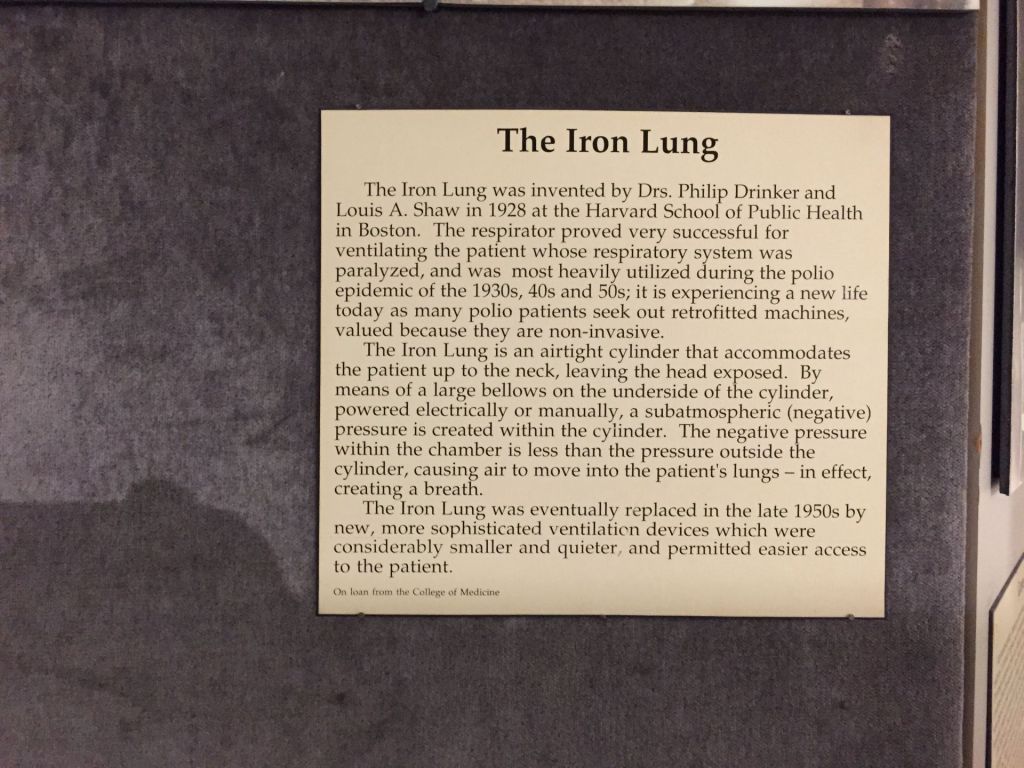
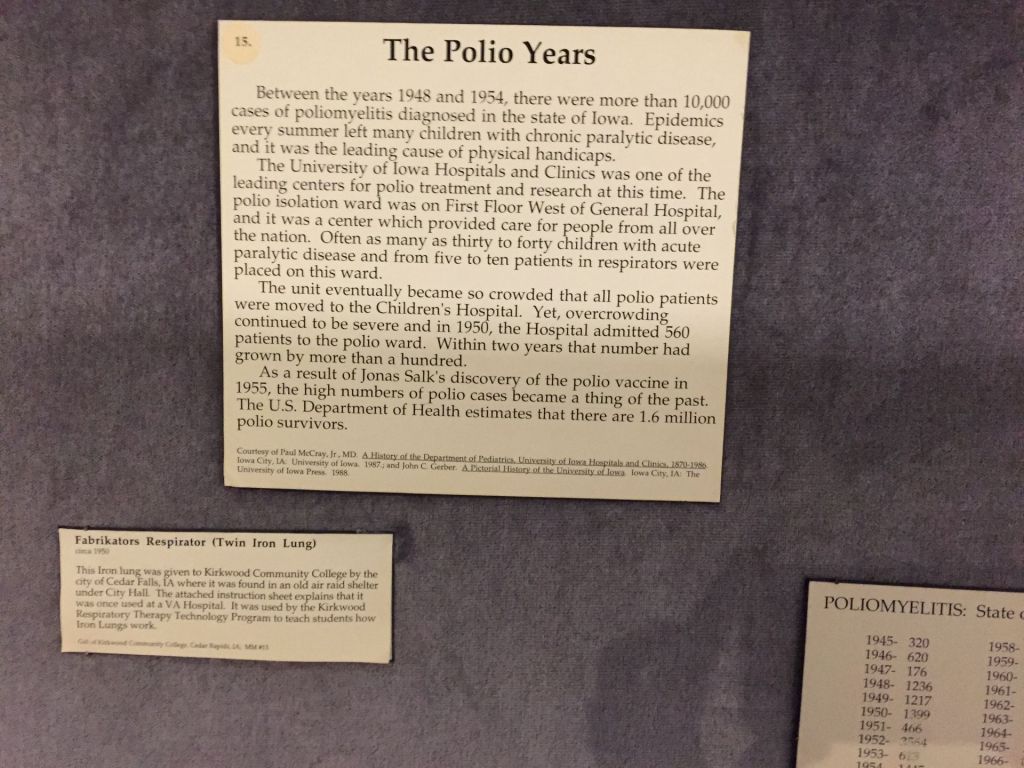
On the other hand, if it weren’t for the natural human drive to ask questions and explore, the mystery of the cause of polio would have remained a mystery and the iron lung would still be in use.
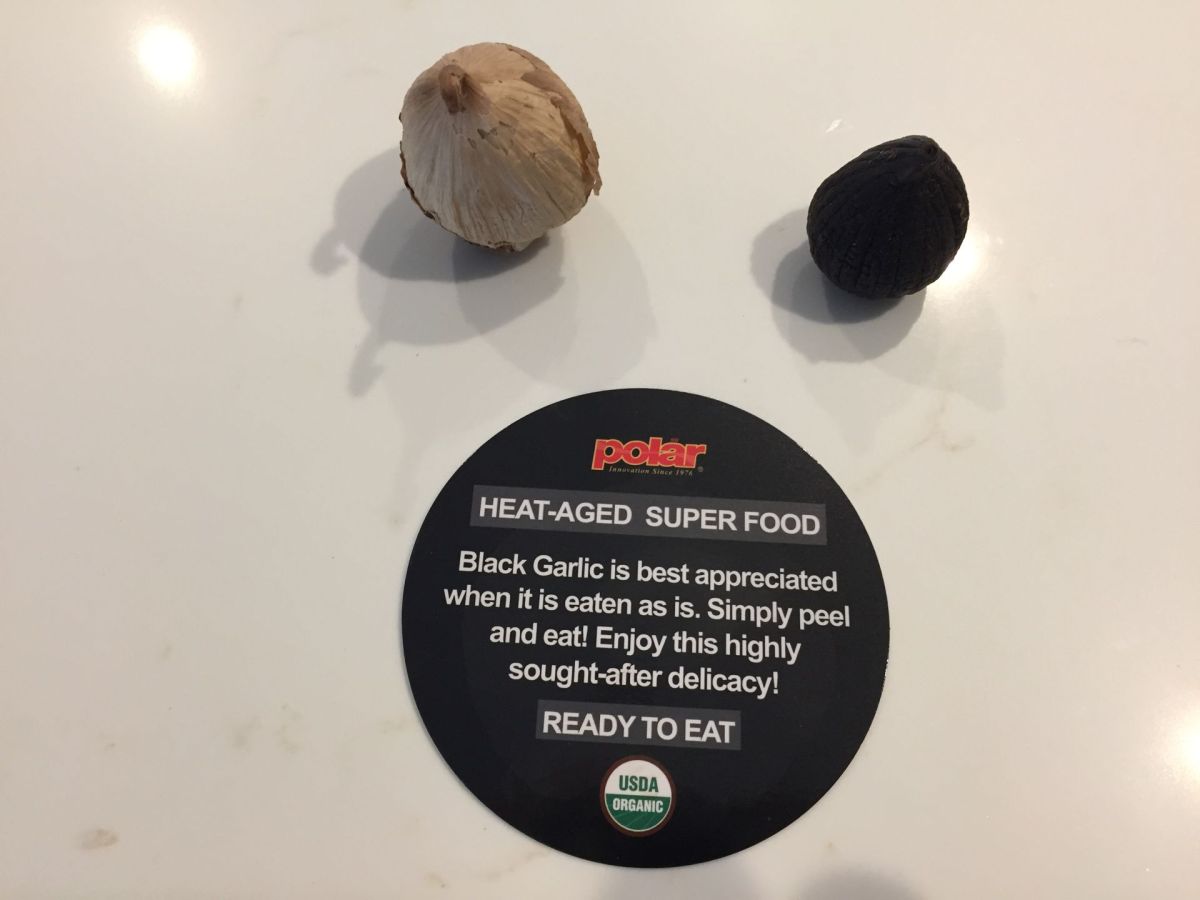
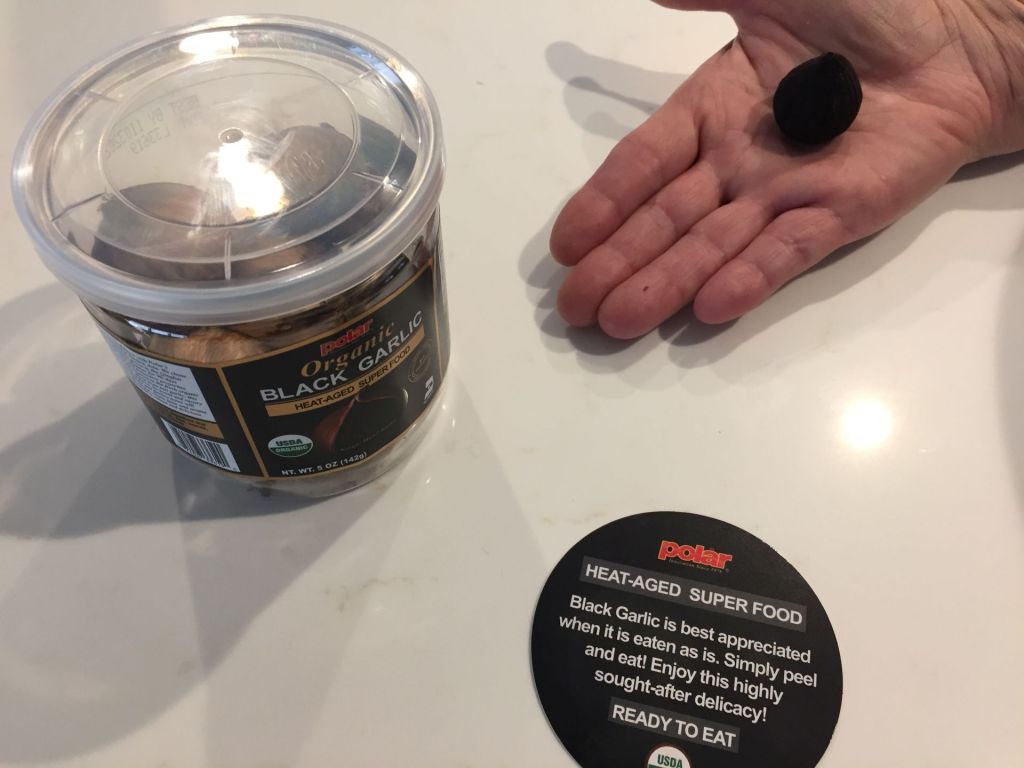
Sena got some black garlic, which many people are enthusiastic about and call a superfood. There is a very long Wikipedia article with over 180 references about its beneficial health effects. The authors are very enthusiastic about it. Like many superfoods, it has a lot of support from many people.
There’s a slew of claims about what black garlic can do for you, from supporting immunity to preventing cancers and dementia.
There are some caveats. It can thin your blood, so those already taking anticoagulants should use caution about eating a lot of it.
Ahmed T, Wang CK. Black Garlic and Its Bioactive Compounds on Human Health Diseases: A Review. Molecules. 2021 Aug 19;26(16):5028. doi: 10.3390/molecules26165028. PMID: 34443625; PMCID: PMC8401630.
It’s been used for hundreds of years in Asia although it sounds like a brand-new food. It’s fermented over several weeks, which gives it the dark color.
It’s black and the taste is on the sweet side. If you just found it on the sidewalk, you’d step around it because it looks like animal poop. It has a gummy bear texture.
I didn’t see any testimonials mentioning how black garlic does in preventing vampire attacks.
President Donald Trump and I made a deal about his plan to make Canada the 51st state of America. If President Trump wins, he goes ahead and tries it. If I win, he lets it go.









 Go Retire Psychiatrist