
Ready for Another Step Counting Recommendation?

Remember my post about the step counter and my workout update pointing out the possibly bogus 10,000 step recommendation?

Well, get ready for another recommendation which lowers the bar somewhat, based on your sedentary index.

There’s a new study which says, essentially:

“Conclusions: Any amount of daily steps above the referent 2200 steps/day was associated with lower mortality and incident CVD risk, for low and high sedentary time. Accruing 9000–10 500 steps/day was associated with the lowest mortality risk independent of sedentary time. For a roughly equivalent number of steps/day, the risk of incident CVD was lower for low sedentary time compared with high sedentary time.”

Reference:

Ahmadi MN, Rezende LFM, Ferrari G, et al. Do the associations of daily steps with mortality and incident cardiovascular disease differ by sedentary time levels? A device-based cohort study. British Journal of Sports Medicine 2024;58:261-268.

I figure I’m in the low sedentary category. This is somewhat reassuring to me because so far, my step counter averages (over 3 days) about 2500 steps during my usual daily exercise periods. Of course, this doesn’t count trips to the bathroom. I guess I can relax now.
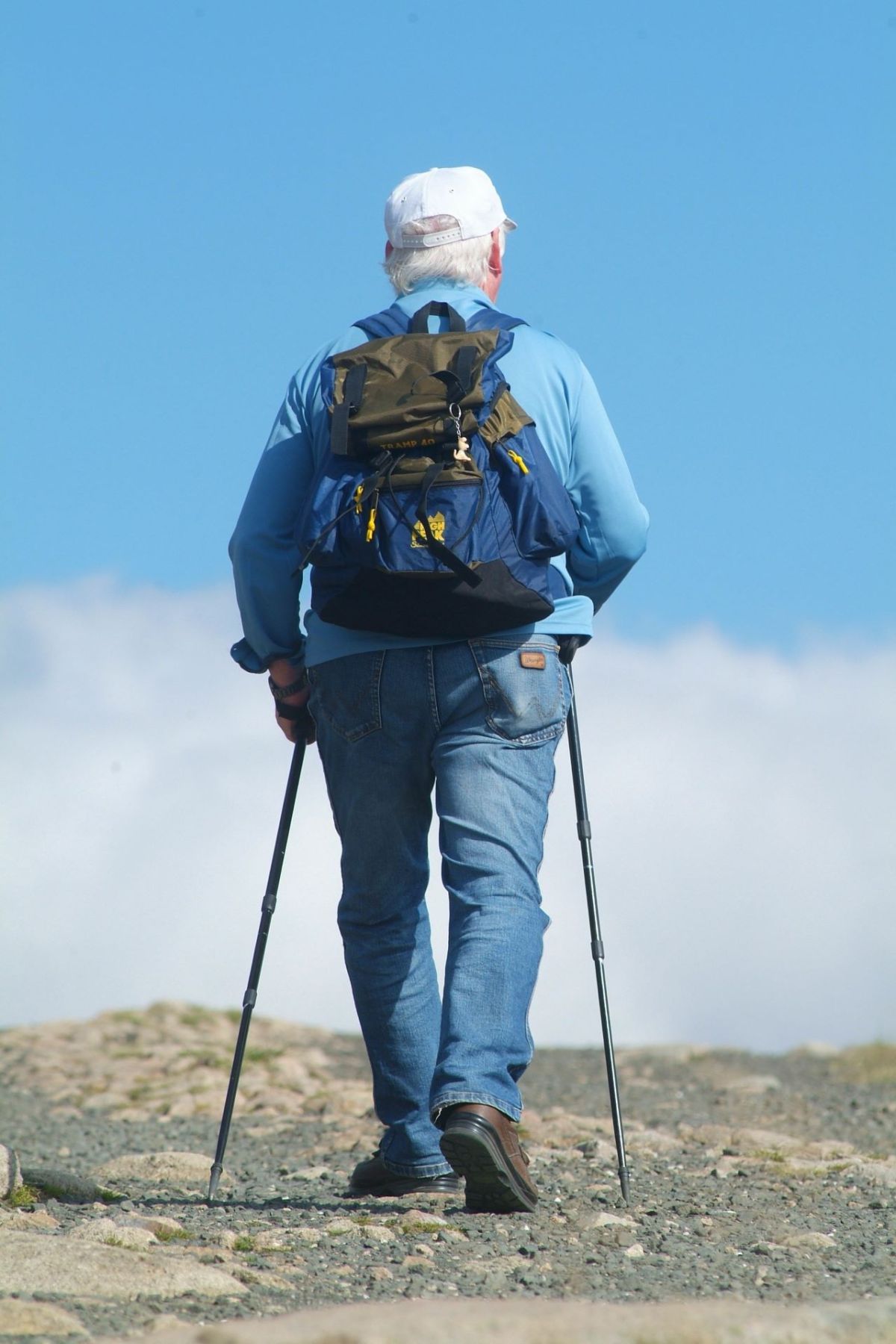
Do You Really Need to Walk 10,000 Steps a Day?

Since we got this little step counter, I’ve been paying more attention to how I exercise. The step counter will even track steps when I juggle—probably because I drop balls often enough to chase after them a lot.

And then I ran across the 10,000 steps as a benchmark for walking to keep healthy. I get about 3,000 steps during a typical 30-minute exercise session, which I do at least 5 days a week. Most people probably know that the CDC recommends that older adults spend 150 minutes as week (5 days a week for about 30 minutes a day) of moderate-intensity exercise.

That includes walking, jogging, wrestling Bigfoot, things like that. Muscle strengthening and balance are also important.

The 10,000-step thing (or 4,000-6,000 steps for older adults) puzzled me a little. The 10,000-step goal has an interesting story behind it. It turns out that around the time of the 1964 Tokyo Olympic games, that 10,000 steps goal had no scientific basis and was a marketing gimmick for selling the early pedometers.

In fact, if you really use your imagination, you might see how the Japanese character for 10,000 looks a little like a man walking—a stick man. The meter was called a Manpo-kei which literally translates to 10,000 steps.

Just walking 10,000 steps a day as a health goal probably doesn’t have a lot of scientific support. But you can increase the intensity of walking to get more benefit, such as walking up stairs or using a step platform, which I use nowadays. As a consultation-liaison psychiatrist, I walked all over an 8-floor hospital. I would usually use the stairs, often well over 20 flights pretty much every day.

I think the other way to make walking a more vigorous exercise is to develop and practice the well-known technique of silly walking, documented in the Ministry of Silly Walks documentary.

Monty Python