

Milestones

I got a nice, if puzzling surprise today. At a faculty meeting I was recognized for my 10-year anniversary of service at our hospital. It’s an important milestone, even if it is wrong. They scheduled this small event a couple of months ago, but I was too busy on the psychiatry consult service to break away. I also usually carry the pager for the trainees during the noon hour when the faculty meetings are held.

The 10-year anniversary recognition was very kind—except that I’ve been here for twenty odd years, not counting residency and medical school.

In all fairness, my department knows that and we shared a few jokes about it. I guess I should clarify that I have left the university for private practice a couple of times, which interrupts the years of service recognition timelines.

I was gone both times for a total of less than 12 months—just sayin’. I returned for a few reasons, although mainly because I missed teaching.

Anyway, I showed up at the faculty meeting, albeit a little guilty looking because I’m usually too busy to attend. My department chair arrived and said that she had to run back to get my “statue.”

That jarred me. Several years ago, when I had my first blog, The Practical Consultation-Liaison (C-L) Psychiatrist, I used to kid my readers that someday a statue of me would be erected in the university Quad. It would be made of Play-Doh.

And that’s why I asked her as she turned to leave, “Is it made of Play-Doh?” She looked puzzled and I didn’t really think I could explain in a way that wouldn’t make me look like I’d been smoking something illegal.

The “statue” is a handsome little sculpture of the number 10, standing for 10 years of service. It has color photos embedded in it of various aspects of academic life at the University of Iowa, many of which I’ve had the privilege of enjoying in the 30 odd years my wife, Sena, and I have been in Iowa City.

Just before the meeting, I had walked up to the 8th floor (I always take the stairs) to the psychiatry department offices to see if I could get a copy of the recently published history of the department, Psychiatry at Iowa: The Shaping of a Discipline: A History of Service, Science, and Education, written by James Bass.

Mr. Bass interviewed many people in the department, including me. I didn’t expect that my perspective on the consultation service, the clinical track, or my race would even get mentioned. However, 2 out of 3 made it into print.

It didn’t really surprise me that my being African American was not mentioned. I think I’m probably the only African American faculty member of the department in its 100-year history, at least until very recently.

It reminded me of another book that I just acquired, Invisible Hawkeyes: African Americans at the University of Iowa during the Long Civil Rights Era, edited by Lena M. Hill and Michael D. Hill.

In a small way, I’m making the invisible visible.

Making the invisible visible

And also, because it’s great for my ego, I’m going to quote what Bass wrote about me in Chapter 5, The New Path of George Winokur, 1971-1990:

“If in Iowa’s Department of Psychiatry there is an essential example of the consultation-liaison psychiatrist, it would be Dr. James Amos. A true in-the-trenches clinician and teacher, Amos’s potential was first spotted by George Winokur and then cultivated by Winokur’s successor, Bob Robinson. Robinson initially sought a research gene in Amos, but, as Amos would be the first to state, clinical work—not research—would be Amos’s true calling. With Russell Noyes, before Noyes’ retirement in 2002, Amos ran the UIHC psychiatry consultation service and then continued on, heroically serving an 811-bed hospital. In 2010 he would edit a book with Robinson entitled Psychosomatic Medicine: An Introduction to Consultation-Liaison Psychiatry.” (Bass, J. (2019). Psychiatry at Iowa: A History of Service, Science, and Education. Iowa City, Iowa, The University of Iowa Department of Psychiatry).

In chapter 6 (Robert G. Robinson and the Widening of Basic Science, 1990-2011), he mentions my name in the context of being one of the first clinical track faculty in the department. In some ways, breaking ground as a clinical track faculty was probably harder than being the only African American faculty member in the department.

As retirement approaches this coming June, I look back at what others and I worked together to accomplish within consultation-liaison psychiatry. The challenges were best described by a former President of the Academy of Consultation-Liaison Psychiatry, Thomas Hackett (this quote I helped find for James Bass and anyone can view it on the Internet Archive):

“A distinction must be made between a consultation service and a consultation liaison service.  A consultation service is a rescue squad.  It responds to requests from other services for help with the diagnosis, treatment, or disposition of perplexing patients.  At worst, consultation work is nothing more than a brief foray into the territory of another service, usually ending with a note written in the chart outlining a plan of action.  The actual intervention is left to the consultee.  Like a volunteer firefighter, a consultant puts out the blaze and then returns home.  Like a volunteer fire brigade, a consultation service seldom has the time or manpower to set up fire prevention programs or to educate the citizenry about fireproofing.  A consultation service is the most common type of psychiatric-medical interface found in departments of psychiatry around the United States today.

A liaison service requires manpower, money, and motivation.  Sufficient personnel are necessary to allow the psychiatric consultant time to perform services other than simply interviewing troublesome patients in the area assigned.  He must be able to attend rounds, discuss patients individually with house officers, and hold teaching sessions for nurses. Liaison work is further distinguished from consultation activity in that patients are seen at the discretion of the psychiatric consultant as well as the referring physician.  Because the consultant attends social service rounds with the house officers, he is able to spot potential psychiatric problems.”— Hackett, T. P., MD (1978). Beginnings: liaison psychiatry in a general hospital. Massachusetts General Hospital: Handbook of general hospital psychiatry. T. P. Hackett, MD and N. H. Cassem, MD. St. Louis, Missouri, The C.V. Mosby Company: 1-14.

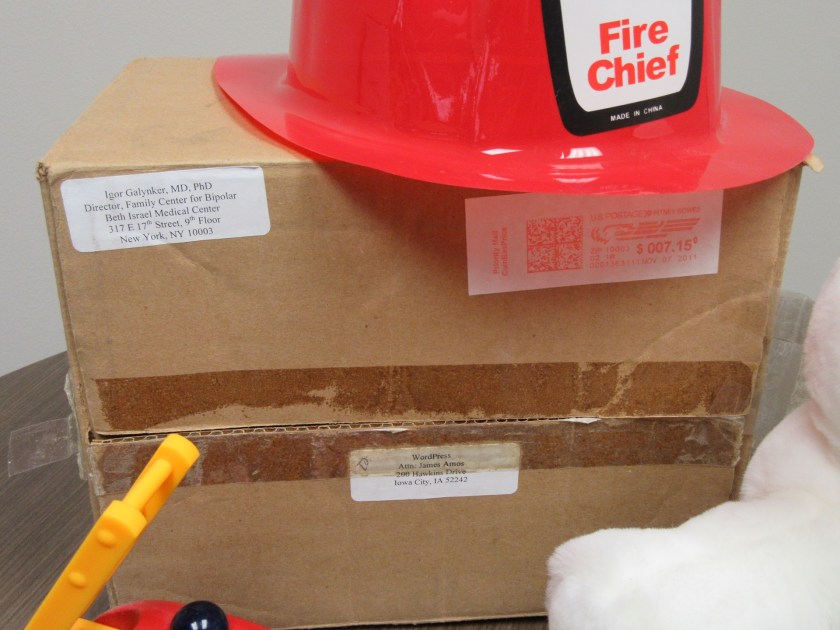
I have what seems like precious few mementos of my sojourn here in the department and, indeed, on this earth. I have a toy fireman’s helmet I found hanging in a plastic sack on my office doorknob one day. It was a gift from a Family Medicine resident who rotated on the consult service and who learned why I called it a fire brigade.

For the same reason, I have a toy fire truck, sent to me by a New York psychoanalyst who was also a blogger.

I have Bumpy the Bipolar Bear, believe or not, sent to me by psychiatrist, Dr. Igor Galynker, about whose emergency room suicide risk assessment method I had blogged about several years ago. C-L psychiatrists do a lot of suicide risk assessments in the hospital and the clinics. I still have the box with the address to me:

WordPress

Attn: James Amos

200 Hawkins Drive

Iowa City, IA 52242

I have my first homemade handbook for C-L Psychiatry and the published handbook that eventually replaced it. Thank goodness the leaders of the Academy of Consultation-Liaison Psychiatry listened to the membership and changed the name from Psychosomatic Medicine to C-L Psychiatry.

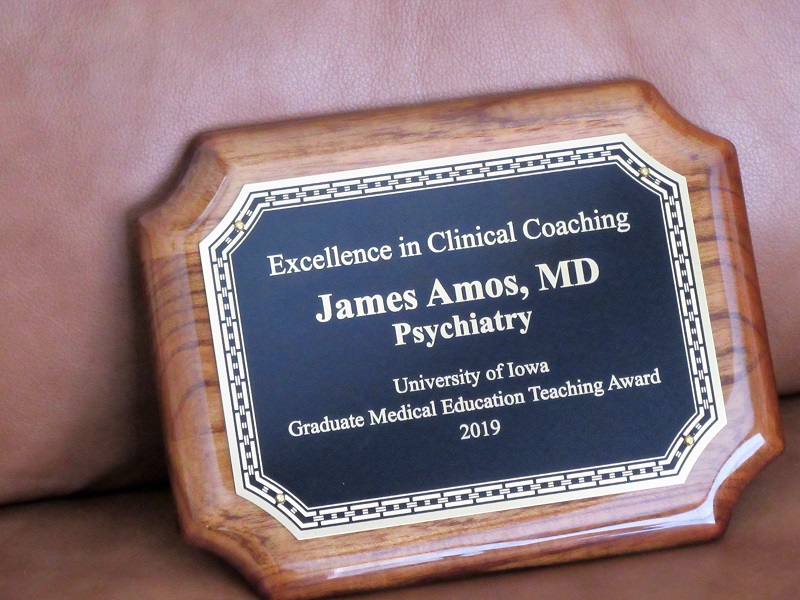
I have an award for being an excellent clinical coach.

And I have my little camp stool, which a colleague who is a surgeon and emergency medicine physician gave me and which allows me to sit with my patients anywhere in the hospital, so that I don’t have to stand over them.
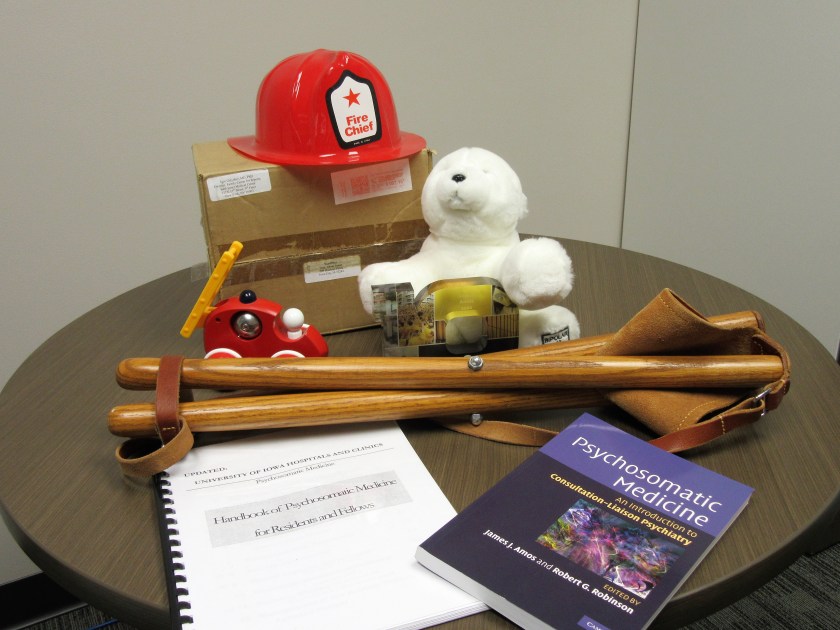
It will all fit in a cardboard box on my last day—the next milestone.

Bridges: An Essay on MLK Day of Service 2020

The Martin Luther King Jr. Day of Service is today and the University of Iowa has taken a quote from King to set the tone each year for this event. This year it is:

“Let us build bridges rather than barriers, openness rather than walls. Rather than borders, let us look at distant horizons together in a spirit of acceptance, helpfulness, cooperation, peace, kindness and especially love.”—Dr. Martin Luther King, Jr.

Dr. Martin Luther King, Jr.

As I look back on my career in medicine, it’s only natural for me to think of my role as a consultation-liaison psychiatrist as a sort of bridge between medicine and psychiatry. I’m pretty sure most would agree that as I chased around the hospital up and down the stairs doing the 3 and 30 (3 miles and 30 floors; I never take the elevator), I was doing my level best to bring psychiatric care to the patients in the general hospital who were suffering from medical illness as well.

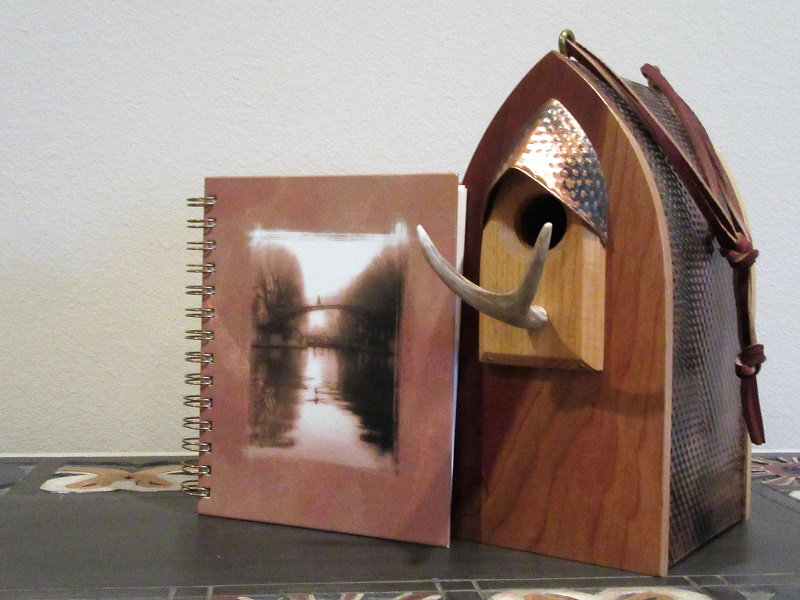
The featured image shows the cover of a little book of kind remembrances I received from colleagues and trainees when, during one of my two such lapses in good judgment, I left the University of Iowa to have a try at private practice. The book has an image of a bridge on it. At the time, I thought of it as a depiction of my path between academia and community psychiatry. We need bridges there too, although one person let me know that someone has to teach new doctors.

I also got a fancy birdhouse as a going-away gift. I still do some bird-watching.

As I head into retirement, I hope that I’ve been a bridge of sorts between the old ways and the new to the next generation of doctors. After all, I’m the institutional memory of psychiatry on the medical and surgical units, in a manner of speaking.

The Medical-Psychiatry Unit (MPU) at University of Iowa Hospitals & Clinics was where I learned how this ward of patients with both medical and psychiatric illness served as a bridge between the departments of psychiatry and medicine. My teachers were doctors who were and still are great leaders. I still recall Dr. Roger Kathol, MD, an internist who also trained in psychiatry, and who designed and started the MPU decades ago, gave readings during sit-down rounds in the unit conference room. He read passages from the works of Galen, the Greek physician, surgeon, and philosopher in the Roman Empire.

Dr. Kathol assigned to me a task one day, which was to give a short presentation the following day on hyponatremia and how to distinguish psychogenic polydipsia from the Syndrome of Inappropriate Antidiuretic Hormone (SIADH). That night I was on call and got 4 admissions on the unit, which was chaotic. One patient actually broke a bed. I didn’t get any sleep. I was up running around until we all sat down to discuss patients.

I struggled through presentations of the 4 patients I had admitted the night before. I could barely talk. I had actually looked up a little information for my assigned presentation on hyponatremia but I was sweating it because I could barely stay awake. I was not the first resident to have episodes of microsleep on rounds and I knew Dr. Kathol saw it happening to me. That was in the days of 32 hours of call. They don’t make trainees do that now.

Dr. Kathol gave me sort of a sidelong glance as we finished discussing patients, which was usually when trainees were expected to give short educational talks. That day, he skipped me.

I should mention that he thought the proper name for the MPU was the Complexity Intervention Unit (CIU), owing to not just the medical and psychiatric complexity of our patients, but also to their social environments and the U.S. payer system which often led to many having inadequate, dis-integrated health care, meaning that there was no bridge between psychiatric and medical illness treatment and split health insurance coverage even though research showed that mental illness definitely lessened quality of life and increased health care costs. He has his own company, aptly named Cartesian Solutions, and it’s a major organization dedicated to helping hospitals and clinics set up collaborative ways to bridge the needs of patients with comorbid psychiatric and medical illness.

The University of Iowa model for the MPU has been disseminated to a number of other hospitals in the country, one of them in Pennsylvania, which I mentioned in a previous post, “Brief News Item,” on May 23, 2019. I’ve just received word a couple of days ago from Dr. Kolin Good that the unit, called the Medical Complexity Unit (MCU), a name which bridges the underlying intent of MPU and CIU, has saved the hospital a great deal of money, has drastically cut the use of sitters doing one to one observation (an extremely expensive intervention), is treasured by patients, and popular with trainees. They are very proud of it and have every right to be so. They are bridge builders too.

Dr. Louis Kirchhoff has been one the most notable internal medicine co-attendings on the MPU. He’s an infectious disease specialist, but has a knack for communicating effectively with patients who are mentally and medically ill, even speaking fluent Spanish with some of them. He and I shared triage call to the MPU every other night before the triage system was changed to a more humane schedule. He was a bridge between internal medicine and psychiatry trainees rotating on the ward. He could explain psychiatry to the medicine residents as well as I could.

I have had a penchant for finding a chair to sit down when I interview patients in their hospital rooms. There are usually not enough chairs in the rooms. A few years ago, Dr. Tim Thomsen, a surgeon and Palliative Care Medicine specialist as well, lent me a camp stool which I carry around with me so that I’m never at a loss for a chair. Everyone likes it. I think the camp stool helps build an emotional bridge with patients.

The little chair

There are special combined specialty residencies at the University of Iowa Hospitals and Clinics which bridge Internal Medicine and Psychiatry and Family medicine and Psychiatry. Slowly but surely the siloed departments of academic medical centers are broadening their curricula and training regimens to rebuild the bridge between mind and body.

It’s been evolving for years. I’m proud to have played a small role in it. This is a place where teachers, researchers, and clinicians build bridges in many ways, foster openness, and search the “distant horizons in a spirit of acceptance, helpfulness, cooperation, peace, kindness and especially love.”

Back in the Saddle Again

This is just a short update on how phased retirement is going. I’m back in the saddle. Last Friday I went back on duty on the Consultation-Liaison Psychiatry service. I’m at 50% time. My step counter today shows about 2 miles and 17 floors—a slow day. That’s fine with me.

Colleagues pass me in the hall and say, “I thought you were retired.” They don’t look happy when I tell them I’ll be fully retired in June next year.

But I’m a little happier. It’s taking a long time to get used to not being a fireman, which is what it means around here to be a C-L psychiatrist.

How’s the cooking going? Miserable but getting better, in a way. I can deal with things like “Just Crack an Egg,” which my wife, Sena got for me, as a sort of sympathy gift, I guess. I can handle it. And I made an omelet the other day, my first ever. The kitchen was not filled with smoke and it was edible.

How’s the exercise routine going? I’m still at it, 20 minutes every day, along with my mindfulness practice.

As I was giving my usual orientation remarks to the new trainees coming on the service this morning, I caught myself saying “I do it for the juice” when telling them why I do this schtick. I’ve said that to a lot of residents and medical students over the years.

I guess I should rethink that remark and the mindset that makes me say it so often. Pretty soon, I won’t be chasing all over the hospital anymore— “for the juice.”

I’ve been trying hard to find something else for the juice. Sena and I’ve rediscovered card games we haven’t played in over 20 years: Pinochle and Gin Rummy. I lost track of time playing Gin yesterday, I had so much fun. We just celebrated our 42nd anniversary. It was magical.

I’m probably going to be OK.

Over the Double Rainbow

We saw a double rainbow while out for a walk during a gentle rain. I know they’re not rare, they form because light bounces off raindrops, and all that. I’m not after the science angle here. I’m just hoping this was a sign of good luck to come. I’m pretty sure I’ve probably seen a double rainbow before. I just can’t remember when. And I doubt it was as striking as this beauty was.

Double rainbow!

These days I’m wondering what’s over the rainbow or the double rainbow. Going for a walk the other day helped me put things in perspective—at least for a while.

Out for a walk in the fall

My life is slower when I’m not on service in my role as a general hospital psychiatric consultant. And I’ll be fully retired in June. I just came off service earlier this week, when I was going at my usual fireman’s pace. Things seem to move so much faster nowadays.

I’m on service at 50% time now. That feels a lot different than the previous two years, when I was at 65% time. When I’m on, I’m going at a dead run. When I’m off, I just mosey along. It’s a little jarring to go from 0 to 90 and back again every so often—even though it’s less and less often.

I don’t mind telling you, I get a little bored sometimes. It helps to do something different every once in a while. I hadn’t made a pizza from scratch in over a year and a half. I guess it’s not completely from scratch. I’m still better at just sticking a frozen one in the oven.

Make that pizza!

Let Happiness Leak

This is just a post to offset the grumpy one from a couple of days ago. Sena and I took a walk on the Clear Creek Trail and she broke me up with her shenanigans.

Along the way, we found a painted rock in a tree which had the word “corridor rocks” printed on it.

It looked like something you could google—which I did. It’s a cute story titled “The Corridor Rocks! —Brightening Days One Stone at a Time” by Sara C. Painting rocks, hiding them and giving people like us a fun time discovering them. Sara says it was a way to stop and smell the roses.

It’s one way to remember how happiness works. It leaks…sort of. We put the rock back where we found it. The only clue we’ll give you is that it’s somewhere out there on the Clear Creek Trail. Have fun!

Signs to Guide Me

It’s been a long while since my last post. I’ve been busy looking for signs to help guide me in adjusting to this retirement gig. It’s a tough skill set to learn.

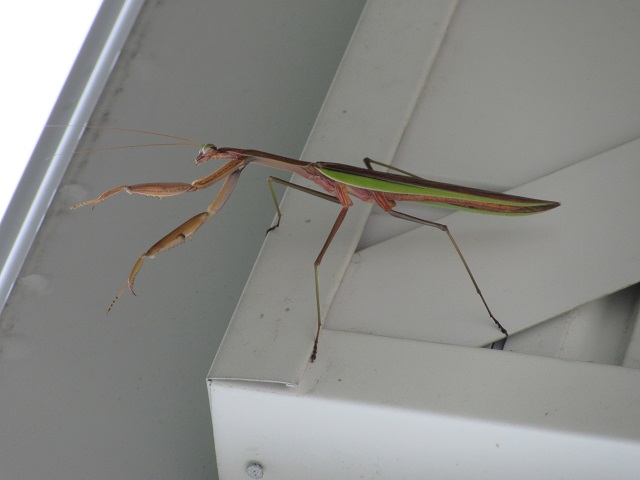
I saw this bug on our house the other day. It turned out to be a Praying Mantis. Don’t quibble about the precious difference between mantids and mantises—I don’t have the patience for that. Anyway, this one didn’t have the typical pose, with the long forelegs cocked into a prayerful posture. It looked more like it was just trying to find its way—kind of like how I feel.

I read a little bit on the web about the Praying Mantis. One culture says seeing one is good luck and another says it’s bad. I read just enough to hope there is no such thing as reincarnation. I hope never to come back as a male Praying Mantis, if you get what I mean. Look it up.

What I really would appreciate is somebody telling me about what would be the best way to adjust to retirement. Many days go by when I struggle to shake the notion that I was never really any good at anything other than being a doctor.

I need a sign. I need many signs, as a matter of fact. Just to clear my head, I went for a long walk out on the Clear Creek Trail. I noticed quite a few signs out there. Most of them seemed to have some special significance. That’s just because I’m preoccupied with getting used to being retired.

There were signs of September on the trail. Specific signs telling you to do something or not do something else. And there were signs that you generally see every September that tell you autumn is on the way.

It reminded me of that song, “Try to Remember,” which has always struck me as lugubrious.

I just need a sign and I don’t care if the Praying Mantis points it out or not.

Ten Month Countdown to Retirement

Starting this month, I’ve got a 10-month countdown to retirement. I was reminded of that when I got a brochure in the mail for the University of Wisconsin 7th Annual Update and Advances in Psychiatry. It’s scheduled for October 11-12, 2019 at the Monona Terrace, which is the usual location.

I’ve received these announcements in the mail every year for longer than 7 years. I’ve never had the time to make it to a single of these meetings. I’ve always been on duty. I’m not sure why they are advertising them as though they started only 7 years ago.

I can remember getting an announcement in 2009 in which the title of the update was Nontrivial Neuropsychiatric Nourishment from Noble Notable Nabobs. How’s that for a sense of humor? There were several like that prior to 2009 but I never kept the brochures. I haven’t seen any brochures like that for the last seven years.

I don’t know who came up with the humorous titles. I wonder if it was Dr. Jefferson. I noticed this year’s brochure had an In-Memoriam notice about James W. “Jeff” Jefferson, MD, who has been a luminary of psychiatry for decades. He was also a major presenter at these psychiatry advances meetings. He was active in psychiatry for over 50 years.

And me? I’m retiring after a much shorter career, by comparison. I’ve been running all over the hospital as a Consult-Liaison Psychiatrist during the busiest time in academic medical centers everywhere–July and the early part of August when senior medical students become full-fledged resident physicians. Newly-minted doctors tend to request many psychiatric consultations. On average I’m putting close to 4 miles and 30-odd floors on my step counter (with C-L psychiatrists, maybe it’s not the years but the miles that count—literally). I’ve not taken vacation during the past 2 years of my current phased retirement contract—and don’t plan one for this final year.

That reminds me of time in 2012 when my wife, Sena, and I went to Madison, Wisconsin on a vacation, the first in a long time. The residents were wondering when I was going to get away. Madison is a great place to visit and we lived there briefly when I took a stab at private practice.

We stayed at the Monona Terrace, which gives a great view of Lake Monona. We loved Olbrich Botanical Gardens. We rented a couple of bikes at Machinery Row Bicycles and rode all the way to Olbrich. The rental bikes were a far sight more affordable than a lot of the ones you could buy. Many were priced at several thousand dollars.

And I found an old copy of Robbins Pathologic Basis of Disease at Browzers Bookshop on State Street. I used that book as a medical student. My class used the nearly 7 pound red 3rd edition containing 1,467 pages. This book is hailed as an outstanding foundational text, which it is. Dr Stanley Robbins has been eulogized as an exacting editor who championed writing of the type espoused by Will Strunk in The Elements of Style.

Not to be picky, but the book contained the phrase “not excessively rare” in reference to some process or disease which I can’t recall. I do recall that a majority of our class howled about this verbiage, which seemed the antithesis of what Strunk tried to teach.

You could see a lot of interesting sights on State Street. During a previous visit, we saw a guy walking down the middle of the street with a rattlesnake coiled on his head, wore it like a hat.

We had a lot of fun in Madison. It’s that kind of relaxed, good time that I want to retire to. Ten months to go.

If You Can’t Stand the Heat…

We saw this rabbit in our front yard today, stretched out on the grass under our crabapple tree. It’s 117 degrees this afternoon with the heat index and we won’t get out from under the Excessive Heat Warning until later this evening. Thank goodness for air conditioning. Rabbits don’t have air conditioning and can’t escape the heat.

Sena stands the heat better than I do; she waters the lawn and garden, keeping it beautiful. On the other hand, I felt body-slammed just walking out to get the mail.

Out in Sena’s garden

The old saying goes, “If you can’t stand the heat, get out of the kitchen.” It means you if you can’t take the pressure of a situation, then you should move and let somebody else take over. It was popularized by President Harry S. Truman, who said the originator of the proverb was Judge Buck Purcell of the Jackson County, Missouri Court—whoever he was.

Anyway, I’m on call this weekend and got to talking with a colleague who is thinking about retirement. We go back a long way in our education and careers. He asked me about what phased retirement is like. I told him I thought if I’d tried to retire outright, I probably would have just come back to work.

That’s a twist on standing the heat. As a psychiatric consultant, I’m like a fireman (get it?) in the general hospital, putting out fires, so to speak, all over the hospital. Most often the problem still tends to be delirium, an acute change in mental status that should be considered a medical emergency rather than a psychiatric problem per se. It’s just one of many crises that I encounter every day. Over 23 years (not counting residency), I learned how to stand the heat in that kitchen. When I retire, somebody else will have to get in there and cook. Speaking of cooking—I still can’t.

I guess I’m mixing my metaphors (fireman and kitchens, etc.). So what? I’m a retiring geezer and I guess I’ve earned the right to mix my metaphors as much as I want.

But in my first year of the 3-year phased retirement contract, I felt a different kind of heat–the heat of trying to find something to do with my unstructured time. It was a struggle for a guy who’s accustomed to being in almost constant motion, climbing up and down 20-30 floors (I hate waiting for elevators) and covering 2-3 miles a day.

The only trouble is—I can’t get out of the kitchen of retirement. I’m getting up there in age and even though most of the time, I seem to leave some of the trainees huffing and puffing getting up the stairs, I know they’ll replace me someday. But I can’t find a replacement to do my retirement time for me.

I have 11 months to go before I retire. I can feel the heat.

Hickory Hill Park Ramble

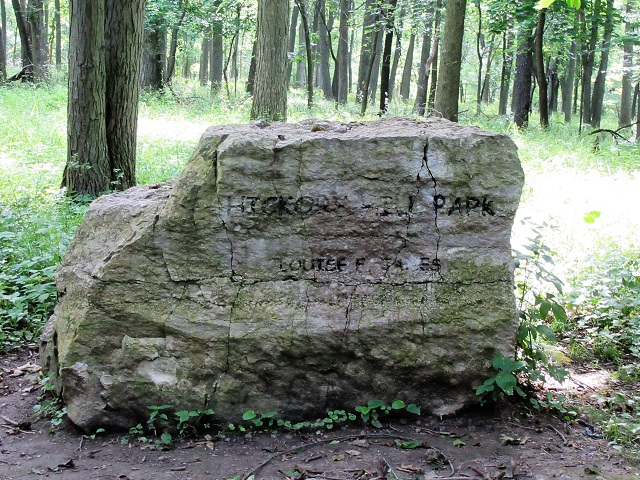
We visited Hickory Hill Park today in Iowa City. We’ve lived in this area for 30 years and have been near it but never walked a trail until now. It’s full of trees, birds, and other wildlife, including deer, which seemed to pose for the camera.

Deer posing

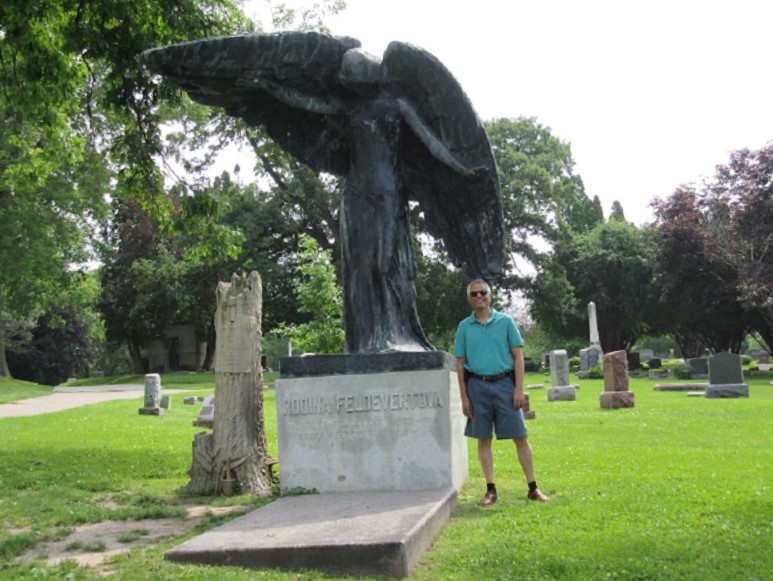
I say we’ve been near it because we have visited Oakland Cemetery, where the famous Black Angel monument is. At least one of the trails leads to one end of the cemetery—which we discovered today.

There are many legends about the Black Angel, most of which are in the vein of various curses and some of which claim that the curses can kill visitors—not true, of course. Many take selfies in front of the Black Angel and toss coins in the base (probably to ward off any curses, just in case).

I was feeling pretty reckless on the day Sena took a snapshot of me in front of the Black Angel. I left a little pocket change. That was a few years ago. The object of the visit was not to visit the Oakland Cemetery but to take part in the picnic and Psychiatry Department Matball Challenge game, Faculty vs Residents at Happy Hollow Park about a block away from the cemetery.

The Black Angel of Oakland Cemetery

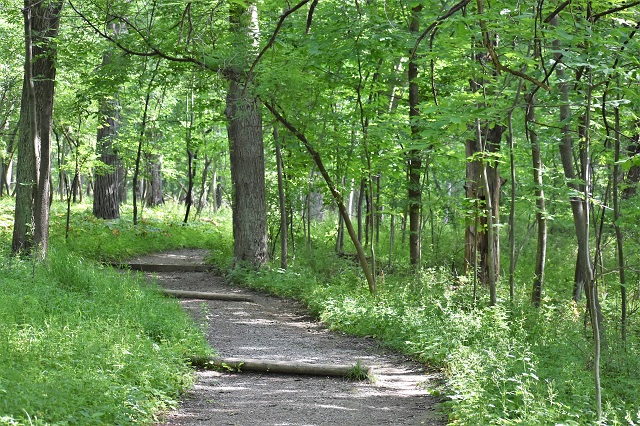
Anyway, it was pretty hot today, in excess of 100 degrees with the heat index. We kept the walk short for that reason. It was warm, but the tree canopy kept the heat down a little. There’s something about walking through a thickly wooded area in which most of the sounds you hear are of nature. It tends to make me a little reflective.

Because I’m in my last year of a phased retirement contract and will fully retire next year, I’ve been thinking about transitions, the end of one era of my life and the unknowns about the beginning of another. There are a lot of unknowns. Sometimes I feel a little lost.

Retirement tends to lead me to think about death, which is pretty morbid, I know. I don’t ruminate about it, but walking past some of the park benches, some of which are memorialized to certain persons, got me to wondering about the next bend in the path. On one of them was a small plaque bearing a quote,

“Not all those who wander are lost.”

JRR Tolkien

There was a baseball on the bench.

And not long before we got to that bench, we saw a shoe, apparently lost by someone—who might have been lost. Hickory Hill Park is big. A person could get lost in there.

Lost shoe

We followed a path that others seemed to be taking. It led to the back of Oakland Cemetery where we saw a couple of headstones which puzzled us. The names were very familiar; man and wife, with only the birth years carved in them. But the strange thing was—as far as we knew they were still very much alive! The man had been the closest thing to a mentor that I could remember ever having.

Naturally, later I realized that it was just that they had thought through their own transitions a lot farther than many of us do. They had planned not only for retirement. They had planned for their own deaths. But until I finally got it, I actually searched on the web for obituaries.

Strange, I actually found a pdf file posted that sort of sounded like one—an exquisitely written letter from a relative who described the person we knew in enough detail that it seemed to identify him beyond much doubt. Why would such a beautiful and presumably private remembrance be posted on the web?

Maybe because the relative wanted the world to know how deeply loved this person is—while he is still alive.

Path

The Retirement Home Search and The Well of Memories

We were out for an adventure today, shopping for a retirement home. That’s what it was, really, although we really didn’t make any hard decisions or commitments.

Nowadays there are considerations for whether to build from the ground up, buy and modify a spec home, buy an older home, go condo, even rent, move to a retirement village, and whatnot.

You have to think about mud rooms, pantries, walkout basements, whether to finish the basement or not, lot size, square footage of the house and the yard, two car or one car garage, Jack and Jill sinks, lawn sprinkler systems, Home Owner Associations (HOAs), fences, ceiling fans, gas fireplaces, whether or not you want to live next door to a high school baseball stadium and more even beyond that.

What you don’t have to think about is whether or not there’s indoor plumbing.

When my brother and I were little boys, our pastor and his family took us on a long drive up to the sticks somewhere in Minnesota in the dead of winter. Man, it was cold up there. The object of the visit was to visit a family who lived out on a farm and they didn’t have indoor plumbing.

There was an outhouse and a well. I remember the pastor’s little girl and his brother and me and my little brother stood by the well and talked about how pure the water was in the well. While we were talking, the pastor’s daughter picked up a rock and, before anyone could stop her, dropped it into the well—just to see how it would float down to a bottom nobody could see.

Her little brother was pretty annoyed. The member of the family we were visiting had just remarked how clear and pure the well water was. After the rock spiraled out of sight into the water, her brother spat out, “Well, it was but now it isn’t!” She just snickered.

Because we were staying the night at the farmhouse, we went to bed. There was a large pan for urinating but if you had to move your bowels, the only option was the outhouse.

I had to go. I waited as long as I could because it was really cold out there. Finally, I just couldn’t hold it any longer, and I had to pull on some clothes and trudge over the frozen ground to this shabby little shed that I could smell long before I got to the rickety door.

There was some paper in there but—it wasn’t real toilet paper. It might have been magazine pages. I was so cold it was impossible to relax enough to let go.

I had problems with constipation after that for a good long while, well after we returned home.

Things have changed a lot—mostly for the better in many ways but you still have to pay a high price in other ways.

Toilet paper is softer.