Thoughts on the Big Mo Pod Show 034: Laughing in the Face of Death

I heard the Big Mo Blues Show just (Halloween theme) this last Friday night and was not surprised to see that one of the songs discussed on the Big Mo Pod Show on Saturday was Peetie Wheatstraw’s “Devil’s Son-in-Law.”

When I first heard it, it got me chuckling because I didn’t understand hardly a single word until the last line. It was babbling. I can remember googling the term “Peetie Wheatstraw and unintelligible,” which revealed I’m not the only one who thinks he’s unintelligible. It’s a mondegreen mine field. It’s a good thing the lyrics are available.

I want to hastily point out that he’s not always unintelligible—but William Bunch aka Peetie Wheatstraw is speaking in tongues on that song. For comparison I listened to another song, “Sweet Home Blues” and I could understand just about every word in the lyrics.

That led me down the rabbit hole about the artist in a web search that seemed to have no end. I should probably say Brer Rabbit hole since most of my searches pointed in the direction of a character called Peter Wheatstraw, Petey Wheatstraw, as well as Peetie Wheatstraw who had variations in their identities, most often in the context of African American folklore.

I’m not going to attempt a summary of my web search on Peetie Wheatstraw; there’s too many twists and turns. You can start with the Wikipedia article. But from there, you can get trapped in Brer Rabbit’s little tunnels, which can run in different directions.

William Bunch was a blues artist in the 1930s who adopted the moniker “Peetie Wheatstraw.” While Big Mo says it’s sort of another name for Satan, I found confusing references by writers who claim that the Peter Wheatstraw character comes from Black folklore. There are those who believe that novelist Ralph Ellison wrote about a character in his book “Invisible Man” named Peter Wheatstraw and said it was the only character in the novel that was based on a live person—William Bunch.

Is that true? And did Ellison ever meet Peetie Wheatstraw (William Bunch)? I can’t tell from the web articles.

I was prompted to get my copy of “Invisible Man” out after reading a scholarly online essay mentioning the Peter Wheatstraw character, “Re-visioning Ralph Ellison’s Invisible Man for a Class of Urban Immigrant Youth” by Camille Goodison, CUNY New York City College of Technology. I couldn’t remember Wheatstraw at first, but there he was in Chapter 9.
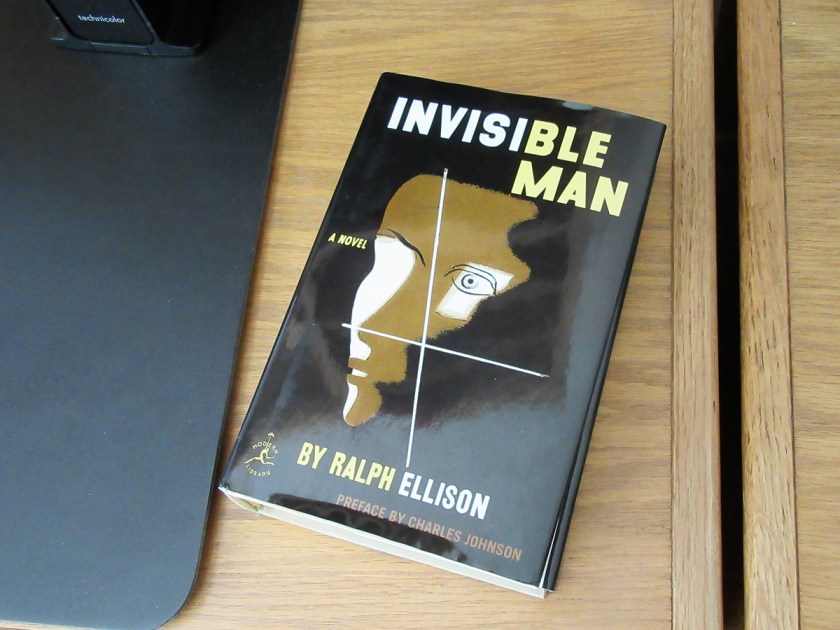
Goodison reveals there is a lot more texture to the Wheatstraw character then just as a moniker adopted by William Bunch. Wheatstraw is probably more complex than the devil. He has many sides to him and could be helpful—but mostly in an indirect way. His guidance is full of riddles and there doesn’t seem to be a solid way to cut through the metaphorical morass. As Emily Dickinson advised, Wheatstraw may tell the truth—but tells it slant.

I still don’t know why he mumbles the song.

Black History Month 2024 Theme is African Americans and the Arts

February is Black History Month and in 2024 the theme is African Americans and the Arts.

This reminds me of a blues artist I heard on KCCK on the Big Mo Blues Show last Friday. His name is Toronzo Cannon and his career as a blues guitarist and songwriter is skyrocketing. I heard his song “The Preacher, the Politician, and the Pimp.”

The lyrics reminded me of a character (or maybe more properly a non-character) called Rinehart in Ralph Ellison’s book, Invisible Man. I’m by no means an Ellison scholar but in chapter 23 the main narrator gets mistaken for a black guy named Rinehart who has many faces in the black community. He’s a preacher, a numbers runner, a pimp, and is also related to a political movement in the novel. Rinehart is all of them and none of them, moving between the “rind and heart” of who black people are in America. The implication is that the identity of black people is multifaceted and the similarity of the theme in Toronzo Cannon’s song is striking.

Cannon is also multifaceted. He’s a Blues guitar star and song writer and is also still a bus driver for the Chicago Transit Authority. How does he find time to do all that?

I wonder if Cannon got the idea for the song from Ellison’s novel. I guess I’ll never know.

This reminds me of an encounter I had with a black writer at Huston-Tillotson University (then Huston-Tillotson College, located in Austin, Texas) in the 1970s when I was an undergraduate in college. I’ve described this episode before in another post (“Black Psychiatrists in Iowa” 2019). The excerpt below includes a reference to a book review I wrote that was published in The American Journal of Psychiatry over 20 years ago:

“This reminds me of a book review I wrote for the American Journal of Psychiatry almost 20 years ago (Amos, J. (2000). Being Black in America Today: A multi perspective review of the problem. Am J Psychiatry, 157(5), 845-846.).”

The book was written by Norman Q Brill, M.D. It reminded me of my experience at Huston-Tillotson College (now Huston-Tillotson University, a private school, historically with largely Black enrollment) in Austin, Texas back in the 1970s. I wrote:

“Dr. Brill’s appraisal of many black leaders in chapters such as “Black Leaders in the Black Movement” and “Black Anti-Semitism” may be refreshingly frank in the opinion of some. He tailors his prose so as not to denounce openly those whom many would describe as demagogues. At the same time, it is apparent that his underlying message is that a substantial number of them are not only out of touch with mainstream black America but may even mislead black people into adopting ideological positions that impede rather than foster progress. Dr. Brill’s description of the issue reminded me of my own experience with this phenomenon as a freshman in the mid-1970s at a college of predominantly black enrollment in the southern United States. A guest lecturer (who, as I recall, had also written a book about being black in America) told us that the white man would never allow a black man to be a man in America. He had only three choices: he could be a clown, an athlete, or a noble savage. These corresponded to the prominent and often stereotyped roles that blacks typically held in entertainment, sports, and black churches.” 

I was taken aback by the speaker’s judgment and asked him what my choice should then be. He was equally taken aback, I suspect. He advised me to be a clown.

The lyrics of Cannon’s song “The Preacher, The Politician, and the Pimp,” Ellison’s Rinehart, and another writer’s characterization of the roles allowed in American society for black men all resonate together. What drives the similarity of this perception across different artistic platforms?

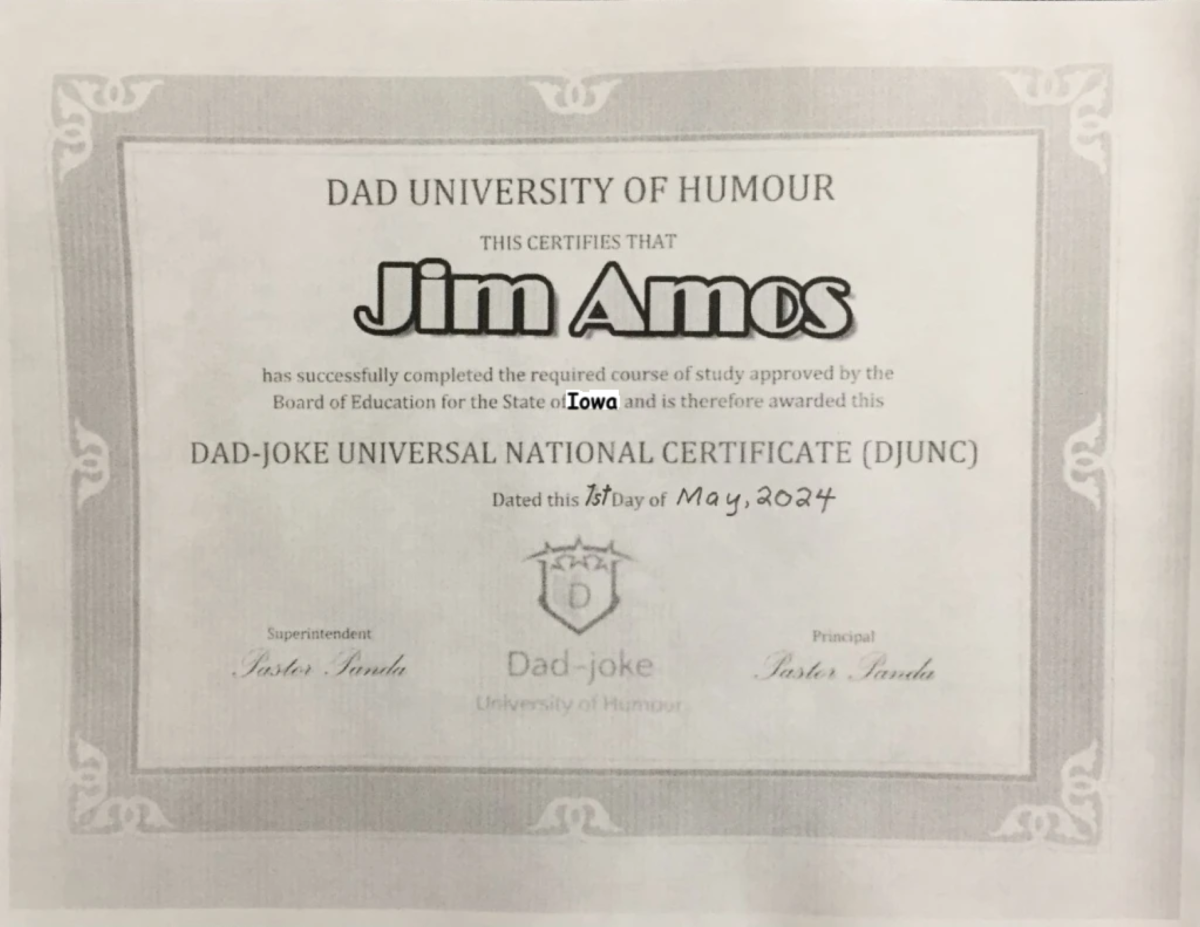
When I reflect on how I’ve negotiated my life’s path over they years, I guess I would have to admit that I’ve often played the clown. Anyone can see that in the way my sense of humor comes across. Is it the healthiest way to respond to racism in this country? In terms of the psychological defense mechanisms, I think it’s a relatively mature strategy. You could argue with that by asking, “But where’s the maturity in dad jokes?”

Hey, it worked for Dick Gregory:

“I’ve got to go up there as an individual first, a Negro second. I’ve got to be a colored funny man, not a funny colored man”—Dick Gregory.

Dick Gregory

University of Iowa Free Webinar Tonight: The Stories That Define Us”

We just found out that the University of Iowa is presenting a free webinar this evening from 4:30—5:30 PM. It’s a zoom meeting and the title is “Breaking Barriers: Arts, Athletics, and Medicine (1898-1947)”. It’s part of a 4-part series that started February 1, 2022, “Uncovering Hawkeye History: The Stories That Define Us.”

Presenters include:

  • Lan Samantha Chang (93MFA), Iowa Writers’ Workshop director and acclaimed author
  • Quinn Early (87BA), Hawkeye football star and film producer
  • Patricia Winokur (88R, 91F), professor of internal medicine–infectious diseases

We discovered this presentation after a long, spirited conversation about race relations generally this morning over breakfast. Authors mentioned included Ralph Ellison, author of “Invisible Man” and James Alan McPherson, long time faculty and director of the Iowa Writers Workshop, author of first African American to win a Pulitzer Prize winner for fiction with his collection “Elbow Room.”

There were several cross threads in our conversation. One of them was my memory of a visiting professor (whose name, however, I can’t remember) who gave a presentation about being Black in America at Huston-Tillotson College (now Huston-Tillotson University; one of the HBCUs in America) in Austin, Texas. He said something I’ll never forget. I mentioned this in a book review published over 20 years ago in the American Journal of Psychiatry:

A guest lecturer (who, as I recall, had also written a book about being black in America) told us that the white man would never allow a black man to be a man in America. He had only three choices: he could be a clown, an athlete, or a noble savage. These corresponded to the prominent and often stereotyped roles that blacks typically held in entertainment, sports, and black churches. It begged the question of what on earth could we hope to accomplish— JAMES J. AMOS, M.D., Iowa City, Iowa (2000). “Being Black in America Today: A Multiperspective Review of the Problem.” American Journal of Psychiatry 157(5): 845-846.

This is related to another memory, that of the quasi-character Rinehart in Ellison’s “Invisible Man.” The name refers to the multiple perspectives from which a black person (or any person, really) can look himself. You can look at the word itself as compound, containing two words, “rind” and “heart.” Understood as metaphors, you can readily see how it could apply to anyone. We can have a surface personality socially, and we can have an inner core, a heart that is hidden and which can truly define who we are. We’re always changing, inside and out, backwards and forwards.

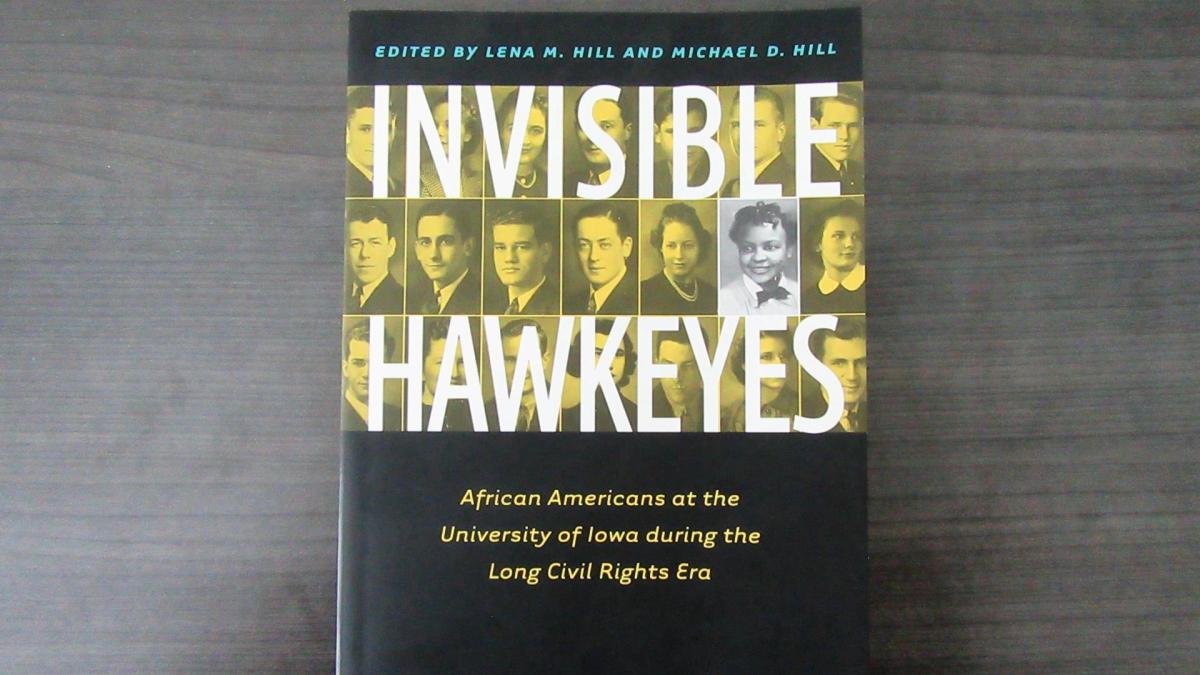
On the subject of hidden stories, I am also reminded of the book “Invisible Hawkeyes: African Americans at the University of Iowa during the Long Civil Rights Era”, edited by former UI faculty, Lena and Michael Hill. The book describes the mixed reactions of African Americans to the interracial climate in Iowa City and at the University of Iowa during that era. Not all felt welcome, although James Alan McPherson did. Indeed, the Hills often highlight the fluidity of the interactions, which makes me think of Rinehart.

David McCartney, the university archivist, is joining the presentation. He led the drive to rename Johnson County in Iowa for Dr. Lulu Merle Johnson, an accomplished University of Iowa alumna, by putting up an on-line petition which gathered 1,000 signatures. We’re looking forward to this evening’s presentation.

The Visible Flame

I began rereading the book Invisible Man by Ralph Ellison today, which is Leap Day. Given what little I know about Leap Day and Leap Year in general, there isn’t a connection.

I first read Invisible Man well over 40 years ago. It was a paperback and I took it with me to Huston-Tillotson College in Austin, Texas (now Huston-Tillotson University), one of the historically black colleges and universities (HBCUs) in the United States.

It was very hot in Austin in my freshman year and the students didn’t have air-conditioned dormitories in those days. It must have been over 90 degrees. The glue melted on most of my paperback books, including Invisible Man. I suppose that’s why I eventually threw the book away, because it was falling apart.

After all these years, I bought a hardcover edition. We have air-conditioning now. I was motivated to read it again after I read Invisible Hawkeyes: African Americans at the University of Iowa during the Long Civil Rights Era, edited by Lena M. Hill and Michael D. Hill. See my blog posts, Milestones, and The Iowa River Landing Sculpture Walk, for background.

When I was a young man, I identified with the protagonist in Invisible Man. The Prologue still strikes a chord.

On the other hand, I googled my name today and found a few links that made me feel less invisible. Probably the most surprising link was to an interview with me entitled “James Amos, MD,” which you can read here. The piece evoked memories of a past version of me—which has not changed much since then. It mentions my former blog The Practical Psychosomaticist which I later renamed The Practical C-L Psychiatrist (C-L stands for Consultation-Liaison) after the flagship organization, the Academy of Psychosomatic Medicine changed its name to the Academy of C-L Psychiatry in response to a poll of its membership asking whether the name should be changed.

This biography makes me more visible, at least on the web. On the other hand, the blog no longer exists, due in part from my concerns about the General Data Protection Regulation (GDPR), which was enforced in 2018. I posted a lot of educational material about C-L Psychiatry on the blog along with pictures and presentations of my trainees. In a way, I did not protect their privacy and I was uncomfortable about that.

Other web pages surfaced during my self-googling. They included my article on delirium, “Psychiatrists Can Help Prevent Delirium,” posted on Psychiatric Times in 2011.

I also found my blog post on physician burnout, “How I left the walking dead for the walking dead meditation,” published on the Gold Foundation web site in 2014.

And there was my other Gold Foundation post about rude doctors, “Are doctors rude? An insider’s view,” posted in 2013.

There are a couple of petitions left over from years ago as well, about the controversial Maintenance of Certification (MOC) and the closure of state mental hospitals in Iowa several years ago.

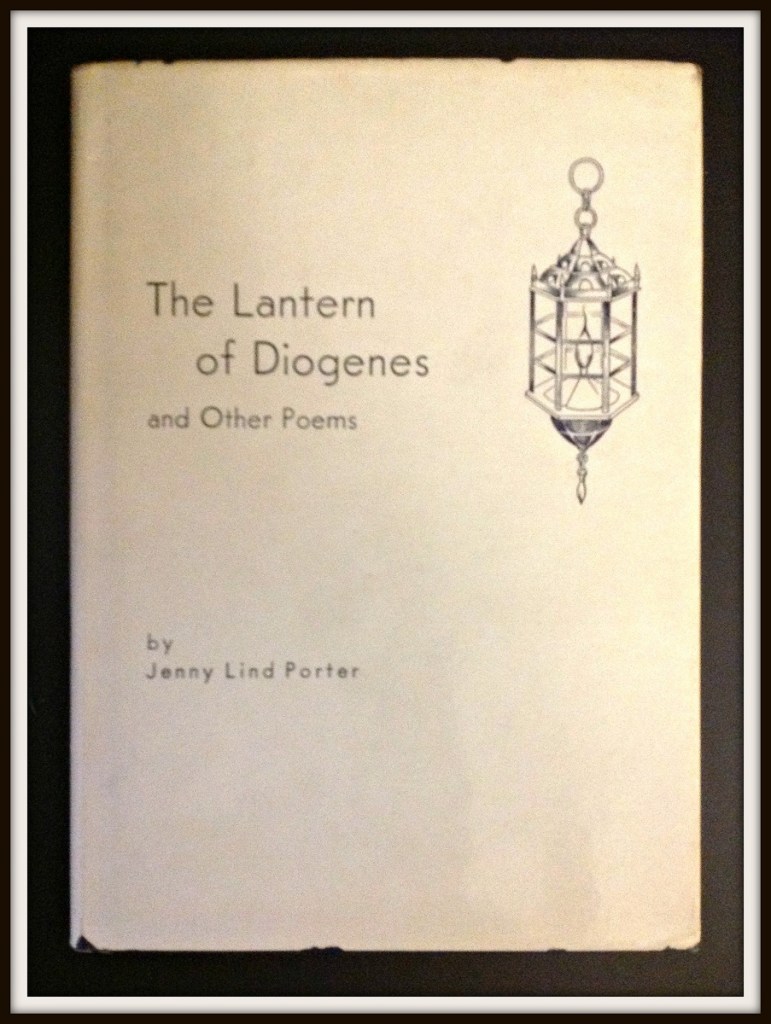
I also found my review of Dr. Jenny Lind Porter’s book, The Lantern of Diogenes and Other Poems (published 1954).

The book seller’s note to me when Porter’s book was delivered in 2011 read as follows:

“Thanks for your purchase! It’s rare to find a book of this age that when you open the pages, it creaks like it is unread. I guess someone liked the way it looked on their bookshelf! Haha! Enjoy the book and Happy New Year, Rob J.”

An unread author is an invisible author. The first poem in the book is below:

The Lantern of Diogenes

by Jenny Lind Porter

All maturation has a root in quest.

How long thy wick has burned, Diogenes!

I see thy lantern bobbing in unrest

When others sit with babes upon their knees

Unconscious of the twilight or the storm,

Along the streets of Athens, glimmering strange,

Thine eyes upon the one thing keeps thee warm

In all this world of tempest and of change.

Along the pavestones of Florentian town

I see the shadows cower at thy flare,

In Rome and Paris; in an Oxford gown,

Men’s laughter could not shake the anxious care

Which had preserved thy lantern. May it be

That something of thy spirit burns in me!

Dr. Porter’s house in Austin, Texas was demolished a few years ago. There were plans to build a house there reminiscent of the architectural style of her original home and also a remembrance of her published work. I just noticed a satellite image of the property. There is no visible evidence that anything of that nature was ever built. Dr. Porter is, in a sense, invisible although her lantern still burns.

Visibility is a relative term. My advancing age and approaching retirement sometimes lead me to feel like I’m becoming invisible, gradually vanishing from the landscape of consultation-liaison psychiatry and general medicine.

Ralph Ellison’s book Invisible Man is a visible legacy. My legacy is small—yet the flame flickers, visible after all.