Our Impressions of University of Iowa Free Webinar Yesterday: The Stories That Define Us”

We were overall delighted with yesterday’s presentation, University of Iowa Free Webinar: “Breaking Barriers: Arts, Athletics, and Medicine (1898-1947).” It’s one in a series of 4 virtual seminars with two more scheduled this month, which you can register for at this link.

February 15: Endless Innovation: An R1 Research Institution (1948–1997)

February 22: The Next Chapter: Blazing New Trails (1998–2047)

The moderator was university archivist and storyteller, David McCartney.

Presenters include:

Yesterday’s presentation was recorded and will be uploaded to The University of Iowa Center for Advancement YouTube site at a later date.

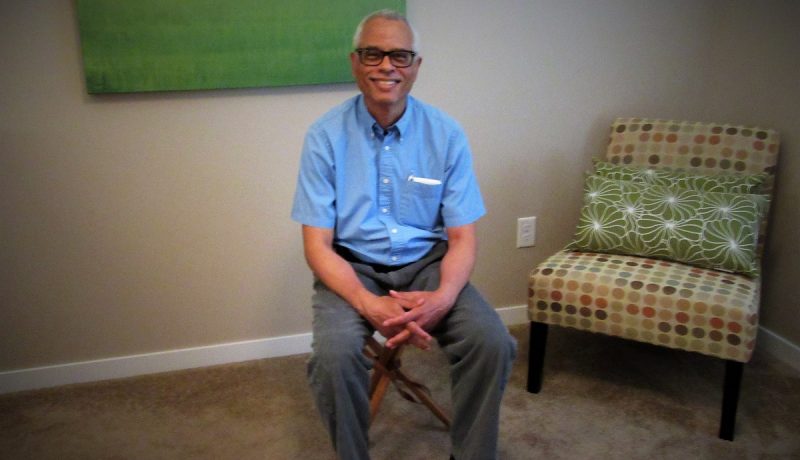
McCartney did an excellent job as moderator, although got stumped from a question from a viewer about who was the first African American faculty member in the College of Medicine. He’s still working on tracking that down. It wasn’t me. I’m not that old and I am not risen from the dead, as far as I can tell; but to be absolutely clear, you should ask my wife, Sena. I was able to google who was the first African American graduate of the University of Iowa law school: Alexander Clark, Jr. McCartney thinks he might have been the first University of Iowa alumnus, although he couldn’t confirm that.

On the other hand, I could have been the first African American consulting psychiatrist (maybe the only African American psychiatrist ever) in the Department of Psychiatry at UIHC—but I can’t confirm that. Maybe McCartney could work on that, too.

 There are a few words about me in the department’s own history book, “Psychiatry at Iowa: The Shaping of a Discipline: A History of Service, Science, and Education by James Bass: Chapter 5, The New Path of George Winokur, 1971-1990:

“If in Iowa’s Department of Psychiatry there is an essential example of the consultation-liaison psychiatrist, it would be Dr. James Amos. A true in-the-trenches clinician and teacher, Amos’s potential was first spotted by George Winokur and then cultivated by Winokur’s successor, Bob Robinson. Robinson initially sought a research gene in Amos, but, as Amos would be the first to state, clinical work—not research—would be Amos’s true calling. With Russell Noyes, before Noyes’ retirement in 2002, Amos ran the UIHC psychiatry consultation service and then continued on, heroically serving an 811-bed hospital. In 2010 he would edit a book with Robinson entitled Psychosomatic Medicine: An Introduction to Consultation-Liaison Psychiatry.” (Bass, J. (2019). Psychiatry at Iowa: A History of Service, Science, and Education. Iowa City, Iowa, The University of Iowa Department of Psychiatry).”

And in Chapter 6 (Robert G. Robinson and the Widening of Basic Science, 1990-2011), Bass mentions my name in the context of being one of the first clinical track faculty (as distinguished from research track) in the department. In some ways, breaking ground as a clinical track faculty was probably harder than being the only African American faculty member in the department.

I had questions for Lan Samantha Chang and for Dr. Patricia Winokur (who co-staffed the UIHC Medical-Psychiatry Unit with me more years ago than I want to count.

I asked Dr. Chang what role did James Alan McPherson play in the Iowa Writers Workshop. She was finishing her presentation and had not mentioned him, so I thought I’d better bring him up. She had very warm memories of him being her teacher, the first African American to win a Pulitzer Prize for fiction, and a long-time faculty member at the Workshop.

She didn’t mention whether McPherson had ever been a director of the Workshop, though she went through the list of directors from 1897 to when she assumed leadership in 2006. You can read this on the Workshop’s History web page. I have so far read two sources (with Wikipedia repeating the Ploughshares article item) on the web indicating McPherson had been acting director between 2005-2007 after the death of Frank Conroy. One source for this was on Black Past published in 2016 shortly after his death, and the other was a Ploughshares article published in 2008. I sent an email request for clarification to the organizers of the zoom webinar to pass along to Lan Samantha Chang.

I asked Dr. Winokur about George Winokur’s contribution to the science of psychiatric medicine. Dr. George Winokur was her father and he was the Chair of the UIHC Psychiatry Department while I was there. She mentioned his focus on research in schizophrenia and other accomplishments. I’ll quote the last paragraph from Bass’s history on the George Winokur era:

“Winokur, in terms of research, was a prototype of the new empirical psychiatrist. Though his own research was primarily in the clinical realm, he was guided by the new neurobiological paradigm (perhaps in an overbalanced way) that was solidifying psychiatry with comparative quickness. New techniques in imaging and revelations of the possibilities in genetic study and neuropsychopharmacology lay ahead. George Winokur had helped the University of Iowa’s Department of Psychiatry—and American psychiatry as a whole—turn a corner away from subjectivity and irregularity of Freudian-based therapies. And once that corner had been turned there was no going back.”

George Winokur was the department chair at University of Iowa Hospitals and Clinics from 1971 to 1990 and had a unique and memorable style. George also had a rough sense of humor. He had a rolling, gravelly laugh. He had strict guidelines for how residents should behave, only slightly tongue-in-cheek. They were written in the form of 10 commandments. Who knows, maybe there are stone tablets somewhere:

Winokur’s 10 Commandments

  1. Thou shalt not sleep with any UI Psychiatry Hospital patient unless it be thy spouse.
  2. Thou shalt not accept recompense for patient care in this center outside thy salary.
  3. Thou shalt be on time for conferences and meetings.
  4. Thou shalt act toward the staff attending with courtesy.
  5. Thou shalt write progress notes even if no progress has been made.
  6. Thou shalt be prompt and on time with thy letters, admissions and discharge notes.
  7. Thou shalt not moonlight without permission under threat of excommunication.
  8. Data is thy God. No graven images will be accepted in its place.
  9. Thou shalt speak thy mind.
  10. Thou shalt comport thyself with modesty, not omniscience.

Quinn Early has a lot of energy and puts it to good use. His documentary of the sacrifices of African American sports pioneers, including “On the Shoulders of Giants” (Frank Kinney Holbrook) is impressive.

There was a good discussion of the importance of the book “Invisible Hawkeyes: African Americans at the University of Iowa during the Long Civil Rights Era”, edited by former UI faculty, Lena and Michael Hill.

Sena and I thought yesterday’s presentation was excellent. We plan to attend the two upcoming webinars as well. We encourage others to join.

Reflecting on Ironies

Over the Easter weekend, we drove by James Alan McPherson Park. A lot of people were having a great time. Because it was crowded, we went to Terry Trueblood Recreation Area, planning to return another day.

We just got our copy of McPherson’s Pulitzer Prize winning fiction anthology, Elbow Room. We’ve ordered his other collection of short fiction, Hue and Cry and it’s been shipped.

McPherson was impressed with the neighboring culture of Iowa City. He’s described as being kind and neighborly himself.

He was self-effacing, which probably seemed ironic to some people, given he was the first African American to win the Pulitzer Prize for fiction for Elbow Room. He was on faculty at the Iowa Writers’ Workshop for many years, won the inaugural Paul Engle award from the Iowa UNESCO City of Literature, graduated from Harvard Law School, recipient of a Guggenheim Fellowship, a MacArthur Fellowship, and was inducted into the American Academy of Arts and Sciences.

I’m struck by a few ironies. Our paths never crossed but that’s probably not surprising given our different professional trajectories. I graduated from medical school at Iowa and just retired last year from the University of Iowa Hospitals & Clinics (UIHC) Dept of Psychiatry where I was a Consultation-Liaison Psychiatrist.

However, McPherson in his essay, [Pursuit of the Pneuma, McPherson, J. (2011). Pursuit of the “Pneuma”. Daedalus, 140(1), 183-188]. described being treated by Iowa City psychiatrist, Dr. Dorothy “Jean” Arnold. And, ironically, Dr. Arnold was white (both she McPherson came from the racially polarized South) and originally graduated from the University of Alabama Medical School. She was also the first female psychiatrist to open a private practice in the state of Iowa in 1957. She taught at the University of Iowa Hospital, but I could not find her mentioned in the history of the UIHC Psychiatry Dept, although Dr. Peg Nopoulos, the first woman chair of the department, has her own chapter [Psychiatry at Iowa: The Shaping of a Discipline: A History of Service, Science, and Education, written by James Bass.]

I’m mentioned in Bass’s history, which is sort of ironic. The book is actually about scientists in the field of psychiatry, and I was anything but. I was a clinician. For comparison, if you ever watch the Weather Channel, I’m not a meteorologist. I’m more like the guys on Highway Thru Hell or Heavy Rescue 401, although I’m not practical in that sense. I am African American though, and it was a good idea for Bass to mention me, since I think I’m the only Black psychiatrist to have ever been hired by the department.

McPherson was impressed with the generous and receptive nature of Iowans, which he ascribed to a quality captured by the word “Pneuma,” a Greek word meaning “the vital spirit of life itself.”

There’s another irony in connection with one of my most influential teachers at Huston-Tillotson College, in Austin, Texas, one of the historically black colleges and universities (HBCU) in America. McPherson attended the HBCU at Morris Brown College in Atlanta, Georgia. Dr. Jenny Lind Porter-Scott, who recently died, was a white Professor of English at H-TC, writer and translator of poetry, teacher to thousands, and popular with students of all races, yet there is no tangible, permanent remembrance of her by Texans. To be sure, she is listed in the Texas Women’s Hall of Fame and in 1964, she was appointed Poet Laureate of Texas by Governor John Connally. Her house was demolished in 2016. In 2016, an architect sent me an email message describing a plan to build a mini-library of her published work in the neighborhood, and a house similar in style to the one demolished on the lot. Whenever I check on Google Maps, the lot remains empty and overgrown with weeds. 

James Alan McPherson taught and formed close bonds with many students who came from different countries, ethnic, and racial backgrounds. Enjoy the park named for him in the “the vital spirit of life itself.”

Shine Your Light

It has been a couple of days since my second COVID-19 vaccine shot a couple of days ago. Consistent with what is known about the side effect profile of the second jab, I had one day of the well-described generalized aches and fatigue besides the sore arm, which didn’t limit my activities. It’s working.

I want to thank the University of Iowa Health Care Support Services Building (HSSB) personnel for a kind, well-organized approach to the vaccine administration process for so many people. This was a way for HSSB to shine a light. It was also an opportunity for many to shine their lights—protecting others as well as themselves.

Dr. Patricia Winokur, MD, Executive Dean and Infectious Diseases specialist at the University of Iowa Hospitals and Clinics, deserves special mention for her superb educational video presentations on the COVID-19 vaccines. Now there’s a big light—more like a beacon.

Her father was George Winokur, MD, who was a very influential psychiatrist and a past chairman of the University of Iowa Department of Psychiatry. He had a great sense of humor and was fond of reminding trainees that we had a lot to learn. He came up with a set of 10 commandments for residents:

Winokur’s 10 Commandments

  1. Thou shalt not sleep with any UI Psychiatry Hospital patient unless it be thy spouse.
  2. Thou shalt not accept recompense for patient care in this center outside thy salary.
  3. Thou shalt be on time for conferences and meetings.
  4. Thou shalt act toward the staff attending with courtesy.
  5. Thou shalt write progress notes even if no progress has been made.
  6. Thou shalt be prompt and on time with thy letters, admissions and discharge notes.
  7. Thou shalt not moonlight without permission under threat of excommunication.
  8. Data is thy God. No graven images will be accepted in its place.
  9. Thou shalt speak thy mind.
  10. Thou shalt comport thyself with modesty, not omniscience.

I got a shout-out to the University on Match Day today. A special congratulations to the Psychiatry Department and the new incoming first year residents. I know they’re going to let their lights shine, especially if they commit Winokur’s 10 Commandments to memory.

I’m reminded of Dr. Joan Y. Reede, MD, MPH, MS, MBA, who delivered the Martin Luther King, Jr. Distinguished Lecture in January. Her light glowed. By the way, she delivered the 2018 Harvard Deans Community Service Awards to medical students whose lights shone brightly.  

I also remember my former English Literature professor at Huston-Tillotson College in Austin, Texas ages ago, Dr. Jenny Lind Porter-Scott, who carried her lantern high. I have a copy of one of her books of poetry, The Lantern of Diogenes and Other Poems. The lead poem fits the theme today:

The Lantern of Diogenes

by Jenny Lind Porter

All maturation has a root in quest.

How long thy wick has burned, Diogenes!

I see thy lantern bobbing in unrest

When others sit with babes upon their knees

Unconscious of the twilight or the storm,

Along the streets of Athens, glimmering strange,

Thine eyes upon the one thing keeps thee warm

In all this world of tempest and of change.

Along the pavestones of Florentian town

I see the shadows cower at thy flare,

In Rome and Paris; in an Oxford gown,

Men’s laughter could not shake the anxious care

Which had preserved thy lantern. May it be

That something of thy spirit burns in me!

Kudos to the Goodenough Psychiatrist for Blog Post “The Perfect Balance”

I almost never write more than one post a day, but I’m pretty impressed with the blog post “The Perfect Balance” by The Goodenough Psychiatrist. It was very thought-provoking and the Stuart Ablon Ted Talk on Collaborative Problem Solving was refreshing.

A little over 3 ½ minutes into the video, Ablon says something interesting about conventional wisdom which helps cast doubt on blindly trusting it. When he remarks that conventional wisdom commonly fosters misconceptions including teaching that the earth was flat, it reminded me of a scene from Men in Black (I confess, one of my favorite movies). Agent K says, “A person is smart. People are dumb, panicky dangerous animals and you know it. Fifteen hundred years ago everybody knew the Earth was the center of the universe. Five hundred years ago, everybody knew the Earth was flat, and fifteen minutes ago, you knew that people were alone on this planet. Imagine what you’ll know tomorrow.”

His remarks highlight the challenge to those who break with conventional wisdom, which can sometimes be isolation.

It takes courage.

The Medical-Psychiatry Unit

I guess I’m incorrigible; there are now 4 eggs in the robins’ nest. Progress there reminded me of another kind of progress–in integrated health care.

On that note, this is just a brief update on the Medical-Psychiatry Unit (MPU). I thought it would be a good time to do this since a hard-working Pennsylvania psychiatrist notified me of the very successful Medical Complexity Unit (MCU) in operation at Reading Hospital. See my post from May 23, 2019.

I co-attended on our MPU for 17 years before I chose to concentrate on the Consultation-Liaison Psychiatry (CLP) service. The health insurance payer system challenges have probably not changed much. I still believe that the MPU is a great place to teach trainees to appreciate the rewards and challenges of caring for patients with complex, comorbid psychiatric and medical issues.

I hope the video makes the case for that. I decided it didn’t need a voice over. I welcome any comments and questions.

Lifelong Learning “Not Excessively Rare”

As I get ready to go back on service at the hospital as a psychiatric consultant, I’m trying to get my head back into the game by reading papers like Psychiatric News. The March 15, 2019 issue (volume 54, number 6) has an interesting article about how medical students are learning these days, entitled “Wright State Adopts Curriculum Without Lectures,” written by Mark Moran. You can easily access this article on the web for free by just searching with the term “Psychiatric News.”

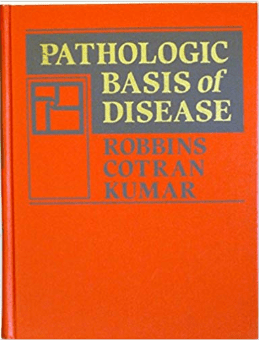
The article mentions the pathology textbook, Robbins’ Pathologic Basis of Disease. My class used the nearly 7 pound red 3rd edition containing 1,467 pages. This book is hailed as an outstanding foundational text, which it is. Dr Stanley Robbins has been eulogized as an exacting editor who championed writing of the type espoused by Will Strunk in The Elements of Style.

Not to be picky, but the book contained the phrase “not excessively rare” in reference to some process or disease which I can’t recall. I do recall that a majority of our class howled about this verbiage, which seemed the antithesis of what Strunk tried to teach.

Robbins book is described as “dense” in the article. It’s probably still pretty tough to wade through. I admire any medical student who can teach peers about its contents using only a study guide. I saw a used copy for sale a few years ago in a bookstore in Madison, Wisconsin.

Wright State University is using Team-Based Learning (TBL) which allows medical students to teach each other in small groups. They prepare by reading on their own about topics and come prepared to teach their peers who participate in discussions. This is thought to promote a better way to promote lifelong learning and to be more effective than the lecture style—which is how I learned.

Another point in the article is that the lecture-based approach is pretty inefficient, which is true in my opinion. I remember it often resulted in poor lecture attendance and cramming before exams. It spawned the sometimes-controversial Note Service (which I think a lot of medical schools had and may still have), in which class members take turns taking notes in lectures, which are then cleaned up and distributed to the rest of the members of the class who sign up for the Note Service.

Wright University also has a problem-based learning exercise in which small groups discuss a clinical case with a faculty facilitator. Students come up with learning objectives, search the medical literature, and then present to each other about evidence-based approaches to real-world clinical challenges which physicians encounter in practice.

It turns out this problem-based learning method is not really new and not excessively rare. It happens to have been the approach used by one of my teachers during my residency rotation through the consultation-liaison psychiatry service. It was eventually called Clinical Problems in Consultation Psychiatry (CPCP). I continue to use this model, although general hospital psychiatry has gotten very busy over the years, making it difficult to do regularly. Medical students and residents have given many outstanding CPCP presentations, often using PowerPoint slides and generating stimulating discussions. The video below is an example to give you the idea of one component.

And this post reminds me that the phased retirement process involves periodically flipping between my work identity and my retiree identity. I suspect this experience is not excessively rare.

Yates, W. R. and T. T. Gerdes (1996). “Problem-based learning in consultation psychiatry.” Gen Hosp Psychiatry 18(3): 139-144.

            Problem-based learning (PBL) is a method of instruction gaining increased attention and implementation in medical education. In PBL there is increased emphasis on the development of problem-solving skills, small group dynamics, and self-directed methods of education. A weekly PBL conference was started by a university consultation psychiatry team. One active consultation service problem was identified each week for study. Multiple computerized and library resources provided access to additional information for problem solving. After 1 year of the PBL conference, an evaluation was performed to determine the effectiveness of this approach. We reviewed the content of problems identified, and conducted a survey of conference participants. The most common types of problem categories identified for the conference were pharmacology of psychiatric and medical drugs (28%), mental status effects of medical illnesses (28%), consultation psychiatry process issues (20%), and diagnostic issues (13%). Computerized literature searches provided significant assistance for some problems and less for other problems. The PBL conference was ranked the highest of all the psychiatry resident educational formats. PBL appears to be a successful method for assisting in patient management and in resident and medical student psychiatry education.