
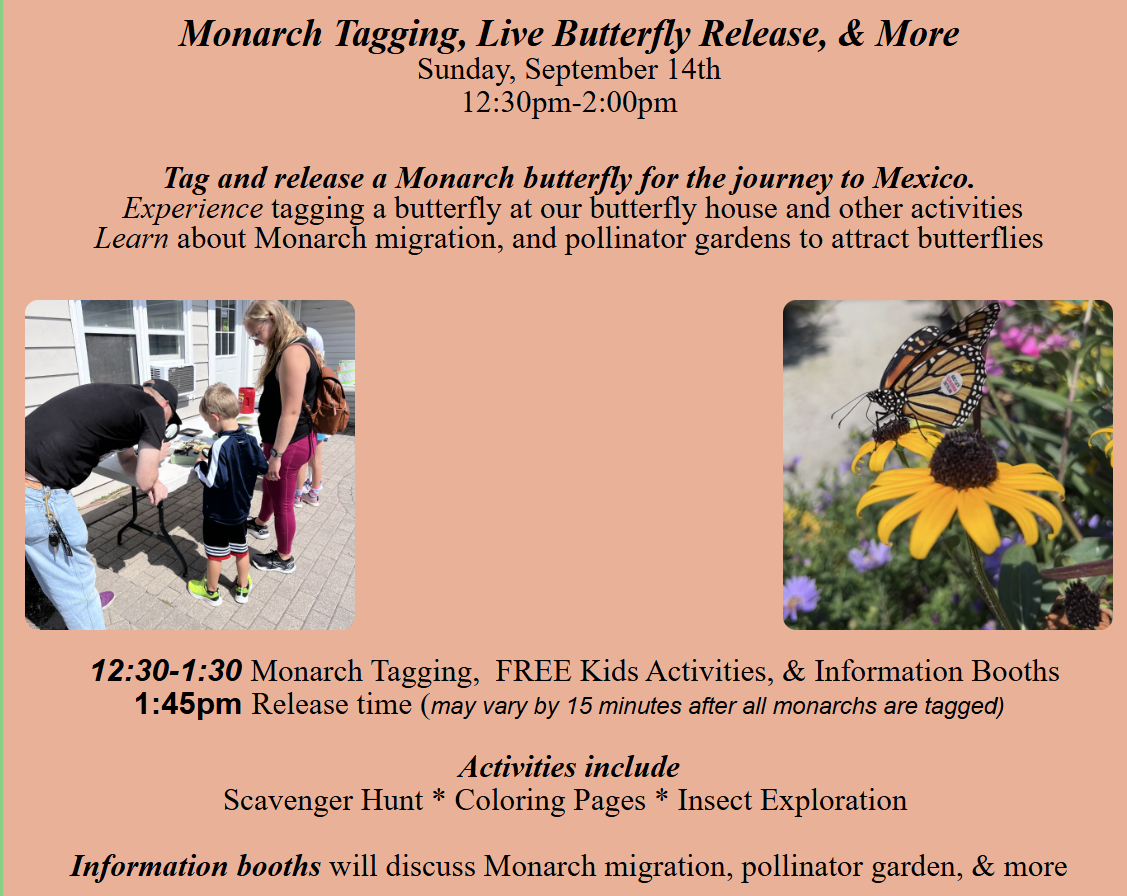
We just found out there’s an update to the Forevergreen Monarch tag and release event on September 14, 2025; see announcement below. It still may be a good idea to call ahead and confirm all details of the event.
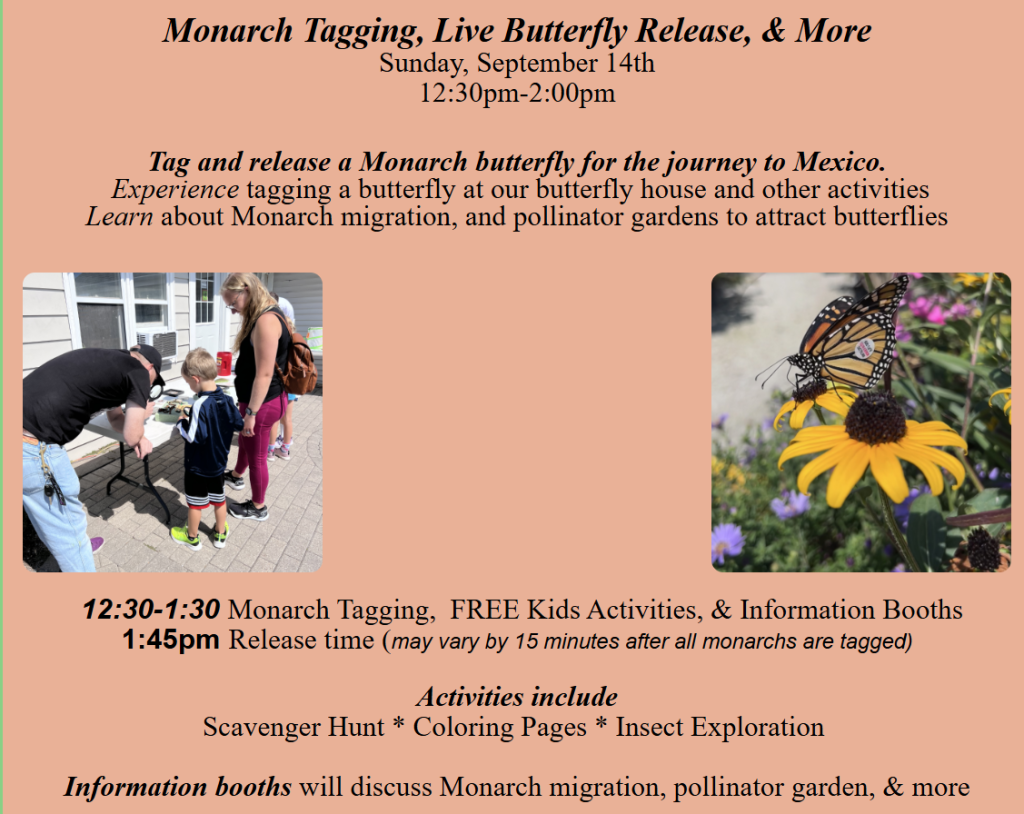


Sena went over to ForeverGreen, a popular landscaping and garden center locally, to see the butterfly house. She got pictures and video clips which showed the monarch butterfly management operation they have. They have quite a conservation program, including a large monarch butterfly house enclosure along with demos of life cycle stages. The butterfly house is just part of the deal and it’s open to the public. It opened in June of this year and runs until September 14th. The schedule shows there’ll be a big release then and possibly even tagging prior to that. You might want to call ahead and check to see if they’re still going to tag the monarchs.
I think this is also a good way to rehabilitate Bigfoot’s image because they could be sort of like ranch hands tending to the monarch as they go through their life cycle. The monarchs migrate to Mexico every fall. You can learn more about the monarch watch program and why many people believe the monarchs are at risk of extinction.
As I announced yesterday, we put together a short YouTube video on the tagged monarch butterfly we saw yesterday at Terry Trueblood Recreation Area, with the help of another guy who pointed it out to us. This was a lot of fun because we didn’t know anything about the monarch tagging project.
The tagging project is just one part of a comprehensive educational and research program. One interesting section on bugs that feed on milkweed talks about milkweed beetles, but I didn’t find anything about milkweed bugs until I checked another site. It sounds like splitting hairs, but they’re not the same insect although they both feed on the milkweed, which the monarch larvae eat.
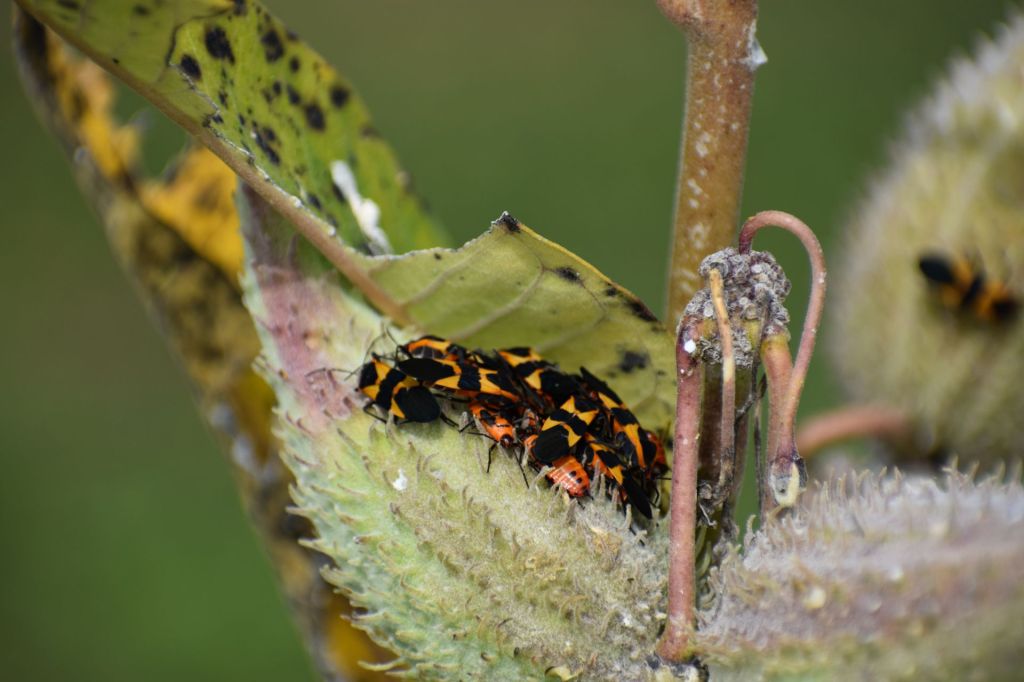
I got a photo of the milkweed bugs. Although the pile of them on the milkweed look like two different insects, the smaller ones are just younger versions of the same bug. I don’t think there were milkweed beetles on the milkweed plant I saw.
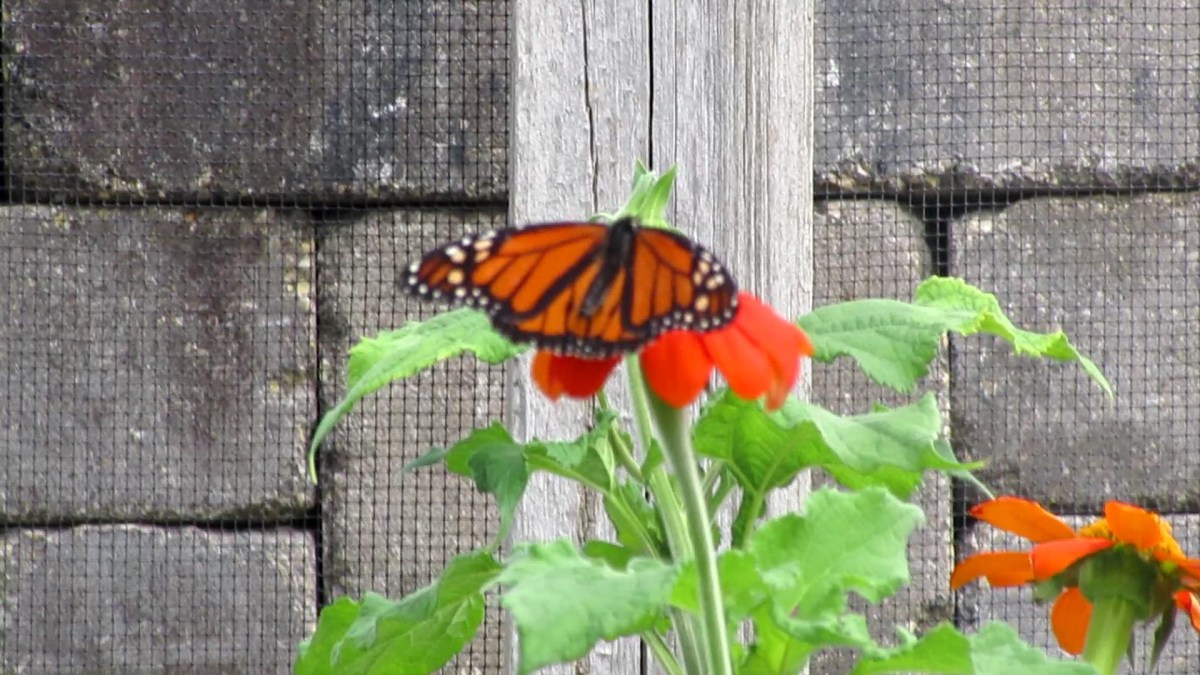
The other interesting thing is how to tell male from female monarchs. I’m not confident I can do that, although there is a video I posted yesterday (made by the Monarch Watch team) which tells you how to distinguish them.
We think the tagged monarch we saw might be a male, but I wouldn’t bet on it. We saw another monarch (which is featured in the video) which could be a female.
There is a fall open house at Kansas University West Campus in Lawrence, Kansas on Saturday, September 13, 2025.
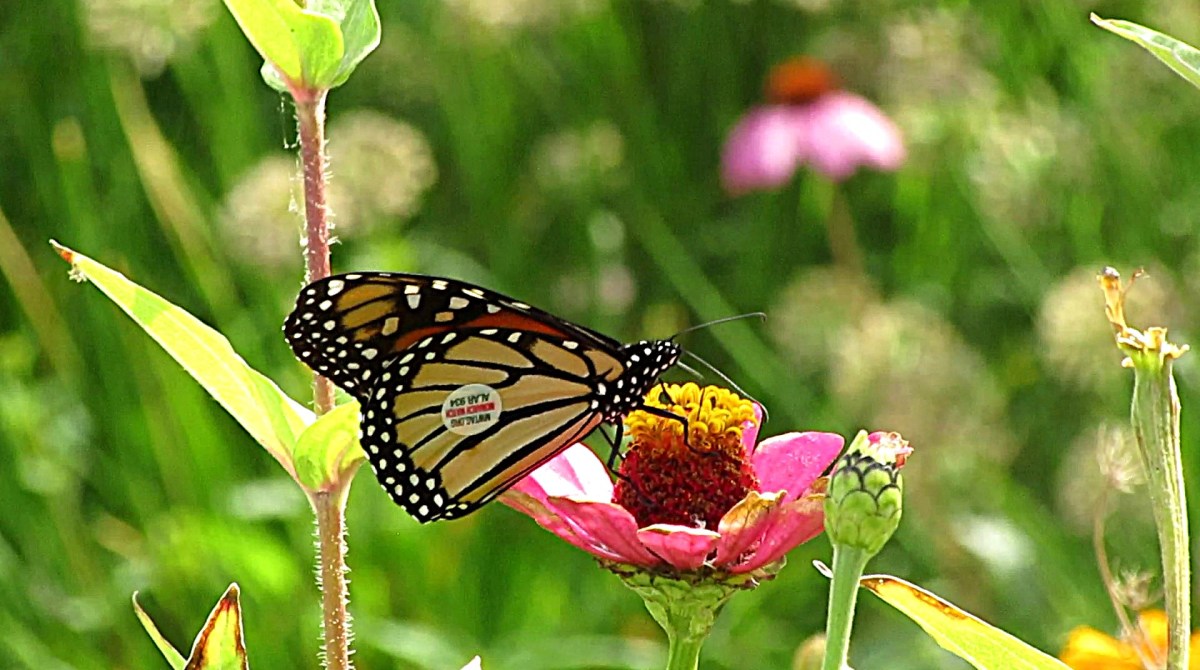
We’re both pretty excited today because we found a tagged monarch butterfly with a guy’s help out on the Terry Trueblood Trail. We saw quite a few monarch butterflies around the flowers and saw a man spending a lot of time getting a video of one of them with his smartphone. Sena remarked about how nice all the flowers were and he pointed to the butterfly and said it was tagged.
We had no idea what he meant until after we filmed the butterfly and saw this tag with numbers and letters printed on its wing. Sena got a really good shot of it and we were able to read the code.
Then we discovered the website for tracking monarch butterflies.
You can actually report the tagged butterfly to MonarchWatch.Org. We had never heard of the Monarch Watch Tagging Program, which got started in 1992 to track the monarch’s migration pattern.
We’re not certain of the sex of the monarch we saw today (which is part of the reporting process), but that’s OK. We can just enter “Unknown.” On the other hand, you can find instructions on line. We plan to make a video of our walk tomorrow with the monarch as the star, but I wanted to give you a heads up about the most exciting part of it today.

 Go Retire Psychiatrist