


We enjoyed the Dr. Martin Luther King, Jr. Distinguished Education (originally given on January 17, 2023) by Dr. Russell Ledet. He’s definitely a mover and a shaker and this is another recorded presentation that I wish was available for the general public.
His bio is knockdown impressive. And even more interesting to me is that he’s presently in residency toward boarding in adult psychiatry and child psychiatry as well as pediatrics.
That’s right—triple boarding.
His talk was a fascinating oral autobiography from his upbringing in poverty to his military career, to his undergraduate and graduate college career, and his achievement in organizing a very successful nonprofit, The 15 White Coats. This helps get underrepresented minority students into medicine by giving them inspiration and financial support.
His life story by itself is inspiring. It’s also exhausting. The person introducing him wondered aloud if he ever slept!
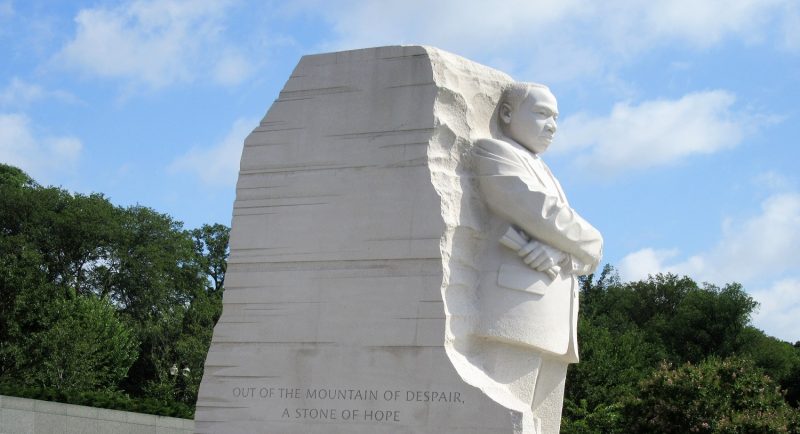
He began with a well-known quote by Dr. Martin Luther King, Jr:
“It’s all right to tell a man to lift himself by his own bootstraps, but it is a cruel jest to say to a bootless man that he ought to lift himself by his own bootstraps.”
Dr. Ledet’s story of his path from bootlessness to crowning success is compelling. You really have to hear it from him to get a clear idea of how difficult it was. It’s hard to imagine that a star like him once rummaged through dumpsters for food for the family while his mother was on the lookout to make sure he didn’t get caught.
I think a big part of what kept him going was his wife and kids. In fact, his wife, Mallory Alise, insisted that he take the path because of her fear he would die if he continued a dangerous assignment in the military.
A member of the audience who had a career similar to Dr. Ledet asked a question about what more should he do to make sure young people of color would get the kind of opportunities to succeed. Dr. Ledet had a very good answer, but that was not the most interesting part of the interaction. Firstly, the questioner didn’t sound (I know this is going to sound crass) black. He sounded more like someone who had grown up in the Northern United States—like me. But during the course of the conversation, it was clear that he was black. He just didn’t sound like Dr. Ledet. He also mentioned, almost in passing, that some people of color who succeed may develop imposter syndrome.
This sounded strange at first, but I quickly realized that I sometimes had felt like an imposter. This cuts two ways with me. One was the obvious context in which I came out of an impoverished background to finish college and medical school, and had a career as a consultation-liaison psychiatrist at a university medical center where I published and taught for many years. At times I felt like a phony.
The other situation in which imposter syndrome arose was when I went to Huston-Tillotson University (an HBCU formerly called Huston-Tillotson College) in Austin, Texas back in the 1970s. Most of the students were from the region. I had a Northerner’s accent and somebody once remarked on it, asking me “Why do you talk so hard?” I was easily identified simply because of how I spoke. I didn’t always feel comfortable, despite for the first time being not the only black guy in school. Ironically, I didn’t feel like I fit in, even in an HBCU. Even among those who looked like me, I sometimes felt like a phony. But that was not an enduring affliction.
And I think Dr. Ledet has a great deal of confidence and energy. More power to him.
 Go Retire Psychiatrist