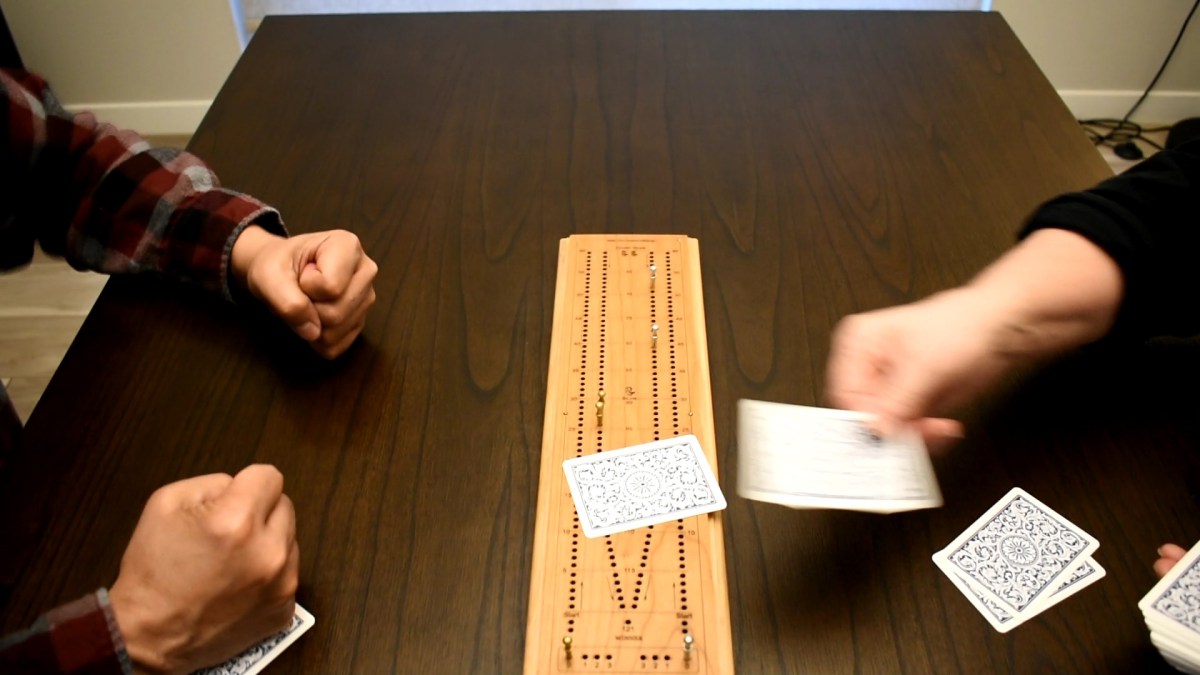
So, as long as we had the cribbage tournament board out, we decided to play 10 card cribbage yesterday. This is not a game for mindfulness, at least for me. Each player gets 10 cards. You have to sort them into two 4 card hands and the dealer gets the usual 4 card crib.
That’s a lot of cards to sort through. I get a little flustered trying to figure out what to keep and what to throw to the crib. I have to decide which 4 card hand to start the play.
The more cards you have, the higher the scores. Some games take only about 15 minutes despite the plethora of scores you have to wade through. Overall, in tournaments you have to be able to play a 6-card game in 15 minutes, so it seems ironic you can do the same in a 10-card game.
You have to be mindful, in a way, to play these Calvinball crib variations. But I can get a little hyped. Maybe you can tell.
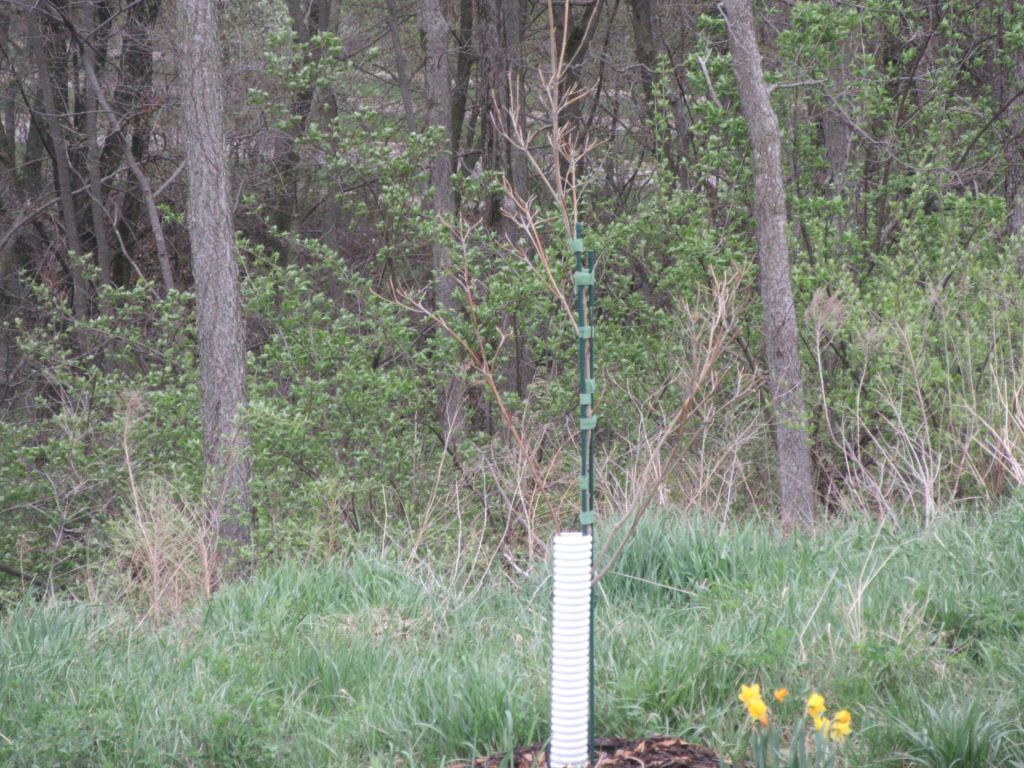
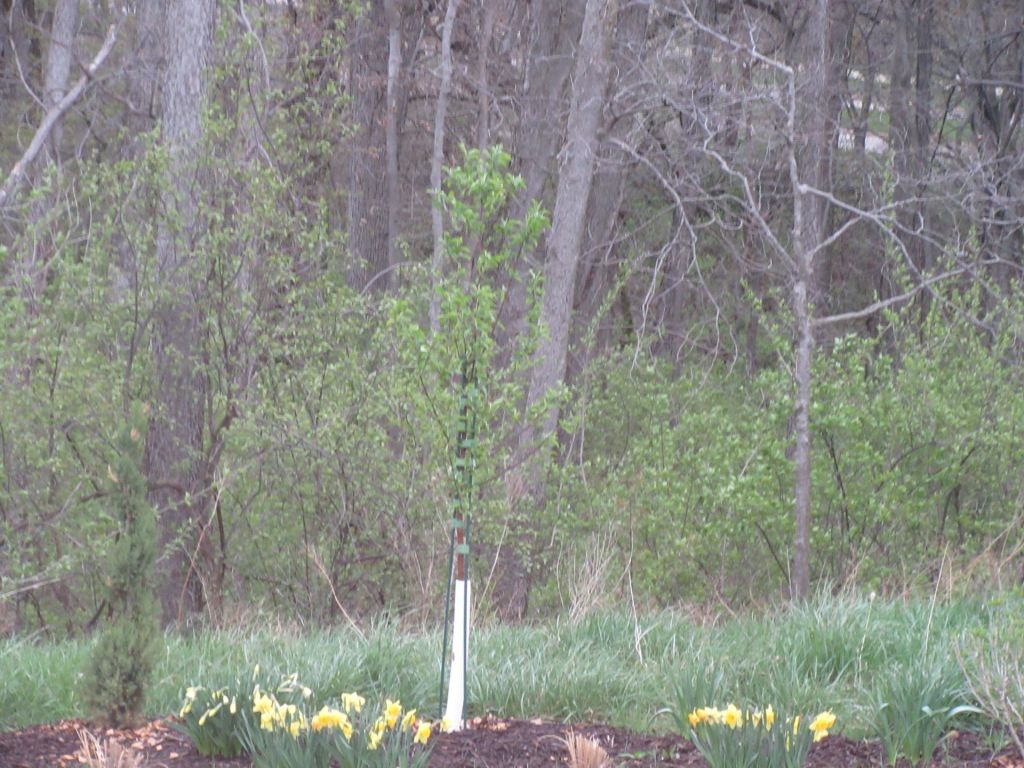
Today is designated Earth Day although there is such a thing as Earth Month. Among the several trees Sena planted in our back yard trees are a few that we hope exemplify the Earth Day theme, which is Our Power, Our Planet.
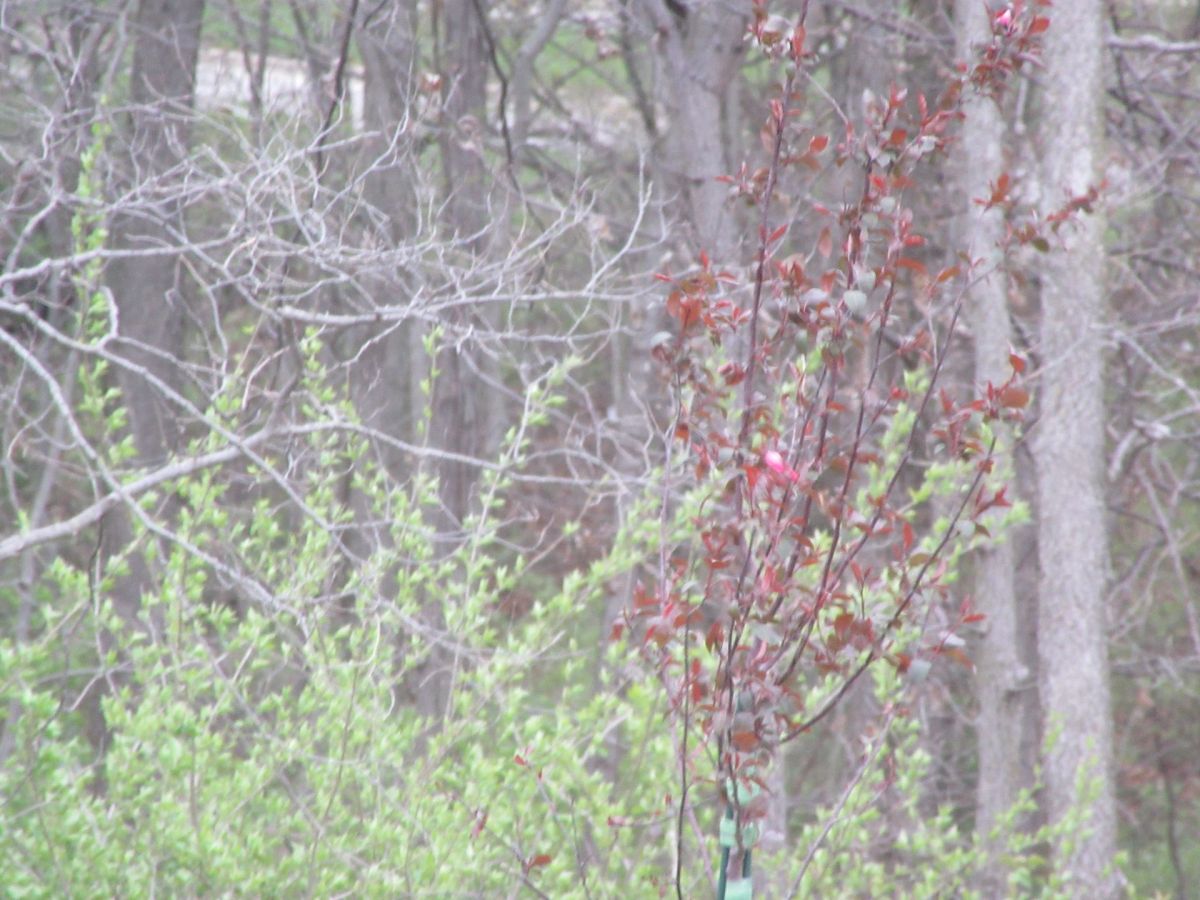
One of them is a dogwood, which we’re hoping will bloom soon. Dogwoods represent joy and rebirth. There are a couple of crab apple trees, a red jewel and a perfect purple. Crab apple trees represent love and all are very special to Sena and me.
Love, joy, and rebirth. They can all be linked to power, which can be the power of will. The will to respect the planet also implies respecting each other. Practicing humility can be a kind of power.
The power to be still and listen to each other can make us more open to change.
On that note, because I can’t go for long without joking around, I should retell the story about me and the walking dead meditation. About 13 years ago, I had an even more serious case of not listening to others than I do now, if you can believe that. It eventually led to my choosing to take the Mindfulness Based Stress Reduction (MBSR) class ( see this current University of Iowa mindfulness essay). I wrote an essay for the Gold Foundation and it’s still available (I updated the links):
How I left the walking dead for the walking dead meditation (August 13, 2014)
About a year or so later, I bought Jon Kabat-Zinn’s book on Mindfulness-Based Stress Reduction (MBSR), Full Catastrophe Living, because I was dimly aware of the burden of stress weighing on me as a consulting psychiatrist in an academic medical center. I didn’t get much out of Kabat-Zinn’s book on my first read. But then in 2012 I started getting feedback from colleagues and trainees indicating they noticed I was edgy, even angry, and it was time for a change.
Until then, I’d barely noticed the problem. Like most physicians, I had driven on autopilot from medical school onward. I had called myself “passionate” and “direct.” I had argued there were plenty of problems with the “system” that would frustrate any doctor. I had thought to myself that something had to change, but I never thought it was me.
After reflecting on the feedback from my colleagues and students, I enrolled in our university’s 8 week group MBSRprogram. Our teacher debunked myths about mindfulness, one of which is that it involves tuning out stress by relaxing. In reality, mindfulness actually entails tuning in to what hurts as well as what soothes. I was glad to learn that mindfulness is not about passivity.
But I kept thinking of Kabat-Zinn’s book, in which he described a form of meditation called “crazy walking.” It involved class members all walking very quickly, sometimes with their eyes closed, even backwards, and crashing into each other like billiard balls. I hoped our instructor would not make me “crazy walk” because it sounded so—crazy. I dreaded crazy walking so intensely that I considered not attending the 6-hour retreat where it might occur.
We didn’t do crazy walking. Instead, we did what’s called the “walking meditation.” Imagine a very slow and deliberate gait, paying minute attention to each footfall—so much so that we were often off balance, close to crashing into each other like billiard balls.
I prefer to call this exercise the “walking dead meditation” because it bore a strong resemblance to the way zombies move. One member of the class mentioned it when we were finally permitted to speak (except for the last 20 minutes or so, the retreat had to be conducted in utter silence). It turned out we had all noticed the same thing!
Before MBSR, I was like the walking dead. I was on autopilot — going through the motions, resisting inevitable frustrations, avoiding unstoppable feelings, always lost in the story of injustices perpetrated by others and the health care system.
In practicing mindfulness, I began noticing when my brow and my gut were knotted, and why. Just paying attention helped me change from simply reacting to pressures to responding more skillfully, including the systems challenges which contribute to burnout. About halfway through the program, I noticed that the metaphor connecting flexibility in floor yoga to flexibility in solving real life problems worked.
Others noticed the change in me. My professional and personal relationships became less strained. My students learned from my un-mindfulness as well as my mindfulness, a contrast that would not have existed without MBSR.
As my instructor had forewarned, it was easy for me to say I didn’t have time to practice meditation. I had to make the time for it, and I value the practice so much that I’ll keep on making the time. I will probably never again do the walking dead meditation.
Today we gather to reward a sort of irony. We reward this quality of humanism by giving special recognition to those who might wonder why we make this special effort. Those we honor in this fashion are often abashed and puzzled. They often don’t appear to be making any special effort at being compassionate, respectful, honest, and empathic. And rewards in society are frequently reserved for those who appear to be intensely competitive, even driven.
There is an irony inherent in giving special recognition to those who are not seeking self-aggrandizement. For these, altruism is its own reward. This is often learned only after many years—but our honorees are young. They learned the reward of giving, of service, of sacrifice. The irony is that after one has given up the self in order to give back to others (family, patients, society), after all the ultimate reward—some duty for one to accept thanks in a tangible way remains.
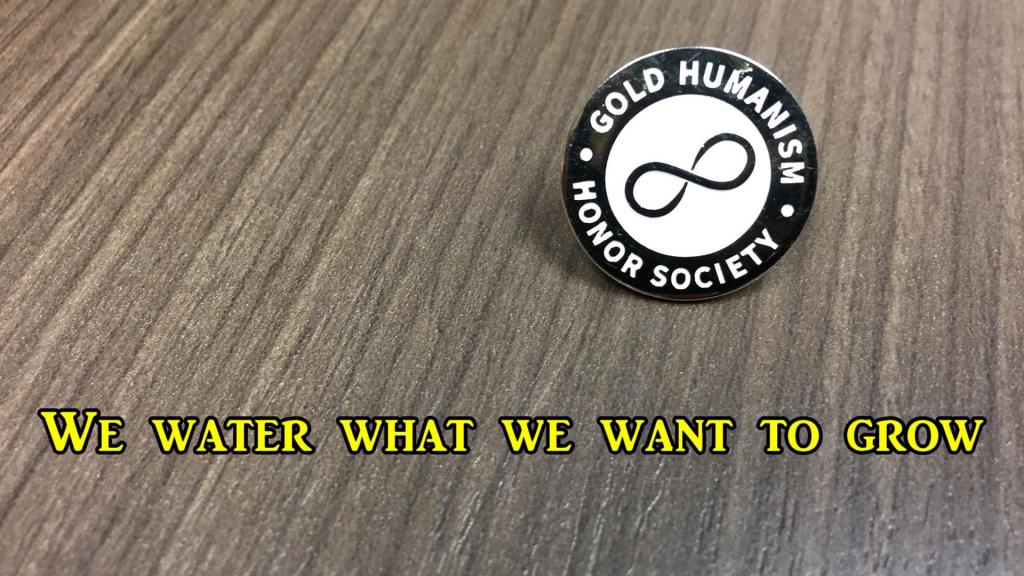
One may ask, why do this? One answer might be that we water what we want to grow. We say to the honorees that we know that what we cherish and respect here today—was not natural for you. You are always giving up something to gain and regain this measure of equanimity, altruism, trust. You mourn the loss privately and no one can deny that to grieve is to suffer.
But what others see is how well you choose.
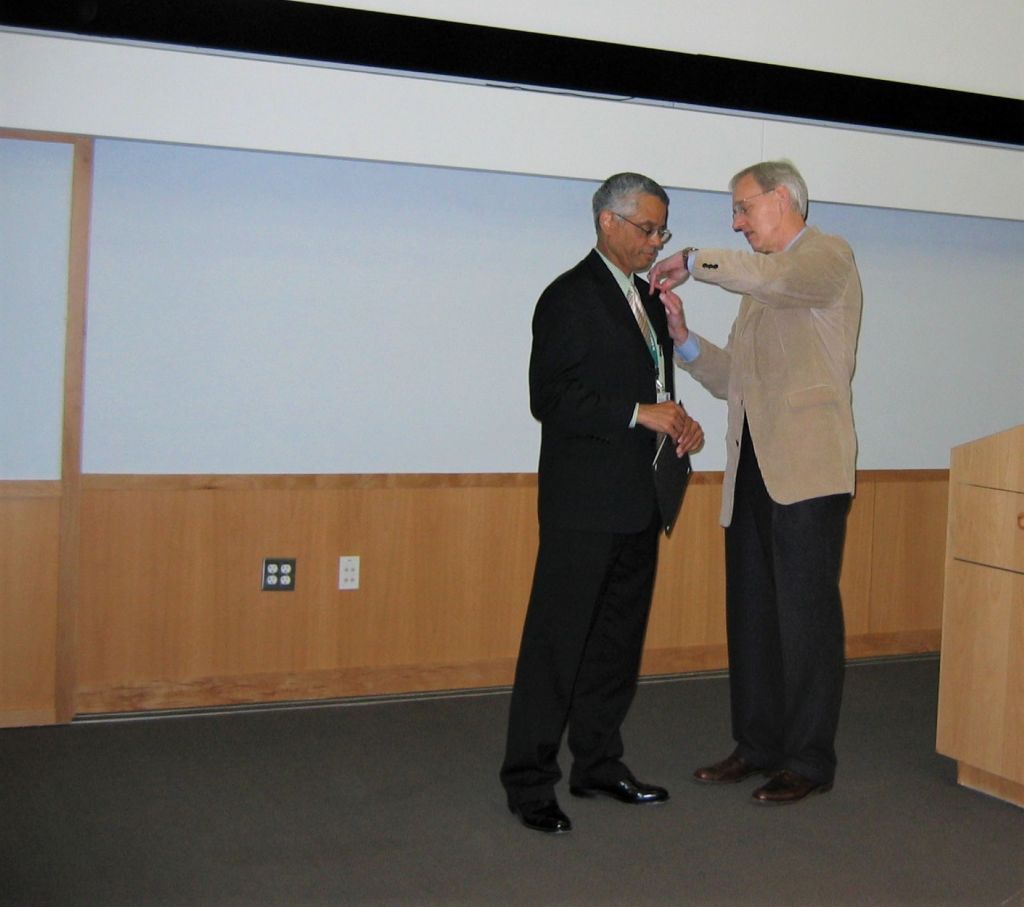
Leonard Tow awardGetting the pinOn my lapel; in my heart
I’m still practicing mindfulness-more or less. Nobody’s perfect. We hope the dogwood tree blooms soon.
I saw this essay about getting your hamster off the treadmill and being in the moment. It’s not just for University of Iowa employees. I do the mindfulness thing, I juggle, I make dumb YouTube videos. And for a little over a month now, I have not scrolled past the first few headlines at the top of the on-line news outlets. It’s a little easier than I thought to give up FOMO zombie-scrolling news habit, if you can even call it the news.
I remember getting a trephination of my fingernail a long time ago when I was working as a surveyor’s assistant. We were out taking elevation shots with a level and a rod measuring the depth of sewer pipes.
This required us to remove the manhole covers, which are very heavy. I got one of my fingers pinched and man that hurt. My crew drove me to the emergency room where an ER doctor drilled a tiny hole in my fingernail. The immediate pain relief resulting from the release of the subungual hematoma pressure felt miraculous.
That was trephination of the fingernail. I’ll bet some of you thought of my skull when you read the word in my first sentence, though.
Trephination is just the word for the medical procedure of making a hole in the body for some reason. In order to relieve pressure and severe pain from getting your finger mashed, a doctor can make a hole in your fingernail.
Trephination can also mean making a hole in your skull to treat brain injuries or to let the evil spirits out. That was done thousands of years ago, but making burr holes in the skull for other medical reasons is still being performed, including to relieve pressure.
It’s the origin of the old saying, “Well, I’ll be bored for the simples,” where the term “simples” means feeble-mindedness and “bored” refers to the obvious treatment.
Anyway, boring holes in either your mashed finger or your head can relieve certain kinds of pressure and pain.
Figuratively speaking, we can feel under pressure in our heads for all kinds of reasons. In fact, we’re born with several kinds of holes in our heads that can lead to the pressures of anger, anxiety, sorrow and fear.
Our eyes can fool us, even to the point of making us believe we see Bigfoot when all we’re really seeing are pictures or videos that are very blurred and pixelated. I didn’t say nobody ever sees Bigfoot. I’m saying that there’s a term for some forms of visual misperception, one of them being pareidolia—the tendency to perceive meaningful images in random or ambiguous visual patterns.
Our ears can also fool us. Mondegreens are misperceived song lyrics. One of the most common mondegreens is a line I was very embarrassed by for years, “Wrapped up like a douche, another runner in the night” from the song Blinded by the Light by Manfred Mann’s Earth Band. It’s actually “Revved up like a deuce, another runner in the night.” A deuce is a kind of automobile that was often converted into a hotrod in the 1930s, usually a Ford.
Those are just a couple of examples of how holes in our heads can sometimes lead to trouble getting along with each other. All you have to do to prove this is to look at news headlines. Everybody’s slamming each other.
There’s no magic cure for interpersonal conflict, although there have been plenty of efforts to help us understand how it may arise from misperceptions and misunderstandings, often arising from missteps in communication. I doubt making more holes in our heads would be helpful.
For example, I could have chosen to show you a picture of which one of my fingers got pinched in a manhole cover. How I might have done that could have been unnecessarily provocative and even offensive—even if I only meant it as a joke. A prominent scientist recently published a picture on social media of what he called a new star he said was taken by the Webb telescope. It later came out it was actually a picture of a slice of chorizo, which is a sausage. Many people didn’t think it was funny, but that was his explanation for the post.
I don’t have to say anything more to convey the message that being mindful of what and how we are communicating is vital to making ourselves understood while remaining respectful and kind.
Practicing mindfulness is one way to facilitate clear communication that can help solve problems without hurting the feelings of others and triggering vengeful counterattacks. We’ve all been there.
Not everybody gets the idea about mindfulness. I think the blogger thegoodenoughpsychiatrist does a great job discussing it in the post “Reflecting on DBT and Mindfulness.”
As the blogger says, “Sometimes, you just need to be brought back down to earth.”
And if that doesn’t work, we can always try trephination.
Does your pet dog, cat, or sloth ever get the zoomies? We don’t have pets; I just read about animals getting the zoomies the other day. It’s an interesting phenomenon. Right after a bath, a dog might race around the yard, getting all dirty again. They look like they’re having great fun and veterinarians say it’s harmless.
It would be great if we could catch a sloth with the zoomies. Not only would that be a first for zoology. Maybe it would outrun the fungus and other parasites growing on its hair, making it easier to gather by scientists. Some of that stuff might have potential for use in developing medicines for humans.
Other animals including those in the wild can get the zoomies, and some version of it might be done by Springbok antelope, although it’s called pronking. They just run around and leap, maybe for no apparent reason. Some claim that dogs occasionally pronk, but I wonder if it’s just a special case of the zoomies.
The veterinary term for zoomies or (and maybe pronking) is Frenetic Random Activity Periods (FRAP).
Technically, I don’t think humans get the zoomies although some would debate the issue. Many of us try to do the opposite, especially nowadays. One example is mindfulness, which I’ve been doing for the last 8 years. It’s difficult for me to describe, but you’re really not trying to do anything, not even trying to relax, per se.
But I try to be still and notice whatever is unfolding, nonjudgmentally. It’s a little hard not to scratch that itch right next to my temple. I’ve seen on the web that some people call it the zennies—maybe we could call it Focused Regular Awareness Periods (FRAP).
I guess dogs and cats enjoy their brand of FRAP, or at least it looks that way. It’s really hard to tell what’s going on if you just watch people doing the human brand of FRAP. Sometimes they just look like they might be asleep—which occasionally happens.
Zoomies or zennies; could they be different paths to the same place?
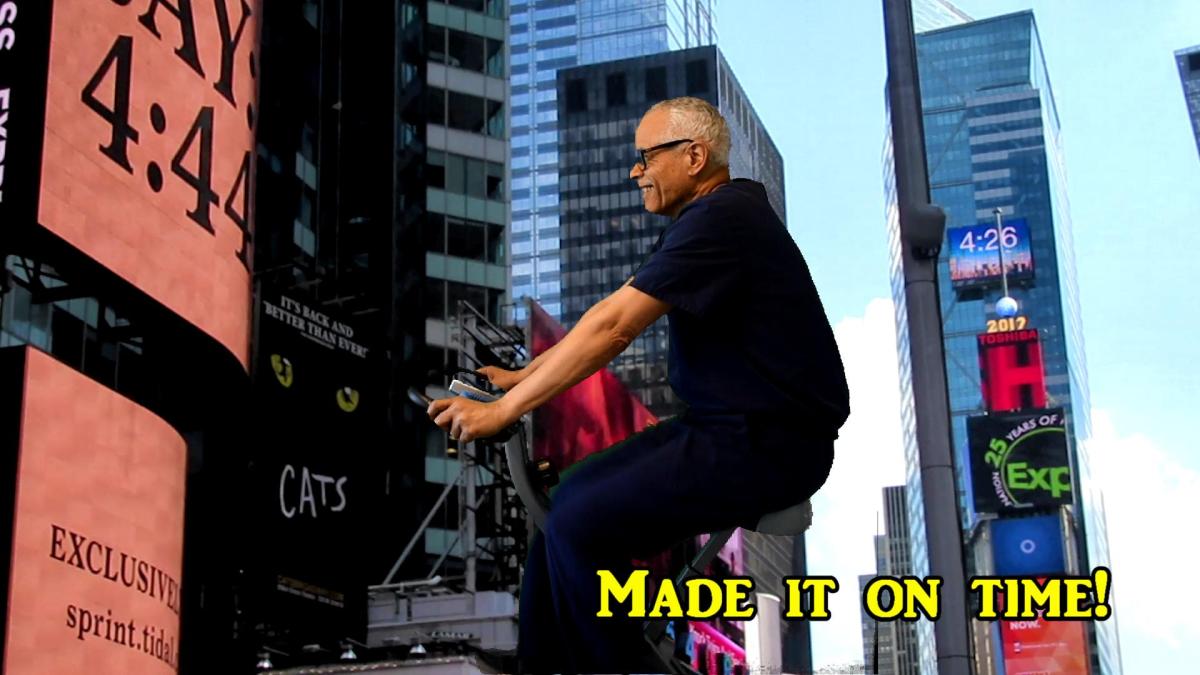
Okay, so I’m nobody’s personal trainer, but I have an update on my exercise routine, which I’m doing daily for the most part. I spend about a half hour on the “workout” which starts with a floor yoga warm up. I get on the exercise bike for 5 minutes. Then I do 3 sets of body weight squats, dumbbells, and planks. I finish off with another 5 minutes on the bike.
Obviously, my goal is not to be ripped. I just want to keep my bowels moving, to sleep OK, and stay reasonably fit for a geezer. I also do daily mindfulness meditation.
I still have a lot of work to do on being more well-rounded. And I mean a lot.
I watch the Weather Channel TV shows Highway Thru Hell and Heavy Rescue 401 and I hear a lot of the towing guys say “Watch yourself!” Often, they say this as they’re about to pull a jack knifed semi out of a ditch. Sometimes a rigging line breaks and a large hook will snap back at lightning speed, which can take your head off, even if you are watching out for it.
I notice many of the older tow crew members are now saying while grinning at the camera things like, “I think it’s really important to teach the younger generation the things I know because I’m not going to be doing this forever, and I’d like to retire sometime in the near future and let somebody else watch out for flying snatch blocks and tow hooks which can take your head off, which would not necessarily be painful because you might die instantaneously, but then there are those other inconvenient consequences like funerals and insufficient life insurance policies with bizarre exclusion clauses disallowing benefit payouts to grieving widows and children because of deaths caused by non-Underwriters Laboratories certified flying snatch blocks and tow hooks, unpaid mortgages and loans for things like exorbitantly expensive snatch blocks, tow hooks, not to mention multi-ton wreckers and rotators.”
Anyway, the expression “Watch Yourself” could also figuratively mean being mindful. Mindfulness meditation has taught me to notice more about what’s going on inside and outside my head.
I do daily sitting meditation, although I may miss a day here and there. And by sitting, I want to make it abundantly clear that I don’t assume the lotus position. My joints are stiff enough that, when I try to stand up, they might have enough spring steel energy stored to whip loose, similar to flying snatch blocks and tow hooks.
While I’m sitting, I do a lot of thinking. By the way, it’s not a mistake to think and feel a lot of different thoughts and emotions during mindfulness sessions. That’s one of several myths about mindfulness. It’s not mandatory or even possible to shut off your yammering mind. I can choose to focus my attention on it or not.
If I try to shut my internal talk off for any length of time, it’s like gripping a slippery valve. Sooner rather than later, my grip slips and thoughts explode like flying snatch blocks and tow hooks. I watch myself and I notice when I’m thinking my hands get tense. As soon as I notice that, my hands relax and I focus on breathing—or maybe it’s the other way around.
This is a follow up to yesterday’s post about elevator pitches. I’m using one of the standard formats below. The first step is to find a really slow elevator.
Who am I?
I’m a retired consultation psychiatrist, slowly evolving beyond that backwards in time to something else I’ve always been. I’ve been a writer since I was a child. My favorite place was the public library. I walked there from my house. I stayed there as long as I could. It was place of tall windows where I could look out and see trees which swayed like peaceful giants. I borrowed as many books as I could carry in my skinny arms and walked all the way back home. Then I picked up a pencil. I wrote short stories which I bound in construction paper. I read them to my mother, who always praised them and called me gifted whether I deserved it or not. I lived inside my head. My inner world was my whole world.
What problem am I trying to solve?
The problem was that I forgot who I was as I got older. I forgot for a long time about being a writer. I evolved into the outer world, adopting other forms. I put down the pencil, but never for very long. I changed what I did and made, but I always lived in my head. People told me “Get out of your head.” I tried, but didn’t know how. I wrote less and less. When I did write, I realized that I was no genius, not gifted—but still driven to write. I was so busy in college, medical school, residency, and in the practice of consultation psychiatry, I didn’t write for a long time. But later I returned to it as the main way to teach students. I even co-edited and published a book, Psychosomatic Medicine: An Introduction to Consultation-Liaison Psychiatry, with my former department chair, Dr. Robert G. Robinson. On the Psychiatry Department web page, in the Books by Faculty section, the book is in the subsection “Classic.” Inside the cover of my personal copy is a loose page with the quote:
A classic is something that everybody wants to have read and nobody wants to read.
Mark Twain
I’m pretty sure I put it there. Part of the preface was my idea because of my admiration for Will Strunk, who I learned about in an essay by E.B. White (“Will Strunk,” Essays of E.B White, New York, Harper Row, 1977). We informally called the work The Little Book of Psychosomatic Psychiatry:
The name comes from Will Strunk’s book, The Elements of Style, which was, as White says, “Will Strunk’s parvum opus, his attempt to cut the vast tangle of English rhetoric down to size and write its rules and principles on the head of a pin. Will himself hung the title “little” on his book and referred to it sardonically and with secret pride as “the little book,” always giving the word “little” a special twist, as though he were putting a spin on a ball.”
I guess our little book was, in a way, my own parvum opus.
Obviously, I don’t write the way Strunk would have wanted. But it’s my way, and I’m finding my way back to it, back to the path I was on in the beginning of my life, back to who I am.
What solution do I propose?
Almost two years ago, my solution to the challenge of rediscovering who I am, I suppose, was interrupting my medical career, but that would be dishonest. I did it because of my chronological age or least that was what I told myself. Burnout was the other reason. That said, despite my love of teaching students, I missed something else. And I knew if I kept working as a firefighter, which is what a general hospital consultation psychiatrist really is, I might lose what I loved best, which was writing for its own sake and for sharing it with others. It sounds so simple when I say it. Why has this been so hard, then? Obviously, I’m not going to recommend to those who are writers at heart lock themselves in a garret and do nothing but write. We would starve.
I think this is where mindfulness helped me. I couldn’t ignore my love of writing. I was better off just accepting it. But until I learned mindfulness in 2014 as a part of a Mindfulness Based Stress Reduction (MBSR), which I took mainly because I was struggling with burnout, I would either just ruminate or act on autopilot. I still do those things, just less often. Mindfulness is not miraculous. It’s not for everyone. It can be a part of transitioning to a healthier life. I exercise too. I don’t rigidly always without fail adhere to my schedule. I miss some days. I accept that and just go back and try again.
What is the benefit of my solution?
I think the benefit of adopting mindfulness and other healthy practices, at least for me, is that sooner or later (in my case much later), I made a sort of uneven peace with the loss of my professional routines, my professional identity, my work, as the single most important way to live. I still have a lot to learn, including how to be more patient, how to listen to others, how to get out of my head for what I know will be only a short time. Most of all, I’ve reintegrated writing into my life and it brings me joy. If you’re going through anything like that, then maybe seeing my struggle, my wins and losses, will help you keep going. It gets better.
This elevator pitch is way longer than 45 seconds.
I got my Moderna Covid-19 booster jab this morning. That was quick. A guy (probably about my age, I’m not sure) waiting for his booster behind me chuckled and asked, “Did she even let you sit down for it?” I was in and out that fast. It’s the same as the primary series, only half-dose. Sena and I are now both fully vaccinated and boosted.
According to the FDA and CDC guidelines, I could have gotten a heterologous booster, but I stuck with what I got for my primary series. There was no problem with vaccine supply; it was already on the shelf, so the only thing different was the smaller dose. Since there’s not much else to say about it, we’ll move on to other more exciting news.
Sena ordered the Zombie cribbage game I just had to have. It won’t get here by Halloween, but that’s OK. I know the board is a folding plastic affair and there’s only enough peg holes for what would be half a full game (61 instead of 121). The pegs are zombie figures—which may or may not fit in the holes.
But it’s zombies! This is what happens to you in retirement, people. My gratitude to Sena for getting Zombie cribbage will be to play Scrabble with her.
That reminds me of a cribbage story I read on the web about a game between a couple of old guys in a senior community in Minnesota. One of them, Harry, was 108 years old and the other, Don, was 105. They were long time cribbage players, but they’d never played each other. The young guy won. As soon as he did, he got back on his walker, saying, “Just another game,” and left. In fact, neither player got as excited about the affair as everyone else including spectators, family, and staff, talking it up like it was a championship boxing match. Don’s family said that his attitude about the win was probably part of the reason for his longevity.
I liked Don’s reaction to winning the game. I don’t know if Don’s approach to cribbage is the same as it is to life in general. Maybe it’s about living in the present. When something is over, it’s in the past and it’s time to move on. There’s probably no point in worrying about the future either, especially when you get pretty old. There’s not much of it left.
Maybe this mean that retirees should be more like zombies—we should just play cribbage, eat brains mindfully, and forget about tomorrow. You’re welcome.









 Go Retire Psychiatrist