I came across a couple of items that prompted my renewed gratitude. One of them was an article in Bloomberg on the web, “US Medical Schools Grapple With First Admissions Since End of Affirmative Action” by Richard Abbey, Ilena Peng, and Marie Patino, published on December 14, 2023. It’s about how hard it is for black students to get into and graduate from medical school. Just getting to college is a major hurdle.
The other item is an obituary of one of the most important persons in my life, Pastor Robert Leroy Stone. He authorized scholarships for two years of my undergraduate college education, which were at Huston-Tillotson College (now Huston-Tillotson University, one of the HBCUs) in Austin, Texas. That was back in the 1970s, ancient history now. The issue of Affirmative Action was widely discussed during that time.
As usual, I’m dumbfounded by how often I miss the passing of the critically important people who made my success in life possible. And there is this astonishing connection which followed me even to Iowa City—but of which I was unaware. After he retired, Pastor Stone moved from Mason City to Iowa City in November of 2001. At that time, I had graduated from The University of Iowa College of Medicine, finished my residency in psychiatry in 1996, and was on staff in University of Iowa Dept of Psychiatry. I never knew he was so close. He died in 2002.
Pastor Stone was a Board Member and Chair of the Mason City YMCA, where I lived for a while. He was also a Member of the Board of Chemical Dependency Services of North Iowa as well as the Mental Health Center of North Iowa.
Although I didn’t graduate from Huston-Tillotson College, I was able to transfer credit to Iowa State University. And from there I went to medical school at The University of Iowa.
I’ve read other stories about how hard it is for Black students to get into and finish medical school. My path was indirect and not easy, but Pastor Stone made it possible. And for that, I am grateful.
As I get ready to go back on service at the hospital as a
psychiatric consultant, I’m trying to get my head back into the game by reading
papers like Psychiatric News. The March 15, 2019 issue (volume 54, number 6) has
an interesting article about how medical students are learning these days,
entitled “Wright State Adopts Curriculum Without Lectures,” written by Mark
Moran. You can easily access this article on the web for free by just searching
with the term “Psychiatric News.”
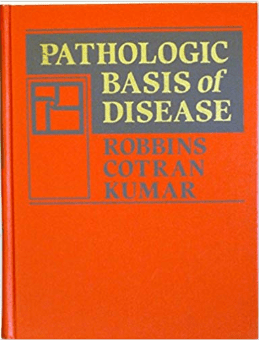
The article mentions the pathology textbook, Robbins’ Pathologic Basis of Disease. My
class used the nearly 7 pound red 3rd edition containing 1,467 pages.
This book is hailed as an outstanding foundational text, which it is. Dr Stanley
Robbins has been eulogized as an exacting editor who championed writing of the
type espoused by Will Strunk in The
Elements of Style.
Not to be picky, but the book contained the phrase “not
excessively rare” in reference to some process or disease which I can’t recall.
I do recall that a majority of our class howled about this verbiage, which
seemed the antithesis of what Strunk tried to teach.
Robbins book is described as “dense” in the article. It’s
probably still pretty tough to wade through. I admire any medical student who
can teach peers about its contents using only a study guide. I saw a used copy
for sale a few years ago in a bookstore in Madison, Wisconsin.
Wright State University is using Team-Based Learning (TBL)
which allows medical students to teach each other in small groups. They prepare
by reading on their own about topics and come prepared to teach their peers who
participate in discussions. This is thought to promote a better way to promote lifelong
learning and to be more effective than the lecture style—which is how I
learned.
Another point in the article is that the lecture-based
approach is pretty inefficient, which is true in my opinion. I remember it
often resulted in poor lecture attendance and cramming before exams. It spawned
the sometimes-controversial Note Service (which I think a lot of medical
schools had and may still have), in which class members take turns taking notes
in lectures, which are then cleaned up and distributed to the rest of the
members of the class who sign up for the Note Service.
Wright University also has a problem-based learning exercise
in which small groups discuss a clinical case with a faculty facilitator.
Students come up with learning objectives, search the medical literature, and
then present to each other about evidence-based approaches to real-world
clinical challenges which physicians encounter in practice.
It turns out this problem-based learning method is not really
new and not excessively rare. It happens to have been the approach used by one
of my teachers during my residency rotation through the consultation-liaison psychiatry
service. It was eventually called Clinical Problems in Consultation Psychiatry
(CPCP). I continue to use this model, although general hospital psychiatry has
gotten very busy over the years, making it difficult to do regularly. Medical students
and residents have given many outstanding CPCP presentations, often using
PowerPoint slides and generating stimulating discussions. The video below is an
example to give you the idea of one component.
And this post reminds me that the phased retirement process involves periodically flipping between my work identity and my retiree identity. I suspect this experience is not excessively rare.
Yates, W. R. and T. T.
Gerdes (1996). “Problem-based learning in consultation psychiatry.” Gen
Hosp Psychiatry 18(3): 139-144.
Problem-based learning (PBL) is a method of instruction
gaining increased attention and implementation in medical education. In PBL
there is increased emphasis on the development of problem-solving skills, small
group dynamics, and self-directed methods of education. A weekly PBL conference
was started by a university consultation psychiatry team. One active
consultation service problem was identified each week for study. Multiple
computerized and library resources provided access to additional information
for problem solving. After 1 year of the PBL conference, an evaluation was
performed to determine the effectiveness of this approach. We reviewed the
content of problems identified, and conducted a survey of conference
participants. The most common types of problem categories identified for the
conference were pharmacology of psychiatric and medical drugs (28%), mental
status effects of medical illnesses (28%), consultation psychiatry process
issues (20%), and diagnostic issues (13%). Computerized literature searches
provided significant assistance for some problems and less for other problems.
The PBL conference was ranked the highest of all the psychiatry resident
educational formats. PBL appears to be a successful method for assisting in
patient management and in resident and medical student psychiatry education.



 Go Retire Psychiatrist