The Iowa State University African and African American Studies Research Guide

In keeping with Iowa History Month 2024, you can have a look at the Iowa State University website “African and African American Studies Research Guide.”

Iowa State University happens to be my alma mater, or in a way, one of them. I took my Bachelor’s degree there and later graduated from The University of Iowa College of Medicine.

There is a wealth of information worth browsing on the ISU website devoted to the history of black people in Iowa. In fact, I found out a few of those connections were to Huston-Tillotson University (HT-U, an HBCU) in Austin, Texas, where I spent several semesters in the 1970s before later transferring to ISU.

The connections between HT-U and Iowa go way back into the history of that school. It started as Tillotson College in 1875, which is where some of the ISU black students also later worked as faculty. The list includes notable scholars:

Ada M. Deblanc-Yerwood: After graduation from ISU, she became head of Home Economics at Tillotson College. She was also co-founder of the George Washington Carver Museum in Austin, Texas. She also had an interesting perspective on retirement. She didn’t, and pursued other positions. Her answer to why she didn’t retire: “Old is a state of mind. When you do nothing, you become nothing. The need to be productive—give life to something—doesn’t automatically stop at age 65 or 70.”

Dr. Samuel P. Massie, Jr.: Dr. Massie went to ISU in 1941 to pursue a Ph.D. in Chemistry. He had to hitchhike to campus because there was no housing for Black students within 3 miles. Dr. Henry Gilman at ISU assigned him to work full time as a research assistant on a special assignment connected to the Manhattan Project (the top-secret effort to build an atomic bomb). President Lyndon B. Johnson appointed him to a Chemistry professorship at the U.S. Naval Academy. He distinguished himself as a scientist in many HBCUs (Fisk, Howard University, North Carolina College, and others) and elsewhere despite the racism that tried to hinder him. In 1981, ISU gave him the highest award—the Distinguished Achievement Citation.

Dr. Frederick Douglass Patterson: He was a brilliant student and he attended Samuel Huston College (see history of Huston-Tillotson College at link above). He also attended ISU, graduating with a DVM in 1923. In his book, Chronicles of Faith, he wrote: “In the veterinary program, I did not feel odd being a part of the group of students working in the veterinary clinic although I was the only black person there. The absence of animosity encouraged me to see veterinary medicine as a field in which I could practice without being hampered by the racial stereotypes and obstacles that would confront me as a medical doctor, for example. I found the teachers of Iowa State helpful whenever I approached them. Educationally, it was a fine experience.” He received the Presidential Medal of Freedom from President Ronald Reagan in 1987. He was President of Tuskegee Institute and transformed it into a university. He also founded the United Negro College Fund.

The United Negro College Fund was part of the reason I was able to attend Huston-Tillotson University. And it’s connected to the history of Iowa.
Thoughts on Jack Trice

I was outside doing yard work the day before yesterday and my neighbor across the street walked over to say hello. We got to talking about sports and football came up. His wife stopped watching football because it was so violent—but then switched to watching hockey. He wondered when the Iowa Hawkeye vs Penn State game was going to be on. No, I’m not going to discuss that any further.

Anyway, that led to my mentioning how brutal college football was back in 1923 when Jack Trice, Iowa State University’s first black athlete was killed on the field during a game with the University of Minnesota. My neighbor was incredulous. He’s in his 80’s and he’s never heard the story.

In fact, I had just learned about the whole Jack Trice story and commemoration event in his honor the day before that, only because Sena told me about it.

All this year long there has been a 100-year anniversary commemoration of Jack Trice, Iowa State University’s first African-American athlete. The program will culminate on October 8, 2023 with the closing ceremony.

Football was a rough game in that era—but rougher still because Trice was black. Many believe his injuries were deliberately and maliciously inflicted because of his race. It’s more than plausible. In 1997, the football stadium was renamed Jack Trice Stadium. It’s the only major college football stadium named for an African-American.

Sena and I moved to Ames in 1981 so that I could enroll in Iowa State University. I was so immersed in my studies that I never gave a thought to Jack Trice. I don’t remember the football field being named Jack Trice Field in 1984.

As I looked through the commemoration website, I wondered how it was possible for me to have ignored the story of Jack Trice while I was there.

I think it’s for the same reason I never knew anything about James Alan McPherson, the first African American to win the Pulitzer Prize for fiction and who was teaching at the Iowa Writers Workshop during the entire time I was in medical school, residency and a faculty member at The University of Iowa Hospitals & Clinics.

I was working hard. I finally found out about McPherson after reading a news item about a neighborhood park being named after him in 2021.

I should pay more attention. Anyway, Iowa State University did a tremendous job putting this commemoration event together.

Iowa State University African American Science Graduates

I was thinking about what to write for the first day of Black History Month, which starts today on February 1, 2023.

As usual, I started to reminisce about my time at Iowa State University (ISU) in Ames, Iowa. I usually don’t talk about my undergraduate days. In fact, I had a little trouble finding my diploma. It was in storage in the first place I should have looked. I graduated from ISU in 1985.

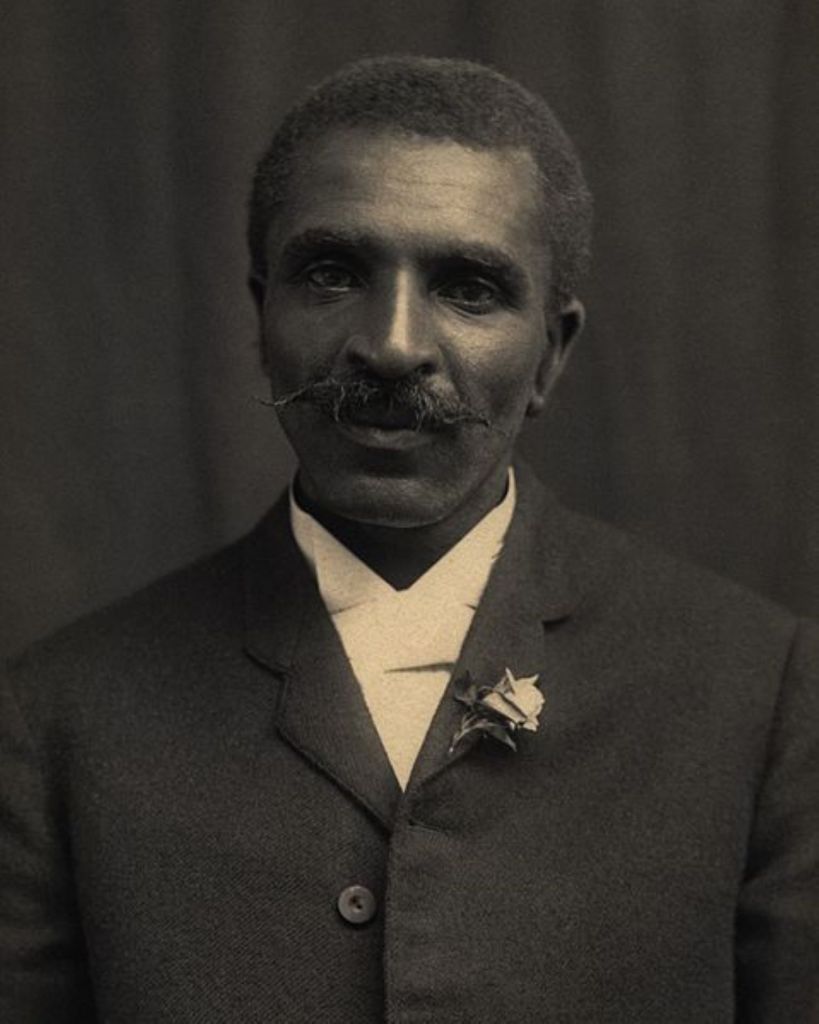
The Iowa State Daily ran a story, “Black scientists from Iowa State,” published on February 4, 2021, obviously in honor of Black History Month. Of course, it featured ISU’s most illustrious graduate, George Washington Carver, who earned his graduate degree in 1894. Carver also loved poetry and painting, which I didn’t know.

This work is in the public domain in the United States because it was published (or registered with the U.S. Copyright Office) before January 1, 1928

Carver was a scientist and put it to practical use. It fits with the ISU motto, which was short and to the point: “Science with Practice.”

I transferred credit to ISU in the mid-1970s from one of the country’s Historically Black Colleges and Universities (HBCUs), Huston-Tillotson College (now Huston-Tillotson University). I submitted a poem to the college’s annual student poetry contest sponsored by one of the English Professors, Dr. Jenny Lind Porter-Scott. My poem didn’t make the cut, but many students got their work published in the little book, Habari Gani (Swahili for “What’s Going On”), which published the best poems.

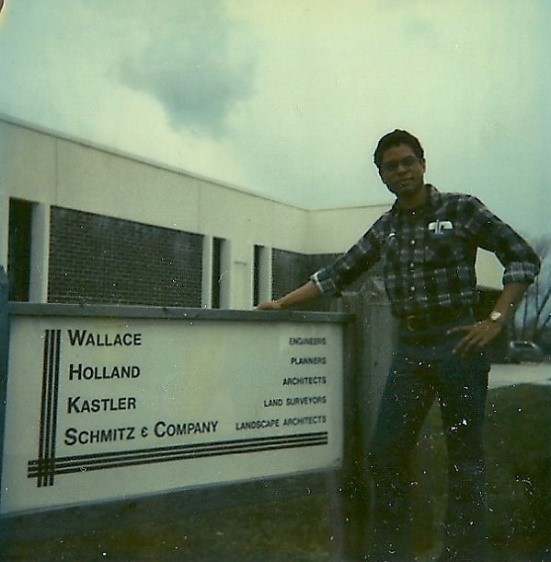
Part of the reason I went to ISU was the encouragement I got from my bosses at WHKS &Co, consulting engineers. I was a surveyor’s assistant and drafter. I was the only African-American employee working there.

The idea behind going to ISU initially was to pursue a degree in engineering. That didn’t happen because frankly, I didn’t have a head for the mathematics. On the other hand, I got interested in biology, chemistry, and zoology and finally ended up in medical school at The University of Iowa in Iowa City. The rest is history, as they say, which allows the usual cover up of a multitude of sins.

At the time Sena and moved to Ames in the early 1980s, it was a quiet little town, except during VEISHEA, an annual spring celebration on campus. The event got out of hand many times and it was finally banned in 2014.

Back in the days of George Washington Carver, African American students were not allowed to room with other students who did not have black skin on campus. By the time we moved to Ames, the most uncomfortable racial incident I can recall personally was being the butt of a “nigger” joke at a barbershop. I had to find another place to get my hair cut.

I still had a lot of science to digest at ISU after switching my major from engineering to the life sciences. I remember a chemistry professor who looked like the typical hippie who demonstrated how electrons get excited by stacking chairs on top of the counter in front of the chalkboard (which teachers were still using) and climbing to the top and nervously doing a shaky little dance showing what an excited electron he was. I think all of us collectively held our breath, waiting for him to tumble to the floor.

I really had a tough time learning organic chemistry. You had to draw diagrams showing how the molecules and atoms connected after each reaction. I will never forget an Asian Teacher’s Assistant who patiently tutored me, despite my having a very bad cold and a bad attitude to boot.

I graduated and then returned to get more credits to try getting into medical school after finding it very difficult to find employment with my Bachelor of Science degree. It took about 9 months before I finally landed a job in the clinical lab at one of the hospitals in Des Moines. The lab director worked there for a very short time while I was there, and then left to go to medical school.

That was my cue. I think it worked out for the best. By the way, the engraved crystal in the featured image is an appreciation gift from The University of Iowa for my years of service.

And I guess that’s about enough reminiscence for now.

New 988 Suicide and Crisis Lifeline Starts Today!

The new 988 Suicide and Crisis Lifeline number is available starting today. Iowa is with the program and you can read more about it at the Iowa State University Extension and Outreach website.

You can also learn more at the 988 Lifeline web page.

Follow the Trail of the Woolly Bear Tale

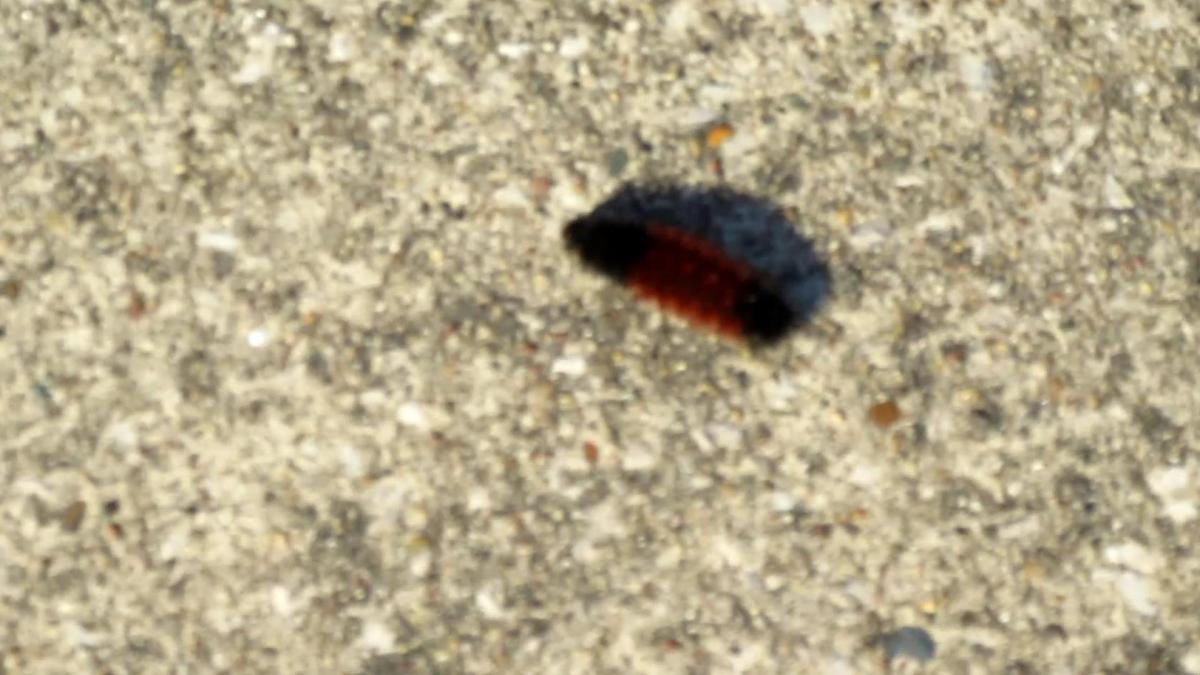
Sena and I went for a walk on the Clear Creek Trail today. It’s been about a year and a half since we last saw the place. A few things have changed, but one thing has not. You can nearly always find a woolly bear caterpillar somewhere along the trail, especially in the fall. I know I mentioned the insect not that long ago in a post after we thought we might have seen one on the Terry Trueblood Trail.

But we’re talking banded woolly bear, the genuine article. They have a brown band in the middle bounded by black bands at the head and tail ends. They’re fat and always busy looking for cover. There is a folk tale about it foretelling how hard the winter is going to get. The longer the black bands, the worse the winter will be.

However, the folk tale has long been debunked, according to my alma mater, Iowa State University (ISU). The bands are just indicators of the age of the insect, which is the larval stage of the Isabella moth.

But don’t try to tell that to the people of Vermilion, Ohio where they have the annual Woolly bear Festival. Dang, we just missed it in early October. They have a parade, woolly bear races, and an “official” examination of the woolly bears to nail down the winter forecast. I guess that’s sort of like hauling out the groundhog Punxsutawney Phil in Punxsutawney, Pennsylvania each Groundhog Day on February 2 to predict how much longer winter will last.

That reminds me (too late!) that we also missed this year’s ISU Department of Entomology Insect Zoo Film Festival, in Ames, Iowa, which was in late October. It’s an outreach program which travels all over Iowa to educate the public about insects.

I gather this evolved from another annual ISU Department of Entomology project called the Insect Horror Film Festival. It began in the early 1990s and gradually settled down into the Insect Zoo Film Festival in the mid-2000s.

That reminds me of one of my favorite movies, the 1997 film Men in Black, in which a bad-tempered giant cockroach alien crash lands its space ship on earth, eats a guy to use his skin as a disguise, tries to steal the Arquillian (tiny alien) galaxy, the best source of sub-atomic energy in the universe, and gets enraged every time it sees humans so much as swat a fly.

The other movie this makes me think of is the 1988 film Beetlejuice. Beetlejuice was sort of the star of the show, played by Michael Keaton. Beetlejuice was a dead guy who ate bugs and hired himself out to the newly dead, claiming to help ghosts get rid of a different species of pest—the living.

Finally, that makes me think of how long it’s going to take to get our Zombie Cribbage game delivered, given the recent slowdown of the Post Office. The snow may fly before it arrives.

But if the woolly bear analysis is right, at least there won’t be a lot of snow to slow down the mail truck.