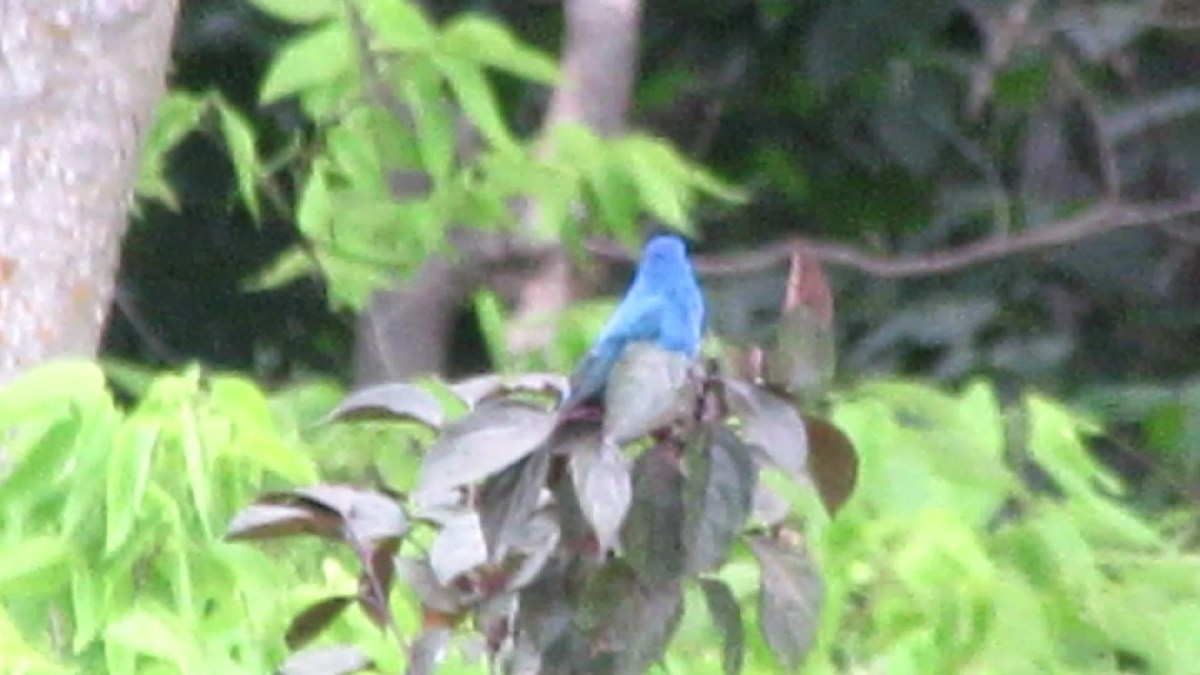
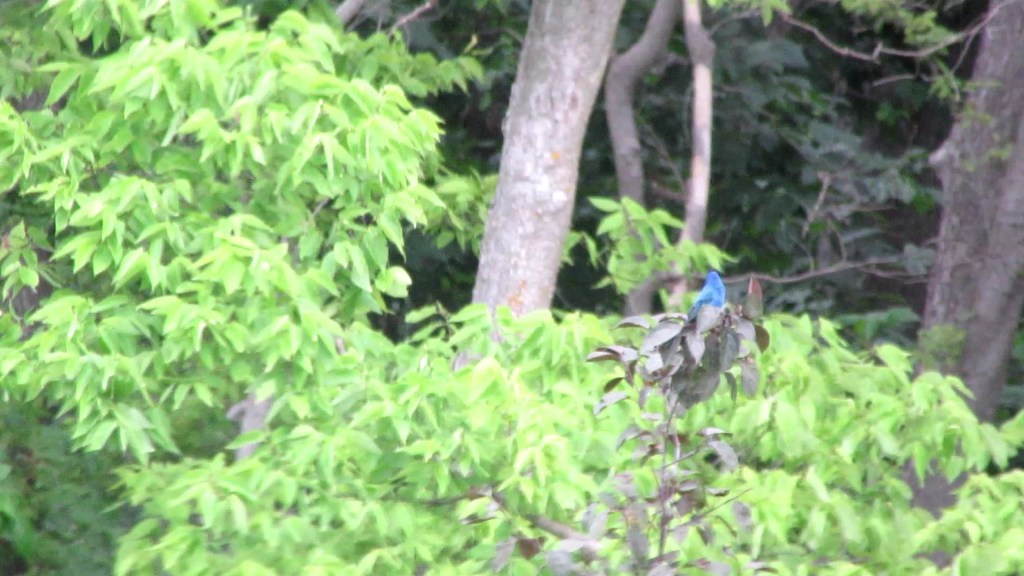
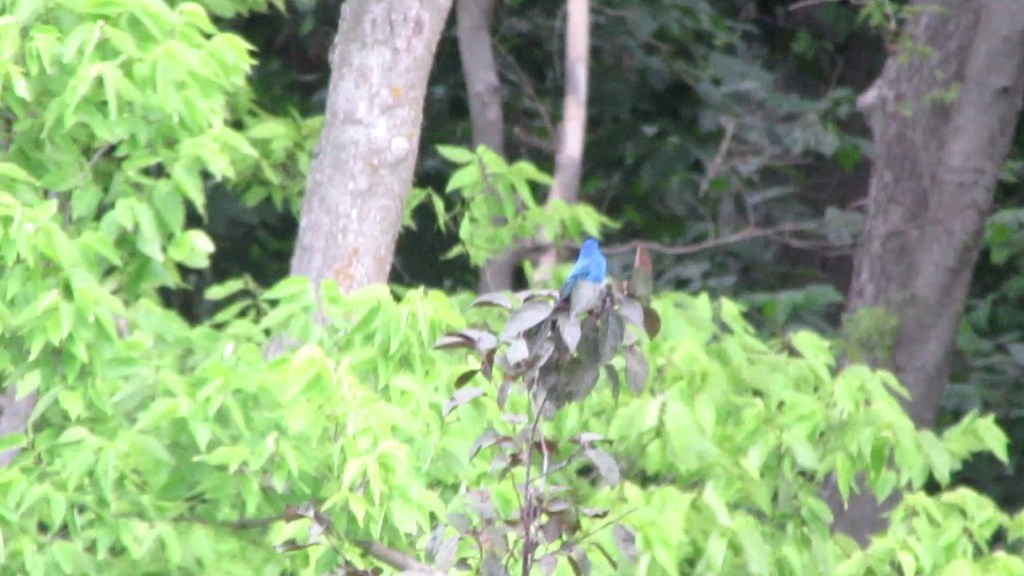
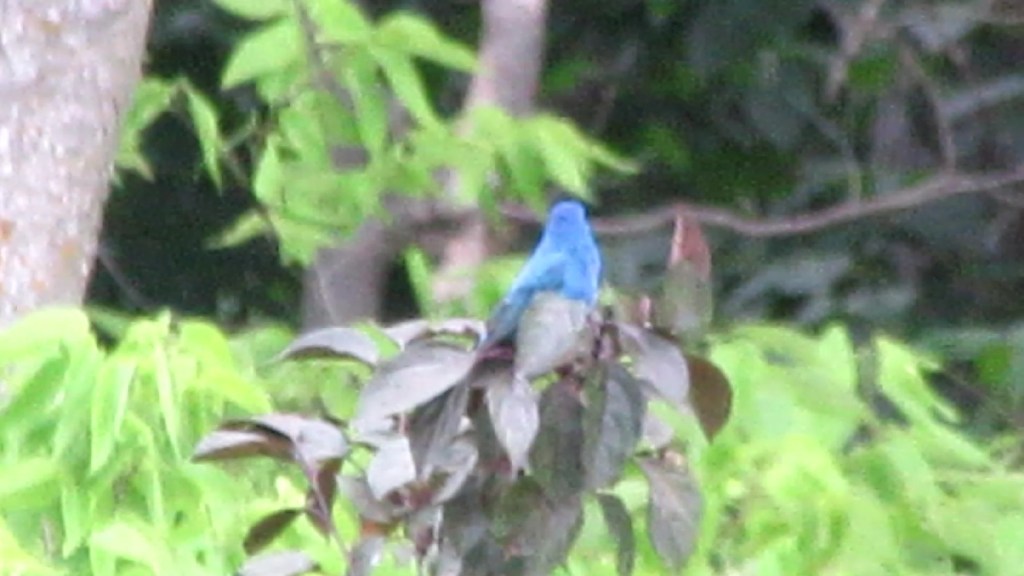
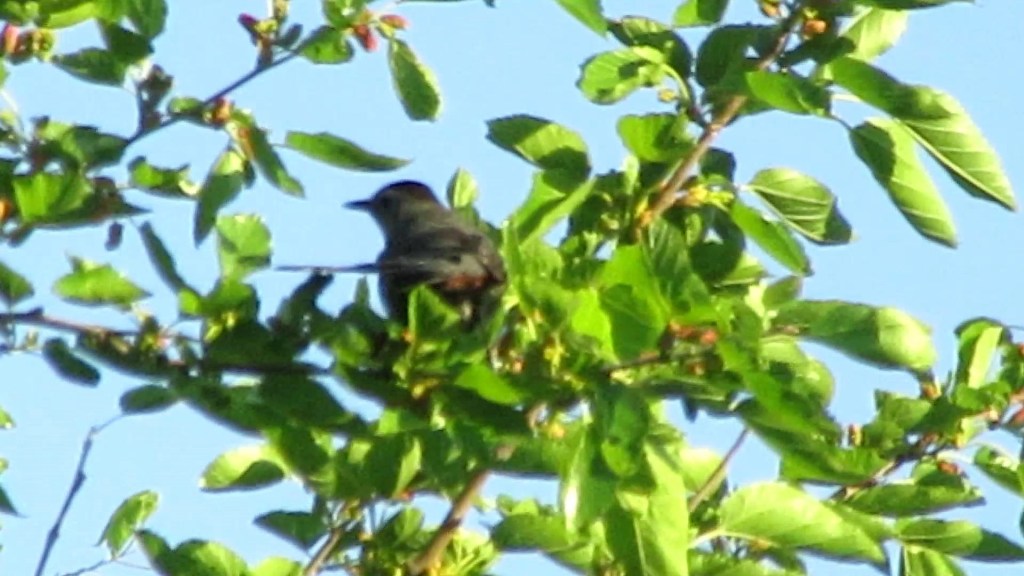
We were playing cribbage this afternoon and Sena spotted a blue bird perched on top of our crab apple tree in the back yard. I rushed to get the camera and got a quick video about 7 seconds long before it flew off. I pulled a few images of the back of the bird; it never turned around. We’re both pretty sure it’s a male indigo bunting, which Sena probably spotted about a week or so ago.
Click each image and then click the little “i” icon, which will open up to instructions on how to enlarge the image.
According to my field manual, it’s actually a gray bird without actual blue pigment in the feathers. They look blue because of how they refract light, similar to blue jays. I have personally not seen an indigo bunting in over 20 years.
And I won the cribbage game, which is pretty rare because Sena will not be defeated! How much excitement in one day can I stand?
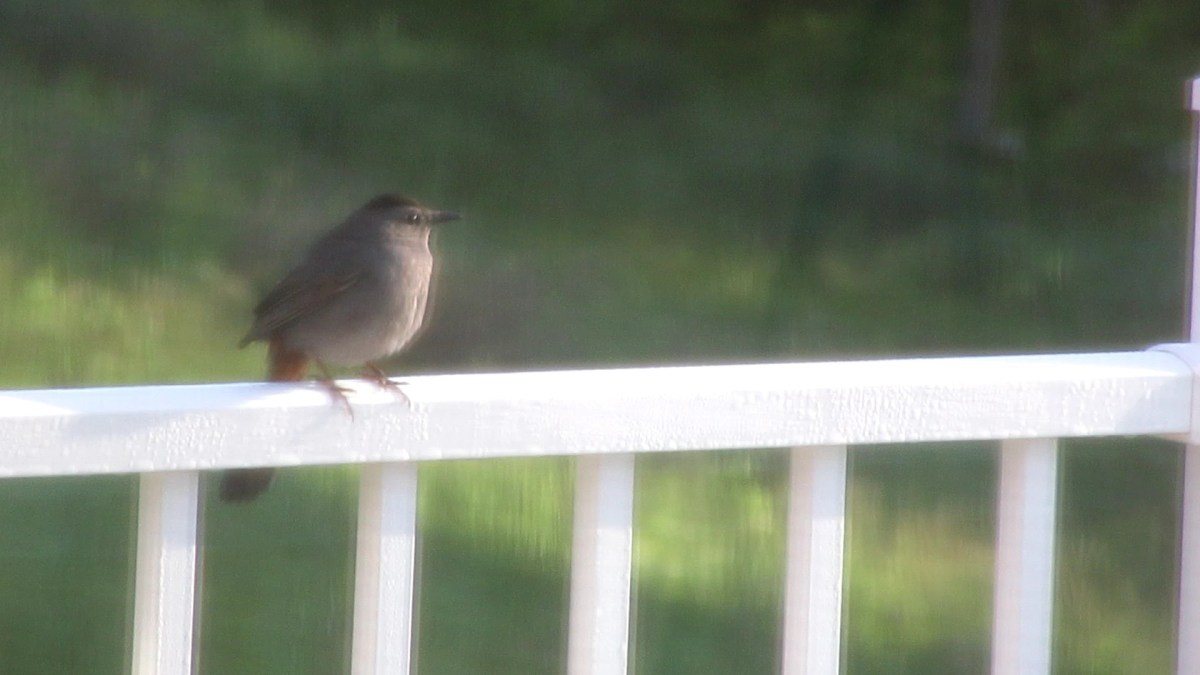
I finally got pictures of gray catbirds this morning! They’re swooping around our back porch, like a lot of other birds have been doing lately. See my video from yesterday about the sassy robin!
The last time I got photos of them was about a year and a half ago. As Mr. Charles Muntz said in the movie Up: “I’ve spent a lifetime tracking it. Sometimes years go by between sightings. I’ve tried to smoke it out of that deathly labyrinth where it lives. You can’t go in after it.”
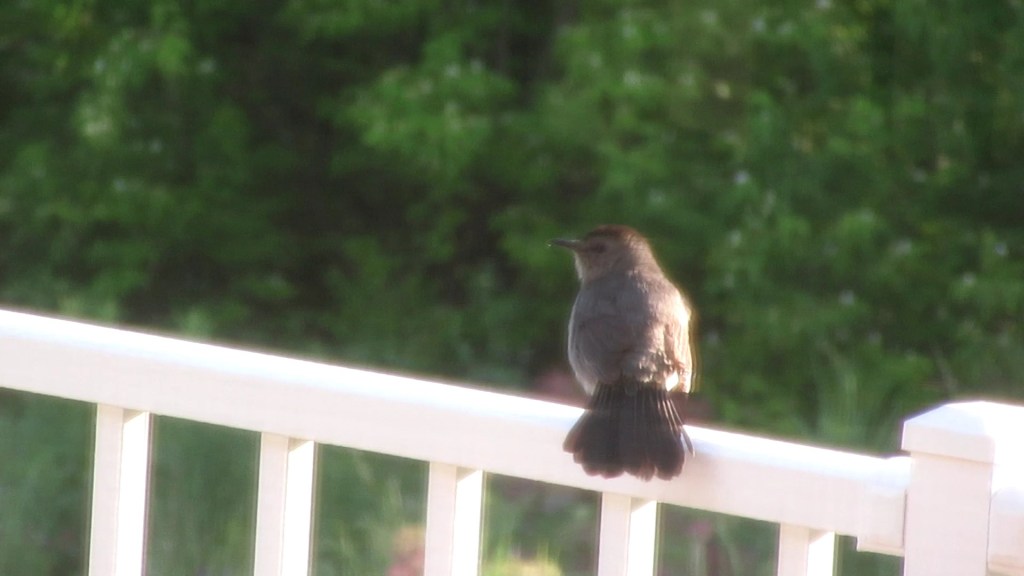
gray catbird gray catbird with chestnut color under tailgray catbird fanning tail
OK, so maybe I’m exaggerating a little. On the other hand, catbirds are more often heard than seen. Many times, all you hear is a mewing noise reminiscent of a cat, but raspy and mixed with a lot of other noises it mimics from other birds (which might be one reason why the literature says it’s related to the mockingbird). And while it doesn’t live in “deathly” labyrinths, the catbird can be almost invisible in thick shrubs where it builds its nest.
The catbirds have a rusty color under their tails, which can be hard for amateurs like me to get a snapshot of. But you can find a lot of excellent videos out there, like the one below:
I looked into the mystery of the gray catbird’s rusty rump. I mentioned the rusty colored feathers under its tail feathers in yesterday’s post. For some reason the underside of its tail feathers looks a little messy. I was able to get more video evidence about what might be the cause.
The catbird looks fastidious. That may be misleading. Scientific observation reveals what is really going on.
This is probably also the origin of an old saying. I think it was Plato who said, “Never stand under a bird.”
We hear the gray catbird more often than we see it. When we do see this beautiful gray bird, it’s only a fleeting glimpse. We more often hear it mewing like a cat. It imitates the songs of other birds as well.
I have caught sight of it in our back yard trees. It streaks back and forth from the trees to somewhere else, most likely a nest.
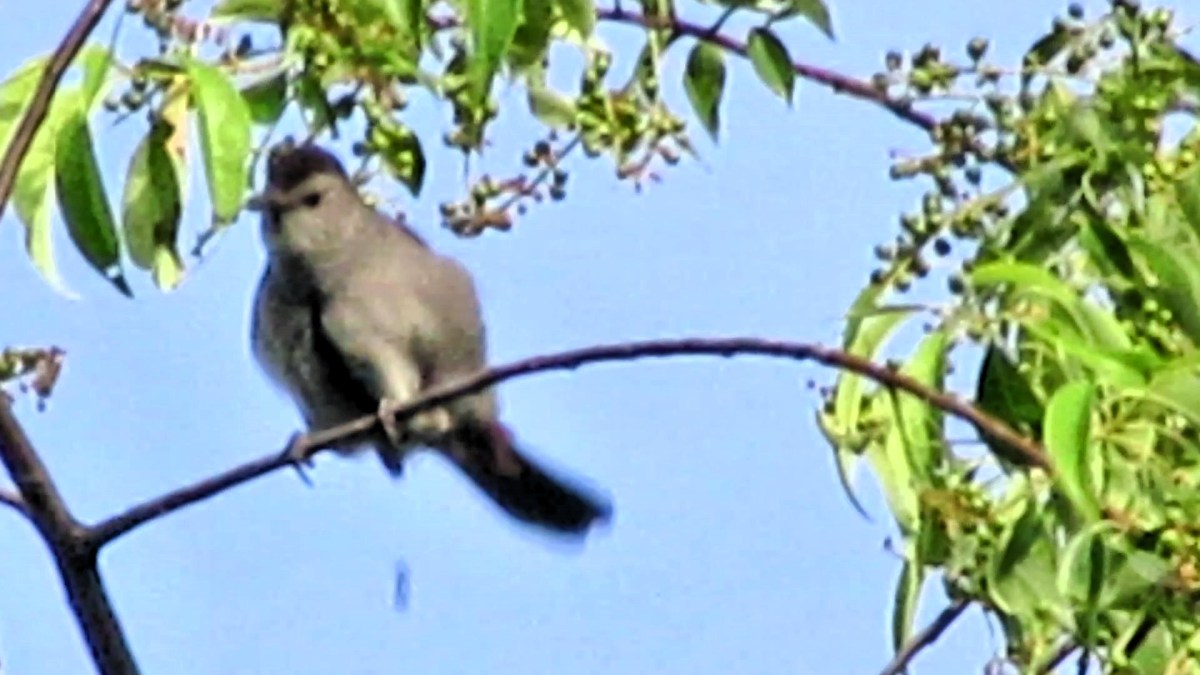
I finally got a short video yesterday morning from which I gleaned a few pictures. It seemed to show off its feathers, even the rust-colored ones you can see only when it lifts its fan-like tail. It has a handsome black cap.
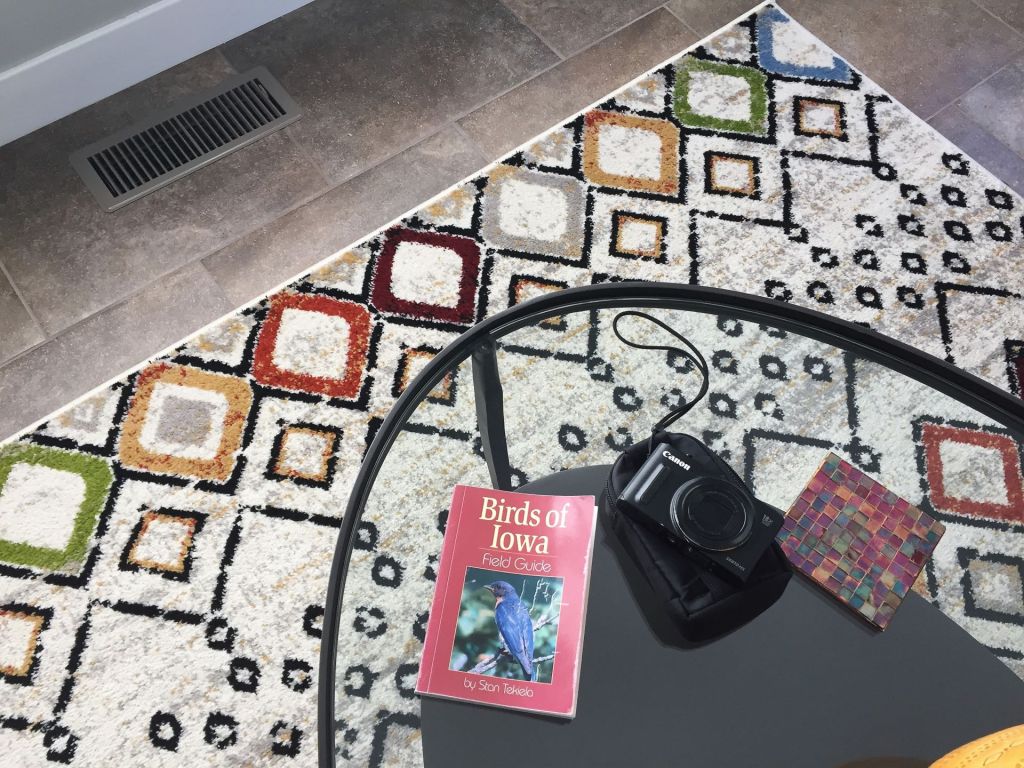
We have a bird book we consult for help identifying birds. The title is Birds of Iowa: Field Guide, written by Stan Tekiela. I first bought the book many years ago. It was published in 2000. I’m pretty sure I bought it at the Iowa Book store on Clinton Street in downtown Iowa City. It was still for sale at the store as recently as last year.
The book makes it easier to identify birds by color. The sections have titles like “Birds that are mostly gray.” Every page has a tab color making it easier to thumb through the book looking for the birds you saw and want to know more about.
The short descriptions are packed with useful descriptions of things like the behavior, migratory patterns, as well as appearance. Tekiela’s description of the gray catbird includes remarks about its color, saying it is “A handsome slate gray bird with black crown…” and “Often seen with tail lifted, exposing chestnut-colored patch under tail.”
Tekiela also would give some pithy and educational stories about birds. According to him, it’s “A secretive bird that the Chippewa Indians named Bird That Cries With Grief due to its raspy call.” Often it mews like a cat, which is how it got its common name.
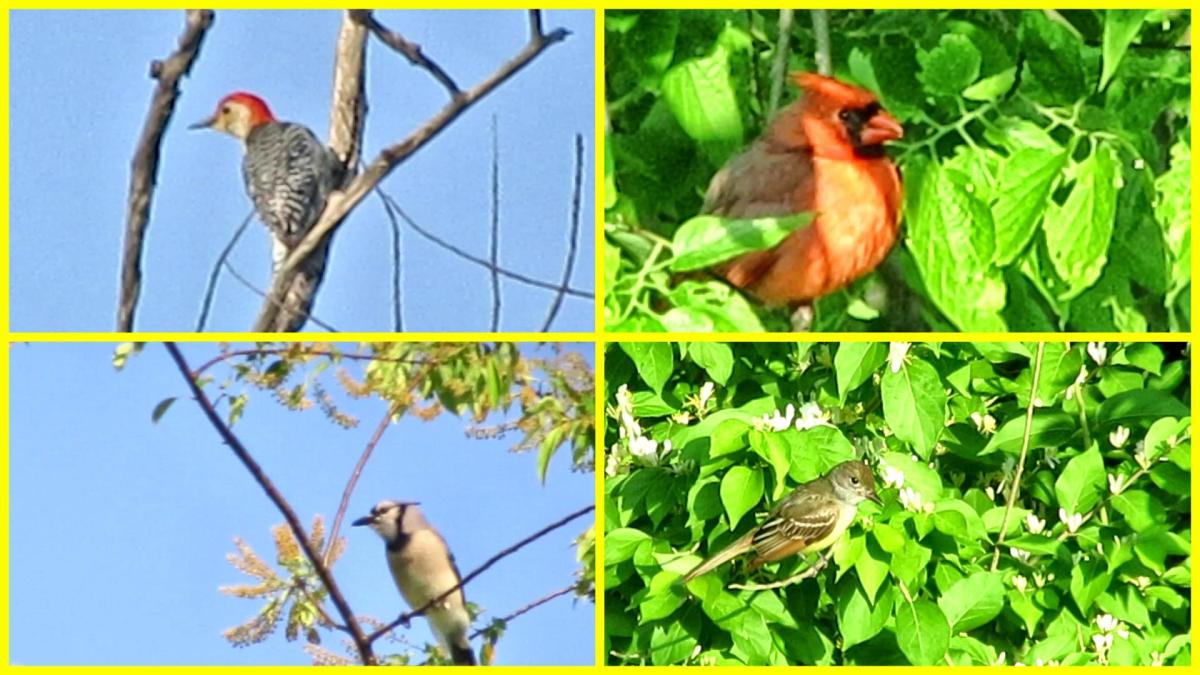
We were bird watching the other day and saw a few birds we definitely recognized. One of them we puzzled about but finally decided was a sparrow.
The Red-Bellied Woodpecker is familiar. We think it was a male. The Blue Jay is still interesting because when it’s not in the sunlight it looks like what it really is—a blackbird. When we first saw it, the bird looked sort of grayish black. Finally, it turned just right and its feather bent the light into the familiar blue color. The Northern Cardinal is instantly recognizable, especially the male. They like to sit a long time, which is great for getting pictures.
The last bird looks like a sparrow but the tail seems longer and the bill is narrower. The breast is not streaked. It has head feathers which stick up. It resembles a female house sparrow, but it seems a bit larger than that. We looked around the web to try and identify the sparrow-like bird we saw.
We wonder if it might be a Cassin’s Sparrow. Although it would be out of its range since it’s found mostly in the southwest United States, Cassin’s Sparrow has been known to wander.
On the other hand, it’s not listed on the websites we saw featuring sparrow species seen in Iowa.
I think the reason it had a greenish breast was because it was reflecting the surrounding tree leaves. We’re calling it a Cassin’s Sparrow for now, but if you know better, shout it out.






 Go Retire Psychiatrist