I got the Winter 2025 Hopkins Brain Wise newsletter today and there was a fascinating article, “Using AI to Reduce Delirium in the ICU: Pilot Study will explore AI headset can help reduce delirium and delay post-delirium cognitive decline.”
The article has exciting news about what researchers are doing which will, hopefully, reduce the incidence of delirium in the intensive care unit (ICU). Another Hopkins researcher has published a study that has already used AI algorithms to detect early warning signs of delirium in the ICU;
Gong, Kirby D. M.S.E.1; Lu, Ryan B.S., M.D., Ph.D.2; Bergamaschi, Teya S. M.S.E., Ph.D.3; Sanyal, Akaash M.S.E.4; Guo, Joanna B.S.5; Kim, Han B. M.S.E.6; Nguyen, Hieu T. B.S., Ph.D.7; Greenstein, Joseph L. Ph.D.8; Winslow, Raimond L. Ph.D.9; Stevens, Robert D. M.D.10. Predicting Intensive Care Delirium with Machine Learning: Model Development and External Validation. Anesthesiology 138(3):p 299-311, March 2023. | DOI: 10.1097/ALN.0000000000004478
The list of references for the study of course include those by Dr. E. Wesley Ely, who delivered an internal medicine grand rounds about delirium at the University of Iowa in 2019.
Anybody who reads my blog knows I’ve been knocking AI for a while now. However, anybody who also knows that I’m a retired consultation-liaison psychiatrist knows how interested I am in preventing delirium in the hospital. I worked as a clinical track professor for many years at The University of Iowa Health Care in Iowa City.
It’s fortuitous that I found out about what Johns Hopkins research is doing on this topic because the director of the Johns Hopkins psychiatry department happens to be Dr. Jimmy Potash MD, MPH, who’s identified on the newsletter. He was the head of the psychiatry department at the University of Iowa from 2011-2017.
Besides all the name-dropping I’m doing here, I’m also admitting that I’ll probably soften my position against AI if the research described here does what the investigators and I hope for, which is to reduce delirium in the ICU.
I found one of my old blog posts about using intravenous infusions of haloperidol for delirium in the intensive care unit. The bottom line is it that it probably should not be used, in my opinion. This is sort of a follow up on my Christmas Eve blog post in which I mention talking to ICU personnel about using IV haldol for delirium. I’ve edited out a portion of the old post.
Notes on Pharmacology for the Treatment and Prevention of Delirium: IV Haldol Infusions
“I ran across the Canadian Coalition for Seniors’ Mental Health guidelines for the management of delirium in elder adults. You can access them for free at the at this link, CCSMH – Canadian Coalition for Seniors’ Mental Health. I was a bit surprised to read the following recommendation:
“For those who require multiple bolus doses of antipsychotic medications, continuous intravenous infusion of antipsychotic medication may be useful.“
Note: I read this in 2011. I’ve rechecked the website of CCSMH, which shows the same recommendation when I reviewed it on December 27, 2023.
The recipe for continuous infusion of haloperidol was in a paper by Riker and I thought it was of historical interest[1]. Essentially, if the delirious patient had not responded to 8 consecutive 10mg bolus injections of haloperidol, you asked the intensivists to start a haloperidol drip at 10mg an hour. It usually didn’t work and despite the puzzling tendency for experts to claim that extrapyramidal side effects (EPSE) such as dystonias, parkinsionism, and akathisia occur at a lower rate when haloperidol is infused intravenously, the dissenting opinion from experienced psychiatric consultants including me is—if you do this enough times you’ll see EPSE. I’ve witnessed everything from trismus to opisthotonos, on one occasion all in one patient as I stood there and watched him over minutes while the intravenous (IV) haloperidol was infusing.
The idea that IV haloperidol infusions seems to stem in part from a 1987 paper by Menza[2]. There were only 10 patients total in that study.
My comments: I remember a presentation at an Academy of Consultation-Liaison (ACLP) meeting many years ago reporting that EPS (extrapyramidal side effects such as dystonia) had been reported to occur after IV administration in 67% of normal humans given a single dose, in 16-74% of adults with medical illness including burns, migraine, and Human Immunodeficiency Syndrome, and in 37% of psychiatric inpatients. EPS occured after IV administration of other dopamine blockers including the anti-nausea agent Reglan and there were at least 6 case reports of Neuroleptic Malignant Syndrome (the “ultimate EPS”) following IV administration of haloperidol.
The presenter reporter that no EPS occurred in several cases of reported very high dose IV Haloperidol, e.g., 945mg/ in 24 hours; and 1155mg in one day (from his own case report in 1995). It may have had something to do with delirium itself being a highly anticholinergic state.
There have been improvements in the management of delirium in the ICU since then. The best example I can give would be what Dr. Wesley Ely, MD has been doing for years at Vanderbilt.
1. Riker, R.R., G.L. Fraser, and P.M. Cox, Continuous infusion of haloperidol controls agitation in critically ill patients. Crit Care Med, 1994. 22(3): p. 433-40.
2. Menza, M.A., et al., Decreased extrapyramidal symptoms with intravenous haloperidol. J Clin Psychiatry, 1987. 48(7): p. 278-80.
Listen to Dr. Wes Ely on the show Talk Radio Europe as he talks about the devastating consequences of severe disease that results in admission to critical care units, specifically in the context of the Covid-19 Pandemic.
The title of the presentation is “Understanding the Long Shadow of COVID and ICU Care.”
I know I’d been saying that I probably wouldn’t have time to
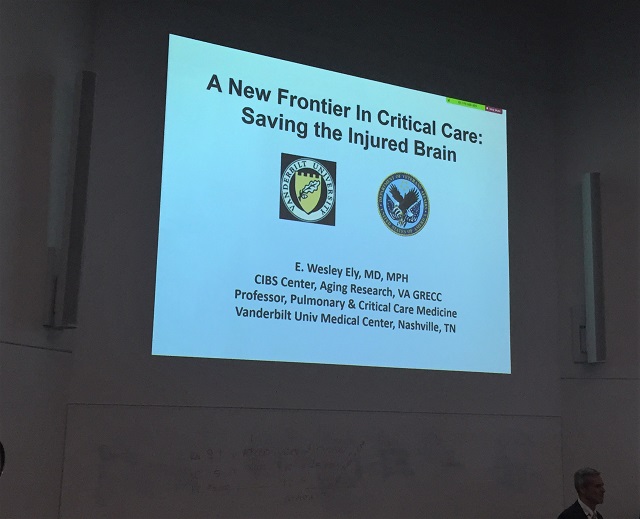
attend Wes Ely’s Grand Rounds presentation yesterday, “A New Frontier in
Critical Care: Saving the Injured Brain.” But against all odds, I
actually got to go, along with some medical students and a Family Medicine resident.
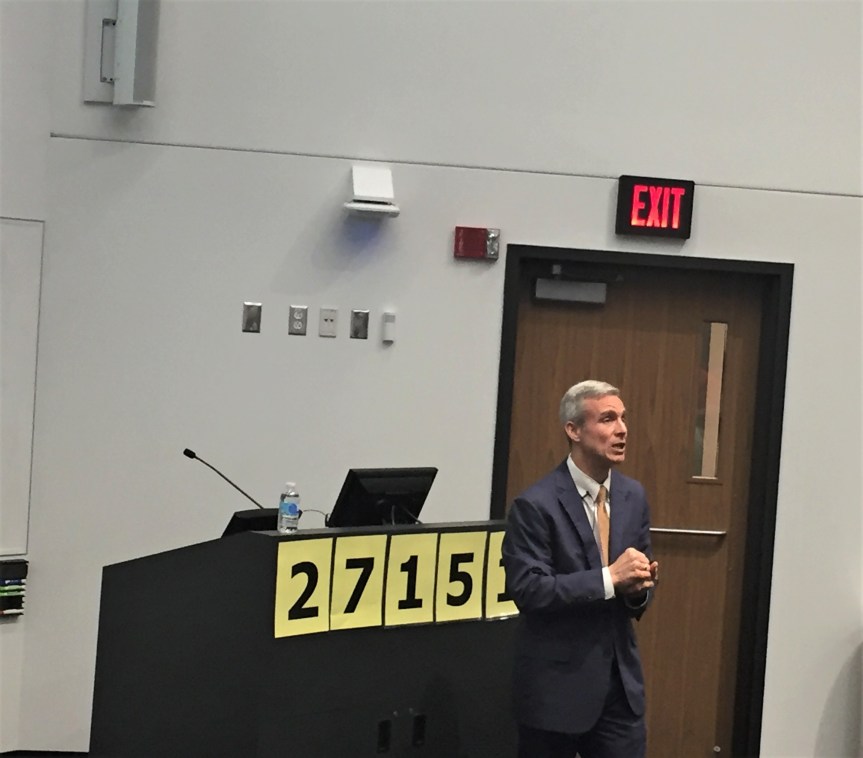
As I expected, Dr. Ely brought the house down. His talk was similar to the one he gave at Emory University in Atlanta, Georgia, but not identical. He described the results of the study “Haloperidol and Ziprasidone for treatment of Delirium in Critical Illness,” published last October in the New England Journal of Medicine. There’s a YouTube video of that in my March 28, 2019 post announcing his visit to Iowa City.
He also discussed in detail the ABCDEF bundle for protecting the brains of patients in the ICU.
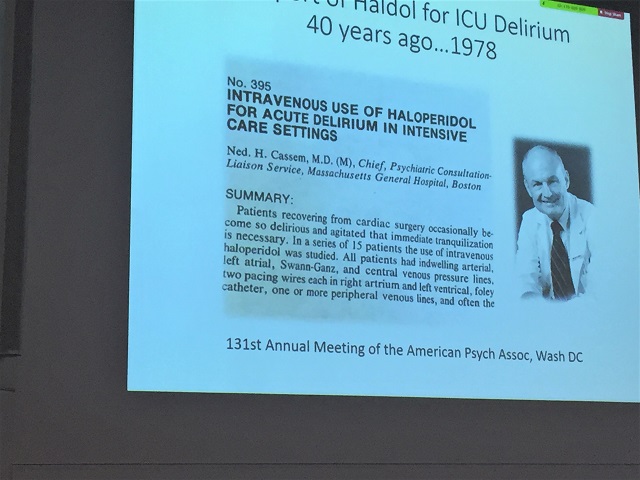
When he outlined the history of intravenous haloperidol for the treatment of delirium in critical care units, I had to cringe because I remembered the continuous IV haloperidol infusion protocol (running at 5-10 mg an hour) developed by Riker and colleagues. I mention it for historical reasons only. I don’t recommend using it.
IV haloperidol for ICU Delirium
Riker, R. R., G. L. Fraser and P. M. Cox (1994). “Continuous infusion of haloperidol controls agitation in critically ill patients.” Critical care medicine 22(3): 433-440.
After his presentation, Dr. Ely asked for questions. I asked him what he thought the role of the psychiatrist is regarding ICU delirium. He actually recognized me; we met very briefly at a meeting of the American Delirium Society in Indianapolis several years ago.
Even better, he knew enough to mention the catatonic variant of delirium and the irony of using a benzodiazepine to treat it, which you would avoid like the plague in delirium (except for alcohol withdrawal, for example). However, benzodiazepines can reverse catatonia. See my post from April 10, 2019 (“Delirium and Catatonia: Medical Emergencies”). He thought psychiatrists would know more about that and would be important collaborators in managing catatonia.
Wes bringing the house down.
It’s difficult not to be excited by the advances in medicine
and psychiatry when an inspirational scientist, humanist, and visionary leader
like Wes comes to town. It makes me wonder how I’m going to get a buzz like
that out of anything I do in retirement.
On the other hand, I get a kick out of making silly videos.
Wes Ely, MD will be giving the Internal Medicine Grand Rounds today at noon at University of Iowa Hospitals and Clinics. The title of his presentation is “A New Frontier in Critical Care: Saving the Injured Brain.”
I’m on duty today in the general hospital as a psychiatric consultant. I’m pretty sure I won’t be able to attend Dr. Ely’s talk, ironically because I’ll be helping colleagues care for delirious patients.
But I found a YouTube video of the talk he gave with the same title. He delivered it in 2017 at a Critical Care Summit meeting at Emory University in Atlanta, Georgia.
I gave a talk to the medical students yesterday about delirium and dementia, which you can view in yesterday’s post. I urged them to try to attend Dr. Ely’s talk today because it would be a stellar, eye-opening, inspirational presentation. I talked about many of the same topics relevant to delirium that he does–but he’s a rock star. He’s a scientist and a humanist. I met him briefly at a meeting of the American Delirium Society several years ago and he’s brilliant.
I was listening to his talk via this YouTube video as I quickly tapped out this post. He’s an intensivist and focuses on delirium in critical care. While the focus of his talk is called “ICU delirium,” I think it’s important to realize that delirium is delirium–anywhere in the hospital or in nursing homes, skilled care facilities, and hospital emergency rooms.
The first-person video that Dr. Ely shows of a patient who developed what is essentially a dementia from prolonged delirium in the ICU is compelling. It’s a stunning revelation from someone who has not recovered from the neurocognitive injury that we call delirium. Some patients have even committed suicide because of the long-term brain injury resulting from delirium.
Dr. Ely makes the point that changing the culture of hospital medicine regarding the approach to assessing and managing delirium is a baby step process. It takes time.
Change happens, especially if we approach it as a team.
Retirement takes a back seat today for this announcement: Dr. Wes Ely, Critical Care Specialist and one of the foremost experts in intensive care unit (ICU) delirium at Vanderbilt University will be speaking at The Newman Center in Iowa City on April 11, 2019 at 7:00 PM, “Maximizing Dignity at End of Life: Insights from the ICU.” He’ll also deliver the Internal Medicine Grand Rounds at the University of Iowa at noon, “A New Frontier in Critical Care: Saving the Injured Brain.”
I was notified by one of our critical care specialists, Dr. Gregory A. Schmidt, MD, who co-authored the recently published study showing that antipsychotics are not effective treatment for delirium. Wes talks about the study in the video below:
Dr. Wes Ely
I met Dr. Ely briefly at one of the annual meetings of the American Delirium Society several years ago. He’s enthusiastic, brilliant, and inspiring. He’s published hundreds of articles and book chapters on delirium and taking care of the brain. Along with Dr. Valerie Page (another critical care specialist) he co-authored a book entitled Delirium in Critical Care, originally published in 2011 and I see that there is a 2nd edition available, published in 2015 by Cambridge University Press.
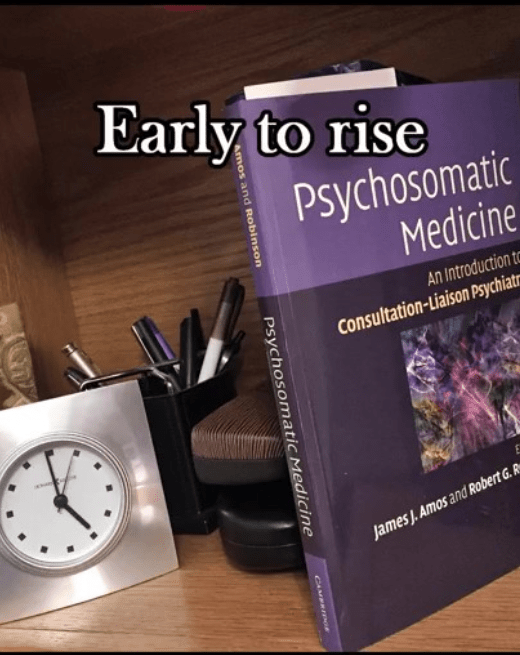
That is the same publisher, incidentally, for the book I co-edited with Dr. Robert G. Robinson, Psychosomatic Medicine: An Introduction to Consultation-Liaison Psychiatry)–shameless plug for my book.
I have a copy of the first edition, which contains a section about the role of the psychiatrist in ICU delirium. It’s very short, which I think is very appropriate. Dr. Alasdair MacLullich, Professor of Geriatric Medicine, Professor of Geriatric Medicine at the University of Edinburgh and past President of the European Delirium Association, wrote the foreword to the 2nd edition and he describes Dr. Ely as “…perhaps the best recognized expert in this field worldwide,” referring to delirium.
Incidentally, about 8 years ago Dr. MacLullich and I corresponded about his research team’s development of the Edinburgh Delirium Test Box (EDTB), an instrument for detecting attentional abnormalities that are a defining feature of delirium. He loaned us the box and I eventually turned it over to a colleague for continuing use of it as part of an ongoing delirium committee project to improve the early detection and prevention of delirium at our hospital. There is now a smartphone application for it.
Where is this thing called an “app”?
Regrettably, I probably won’t get to hear Wes give his presentation—because I’m on duty as the general hospital psychiatric consultant and most likely will be trying to help physicians care for delirious patients.
References:
Girard, T. D., et al. (2018). “Haloperidol and Ziprasidone for Treatment of Delirium in Critical Illness.” N Engl J Med 379(26): 2506-2516.
BACKGROUND: There are conflicting data on the effects of antipsychotic medications on delirium in patients in the intensive care unit (ICU). METHODS: In a randomized, double-blind, placebo-controlled trial, we assigned patients with acute respiratory failure or shock and hypoactive or hyperactive delirium to receive intravenous boluses of haloperidol (maximum dose, 20 mg daily), ziprasidone (maximum dose, 40 mg daily), or placebo. The volume and dose of a trial drug or placebo was halved or doubled at 12-hour intervals on the basis of the presence or absence of delirium, as detected with the use of the Confusion Assessment Method for the ICU, and of side effects of the intervention. The primary end point was the number of days alive without delirium or coma during the 14-day intervention period. Secondary end points included 30-day and 90-day survival, time to freedom from mechanical ventilation, and time to ICU and hospital discharge. Safety end points included extrapyramidal symptoms and excessive sedation. RESULTS: Written informed consent was obtained from 1183 patients or their authorized representatives. Delirium developed in 566 patients (48%), of whom 89% had hypoactive delirium and 11% had hyperactive delirium. Of the 566 patients, 184 were randomly assigned to receive placebo, 192 to receive haloperidol, and 190 to receive ziprasidone. The median duration of exposure to a trial drug or placebo was 4 days (interquartile range, 3 to 7). The median number of days alive without delirium or coma was 8.5 (95% confidence interval [CI], 5.6 to 9.9) in the placebo group, 7.9 (95% CI, 4.4 to 9.6) in the haloperidol group, and 8.7 (95% CI, 5.9 to 10.0) in the ziprasidone group (P=0.26 for overall effect across trial groups). The use of haloperidol or ziprasidone, as compared with placebo, had no significant effect on the primary end point (odds ratios, 0.88 [95% CI, 0.64 to 1.21] and 1.04 [95% CI, 0.73 to 1.48], respectively). There were no significant between-group differences with respect to the secondary end points or the frequency of extrapyramidal symptoms. CONCLUSIONS: The use of haloperidol or ziprasidone, as compared with placebo, in patients with acute respiratory failure or shock and hypoactive or hyperactive delirium in the ICU did not significantly alter the duration of delirium. (Funded by the National Institutes of Health and the VA Geriatric Research Education and Clinical Center; MIND-USA ClinicalTrials.gov number, NCT01211522 .).
Tieges, Z., Stíobhairt, A.,
Scott, K., Suchorab, K., Weir, A., Parks, S., . . . MacLullich, A. (2015).
Development of a smartphone application for the objective detection of attentional
deficits in delirium. International Psychogeriatrics, 27(8),
1251-1262. doi:10.1017/S1041610215000186




 Go Retire Psychiatrist