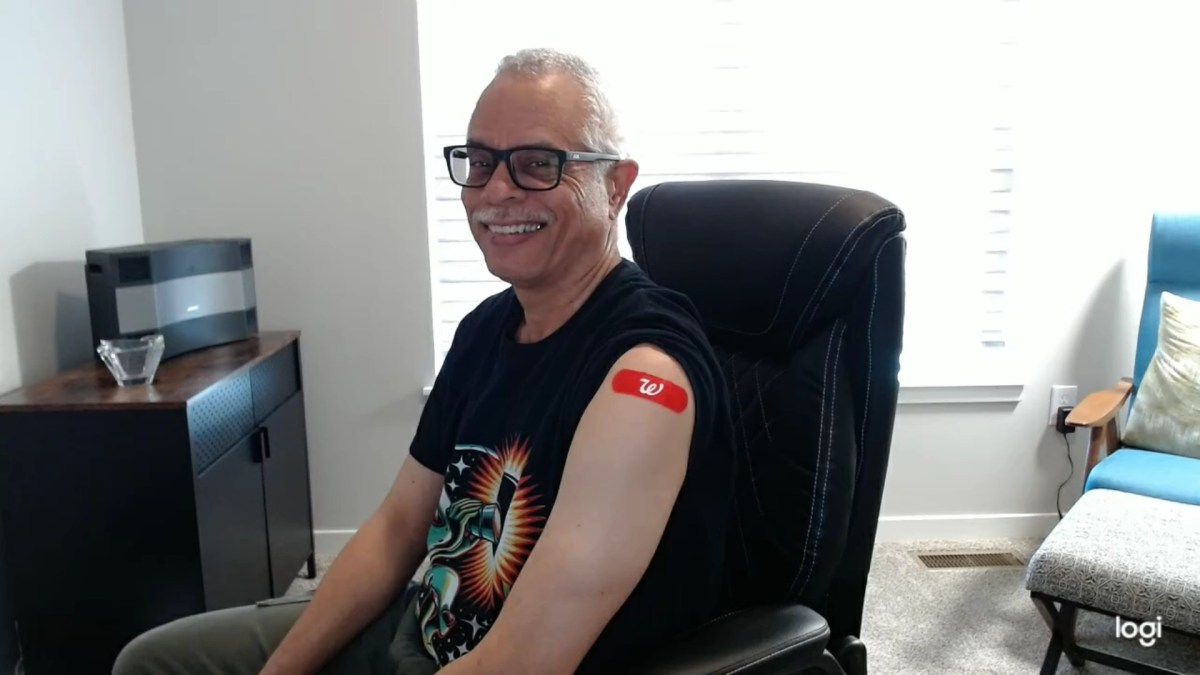
So, I Got the Covid-19 Booster Today

After giving the Covid-19 summer booster a lot of thought, I got it today. What the heck. I’m an old guy and the experts all agree that the summer surge is real, including the current leaders of the FDA Center for Biologics Evaluation and Research (Vinay Prasad, M.D., M.P.H and Martin A. Makary, M.D., M.P.H.).

 I read their article “An Evidence-Based Approach to Covid-19 Vaccination” published in the New England Journal of Medicine on May 20, 2025. It sounds like they’re going to require placebo-controlled trials for new vaccines for almost everybody except those over age 65 and high risk because they’re not recommending it for certain other groups such as healthy children.

I didn’t think it was worth the wait for the upcoming CDC ACIP meeting on June 22, 2025 in order to decide whether or not to get the summer vaccine. It’s the same one I got last fall and the same one the FDA advisory committee decided at this month’s meeting would be appropriate going forward (the JN.1 lineage).

It wasn’t like there was a long wait time to get the vaccine today. There wasn’t a line. I scheduled it but I didn’t have to because I got right in.

It’s true that vaccine uptake has been low. However, I think on balance they’ve been proven to be safe and effective so I’m not sure that placebo-controlled trials are warranted. I guess we’ll just have to agree to disagree.

Reference:

An Evidence-Based Approach to Covid-19 Vaccination

Authors: Vinay Prasad, M.D., M.P.H., and Martin A. Makary, M.D., M.P.H.Author Info & Affiliations

Published May 20, 2025

DOI: 10.1056/NEJMsb2506929

CDC Meeting Results in Recommending a 2nd Covid-19 Vaccine Dose for Those 65yr and Older and for the Immunocompromised

I missed the October CDC meeting which resulted in a decision to recommend a 2nd dose of the Covid-19 vaccine for those 65 years and older and for the immunocompromised.

The Evidence to Recommendations (EtR) slides by Roper indicated Covid-19 circulates year round, peaking in late summer and winter.

The recommendation that those in the above-named populations should get 2 doses of Covid-19 vaccine spaced 6 months apart seems based on reasonable considerations.

It looks like the vaccine would be the same as the one previously recommended for this year.

U.S. News & World Report Ranks Iowa City Hospital in 9 Specialties

The University of Iowa Stead Family Childrens Hospital in Iowa City has ranked in 9 pediatric specialties, including pediatric behavioral health by U.S. News & World Report!

Rounding At Iowa: Smoking and Vaping

I just want to give a shout out to University of Iowa Health Care and the Rounding@Iowa podcast for an outstanding presentation on the hazards of smoking tobacco, vaping, and dabbing.

The program originally aired on May 14, 2024 and the guests included two ICU doctors who are pulmonologists I’ve worked with as a psychiatric consultant. They are very dedicated.

There was a third guest and he is a patient who vaped and suffered disastrous consequences leading to lung transplant surgery. His insights are invaluable.

Breathing is good; not breathing is bad.

86: Cancer Rates in Iowa Rounding@IOWA

Iowa's cancer rates are among the highest in the country, and they are rising. In this episode of Rounding@Iowa, Dr. Gerry Clancy and guest experts Dr. Mary Charlton and Dr. Mark Burkard discuss the data, risk factors, and prevention strategies clinicians can use to make a difference. CME Credit Available:  https://uiowa.cloud-cme.com/course/courseoverview?P=0&EID=81274  Host: Gerard Clancy, MD Senior Associate Dean for External Affairs Professor of Psychiatry and Emergency Medicine University of Iowa Carver College of Medicine Guests: Mark E. Burkard, MD, PhD Professor of Internal Medicine-Hematology, Oncology, and Blood and Marrow Transplantation University of Iowa Carver College of Medicine Director, University of Iowa Health Care Holden Comprehensive Cancer Center Mary Charlton, PhD Professor of Epidemiology Director, Iowa Cancer Registry Iowa College of Public Health Financial Disclosures:  Dr. Clancy, Dr. Burkard, Dr. Charlton, and Rounding@IOWA planning committee members have disclosed no relevant financial relationships. Nurse: The University of Iowa Roy J. and Lucille A. Carver College of Medicine designates this activity for a maximum of 0.75 ANCC contact hour. Pharmacist and Pharmacy Tech: The University of Iowa Roy J. and Lucille A. Carver College of Medicine designates this knowledge-based activity for a maximum of 0.75 ACPE contact hours. Credit will be uploaded to the NABP CPE Monitor within 60 days after the activity completion. Pharmacists must provide their NABP ID and DOB (MMDD) to receive credit. UAN: JA0000310-0000-25-090-H99 Physician: The University of Iowa Roy J. and Lucille A. Carver College of Medicine designates this enduring material for a maximum of 0.75 AMA PRA Category 1 CreditTM. Physicians should claim only the credit commensurate with the extent of their participation in the activity. Other Health Care Providers: A certificate of completion will be available after successful completion of the course. (It is the responsibility of licensees to determine if this continuing education activity meets the requirements of their professional licensure board.) References/Resources:  Iowa Cancer Plan  
  1. 86: Cancer Rates in Iowa
  2. 85: Solutions for Rural Health Workforce Shortages
  3. 84: When to Suspect Atypical Recreational Substances
  4. 83: Hidradenitis Suppurativa
  5. 82: End-of-Life Doulas

Third Video in the Uncovering Hawkeye History Series: “Endless Innovation: An R1 Research Institution (1948-1997)”

Here’s the video recording of the third session in the Uncovering Hawkey History Series: Endless Innovation: An R1 Research institution (1948-1997).” Enjoy!

University of Iowa Health Care Black History Month Lecture: “Pursuing Health Equity—A Call to Action”

Yesterday Sena and I listened to the Zoom lecture “Pursuing Health Equity—A Call to Action,” delivered by Louis H. Hart, III, MD from noon to 1:00 PM. Dr. Hart is the inaugural Medical Director of Health Equity for Yale New Haven Health System and Assistant Professor of Pediatrics and faculty member in the Yale School of Medicine. The lecture was sponsored by the University of Iowa Office of Diversity, Equity, and Inclusion in the College of Medicine. The introductory remarks about him were that his “leadership work addresses unjust structural and societal barriers that lead to inequitable health outcomes for the patients we serve.” His lecture was intended to “focus on efforts to ingrain an equity lens into clinical operations.”

Sena and I talked a lot about Dr. Hart’s presentation, as usual in a spirited way. We don’t always agree on everything and we’re not shy about saying so to each other. The lecture was recorded. However, since I don’t know when it might be publicly available, I looked on the web, and as luck would have it, I found a YouTube (see below) of a similar lecture he gave on June 22, 2021 in New York. The message was basically the same, and included many of the same slides.

Dr. Hart is very committed and passionate about health equity. Calls to action typically, as you’d expect, are delivered with passion, which sometimes entails emphasizing the “whys” of what must be done over the “hows” regarding implementation of changes to our health care system.

He began by letting the audience know that we’d all probably be a little uncomfortable about some parts of his message. He had a little original one-liner about comfort zones, which I unfortunately can’t recall exactly, but it conveyed a message similar to the one below:

A comfort zone is a beautiful place, but nothing ever grows there.

John Assaraf

In the YouTube video below, Dr. Hart reminds me of myself in my role as a consultation-liaison psychiatrist many years ago, when I was trying to persuade our general hospital medical staff to take delirium much more seriously, stop seeing it as a psychiatric problem, and treat it as a complication of severe medical disease. I got acquainted with a famous critical care doctor, Wes Ely, MD, who recently published a fascinating book, “Every Deep Drawn Breath.” He has worked tirelessly for most of his career to teach his colleagues, nurses, and trainees, especially those in critical care, to get the point he made so succinctly in his research notebook: “Hypothesis: The lung bone is connected to the brain bone.” I wish we could keep it that simple.

I was a crusader at the time. I often took nurses and doctors and medical students out of their comfort zones, driven to ingrain in them the delirium lens that would help save patients from developing dementia and dying from the deadly syndrome of delirium.

My approach sometimes probably didn’t sit too well with my peers and my trainees. My call to action for preventing delirium likely moved a few clinicians—but just as likely alienated others.

I can see how some people might get that feeling from Dr. Hart in the video, although when I compare him with others who beat the drum loudly about structural racism in general and get pretty confrontational, I think he does a pretty fair job of moderating that approach. I get his passion and his urgency, which is for the most part balanced by his impressive ability to articulate all the “whys” about what must be done. I was reasonably confident he could collaborate with all of the people he needs to figure out the “hows.”

Now, to throw you a curve ball, I’m giving you the link to a podcast in which, if I close my eyes, I nearly don’t recognize Dr. Hart as he describes in polished detail the “hows” of his plan to improve health equity. It seemed almost miraculous. He’s just as passionate about his mission, but the crusader gives way to the thorough, confident, caring and even witty administrator presenting his very sophisticated vision of what the health care system of the future might look like. See what you think.