


I’ve been looking over some of the web articles on the Goldwater Rule, which is the APA Ethics Committee guideline enjoining any psychiatrist from making public psychiatric armchair diagnoses of public or political figures without a formal evaluation or permission to conduct one. It was originally made in 1973, years after Fact Magazine in 1964 sent out a questionnaire to psychiatrists asking for their public opinions about the mental stability of then candidate Barry Goldwater who was running for President against Lyndon B. Johnson. Many thought he was psychotic, although there was no evidence for that. Goldwater won a lawsuit against Fact Magazine, which led to the publisher going out of business. It was a big embarrassment for psychiatrists, which contributed to the creation of the Goldwater Rule.
Over the last few years and currently, many psychiatrists question whether the Goldwater Rule should be revised and abolished, making it permissible for psychiatrists who believe they have a duty to warn the public about political leaders they think might be a threat to national security, specifically President Donald Trump.
I’ve found a few articles on the web which helped me think about my own position about this. McLoughlin says the Goldwater Rule should change, but doesn’t tell us how. Glass calls the Goldwater Rule a “gag rule” and tells us why it should change. He resigned from the APA in protest. Ghaemi and others don’t agree on whether the Goldwater Rule should change, and one discussant says the rule only applies if you’re a member of the APA. Blotcky et al tell us how it could change, using sample conversations between reporters and psychiatrists.
I lean toward Blotcky et al. In fact, the final paragraph gives psychiatrists another way to express their opinions to the public. They can give them as private citizens without calling them professional judgments—which is their right.
On the other hand, if you want to know about my psychiatric interview of President Trump, you can see it below.

Mr. President, you have signed an affidavit allowing me to conduct a thorough psychiatric assessment today.
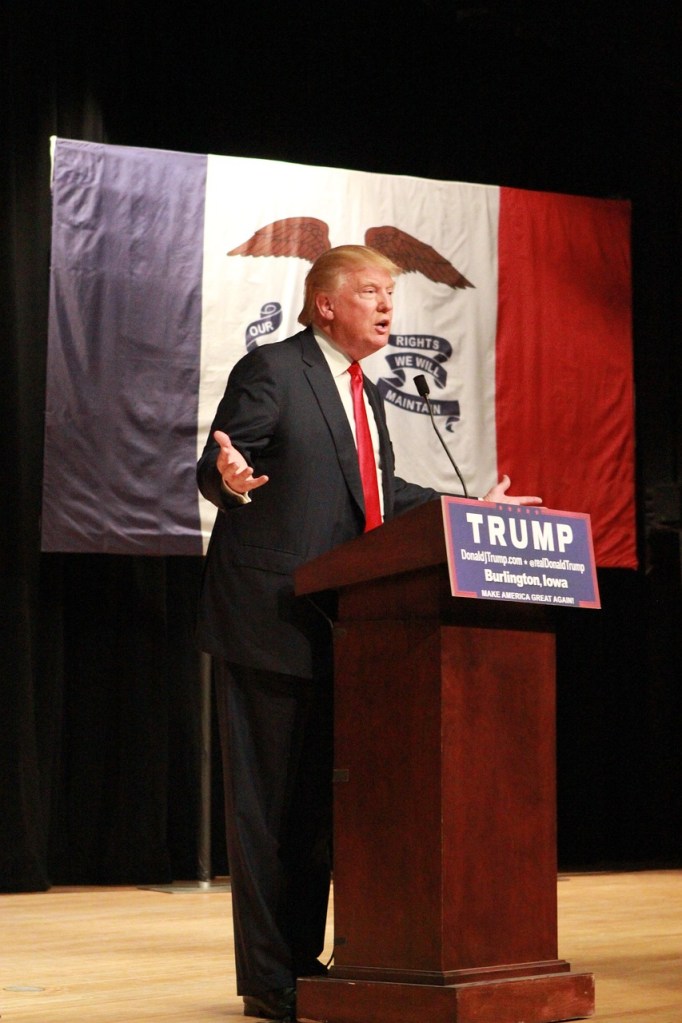
Yes, Dr. Amos, that’s correct.
Can you tell me why an Autopen was used to sign it?
I decline to answer that question on the grounds it may incriminate me.
Have you ever undergone a psychiatric assessment before?
Yes, but I had to fire her when she started asking questions about tariffs.
Very well, then. Can you tell me a little about your childhood?
It was perfect—as long as the other kids paid their tariffs.
Oh. Was there ever a time in your life marked by any problems with having access to the basic necessities of life?
Well, there was one thing. Water pressure was sometimes low, which is why I just wrote an Executive Order ensuring that low water pressure in faucets and showerheads will never again in my lifetime or yours be a problem. Make American Faucets Gush Again (MAFGA).
Thanks, I’m sure. Tell me, how would you typically go about solving an interpersonal conflict between you and others?
Raise tariffs by 300%.
I see. How about talking to people with whom you disagree?
I would say, “You’re fired.”
Would you try anything else first?
I would try tariffs.
Well, I think we’re done here. Thank you for your time, Mr. President.
Of course, this was satire.
References:
McLoughlin A. The Goldwater Rule: a bastion of a bygone era? Hist Psychiatry. 2022 Mar;33(1):87-94. doi: 10.1177/0957154X211062513. Epub 2021 Dec 20. PMID: 34930051; PMCID: PMC8886301.
Nassir Ghaemi, MD MPH.The Goldwater Rule and Presidential Mental Health: Pros and Cons – Medscape – Jun 07, 2017.
Glass, Leonard A. The Goldwater rule is broken. Here’s how to fix it. Stat News. June 28, 2018.
Blotcky, Alan D., PhD; Ronald W. Pies, MD; Moffic, H. Steven, MD. The Goldwater Rule Is Fine, if Refined. Here’s How to Do it. Psychiatric Times. January 6, 2022. Vol. 39, Issue 1


 Go Retire Psychiatrist