The Hippeastrum Flop Crisis

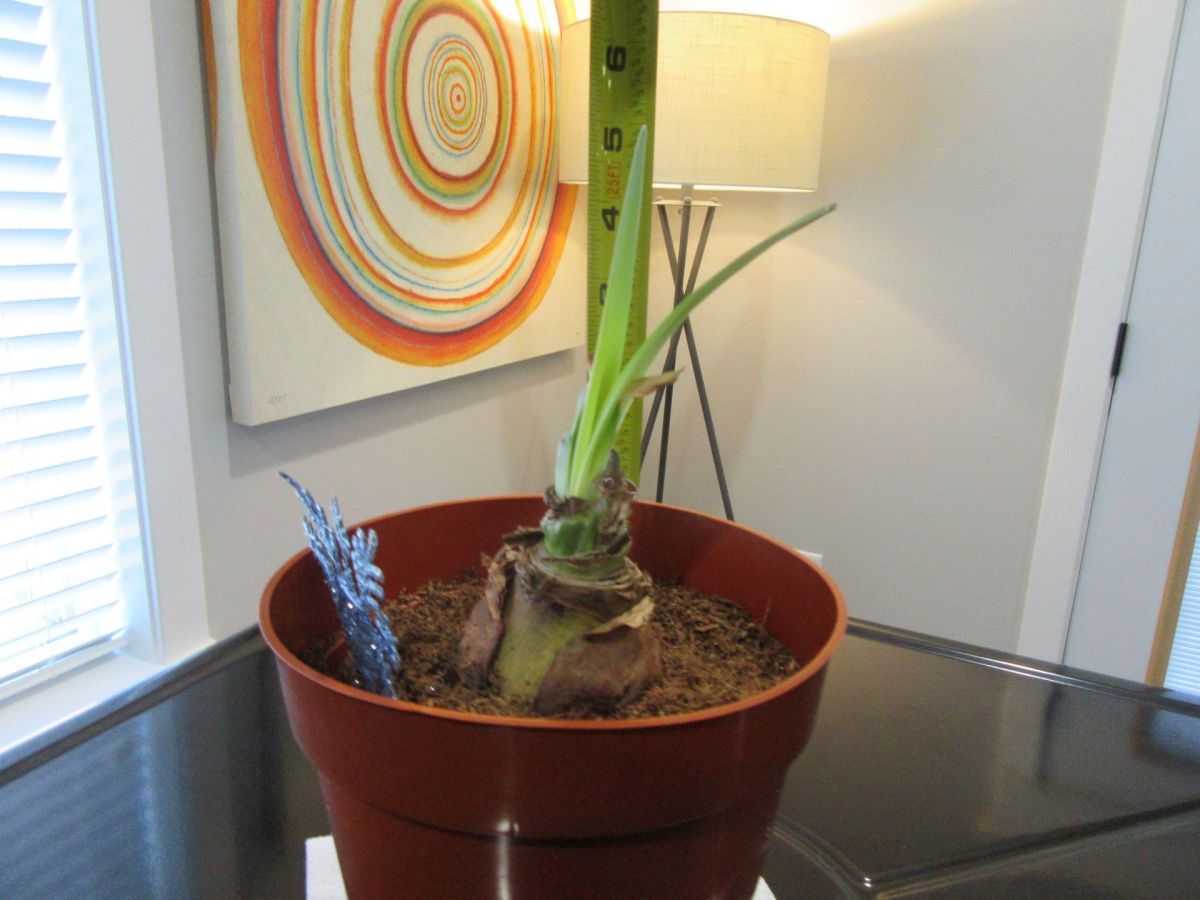
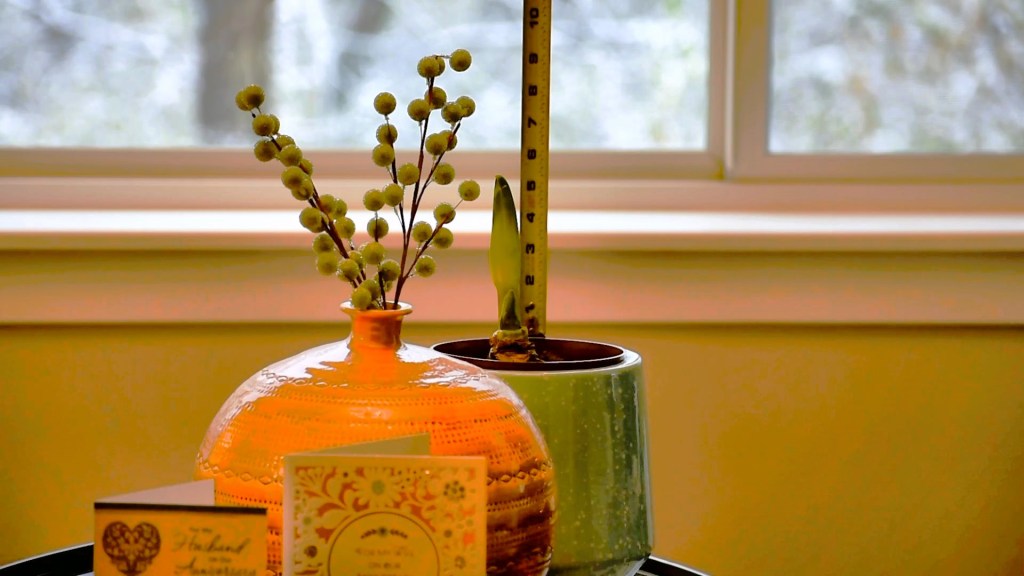
Our Hippeastrum/Amaryllis flowers are doing the flop. Whether you want to call it a Hippeastrum or an Amaryllis, they both flop. I think it’s because they both have hollow stems and heavy flowers. I read that Tulips flop for the same reason. They’re doing pretty well; the tallest one is up to nearly 30 inches.

The flower as it grows starts to bend in one direction or the other. We saw this a couple of years ago with our first Hippeastrum. In the beginning, we thought turning it one way or the other towards or away from the sunlight or the space heater would make a difference. Looking back on it now, I don’t think it did. We ended up staking it using a zip tie and a wooden dowel.

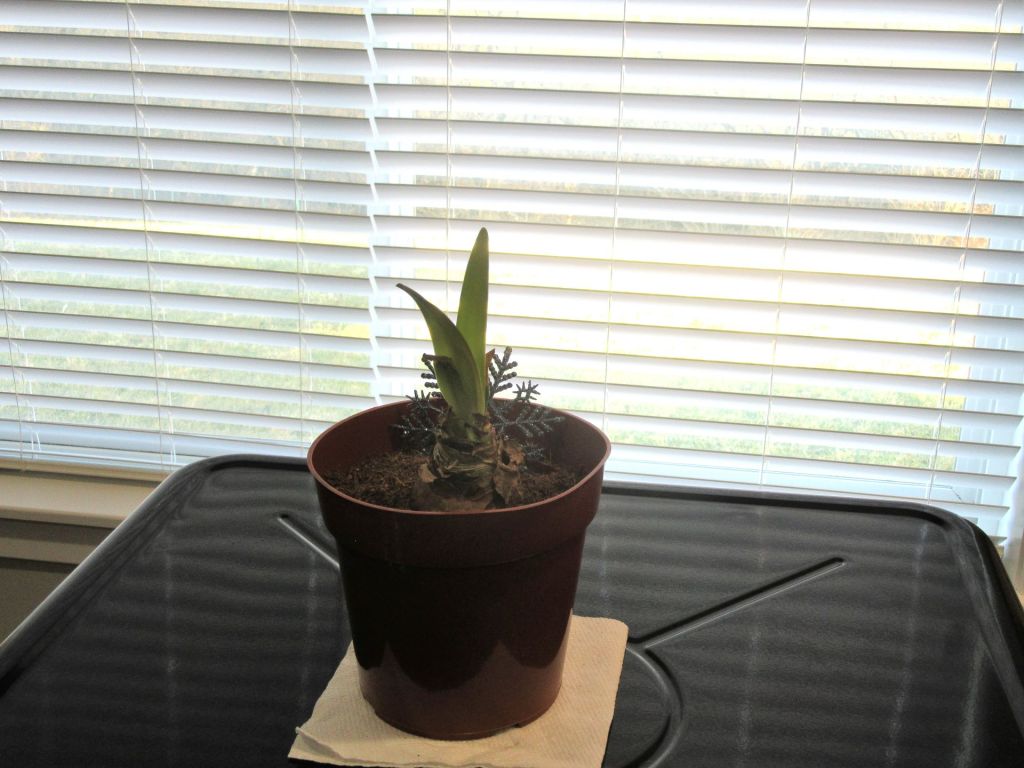
Sena stakes our new flowers using zip ties and long metal rods topped by a Christmas tree ornaments you stick in the dirt. The effect is comical, and it makes both of us laugh out loud.

I checked around on the web and found articles and YouTube videos about how to fix the Hippeastrum flop. One even suggested using a wire coat hanger. You can do this if you’re handy with tools. Or you could get a Christmas cactus.

We’re not doing wire coat hangers.

Addendum: Sena tried to replace the zip tie on the biggest plant because she’s ambivalent about the look of them. OK, so she’s not ambivalent; she was “bent” on finding a different staking method. So, she cut the zip tie and, wouldn’t you know, that’s a good way to tell if the stem is really hollow. She accidentally cut it open. It started to leak fluid. She quickly applied a Christmas tree ribbon bandage, one with blood red cardinals on it in fact. We hope the wound is not fatal.

Another Addendum: OK here’s the last adddendum. It’s a set of crude drawings meant to show how to pronounce “Hippeastrum.” I’ve previously pointed out there seem to be two ways and I don’t know which one is preferred. If you know, shout it out. This is a trick I got from Svengoolie, the star of his TV show of the same name. You draw cartoons that are clues which are supposed to translate to a real word. Sound it out. Hint for the first picture; it’s from the 1960s.
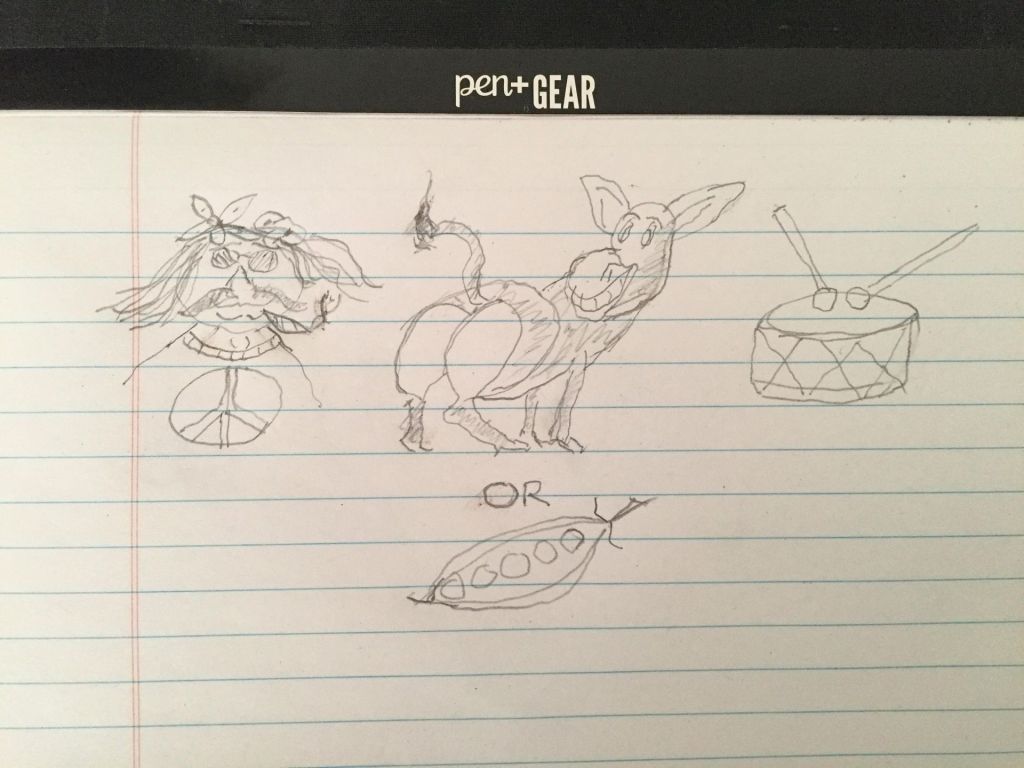
Amaryllis or Hippeastrum Trio?

The Amaryllis trio are reaching for the stars, and “star” may be the operative word because I just found out the name of the flower may be in dispute.

It turns out that the actual name of the Amaryllis is probably Hippeastrum due to a change in the genus classification of this striking bloom. My word processor kept highlighting Hippeastrum, so I had to add it to the dictionary.

The usual name, which has been Amaryllis, sounds pretty and has a romantic story behind it based in Greek mythology. The short version is that a maiden named Amaryllis fell in love with a shepherd named Alteo. Alteo insisted that he would fall in love with a girl only if she brought him a new flower he’d never seen before. She went to the Oracle of Delphi who advised her to literally bleed for him—which she did by stabbing her heart every day and spilling her blood on the ground outside his house. On the 30th day, a gorgeous red flower bloomed out of the blood. After that she and Alteo were definitely an item. You can find this story on many gardening web sites.

On the other hand, the unromantic name Hippeastrum (it seems there are two ways to pronounce it, both of which sound like a sneeze) was given to the flower by someone named William Herbert. You can find the complete and erudite story about it on a WordPress blog called Professor Hedgehog’s Journal in the post, “Plant of the Month: February 2018.” The name means something like Knight’s Star.

I’m betting that stores are unlikely to change the name on the boxes, out of which the flowers burst impatiently on to the shelves.

Terry Trueblood Garden of Natural and Not So Natural Things

On a balmy day we went for a walk on the Terry Trueblood trail. There was a cool breeze in contrast to the brutal humidity lately. There was a mix of natural beauty and some not so natural sights.

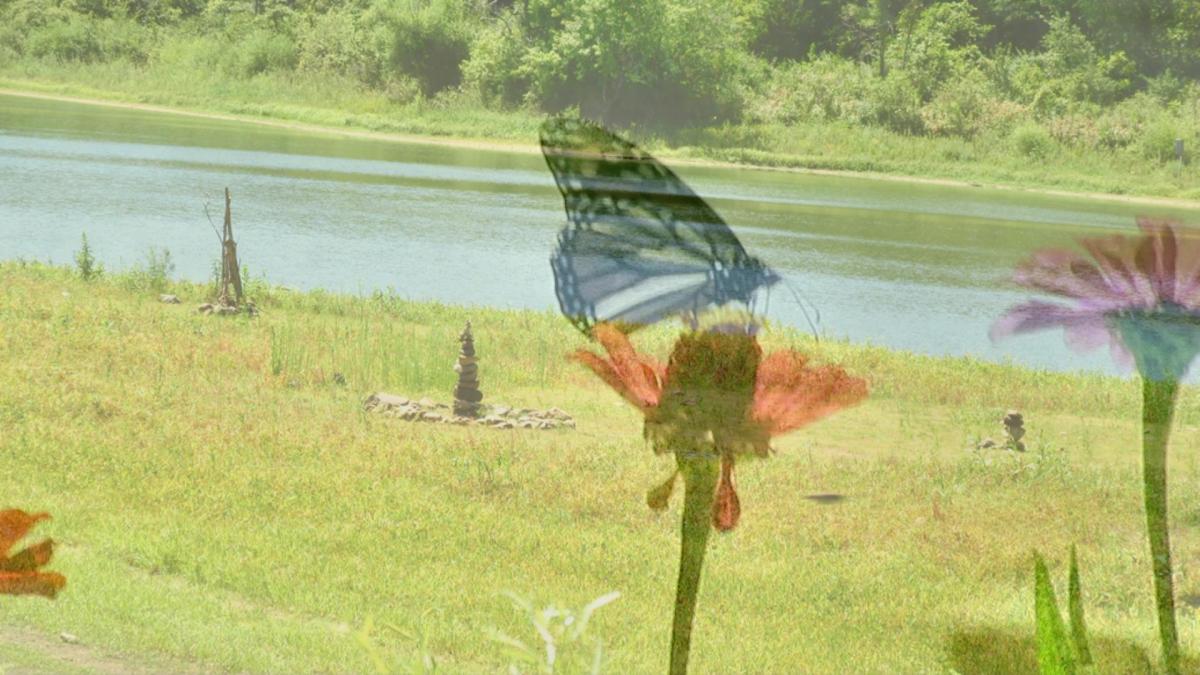
The flowers were gorgeous as usual. But we also saw stacked stones close to the shore of the lake. I should say there were a couple of stacked stones and one which was made of tree branches that reminded me of the Eiffel Tower.

That was the first time we’ve ever seen stacked stones there. I looked up the topic of stacking stones on the web and there’s disagreement about whether it’s a good thing or not. Some say it disturbs the natural order of things while others say it pays homage to nature.

We saw a couple of people out on the shore and one of them kicked over one of the piles. I guess that’s one person who doesn’t like rock stacking.

We also saw a pair of black hands stamped on the sidewalk. What’s that about? Some say that black hands are about death, criminality, or even the Black Lives Matter movement. I don’t know what it means.

And a couple of the large stones along the edges of the parking lot were shoved out of place. Who knows why. They looked very heavy. It probably took a lot of work to move them, and for no apparent reason. It reminded me of the rocks, some of which weigh several hundred pounds, that seem to move by themselves across the desert in Death Valley Park, leaving trails behind. There’s a natural explanation for it, involving the interplay of ice, wind, and water. I’m pretty sure humans moved them.

Anyway, there was plenty of natural beauty along the trail. They were the only source of wonder we cared about that day.

Amaryllis and Zygocactus Repotting

Remember that gorgeous Christmas Amaryllis flower? After it leaned over so far, we had to retire it, so to speak. We didn’t throw it out, but Sena kept it and performed some kind of miracle.

Apparently, she resurrected it by giving it a little water. A couple of new leaves grew a few inches overnight.

She knows that gardeners tell you to bury the Amaryllis bulb outside after the flowers die. I guess in the following winter you dig it up, put it in a new pot and a new set of blossoms should grow. She wanted to transfer it to a different pot instead, one with holes that will let the excess water leak out.

She was very industrious. She also repotted the Zygocactus. That’s the holiday cactus, another houseplant she got for the Christmas holidays.

And the most important question: how are extraterrestrials involved in this urge to repot? ? By the way, I was not involved in the repotting project because I’m allergic to gardening. I did make a YouTube video of her working on it, though.

Amaryllis Plant Growing Like a Weed!

Sena got our Amaryllis plant shortly after a juvenile Cedar Waxwing lost its life by banging into our sun room window. That was on November 1, 2022. It’s sort of a remembrance of the little bird.

It was barely measurable then. As of yesterday, it was about 5 inches tall and it seems to grow an inch or two almost every couple of days.

The articles I find on the web say the Amaryllis blooms about 7 to 10 weeks after planting. The stalk can get up to 18-36 inches tall. The average lifespan of a bulb can be about 25 years.

Ours is a red one and will make an impressive flower, maybe around Christmas—we hope.

Sena Grows Peonies!

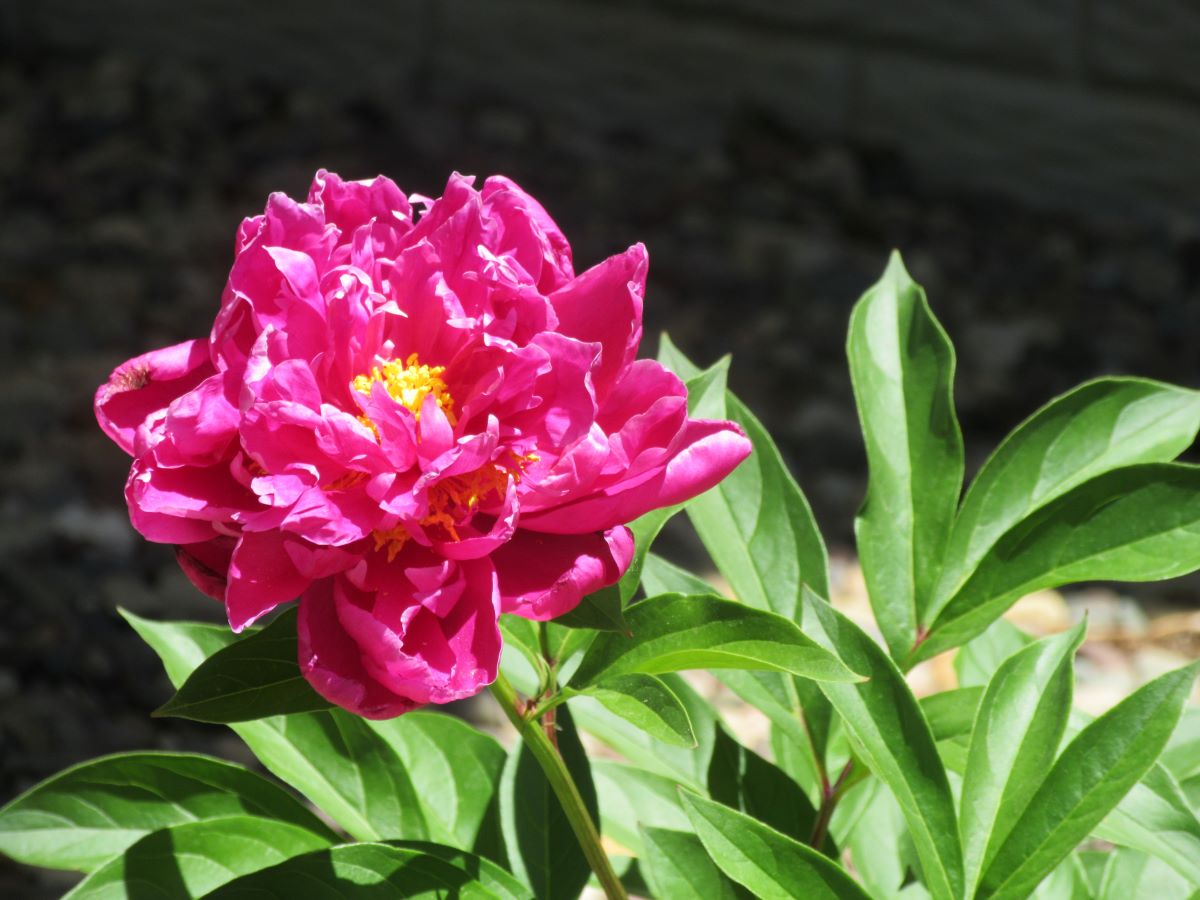
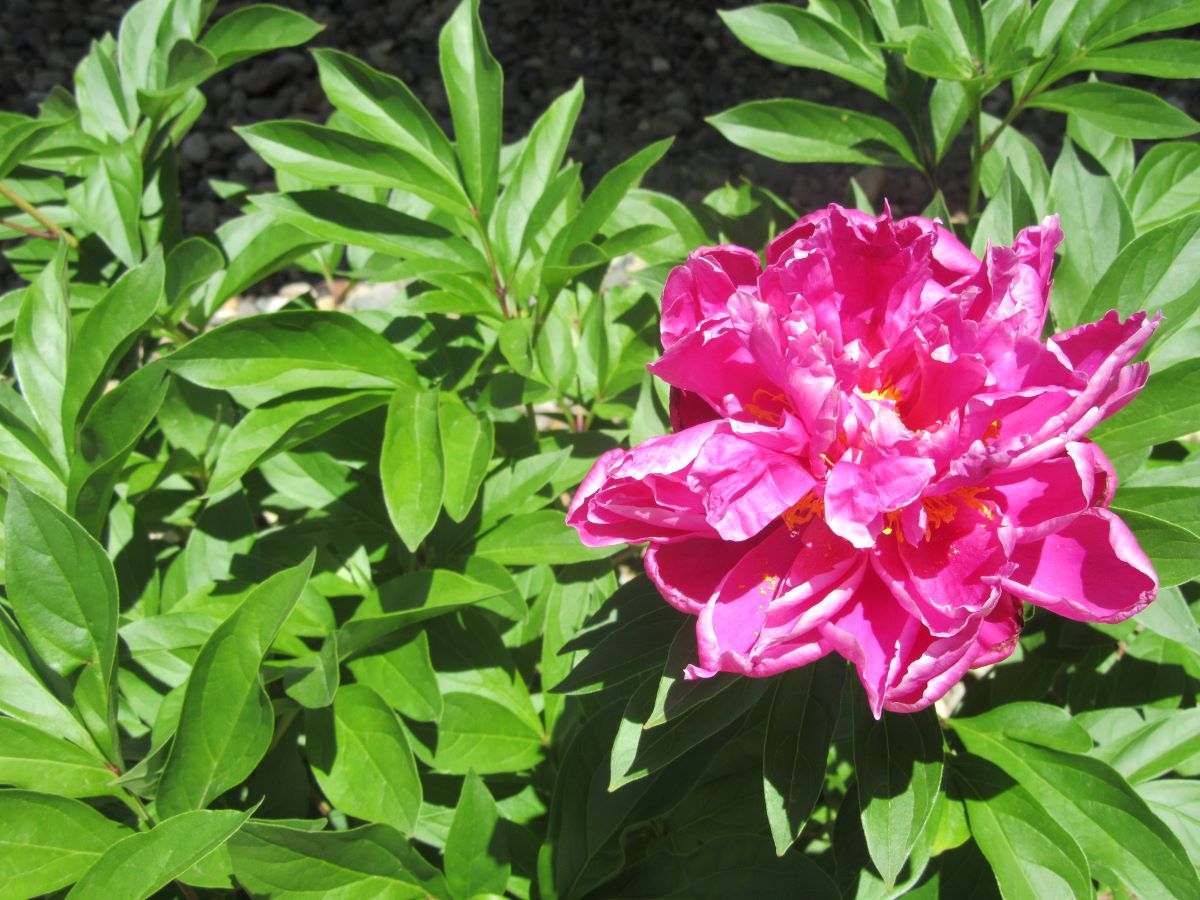
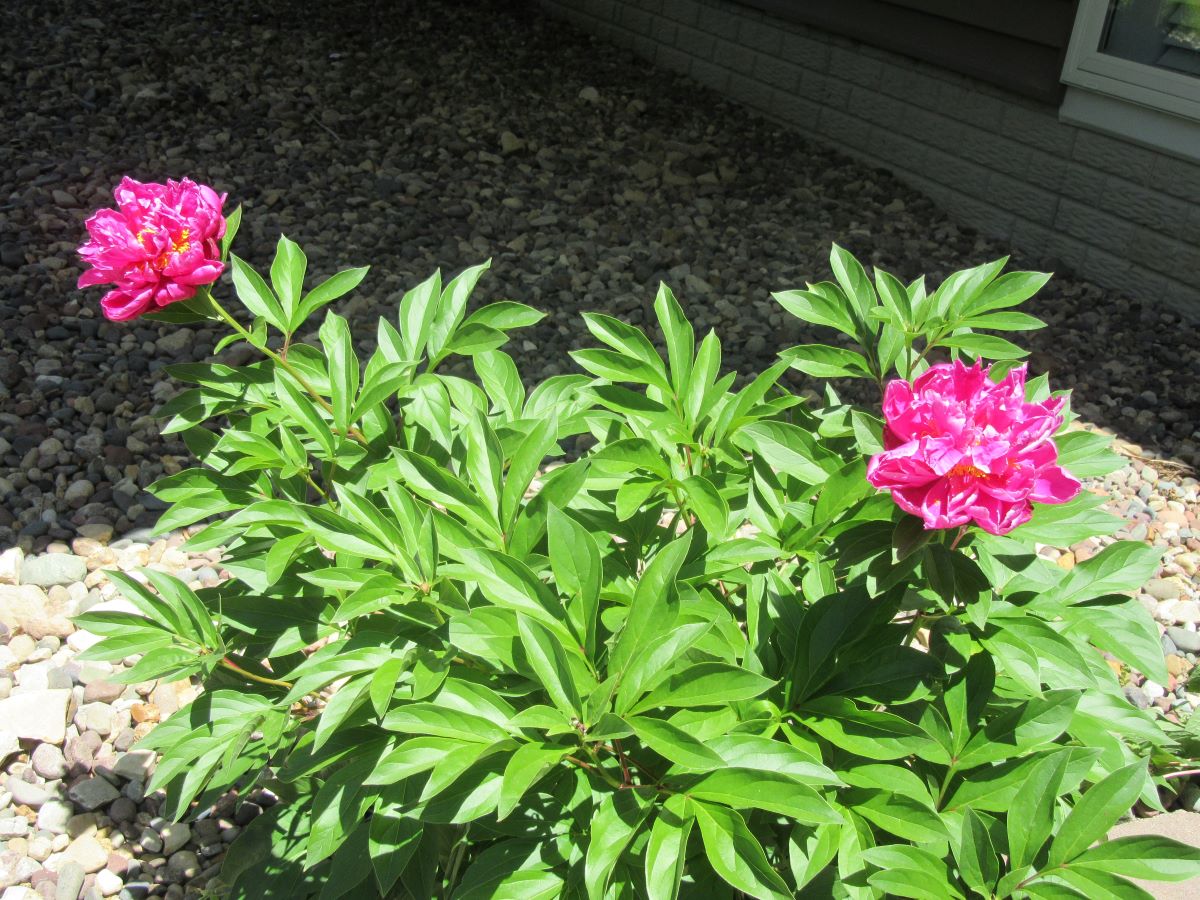
Sena has a peony shrub growing dazzling red blossoms. The red ones are said to symbolize love, respect, and honor. The peony genus classification is Paeonia, which is taken from the Greek word Paean. At least a couple of flower web sites say the origin of the name peony comes from a Greek myth involving a deity called Paean (pronounced “Bud”).

According to the flower web sites version of the myth, Paean was the physician of the gods. He was a student of Aesculapius or Asclepius, whose friends just called him “Bud.”

Paean used a peony root to heal Pluto, which was the Roman name of the deity Hades. I don’t know what was ailing Pluto. Maybe it was the gout. Anyway, Aesculapius got wind of Paean’s treatment, and became really jealous. He tried to kill him, but Zeus wasn’t having any of that baloney, intervened and turned Paean into a peony.

I couldn’t find this version in any scholarly source of Greek mythology. In fact, Edith Hamilton, a Greek scholar who wrote a book entitled simply, Mythology, says Paean was just another name for Apollo or Aesculapius, also known as Asclepius—or “Bud.”

In fact, a paean is a song of thanksgiving or triumph addressed to Apollo.

Hamilton’s version is kind of a soap opera. Greek gods always seemed to be having torrid affairs with humans, often leading to drama involving the transformation of humans into various plants, animals and whatnot—and maybe even destroying them.

This is what happened to a human female named Coronis, who had a fling with Apollo who got her pregnant. She snubbed him for a human guy, which annoyed Apollo so he killed her. However, he saved his baby by tearing Coronis open and plucking him out right out of the womb—really extreme.

Apollo than adopts the kid out to an old fart of a Centaur named Chiron. Apollo ordered Chiron to name the child Aesculapius, or Asclepius, “Bud” for short. He was never named Paean, according to Hamilton.

Chiron was pretty slick with healing arts and taught Bud everything he knew. Then Bud got too big for his britches and brought a guy back from the dead. I can’t recall exactly who got resurrected; it was either Hippolytus or Elvis. Gods got mad about it because making zombies is their business, not Bud’s.

Consequently, Zeus killed Bud by slinging a thunderbolt at him. Contrary to flower shop lore, Zeus never even considered turning him into a peony. In his opinion, you had to teach these pups a lesson.

How do you think Apollo felt about this? How would you feel? What would you do? Apollo got on the phone with his lawyer, and before you could say “peony,” he got a court order authorizing Apollo to kill the Cyclops who were manufacturing all of Zeus’s thunderbolts.

If you think it ended there, you’re wrong. Zeus, not to be outdone, sued Apollo, who lost big time and was sentenced to slavery to King Admetus for one to nine years in solitary confinement.

Bud, on the other hand, even though he was slain, was honored by thousands for hundreds of years. Those who came to his temples were invariably healed of various ailments including but not limited to the gout. Snakes were involved in the treatments, though, and some preferred to live with the gout, so declined to sign the informed consent forms.

Hamilton and other scholars don’t ever mention Bud getting turned into a peony. But Sena’s peonies are still beautiful.

Reference: Edith Hamilton, Mythology, Little, Brown and Company, 1942.

Life in the Garden

We were out working hard in the garden today–or at least Sena was. She was very busy planting Black-Eyed Susan and other things the names of which I can never remember.

I usually just take pictures and make videos of her garden. It’s a lot of fun watching her. But that’s not all I do. Sometimes I carry bags of mulch.

She has been devoted to gardening for over 17 years. It began with cultivating our back yard. I labored cutting out weeds by the dozens–until I found out it was Vinca. I think another name for it is creeping myrtle.

She gave me permission to film her usual planting posture. You’re welcome.

Out in the garden