
“I Have a Dream” Speech 60 Years Later

Today is the 60th anniversary of the Reverend Dr. Martin Luther King Jr’s “I Have a Dream” speech at the Lincoln Memorial in Washington D.C.

I was too young to remember it. However, I have a deep appreciation of the meaning it has not just for Black people, but for all of us. It’s not difficult to broaden the implication for all people.

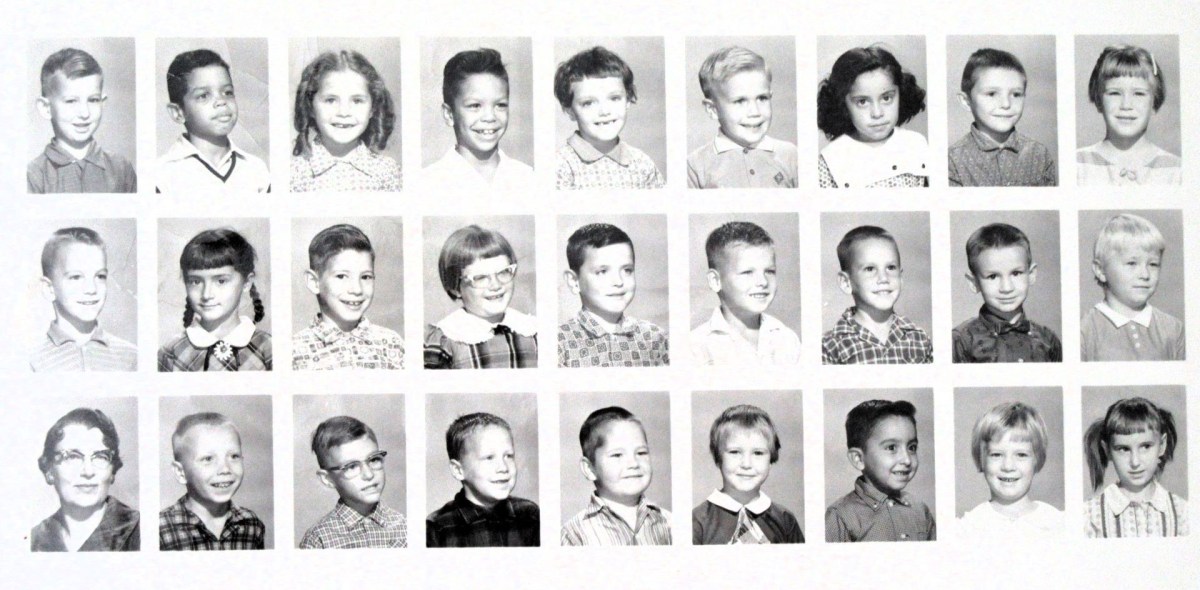
My personal reflection about this started this morning with a look at one of my primary school class pictures. I’m the handsome guy 2nd from the left in the top row. The other kids of color in the photo are Latino.  

The photo shows not just a group of kids. It also illustrates, just by chance, pretty closely the percentage of black persons in the state of Iowa as of the 2021 U.S. census, about 4%. Historically though, in the county in which I was living at that time, the percentage of nonwhite persons was listed at 0.4%. This was a 28% drop from the previous decade. In 1980, the percentage of Black people in the state was only 1.8%. As near as I can tell from the web, the current percentage of Black people as of the most recent data is 3.74% (possibly as of 2021).

My father was black and my mother was white. In Iowa, the law against miscegenation (marriage between blacks and whites) was repealed in 1839. On the other hand, my parents got their marriage license in 1954 in Watertown, South Dakota—which was 3 years prior to when that state repealed its law against interracial marriage. Right below the license, though, is a certificate of marriage marked State of South Dakota in Codington County. It certifies that my parents were married in Mason City, Cerro Gordo County in the state of Iowa.

I’m not going to try to puzzle that one out. My mother kept a lot of old photos and legal records that anchor me in my personal history.

I have photos of my father with me and my brother, Randy. I also have photos of my mother with me and my brother.

What I don’t have are photos of all of us together. It’s understandable to ask why. I wonder if it has something to do with the culture and mindset of the time. Why was it not possible to find someone, black or white, to snap a family photo of us together?

We can pass legislation repealing anti-miscegenation laws as well as other laws to protect civil rights. That is a necessary (but perhaps insufficient) step toward non-exclusion of certain groups of people from basic human rights.

Ashley Sharpton, who is an activist with the National Action Network and daughter of Reverend Al Sharpton, said that Americans need to “turn demonstration into legislation.”

I agree with her. On the other hand, I also wonder what more has to happen in the minds of all of us to turn legislation into transformation—of our personal implicit biases, which are not in themselves always bad or inescapable.

And since we’re into rhyming, what about asking another question? Can we turn demonstration into legislation while encouraging transformation without bitter confrontation?
Dr. Feranmi Okanlami MLK Distinguished Lecture

Today, Dr. Feranmi Okanlami, MD, MS, director of student accessibility and accommodation services at the University of Michigan, delivered the Martin Luther King Jr. Distinguished Lecture: Disabusing Disabilities.” It was sponsored by the University of Iowa.

I attended Dr. Okanlami’s lecture by Zoom. I noticed he was wearing a handsomely carved wooden bow tie, which I don’t have an image for, but you can order them on Amazon, if you’re interested. I’m not the only attendee who noticed it. I used to wear cloth bow ties when I was a much younger man. I gave up wearing any cloth ties shortly after the Covid-19 pandemic began because, as everyone knows, fabric neckties of any kind generally almost never get laundered and carry all kinds of germs. The wooden bow tie is easily wiped down with sanitizers.

But this post is not about wooden bow ties. It’s about what Dr. Okanlami called “ableism” which naturally brings to mind other terms like “racism.” He showed a few images on his slides which showed another point he expanded on, which is the difference between equality and equity. The quick way for me to explain this is to quote the Milken Institute School of Public Health definition:

“Equality means each individual or group of people is given the same resources or opportunities. Equity recognizes that each person has different circumstances and allocates the exact resources and opportunities needed to reach an equal outcome.” — MPH@GW, the George Washington University online Master of Public Health program.

Dr. Okanlami impressed me in many ways, but one of them is his ability to give unrehearsed presentations. He hates to “give talks” as he put it, but likes to talk. 

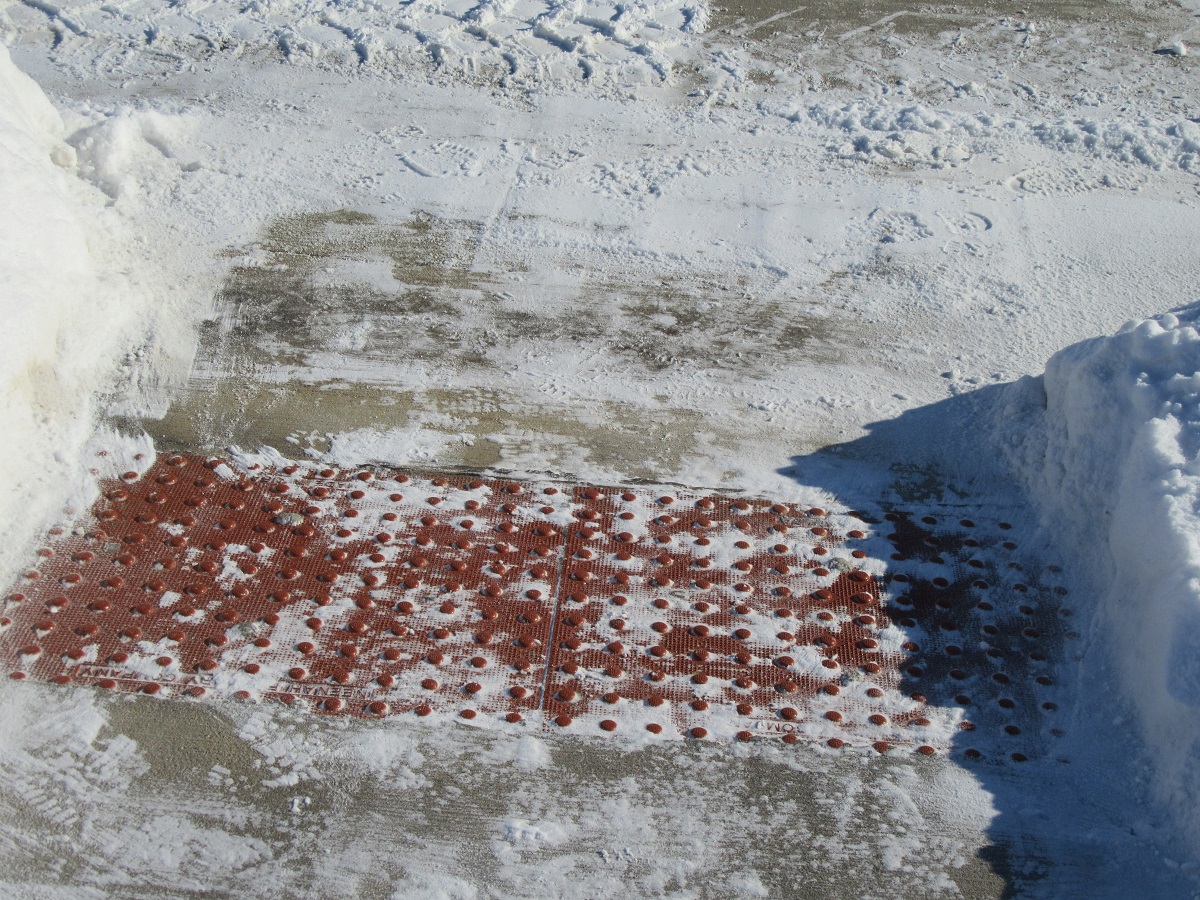
I should explain the reason for this post’s featured image, which might seem puzzling. It’s a photo of the curb ramp connected to the sidewalk outside our home. The city requires homeowners to clear the snow from curb ramps, which, ironically, the city plows plug with snow after every snowstorm. These used to be called “handicap ramps.” I suspect Dr. Okanlami would object to the use of this label and in general it’s probably insulting, but that is what they were called for years. They are an accommodation for those who use wheelchairs.

The word accommodation can have a negative connotation, which Dr. Okanlami clarified. Many believe accommodations give an “unfair” advantage to some people. Actually, they provide opportunities for those with a different set of abilities or altered abilities to participate in society in ways that allow them to contribute to society, and even change it—sometimes in major ways.

Our curb ramp is interesting. The short length of sidewalk beyond it leads to a pile of construction rubble because there is no sidewalk extending beyond our property line on that side. I call it the sidewalk to nowhere, which is now a misnomer. There is a new subdivision under development leading north of our neighborhood. There are houses being built and many have moved in. But for now, you have to walk in the street, which is often muddy and blocked. It’s difficult to walk through it because of heavy equipment and trucks parked along the street. But that doesn’t stop people from walking there. I have never seen anyone in a wheelchair attempt to use the curb ramp. But many people use it who don’t have a visible disability. But it’s there if someone needs it, and we keep it clear of snow on principle.

Dr. Okanlami mentioned those with invisible disabilities. There was not enough time to discuss this in detail, but they include those with mental health challenges. As a consulting psychiatrist working in the general hospital, I saw many of them. They deserve a seat at the table, too.

And I remember one of my medical school classmates who did need to use a wheelchair. There was a special ramp made for him that allowed him to participate in gross anatomy class. Dr. Lance Goetz, MD, graduated with our class and has been a practicing physiatrist in Richmond, Virginia for the last 21 years.

Although Dr. Okanlami’s lecture was recorded today and will, I hope, soon be available for public view, I’m including a YouTube recording of a presentation he gave in 2018 which has the same title and very similar content as the talk he delivered today.

I think his talk evolves every time he gives it. The environment in 2018 was very different than it is now because there was no pandemic and there was a live audience which interacts in a very different way than Zoom allows. That said, the slides were essentially the same today on equity and equality, as were his essential points. He shared a lot about himself in 2018, maybe a little less today mainly because of time constraints and the difficulties inherent to virtual lectures. But he has a great sense of humor.

And he does wear very handsomely carved wooden bow ties.