Attack of the Toothworms

I had my regular visit to the dentist at The University of Iowa Health Care (UIHC) today, and it was a good thing I did. For the past couple of weeks or so I’ve had cold and hot sensitivity in a couple of teeth. No surprise, the dentist found 3 teeth that needed a little work.

The dental hygienist also suggested I try using a tongue cleaner and gave me a free one. I’d never heard of a tongue cleaner before. The package advertisement (in English, French, and Spanish) says it’s for combatting bad breath, although the dental hygienist assured me in 6 different languages that she didn’t detect that problem in me.

I was there for my annual teeth cleaning but now I had 3 teeth needing work. Luckily, the dentist had an appointment in the early afternoon. It was a 3 hour wait, but I thought it was better to get it done sooner rather than later. Anticipating a visit with a dentist is sometimes almost as bad as getting in the chair and exercising my ability to refrain from flinching as the high-speed instruments whine in my ear while the dentist and the assistant do their level best to see that I gag several times in at least 9 different languages, including Klingon.

It’s hard to explain why I was having tooth sensitivity because, according to the dentist, the damage was not that severe. It wasn’t until I wandered around the hospital while waiting for the 2nd appointment that I realized I had never visited the Medical Museum on the 8th floor. And that’s where I found a possible explanation that made more sense than the modern one. It’s probably toothworms.
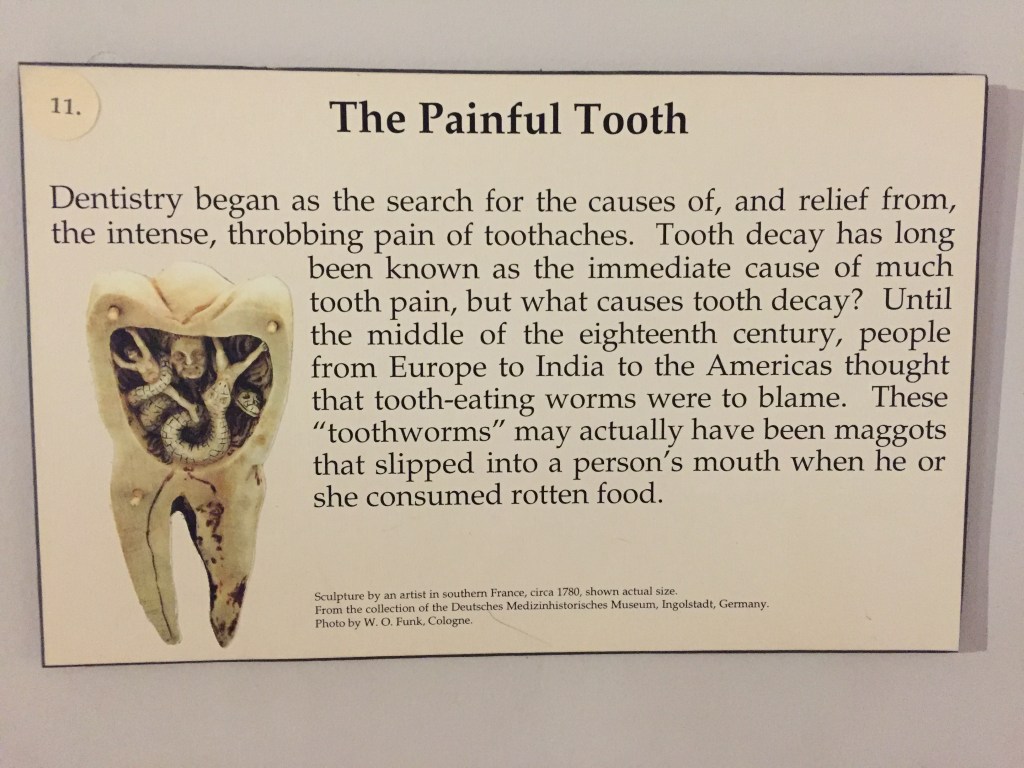
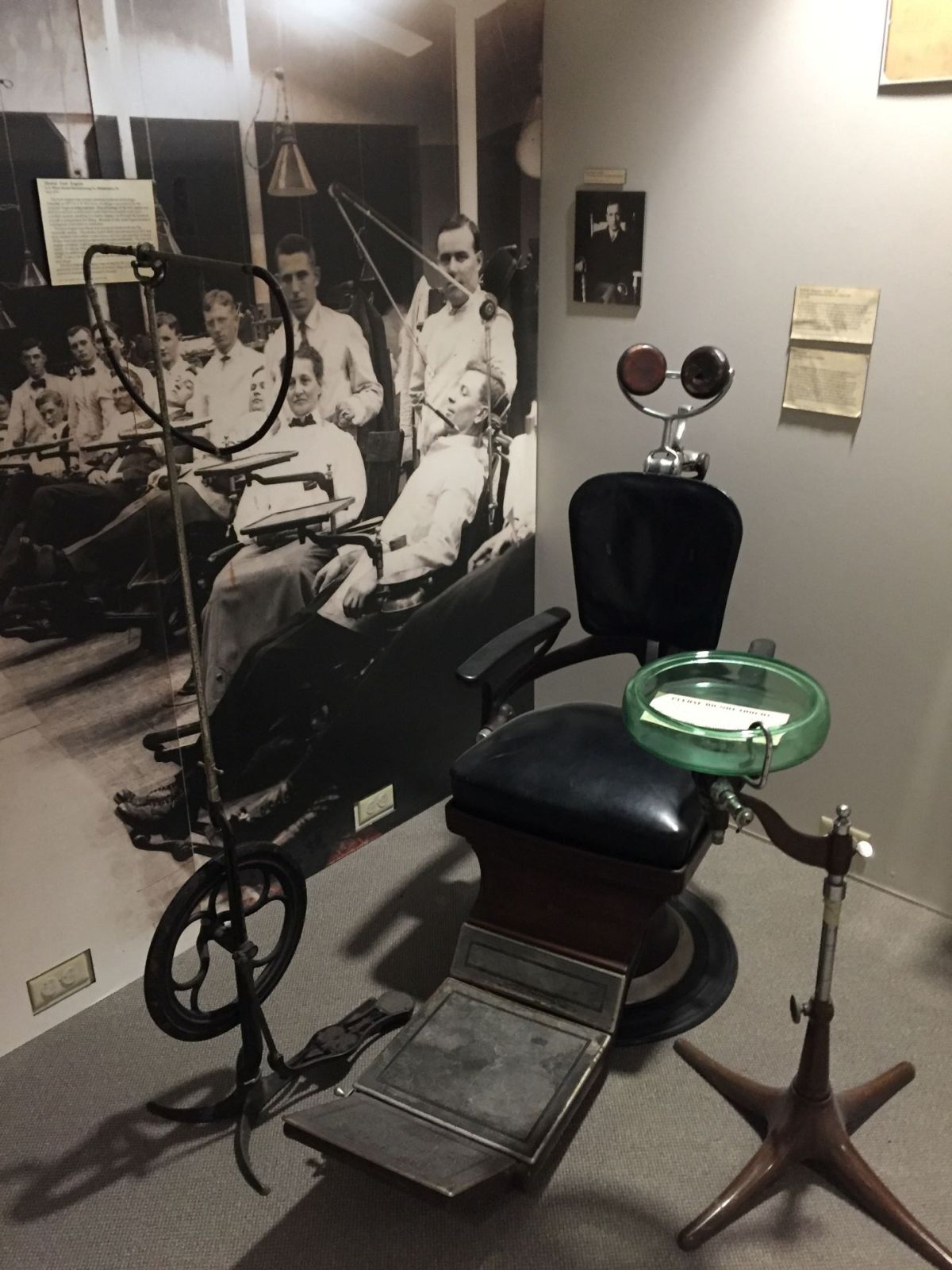
No kidding, back in the 18th century, a lot of people thought worms caused tooth decay by eating them from the inside out. There was also a College of Dentistry display in the Medical Museum featuring a typical dentist chair and samples of rusty tools, which made wonder if I should put off the filling work until, say, after my next ten reincarnations.

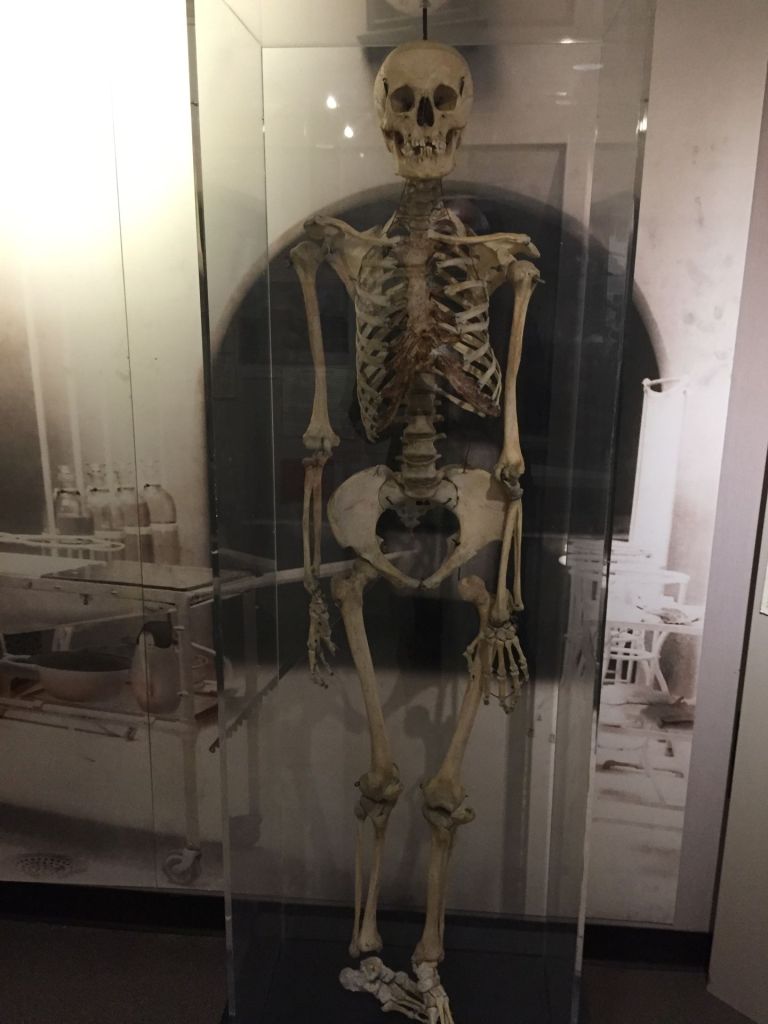
There’s a human skeleton in the museum which is affectionately called Gertie. The historical note on Gertie is very interesting in that it was thought to be a male when Ottumwa Regional Health Center donated it to UIHC in 2013. It turns out he is actually a she and the “…two symmetrical holes in the upper jaw are the result of large dental abscesses.” Just what I wanted to learn on a day when I’m anticipating dental work.

Anyway, my teeth got repaired. I would say that the UIHC dental clinic has come a long way from 1904. You don’t turn and spit in a bowl anymore. They just siphon the toothworms out with a suction wand nowadays.

Fluoride in Your Precious Bodily Fluids

Yesterday, Sena and I talked about a recent news article indicating that a federal judge ordered the Environmental Protection Agency (EPA) to review the allowed level of fluoride in community water supplies. The acceptable level may not be low enough, in the opinion of the advocacy groups who discussed the issue with the judge, according to the author of the article.

A few other news items accented the role of politicians on this issue. This seems to come up every few years. One thing leads to another and I noticed a few other web stories about the divided opinions about fluoride in “your precious bodily fluids.” One of them is a comprehensive review published in 2015 outlining the complicated path of scientific research about this topic. There are passionate advocates on both sides of whether or not to allow fluoride in city water. The title of the paper is, “Debating Water Fluoridation Before Dr. Strangelove” (Carstairs C. Debating Water Fluoridation Before Dr. Strangelove. Am J Public Health. 2015 Aug;105(8):1559-69. doi: 10.2105/AJPH.2015.302660. Epub 2015 Jun 11. PMID: 26066938; PMCID: PMC4504307.)

This of course led to our realizing that we’ve never seen the film “Dr. Strangelove Or: How I Learned to Stop Worrying And Love the Bomb,” a satire on the Cold War. We watched the entire movie on the Internet Archive yesterday afternoon. The clip below shows one of the funniest scenes, a dialogue between General Jack Ripper and RAF officer Lionel Mandrake about water and fluoridation.

During my web search on the fluoridation topic, one thing I noticed about the Artificial Intelligence (AI) entry on the web was the first line of its summary of the film’s plot: “In the movie Dr. Strangelove, the character Dr. Cox suggests adding fluoride to drinking water to improve oral health.” Funny, I don’t remember a character named Dr. Cox in the film nor the recommendation about adding fluoride to drinking water to improve oral health. Peter Sellers played 3 characters, none of them named Cox.

I guess you can’t believe everything AI says, can you? That’s called “hallucinating” when it comes to debating the trustworthiness of AI. I’m not sure what you call it when politicians say things you can’t immediately check the veracity of.

Anyway, one Iowa expert who regularly gets tapped by reporters about it is Dr. Steven Levy, a professor of preventive and community dentistry at the University of Iowa. He’s the leader of the Iowa Fluoride Study, which has been going on over the last several years. In short, Dr. Levy says fluoride in water supplies is safe and effective for preventing tooth decay in as long as the level is adjusted within safe margins.

On the other hand, others say fluoride can be hazardous and could cause neurodevelopmental disorders.

I learned that, even in Iowa there’s disagreement about the health merits vs risks of fluoridated water. Decisions about whether or not city water supplies are fluoridated are generally left to the local communities. Hawaii is the only state in the union which mandates a statewide ban on fluoride. About 90 per cent of Iowa’s cities fluoridate the water. Tama, Iowa stopped fluoridating the water in 2021. Then after a brief period of public education about it, Tama restarted fluoridating its water only six months later.

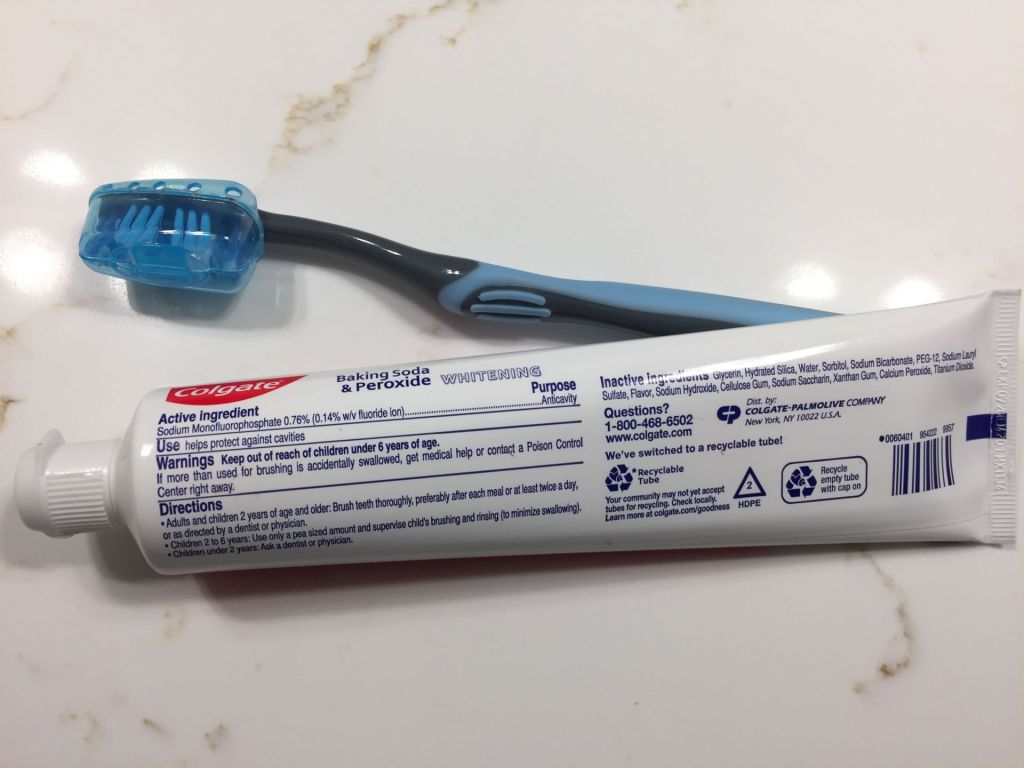
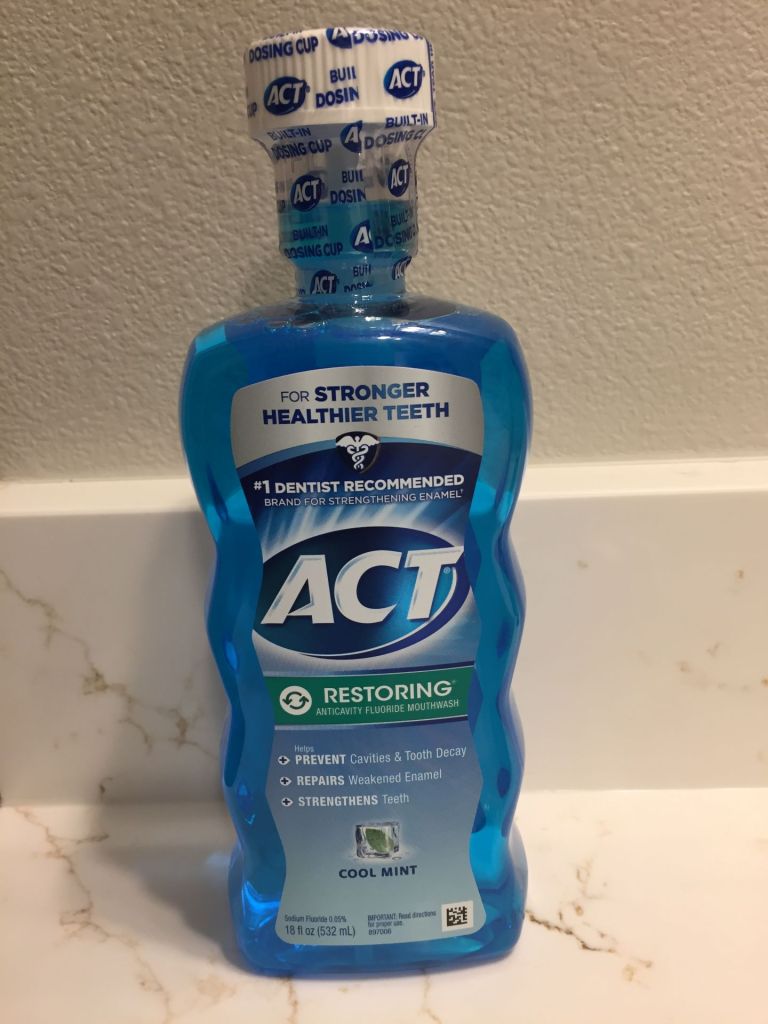
We use a fluoridated dentifrice and oral rinse every day. We drink fluoridated water, which we offer to the extraterrestrials who occasionally abduct us, but they politely decline because of concern about their precious bodily fluids.

Thoughts on Battery Powered Toothbrushes

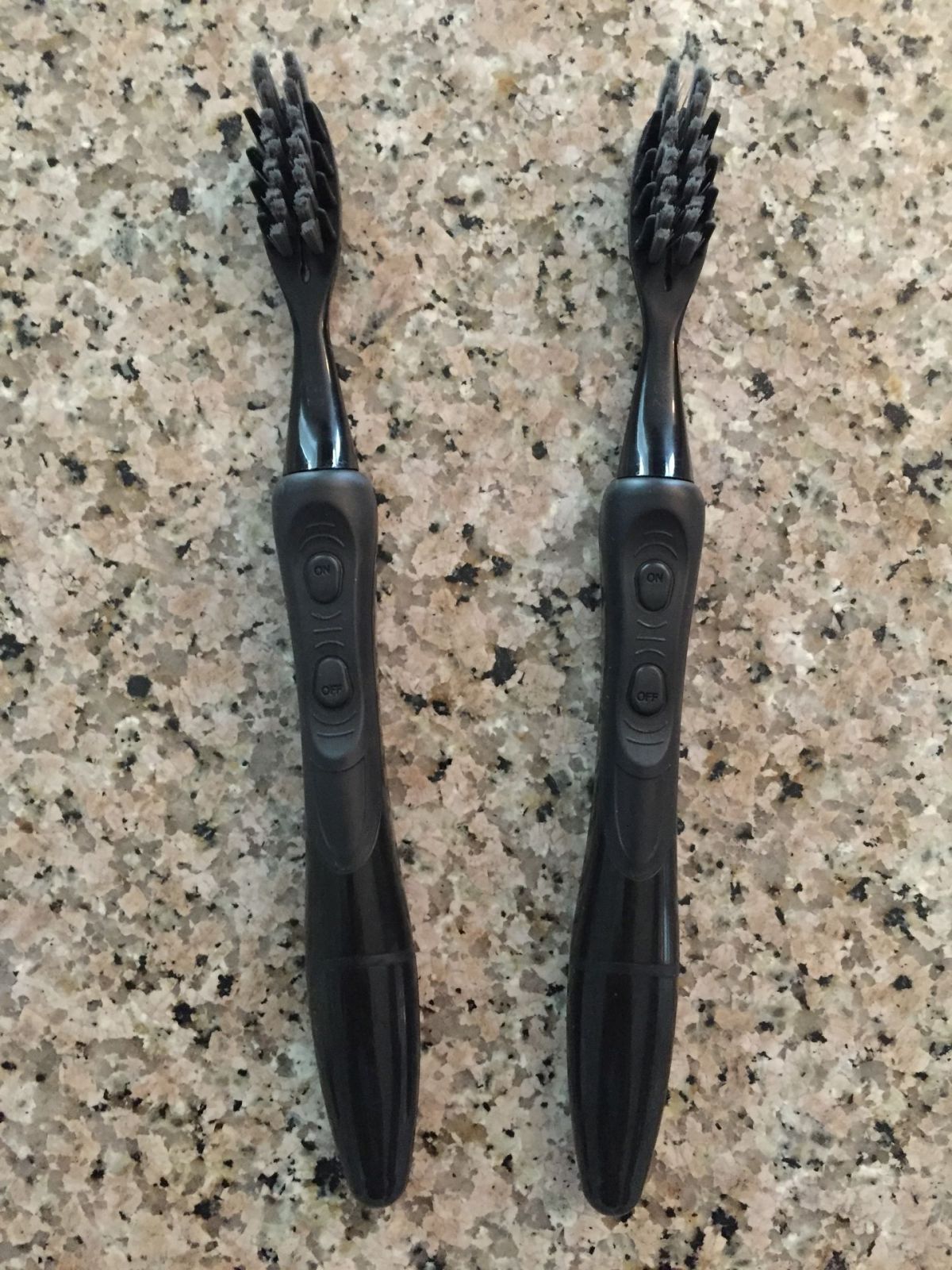
Sena bought a couple of Equate Polaris Vibraclean non-replaceable battery-powered toothbrushes with charcoal bristles (see below for remarks on charcoal) for us. When the battery dies, you just throw the brushes away. We had a rechargeable electric toothbrush a long time ago, but getting replacement parts for it was too expensive. We went back to manual toothbrushes.

You just press the on button and you’re buzzing. You press the off button when you’re done. It’s a little tough to refrain from trying to manually brush, but the internet entries say you should do that anyway.

Sena says the battery-powered toothbrush feels weird rumbling in her mouth. I think it does a good job of massaging the gums and tongue as well as cleaning teeth.

I found a couple of studies published about twenty years ago that compared electric and battery-powered toothbrushes. They didn’t find any difference. The few studies that have been done generally find the battery-powered toothbrushes are superior to manual brushing.

The American Dental Association (ADA) says either manual or electric brushing works fine—compared to not brushing at all, I guess. The ADA web site has list of the organization’s preferred electric products. The Equate brand of battery powered brushes apparently didn’t make the cut.

Some brushes (including ours) have charcoal bristles, which supposedly whiten teeth. After looking on the internet, I’m not so sure that’ll work. In fact, the ADA has a low opinion of charcoal-containing dental care products. There’s no evidence that they’re effective or even safe, according to the September 2017 issue of The Journal of the American Dental Association. They might even wear away the enamel.

Hmmm. Maybe charcoal is not the best thing?

The brushes were a bargain—oh well, back to manual brushing. On the other hand, there’s plenty of evidence that regular brushing with toothpaste along with flossing is good practice.