CDC Updated Recommendations for Covid-19 Vaccine Use

The Centers for Disease Control (CDC) held a Clinician Outreach and Communication Activity (COCA) meeting to discuss updated recommendations for Covid-19 vaccine use on May 11, 2023. You can view the YouTube recording of the meeting and view presentation slides at this link. The meeting was designed for clinicians.

FDA Update on Covid-19 Annual Vaccine Strategy

On April 18, 2023 the FDA posted an update on the Covid-19 updated bivalent vaccine and the upcoming immunization strategy for this fall. According to the announcement:

“In June, the FDA will hold a meeting of its VRBPAC to discuss the strain composition of the COVID-19 vaccines for fall of 2023. Much like the FDA does yearly with the influenza vaccines, the agency will seek input from the committee on which SARS-CoV-2 variants and lineages are most likely to circulate in the upcoming year. Once the specific strains are selected for the COVID-19 vaccines, the FDA expects manufacturers to make updated formulations of the vaccines for availability this fall.”

Behind the Mask Policy

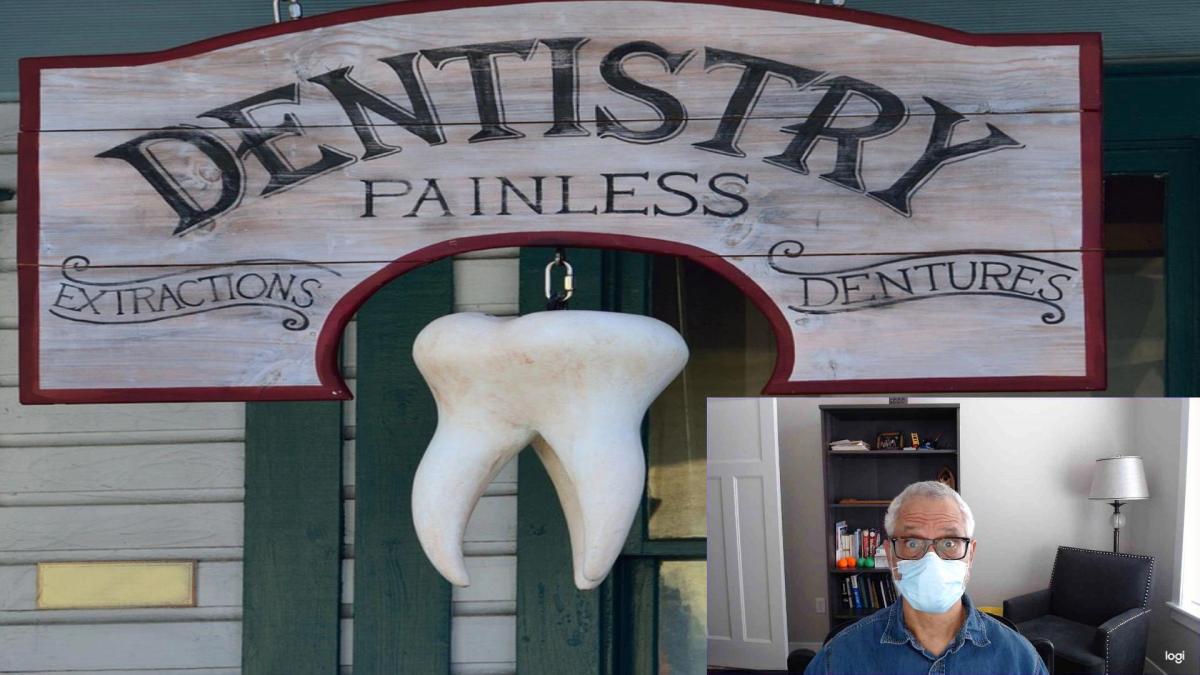
Tomorrow I’ll get to see how the new Covid-19 face mask policy works at the University of Iowa Hospital & Clinics. It goes into effect today. I’m going to see the dentist, as I have periodically for years, even during the Covid-19 pandemic. Of course, the idea of masked dental patients is ironic.

The rule change about masks being sort of optional is a little confusing.

It’s sort of optional because it looks like it’s not optional for unvaccinated health care employees. They still have to wear masks.

I wrote about this back in May of 2021, “Unmasked Means Fully Vaccinated?” That was back when bandanas were acceptable as face coverings.

So does being masked mean “not vaccinated?” It’s confusing because if masking is optional for patients and visitors, why are health care workers the exception? I’m not sure how anyone would enforce the policy.

If you can wear a mask just because you want to do that, how does that separate you from the unvaccinated person?

If masks are optional, then why are the entrance and exit policies not changing, including screening of patients, visitors, and staff? I didn’t see the guidance about what to do if anyone says they are symptomatic or unvaccinated and prefers not to wear a mask, other than to offer a mask (which is free!).

If it’s disrespectful to ask a patient or visitor to put on a face mask, why is it not disrespectful to require an unvaccinated health care worker to do so? There is one bullet point in the question-and-answer section about whether you can ask anyone to wear a face mask which says you can’t ask anyone, including “employee, colleague, patient, visitor, etc.” In the same section is the statement: “Whether or not to wear a mask is a personal decision that each person must make for themselves and for their own reasons.” Does that apply to getting a Covid-19 vaccine as well?

That said, I’m a staunch supporter of everyone getting a Covid-19 vaccine, if they don’t have medical or other exemptions. They don’t make you magnetic!

And I don’t think the recent Cochrane Review results on face masks really means they’re useless, which some news stories tend to convey. I think the Cochrane review does what most such reviews do, which is point out the problems with some controlled studies. And the reviews themselves may have unintended biases.

What’s the most important part of all this? Well, maybe the predicted snowstorm coming to Iowa tomorrow will prevent my dentist from getting to the clinic. And if that doesn’t work, maybe I could just exercise my right and privilege to wear my mask as a barrier to any nefarious procedures.

Reminder: FDA Advisory Committee Meeting Thursday January 26, 2023 on Future of Covid-19 Vaccination Regimens

Remember, the 178th Annual Meeting of the FDA Advisory Committee on the future of Covid-19 Vaccination Regimens is this Thursday from 8:30 AM-5:30 ET.

The details so far include the voting question:

“Simplification of current COVID-19 vaccine use:

  • Vaccine composition: Does the committee recommend harmonizing the
    vaccine strain composition of primary series and booster doses in the U.S.
    to a single composition, e.g., the composition for all vaccines administered
    currently would be a bivalent vaccine (Original plus Omicron BA.4/BA.5)?”

FDA Advisory Committee Meeting to Discuss Future Covid-19 Vaccine Regimens

The FDA 178th Meeting of the Vaccine and Related Biological Products Advisory Committee will meet in open session January 26, 2023 to discuss future Covid-19 vaccination regimens. The meeting will run between 8:30 AM-5:30 PM ET.

CDC Identifies Preliminary Covid-19 Vaccine Safety Signal

The CDC announced that a prelimary Covid-19 Vaccine Safety signal has been identified in a recent update on their website:

“Following the availability and use of the updated (bivalent) COVID-19 vaccines, CDC’s Vaccine Safety Datalink (VSD), a near real-time surveillance system, met the statistical criteria to prompt additional investigation into whether there was a safety concern for ischemic stroke in people ages 65 and older who received the Pfizer-BioNTech COVID-19 Vaccine, Bivalent. Rapid-response investigation of the signal in the VSD raised a question of whether people 65 and older who have received the Pfizer-BioNTech COVID-19 Vaccine, Bivalent were more likely to have an ischemic stroke in the 21 days following vaccination compared with days 22-42 following vaccination.

This preliminary signal has not been identified with the Moderna COVID-19 Vaccine, Bivalent. There also may be other confounding factors contributing to the signal identified in the VSD that merit further investigation. Furthermore, it is important to note that, to date, no other safety systems have shown a similar signal and multiple subsequent analyses have not validated this signal:

  • A large study of updated (bivalent) vaccines (from Pfizer-BioNTech and Moderna) using the Centers for Medicare and Medicaid Services database revealed no increased risk of ischemic stroke
  • A preliminary study using the Veterans Affairs database did not indicate an increased risk of ischemic stroke following an updated (bivalent) vaccine
  • The Vaccine Adverse Event Reporting System (VAERS) managed by CDC and FDA has not seen an increase in reporting of ischemic strokes following the updated (bivalent) vaccine
  • Pfizer-BioNTech’s global safety database has not indicated a signal for ischemic stroke with the updated (bivalent) vaccine
  • Other countries have not observed an increased risk for ischemic stroke with updated (bivalent) vaccines”

The CDC says it’s “very unlikely  that the signal in VSD represents a true clinical risk…” The data and additional analyses will be discussed at the January 26, 2023 meeting of the FDA’s Vaccines and Related Biological Products Advisory Committee.

No changes are recommended to the current Covid-19 vaccination practice:

“CDC continues to recommend that everyone ages 6 months of age and older stay up-to-date with COVID-19 vaccination; this includes individuals who are currently eligible to receive an updated (bivalent) vaccine. Staying up-to-date with vaccines is the most effective tool we have for reducing death, hospitalization, and severe disease from COVID-19, as has now been demonstrated in multiple studies conducted in the United States and other countries:

  • Data have shown an updated COVID-19 vaccine reduces the risk of hospitalization from COVID-19 by nearly 3-fold compared to those who were previously vaccinated but have not yet received the updated vaccine.
  • Data have shown that the updated COVID-19 vaccine also reduces the risk of death from COVID-19 by nearly 19-fold compared to those who are unvaccinated.
  • Other preliminary data from outside the U.S. have demonstrated more than 80% protection against severe disease and death from the bivalent vaccine compared to those who have not received the bivalent vaccine.

Overall safety data for the bivalent COVID-19 vaccines are available here.

Once again, no change is recommended in COVID-19 vaccination practice, which can be found here.”

Bivalent Covid-19 Booster Protects Us

University of Iowa Health Care participated in research which demonstrates that people over age 65 who got the updated bivalent Covid-19 vaccine booster:

  • “84% less likely to be hospitalized with COVID-19 compared with unvaccinated people 
  • 73% less likely to be hospitalized with COVID-19 compared with people who received monovalent mRNA vaccination alone but had not received the bivalent booster dose.”

Listen to Dr. Wes Ely, MD on Talk Radio Europe Discuss His Book: Every Deep-Drawn Breath

Listen to Dr. Wes Ely on the show Talk Radio Europe as he talks about the devastating consequences of severe disease that results in admission to critical care units, specifically in the context of the Covid-19 Pandemic.

The title of the presentation is “Understanding the Long Shadow of COVID and ICU Care.”

Rounding@Iowa Presentation on Covid-19 Bivalent Vaccine Boosters

Give a listen to the Rounding@Iowa presentation “Update on Covid-19 Bivalent Vaccine Boosters. While these presentations are mainly directed to health care providers, they are very helpful for members of the community at large.

Single Administration Therapeutic Interfering Particle (TIP) Reduces Covid-19 Viral Shedding & Pathogenesis in Hamsters

Proceedings of the National Academy of Sciences (PNAS) recently published a study showing:

Abstract

“The high transmissibility of severe acute respiratory syndrome coronavirus 2 (SARS-CoV-2) is a primary driver of the COVID-19 pandemic. While existing interventions prevent severe disease, they exhibit mixed efficacy in preventing transmission, presumably due to their limited antiviral effects in the respiratory mucosa, whereas interventions targeting the sites of viral replication might more effectively limit respiratory virus transmission. Recently, intranasally administered RNA-based therapeutic interfering particles (TIPs) were reported to suppress SARS-CoV-2 replication, exhibit a high barrier to resistance, and prevent serious disease in hamsters. Since TIPs intrinsically target the tissues with the highest viral replication burden (i.e., respiratory tissues for SARS-CoV-2), we tested the potential of TIP intervention to reduce SARS-CoV-2 shedding. Here, we report that a single, postexposure TIP dose lowers SARS-CoV-2 nasal shedding, and at 5 days postinfection, infectious virus shed is below detection limits in 4 out of 5 infected animals. Furthermore, TIPs reduce shedding of Delta variant or WA-1 from infected to uninfected hamsters. Cohoused “contact” animals exposed to infected, TIP-treated animals exhibited significantly lower viral loads, reduced inflammatory cytokines, no severe lung pathology, and shortened shedding duration compared to animals cohoused with untreated infected animals. TIPs may represent an effective countermeasure to limit SARS-CoV-2 transmission.”