Blast from the Past Blog

I thought I’d re-post something from my previous blog, The Practical Psychosomaticist, which I cancelled several years ago. The title is “Face Time versus Facebook.” I sound really old in it although it appeared in 2011.

I’m a little more comfortable with the concept of social media nowadays and, despite how ignorant I was back then, I later got accounts in Facebook, Twitter, and LinkedIn. I got rid of them several years later, mainly because all I did was copy my blog posts on them.

The Academy of Psychosomatic Medicine (APM) to which there is a link in the old post below, later changed its name to the Academy of Consultation-Liaison Psychiatry (ACLP), which made good sense. I still have the email message exchange in 2016 with Don R. Lipsitt, who wrote the book “Foundations of Consultation-Liaison Psychiatry: The Bumpy Road to Specialization.” It’s an excellent historical account of the process.

Don liked a post I wrote, entitled “The Time Has Come for ‘Ergasiology’ to Replace ‘Psychosomatic Medicine?” It was a humorous piece which mentioned how many different names had been considered in the past for alternative names for Psychosomatic Medicine. I was actually plugging his book. I don’t think ergasiology was ever considered; I made that part up. But it’s a thing. It was Adolph Meyer’s idea to invent the term from a combination of Greek words for “working” and “doing,” in order to illustrate psychobiology. Don thought “…the Board made a big mistake…” naming our organization Psychosomatic Medicine. He much preferred the term “consultation-liaison psychiatry.” We didn’t use emoticons in our messages.

The Don R. Lipsitt Award for Achievement in Integrated and Collaborative Care was created in 2014 to recognize individuals who demonstrate “excellence and innovation in the integration of mental health with other medical care…”

I don’t think the ACLP uses Facebook anymore, but they do have a Twitter account.

I also included in the old post a link to the Neuroleptic Malignant Information Service (NMSIS). I used to call the NMSIS service early in my career as a consultation-liaison psychiatrist. I often was able to get sound advice from Dr. Stanley Caroff.

Blog:  Face Time versus Facebook

You know, I’m astounded by the electronic compensations we’ve made over the years for our increasingly busy schedules which often make it impossible to meet face to face.  Frankly, I’ve not kept up. I still think of twittering as something birds do. If you don’t get that little joke, you’re probably not getting mail from the AARP.

The requests for psychiatric consultations are mediated over the electronic medical record and text paging. Technically the medical team that has primary responsibility for a patient’s medical care contacts me with a question about the psychiatric management issues. But it’s not unusual for consultation requests to be mediated by another consultant’s remarks in their note. The primary team simply passes the consultant’s opinion along in a request. They may not even be interested in my opinion.

I sometimes get emails from people who are right across the hall from me. I find it difficult to share the humor in a text message emoticon. And I get more out of face-to-face encounters with real people in the room when a difficult case comes my way and I need to tap into group wisdom to help a patient. These often involve cases of delirium, an acute confusional episode brought on by medical problems that often goes unrecognized or is misidentified as one of the many primary psychiatric issues it typically mimics.

The modern practice of medicine challenges practitioners and patients alike to integrate electronic communication methods into our care systems. And these methods can facilitate education in both directions.  When professionals are separated geographically, whether by distances that span a single hospital complex or across continents, electronic communication can connect them.

But I can’t help thinking there are some messages we simply can’t convey with emoticons. By nature, humans communicate largely by nonverbal cues, especially in emotionally charged situations. And I can tell you, emotions get involved when physicians and nurses cue me that someone who has delirium is just another “psych patient” who needs to be transferred to a locked psychiatric unit (although such transfers are sometimes necessary for the patient’s safety).

So, when do we choose between Face Time and Facebook? Do we have to make that choice? Can we do both? When we as medical professionals are trying to resolve amongst ourselves what the next step should be in the assessment and treatment of a delirious patient who could die from an occult medical emergency, how should we communicate about that?

As a purely hypothetical example (though these types of cases do occur), say we suspect a patient has delirium which we think could be part of a rare and dangerous medical condition known as neuroleptic malignant syndrome (NMS). NMS is a complex neuropsychiatric disorder which can be marked by delirium, high fever, and severe muscular rigidity among other symptoms and signs. It can be caused very rarely by exposure to antipsychotic drugs such as Haloperidol or the newer atypical antipsychotics. The delirium can present with another uncommon psychiatric disorder called catatonia, and many experts consider NMS to be a drug-induced form of catatonia. Patients suffering from catatonia can display a variety of behaviors and physiologic abnormalities though they are often mute, immobile, and may display bizarre behaviors such as parroting what other people say to them, assuming very uncomfortable postures for extended periods of time (called waxy flexibility), and very rapid heart rate, sweating, and fever. The treatment of choice is electroconvulsive therapy (ECT) which can be life-saving.

Since NMS is rare, many consulting psychiatrists are often not confident about their ability to diagnose the condition. There may not be any colleagues in their hospital to turn to for advice. One option is to check the internet for a website devoted to educating clinicians about NMS, the Neuroleptic Malignant Syndrome Information Service at www.nmsis.org.  The site is run by dedicated physicians who are ready to help clinicians diagnose and treat NMS. Physicians can reach them by telephone or email and there are educational materials on the website as well. I’ve used this service a couple of times and found it helpful. The next two electronic methods I have no experience with at all, but I find them intriguing.

One might be a social network like Facebook. In fact, the Academy of Psychosomatic Medicine (APM) has a Facebook link on their website, www.apm.org. Psychosomaticists can communicate with each other about issues broached at our annual conferences, but probably not discuss cases. Truth to tell, the Facebook site doesn’t look like it’s had many visitors. There are 3 posts which look like they’ve been there for a few months:

Message 1: We have been thinking about using Facebook as a way to continue discussions at the APM conference beyond the lectures themselves. Would anyone be interested in having discussions with the presenters from the APM conference in a forum such as this?

Message 2: This sounds great!

Message 3: I think it’s a very good idea

 It’s not exactly scintillating.

Another service could be something called LinkedIn, which I gather is a social network designed for work-at-home professionals to stay connected with colleagues in the outside world. Maybe they should just get out more?

Email is probably the main way many professionals stay connected with each other across the country and around the world. The trouble is you have to wait for your colleague to check email. And there’s text messaging. I just have a little trouble purposely misspelling words to get enough of my message in the tiny text box. And I suppose one could tweet, whatever that is. You should probably just make sure your tweet is not the mating call for an ostrich. Those birds are heavy and can kick you into the middle of next week.

But there’s something about face time that demands the interpersonal communication skills, courtesy, and cooperation needed to solve problems that can’t be reduced to an emoticon.

Factitious Disorder and Civil Commitment

Similar to my previous post on the role of civil commitment and catatonia, I’d like to share my thoughts on what little is known about Factitious Disorder and civil commitment.

There is not much to say, in brief. In fact, many writers can find a lot to say about the other interesting clinical features of Factitious Disorder. That includes me. I wrote the chapter on factitious disorder and malingering in the book I and my former University of Iowa psychiatry department chairperson, Robert G. Robinson, co-edited (Amos, 2010).

The gist of the definition of this disorder is that patients lie about medical or psychiatric symptoms to health care providers to adopt the sick role presumably because they crave attention, especially from doctors. It is distinguished from malingering by not defining malingering as a disorder and identifying external incentives as the major reason to fake medical or psychiatric illness, e.g., escaping penalties or obligations such as incarceration or military service, or obtaining entitlements.

In the DSM-5 it was placed in the Somatic Symptom Disorder Category:

  • Factitious Disorder Imposed on Self
    • A. Falsification of physical or psychological signs or symptoms, or induction of injury or disease, assoc. w/identified deception
    • B. Presenting oneself to others as ill, impaired, injured
    • C. Deceptive behavior evident even in absence of obvious external rewards
    • D. Not better accounted for by another mental d/o like delusional d/o or other psychosis

It can be further specified into single or recurrent episodes. There is also another category, Factitious disorder imposed on another (by proxy in DSM-IV).

Regarding civil commitment, obtaining an order can sometimes be difficult when the standard in a jurisdiction is imminent danger to self, or when judges require a treatment plan for a disorder for which there is little evidence of consistently effective treatment— (Eastwood, S. and J.I. Bisson, Management of Factitious Disorders: A Systematic Review. Psychotherapy and Psychosomatics, 2008. 77(4): p. 209-218.)

The legal climate is further complicated by patients with the disorder who have filed malpractice lawsuits against the doctors who failed to recognized their factitious behavior. Patients have been sued for false claims to insurance companies.

A recently published case report (which makes up the majority of papers published about the disorder) mentions the Eastwood and Bisson review (see above), which indicated that 60% of these patients either refused or failed to appear for psychiatric follow-up. Civil commitment is limited to those with imminent suicide risk, clear evidence of danger to others, or inability to provide for basic self-care needs (Sinha A, Smolik T. Striving to Die: Medical, Legal, and Ethical Dilemmas Behind Factitious Disorder. Cureus. 2021 Feb 9;13(2): e13243. doi: 10.7759/cureus.13243. PMID: 33585147; PMCID: PMC7872498.)

Patients with factitious disorder can self-induce illness in ways that result in severe disfigurement or death, often from unnecessary medical interventions. And they have successfully sued physicians who unwittingly caused iatrogenic harm for failing to recognize their disorder—despite denying the true nature of their feigned illnesses in the first place early on. The cost of their excessive health utilization has been estimated to run in the millions of dollars. Their subterfuge can also result in the physician ignoring genuine disease.

General management principles involved include:

  • Assess severity, potential for imminent life or limb threat
  • Thoroughly document evidence
  • Involve hospital administration/attorneys/ethicists early
  • Psychiatric consultation early
  • Treat depression, psychosis, addiction
  • Confrontational v. nonconfrontational approaches

One published case report described obtaining a commitment order based on the patient’s demonstrated dangerousness from self-induced illness (Johnson, 2000). Another case report described “house arrest” as the intervention (Elmore, 2005). Yet another report discussed an interesting non-coercive “Hospital Management” approach which used “paradoxical free access to the hospital with a designated permanent bed on a medical ward for 1 year—which was apparently successful (Schwarz, 1993). The list of successfully treated patients under court order is short and the likelihood of sustained recovery is probably low.

The civil commitment approach is confrontational and there are proponents for a nonconfrontational approach because it’s difficult to get a court order for involuntary psychiatric hospitalization and often, once a patient with Factitious Disorder is admitted to a locked psychiatric ward, the self-induced illness behavior often simply stops. And there are supporters for the development of a “therapeutic discharge” plan in which hospital administration and clinical staff collaborate to conduct a safe discharge:

  • Consider involving hospital administration and all health care personnel in a therapeutic discharge plan if it can be done safely
    • Taylor, J. B., S. R. Beach and N. Kontos (2017). “The therapeutic discharge: An approach to dealing with deceptive patients.” Gen Hosp Psychiatry 46: 74-78.
    • Kontos, N., J. B. Taylor and S. R. Beach (2018). “The therapeutic discharge II: An approach to documentation in the setting of feigned suicidal ideation.” Gen Hosp Psychiatry 51: 30-35.
    • Beach, S. R., et al. (2017). “Teaching Psychiatric Trainees to “Think Dirty”: Uncovering Hidden Motivations and Deception.” Psychosomatics 58(5): 474-482.

References

Amos, J. (2010). Managing factitious disorder and malingering. In E. b. Robinson, Psychosomatic Medicine: An Introduction to Consultation-Liaison Psychiatry (pp. 82-88). New York: Cambridge University Press.

Elmore, J. L. (2005). Munchausen Syndrome: An Endless Search for Self, Managed by House Arrest and Mandated Treatment. Annals of Emergency Medicine, 561-563.

Johnson, B. R. (2000). Suspected Munchausen’s Syndrome and Civil Commitment. J Am Acad Psychiatry Law, 74-76.

Schwarz, K. M., et al (1993). Hospital Management of a Patient With Intractable Factitious Disorder. Psychosomatics, 265.

Congratulations to Paul Thisayakorn, MD!

I got a wonderful holiday greeting from one of my favorite past residents, Paul Thisayakorn, MD. He’s running a top-notch Consultation-Liaison Psychiatry (CL-P) Service and a brand-new C-L Fellowship in Thailand. I could not be more excited for him and his family. His wife, Bow, runs the Palliative Care Service.

He and Bow answered our holiday greeting to them. In it I remarked about my brief episode of mild delirium immediately following my eye surgery for a detached retina and mentioned a nurse administering the CAM-ICU delirium screening test. One of the questions was “Will a stone float on water?” I answered it correctly, but joked in the greeting message that I said “Yes, but only if it really believes.”

His remark was priceless: “We actually did a CAM-ICU in the morning when I received this email from you. I told my fellow and residents about you and what you taught me how to be a practical psychosomaticist. They also learned about how stone floats on the water.”

Paul made an awesome contribution to the Academy of C-L Psychiatry knowledge base during the height of the Covid-19 Pandemic. Things were tough there for a long time. Paul tells me they are still practicing some elements of the Covid protocol. Thailand is gradually opening back up.

This is the second year for his C-L Psychiatry fellowship program at the Chulalongkorn Psychiatry Department. They graduated their first C-L fellow and there are now two other fellows in training.

Under Paul’s strong leadership, they’ve gathered a group of interested Thai psychiatrists and founded the Society of Thai Consultation-Liaison Psychiatry just this past October.

And he was given an assistant professor position at the university. Paul and his team are in the featured image at the top of this post. Paul’s the guy wearing glasses in the middle.

He’s not all work and no play, which is a wonderful thing. He jogs and meditates and he has the most beautiful family, two great kids growing fast and a wife who is both a devoted partner and the leader of the Palliative Care service.

As a teacher, I couldn’t ask for a better legacy. I still have the necktie with white elephants that he gave me as a gift. In Thai culture, the white elephant is a symbol of good fortune (among other things), which is what Paul was wishing for me. Of course, the feeling is mutual.

I wish Paul well in the coming new year. And to all those who read my blog, have a happy new year.

Thoughts on Suicide Risk Assessment

I know the term “suicide risk assessment” sounds very clinical. That’s because I did it for many years as a consultation-liaison psychiatrist in the general hospital.

The human part of it was using the suicide safety plan, which I got from the Centre for Applied Research in Mental Health & Addiction (CARMHA). You can download it yourself and adapt it by writing in the National Suicide Prevention Lifeline: 988 Suicide and Crisis Lifeline. That’s because the phone numbers on the form are specific to Canada.

Most often I interviewed patients in the intensive care units, where they were admitted after a suicide attempt. The interviews were very short if they refused to talk to me or were still delirious—often the case.

If they were awake and able to converse, the interviews were often pretty long. One way to connect with the patient was working on the safety plan together. I was often able to tell whether they were sincere or not by the level of detail they gave me about support persons they could get in touch with or things they could do to help them cope with whatever was troubling them.

A lack of detail in the plan, or refusal to work on some parts of it were areas of concern. If there were comments about friends, pets, or pastimes that spontaneously led to laughter (yes, that happened occasionally!), I was more confident that the patient was able to look toward the future and make specific plans for staying alive.

There is healthy debate about how useful specific suicide risk assessment scales are for predicting and preventing suicide. They are an essential part of the computerized medical records now, whatever anyone thinks of their reliability at predicting imminent suicide. I never used no-suicide contracts because well before the time I entered professional practice, most experts agreed that they don’t prevent suicide.

What was more useful for me as a clinician was to sit down at the patient’s bedside and, after getting the details about what the patient actually did in the suicide attempt and the events connected with it (along with a comprehensive and thorough history), I would get the safety plan from my clipboard, hold it up so they could see it and say, “Now let’s work on this; it’s your safety plan.”

I can’t tell you how often working on those plans, frequently for more than half an hour, led to laughter as well as tears from the patient. When it worked, meaning the relationship between us deepened, I sometimes did not find it necessary to admit the person to the psychiatric ward. While this occasionally alarmed the ICU nurses, things usually turned out fine later.

A Retired Consultation-Liaison Psychiatrist’s Perspective on Eating Disorders

This is just my presentation on eating disorders vs disordered eating for a Gastrointestinal Disease Department grand rounds several years ago. What’s also helpful is an eating disorder section on the National Neuroscience Curriculum Initiative (NNCI) web site. I left comments and questions there, which the presenter answered.

In addition, the Academy of Consultation-Liaison Psychiatry (ACLP) has an excellent web site and here is the link to a couple of fascinating presentations from the ACLP 2017 annual meeting on management of severe eating disorders, including a report on successful treatment using collaboration between internal medicine and psychiatry.

If you can’t find it from the link, navigate to the Live Learning Center from the ACLP home page and type “eating disorder” in the search field. One of the presentations is entitled “Has She Reached the End of Her Illness Process.” The other is entitled “Creating Inter-Institutional Collaborative Care Models.”

This is a very complex area of medicine and psychiatry. There are no simple solutions, although many experts across the country are hard at work on finding practical solutions.

The caveat is that the information here is not updated for recent changes in the literature.

What Would Make Psychiatry More Fun?

I just read Dr. George Dawson’s post “Happy Labor Day” published August 31, 2022. As usual, he’s right on the mark about what makes it very difficult to enjoy psychiatric practice.

And then, I looked on the web for anything on Roger Kathol, MD, FACLP. There’s a YouTube video of my old teacher on the Academy of Consultation-Liaison Psychiatry (ACLP) YouTube site. I gave up my membership a few years ago in anticipation of my retirement.

I think one of my best memories about my psychiatric training was the rotation through the Medical-Psychiatry Unit (MPU). I remember at one time he wanted to call it the Complexity Intervention Unit (CIU)—which I resisted but which made perfect sense. Medical, behavioral, social, and other factors all played roles in the patient presentations we commonly encountered with out patients on that unit where we all worked so hard.

Dr. Kathol made work fun. In fact, he used to read selections from a book about Galen, the Greek physician, writer and philosopher while rounding on the MPU. One day, after I had been up all night on call on the unit, I realized I was supposed to give a short presentation on the evaluation of sodium abnormalities.

I think Roger let me off the hook when he saw me nodding off during a reading from the Galen tome.

Dr. Dawson is right about the need to bring back interest, fun and a sense of humor as well as a sense of being a part of what Roger calls the “House of Medicine.” He outlines what that means in the video.

What made medicine interesting to me and other trainees who had the privilege of working with Roger was his background of training in both internal medicine and psychiatry. He also had a great deal of energy, dedication, and knew how to have fun. He is a great teacher and the House of Medicine needs to remember how valuable an asset a great teacher is.

Short History of C-L Psychiatry Fellowship at Iowa

I read a short article, “The case for pursuing a consultation-liaison psychiatry fellowship” by Samuel P. Greenstein, MD in Current Psychiatry (Vol. 1, No. 5, May 2022). After 3 years as an attending, he found his calling as a C-L psychiatrist, especially after getting teaching awards from trainees. But when he applied to academic institutions for position as a C-L academic psychiatrist, people kept advising him to complete a fellowship training program in the subspecialty first. He gave it careful thought and did so, even he called it going “backwards” in his career.

On the other hand, he believes C-L fellowships will help meet the challenges of addressing rising health care costs and improving access to what most people see as the critically important goal of providing access to integrated mental health and medical care.

I’ve been retired from consultation-liaison psychiatry for two years now. I get an enormous sense of achievement on the rare occasions when I hear from former trainees who say things like “For me you were…one of the most outstanding attendings I had at my time at Iowa.” And “I can at least take comfort that University of Iowa is still at the forefront of psychiatry.”

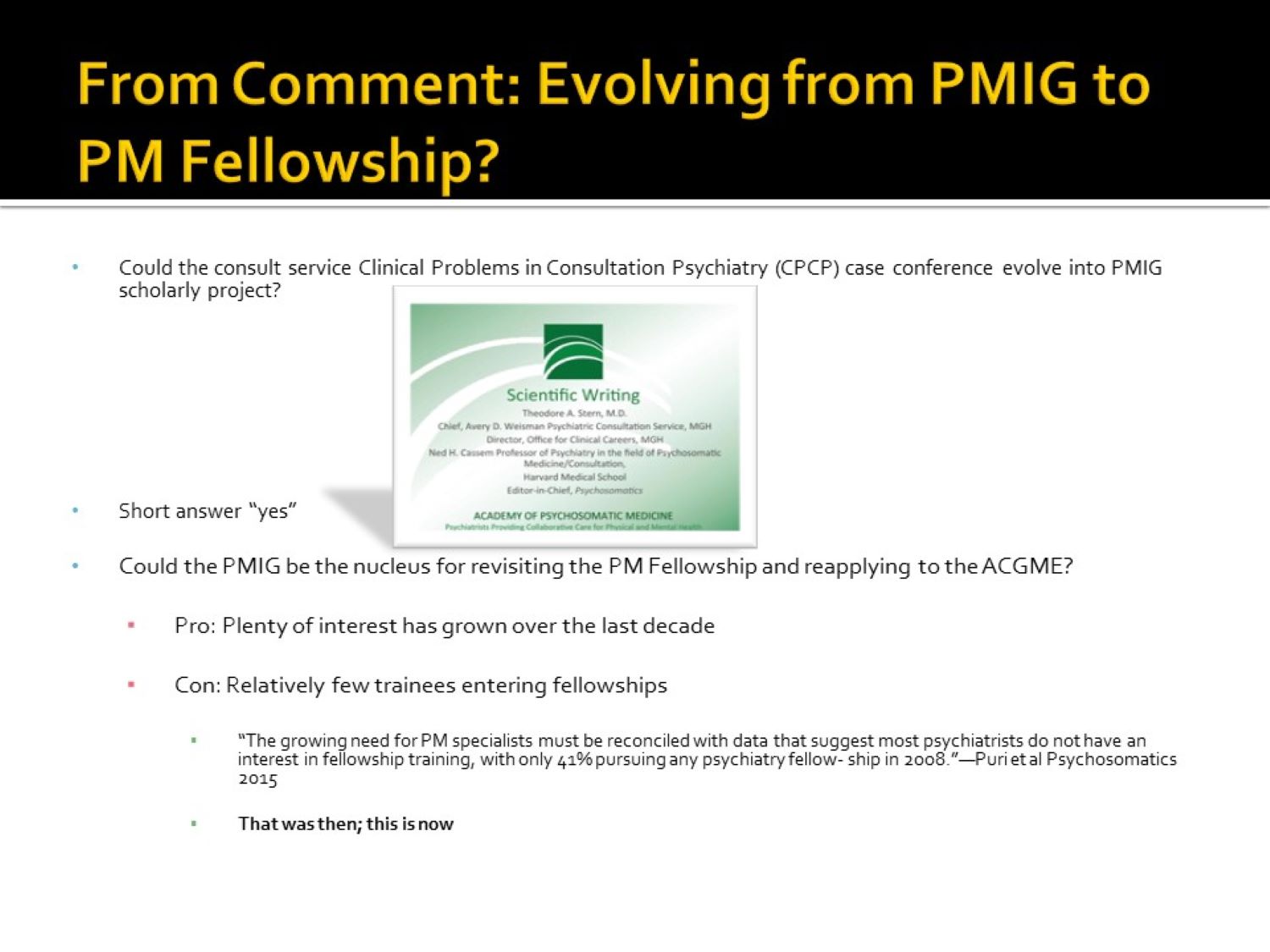
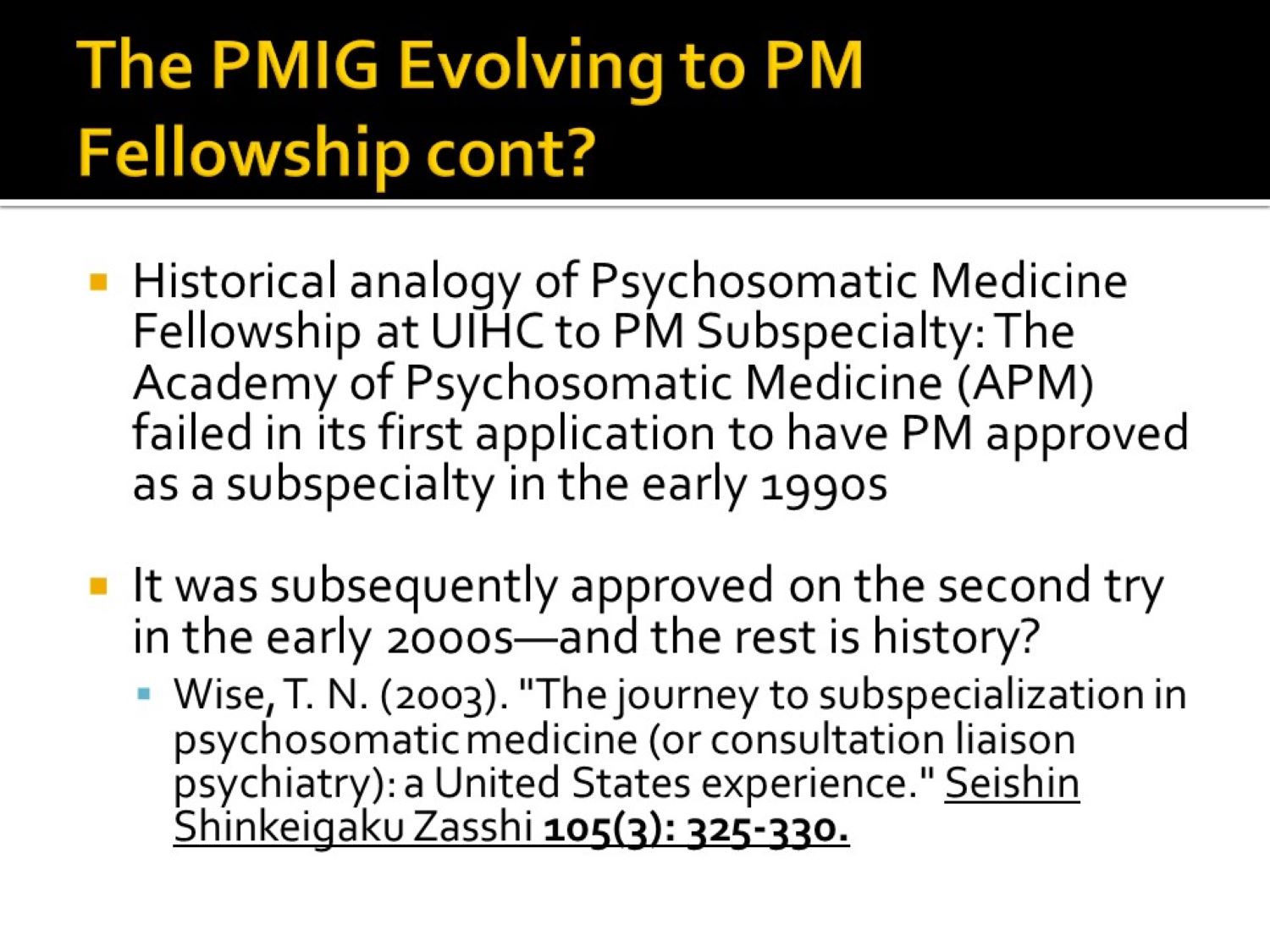
Several years ago, one of the residents suggested starting a Psychosomatic Medicine Interest Group (PMIG). This was before the name of the subspecialty was formally changed to Consultation-Liaison Psychiatry in 2018. I know many of us were very pleased about that.

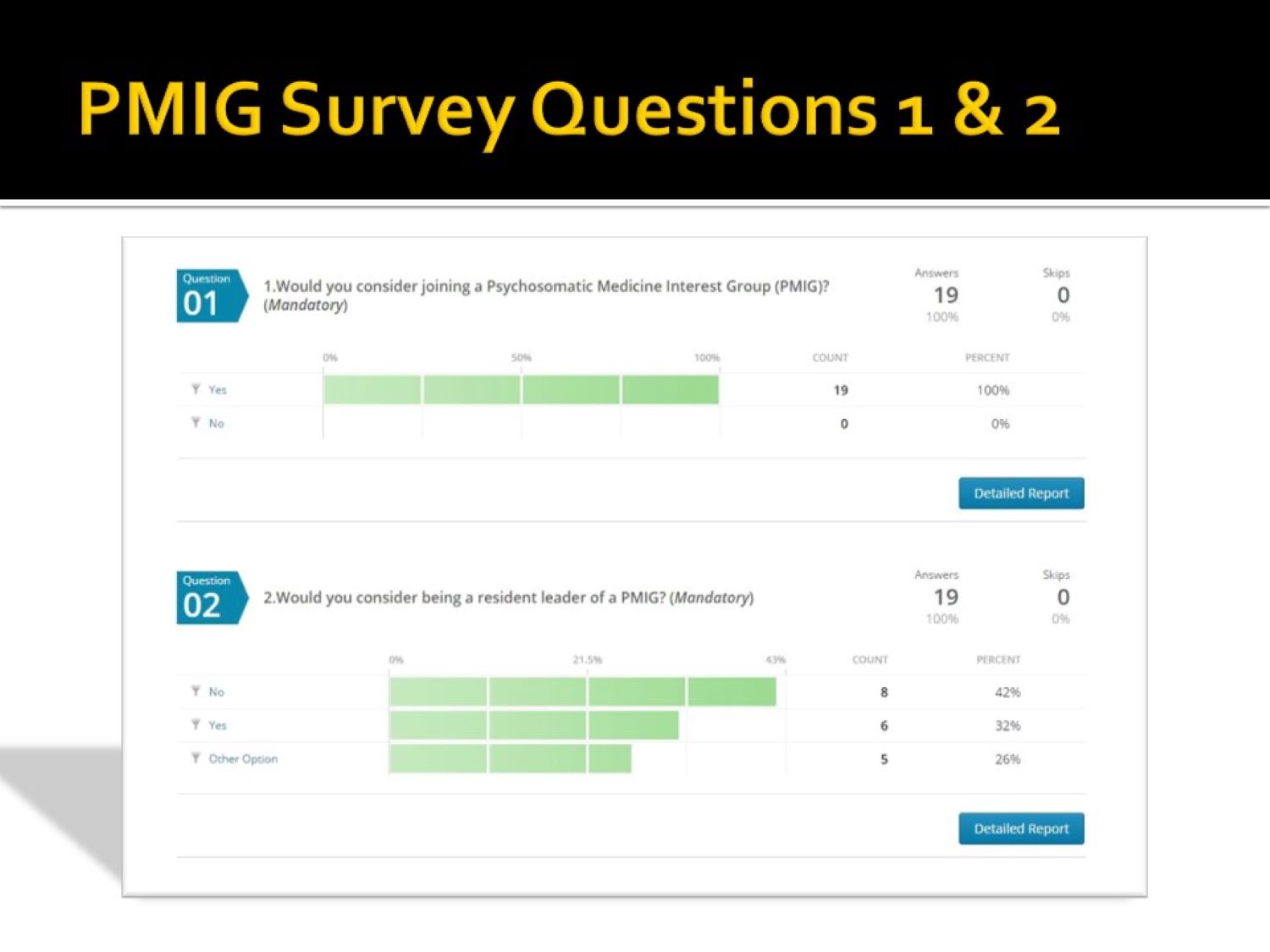
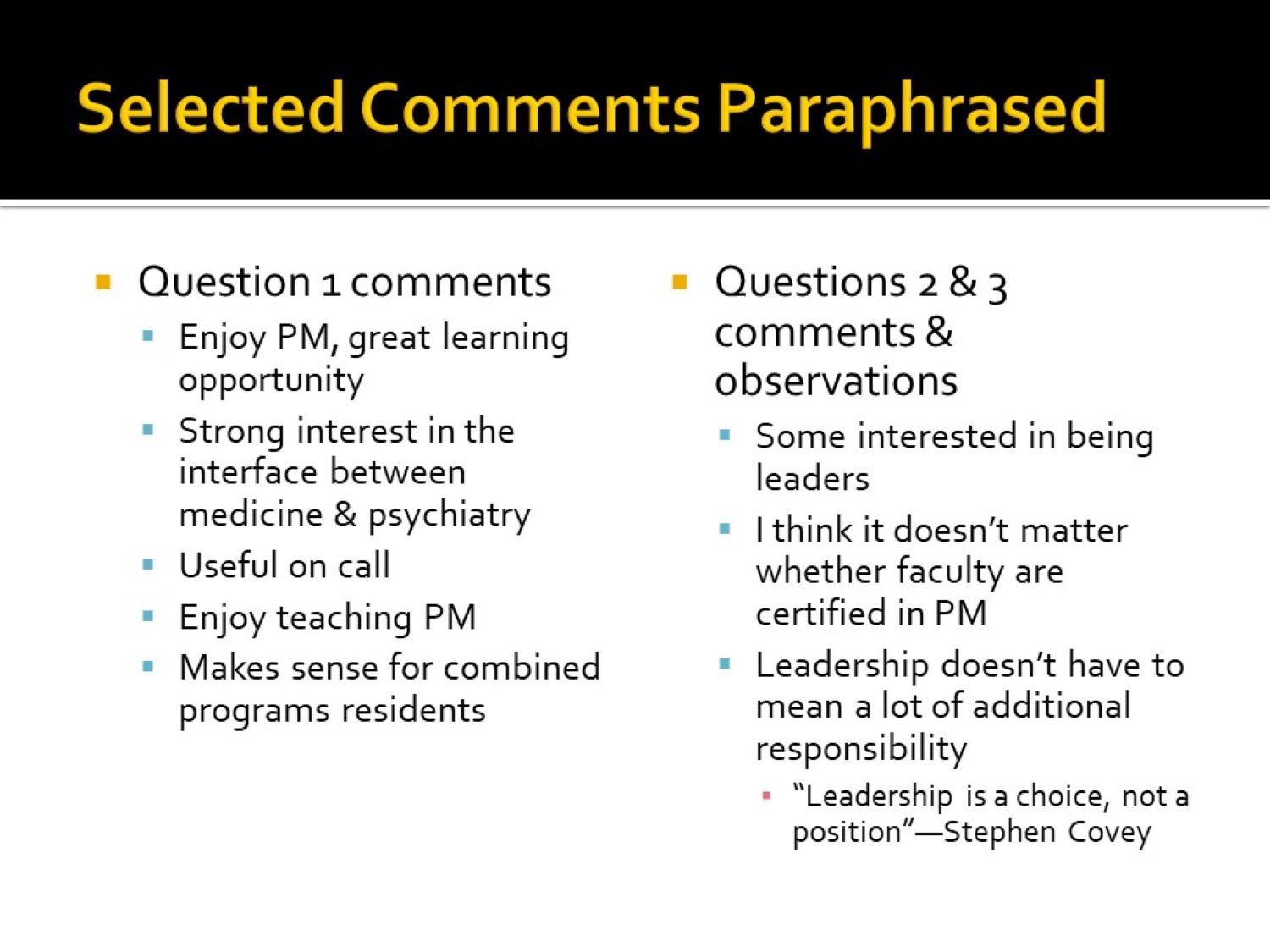
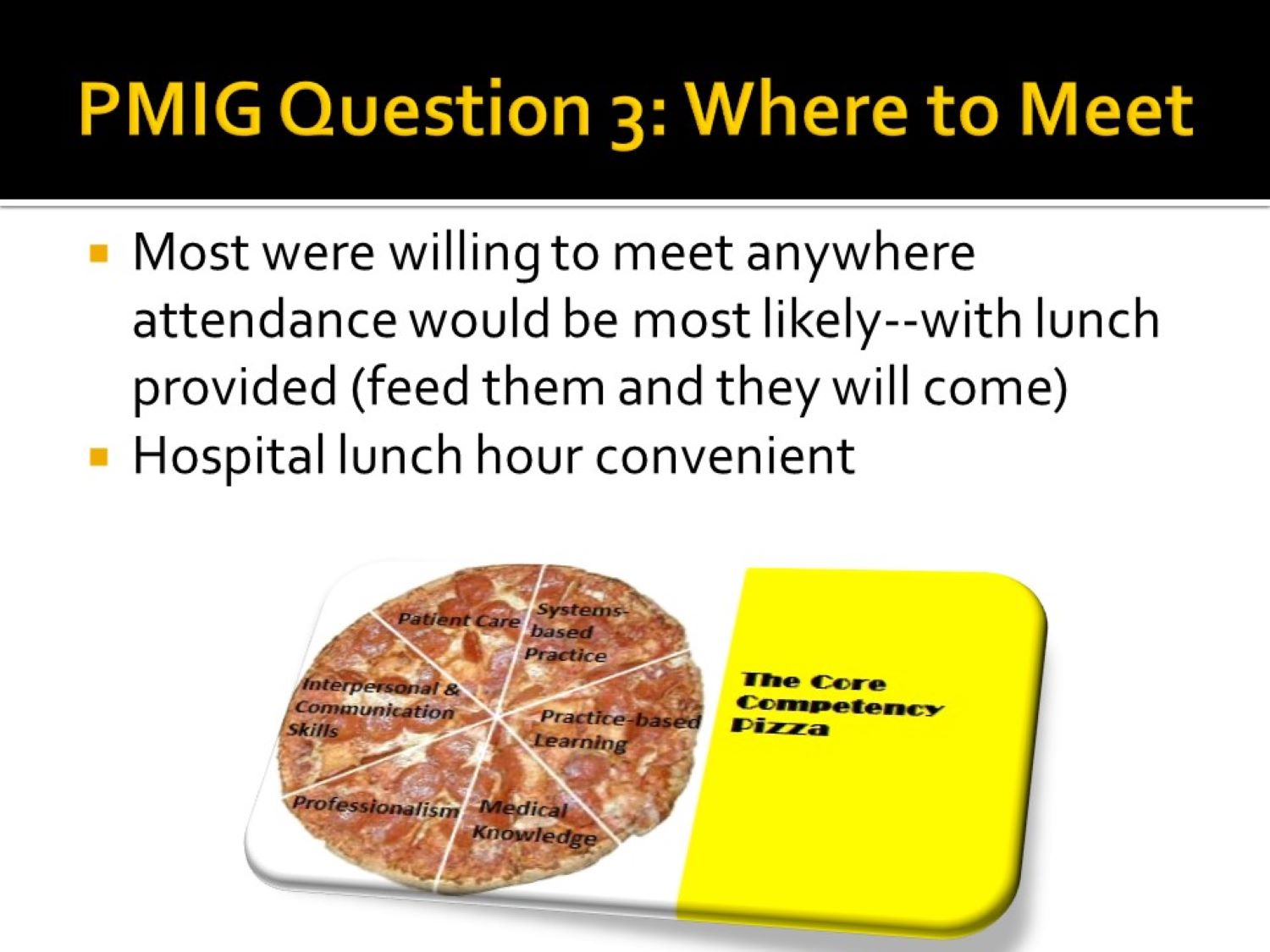
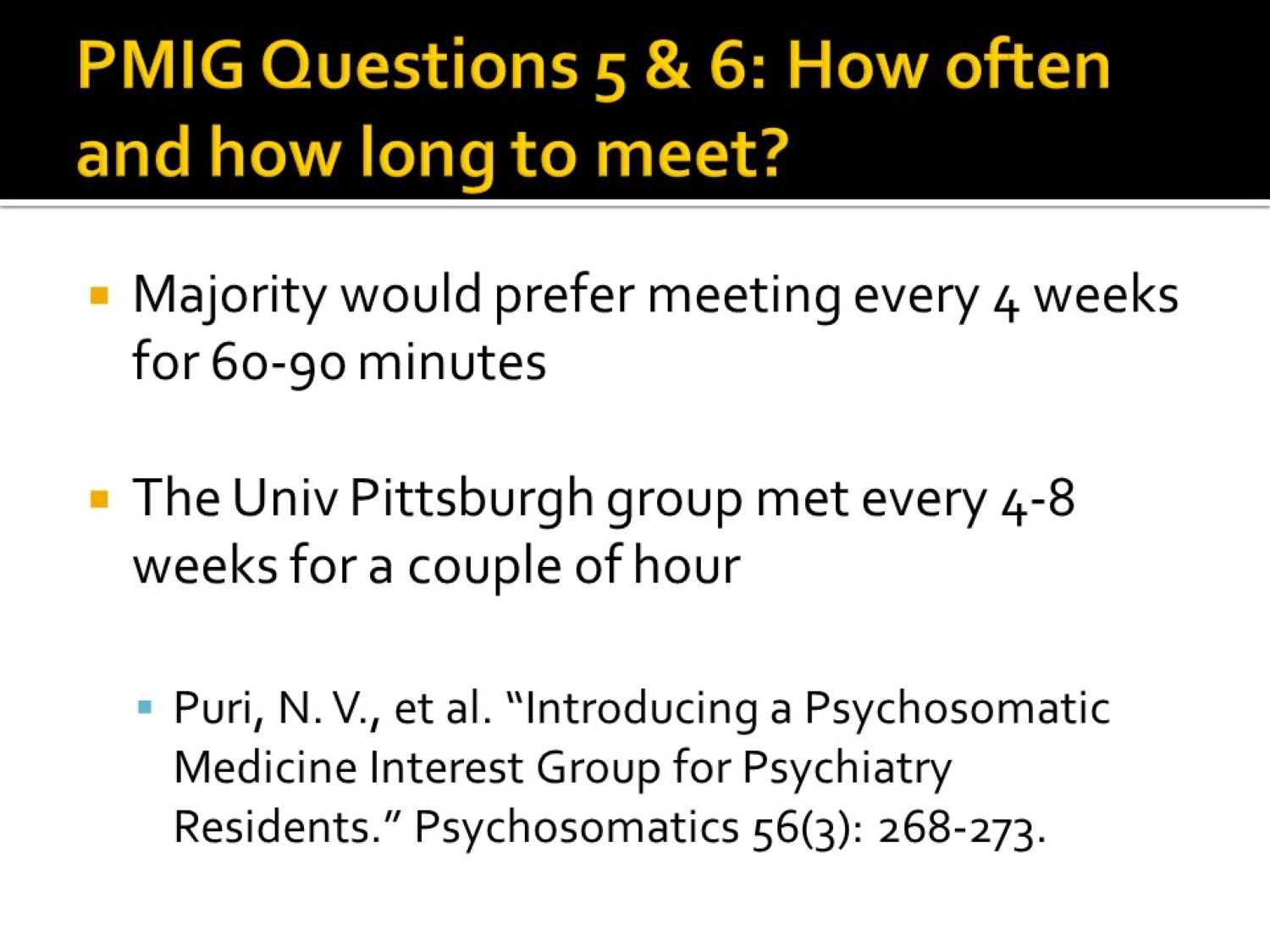
I sent a short survey (see the gallery below the slide show) to the faculty and residents in an effort gauge support for the idea and readiness to participate. I used a paper published at the time to guide the effort, (Puri NV, Azzam P, Gopalan P. Introducing a psychosomatic medicine interest group for psychiatry residents. Psychosomatics. 2015 May-Jun;56(3):268-73. doi: 10.1016/j.psym.2013.08.010. Epub 2013 Dec 18. PMID: 25886971.).

You’ll notice on slide 4 one faculty member’s comment, “I think it doesn’t matter whether faculty are certified in PM.” As Dr. Greenstein discovered, it probably does matter, at least if you want to be board certified.

I was initially certified by the American Board of Psychiatry & Neurology (ABPN), but I objected to the whole Maintenance of Certification (MOC) program, as did many other psychiatrists. I eventually declined to continue participating in the MOC process. However, I notice that the Delirium Clinical Module that I and a resident put together is still accessible on the ABPN website.

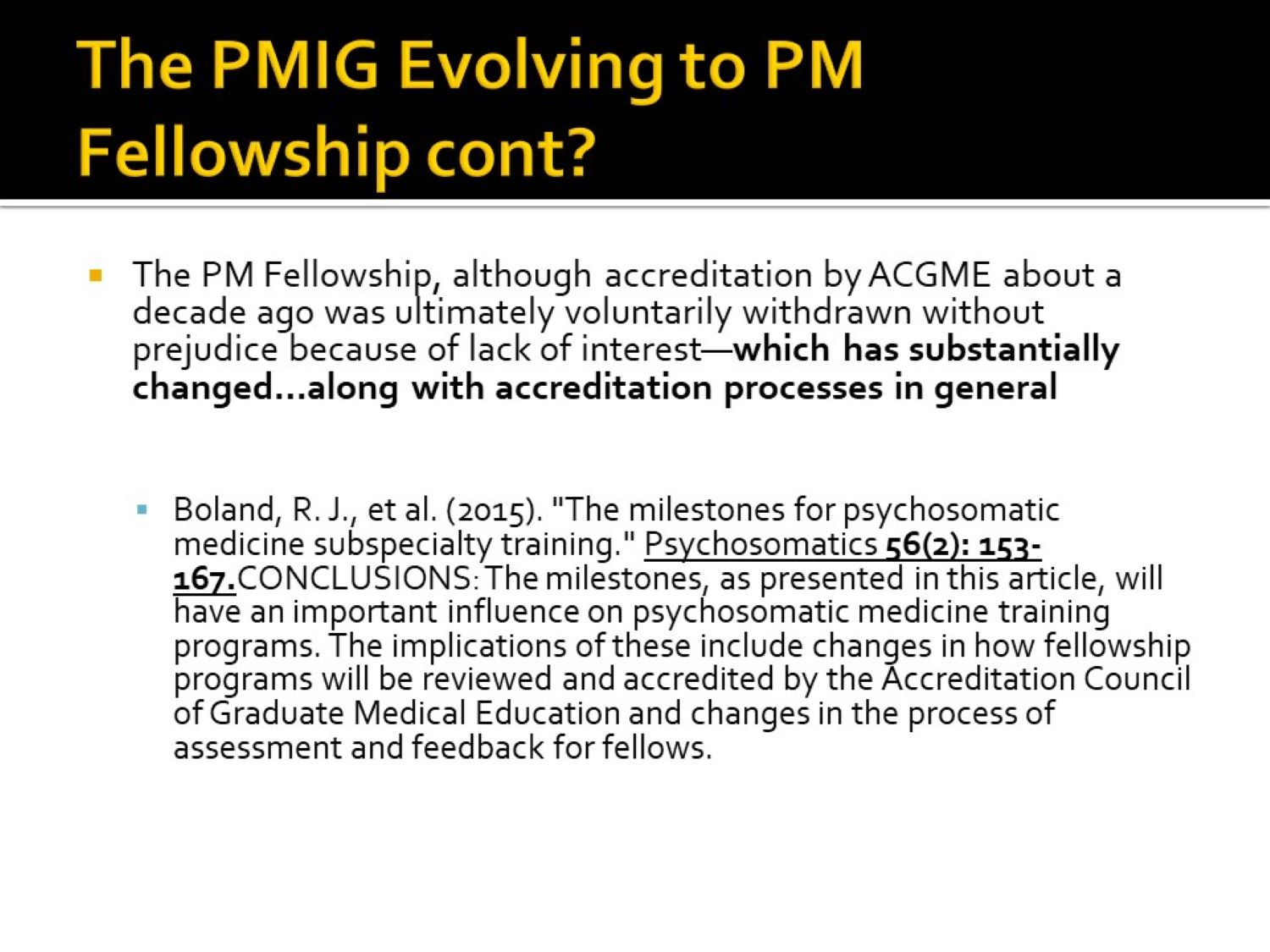
Although response numbers were low, there was clearly an interest in starting the interest group. There was also an incentive to reapply to the ACGME for approval of a Psychosomatic Medicine (Consultation-Liaison Psychiatry now) fellowship.

My attempt years earlier had been frustrating. While it was approved, I couldn’t attract any fellows, forcing me to withdraw it without prejudice (meaning another application for approval could be attempted). Fortunately, that situation changed later. The Psychiatry Department at The University of Iowa now has an early career C-L psychiatrist who graduated from the reinstated C-L fellowship.

As the saying goes, “What goes around comes around.” Although the origin of that saying might have originated in the 1970s, at least one person thought his grandmother had her own version in the 1950s: “You get what you give.”

Looking Back on Gunslingers and Chess Masters

I was looking at an early version of the handbook of consultation-liaison psychiatry that eventually evolved into what was actually published by Cambridge University Press. I wrote virtually all of the early version and it was mainly for trainees rotating through the consult service. The published book had many talented contributors. I and my department chair, Dr. Robert G. Robinson, co-edited the book.

In the introduction I mention that the manual was designed for gunslingers and chess masters. The gunslingers are the general hospital psychiatric consultants who actually hiked all over the hospital putting out the psychiatric fires that are always smoldering or blazing. The main problems were delirium and neuropsychiatric syndromes that mimic primary psychiatric disorders.

The chess masters were those I admired who actually conducted research into the causes of neuropsychiatric disorders.

Admittedly the dichotomy was romanticized. I saw myself as a gunslinger, often shooting from the hip in an effort to manage confused and violent patients. Looking back on it, I probably seemed pretty unscientific.

But I can tell you that when I followed the recommendations of the scientists about how to reverse catatonia with benzodiazepines, I felt much more competent. After administering lorazepam intravenously to patients who were mute and immobile before the dose to answering questions and wondering why everyone was looking at them after the dose—it looked miraculous.

Later in my career, I usually thought the comparison to a firefighter was a better analogy.

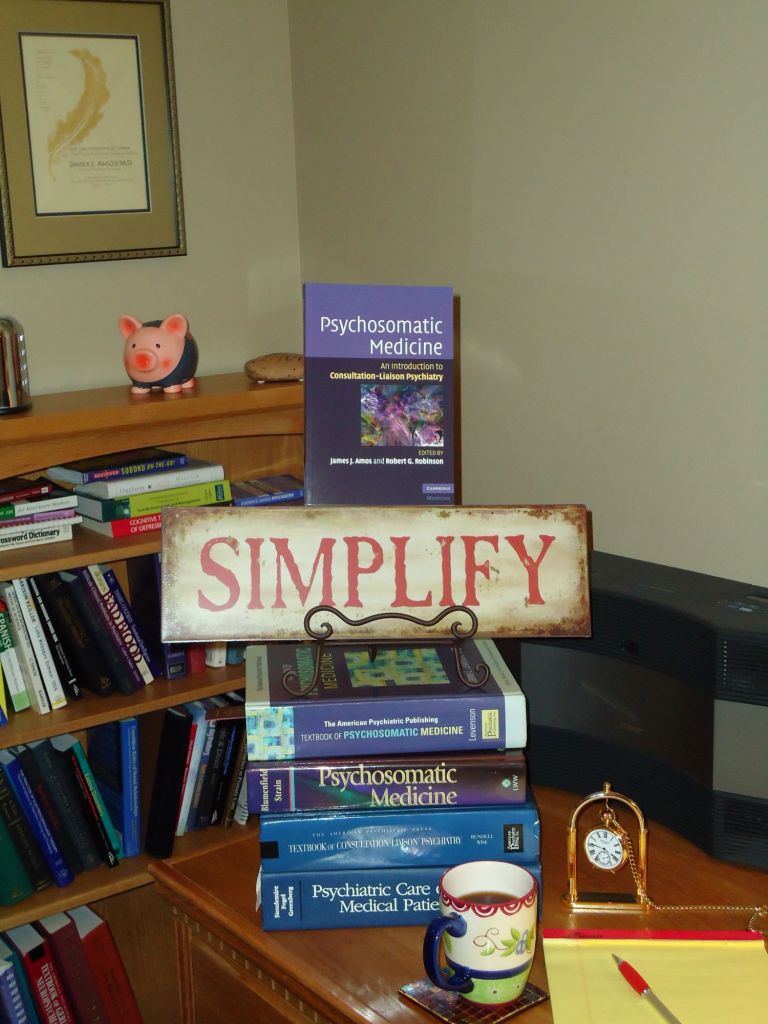
The 2008 working manual was called the Psychosomatic Medicine Handbook for Residents at the time. This was before the name of the specialty was changed back to Consultation-Liaison Psychiatry. I wrote all of it. I’m not sure about the origin of my comment about a Psychosomatic Medicine textbook weighing 7 pounds. It might relate to the picture of several heavy textbooks on which my book sits. I might have weighed one of them.The introduction is below (featured image picture credit pixydotorg):

“In 2003 the American Board of Medical Specialties approved the subspecialty status of Psychiatry now known as Psychosomatic Medicine. Long before that, the field was known as Consultation-Liaison Psychiatry. In 2005, the first certification examination was offered by the American Board of Psychiatry and Neurology. Both I and my co-editor, Dr. Robert G. Robinson, passed that examination along with many other examinees. This important point in the history of psychiatry began many decades ago, probably in the early 19th century, when the word “psychosomatic” was first used by Johann Christian Heinroth when discussing insomnia.

Psychosomatic Medicine began as the study of psychophysiology which in some quarters led to a reductionistic theory of psychogenic causation of disease. However, the evolution of a broader conceptualization of the discipline as the study of mind and body interactions in patients who are ill and the creation of effective treatments for them probably was a parallel development. This was called Consultation-Liaison Psychiatry and was considered the practical application of the principles and discoveries of Psychosomatic Medicine. Two major organizations grew up in the early and middle parts of the 20th century that seemed to formalize the distinction (and possibly the eventual separation) between the two ideas: the American Psychosomatic Society (APS) and the Academy of Psychosomatic Medicine (APM). The name of the subspecialty finally approved in 2003 was the latter largely because of its historic roots in the origin of the interaction of mind and body paradigm.

The impression that the field was dichotomized into research and practical application was shared and lamented by many members of both organizations. At a symposium at the APM annual meeting in Tucson, AZ in 2006, it was remarked that practitioners of “…psychosomatic medicine may well be lost in thought while…C-L psychiatrists are lost in action.”

I think it is ironic how organizations that are both devoted to teaching physicians and patients how to think both/and instead of either/or about medical and psychiatric problems could have become so dichotomized themselves.

My motive for writing this book makes me think of a few quotations about psychiatry in general hospitals:

“Relegating this work entirely to specialists is futile for it is doubtful whether there will ever be a sufficient number of psychiatrists to respond to all the requests for consultations. There is, therefore, no alternative to educating other physicians in the elements of psychiatric methods.”

“All staff conferences in general hospitals should be attended by the psychiatrist so that there might be a mutual exchange of medical experience and frank discussion of those cases in which there are psychiatric problems.”

“The time should not be too long delayed when psychiatrists are required on all our medical and surgical wards and in all our general and surgical clinics.”

The first two quotes, however modern they might sound, are actually from 1929 in one of the first papers ever written about Consultation Psychiatry (now Psychosomatic Medicine), authored by George W. Henry, A.B., M.D. The third is from the mid-1930s by Helen Flanders Dunbar, M.D., in an article about the substantial role psychological factors play in the etiology and course of cardiovascular diseases, diabetes, and fractures in 600 patients. Although few hospital organizations actually practice what these physicians recommended, the recurring theme seems to be the need to improve outcomes and processes in health care by integrating medical and psychiatric delivery care systems. Further, Dr. Roger Kathol has written persuasively of the need for a sea change in the way our health care delivery and insurance systems operate so as to improve the quality of health care in this country so that it compares well with that of other nations (2).

This book is not a textbook. It is not a source for definitive, comprehensive lists of references about all the latest research. It is not a thousand pages long and does not weigh seven pounds. It is a modest contribution to the principle of both/and thinking about psyche and soma; consultants and researchers; — gunslingers and chess masters.

In this field there are chess masters and gunslingers. We need both. You need to be a gunslinger to react quickly and effectively on the wards and in the emergency room during crises. You also need to be a chess master after the smoke has cleared, to reflect on what you did, how you did it—and analyze why you did it and whether that was in accord with the best medical evidence.

This book is for the gunslinger who relies on the chess master. This book is also for the chess master—who needs to be a gunslinger.

“Strategy without tactics is the slowest route to victory. Tactics without strategy is the noise before defeat”—Sun Tzu.”

References:

1.        Kathol, R.G., and Gatteau, S. 2007. Healing body and mind: a critical issue for health care reform. Westport, CT: Praeger Publishers. 190 pp.

2.        Kornfeld, D., and Wharton, R. 2005. The American Psychiatric Publishing Textbook of Psychosomatic Medicine. Psychosomatics 46:95-103.

They Did Learn How to Check for Delirium!

Here’s another oldie but goodie blog post, “It’s Survey Time.” It’s a blast from the past (May of 2011) but it needs a short introduction on why I’m reposting it.

So, I’m about a week out from my surgery for a detached retina. I’m doing pretty well. I keep thinking about a question a nurse asked me right after I was taken to the recovery room from the operating room. I was a little hazy because I’m pretty sure I got some sedation medication, although I was definitely mostly awake for the procedure. The nurse asked me, “Well, can you answer a question for me; will a stone float on water?”

First of all, I gave the right answer, “No.” More importantly, I was momentarily stunned because I recognized the question is from the Confusion Assessment Method for the Intensive Care Unit (CAM-ICU). And I told the nurse that. It reminded me of my early career as a general hospital consultation-liaison psychiatrist.

Most of my old blog posts from The Practical Psychosomaticist are about my frustration over what seemed to be my fruitless efforts to teach nurses and physicians about how to prevent, assess, and manage delirium.

I can’t tell you how happy I was that my recovery room nurse asked me a CAM-ICU delirium screening question.  

I mentioned the American Delirium Society (ADS) in the post and also found a fairly recent article on the CAM ICU. Among the authors were those I met at one of t he first ADS meetings: Malaz Boustani and Babar Kahn.

“It’s Survey Time!”:

“I know, I know, I can hear it out there, “Doesn’t Dr. Amos ever learn? Nobody does surveys and polls!” Hey, that’s OK; I have so much fun doing them anyway. Of course, it would be nice to get some responses… I’ve talked to you and I’ve talked to you, and I’m done talkin’ to you! Come back here, I’m not done talkin’ to you!

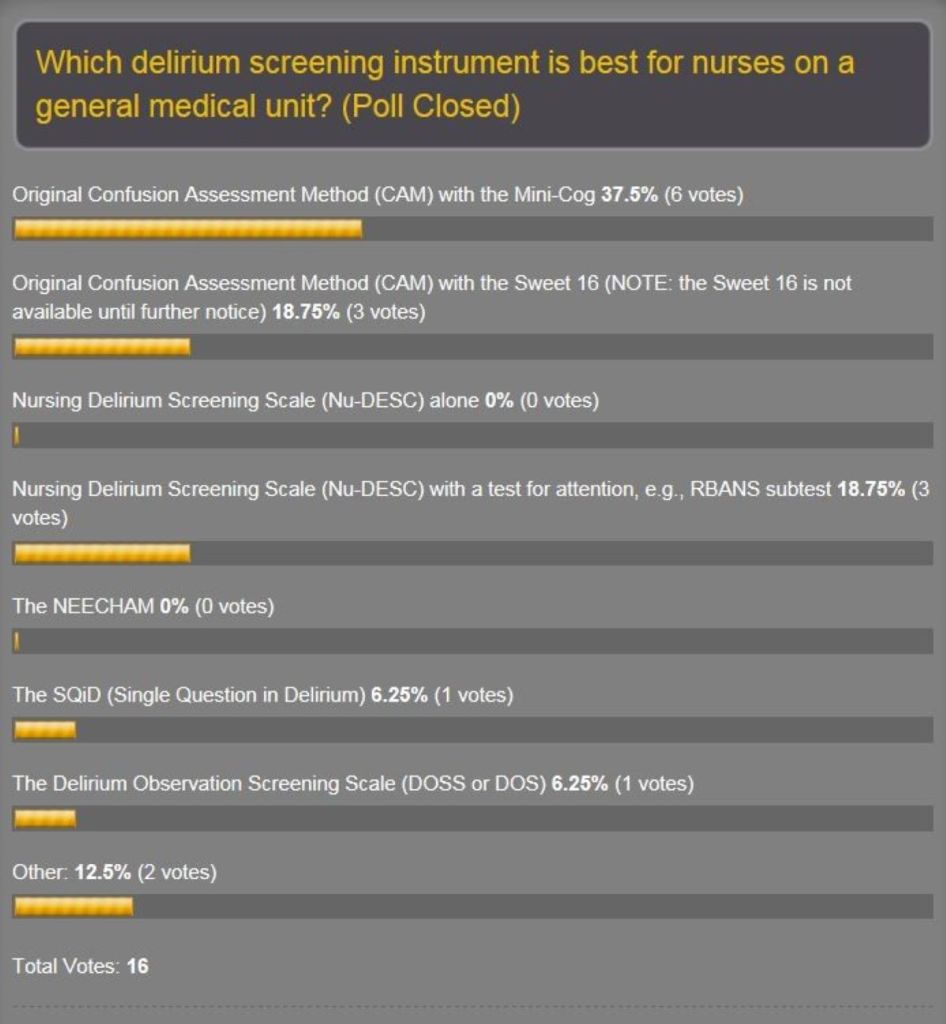
Anyway, the new poll for what’s hot and what’s not about delirium screening scales is up on the home page. The original one was partly to help our delirium prevention project committee to decide on which one to use. Well, the original got only 16 responses…but they were great responses! The amazing thing was that, despite the paucity of votes, the results were plausible. See the results:

Recall that at our 7th project meeting we selected the DOSS. What? There is good literature supporting all of these scales and a lot of factors influence selection of any tool, not the least of which is feasibility, which is mainly ease of use. That means it’s quick and doesn’t require a lot of training or additional assessments. And you should use a tool that’s validated for the patient population you want to protect from delirium. I probably got a lot of questioning looks at the screen when this poll came out because the Confusion Assessment Method-Intensive Care Unit (CAM-ICU) was not on the list. Well, you heard it from one of the main dudes on the team that developed the CAM-ICU that it’s probably not appropriate for use on general medical units…Dr. E. Wesley Ely himself (see post April 29, 2011). Hey, as far as the ICU patient population goes, the CAM-ICU is the holy grail. We need to keep looking for a sensitive and specific tool which is quick and easy for nurses to administer on general medical units.

We’re going with the DOSS. And one of my neuropsychologists, John, is offering to run neuropsychology test batteries on the patients that nurses screen with the DOSS. Atta boy, John! Neuropsychologists are going to be indispensable in this area. I remember pushing for the addition of subtests of the Repeatable Battery for the Assessment of Neuropsychological Status (RBANS), especially the Coding test in order to detect delirium early as possible. It didn’t make it, but it was close. This has been advanced by another one of our neuropsychologists here who’s done some delirium research in the bone marrow transplant unit with delirious patients. Hey, I still wonder what we could accomplish if the Coding test were added to the DOSS or even the Nursing Delirium Screening Scale (Nu-DESC). Maybe there’s already somebody out there putting a practical implementation plan for that into the real world.

So why do the poll again? Because I’d like to see if I could persuade nurses from large American and world organizations to put the nickel down and vote. And if I keep shoving this thing out there, maybe somebody will let us know that, hey, we’re not in this alone and offer to collaborate.

And I stole a couple of survey questions from our group to see what physicians and nurses think about how they manage delirium. It’s a way to take a snapshot of the culture of how docs and nurses work together on delirium recognition and interventions. And hey, why am I doing that? Because I’m a thief…no, no, I mean the reason is delirium is a medical emergency and we all need to work together to find ways to understand it better in order to prevent it. The American Delirium Society (ADS) tell you why delirium prevention is critical in the endless search to find ways to deliver high-quality medical care to patients:

Delirium Simple Facts:

  • More than 7 million hospitalized Americans suffer from delirium each year.
  • Among hospitalized patients who survived their delirium episode, the rates of persistent delirium at discharge, 1, 3 and 6 months are 45%, 33%, 26%, and 21% respectively.
  • More than 60% of patients with delirium are not recognized by the health care system.
  • Compared to hospitalized patients with no delirium and after adjusting for age, gender, race, and comorbidity, delirious patients suffer from:
  • Higher mortality rates at one month (14% vs. 5%), at six months (22% vs. 11%), and 23 months (38% vs. 28%);
  • Hospital stay is longer (21 vs. 9 days); Receive more care in long-term care setting at discharge (47% vs. 18%), at 6 months (43% vs. 8%) and at 15 months (33% vs. 11%); and
  • Have higher probability of developing dementia at 48 months (63% vs. 8%).

And have you registered for the ADS inaugural conference on June 5-7 in Indianapolis? Good for you! And are you going to bring back something from that conference for The Practical Psychosomaticist, and I don’t mean doughnuts? That’s the spirit! The surveys have spaces for free-text comments as well, which I want to hear!”

The Chicken Finally Lays An Egg

Below is an old post from a previous blog that I published on June 6, 2010. Although the title in my record is simply PM Handbook Blog, there must have been another title. Maybe it should have been more like The Chicken Has Finally Laid an Egg (you’ll get the joke later).

There are two reasons for posting it today. One is to illustrate how the Windows voice recognition dictation app works. It’s a little better than I thought it would be. The last time I used it, it was ugly. I’m using it now because I thought it might be a little easier than trying to type it since I still have problems with vision in my right eye because of the recent retinal tear injury repair. So, instead of doing copy paste, what you’re seeing is a dictation—for the most part.

On the other hand, I’m still having to proofread what I dictate. And I still find a few mistakes, though much fewer than I expected.

The other reason for this post is to help me reflect on how far the fellowship has come since that time. It did eventually attract the first fellow under a different leader. That was shortly after I retired. It was a great step forward for the department of psychiatry:

“Here is one definition of a classic:

“Classic: A book which people praise but don’t read.” Mark Twain.

When I announced the publishing of our book, Psychosomatic Medicine, An Introduction to Consultation Liaison Psychiatry, someone said that it’s good to finally get a book into print and out of one’s head. The book in earlier years found other ways out of my head, mainly in stapled, paperclipped, spiral bound, dog eared, pages of homemade manuals, for use on our consultation service.

It’s a handbook and meant to be read, of course, but quickly and on the run. As I’ve said in a previous blog, it makes no pretension to being the Tour de Force textbook in America that inspired it. However, any textbook can evolve into an example of Twain’s definition of a classic. The handbook writer is a faithful and humble steward who can keep the spirit of the classic lively.

We must have a textbook as a marker of Psychosomatic Medicine’s place in medicine as a subspecialty. It’s like a Bible, meant to be read reverently, venerated, and quoted by scholars. But the ark of this covenant tends to be a dusty bookshelf that bows under the tome’s weight. A handbook is like the Sunday School lesson plan for spreading the scholar’s wisdom in the big book.

Over the long haul, the goal of any books should mean something other than royalties or an iconic place in history. No preacher ever read a sermon to our congregation straight out of the Bible. It was long ago observed by George Henry that there will never be enough psychiatric consultants. This prompts the question of who will come after me to do this work. My former legacy was to be the Director of a Psychosomatic Medicine Fellowship in an academic department in the not-so-distant past. Ironically, though there will never be enough psychiatric consultants, there were evidently too many fellowships from which to choose. I had to let the fellowship go. My legacy then became this book, not just for Psychosomatic Medicine fellows, but medical students, residents, and maybe even for those who see most of the patients suffering from mental illness—dedicated primary care physicians.

My wife gave me a birthday card once which read: “Getting older: May each year be a feather on the glorious Chicken of Life as it Soars UNTAMED and BEAUTIFUL towards the golden sun.” My gifts included among the obligatory neckties, a couple of books on preparing for retirement.

Before I retire, I would like to do all I can to ensure that the next generation of doctors learn to respect the importance of care for both body and mind of each and every one of their patients. That’s the goal of our book. And may the glorious chicken of life lay a golden egg within its pages to protect it from becoming a classic.”

Chicken picture credit: Pixydotorg.