Last year, we noticed a groundhog waking up and bulldozing
our back yard, even though snow was forecast that day. It’s pretty good at just
putting its head down and pushing through almost anything in its path including
leaves, sticks, small rocks, flowers, and so on.
Their single-minded digging has helped uncover bones and
pottery of old civilizations and aided medical researchers study a lot of
things including the role of viral hepatitis in liver cancer.
I can compare them to those who bury themselves in the
single-minded study of medicine in the transformative path to medical practice.
I can recall my medical school classmates and their clicker pens taking notes
in class. They weren’t called “gunners” for nothing. Call it the Groundhog
Effect.
Even if you weren’t a gunner, you had to apply yourself just
like a groundhog to your studies. It could lead to another characteristic
common among these creatures. They tend to be loners.
The analogy is far from perfect, of course. Groundhogs
aren’t lonely. People can be, which is why medical students and residents are
often advised to always remember H.A.L.T.
H.A.L.T. refers to trying to avoid letting oneself get too
hungry, angry, lonely, or tired. It’s probably a warning about incipient
burnout, a problem that affects at least half of physicians and which is the
hot topic these days.
I’m always a little puzzled that so many physician wellness
programs and meetings seem to devote a lot of time trying to teach doctors how
to improve their resilience. It’s as though we’re somehow to blame for getting
burned out.
I’m not saying learning things like mindfulness are not
important for promoting physician wellness. I have my own daily mindfulness
practice and it is certainly helpful.
It would also be nice to spend more time addressing the
systems issues contributing to physician burnout, such as very full clinic
schedules, overly complicated electronic health records requiring hours of data
input that create the need for “pajama time,” which is bringing your job home
with you, board certification busywork, managed care rules that marginalize
physicians, and so on.
This is a continuation of the hassle factors that can lead
to physicians just learning to put their heads down and dig through the
mess—sort of like the groundhog, and often in isolation from each other.
Transformative processes can also occur at the end of a
physician’s career. I’ve spent a long time learning to be a physician and now
that I’m in phased retirement, I’m finding out how hard that can be. It would
be helpful to know that others are passing through this stage as well, and that
I’m not alone.
Could it be that one way to counter the Groundhog Effect is
to come together and share this retirement experience? There will always be
those who work well into their nineties and that’s great. Statistically,
though, most of us will retire in our mid-sixties.
The graying out of the psychiatrist population is
contributing to the shortage, to be sure. But we could still be useful to the
next generation of doctors acting as role models for how to navigate the other
transformative process—reflecting on the task of becoming somebody other than a
physician. I think it would be easier if several doctors did this.
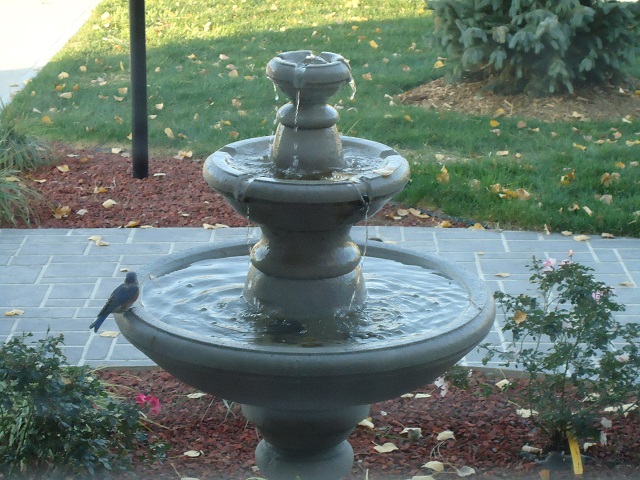
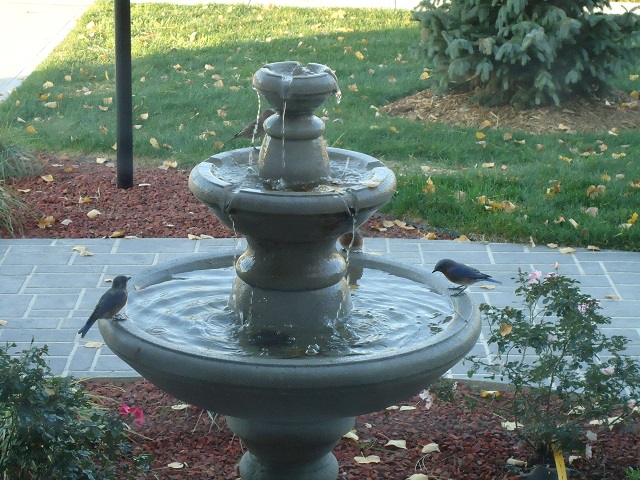
Animals do this. I saw this several years ago when we owned
a house with a fountain, which was frequented by more than a couple of species
of birds, including Bluebirds. They gradually arrived but were at first
tentative about immediately diving in. One would perch on the rim. Another
would come along and do the same, maybe drink a little water while watching the
other.
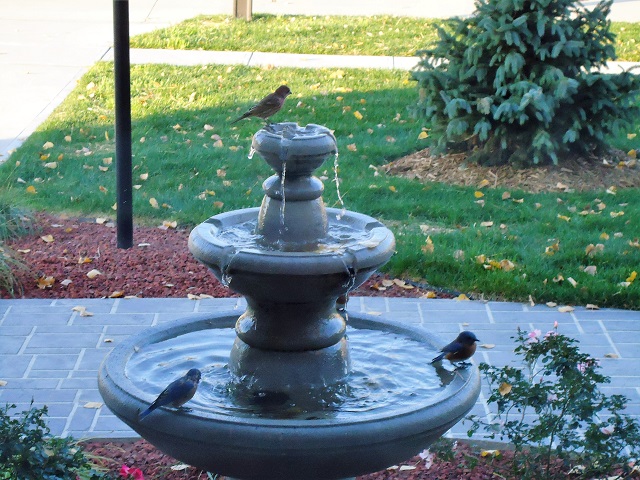
Eventually, one would dip its tail feathers in just for a
moment. Pretty soon, they would make like ducks.
I guess you could call it the Bathing Bluebird Effect.






 Go Retire Psychiatrist