

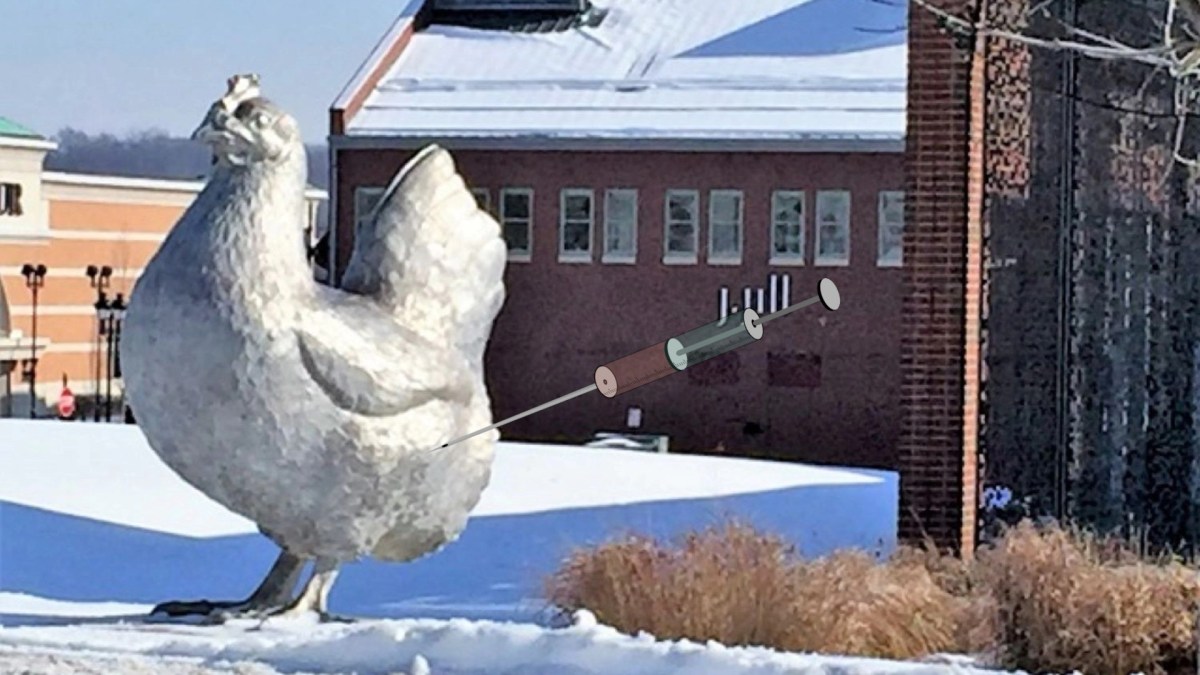
I’ve heard about the recent contract a drug company (Zoetis) obtained to make chicken vaccine for the H5N1 bird flu virus which is hopping from birds to cows and even to humans. So far, I haven’t heard that the bird flu is transmitted between humans.
As far as eating eggs, I’ve read that the chance of getting bird flu is pretty slim—but experts tell you to cook your eggs to a temperature above 165 degrees. No soft egg yolks for me.
Anyway, Zoetis is making a vaccine for chickens. I got to wondering how you would vaccinate chickens. Obviously, you have to catch them first, wrestle them down to the barnyard floor and stick a needle into them somewhere under all the feathers.
There’s a Wikihow with instructions (including a video) for giving chickens vaccines. One of them says to inject the bird in the spot for which you have the easiest access and which is the “most comfortable for the chicken.”
How do you tell which is the most comfortable spot for the chicken to be impaled by a needle? Maybe it’s marked by a Walgreens sticker. You have to sterilize the spot, maybe with a splash of that moonshine you’re making on your property. Make sure you don’t drink any of it during the vaccination process. You want to make sure of your aim.
When and how do you wrap a rubber band around the beak? You know darn well the chicken is going to peck you. You can tell we don’t have chickens in the backyard.
And then there are all the stories on the internet about how chickens can run around for a short while even after their heads are cut off. If they’re that energetic without their heads attached, how much more frantic are they going to be if they see you chasing after them with a needle? And remember, you’re going to probably poke them in the neck. Chickens know that. They also know you’re wearing only thin rubber gloves.
And aren’t chicken farms or ranches or coops, whatever, just chock full of thousands of chickens? Vaccinating all of them is a dawn to dusk proposition so you better have your Wheaties in the morning.
Are the roosters also up for the vaccine? One way to get them ready is to let them crow until they pass out. Then you can poke them. You’re welcome.

 Go Retire Psychiatrist