Saga of the Nestlings

Recall that the house finch nestlings were taken by a marauding crow yesterday. The house finch parents were frantic and devastated for about an hour. Although the crow flew by a second time, it didn’t return. The reason why was clear today. The nest is still in the tree but it’s obviously a wreck. We think it has been abandoned.

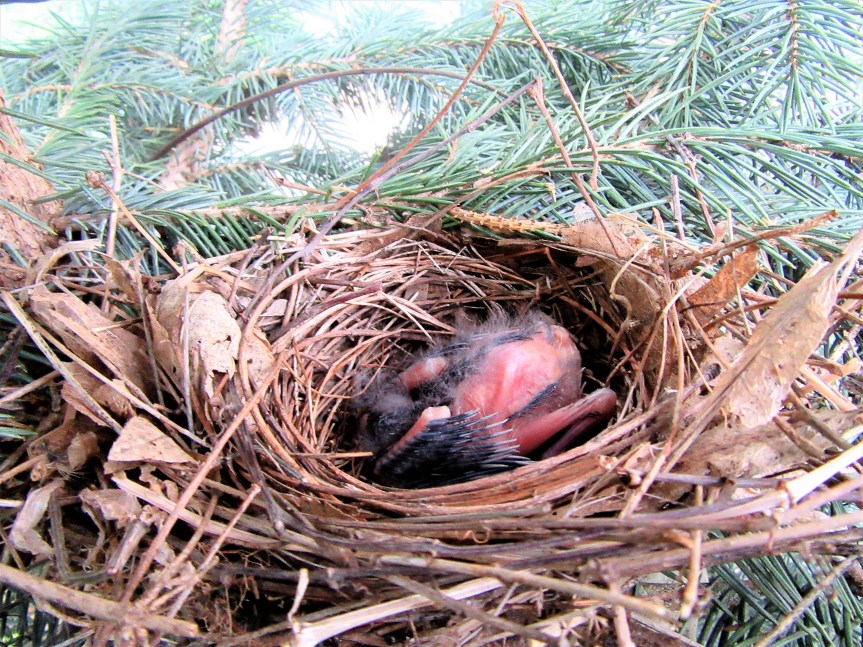
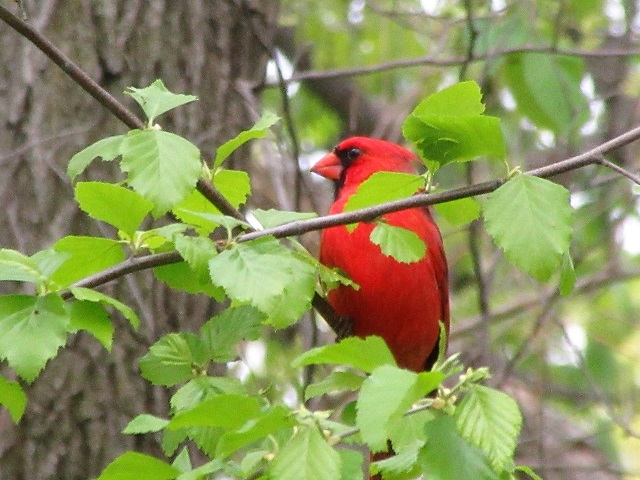
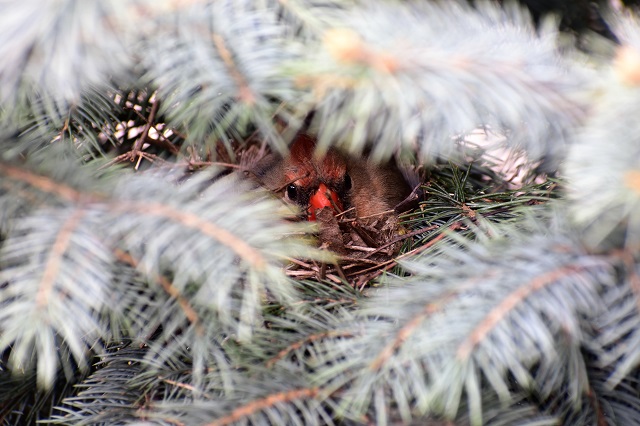
I checked on the cardinal nest and could find only one baby. He’s large and the younger, smaller brother is nowhere in sight.

Big fella

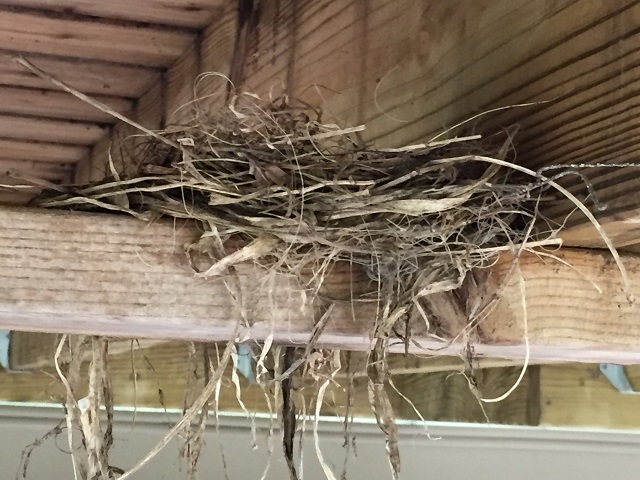
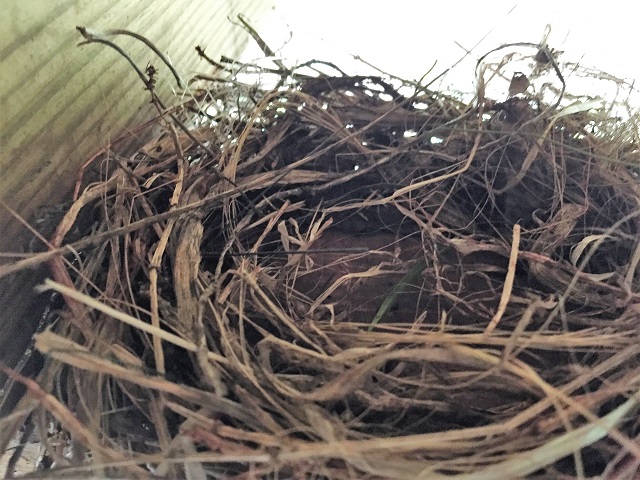
The robins have not laid any eggs in the nest under our deck and it’s likely they’ve abandoned it.

Survival of the fittest seems to be the lesson here. Instinct is the driver, but it was hard not to think of the house finch parents, (especially the female) as grieving the loss of all their chicks.

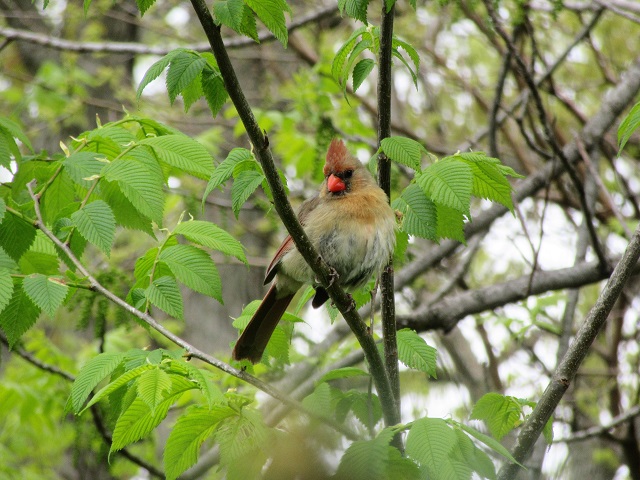
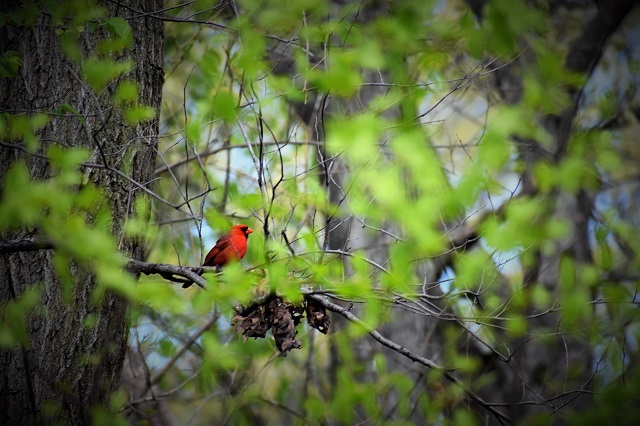
The cardinal parents seem very annoyed when I pop around with my camera. Why not? Life is hard enough, with bad weather, crappy nest-building materials, unsafe locations, and predatory crows.

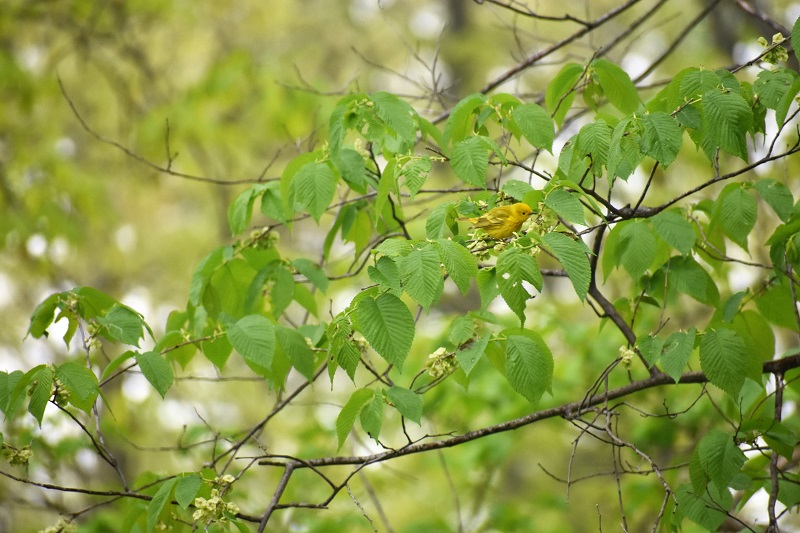
By the way, we saw a yellow warbler for the first time. I mistook it for a goldfinch at first. But then I saw the streaking on its belly and checked my field guide. Goldfinches have black wings and a black forehead patch. Yellow warbler males have orange streaks on their bellies. This one was probably picking bugs off the topmost tree leaves. It’s a male and making the most of its time on earth.

Yellow Warbler male

Marauding Crow Snatches Nestlings

I was sitting at my desk by the front window where we often watch the house finches come and go from their nest. It was just a couple of days ago that 3 baby house finches were squirming about in the nest.

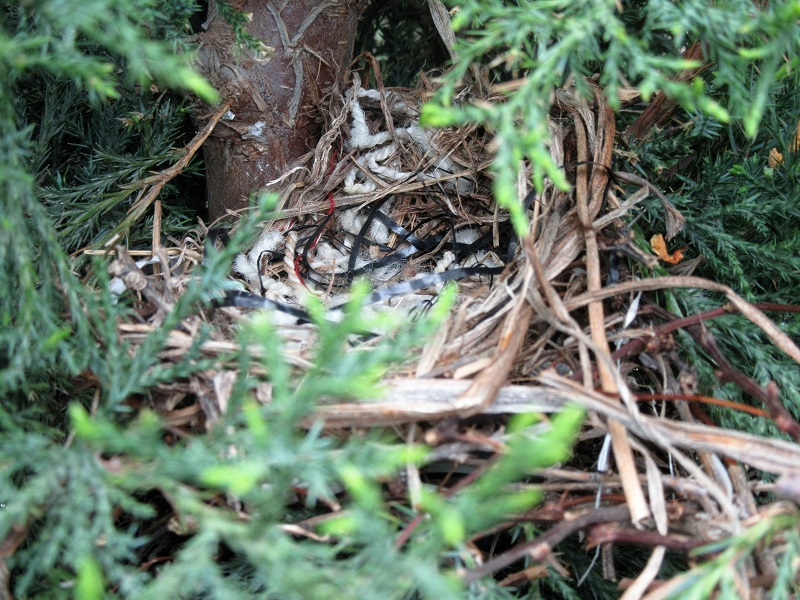
There are 3 house finch nestlings ( or I guess I should say there were)

I kept hearing a strange noise outside the window. It sounded like a large sheet blowing and flapping in the wind. I glanced a couple of times and didn’t see anything. About the 3rd time I heard it, I caught sight of a huge crow (maybe a raven?) flapping its wings, which was the sound I evidently heard.

I grabbed my camera and tried to open the blinds but I was too late to get a snapshot of the giant crow pounding the juniper tree with its wings, jabbing its beak into the tree and then thundering off with a mouthful of nestlings. I’m pretty sure it got all of them.

I was stunned. A couple of minutes later, the house finch mama was flitting in a panic around the tree and in the nest, apparently searching for the newborns. It was a frantic scene which went on for over half an hour at least. She flew off and flew back repeatedly to what I assumed was an empty nest. There might have been an egg left because the crow returned to fly over the tree. But it didn’t stop.

Frantic house finch mama

I now believe that’s what happened to the missing cardinal egg and cardinal baby. My wife says she has seen a large crow swooping around our property. I wonder if that’s what spooked the robins who have probably abandoned the nest under our deck.

I took a quick look around the web and found that crows will eat eggs and nestlings, but it’s said to be an uncommon occurrence. It definitely happened in front of me and in the blink of an eye.

I don’t know what the house finches will do now. Will they try again? I doubt it will be in the same tree. Many of the branches are bent, exposing the nest where the thief broke in.

I’ll keep you posted.

The Bird Saga

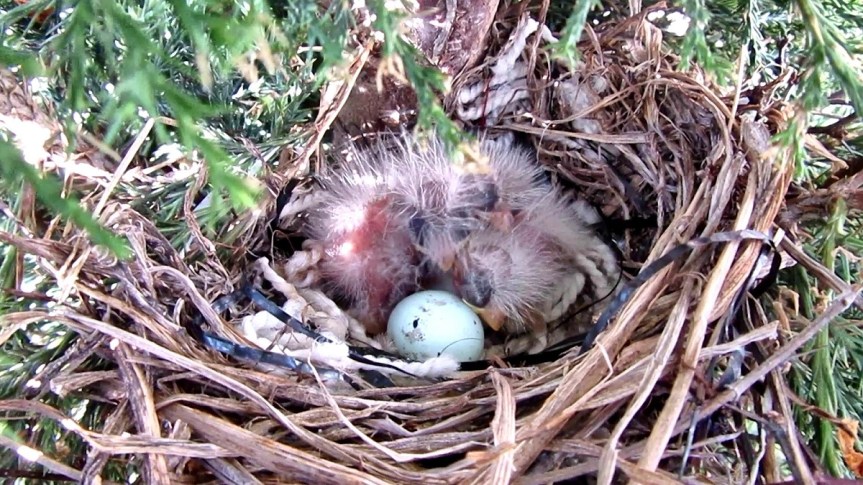
The bird saga continues and it has been a little rocky. The cardinals are having an up and down course with their young. They lost a chick. One egg was laid a bit late and so the two chicks remaining are vastly different in size.

Big brother and little brother

The house finches are hatching. So far there were two hatchlings we could see. Out of the five eggs it was hard to tell what happened to the other three. I could see only two; one of them was the brown egg.

My wife took a shine to one of the house finch nestlings. She calls it her “little alien.” Funny, I always thought I was her little alien. Both of the babies look like they have Mohawk haircuts.

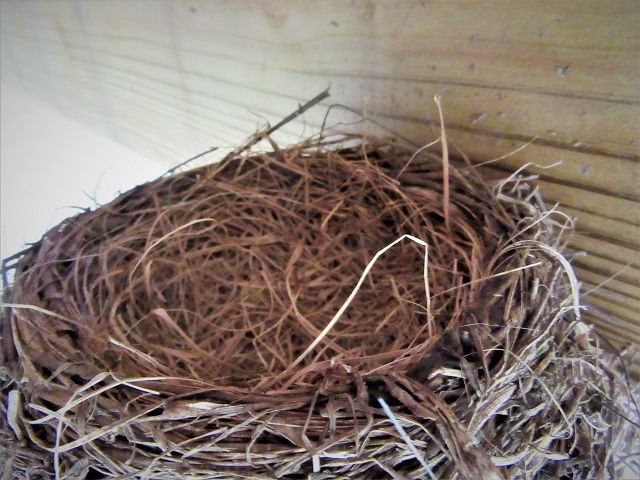
The robins probably have abandoned their carefully built nest under our deck. It has been a few days now since the nest was completed and no eggs are in it.

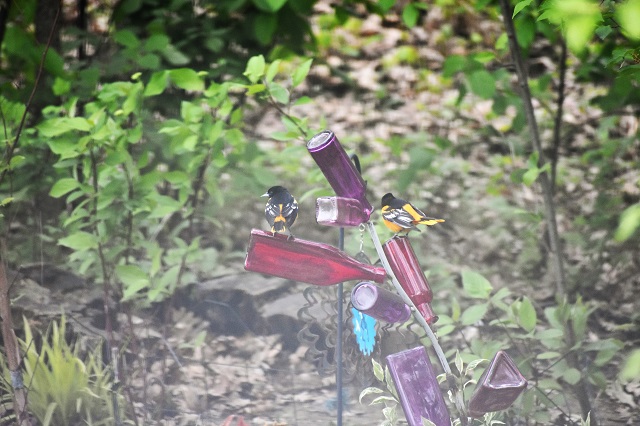
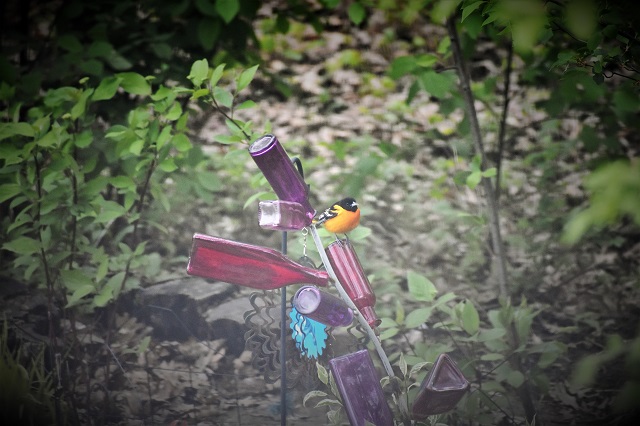
Now we’re starting to see Baltimore Orioles flitting around our garden. There were three of them (all males) and I could barely get snapshots of two. I doubt we’ll see nests. They build pretty high up in the trees.

The Groundhog Effect

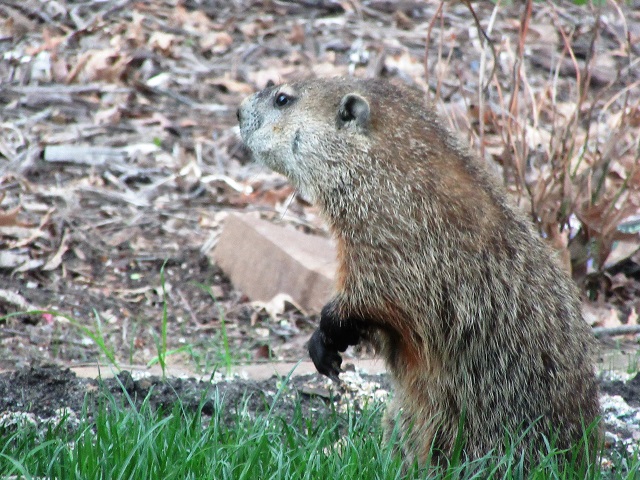
Last year, we noticed a groundhog waking up and bulldozing our back yard, even though snow was forecast that day. It’s pretty good at just putting its head down and pushing through almost anything in its path including leaves, sticks, small rocks, flowers, and so on.

Their single-minded digging has helped uncover bones and pottery of old civilizations and aided medical researchers study a lot of things including the role of viral hepatitis in liver cancer.

I can compare them to those who bury themselves in the single-minded study of medicine in the transformative path to medical practice. I can recall my medical school classmates and their clicker pens taking notes in class. They weren’t called “gunners” for nothing. Call it the Groundhog Effect.

Even if you weren’t a gunner, you had to apply yourself just like a groundhog to your studies. It could lead to another characteristic common among these creatures. They tend to be loners.

The analogy is far from perfect, of course. Groundhogs aren’t lonely. People can be, which is why medical students and residents are often advised to always remember H.A.L.T.

H.A.L.T. refers to trying to avoid letting oneself get too hungry, angry, lonely, or tired. It’s probably a warning about incipient burnout, a problem that affects at least half of physicians and which is the hot topic these days.

I’m always a little puzzled that so many physician wellness programs and meetings seem to devote a lot of time trying to teach doctors how to improve their resilience. It’s as though we’re somehow to blame for getting burned out.

I’m not saying learning things like mindfulness are not important for promoting physician wellness. I have my own daily mindfulness practice and it is certainly helpful.

It would also be nice to spend more time addressing the systems issues contributing to physician burnout, such as very full clinic schedules, overly complicated electronic health records requiring hours of data input that create the need for “pajama time,” which is bringing your job home with you, board certification busywork, managed care rules that marginalize physicians, and so on.

This is a continuation of the hassle factors that can lead to physicians just learning to put their heads down and dig through the mess—sort of like the groundhog, and often in isolation from each other.

Transformative processes can also occur at the end of a physician’s career. I’ve spent a long time learning to be a physician and now that I’m in phased retirement, I’m finding out how hard that can be. It would be helpful to know that others are passing through this stage as well, and that I’m not alone.

Could it be that one way to counter the Groundhog Effect is to come together and share this retirement experience? There will always be those who work well into their nineties and that’s great. Statistically, though, most of us will retire in our mid-sixties.

The graying out of the psychiatrist population is contributing to the shortage, to be sure. But we could still be useful to the next generation of doctors acting as role models for how to navigate the other transformative process—reflecting on the task of becoming somebody other than a physician. I think it would be easier if several doctors did this.

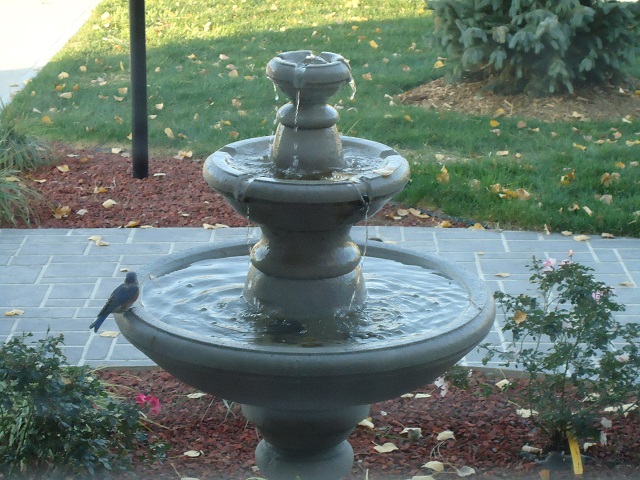
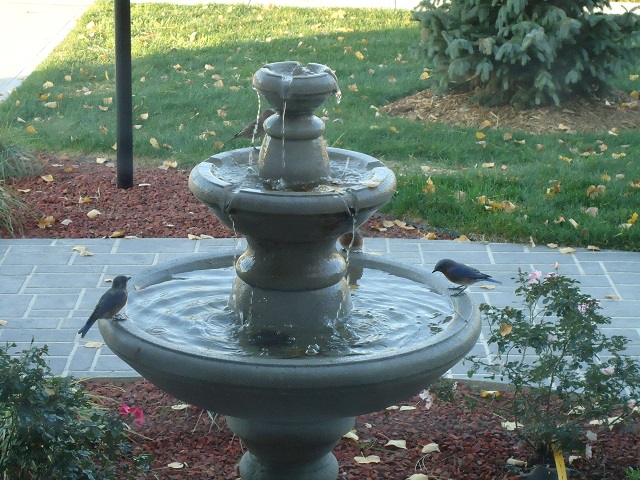
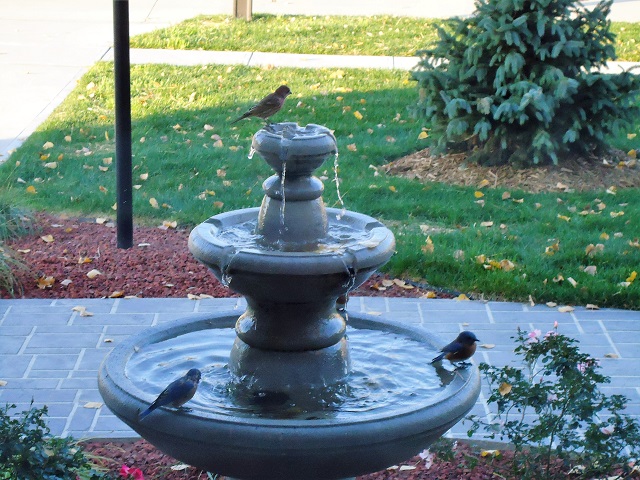
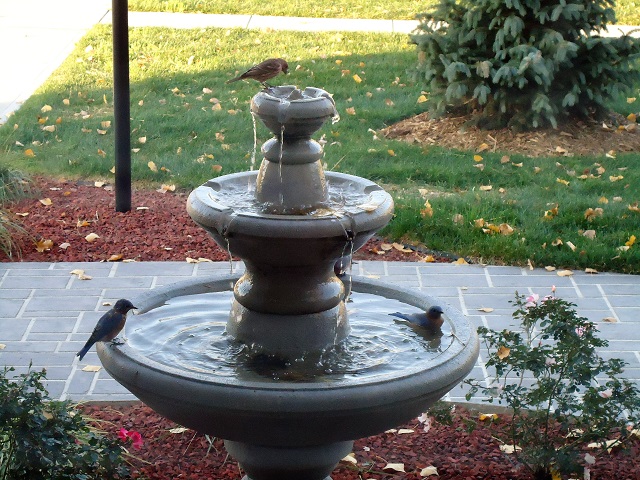
Animals do this. I saw this several years ago when we owned a house with a fountain, which was frequented by more than a couple of species of birds, including Bluebirds. They gradually arrived but were at first tentative about immediately diving in. One would perch on the rim. Another would come along and do the same, maybe drink a little water while watching the other.

Eventually, one would dip its tail feathers in just for a moment. Pretty soon, they would make like ducks.

I guess you could call it the Bathing Bluebird Effect.

What’s Up with the Birds?

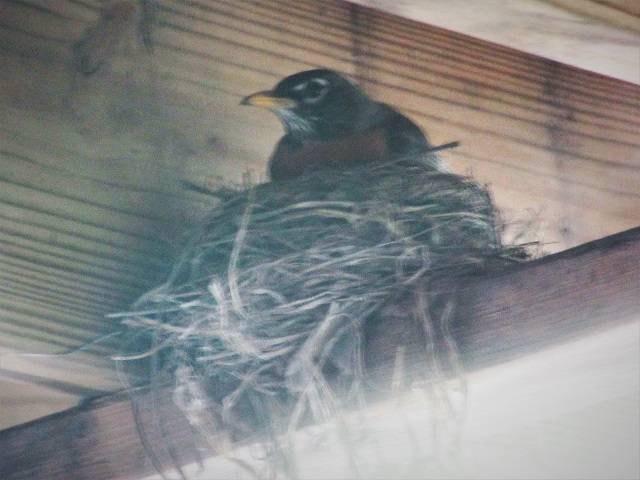
Since my last post about our birds, we’ve had some new developments. The robins actually have a pretty fine nest now under our deck. I managed to get a blurry snapshot of mama robin actually sitting in the nest. I’ve also caught sight of a portly male cavorting with her on our porch rail. Early this morning the nest was empty.

There’s an odd, brownish egg amongst the house finch clutch. I’m not sure what that means, if anything. Maybe it’s the same as brown or white chicken eggs. E.B. White wrote an essay entitled “Riposte,” (in White, E. B. (1999). Essays of E.B. White. New York, HarperPerennial), which treated the difference in some detail. The general idea was that brown eggs are more “natural” than white ones because they are suggestive of the country. However, the last paragraph of the essay mentions a farmer who planned to promote green eggs and who knew of a hen who could lay them.

See that brown egg?

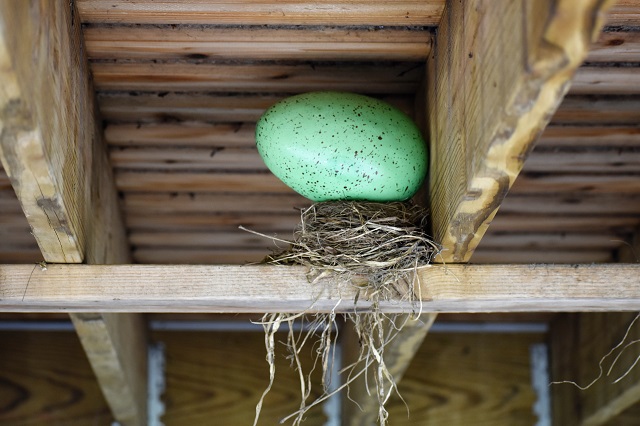
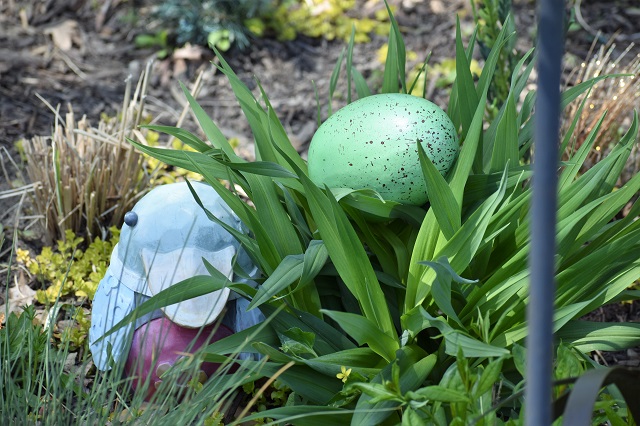
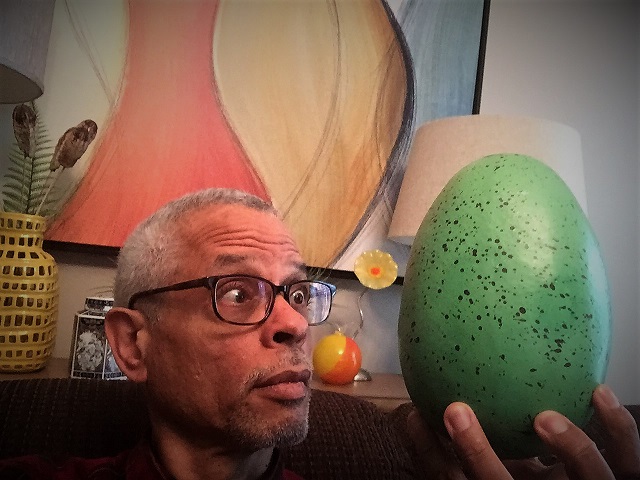
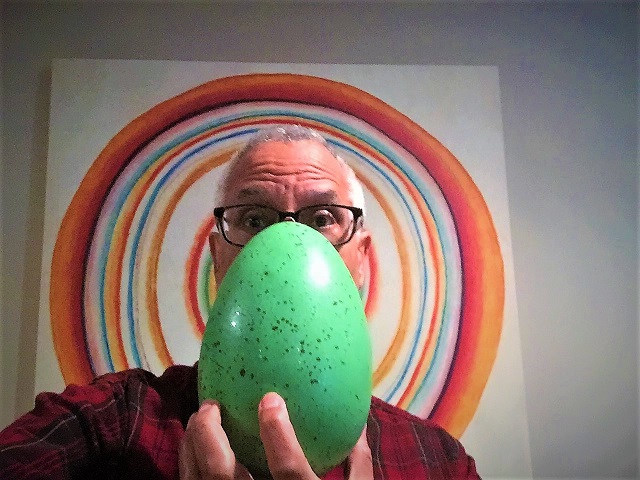
That reminds me. Later today, I noticed some pretty large green eggs, not just in the robin’s nest, but in a few other places too. Robins don’t lay eggs as big as my head and they generally are not green; they’re robin’s egg blue as the saying goes. As for who laid them, I think I spotted the culprit out in the garden.

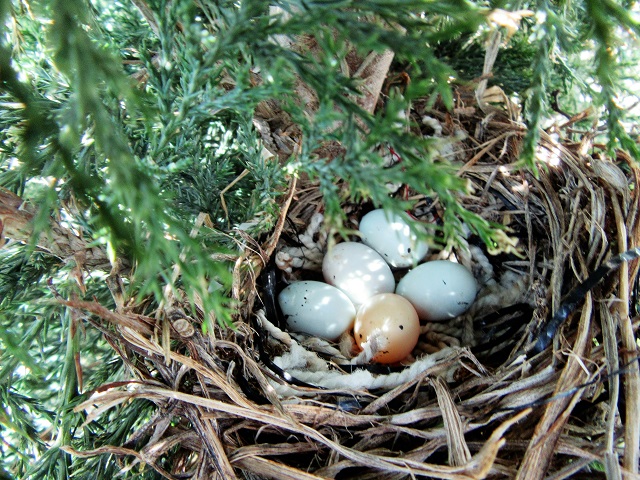
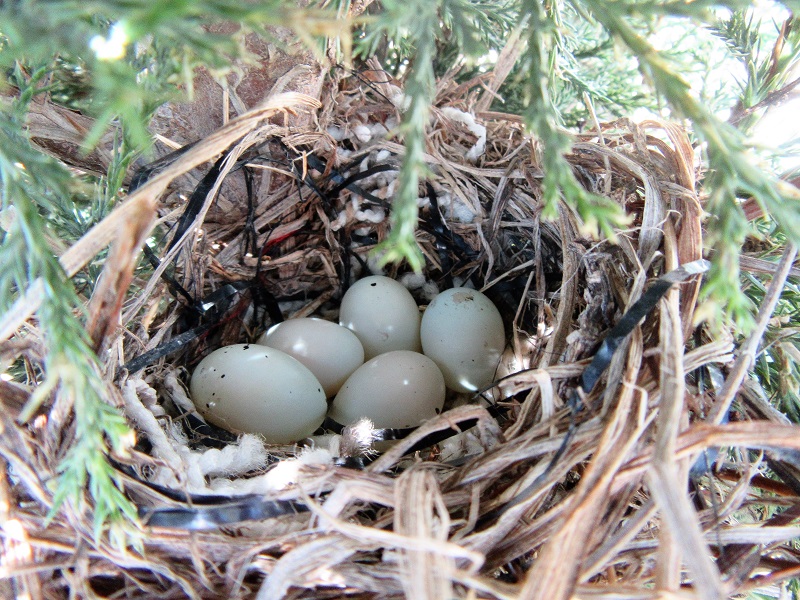
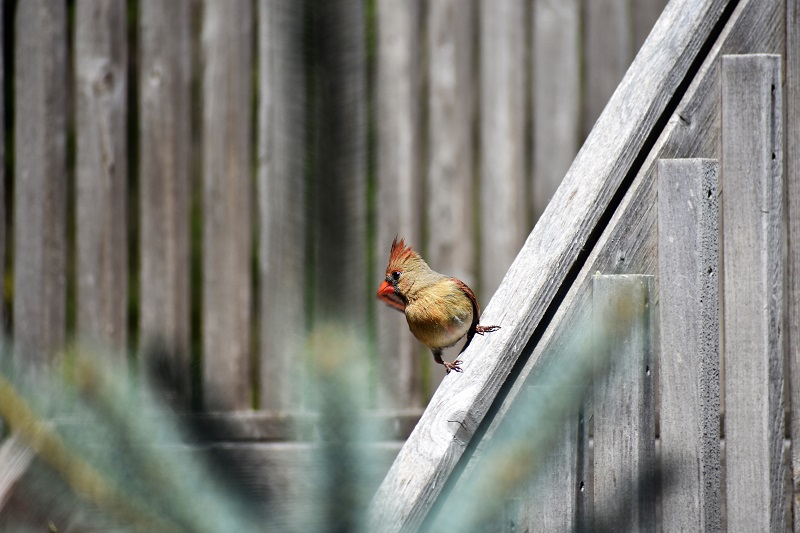
There are still just 3 cardinal eggs. Mama cardinal lets me get pretty close to the nest these days before she thunders off. She tries to hide behind leaf and junk. And papa is stand-offish as usual.

My wife is pretty busy in the garden and pointed out that I don’t have any shots of the pansies. They’re a sure sign of spring, along with the daffodils and tulips—and cavorting birds leading to many eggs.

Pansies; a sure sign of spring!

Spring

I’m coming up on my last 3 days for the academic year and reflecting now that my favorite season is upon us. Spring does that to me, especially now that I’ve been in the phased retirement contract for the last 2 years. I’ll be going into the 3rd and final year as of July.

I just found out that next week I’ll be among those faculty members selected to receive the Excellence in Clinical Coaching Award from the Gradual Medical Education Office at the Leadership Symposium.

I’ve received teaching awards from the residents at graduation time (another sign of spring!) over the years and I’m always grateful for their recognition. The Excellence in Clinical Coaching Award is recognition from my department as a whole, the members of which put together a nomination package including letters from department leaders as well as trainees.

 I’m also humbled by it because I’ve learned a lot from everyone with whom I’ve had the privilege of working, but my favorites are the trainees, including medical students. In fact, I learned from them again in the last week or so. Three talented medical students gave outstanding presentations about issues relevant to all physicians, not just psychiatrists.

They will be excellent physicians. They will teach others. They will lead and it’s a good thing—medicine needs them.

I like the coach idea. I know one of the internal medicine residents thought of me as a mentor. I’m aware of the differences between mentors and coaches as well as the similarities.

Coaches spend relatively less time with learners and the focus of the relationship is usually a set of specific skills which needs to be passed on. Mentors tend to develop longer term relationships and guide learners in broader ways in terms of career goals and more.

However, both mentors and coaches serve as role models, something all teachers do—including trainees.

That’s partly why I feel less troubled about retiring as my time to leave draws nearer. I trust the next generation of doctors and, just like the Supremes song says, “You better make way for the young folks.” It’s my time to leave. It’s their time to live.

Even the birds know that.

OK, Maybe Robins Can Build Nests Anywhere

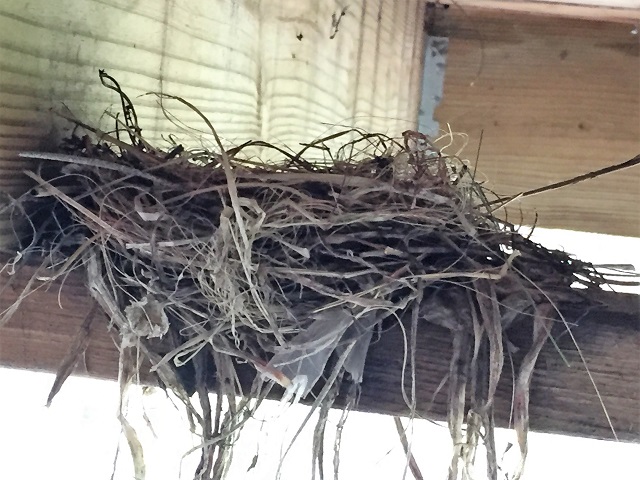
I’ve been making fun of birds who build funny-looking and impractical nests. Maybe I’ve been wrong about the robins, though. My wife alerted me by phone that the robin I joked about in my YouTube video, “Nest Building for Bird Brains,” had actually cobbled together a convincing nest underneath our deck.

I couldn’t believe it. I think the only explanation is alien influence. Their heads are egg-shaped and that’s about the only proof you need.

I figure the aliens get into our dimension via spacecraft through a wormhole, which would appeal to a bird, especially a robin. They love worms! They would just as soon gobble up a worm as poop on your Hostas. Then the alien probes the robin (they got this thing about cloaca probing), inserting an egg as big as my head for crying out loud. This naturally leads to a change in the robin’s central nervous system, leading it to become insane in the bird brain (so to speak) and rendering it incapable of doing the normal thing like building a nest in a tree, so they end up slapping it under a deck, in your lawn mower, on top of your god-forsaken egghead, good gahd amighty!

However, you can hardly call it quibbling when I point out there’s no bottom in the nest—yet. On the other hand, if I were a betting man, I would have bet against it getting built at all.

You can still see the floor board! Ya gonna lay eggs on that?

Our guess is that, at this rate, the floor will be down in no time and eggs will likely be laid soon after that.

Hoorah’s nest if I ever saw one…

We now have three bird nests to keep track of for the next couple of weeks—cardinal, house finch, and now the robin. At this rate, we’ll be lucky to keep up.

Bird Brains Building Nests

I just can’t figure how some birds ever get the nest-building job done. It’s mind-boggling how clueless some of them are. And it’s no wonder—they’re all bird brains trying to figure out something that they obviously don’t have much more than bare instinct to go on.

Robins are some of the worst nest builders around. About 4 years ago, they tried to build a nest in between our deck rail and the house. It was the most hilarious Hoorah’s nest we ever saw!

This year they’re trying once again to build a nest underneath our deck. Don’t they get it? That’s what trees are for.

We’ve got a bird’s eye view of the egg-laying prowess of a house finch and a cardinal, in the front yard and the back yard respectively. We don’t understand how the cardinal lost one of her eggs. She just laid a replacement.

Funny thing about cardinals and house finches. We see the male house finch feeding his mate all the time. The papa cardinal is a rare visitor to the nest; I sometimes wonder if mama has trouble with laying enough eggs because she’s underfed.

And the eggs of the house finches are not what we expected. They’re creamy white, not pale blue. Guide books are not always right, I guess.

We’ll keep checking on the robin’s nest building progress. I’m skeptical, but I’ve been wrong about a lot of things.

Bird Brains Building Nests

Let’s Get Ready to Rumble!

Let’s get ready to rumble! It’s an egg laying contest. The competition is underway and let’s face it—the house finch has the title tails down.

As of last Friday, the house finch had 5 white eggs in the nest, which is a typical clutch. The cardinal is probably going to end up with only two, after losing one egg somehow. Usually, the number is between 3-4.

None of the house finch eggs are the expected pale blue color—all creamy white.

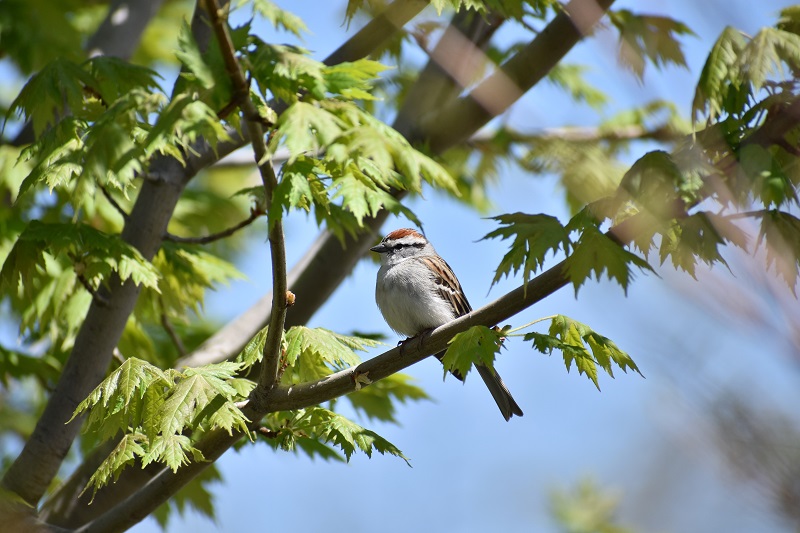
But how many will actually hatch? And more importantly, how many will fledge? Also, it looks like the chipping sparrow will have some commentary about the matter because it continues to hang out and make a lot of noise.

Chipping sparrow has an opinion…

We’ll probably know the hatching result in another 12 days or so. Fledging numbers will take another couple of weeks. We can see the action in the house finch nest from our front window. We can peek into the cardinal’s nest from our back window. The competition is keen.

Anything can happen. Last year, I think a cat might have made off with at least one of the baby robins who hatched from a nest in the same tree the cardinals are in this year. We don’t know for sure if either of the two chicks actually fledged. I’ll keep you posted.

Bird Garden Update

I have some bird garden updates. As of a few days ago, we noticed a 4th egg was added to the front yard nest. I say that because there is a mysterious triad of birds now associated with the loosely woven and frankly untidy property.

I caught a fair snapshot of a house finch male and female which might explain the nest, although I’m still puzzled for a couple of reasons.

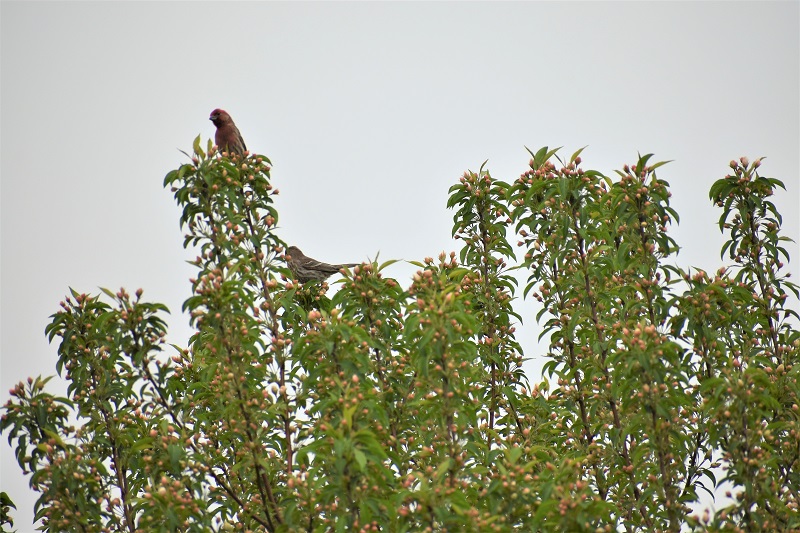
House finch male and female (female in the back and camera shy).

The eggs are white although I’ve read that house finch eggs are usually bluish. The other curiosity is the single chipping sparrow that hangs around and chirps up a storm whenever I get too close to the nest.

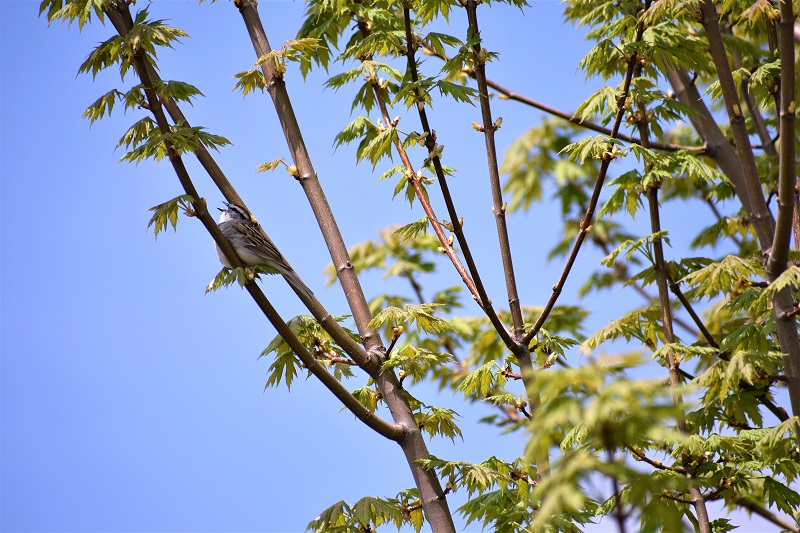
Chipping sparrow raising a ruckus (sounding an alarm?)

I can’t find another nest in any of the other front yard garden trees. What’s the motivation for the chipping sparrow? All three get really fussy whenever I’m out there messing around.

I can see the tree from inside our house through the window. I can’t get a clear picture of the bird sitting on the nest because there’s not enough light through the foliage. But every time it moves it’s head, I can see its beak, which looks sort of thick but it’s in the shadows—I don’t think that’s the sparrow.

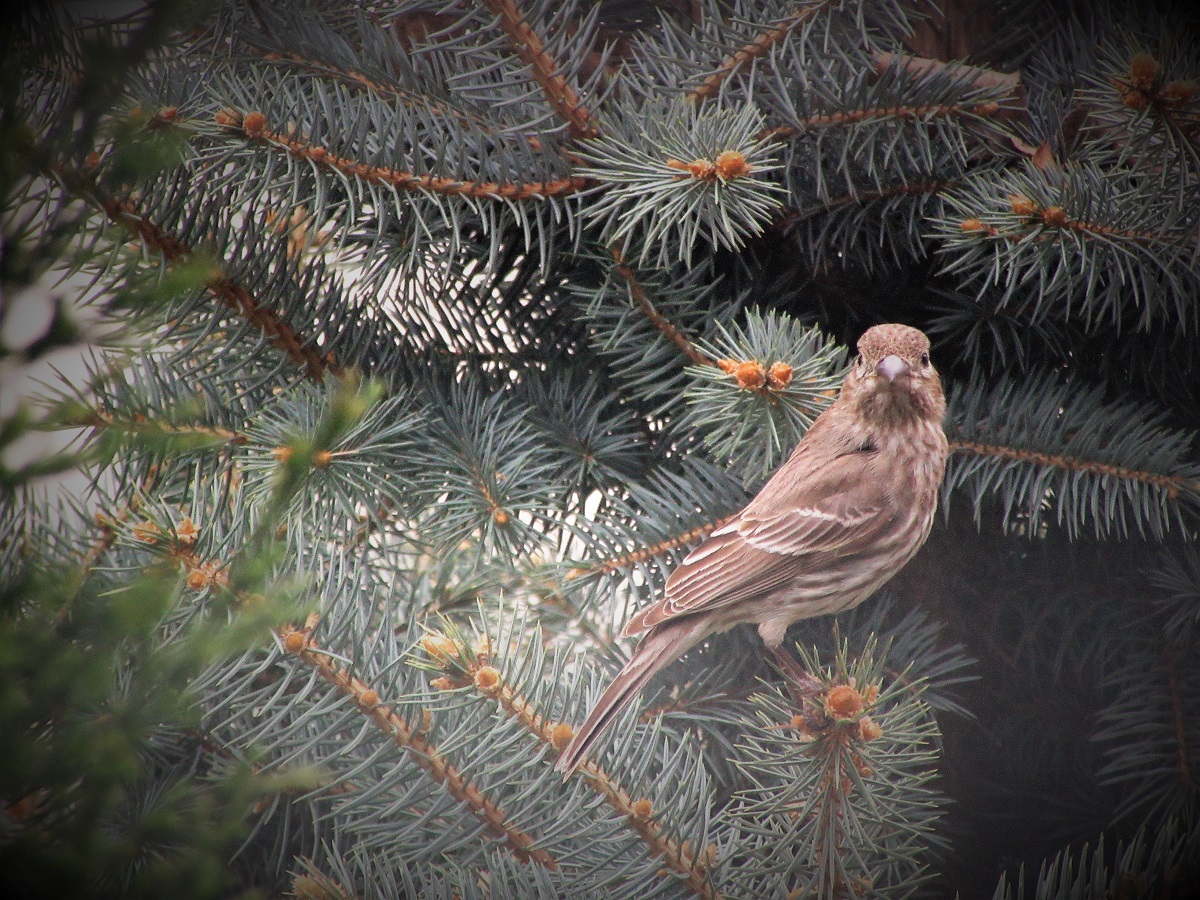
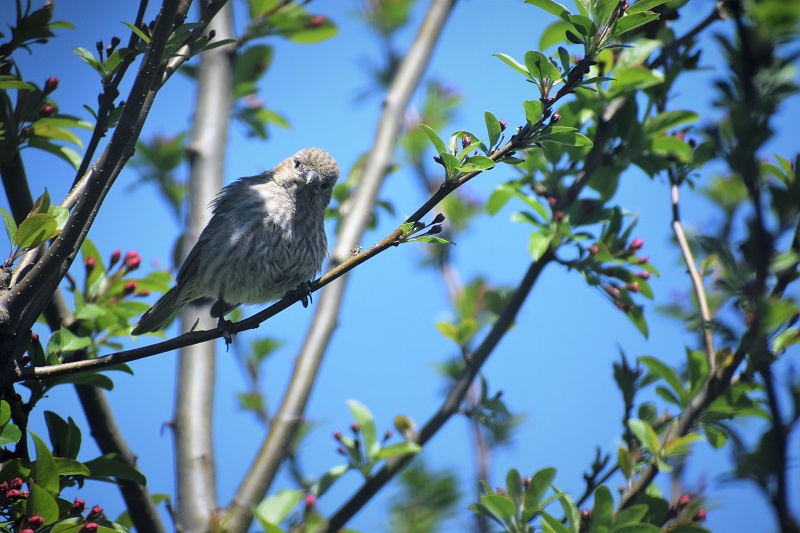
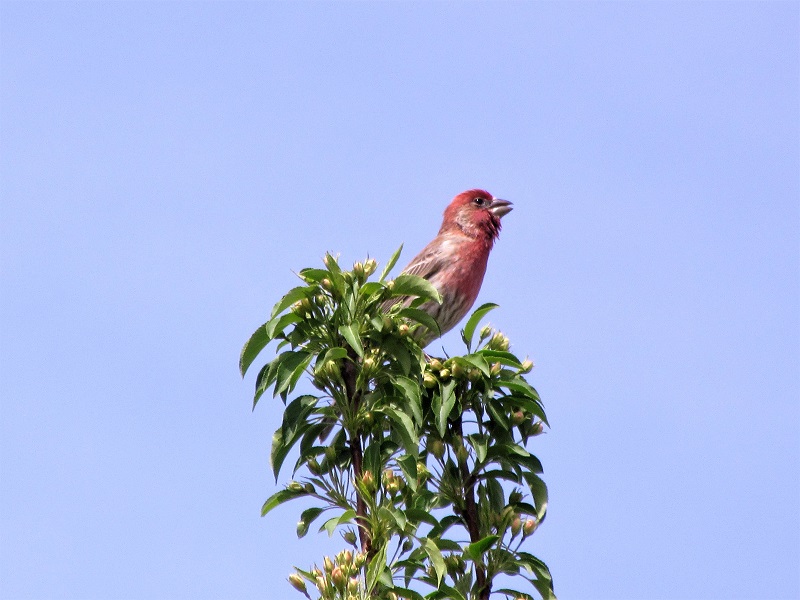
Both male and female house finch have thick beaks. The male is pictured here; the female is brown with a heavily streaked belly.

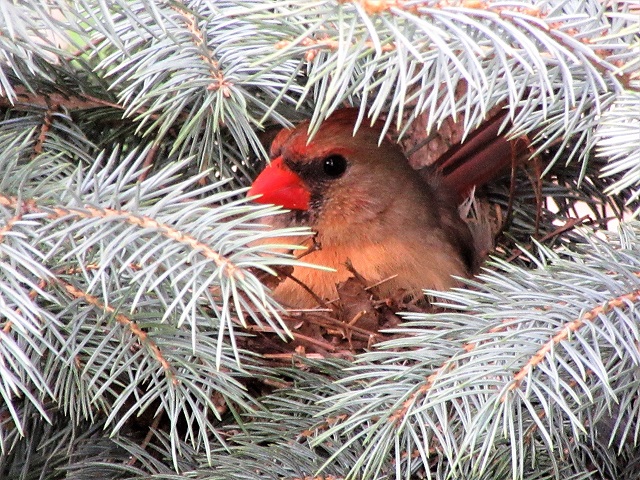
As for the back-yard garden, there’s still only two cardinal eggs left in the nest. Mama won’t let me get too close when she’s sitting on them. She gives me that look, “Don’t you eye ball me.”

Don’t you eyeball me, boy!