Here’s a side note on my recent post about using a smartphone to help you find where you parked your car. I just saw a few news items about something people are calling the “dumbphone.” I gather they’re making a comeback, and not just for old folks.
Hey, I used to have one of those. It was a flip phone. Several years ago, before I retired, residents rotating through the general hospital psychiatry consultation service suggested I graduate to a smartphone.
After I finally got one, I used it basically as a phone and did little else with it for a long time. It was my smart dumbphone.
I gradually added apps to it, including a step counter, epocrates, and whatnot. But I’m not constantly on it playing games and checking the news, mail, and so on.
The battery swelled up on it a couple of years ago, which worried me. But I took it to a cell phone repair shop where the battery was replaced and it’s been fine ever since.
I still use it mainly as a phone. However, I wonder what I’ll do, say, if the battery swells up again. I don’t know if it would make any sense to go back to the dumbphone.
This is a post about how easy it is to forget where you parked your car in a big parking lot, say at the grocery store, and ways to help prevent it. This sometimes attracts the kindness of strangers, which is puzzling because it’s not very clear how helpful they can be in this situation.
But you want to say more than something like, “Oh, that’s too bad, hope you find it before the ice cream melts.”
The other day, Sena forgot where she parked the car at the grocery store. The circumstances were a little unusual. She parked near one entrance to the store and after getting the groceries, left from an entrance on the other side of the store way across the parking lot. The landmarks were all different.
This is how things started: she ran into a guy with his little boy. The guy actually couldn’t remember where he parked his car and was trying to use his car key fob remote to locate it. This is actually pretty common nowadays. I remember leaving the eye clinic a few months ago and hearing a small symphony of beeps from a number of people using their key fob remotes this way trying to find their cars in the large parking garage.
Sena was sympathetic to the guy, but it was understandably really difficult to help him. He eventually found his car using the key fob trick.
Then the situations were reversed. Sena had trouble finding our car. She was roaming about the parking lot, pushing the grocery cart, obviously looking lost. This attracted 4 different persons (including the first guy she met) who were sympathetic and offered advice—mostly on how to use a key fob to locate the car by pressing one of the buttons (probably the lock/unlock although there might be a panic button). They demonstrated it by pressing the key fob button while standing right next to their cars. They suggested holding it far above your head.
This trick usually works best when you’re fairly close to the car because the key fob remote is a transmitter which uses low-power signals. The operating range may sometimes be limited. Sena was probably pretty far away from our car. She actually began to suspect our car had been stolen. She eventually found it by trial and error.
This episode resulted in attracting a number of people who were kind to her. That’ s encouraging since it looks like kindness is often in short supply. On the other hand, it’s not always good to be alone in a large unfamiliar parking lot, perhaps at night, looking lost and surrounded by strangers.
We can’t remember having this problem years ago before the era of keyless fob remotes, which I read was in the mid-1990s. And we didn’t have them until years after that. I guess we were just more careful about noting landmarks in large parking lots.
There are few things to do in order to avoid forgetting where you park.
You can try to find your car using your key fob remote, although the effective range of the signal might be too short to trigger the horn or the lights. And it might not work if the fob remote battery power is low. And if you’re surrounded by a lot of other people hunting for their cars using the same method, you might have a little trouble discriminating which beep is yours. This could become a YouTube meme, especially with different beep tones (like the 5 tones in the movie “Close Encounters of the Third Kind”).
You can pick a landmark which will make it easier to remember where your car is. Many parking lots have large signs with numbers and letters which can help you.
You can take a picture of your car’s location using your cell phone, including more permanent landmarks than just the other cars adjacent to it—which can be driven off by their owners.
You can also use a cell phone with Google Maps or another geolocation app to help guide you back to your car. Just about all smartphones have this feature. You can consult the owner’s manual for instructions for flip phones, some of which have this function. I don’t think car owners’ manuals typically have instructions for how to use the key fob remotes to find your car. At least ours doesn’t.
Sena suggested we send a message to Iowa City Mayor Bruce Teague inquiring about the proposed memorial plaque to James Alan McPherson, Pulitzer Prize winning author and longtime Iowa Writers’ Workshop faculty member.
I can remember only one other time in my life that I wrote a letter to an elected official. I wrote President Barack Obama in 2013, basically complaining about the Maintenance of Certification (MOC) program for physicians. I’m not sure what I expected him to do about it. Like many doctors, I was frustrated about the regulatory requirements from certification boards. I thought they were unnecessary and burdensome.
I received a reply which was completely off topic and probably not written by the President. The letter from “President Obama” didn’t answer or even come close to addressing the concerns about what I thought was regulatory harassment. In fact, I never kept the reply and forgot about it.
But the email to Mayor Bruce Teague was different. We just asked about the timeline on the memorial plaque for the James Alan McPherson Park, which was renamed last year. The celebration and ribbon cutting reveal of the new sign was in early August 2021. The memorial plaque was still in the planning stage. We’ve driven by the park several times in the last year looking for it.
Mayor Teague’s reply came the day after we sent our message. It was definitely pertinent and to the point. McPherson’s daughter Rachel is still looking over the wording on the mock-up of the plaque, considering what to include. After her approval, it would take about 10-12 weeks to complete.
Now that’s a quick and specific answer from a political leader. Mayor Teague also sings.
I was thinking yesterday about Ransom’s Cigar Store in Mason City, Iowa. There are actually a couple of reasons why it’s on my mind now.
The first thing about Ransom’s is that it’s an old pool hall on 120 North Federal Avenue. It looks like it has been there for a century. Decades ago, probably in the 1970s, I played a game of eight-ball with Bart Curran. Bart was the host of Bart’s Clubhouse, which I found out has a substantial Facebook following. Bart’s Clubhouse was a popular kids TV show back in my day and it aired on station KGLO (later KIMT) in Mason City.
Anyway, Bart and I played eight-ball (or was it nine-ball?) and drank a short beer. He was shorter than I imagined. He was a real nice guy. I think he asked me what my dad’s name was and when I told him it was John, he looked a little doubtful and said something like “Not the actor John Amos?” I don’t remember who won the pool game. It’s unlikely to have been me.
The second thing is, I searched Ransom’s Cigar Store on the web and found a couple of links to something called Ransom’s Pleazol. I can’t find the word Pleazol in any dictionary, including the Scrabble Dictionary. If anyone knows what that means, please drop a comment.
I’m going to chime in mainly to show a few graphics I found which I think send a clear and simple message. Before I get to that, I just want to mention a few anecdotes to show how little hands-on experience I have with guns.
My earliest memory of any contact with firearms is in early childhood. My dad and a friend came home from a hunting trip with some rabbits for dinner for the family, which included my younger brother and my mother. I don’t know who cleaned or cooked them. I’m pretty sure my mom would not have had anything to do with them. I got my first taste and didn’t like it and said so to my dad. He introduced me to the word “gamey.” I didn’t know meat could taste gamey. The other thing I got from that meal was a mouthful of buckshot. I silently vowed I would never eat anything like it again while I lived.
My next encounter with guns was a YMCA program for kids to learn how to shoot. I might have been in my early teens, maybe even younger. We were given BB guns and instructed to do some target shooting. The paper bullseye targets were set up several yards away. I took many shots and collected my target to show the instructor.
I thought I hit it once and pointed to the hole. The instructor looked at it critically for a few seconds and then told me kindly that the hole was where the pin was stuck to fix the target to the wall. I never touched another gun.
Fast forward to when I was a third-year medical student getting through my clinical rotations at the University of Iowa. In 1991, a physics graduate student named Gang Lu shot and killed 6 people on campus including himself, wounded another rendering her paralyzed from the neck down, all apparently because he was not chosen to get an award for his dissertation. I remember feeling shocked when I read about it in the newspaper.
Now let’s move to some graphics I found at a website maintained by The University of Sydney, GunPolicydotorg, International firearm injury prevention and policy https://www.gunpolicy.org/. It makes it easy to put together comparison statistical graphics on things like gun violence. I compared the United States to New Zealand, Australia, and Canada. Click the next few links in order to get the message. In my opinion, I think the last one is a consequence of the first few.
The jumping worm invasion is the big news these days. This is a follow up to the post I wrote on May 19, 2022. I found this article, “Invasive jumping worms now in 34 states—including Iowa.” It was posted by an Indianola, Iowa outdoorsman named Tom Charlton.
The most interesting thing about this article is the jumping worm joke at the end. I’ll have to do this in stages. First, he prefaces this joke with the one about “What’s worse than finding a worm in your apple?” And I can’t help but think he’s got a different version than the one I know. He says “Of course, we all know what’s worse than biting into an apple and finding half a worm.”
I don’t know what would be worse than finding half a worm. In fact, this actually happened to me. I was a young man living at the YMCA in Mason City, Iowa. That was back in the days when you could rent a single occupancy sleeping room there on the cheap. There was an old snack vending machine there and I got a Butterfinger. I bit into it and found—half of some kind of little worm. Spoiler Alert: the worm half was doing something typical for worms. The answer is below.
By the way, that Mason City YMCA was placed on the National Register for Historic Places in 2002 and has been renovated into the River City Apartments, a low-income housing resource. I don’t know if it still has snack vending machines.
I also can’t think of anything worse than finding half a worm. One worm joke site says “Two worms.” Somehow, it doesn’t have the zing of the “half a worm” version.
I thought the joke (which has been found in print since 1911) went more like: “What could be worse than biting into an apple and finding a worm in it?” The punchline is “finding half a worm in it.”
In the next sentence, Mr. Charlton writes: “…but do you know why the young boy thought the jumping worm would taste like chewing gum?”
I really didn’t get this. I googled it and couldn’t find anything about it. Then my wife, Sena, did a web search on Bing and solved the riddle immediately. She gave me a hint which helped: think of a brand of gum.
It’s actually an old worm joke. It’s very similar to Mr. Charlton’s joke, except it leaves out the word “jumping.” Think of a brand of chewing gum and you’ll get it. It’s not Trident.
The punchline is “Because they’re Wrigleys.” I got sidetracked into overthinking it because it was about jumping worms.
That should have made coming up with the punchline easier. Thank you, Mr. Charlton!
The title of the post is “Mysteries in History,” and before I chose it, I realized it had a familiar ring to it. It’s from Men in Black II. It’s an imaginary, cheesy, very low budget TV series narrated by Peter Graves in the movie. And it’s actually the perfect title for what my wife and I think about the Mason City, Iowa YWCA not being on the National Register for Historic Places. It’s a mystery in history which is anything but cheesy. I mentioned it in my previous post about the Mason City Ys.
I asked the State Historical Society of Iowa about it. It turns out it has been deemed eligible twice for nomination to the National Register, in 1991 and again in 2003, which was a year after the YMCA was added to the list.
The Mason City YWCA has never been nominated. Why it has never been nominated is the mystery in history.
It’s not a simple matter to get a building on the National Register. The process is outlined on the State Historical Society of Iowa web site. Unless you’re a professional historian, it’s a tough project and can take at least a year to accomplish.
I found a 36-page form on the web which documented the approval of the Mason City YMCA as a historic site fit for the National Register. It’s minutely detailed and I imagine it took a year just to complete the form itself, not to mention all the other hurdles you have to negotiate. The photos bring back memories of when I lived there as a young man. You could actually live in small, single occupancy dormitory rooms. You could do that at the YWCA as well, once upon a time.
There are 2 Artists who bought the YWCA building last year. It’s 100 years old and the place needs a lot of work. There’s a Trulia entry on the web which says it has housed a health spa, an intermediate care facility for people with intellectual and developmental disabilities called One Vision, a Women’s shelter and the list apparently doesn’t stop there.
A couple of articles say that one of the two new owners, Elisha Marin, filmed his music video, “Shining Out,” in an abandoned YWCA. They don’t say which one, but I wonder if it’s the Mason City YWCA. It would fit the long and winding story.
The Mason City Public Library (my favorite place when I was a kid) has a web page with a historical timeline indicating that the YWCA was built in 1918. The YMCA was dedicated in 1927 and placed on the National Register in 2002. I think a lot of the historical documents which helped get the YMCA listed might also prove the YWCA should be listed too.
I found another place called Five College Compass Digital Collections, which also has a ton of documents on microfilm about the Mason City YWCA. It was difficult to navigate and some of the pages were rotated, making them hard to read unless you can bend your head 90 degrees. You can click a button which apparently flips the pages upright, but transforms the text into something that looks like a foreign language.
You can get technical assistance in getting a property listed. The assistant would be available for 24 hours total. You can apply for grants, which can help with some of the expenses. It looks exhausting, though. Hey, I’m the kind of guy who flunked history.
It would sure be nice to solve this mystery in history. Maybe the 2 Artists will consider it. I wish them luck.
The annual Kickball challenge between University of Iowa Department of Psychiatry Residents and Faculty is coming up in June. You know what that means.
Losers suspend the winners’ trophy in Jello. Somebody did that when we played Matball several years ago. If you need a recipe:
Matball was the forerunner of Kickball in the department. I think the Kickball rules are here. Federal law says you have to play in 95-degree heat with insane humidity driving the perceived temperature to slightly above that on the surface of the sun. Other rules:
If the ball melts, faculty wins.
For every point the residents score, faculty automatically score 5.
Faculty may tackle the base runner at any time.
If it rains, faculty win by 10 points.
The thing to do is to recruit Sasquatch for your side, who will always boot the ball into the next county. Bring many replacement balls. Sasquatch will bring the beef jerky.
The games are fun to watch. Residents jumping over faculty; Faculty collapsing from heat stroke.
I never played.
I’m trying to recall whether faculty ever won a game. I don’t think we ever did. I think that’s why the trophy ended up in Jello.
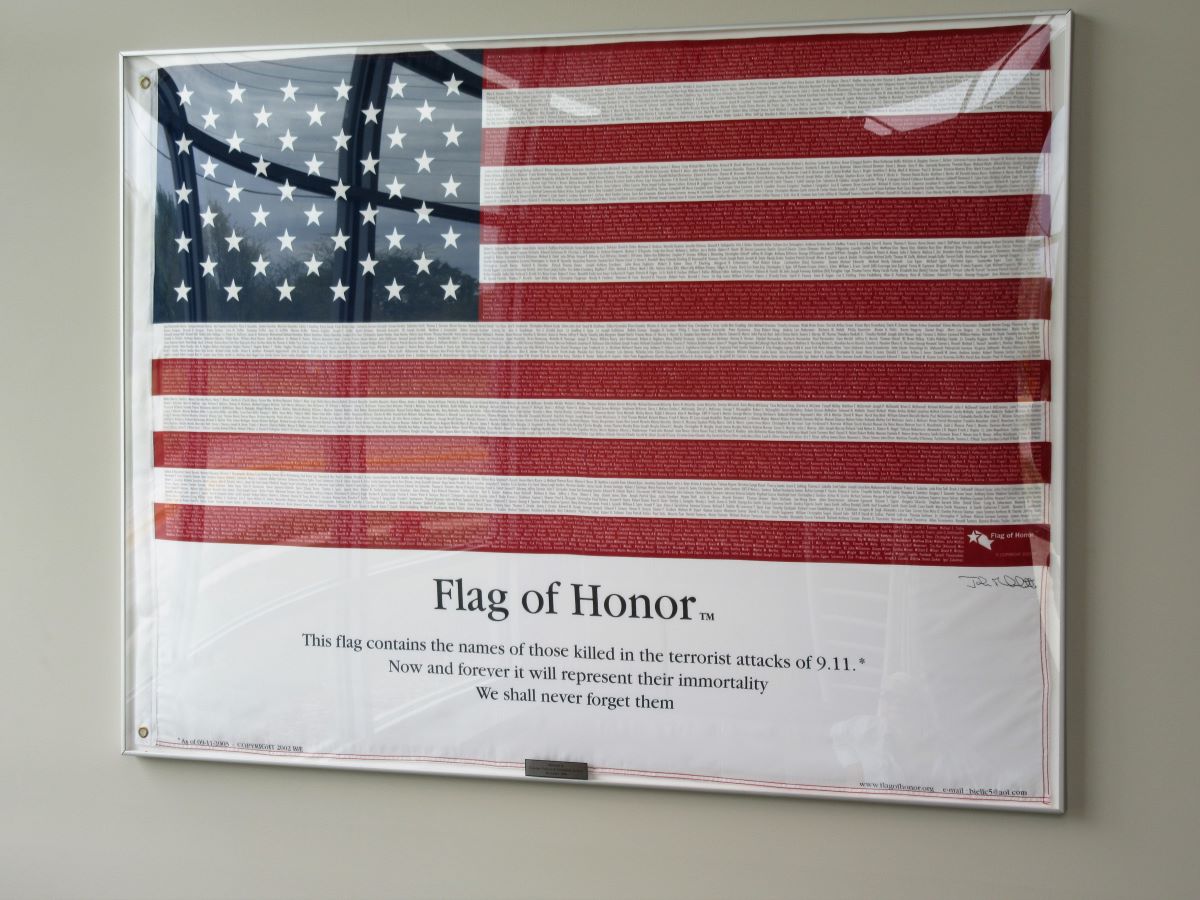
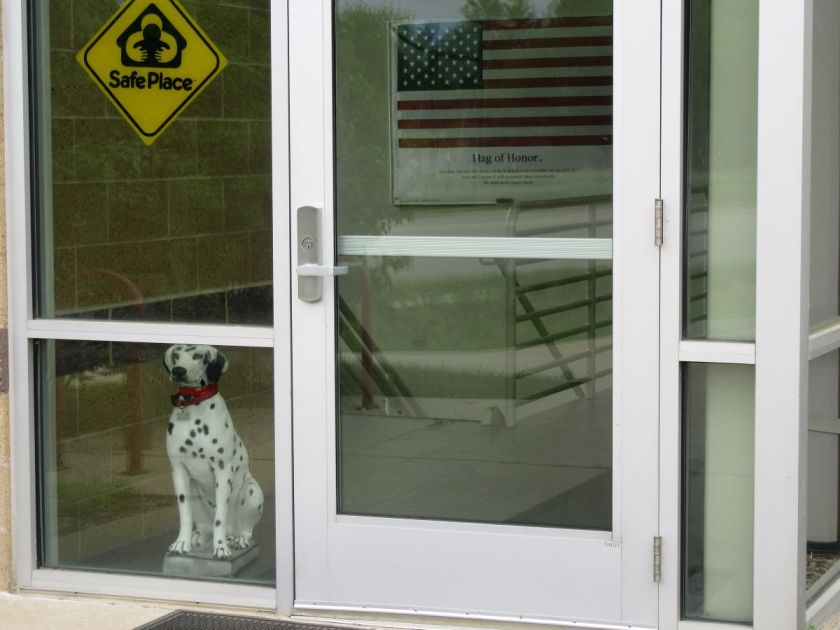
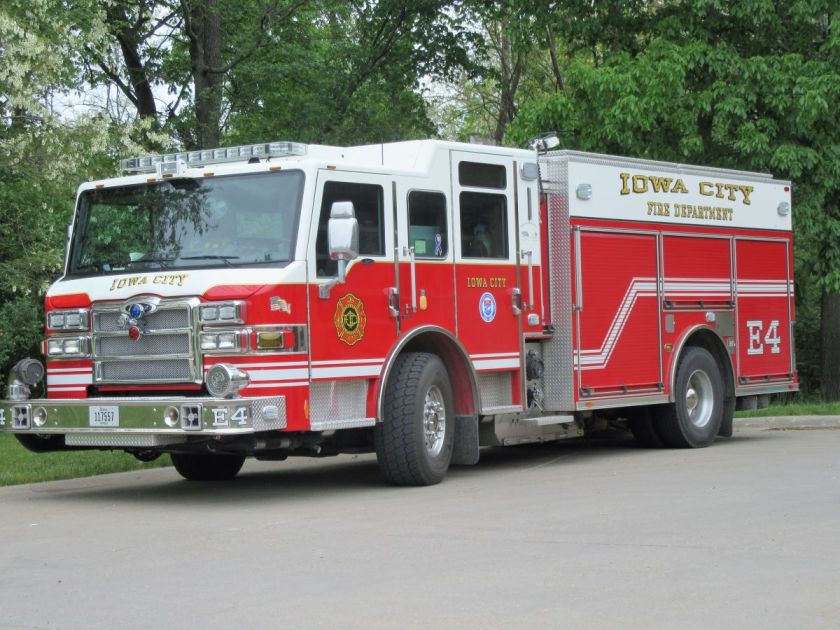
We took a walk this weekend on Scott Boulevard and eventually found our way to Fire Station No. 4. At first, we were struck by what looked like a real Dalmatian apparently sitting just inside the door. It was a pretty good sculpture. Just behind it was a large American Flag hanging on the wall. Below it was the title “Flag of Honor.”
One of the firefighters noticed us and welcomed us inside. He talked a long time about the Iowa City Fire Department and what they did. They responded to a lot of medical calls. In fact, those were the most frequent calls, fires not so much. He graciously answered our questions, including the one about The Flag of Honor on the wall. It’s to honor the victims and the heroes of the September 11, 2001 attack on America.
Later, I found out more on the web about the Flag of Honor. Over 800,000 Flags have been distributed across America. They’re in many places: public buildings, private homes, police and EMS stations, and firehouses.
I remember where I was on September 11, 2001. I was running up the stairs from the lower level to the first floor. I think I had just finished a psychiatric consultation and I was probably on my way to another one, or to my office. It was my usual routine. Like most general hospital psychiatric consultants, I was a lot like a firefighter, going from one urgent consultation to another, to the critical care unit, the emergency room, and others. My pager was like a fire alarm and off I would go.
I was on the stair landing just going up to the first floor. The stairs overlooked a lobby and the television on the wall was showing a video of one of New York City’s Twin Towers on fire, smoke all around it.
I stopped in my tracks and watched, not comprehending the scene. I can’t remember if the volume was high enough for me to hear the reporter. I don’t think it was. I just saw the fire and the smoke and at that moment I didn’t know what happened. That news I wouldn’t hear until later.
And then much later, in the summer of 2017, Sena and I took a vacation in New York City. Like many tourists, we saw the reflecting pools and Sena took a snapshot of me by the Callery Pear—the Survivor Tree.
The firefighter finally had to excuse himself, because there was somewhere he had to go, something he had to do.
He had probably been busy when we showed up, remarking on the Dalmatian which looked so lifelike, taking pictures of the Flag of Honor, asking questions about what Fire Station No. 4 does, listening to his answers, admiring his patience, his sense of humor, his sense of duty—and thanking him for all of it.
I read a short article, “The case for pursuing a consultation-liaison psychiatry fellowship” by Samuel P. Greenstein, MD in Current Psychiatry (Vol. 1, No. 5, May 2022). After 3 years as an attending, he found his calling as a C-L psychiatrist, especially after getting teaching awards from trainees. But when he applied to academic institutions for position as a C-L academic psychiatrist, people kept advising him to complete a fellowship training program in the subspecialty first. He gave it careful thought and did so, even he called it going “backwards” in his career.
On the other hand, he believes C-L fellowships will help meet the challenges of addressing rising health care costs and improving access to what most people see as the critically important goal of providing access to integrated mental health and medical care.
I’ve been retired from consultation-liaison psychiatry for two years now. I get an enormous sense of achievement on the rare occasions when I hear from former trainees who say things like “For me you were…one of the most outstanding attendings I had at my time at Iowa.” And “I can at least take comfort that University of Iowa is still at the forefront of psychiatry.”
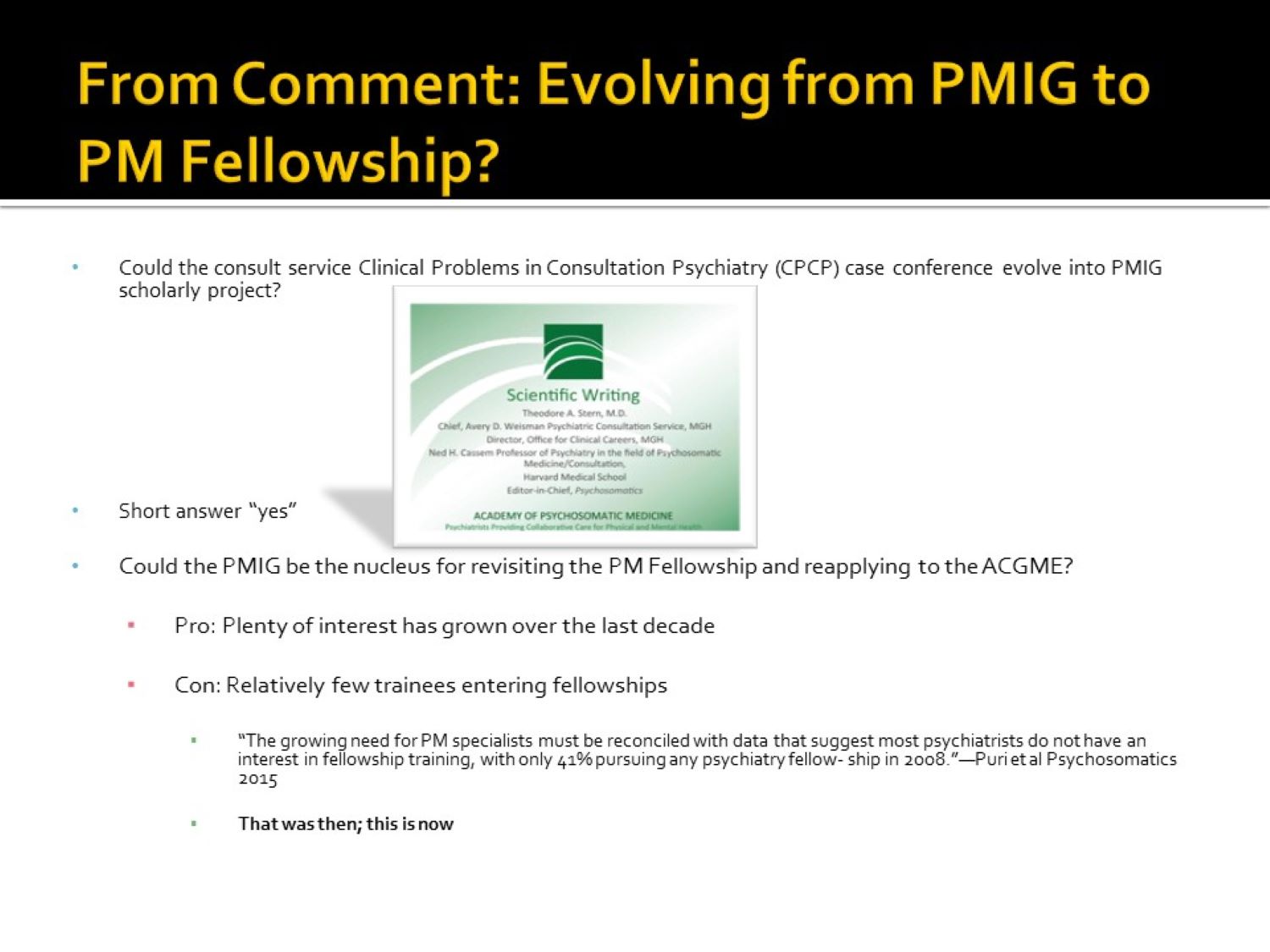
Several years ago, one of the residents suggested starting a Psychosomatic Medicine Interest Group (PMIG). This was before the name of the subspecialty was formally changed to Consultation-Liaison Psychiatry in 2018. I know many of us were very pleased about that.
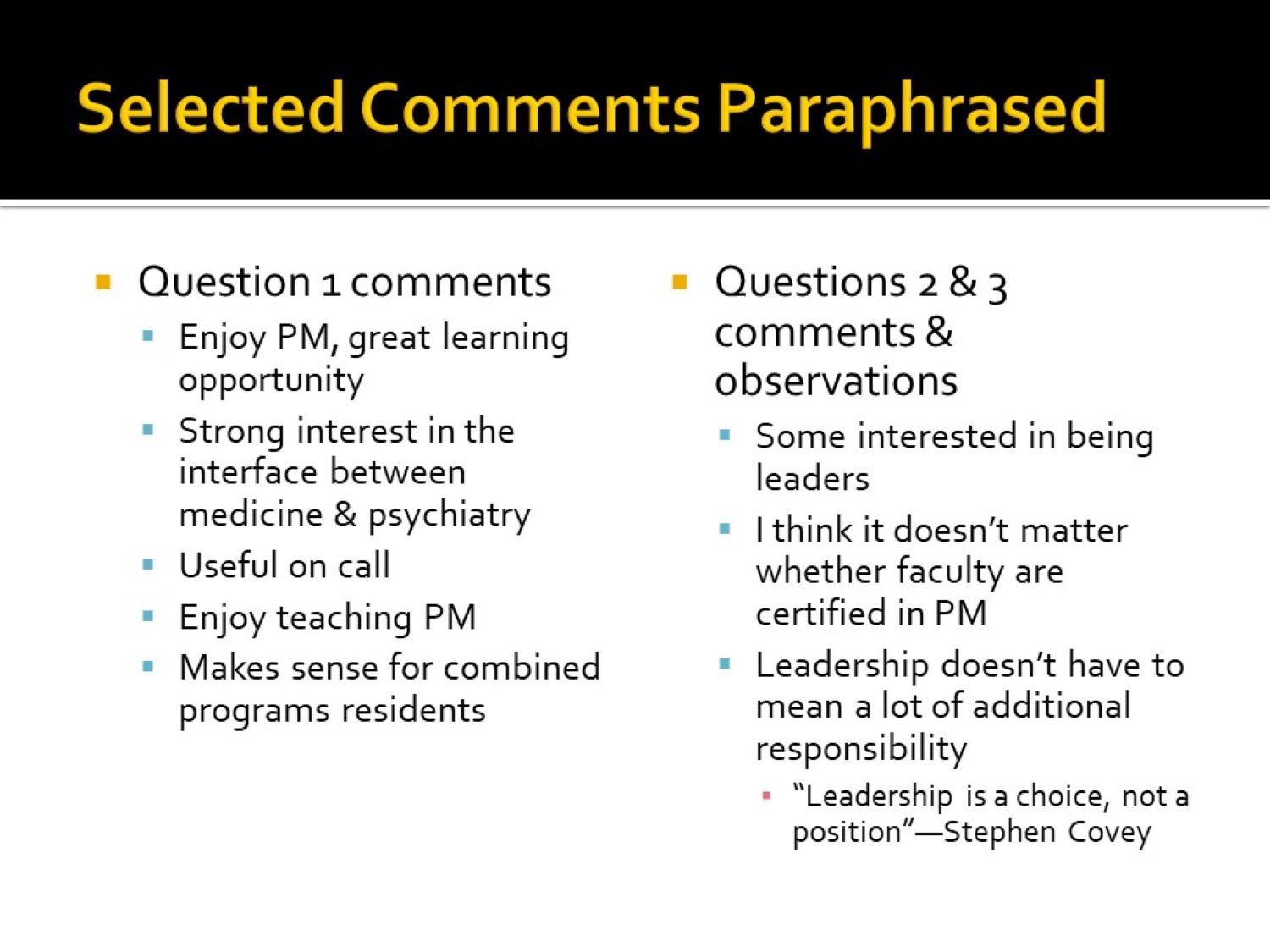
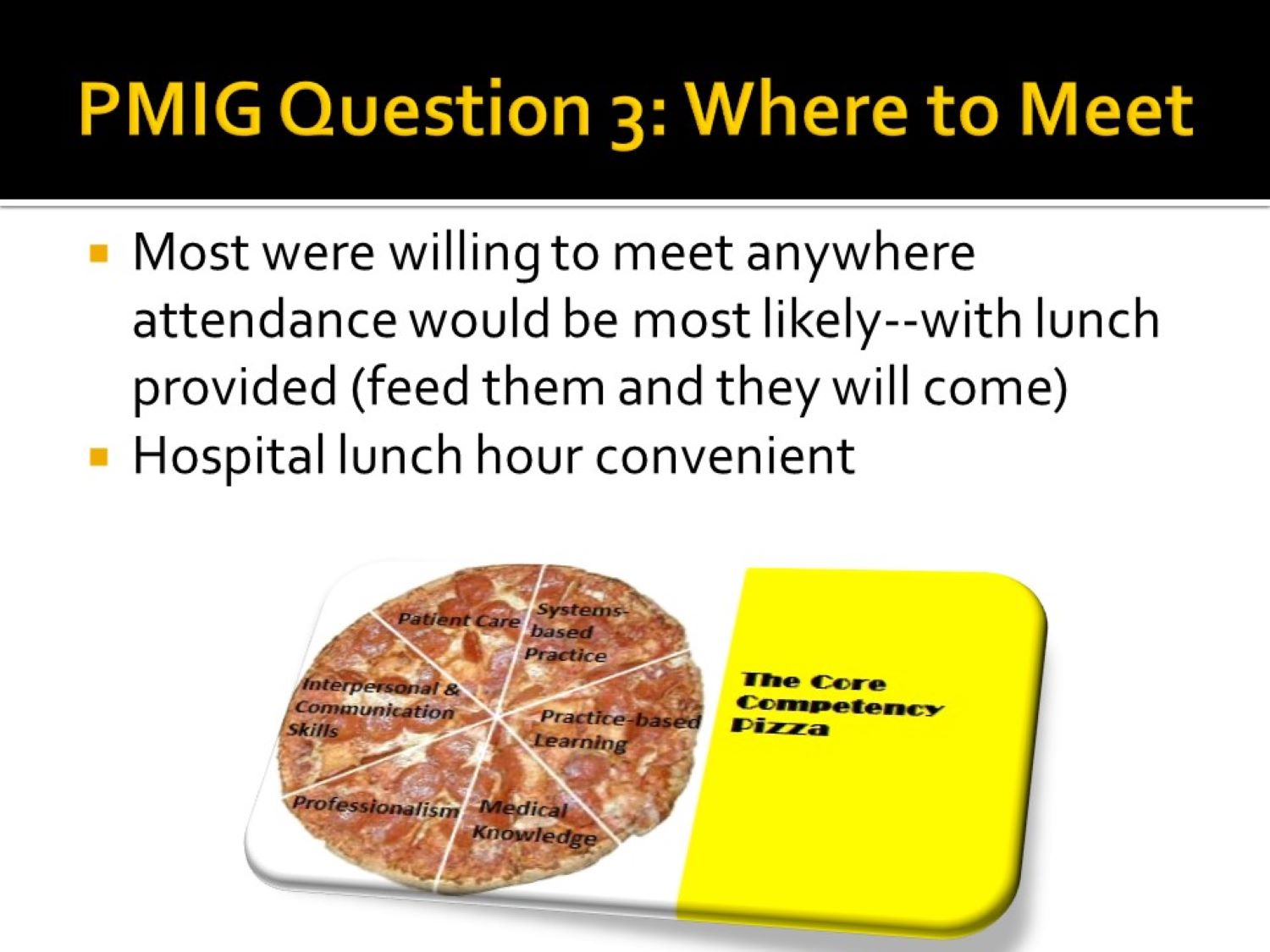
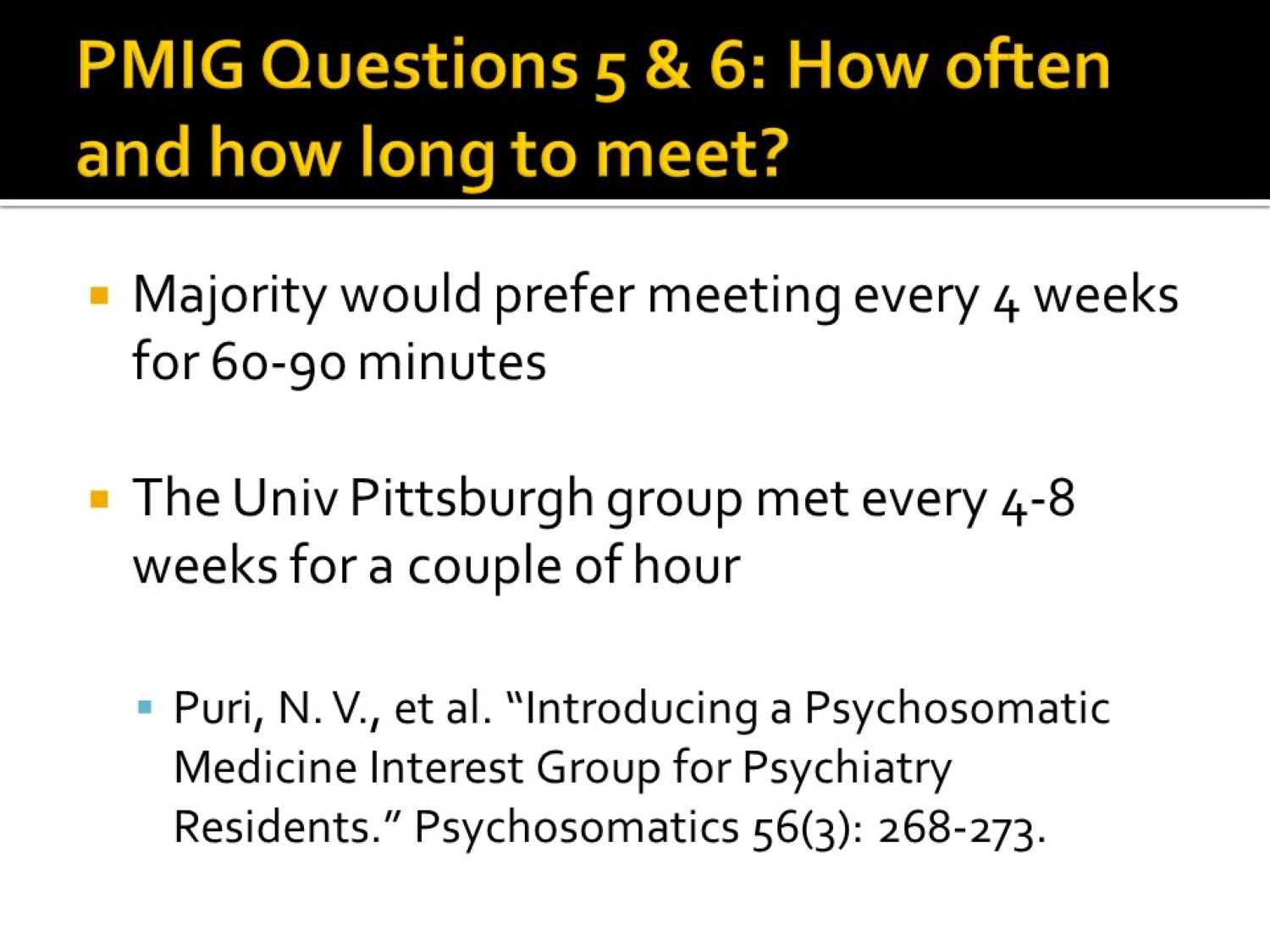
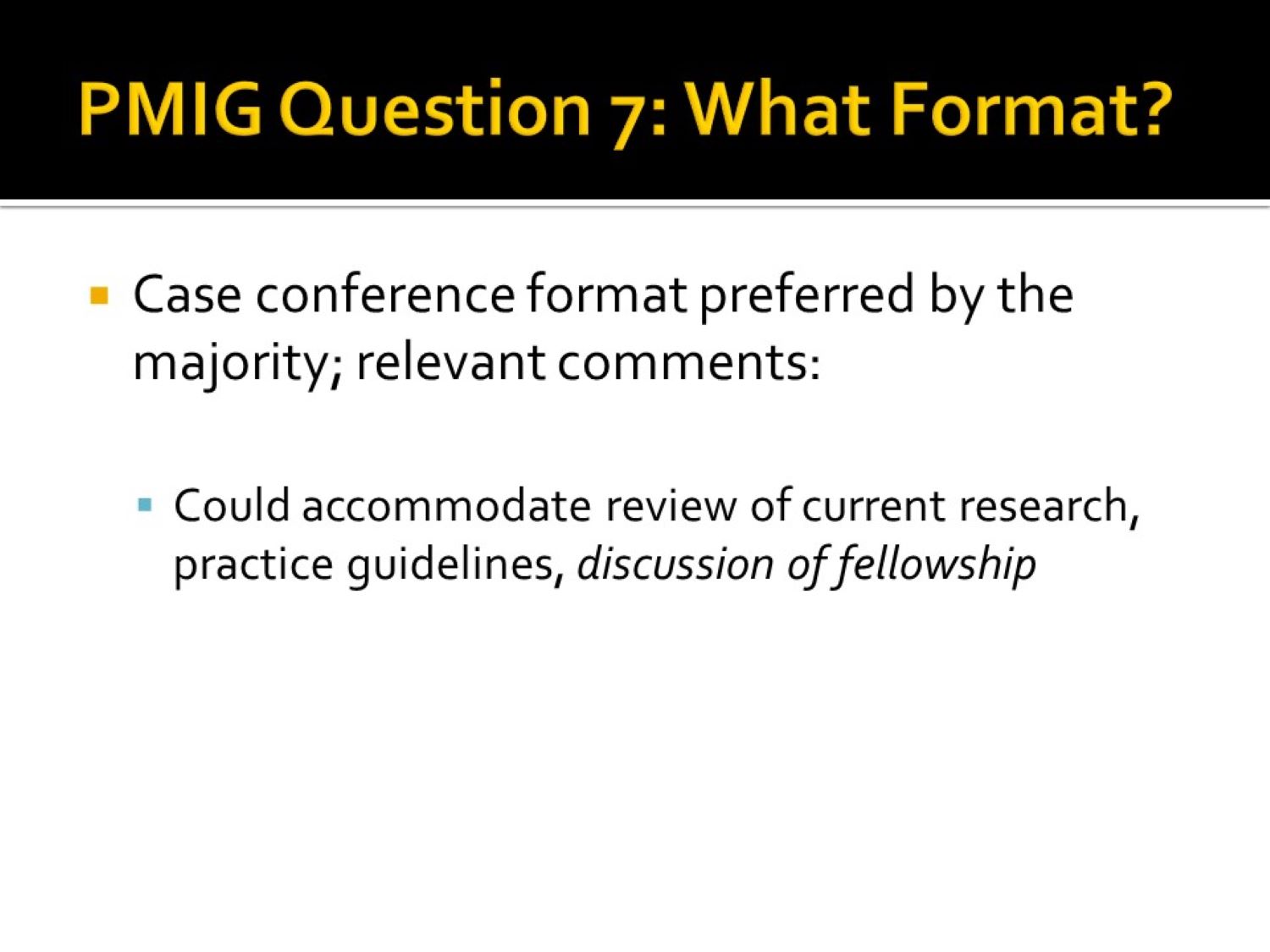
I sent a short survey (see the gallery below the slide show) to the faculty and residents in an effort gauge support for the idea and readiness to participate. I used a paper published at the time to guide the effort, (Puri NV, Azzam P, Gopalan P. Introducing a psychosomatic medicine interest group for psychiatry residents. Psychosomatics. 2015 May-Jun;56(3):268-73. doi: 10.1016/j.psym.2013.08.010. Epub 2013 Dec 18. PMID: 25886971.).
You’ll notice on slide 4 one faculty member’s comment, “I think it doesn’t matter whether faculty are certified in PM.” As Dr. Greenstein discovered, it probably does matter, at least if you want to be board certified.
I was initially certified by the American Board of Psychiatry & Neurology (ABPN), but I objected to the whole Maintenance of Certification (MOC) program, as did many other psychiatrists. I eventually declined to continue participating in the MOC process. However, I notice that the Delirium Clinical Module that I and a resident put together is still accessible on the ABPN website.
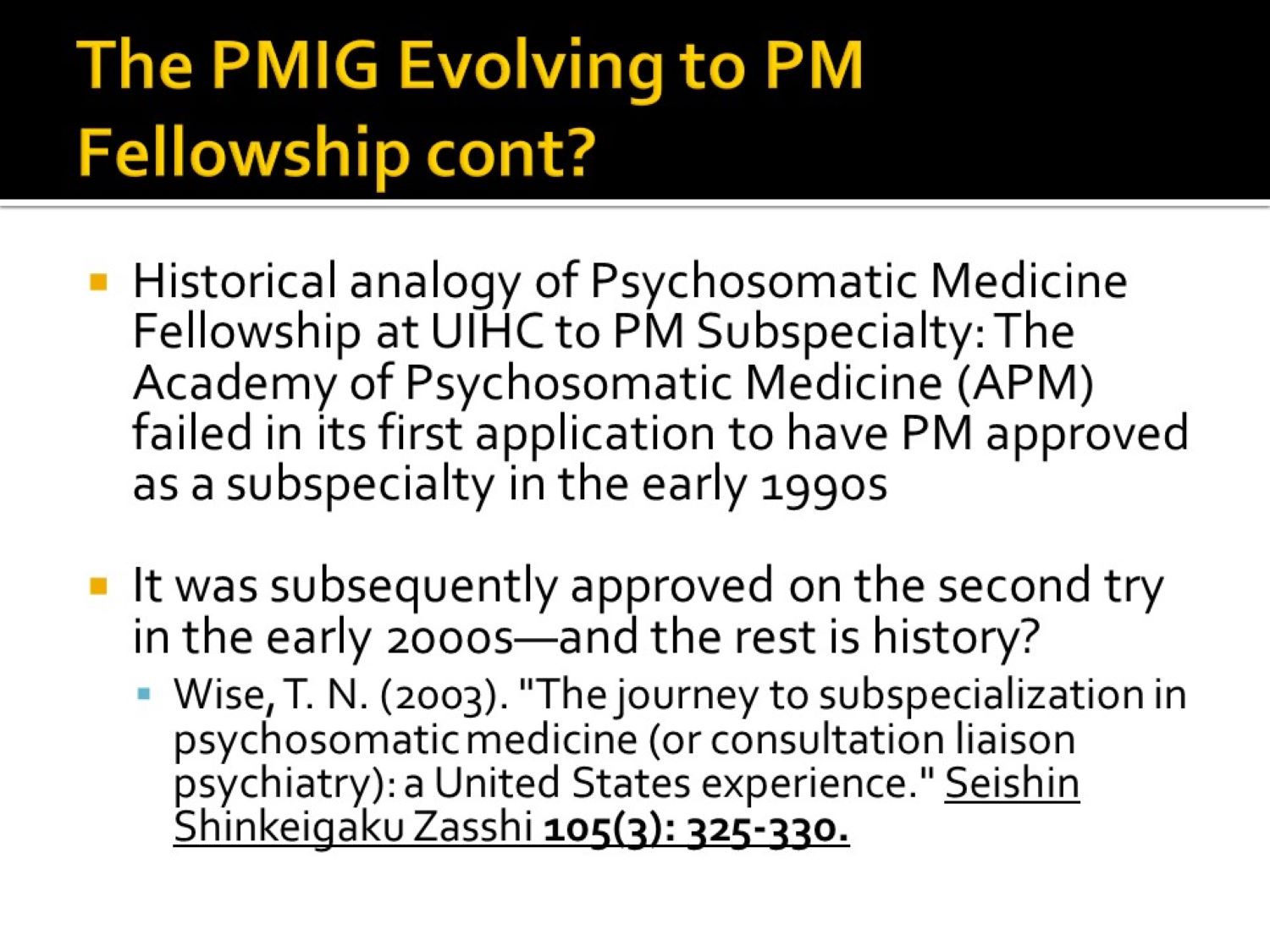
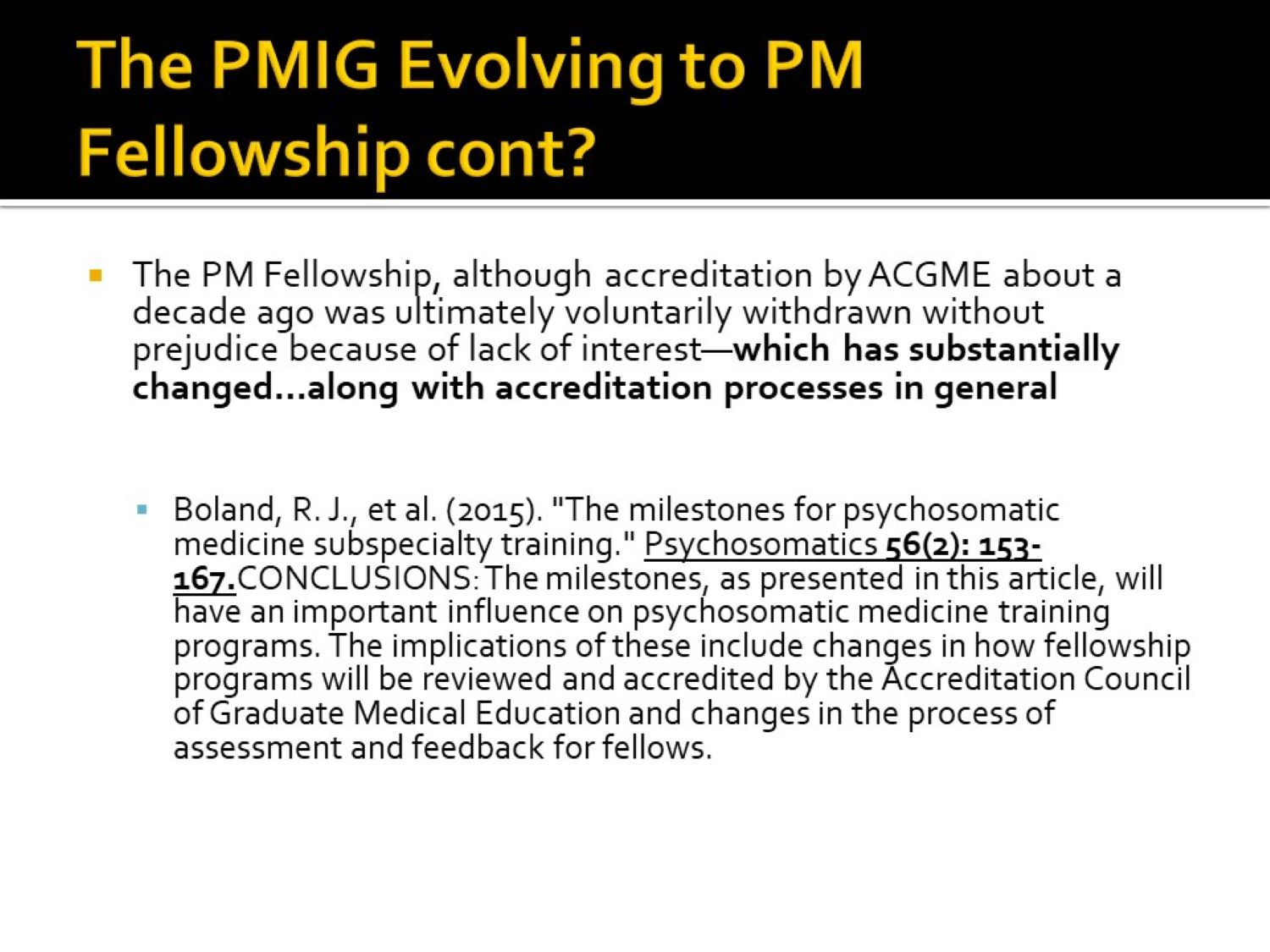
Although response numbers were low, there was clearly an interest in starting the interest group. There was also an incentive to reapply to the ACGME for approval of a Psychosomatic Medicine (Consultation-Liaison Psychiatry now) fellowship.
My attempt years earlier had been frustrating. While it was approved, I couldn’t attract any fellows, forcing me to withdraw it without prejudice (meaning another application for approval could be attempted). Fortunately, that situation changed later. The Psychiatry Department at The University of Iowa now has an early career C-L psychiatrist who graduated from the reinstated C-L fellowship.
As the saying goes, “What goes around comes around.” Although the origin of that saying might have originated in the 1970s, at least one person thought his grandmother had her own version in the 1950s: “You get what you give.”















 Go Retire Psychiatrist