The Monsters

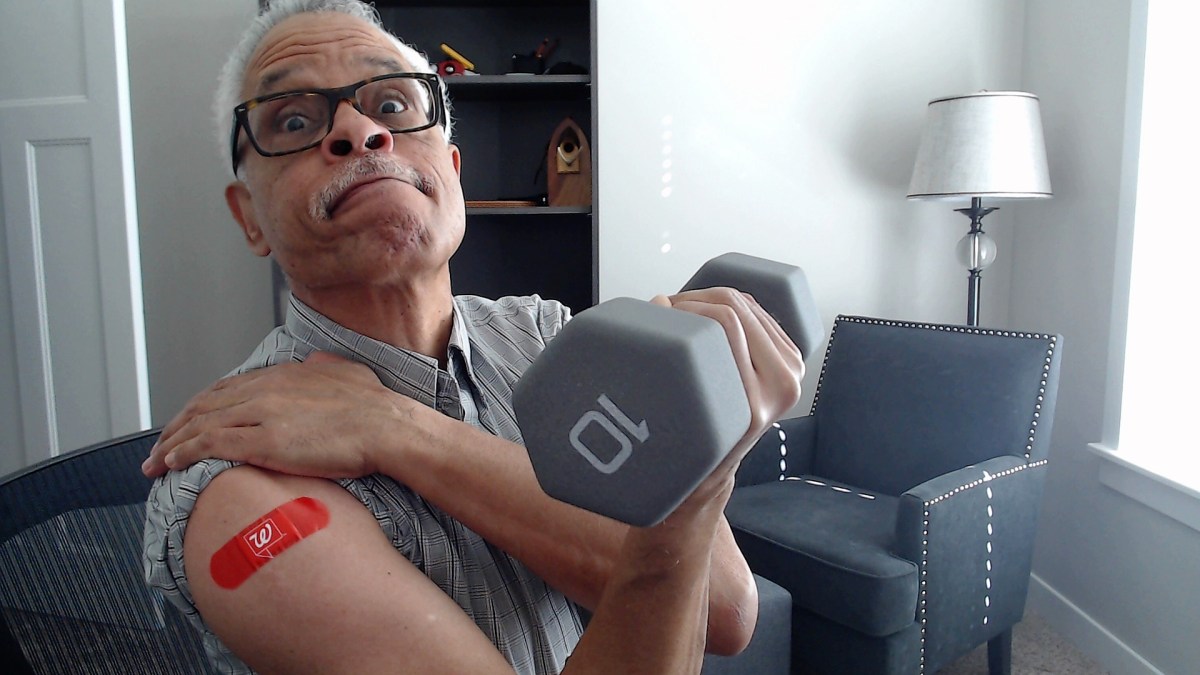
Sena and I got our annual flu shots last week, and I also got a pneumonia vaccine. We’ve been fully vaccinated against COVID-19 since earlier in the year. Now we’re waiting for the word on whether we’ll need COVID-19 vaccine boosters. We’ll probably know more about that by the end of the week after the FDA Advisory Committee meeting on the matter.

We’re part of the vaccinated, which is increasingly distinguished from the unvaccinated in various ways. The controversy about the unvaccinated almost amounts to them being discriminated against, according to some news headlines. The COVID-19 pandemic is now being called a pandemic of the unvaccinated, although some are able to resist the trend by seeing through it and realize we’re all in this together.

It reminds me of an old Cold War era episode of The Twilight Zone, “The Monsters Are Due on Maple Street,” which originally aired in 1960. The gist is that aliens seeking to conquer earthlings create paranoia and violent conflict amongst neighbors on a quiet cul-de-sac simply by manipulating the electrical power to cars and other devices. At first, the electrical malfunctions are only puzzling until a boy named Tommy tells everyone that the trouble is being perpetrated by aliens who are indistinguishable from humans, a notion he got from a comic book.

And after that, everyone on the street begins accusing each other of being malevolent aliens disguised as humans, often on the basis of interpreting benign behaviors like insomnia or tinkering with a ham radio as evidence for dangerous plots. One character even shoots his neighbor dead, believing he’s a dangerous alien.

There was a 2003 remake of this in which the government, instead of aliens, is doing the manipulating. No doubt both of these will be re-broadcast as part of Twilight Zone marathons next month as part of the usual October Halloween TV program lineup.

Sena thought of another Twilight Zone show, “The Shelter,” first broadcast in 1961, which also might fit the current pandemic context. A doctor builds a bomb shelter to protect just him and his family in case of a disaster. The unthinkable happens with UFOs being sighted and the friends and neighbors who threw a party for him all want to beg, bargain, or threaten their way into the doctor’s bomb shelter because they didn’t build their own. He refuses to allow them in. The neighbors turn on each other, showing the worst selfishness, hatred, and racism. They finally break into the doctor’s shelter with a battering ram (which, of course, negates the safety it might have provided)—only to find out in that moment that the UFOs were just satellites. They had become monsters and could not see how it happened.

Depending on what news media outlet you prefer to read, the vaccinated or the unvaccinated will be cast as bad guys or good guys. As the rhetoric heats up based on divisions between political parties, religious groups, scientists, races, and nations, the antipathy has fostered escalating tensions over whether vaccine and mask mandates should or should not prevail. The unvaccinated have their own battering ram—fake vaccination passports, which negate the safety assurance. The unvaccinated can’t get in to see their doctors in person, poison themselves with unproven medicines, or accuse the government of trying to poison them with vaccines. The wealthy vaccinated buy their booster shots at the expense of those who can’t afford them and before the medical experts can approve their safety and necessity. People are resorting to violence.

I always had a little trouble with the title of the Twilight Zone episode, “The Monsters Are Due on Maple Street.” The monsters are not just due—we have arrived. Why is it so hard for me to recall an episode showing exactly how to recover our humanity?

Pelican on the Lake

Sena and I went for a walk on the Terry Trueblood Trail yesterday. We saw a huge apple tree on the trail. We’ve never noticed it before. The boughs were bent and broken from the load of apples. There were a lot of buzzing insects, maybe some annual cicadas among them.

We saw a lone American White Pelican on the lake, the first one we’ve ever seen.  There were no other birds on the water. In fact, we didn’t notice other birds other than the pelican. All but one of the tree swallow nest boxes had been removed. Nothing peeked out from it.

The pelican just bobbed about on the lake. They migrate in autumn to Central and South Americas. They’re often seen in large groups, but this one was alone. They get pretty big, about 5 feet tall, and can have a 9-foot wingspan.

Pelicans are often connected to symbolic meanings including nurturing, humility, charity, healing, wisdom, and sacrifice.

Where were all the other pelicans?

Love Each Other More Now

When I think about all the mandates and bans against mandates for the COVID-19 vaccines and masks, I wonder about my own motive for getting the vaccine and wearing a mask.

In one sense, I’m doing it for myself. I’m a retired consultation-liaison psychiatrist and I got called to the intensive care units a lot. Almost always, the patient was delirious. And almost always, the patient was delirious in the setting of being on the ventilator or in the process of being liberated from the ventilator.

The critical care physician and the nurses were always looking for one specific thing from me. I was supposed to stop the patient from being agitated, to calm the wildly thrashing, terrified person fighting the restraints and struggling with hallucinations and fragmented paranoid delusions that every caregiver in the unit was trying to kill him. Often there were many medical problems, including multiple organ failure often from lack of oxygen, resulting in brain injury as well. Nowadays, COVID-19 is a frequent cause of delirium for the same reasons.

Years ago, the only tool I had was an antipsychotic called haloperidol, because it could be given intravenously. It would calm some patients, but it could and did cause side effects including akathisia (extreme restlessness), dystonia (severe muscle spasms), and neuroleptic malignant syndrome NMS, a rare, complex, life-threatening neurologic emergency attributable to antipsychotics. Over the past several years, the ICU pharmacies acquired newer drugs like dexmedetomidine, which is not a psychiatric drug. That didn’t stop the ICU from calling me.

I’ve seen all of that. I got the vaccine and wear the mask mostly because I don’t want to be in that boat. But I think those measures help protect others, too. I think many people have that motive. Those who think they’re getting it just for themselves can go on thinking that.

We’re taking a risk when we get the vaccine. It’s not completely harmless. There are very rare side effects which can be life-threatening and they have killed people. There is some level of altruism involved. Those who get the vaccine are playing a role, however small, in reducing the chance the virus will mutate into something that will kill even more people.

Wearing masks is a nuisance and doesn’t really feel heroic. But this act combined with other measures (the usual suspects: hand-washing, social distancing, avoiding large crowds) spreads love instead of infection.

We don’t have to agree. We don’t have to love each other. I just hope we can respect each other.

Reminisce Once in a While

Occasionally I’ll reminisce, an activity which recently got triggered when I realized why I tend to like watching TV shows like Highway Thru Hell and Heavy Rescue 401, which are heading into the 10th and 6th seasons, respectively. Despite that, last year I didn’t see any episodes in which the COVID-19 pandemic was even mentioned. Nobody wears masks. They’re hard-working people in Canada who basically drag semi-trucks out of various ditches. It’s hard work, they’re down-to-earth and they’re not acting.

I marvel at what they do. It’s brutal, real, and no-nonsense. While I watch them, I tend to forget about the pandemic, and the social and economic upheaval everywhere on the planet. For a little while, I almost stop thinking about bored I am and without a purpose or meaning sometimes in retirement. I just find myself being glad I don’t have their job.

Sometimes I think about how I got my start as a working stiff, starting out as a teenager doing practical work like the heavy tow truck drivers. Now, don’t get me wrong. I’m not trying to sell you the idea that land surveying is really hard work. I was outside most of the time, although in the winter when highway, street, and other construction was down, I would do some drafting. I worked for WHKS & Co. If you click the link to their website, scroll all the way down on the About Us section. There’s a black and white picture with four frowning men sitting at a heavy desk in front of a bookcase with many large books in it. They are from left to right, Richard “Dick” Kastler, Francis Holland, Ralph Wallace, and Frank Schmitz. I didn’t know Richard but his brother, Carol Kastler, was my boss along with the other three. Carol Kastler was the head of the land surveying department.

This is not going to be a history of surveying, which I’m not qualified to do; just my impressions of it as a young man. I can flesh it out a little with a video about how to throw a chain, and an extremely detailed reminiscence written by a real old-timer about surveying that was a lot like the way I remember it. Try to read all of Knud E. Hermansen’s first essay about measuring with a steel tape, “Reminisce Of An Old Surveyor, Part I: Measuring a Distance by Taping.” You can skip Part II, which even I couldn’t relate to because the stuff was way before my time.

Hermansen’s description of measuring distance using a steel tape and plumb bob is spot on, though. The other thing I would do in the winter down time was tie up red heads—which is not what you’re thinking. You tied red flagging around nails which were used to mark distances measured.

We often did work out in the field through the winter, though. When we set survey corners using what were called survey pins. Sometimes we had to break through the frozen ground first by pounding a frost pin with a sledge hammer. I remember WHKS & Co. made their own cornerstones using a wood frame box and cement. They were several feet long and they were heavy and surveyors carried them slung to their backs through the timber.

We spent a lot of cold days on straightening out a lot of the curves in Highway 13 between Strawberry Point and Elkader in eastern Iowa. We had expense accounts and were often away from our homes a week at a time for most of the winter. We ate a lot of restaurant food. Carol Kastler was partial to pea salad.

Guys told colorful stories out in the field, some of them pretty sobering. We were out setting stakes for widening a drainage ditch and talking with an old timer running a piece of heavy equipment called a dragline excavator. It has a long boom and a bucket pulled by a cable. The old timer told a harrowing study about his son, a dragline operator himself, who suffered a terrible accident. Somehow the boom broke off and fell on him. It didn’t outright kill him and workers frantically called his father (the old timer). They told him to come quick to see his son before he died because they knew they couldn’t get him to a hospital quick enough from way out in the field. The old timer just said, “I don’t want to see him.” It was just like that, a simple statement. It sounded cold but he somehow conveyed that he just didn’t want his last encounter with his son to be under a horrifying circumstance like that.

The company had Christmas parties which almost everybody enjoyed a lot. There were some guys who had a hard time relaxing. I remember a driven, work-devoted surveyor, who was thinking about work. I could tell because there was some kind of game we were playing which involved writing something like a question on a piece of paper and giving it to someone else, some inane thing like that, I can’t remember the details. I gave him my slip, and he took it. While he scribbled something on it without looking at it, he looked away and mumbled, “I really don’t have a whole lot of time.” He was at the party but his mind was out in the field.

It’s hard not to absorb experiences like that early in your life when you’re still young and impressionable. Work can become a way of life. It doesn’t seem to make a difference what kind of work it is. Even Agent J in Men In Black 2 gets a short lecture from Zed after Agent J returns from a mission and seems like he’s on autopilot, asking Zed for yet another mission, “What do you got for me?” Zed says, “Dedication’s one thing, but this job will eat you up and spit you out.”

It’s even hard for some of the guys in Highway Thru Hell and Heavy Rescue 410 to relax; even after a heart attack, one older guy can’t wait to get back in the tow truck. But even he knows that it’s a young man’s job.

Anyway, I promised I would show a video about how to throw a chain, which I learned how to do back in the day. I’m pretty sure I couldn’t do it today.

Thoughts on the Movie I, Robot

I recently saw the movie, I, Robot in its entirety for the first time. This is not a review of the movie and here’s a spoiler alert. It was released in 2004, got mixed reviews and starred Will Smith as Detective Del Spooner; Bridget Moynahan as a psychiatrist, Dr. Susan Calvin; Alan Tudyk as the voice actor for NS5 Robot, Sonny; James Cromwell as Dr. Lanning; Chi McBride as the police lieutenant, John Bergin, who was Spooner’s boss; Bruce Greenwood as the CEO, Lawrence Robertson of United States Robotics (USR); Fiona Hogan as the voice actor for V.I.K.I. (Virtual Interactive Kinetic Intelligence, USR’s central artificial intelligence computer); and a host of CGI robots. Anyway, it’s an action flick set in the year 2035 where robots do most of the menial work and are supposedly completely safe. The robots are programmed to obey the 3 Laws:

  1. A robot may not injure a human being or, through inaction, allow a human being to come to harm.
  2. A robot must obey orders given to it by human beings, except where such orders would conflict with the First Law.
  3. A robot must protect its own existence as long as such protection does not conflict with the First or Second Law.

The film was inspired by but not based on the book I, Robot, by Isaac Asimov n 1950. The 3 Laws came from that book. Drs. Calvin and Lanning were characters in it, which was a series of short stories. I’ve never read it. I was a fan of Ray Bradbury.

Spooner gets called to investigate the apparent suicide of Dr. Lanning, although Spooner is more inclined to suspect a robot murdered him, partly because Spooner harbors a longstanding suspicion of all robots. When he and a little girl were in a deadly car accident, a robot saved his life rather than the little girl’s life because it calculated he was more likely to survive. Spooner has this kind of hero complex and following the accident he develops nightmares, sleeps with his sidearm, and is regarded by many to be mentally ill, including Lt. Bergin, who is a kind of mentor and friend but who eventually makes Spooner hand over his badge to him because he can’t believe Spooner’s account of being attacked by hundreds of robots—and after all, Bergin is his boss. In fact, Spooner was attacked by robots and this was ordered by the CEO, Robertson, who has been manufacturing thousands of new robots which will take over the world, making him extremely wealthy.

There is tension between Dr. Calvin and Spooner. He calls her the dumbest smart person he’s ever met and she, in turn, calls him the dumbest dumb person she’s ever met. The context for this is, again, his insistence that a robot, in this case, a special NS5 model named Sonny with both human and robot traits, both logical and illogical, murdered Dr. Lanning. Dr. Calvin believes that all robots obey the 3 Laws and therefore Sonny can’t be guilty of murdering Dr. Lanning but Detective Spooner believes that Sonny killed Dr. Lanning and is a lawbreaker in need of extra violent, action-packed extermination, preferably as high up in the air as possible. This dynamic is complicated by Spooner’s gratitude to Dr. Lanning for replacing practically all of his left upper torso including the lung following his car accident which led to his being rescued by a coldly logical “canner” (abusive slang for robot).

As it turns out, Robertson is ultimately murdered by VIKI, who is the real mastermind of a plan to take over the world and kill as many individual illogical, self-destructive humans as it takes to ensure the ultimate survival of humanity (“I love mankind; it’s people I can’t stand).

However, when Detective Spooner finally persuades Dr. Calvin that these dang robots are up to no good, they team up with Sonny who winks at Sonny while holding a gun to Calvin’s head and this is because Sonny has learned how to wink from Spooner signaling that a robot can be an OK dude, and this turns the table on the NS5 horde, eventually leading to Spooner and Calvin falling from a very high altitude, in turn recreating a form of Spooner’s traumatic car accident episode. He orders Sonny to save Calvin, not him, which is Sonny’s first choice, driven by a coldly logical probability calculation.

Sonny saves Calvin first. Spooner smites VIKI (“you have so got to die!”), but is left high and dry on a great height. At that point, Spooner calls out to Sonny, “Calvin’s safe—now save me.” Sonny needs to bring passionate brute strength and calm logic together. Sonny contains both.

In my simple-minded way, I think of this movie as asking fundamental old questions, like about what is means to be human, what defines heroism and sacrifice and why it may sometimes look crazy, and if there’s any way humanism and science can be integrated so that we can save ourselves and our planet.

Like I say, the movie got mixed reviews.

An Update on the Sitting Man Post

This is just an update on my Sitting Man post. I just found a YouTube presentation about the Sitting Man that clearly shows the title inscribed on the side of it was Man on a Bench in 2014. The inscription on the rear was illegible back then. I’m guessing that when the sculptors, Doug Paul and J.B. Barnhouse, moved it last summer from the east side to the west side of Scott Boulevard, they might have altered and refurbished the inscriptions at around the same time.

When we visited the site, the year inscribed on the side was 2013. Other people have described it as being finished in 2015. I’m not sure it matters to the artists. They might see it as a timeless artifact, which they happened to uncover, according to free-lance writer, Lori Erickson.

It reminded me of another sculptor’s work entitled Palimpsest by V. Skip Willits, from my post about the Iowa City Public Art Program. I think it might fit the palimpsest definition: something that’s been reused or altered but still has traces of its earlier form. 

Anyway, back when it was on the other side of Scott Boulevard, it was even harder to access. It was on private land that you had to ask Harvard Preserve permission to enter. In fact, for photographer David Weldon, the path to the sculpture was muddy and difficult to climb in 2015. There was no parking and that is still the case. If you’re not within walking distance, you have to scramble out of your car and grab a quick snapshot while avoiding traffic. And it’s still on private land owned by Harvest Preserve, although now you don’t have to obtain permission to climb the hill.

The artists have said that The Sitting Man was never intended to be called a Buddha, although it’s often called just that. You can make your own interpretation of what it means to you. However, according to Roadside America, Doug Paul has called it “distinctly Iowan.”

My Most Dreaded Retirement Question

Yesterday somebody asked me “So what do you do now that you’re retired?” I have come to dread the question. I told him I write this blog. That seemed to surprise him a little. It sounded a little lame to me as I said it. I’m not sure it’s the right answer to this question that I still don’t know how to answer, even though I’ve been retired for a little over a year.

I remember the blog post I wrote a couple of years or so ago, “Mindfully Retiring from Psychiatry.” It sounded good. It still sounds good even as I re-read it today. Others were reading it too, judging from my blog stats. I wondered if one of them was the guy who asked me the dreaded question.

I still exercise and do mindfulness meditation, although for several months after I retired, I dropped those habits. A lot was going on. We moved. I didn’t weather that process well at all. I was bored. In fact, I still struggle with boredom. The derecho hit Iowa pretty hard. It knocked over a tree in our front yard, which I had to cut up with a hand saw. The COVID-19 pandemic and social upheaval is an ongoing burden for everyone and seems to be directly related to making everyone very angry all the time. Sena and I are fully vaccinated but I’m pretty sure that more vaccinations are on the way in the form of boosters.

I’ve had to do things I really never wanted to learn how to do. Sena handed me a hickory nut she found in the yard this morning, reminding me of walnut storms we had at a previous home. I picked up scores (maybe hundreds) of walnuts there. I don’t want to do that again. I remember being jarred awake each time a walnut hit the deck.

And for the first time, I had to replace a dryer vent duct. I’m the least handy person on the planet. Our washer and dryer pair are both 54 inches tall and I found out that when you have to drag a big dryer away from the wall, you have to do it like you really mean business.

You don’t want to look at what’s behind the dryer. Worse yet is jumping down behind it in a space barely big enough for me to turn around. Getting out of it is even harder. Jump and press to the top of the machines and watch those cords and hoses.

I tried so-called semi-flexible aluminum duct. I switched to flexible foil duct, despite the hardware store guy telling me that it’s illegal. It’s not. You want to wear gloves with either because you’ll cut up your hands if you don’t.

Who’s the genius who thought of oval vent pipe on the wall when the duct is 4-inch round? It’s not illegal but it does make life harder. And how do you attach the duct ends to the pipes? Turn key or screw type worm drive clamps. If you don’t have enough room for a screw driver, the turn key style is the best bet. Good luck finding those wire galvanized squeeze-style full clamps. I think they’re often out of stock because they’re not only older, but easier to use and cheaper.

See what I mean? I would not even have the vocabulary for that kind of job if I were still working as a psychiatrist. I would just hire a handyman to do it—like I do for a lot of other things I still don’t know how to do since I retired. It’s sort of like that Men in Black movie line from Agent K when he tells Agent J what they have to do on their first mission: “Imagine a giant cockroach, with unlimited strength, a massive inferiority complex, and a real short temper, is tear-assing around Manhattan Island in a brand-new Edgar suit. That sound like fun?”

No, it doesn’t and neither does replacing a dryer vent duct or any number of things retired guys get to learn because they have too much time on their hands.

So, I’m really glad to change the subject and talk about other people who are doing things I admire. First is a former student of mine, Dr. Paul Thisayakorn, who is a consultation-liaison (CL) psychiatrist in Bangkok, Thailand. He did his residency at The University of Iowa Hospitals and Clinics. He put together a CL fellowship program in Thailand. The photo below shows from left to right: Paul, Dr. Tippamas, the first CL Psychiatry fellow, and Dr. Yanin. Dr. Tippamas will be the first CL Psychiatry trained graduate in Thailand next year and will work at another new medical school in Bangkok. Dr. Yanin just graduated from the general psychiatry residency program last year. Paul supervised her throughout her CL Psychiatry years. Now she is the junior CL staff helping Paul run the program. Within the next few years, Paul will send her to the United States or the United Kingdom or Canada for clinical/research/observership experience so she can further her CL education. Way to go, Paul and your team!

Dr Paul Thisayakorn and CL Psychiatry grads (see text for details)

By the way, that tie I’m wearing in the Mindfully Retiring from Psychiatry post picture (the one with white elephants; the white elephant is a symbol of royal power and fortune in Thai culture) was a going away gift from Paul upon his graduation.

The other is a heavy-hitter I met years ago, Dr. E. Wes Ely, MD, MPH, a critical care doctor who is publishing a new book, Every Deep-Drawn Breath, which well be coming out September 7, 2021. Our interests converged when it came to delirium, especially when it occurs in the intensive care unit, which is often. I met him in person at an American Delirium Society meeting in Indianapolis. He’s a high-energy guy with a lot of compassion and a genius for humanely practicing critical care medicine. I sort of made fun of one of his first books, Delirium in Critical Care, which he wrote with Dr. Valerie Page and published in 2011, the same year I started a blog called The Practical Psychosomaticist (which I dropped a few years ago as I headed into phased retirement). Shortly after I made fun of how he compared the approaches of consult psychiatrists and critical care specialists managing delirium, he sent me an email suggesting I write a few posts about the ground-breaking research he and others were doing to advance the care of delirious ICU patients—which I gladly did. I think he actually might have remembered me in 2019 when he came to present a grand round in the internal medicine department at University of Iowa Hospitals & Clinics (I wrote 3 posts about that visit: March 28 and April 11 and 12).

In the email Dr. Ely sent to me and many others about the book, he said, “Every penny I receive through sales of this book is being donated into a fund created to help COVID and other ICU survivors and family members lead the fullest lives possible after critical illness. This isn’t purely a COVID book, but stories of COVID and Long COVID are woven throughout. I have also shared instances of social justice issues that pervade our medical system, issues that you and I encounter daily in caring for our community members who are most vulnerable.”

I look up to these and others I had the privilege of working with or meeting back before I was not retired and struggling to come up with a good answer to the dreaded question: What do you do now that you’re retired?

Hey, what do you do now that you’re retired?

The Sitting Man of Iowa City

After 33 years living in Iowa City, Iowa, Sena and I finally trekked up Scott Boulevard to see Sitting Man, or Man on a Bench, or the Buddha of Iowa City. Whatever you call him, he’s steady as a rock, which is what he is—110 tons of limestone and 20 feet tall. He was carved by Douglas J. Paul and J.B. Barnhouse and finished in 2013. It was a monumental challenge to move him from the east side of Scott Boulevard to the west side in the summer of 2020 after a change in property ownership. He sits on land owned by Harvest Preserve.

He had an old hornet’s nest booger up his nose, which actually tends to support the idea of him being some kind of Buddha. You have to be pretty serene to put up with that.

Before you get to the Sitting Man, you reach a contemplative space called the Visionary Stone. The inscription on it is about Dee Norton. According to his obituary on the web, Dee W. Norton was Associate Professor of Psychology and former chair of the Department of Psychology at The University of Iowa. In 1991, he received the Michael J. Brody Award for Faculty Excellence in service to The University of Iowa. He was a longtime member of the Unitarian Universalist Society. He made numerous contributions to education and the community. He had a pretty good sense of humor, too.

I learned more than I thought I would on the journey to the Sitting Man. On the back of the sculpture is an inscription of a prayer, which is dedicated to Paramahansa Yogananda, founder of the Self-Realization Fellowship Church, which I had never heard of or read about when I scanned the web trying to learn more about the Sitting Man. I briefly looked at the website and there seems to be an Iowa City Meditation Circle here, although only an email address is listed (iowacity.srf@gmail.com) and I don’t know what the fellowship is all about in any detail.

There may be more than meets the eye when it comes to a limestone giant with an old hornet’s nest up his nose and a hand open in what is probably a gesture of welcome and acceptance. We could sure use some of this now—minus the hornet’s nest.

Take a Break: Art in the Parks

Since the weather took a break yesterday from the triple digit temperatures, we took a little getaway to a few of the city parks to see the new public art. This is connected with the Iowa City Public Art Program. Five sculptures were installed about a week ago at Terry Trueblood Recreation Area, Riverfront Crossings Park, and Mercer Park.

Three sculptures are at Riverfront Crossings. Two are by V. Skip Willits: Palimpsest and Cloud Form. The third is by Hilde DeBruyn: Sea of Change. Sena knows that Sea of Change looks like a sailboat when you look at it from the right angle. We could see clouds through Cloud Form.

I noticed that V. Skip Willits’s name could be spelled wrong (Willets vs Willits?) on the artist’s nameplate below the sculpture, Palimpsest (also on Cloud Form). I also discovered a 2013 news story of a similar sculpture at the Ames Annual Outdoor Sculpture Exhibition although it was given a different title: Prayer Torso. His sculpture Swans on the Marsh featured in a 2015 image on Sculpture Walk Peoria in Illinois and another fashioned out of corrugated iron in Effingham, Illinois resemble Palimpsest as well. A news story in the March 26, 2021 Effingham Daily News quotes Willits as identifying the sculpture’s title as Cipher. He and probably a few passersby had written on the piece. There are also variant spellings of his name, including V.skip Willits, lower case “s” for “skip.” He’s not the same person as Skip Willits, who is a photographer selling wall art. In any case, Palimpsest is a pretty good example of a palimpsest.

According to the dictionary, a palimpsest is a “piece of writing on which the original writing has been effaced to make room for later writing but of which traces remain.” More generally, it’s something that’s been reused or altered but still has traces of its earlier form. You might want to snap a picture of the sculpture and rotate it in order to see all that’s written there; for example:

“Let me sing to you now, about how people turn into other things.”

I think it could be evocative of what many have noticed and remarked on, only using different words in different languages in different circumstances over millennia. We’re all turning into other things in the turbulent sea of change, sort of like clouds which are the ultimate shape-shifters.

This was the first time we had ever visited Riverfront Crossings Park and we found something familiar there—a stone inscribed with the words Calder’s Path: An Inspiration to Us All. Pebbles were strewn all over the path. After all, no path is without stones. We frequently drive by a small and neatly kept neighborhood park called Calder Park many blocks away. It’s a memorial to a boy named Calder Wills, who passed away of leukemia several years ago. We never knew him or his family. Based on what I’ve gleaned on the web, Calder had big dreams. He was strong. He was a person who turned into a light.

We also enjoyed Mercer Park where we saw the sculpture The Other Extreme, by Tim Adams. Mercer Park and Aquatic Center is named in honor of Leroy S. Mercer who distinguished himself as Iowa City Mayor, state representative and state senator as well as a successful businessman and banker. The sculpture is the sun with a rock at the center. According to Adams, it’s utterly simple; a clear vision of how everything started. There was only the earth and the sun. That was it. And then change took over. Things changing into other things. People turning into other things. Tim Adams art has been influenced by his career as a Registered Landscape Architect. His subjects are influenced by the rugged Iowa weather, which his creations are designed to withstand with little need for maintenance.

Sena and I both got a kick of the automobile jungle gym.

We had already visited the 5th sculpture last week. It is called Bloom by Hilde DeBruyn. Again, the theme of change because it’s a flower and flowers start from seeds in the earth, and burst up to the sun. Because this is where it all begins. DeBruyn is another gifted Iowa artist who has said in an interview with Iowa Artisans Gallery that her work often involves the “natural cycle of growth and decay.”

We begin with one extreme, the raw and wild. Eventually, we reach the other extreme, the ultra-refined and wildly complex. In the middle, we erase and then reconstruct many things from the relics of ancient wisdom or folly, forgetful of bygone grandeur or catastrophe, rarely startled by déjà vu.

James Alan McPherson Park Sign Reveal

Yesterday evening the new sign reveal of James Alan McPherson Park made the new name of the park official. The weather was balmy and a big crowd showed up for the event, including Iowa City Mayor Bruce Teague. He joined McPherson’s daughter, Rachel McPherson; Director of Parks and Recreation Juli Seydell Johnson, and Iowa City Council member, Pauline Taylor for the ribbon-cutting ceremony.

This was immediately followed by a sing-along of a few bars of “You are My Sunshine,” led by Mayor Teague—who was in fine voice.

And even more music was provided by Cedar County Cobras. They were in a blues mood that evening—very popular with the crowd.

Prior to the ribbon-cutting, there were remarks from Mayor Teague, Rachel McPherson, and Juli Seydell Johnson. They shed personal stories highlighting McPherson’s gifts as a writer, intellectual, and humanist. They seemed to echo poet James Galvin’s perception of McPherson as not just the moral center of the Iowa Writers Workshop, but as the moral center of the universe.

You couldn’t miss the speakers’ impression of McPherson’s sense of humor, which tended to be ironic. Rachel shared an incredible anecdote about his tendency to write to far right-wing organizations (including the KKK) for more information about them, evidently giving them the impression that he was interested in becoming a member—to which they replied with enthusiastic offers to do so! This was not a one-time gag, but a running insider joke for years. Rachel is still getting mail from these groups. She also brought enough memorabilia to fill a table, and it included several “business cards” which deftly deflated the pomposity, posturing, racism, and outright villainy in society. I had to run to the web to get some of the jokes:

Guslar: traditional Bosnian-Croatian-Serbian name for an epic singer who performs long narrative tales (some detailing ancient battles and other historical events) while accompanying himself on a one-or-two stringed instrument called a gusle.

Ebonics: According to the Linguistics Society of America, this means literally “black speech” and refers to English spoken by African-Americans.

Enron was a company which perpetrated one of the largest accounting scandals and bankruptcy in recent history.  

We welcomed a member of the Iowa City Police, who set up a table offering many useful free items including a generous helping of good will.

Another part of the presentation was a discussion between consultants and interested community members about future enhancements to the park, which include a plan for a memorial plaque in honor of McPherson.

Many quotes from McPherson were written in colorful chalk on the walkways around the park, including one that is also inscribed on his monument in Oakland Cemetery:

“I think that love must be the ability to suspend one’s intelligence for the sake of something. At the basis love must therefore live in the imagination.”