We have a sun room again. We moved into this house a little over a year and half ago. It has taken a little time to get it comfy. For the last couple of weeks, I’ve been sitting in there on Friday nights listening to the KCCK Jazz Radio ‘da Friday Blues show hosted by John Heim, aka Big Mo. I used to do that regularly but we’ve not lived in a house with a sun room for several years. The Big Mo blues show has been a favorite of mine for a long time.
I suppose I could have listened to it in another room in the other homes we’ve lived in. But it wouldn’t have felt right. I connect sun rooms with ‘da Friday Blues on KCCK 88.3.
It’s hard to believe Big Mo is still doing the show. He suffered an accidental neck injury a few years ago that left him paralyzed from the neck down. He was hospitalized at the University of Iowa and went to rehab from there. He still sounds great. He retired from teaching in 2004. He hasn’t retired from having a good time and helping others enjoy music and life. There’s a lesson in that for us all.
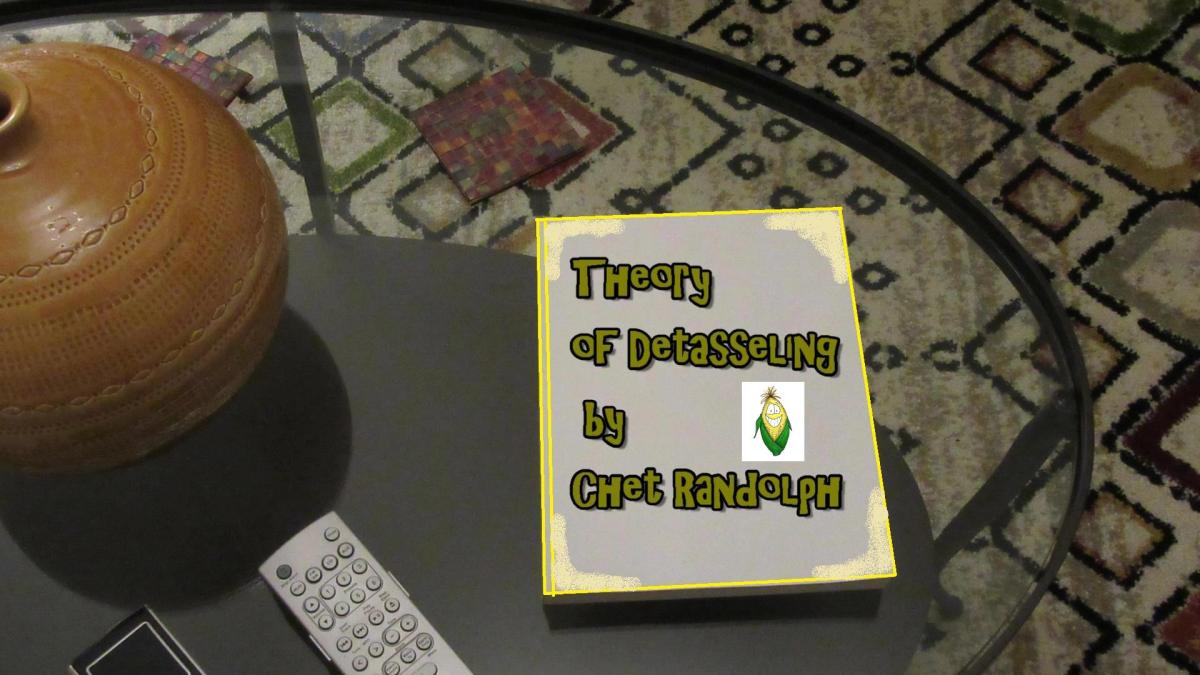
Anyway, we have a great sun room again. We have a nice coffee table in there, with the mandatory coffee table book. Chet Randolph really didn’t write that book, Theory of Detasseling—but he could have.
coffee table book
Here’s a tune from tonight’s show that fits the season.
Today, Dr. Feranmi Okanlami, MD, MS, director of student accessibility and accommodation services at the University of Michigan, delivered the Martin Luther King Jr. Distinguished Lecture: “Disabusing Disabilities.” It was sponsored by the University of Iowa.
I attended Dr. Okanlami’s lecture by Zoom. I noticed he was wearing a handsomely carved wooden bow tie, which I don’t have an image for, but you can order them on Amazon, if you’re interested. I’m not the only attendee who noticed it. I used to wear cloth bow ties when I was a much younger man. I gave up wearing any cloth ties shortly after the Covid-19 pandemic began because, as everyone knows, fabric neckties of any kind generally almost never get laundered and carry all kinds of germs. The wooden bow tie is easily wiped down with sanitizers.
But this post is not about wooden bow ties. It’s about what Dr. Okanlami called “ableism” which naturally brings to mind other terms like “racism.” He showed a few images on his slides which showed another point he expanded on, which is the difference between equality and equity. The quick way for me to explain this is to quote the Milken Institute School of Public Health definition:
“Equality means each individual or group of people is given the same resources or opportunities. Equity recognizes that each person has different circumstances and allocates the exact resources and opportunities needed to reach an equal outcome.” — MPH@GW, the George Washington University online Master of Public Health program.
Dr. Okanlami impressed me in many ways, but one of them is his ability to give unrehearsed presentations. He hates to “give talks” as he put it, but likes to talk.
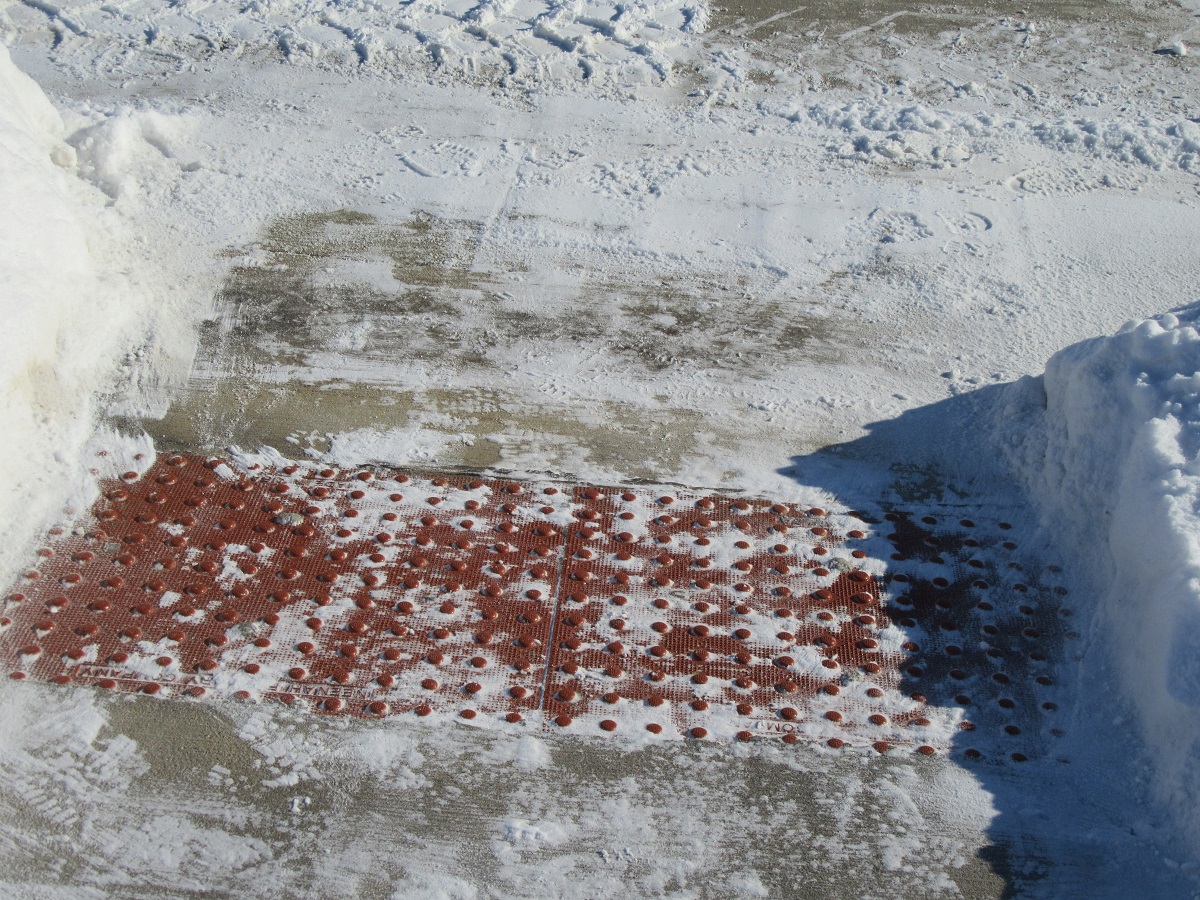
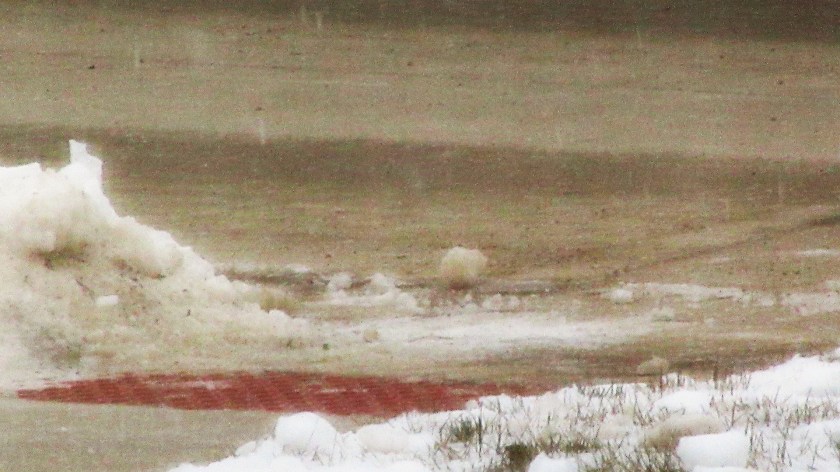
I should explain the reason for this post’s featured image, which might seem puzzling. It’s a photo of the curb ramp connected to the sidewalk outside our home. The city requires homeowners to clear the snow from curb ramps, which, ironically, the city plows plug with snow after every snowstorm. These used to be called “handicap ramps.” I suspect Dr. Okanlami would object to the use of this label and in general it’s probably insulting, but that is what they were called for years. They are an accommodation for those who use wheelchairs.
The word accommodation can have a negative connotation, which Dr. Okanlami clarified. Many believe accommodations give an “unfair” advantage to some people. Actually, they provide opportunities for those with a different set of abilities or altered abilities to participate in society in ways that allow them to contribute to society, and even change it—sometimes in major ways.
Our curb ramp is interesting. The short length of sidewalk beyond it leads to a pile of construction rubble because there is no sidewalk extending beyond our property line on that side. I call it the sidewalk to nowhere, which is now a misnomer. There is a new subdivision under development leading north of our neighborhood. There are houses being built and many have moved in. But for now, you have to walk in the street, which is often muddy and blocked. It’s difficult to walk through it because of heavy equipment and trucks parked along the street. But that doesn’t stop people from walking there. I have never seen anyone in a wheelchair attempt to use the curb ramp. But many people use it who don’t have a visible disability. But it’s there if someone needs it, and we keep it clear of snow on principle.
Dr. Okanlami mentioned those with invisible disabilities. There was not enough time to discuss this in detail, but they include those with mental health challenges. As a consulting psychiatrist working in the general hospital, I saw many of them. They deserve a seat at the table, too.
And I remember one of my medical school classmates who did need to use a wheelchair. There was a special ramp made for him that allowed him to participate in gross anatomy class. Dr. Lance Goetz, MD, graduated with our class and has been a practicing physiatrist in Richmond, Virginia for the last 21 years.
Although Dr. Okanlami’s lecture was recorded today and will, I hope, soon be available for public view, I’m including a YouTube recording of a presentation he gave in 2018 which has the same title and very similar content as the talk he delivered today.
I think his talk evolves every time he gives it. The environment in 2018 was very different than it is now because there was no pandemic and there was a live audience which interacts in a very different way than Zoom allows. That said, the slides were essentially the same today on equity and equality, as were his essential points. He shared a lot about himself in 2018, maybe a little less today mainly because of time constraints and the difficulties inherent to virtual lectures. But he has a great sense of humor.
And he does wear very handsomely carved wooden bow ties.
Sena and I thought today’s Zoom presentation “Racial Perspectives on the Institution of Medicine” by Director and Chair of Emergency Medicine Jenice Baker, MD, from Chestnut Hill Hospital in Philadelphia was fascinating. It was an early feature of Martin Luther King Jr. Celebration of Human Rights week. This presentation stimulated a long discussion between us. The theme of this year’s MLK week is “Whatever Affects One Directly, Affects All Indirectly.”
Dr. Baker cautioned that some of the content of her talk would make us feel uncomfortable about the issue of racism in the social realm of our society extending to the medical realm as well. Sena and I were a little surprised about some of the historical facts, such as that white patients always had to be treated first before black people in emergency rooms, regardless of the severity and urgency of the trauma.
This led me to look up the term “implicit bias.” It doesn’t always denote racism per se. It does mean that we’re all prone to making broad generalizations. This accentuates the conflict between political parties, races, and other groups. People on both sides of the color line can overgeneralize, leading to stereotyping.
I told the following anecdote in a blog post from last year’s MLK Human Rights Week:
When I was a first-year resident on rotation in the inpatient psychiatric wards, one of the patients assigned to me roared at me “I don’t want no nigger doctor!” more than once. I discussed the issue with my supervisor. It was a difficult conversation. It was a long time ago and I recall mostly the sense that we both felt awkward. I asked that the patient, who clearly didn’t want anything to do with me, be transferred to the care of another resident. I don’t recall whether he offered to talk with the patient and he deferred on asking another trainee to take over the patient’s care. My recollection is dim about how I handled it. I suspect that’s because it was emotionally painful. Although I had to see him prior to rounds every day, I think I excused myself as soon as he spat the word “nigger” in my face—which was practically every day. I told him I didn’t’ have to tolerate that.
The flip side of this is a conversation I overheard in the distant past between my father (a black man) and his friend (also black, who I’ll call Mark). My father took Mark in, who had just been released from jail and was homeless. He was wearing poorly fitting clothes he probably found because he was penniless and jobless. While he paced the living room floor, he cursed and said angrily, “Man, I will never let this white man do this to me again.” My father just snorted in a way that made me think he didn’t believe that Mark was in his predicament because of any white man—it was probably Mark’s own bad decisions that led to his problems.
As in past years when Sena and I are intellectually stimulated by MLK Celebration of Human Rights week speeches, our discussions get long and spirited and tend to range widely over the spectrum and durability of human weakness, human evil, and the seemingly accidental nature of human wisdom and human kindness.
We talked at length about James Alan McPherson, long time Iowa City resident and nationally renowned writer, the first African American to win the Pulitzer Prize for short fiction, and acting director of the Iowa City Writers Workshop. He died in in the summer of 2016. An Iowa City neighborhood park was recently renamed James Alan McPherson Park in his honor.
But judging from news stories, this didn’t happen until members of the Iowa Freedom Riders suggested that a park be named “Black Lives Matter Park” in the summer of 2020. In response, more than a dozen people recommended that Creekside Park be renamed in McPherson’s honor instead.
Was the suggestion of renaming the park after McPherson simply a maneuver to avoid naming a park after BLM—and possibly to avoid extremist consequences? Why did it take Iowa City so long to honor him after he died? It is puzzling given that his peers called him the heart and soul of the Iowa Writers Workshop and given that McPherson himself called Iowa a place where he felt welcome. He was even in psychotherapy delivered by a white psychiatrist, Dr. Dorothy “Jean” Arnold, the first female psychiatrist to open a private practice in the state of Iowa in 1957. They were both from the racially polarized South. I wonder how they ever connected.
Why should this matter so much to us? Just like Dr. Baker’s presentation, it’s a very uncomfortable discussion. Sena is very good at doing what MLK suggested in his Letter from a Birmingham Jail, where the quote “Whatever Affects One Directly, Affects All Indirectly” comes from—creating “constructive nonviolent tension.” King always advised against violence or anything other than nonviolent methods of protest, saying that what we need is to create a type of constructive nonviolent tension, which he proved can be more effective than violent confrontation.
Some extremists say that King’s nonviolent approach is no longer relevant for our times, but I doubt violence is the answer. Somehow all of us need to learn how to not just tolerate an atmosphere charged with constructive nonviolent tension—but to somehow transform ourselves directly and thereby transform others indirectly into peaceful agents of change.
It’s been a quiet day around here. It’s New Year’s Eve. I got a great message from a former resident who has started his own Psychiatry Consultation Fellowship training program in Bangkok, Thailand. Dr. Paul Thisayakorn and his wife are welcoming 2022 with their 2 lovely children and hoping 2022 will be a better year, as we are. The Covid pandemic has been hard around the world.
Paul also looks forward to establishing a C-L Psychiatry academic society in Thailand in the coming year. Paul did his psychiatry residency at University of Iowa and his C-L Psychiatry fellowship in Cleveland. Sena and I wish him and his family all the best in the new year.
Today was quiet, but tomorrow the big snowstorm will come. We’ll be digging out all day because the forecast is for 5-8 inches, high wind gusts, and ice. It’s Iowa, after all.
But for tonight we’ll take a cup of kindness and say goodbye to 2021.
And if you like MacLean’s version of Auld Lang Syne above, you might have a listen to another with the Scottish lyrics translated.
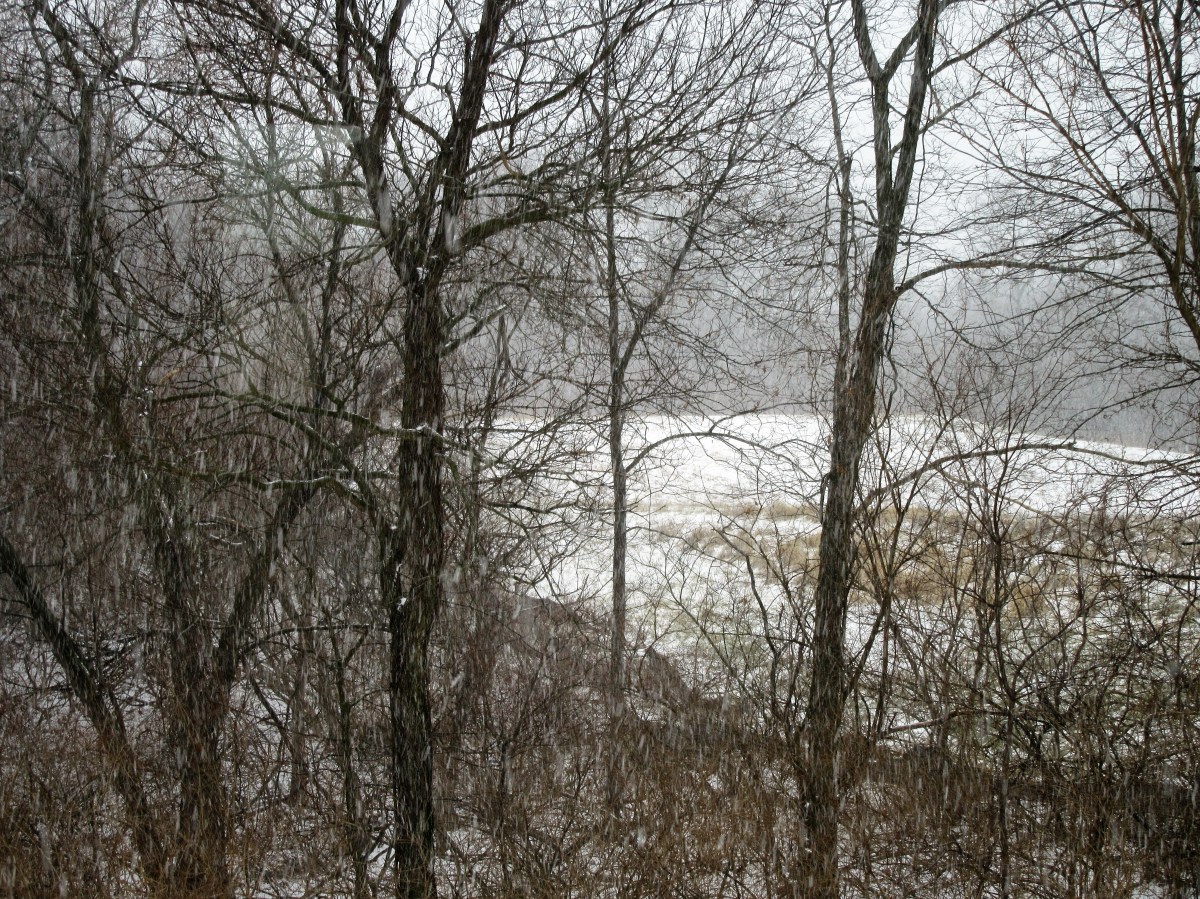
Today is Iowa’s 175th birthday. It’s also the first day of snow this winter. I had to get out there and shovel. I can celebrate Iowa’s 175th year of statehood by rubbing liniment on my sore shoulders. The Iowa statehood anniversary will be a year-long commemoration. If it snows anymore, I’ll be bathing in muscle cream for at least that long and will likely miss many of the events.
It was a wet, heavy snow. I pushed it around for hours. While sweeping snow from the front porch, I slipped off the first step and came down hard (but on my feet!) on the sidewalk instead of the second step. I was unhurt, but it was jarring. It reminded me of one of last year’s big snows which left enough ice on the driveway to make me slip and fall on my butt. The next-door neighbor, who was also out shoveling, saw it and looked at me a long time—but I bounced right back up. No need to call an ambulance. I’m good!
And then the city snow plows came through and did what they did last year. They left snow droppings in our driveway, which wasn’t really plugged but looked unsightly.
The only excuse I have for not going back out to clean it up is that it was raining steadily, and my winter coat and gloves were still soggy from sweat. It’s not like it was a couple of years ago, when we lived another part of town and the plows banked in drifts the size of small cars across our driveway. However, I have modified my shoveling technique. I no longer twist my back and throw snow over my shoulder (the John Henry model). I bend my knees and keep my back straight.
There will be more snow tomorrow, later in the day. Maybe it will be late enough that it will be too dark to shovel. Or maybe all the shovels in our garage will meet with some sudden, mysterious accidental breakage that makes them useless. The roads will probably be too icy and impassable from snow drifts for driving to the hardware store to buy replacements.
That’s how things go in the winter around the Midwest, especially in places like Iowa, ravaged by 175 years of snowstorms, freezing temperatures, shovels, and oceans of liniment.
On Christmas eve, when it looked like there would be no snow for Christmas Day, I remembered my blog on WordPress had a setting that would make snow fall and blow across our websites. It looks like that stopped about 6 or 7 years ago to allow a sharper focus on the business aspect. A lot of bloggers were unhappy about the change. You had to pay to play to get the Holiday Snow, which means you had to purchase the Business Plan blog and a special plugin, which could then be exploited by hackers.
Today, I got all the snow I would ever need. Happy Birthday, Iowa!
ADDENDUM 12/29/2021:
Today I used an ice chopper to clear the snow blobs from my driveway, which had been frozen into ice blobs overnight. I also chopped the ice from the curb ramp on my sidewalk which the city snow plow had also plugged yesterday. An official city truck was driving by and witnessed me clearing it. Will it make a difference? It started snowing again this evening.





 Go Retire Psychiatrist