University of Minnesota CIDRAP Story on CDC ACIP Meeting Next Week

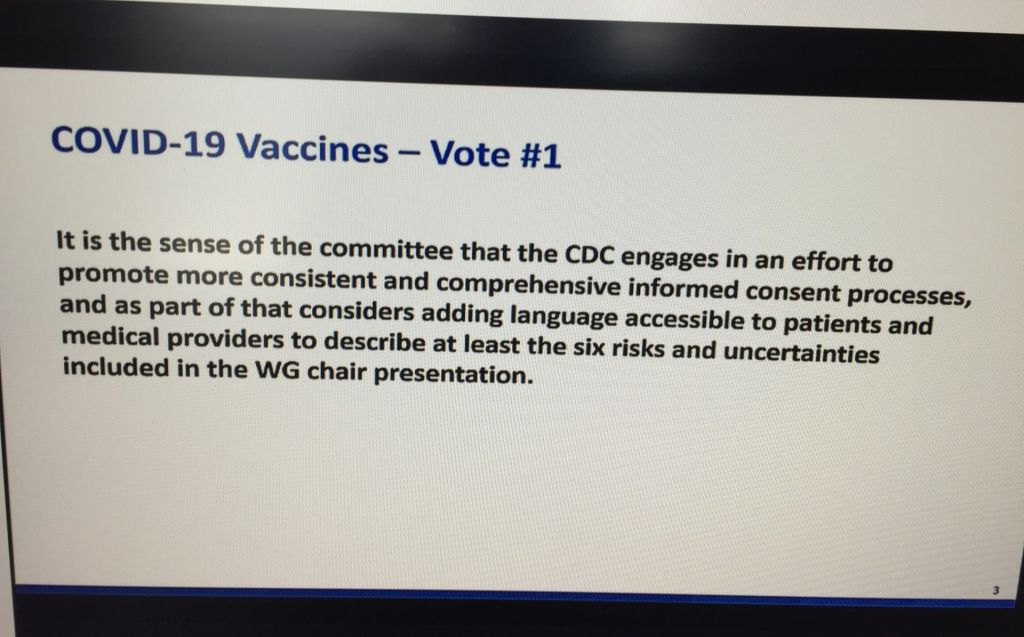
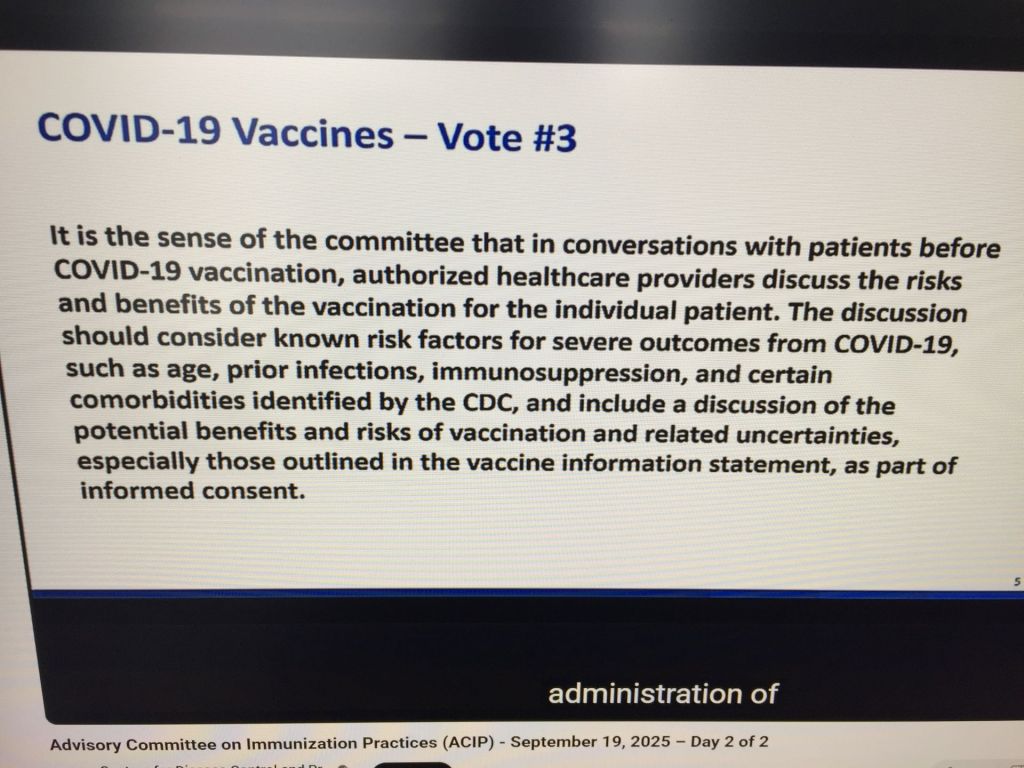
The University of Minnesota Center for Infectious Disease Research and Policy (CIDRAP) posted a news report about the upcoming CDC ACIP meeting next Wednesday. Apparently, so far the new advisory committee draft agenda does not include a vote on the Covid-19 vaccine.

Sit and Rise Exercise Related to Longevity?

I just read a few news articles and saw a couple of videos on something called the sit and rise or sitting rising exercise. It’s not the same as the sit to stand exercise, which is how many times you stand up from a chair without falling down after drinking several beers. The sit and rise exercise is sitting down and then standing back up in a cross-legged position.

Just to let you know, there are dozens of news stories that claim if you can’t do the sit and rise exercise without using one or both hands or a crane to get back up, you’re marked for death within hours. Make sure your last will and testament is notarized.

OK, I also saw a Snopes fact-check story about the sit and rise thing and it’s a myth that the inability to do it predicts mortality within a few years. It does indicate you have problems with mobility and that could be from a number of factors, including previous joint injuries and not having legs. Check a full-length mirror.

Apparently, there was a study done in Brazil in 2012 that got this story going about imminent mortality if you can’t do the sit and rise cross-legged routine. It looks like there have been news stories about it every year or so since then just to scare old people.

I can’t do the sit and rise cross-legged and wondered if there’s some kind of trick to it. There isn’t and the main problem according to experts are weak glutes. And I’m able to stand on one leg for 30 seconds and I can do 3-4 reps of the single sit to stand exercise on both legs. I also have no problem getting up from a chair from a sitting position without pulling myself up using grab bars or having somebody haul me up with a tow chain.

I can’t remember a time when I could even sit cross-legged, although I guess I did when I was in kindergarten. When I took a Mindfulness Based Stress Reduction (MBSR) course, I had to try to sit cross legged to meditate and I was numb in my hips and knees within a couple of minutes. When I got up, I usually fell over, sustained a minor head injury and was rushed to the ER about 1,200 times (“It’s Dr. Amos again; he’s been trying to sit in that lotus position” “OK, put him in the rack.”).

There’s a web page that gives advice on how to fix a problem with not being able to sit in a crossed leg position for longer than a minute. The author provides a short list of exercises without instructions for how to do them:

Child Pose: I imagine this resembles standing pigeon-toed, holding your crotch and dancing around a little about an hour after drinking a half-gallon of Kool-Aid.

Pigeon Pose: This is kind of like the Child Pose only it’s done while pooping on the head of a statue.

Toe Touch: Self-explanatory but apparently you can touch anything with your toe as long as it’s not something recently expelled from a pigeon.

Vajrasana: It involves contacting extraterrestrials who will assist you by inserting various probes in several orifices while you remain very still to allow the tracking device to be correctly installed.

Lung Pose: I’m not sure how this strengthens your glutes but obviously it involves surgery. Check your insurance.

Bridge Pose: This might tone your glutes if you dive off a bridge without a parachute. Make sure your life insurance policy is up-to-date.

That about does it for the sit and rise cross-legged issue. Remember, it’s only when you do it while cross-eyed that all the trouble starts. Glad I could clear that up.

This essay is satirical.

The Short Story on Kiwi for Health

Sena was at the store yesterday and some guy (a total stranger) in a motorized scooter rode up to her and said, “I have trouble sleeping” and asked her where to find the kiwi fruit in the produce section. It didn’t faze her because this didn’t sound like a pickup line, you know like that joke on the TV commercial: “Why do iguanas reproduce only once a year? That’s because they have e-reptile dysfunction.”

Actually, the guy was looking for kiwi fruit because he had heard that it can help you sleep. So, she told him where it was. A little later, she saw him wandering around and asked him if he’d found the kiwi fruit. He hadn’t so she got a package for him.

It turns out there is a news article saying there are a few small studies indicating that eating a couple of kiwis (remember, this is about the fruit, not the birds) about an hour before you hit the sack can help you sleep. They have a lot of serotonin which your body turns into melatonin which can promote sleep.

You have to be careful about eating kiwis if you have a latex or fruit allergy because you could have a reaction. And if you have diabetes you need to be aware kiwis are high in sugar.

The thing is, you have to eat a couple of them about an hour before bedtime. Often enough I find that I’m napping in the evening in front of the TV long before then—but that’s probably because there’s usually nothing on but reruns and the usual commercials about cannabidiol (CBD) products, total body deodorants, and snake oil for e-reptile dysfunction.

In fact, there’s also some limited evidence that kiwi fruit can just help you feel better in general. It’s mainly about yellow kiwi fruit rather than the green ones. The yellow ones are called SunGold, and they have a lot of vitamin C. Actually, if you don’t like kiwi fruit, you can find other fruits and vegetables containing a lot of vitamin C, including strawberries and oranges—and broccoli. Go with kiwi fruit.

On the other hand, it looks like you might pay about 3x more for the yellow kiwi than the green.

Kiwi fruits are packed with vitamins. You can get 100% of vitamin C from SunGold and they have more than 20 vitamins and minerals. More than a million tons of kiwi fruit are produced every year. You can make kiwi pizza-if you’re on drugs!

And if you eat a couple of SunGold kiwis a day you could feel so good you might be more willing to contribute to the foundation for assisting iguanas with e-reptile dysfunction.

Center for Infectious Disease Research and Policy Outlook on Covid Data and New CDC ACIP Committee

I have a lot more faith in the infectious disease news from the University of Minnesota Center for Infectious Disease Research and Policy Outlook (CIDRAP) than most other news outlets. Their review of the so far 8 newly appointed CDC ACIP committee members is interesting. I plan to watch the upcoming June 25-27 CDC ACIP meeting.

They also provide updates on the CDC Covid-19 variant tracking data. While the LP.8.1 has been in the spotlight lately as the upcoming variant of note, the Nowcast estimates of the proportion of NB.1.8.1 are currently almost equal to LP.8.1. They report the NB.1.8.1 is minimally more immune evasive than LP.8.1. They are both descended from the JN.1 lineage. Overall, Covid-19 activity is low.

Can We Calm Down?

First of all, I want to make it clear that I am not now nor have I ever been pregnant. Now that I have your attention, I’ll add some context to that weird statement by saying how puzzled I am by all the controversy about whether or not there’s actually a federal recommendation against pregnant women getting the Covid-19 vaccine.

I admit, I actually did think about the movie “Signs” in which the lead character, Graham Hess, says “Everybody in this house needs to calm down and eat some fruit or something.” I think it fits.

I found a lot of news stories claiming that HHS and the CDC don’t recommend that pregnant women get the Covid-19 vaccine. What I actually found on the HHS web site says the opposite—the agency recommends it.

That seems to agree with the paper from the FDA leadership, published in the New England Journal of Medicine by Drs. Prasad and Makary (An Evidence-Based Approach to Covid-19 Vaccination. Authors: Vinay Prasad, M.D., M.P.H., and Martin A. Makary, M.D., M.P.H. Author Info & Affiliations). Published May 20, 2025. DOI: 10.1056/NEJMsb2506929.

“Moving forward, the FDA will adopt the following Covid-19 vaccination regulatory framework: On the basis of immunogenicity — proof that a vaccine can generate antibody titers in people — the FDA anticipates that it will be able to make favorable benefit–risk findings for adults over the age of 65 years and for all persons above the age of 6 months with one or more risk factors that put them at high risk for severe Covid-19 outcomes, as described by the CDC (Figure 2).”

Figure 2 is a table which lists many medical conditions that are indications for getting the Covid-19 vaccine. Pregnancy is one of them, based on the idea that it could increase the severity of Covid-19 disease.

On the other hand, when I looked at the health care provider page on the CDC website, the table showing the clinical indications for the Covid-19 vaccine sends a confusing message by showing pregnancy as a condition for which there is currently “No Guidance/Not Applicable.”

Just in case this web page gets updated, I took a screenshot of that part of the table:

screenshot June 12, 2025

But elsewhere on the CDC website are pages which clearly recommend that pregnant women get the Covid-19 vaccine.

I’m not making any political statements here. I’m just an old guy who clearly does have an indication for getting the Covid-19 vaccine and I recently did just that last month.

Dept of Health & Human Services to Reconstitute CDC Advisory Committee on Immunization Practices

HHS announced the removal and replacement of the current members of the CDC Advisory Committee on Immunization Practices in a press release today. The CDC ACIP meeting for vaccine recommendations is still scheduled for June 25-27. According to the Federal Register announcement under Supplementary Information:

“SUPPLEMENTARY INFORMATION:

Purpose: The Advisory Committee on Immunization Practices is charged with advising the Director, Centers for Disease Control and Prevention (CDC), on the use of immunizing agents. In addition, under 42 U.S.C. 1396s, the Committee is mandated to establish and periodically review and, as appropriate, revise the list of vaccines for administration to vaccine-eligible children through the Vaccines for Children program, along with schedules regarding dosing interval, dosage, and contraindications to administration of vaccines. Further, under applicable provisions of the Affordable Care Act and section 2713 of the Public Health Service Act, immunization recommendations of ACIP that have been adopted by the Director, CDC, and appear on CDC immunization schedules generally must be covered by applicable health plans.

Matters To Be Considered: The agenda will include discussions on anthrax vaccines, chikungunya vaccines, COVID-19 vaccines, cytomegalovirus (CMV) vaccine, Human papillomavirus (HPV) vaccine, influenza vaccines, Lyme disease vaccine, meningococcal vaccines, pneumococcal vaccines, Respiratory Syncytial Virus (RSV) vaccines for adults, and RSV vaccines for maternal and pediatric populations. Recommendation votes are scheduled for COVID-19 vaccines, HPV vaccine, influenza vaccines, meningococcal vaccine, RSV vaccines for adults, and RSV vaccine for maternal and pediatric populations. Vaccines for Children (VFC) votes are scheduled for COVID-19 vaccines, HPV vaccine, influenza vaccines, and RSV vaccines. Agenda items are subject to change as priorities dictate. For more information on the meeting agenda, visit https://www.cdc.gov/​acip/​meetings/​index.html.

Meeting Information: The meeting will be webcast live via the World Wide Web. For more information on ACIP, please visit the ACIP website: https://www.cdc.gov/​acip.

The Wild West Sandbox of AI Enhancement in Psychiatry!

I always find Dr. Moffic’s articles in Psychiatric Times thought-provoking and his latest essay, “Enhancement Psychiatry” is fascinating, especially the part about Artificial Intelligence (AI). I liked the link to the video of Dr. John Luo’s take on AI in psychiatry. That was fascinating.

I have my own concerns about AI and dabbled with “talking” to it a couple of times. I still try to avoid it when I’m searching the web but it seems to creep in no matter how hard I try. I can’t unsee it now.

I think of AI enhancing psychiatry in terms of whether it can cut down on hassles like “pajama time” like taking our work home with us to finish clinic notes and the like. When AI is packaged as a scribe only, I’m a little more comfortable with that although I would get nervous if it listened to a conversation between me and a patient.

That’s because AI gets a lot of things wrong as a scribe. In that sense, it’s a lot like other software I’ve used as an aid to creating clinic notes. I made fun of it a couple of years ago in a blog post “The Dragon Breathes Fire Again.”

I get even more nervous when I read the news stories about AI making delusions and blithely blurting misinformation. It can lie, cheat, and hustle you although a lot of it is discovered in digital experimental environments called “sandboxes” which we hope can keep the mayhem contained.

That made me very eager to learn a little more about Yoshua Bengio’s LawZero and his plan to create the AI Scientist to counter what seems to be a developing career criminal type of AI in the wild west of computer wizardry. The LawZero thing was an idea by Isaac Asimov who wrote the book, “I, Robot,” which inspired the film of the same title in 2004.

However, as I read it, I had an emotional reaction akin to suspicion. Bengio sounds almost too good to be true. A broader web search turned up a 2009 essay by a guy I’ve never heard of named Peter W. Singer. It’s titled “Isaac Asimov’s Laws of Robotics Are Wrong.” I tried to pin down who he is by searching the web and the AI helper was noticeably absent. I couldn’t find out much about him that explained the level of energy in what he wrote.

Singer’s essay was published on the Brookings Institution website and I couldn’t really tell what political side of the fence that organization is on—not that I’m planning to take sides. His aim was to debunk the Laws of Robotics and I got about the same feeling from his essay as I got from Bengio’s.

Maybe I need a little more education about this whole AI enhancement issue. I wonder whether Bengio and Singer could hold a public debate about it? Maybe they would need a kind of sandbox for the event?

Reasons to Be Proud and Hopeful for the Future

As the month of May Mental Health Awareness draws to a close, I reflect a little on the Make It OK calendar items that are salient for me: 3 things I’ve done that I’m most proud of and 3 reasons I’m hopeful for the future. I’ll keep it short.

One thing I’m most proud of is being the first one in my family to go to college. The biggest accomplishment was going to medical school at The University of Iowa in 1988. That was also the year Michael Jackson’s pop hit “Man in the Mirror” was released. That’s sort of how I felt about what I was doing that year—making a big change.

The more I reflect on this the more I realize the other thing I’m most proud of was getting a degree from Iowa State University in 1985. That paved the way for the path to becoming a doctor.

This process seems to work backwards because probably the first thing I’m proudest of is making a change even earlier in my life to land a job with a Mason City, Iowa consulting engineer firm, Wallace Holland, Kastler Schmitz & Co. That came before college and they’re all like stepping stones on the path of achievement. I think I started at the minimum wage back then, which was about $2.00/hr. I was an emancipated minor and couldn’t afford an apartment so I lived at the YMCA. It was a cramped sleeping room with no kitchen, a communal bathroom/shower, and a snack vending machine from which I got a worm infested candy bar. There were strict rules about what you could keep in your room—which somehow didn’t prevent one guy from building a motorcycle in his. Now this is getting too long.

In order to move on expeditiously with the mental health awareness calendar items, I’m going to cheat on the 3 reasons I’m hopeful for the future because they involve what is most important to a teacher. That’s what I was. I was so proud of the many medical students and residents I had the honor to teach. There were a lot more than 3 reasons to be hopeful for the future. I used to take group pictures of them and me at the end of each rotation through the consultation psychiatry service. We got a kick out of that because the only way I could do it was by using my old iPad that had a fun remote way to trigger the snapshot. I leaned the iPad up against something on a table. We all gathered as a group at the other end of the room. We posed, I raised my hand and counted to three, then closed my hand into a fist. That was our cue to smile. The shutter clicked.

Every time we did that, I was proud. Wherever they are, I hope they know how proud I am of them.

So, I Got the Covid-19 Booster Today

After giving the Covid-19 summer booster a lot of thought, I got it today. What the heck. I’m an old guy and the experts all agree that the summer surge is real, including the current leaders of the FDA Center for Biologics Evaluation and Research (Vinay Prasad, M.D., M.P.H and Martin A. Makary, M.D., M.P.H.).

 I read their article “An Evidence-Based Approach to Covid-19 Vaccination” published in the New England Journal of Medicine on May 20, 2025. It sounds like they’re going to require placebo-controlled trials for new vaccines for almost everybody except those over age 65 and high risk because they’re not recommending it for certain other groups such as healthy children.

I didn’t think it was worth the wait for the upcoming CDC ACIP meeting on June 22, 2025 in order to decide whether or not to get the summer vaccine. It’s the same one I got last fall and the same one the FDA advisory committee decided at this month’s meeting would be appropriate going forward (the JN.1 lineage).

It wasn’t like there was a long wait time to get the vaccine today. There wasn’t a line. I scheduled it but I didn’t have to because I got right in.

It’s true that vaccine uptake has been low. However, I think on balance they’ve been proven to be safe and effective so I’m not sure that placebo-controlled trials are warranted. I guess we’ll just have to agree to disagree.

Reference:

An Evidence-Based Approach to Covid-19 Vaccination

Authors: Vinay Prasad, M.D., M.P.H., and Martin A. Makary, M.D., M.P.H.Author Info & Affiliations

Published May 20, 2025

DOI: 10.1056/NEJMsb2506929