We have the winners of the Iowa State Fair Cribbage Tournament. A couple of them were from Missouri!
Congratulations to all!
I just have a few remarks about the Iowa State Fair Cribbage Tournament which took place today. I don’t have the results and it could be a week before anything is announced about the winner. Here are the rules:

Note the $1 entry fee and you have to bring your own cribbage board, cards, and pen. In the past there have been as many as 200 entrants (that was in 2015). We’ve never entered.
I also wanted to let you know that Sena has started a new cribbage tradition. Whenever she wants to play cribbage, she just puts the deck of cards in our automatic shuffler and makes a racket.
I was noodling around the web yesterday and accidentally on purpose found out thumb wrestling used to be a thing. Sure, it’s been about 20 years ago, but it’s overdue for a comeback. They even had this little wrestling ring box that athletes could put their thumbs through. Did you know there used to be a Thumb Wrestling Federation? It was nuts, I guess.
I’m in training for thumb wrestling—sort of. There’s also toe wrestling, but in addition to toe jam, broken toes are a problem. This Toe Wrestling Federation began in the 1970s and I think it’s still going on in England.
Thumb wrestling has been out for a while now. But I can think of ways to bring it back. This is how politicians could settle their differences.
I modified the YouTube cribbage video “One for his nob short” to be about the same length as Canadian country singer Brett Kissel’s song about cribbage “The Crib Song.” I didn’t change any of the subtitles on the video because they fit the game play in the video.
There is no audio in the short version because you’ll need to play the YouTube video of the song “The Crib Song” along with our cribbage game video (see below). We think they still go together.
I found a Facebook entry on the web that must below to Brett, because it shows images of the computer cribbage game Cribbage Classic (which I’ve reviewed in the past, see my YouTube channel) and he says. “I’m a legend. I will play anyone at crib. Except if you’re over 70 years old. I won’t be able to beat you if you’re 70+.” I wonder why. I don’t have a Facebook account so I can’t ask him about the lyrics of The Crib Song.
Anyway, I found the lyrics for the song. OK, it clips along but I can’t verify some of the cribbage lingo in it. Maybe they’re common parlance for cribbage players in Canada. If any of you know what the following mean let me know:
Romney’s-no idea but it’s evidently something Ebs keeps getting
Loins-if all you get is “loins,” what are those? Sounds like if that’s all you get you might be lucky or good or maybe neither.
Gino-from context it sounds like something you win (“I just won a Gino”)
There’s another that I couldn’t figure out:
Piled-this is connected to “Deuce Neon” in some way (Deuce neon got him piled”); maybe a player?
There are a few I recognized. The kitty is another name for the crib (the two extra cards from the non-dealer and the dealer which are for the dealer). A flush is a hand of cards all the same suit, which can include the cut card. You can’t get a flush in the crib unless the cut card is also of the same suit.
The lyric “I’m looking for that 29” is about that very rare hand of 29 points: the nob jack (jack of the same suit as the cut card), and 3 fives in your hand, the cut card being the other 5. And a score of 19 is slang for zero points because 19 is not a possible score in cribbage.
I think the lines below are about forming sequences during pegging:
“Don’t give away your hand
I’ll rope you right into a run
Peg 8 or 9 or 10
Looking at your face”
You can find lists of cribbage lingo, but admittedly they’ll probably be mostly American usage. The American Cribbage Congress (ACC) list is pretty good and so is the Cribbage King list.
Yesterday while playing cribbage, Sena and I accidentally switched non-dealer and dealer roles during the cut and pick the starter card phase of the game. I was dealer and by mistake cut the deck. Sena was non-dealer and by mistake picked the starter card—which happened to be a jack.
At that point we both realized this was wrong. I was the dealer and should have got the two for his heels, but I was also guilty of cutting the deck which the non-dealer is supposed to do. Sena, for whatever reason, picked the starter card, compounding the mistake of switching roles. This actually would have resulted in her getting 16 points!
At first, she suggested she get the two for his heels points and proceed. I thought this would compound the mistake further and thought we should reshuffle and redeal—which she did after a fairly long discussion. We kept our original hands and cribs and just repeated the cut and picked a new starter card the way it was supposed to be done—nondealer (Sena) cut and dealer (me) picked the starter card. In all fairness, we’ve both done this in the past but caught the mistakes before it got as far as it did yesterday.
However, we then looked for any rule which would cover what we should have done. I couldn’t find one either on the American Cribbage Congress website rulebook page or anywhere else. The link takes you to the ACC 2025 version of the tournament cribbage rules; which gives the cut card rules starting on page 28 of the flipbook. It covers the mistakes of the dealer turning up the starter card before both players discard to the crib, nondealer looking at the bottom card of the upper pack when making the cut, and the dealer placing the cut card in his hand and not showing it to the nondealer. It doesn’t cover the wild mistake of both dealer and nondealer accidentally switching roles either by somehow switching to a parallel universe or by extraterrestrial intervention.
We also tried to ask Artificial Intelligence (AI): What happens in cribbage if the dealer cuts the cards by mistake and the non-dealer turns up the starter card by mistake?
AI answer: “In cribbage, if the dealer cuts the deck by mistake and the non-dealer mistakenly turns up the starter card, the dealer loses the deal and the crib. The non-dealer then becomes the new dealer, and the cards are dealt again.”
I couldn’t find anything on the web which supported the AI answer or its detailed explanation. Long story short, I think this might be an example of an AI confabulation (some would call this a hallucination).
However, when I searched again asking the same question, AI gave a different answer:
“In a friendly cribbage game, if the dealer cuts the deck and the non-dealer turns up the starter card by mistake, the cards should be reshuffled and re-dealt. There is no penalty for this mistake as it is considered a misdeal.”
The explanations for the AI answer make sense but tend to sound like rephrasing of the initial answer and there are links which don’t seem connected to the answer. And if I search again, I get a slightly different answer and the explanations are not really connected to the original question.
But we reshuffled and redealt. I sent a question about this to the relevant ACC representative who takes general questions about cribbage. If I get an answer, I’ll pass it along.
This is a red-letter day! First of all, I saw this article on line about how older people can stay sharp and fit. One of the suggestions for cognitive fitness was to play “complex card games.” Cribbage counts (literally) because today, Sena had a Raggedy Ann hand!
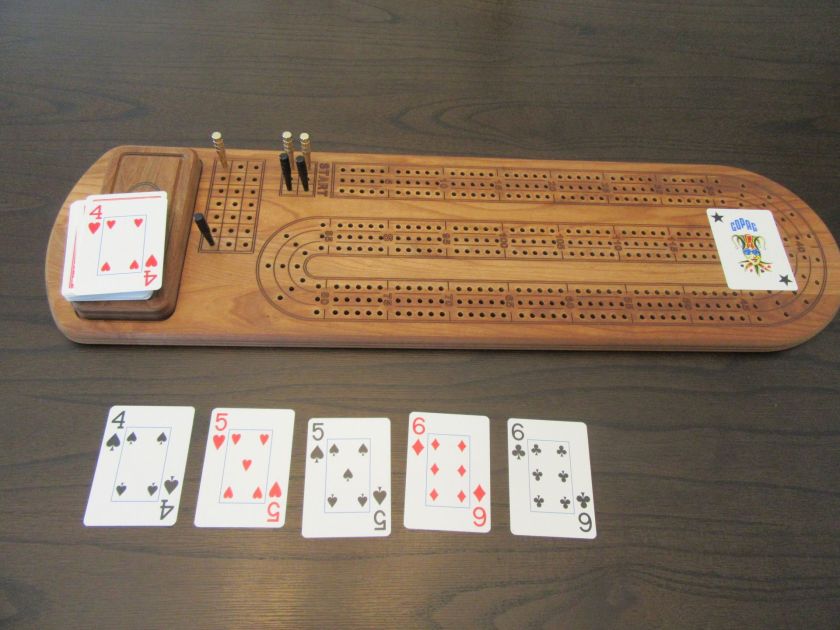
A Raggedy Ann is, as my old medical school pathology textbook authors put it, “not excessively rare,” but it’s uncommon enough that it can trip you up on how to count the points. It consists of 8-7-6-A-A with one of the aces being the cut card, of course. It’s worth 13 points.
First count the 15s, which are cards adding up to 15: the 8 and the 7, the 8 and the 6 and the A diamond, the 8 and the 6 and the A club in the crib, finally the 7, 6, and the two A’s=8 total. Add the three card run 6,7,8=11; then add the A pair for 2 more=13.
What’s hilarious about this is that we thought it was 11 points—which is another weird hand called a Raggedy Andy. It consists of 8-7-6-2-2. But because Sena’s hand had aces, the other 15-point combo was hard to pick out. Both hands are often miscounted.
Substitute deuces for the aces and try to count it. You should come up with 11 and that’s the Raggedy Andy.

Another funny thing about this is that when I was looking on the web for the odds on getting these hands, the AI (which always comes up) got it all wrong, saying “In cribbage, a “Raggedy Ann” hand refers to a hand with a score of 28, which is also known as a “28-hand”. This hand is quite rare, with odds estimated at about 1 in 15,028.” The second time I searched, AI corrected itself and got it right.
As far as I know, there’s no particular name for a 28-hand. Also, I couldn’t find any information of the statistical likelihood of getting a Raggedy Ann or a Raggedy Andy. I couldn’t find any explanation for how the hands got their names either although many assume that it’s because the count is so—raggedy.
As I mentioned earlier, it’s tough to spot one of the fifteens in the Raggedy Ann. Check out the American Cribbage Congress web site for more cribbage lingo.
This kind of gets us pumped for hoping one of us will get the very rare 29 hand.
By the way, the other thing we did today was to plug in the automatic card shuffler to top off the charge, so we both hand shuffled. We plugged it in at 10:30 am and it wasn’t fully charged until 4:30 pm. And you’re supposed to get 2,000 shuffles out of it, and I’m pretty sure we’re nowhere near that. Anyway, shuffling was a lot less noisy.
I wish we’d filmed the cribbage match we just played because it was marked by the weird combination of luck and strategy so typical of every cribbage game. On the other hand, I know if we’d tried to film it, we’d have been too flustered to make anything useful of it.
So, I’m going to point out generalities that might be interesting and useful to anyone who wants to know about how to play cribbage.
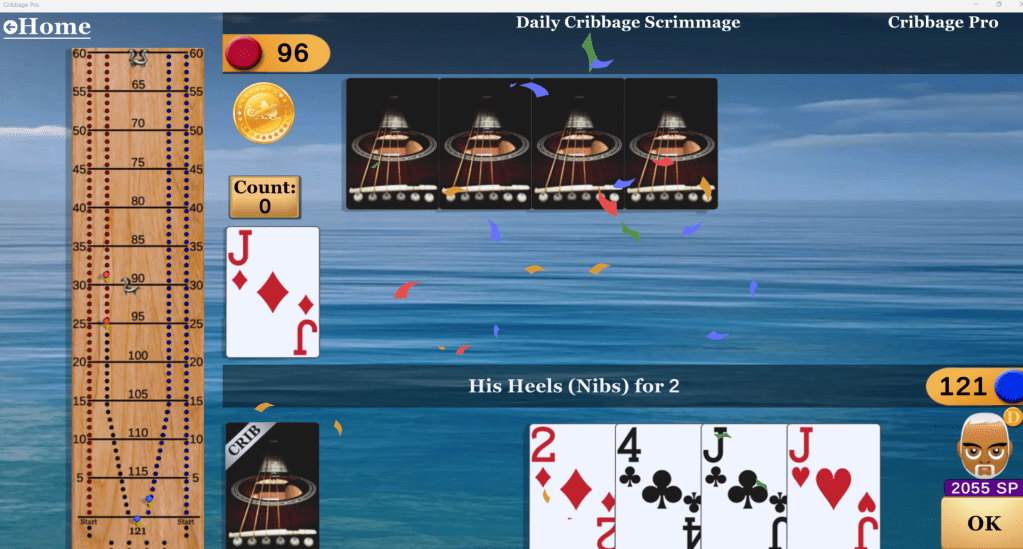
One skill I’ve picked up from playing the computer game Cribbage Pro is how to figure out which two cards I should throw to either my crib or Sena’s. In general, you can learn from any cribbage player you should throw “bad” cards to your opponent and “good” cards to yourself. It’s just about keeping the most points for yourself and as few as possible to your opponent. Cribbage Pro rates your throws. You want to keep cards that you can make points on when you’re the dealer and you want to throw cards to your opponent which will be least likely to make points for them.
It’s easy to get hypnotized into thinking that the crib tosses are the main way to win—but it’s a false hope. I’ve gotten perfect ratings on my crib throws and been skunked by Brutal, the Cribbage Pro game’s toughest opponent.
Luck is an important part of cribbage and counting on just one of the aspects that you have some modicum of control over is a mistake. In fact, one of the reasons I get dinged by the computer is my tendency to ignore the 3-point run in my hand, which when counted with a two card 15 combo can make me 5 points. I usually get mesmerized by the common double 15 with two 10 cards and a five card, which are worth 4 points and break up the 3-point run. I can’t figure out why I do that so often.
The other thing I miss is the flush in my hand, which often would net me more points, especially when I don’t see what I usually get stuck on—the 15s!
But there’s always a big luck factor along with simple inattention to careful counting that does me in. And focusing too much on the throw to the crib can distract you from learning pegging skills, which is governed by some basic understanding of probability (nothing esoteric here, please, because I barely got through biostatistics in medical school!) and whether or not you’re playing with someone you know pretty well and able to anticipate their usual moves (she always drops the 9 spot on the 6 lead!).

That reminds me of somebody who was one of the top cribbage players in the world, DeLynn Colvert. He won several national cribbage championships in his career and wrote a book about the statistical aspects of the game, including something he called the Twenty-Six Theory. I have the book and I’ve never really even tried to read that chapter. You can get a sense of what kind of cribbage expert he was by reading Part 1 of his Twenty-Six Theory on the American Cribbage Congress (ACC) web site.
Paraphrasing Master Yoda: “That is why I fail.”


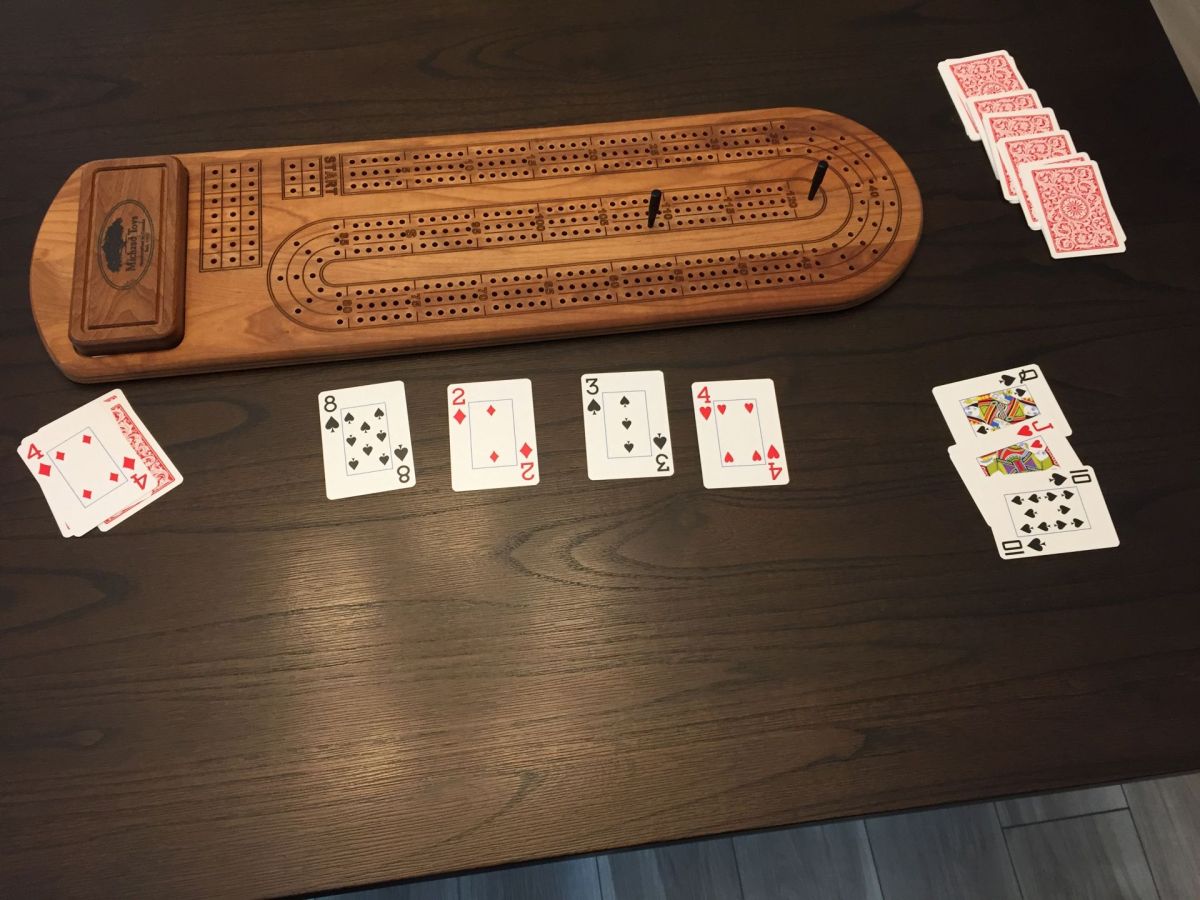
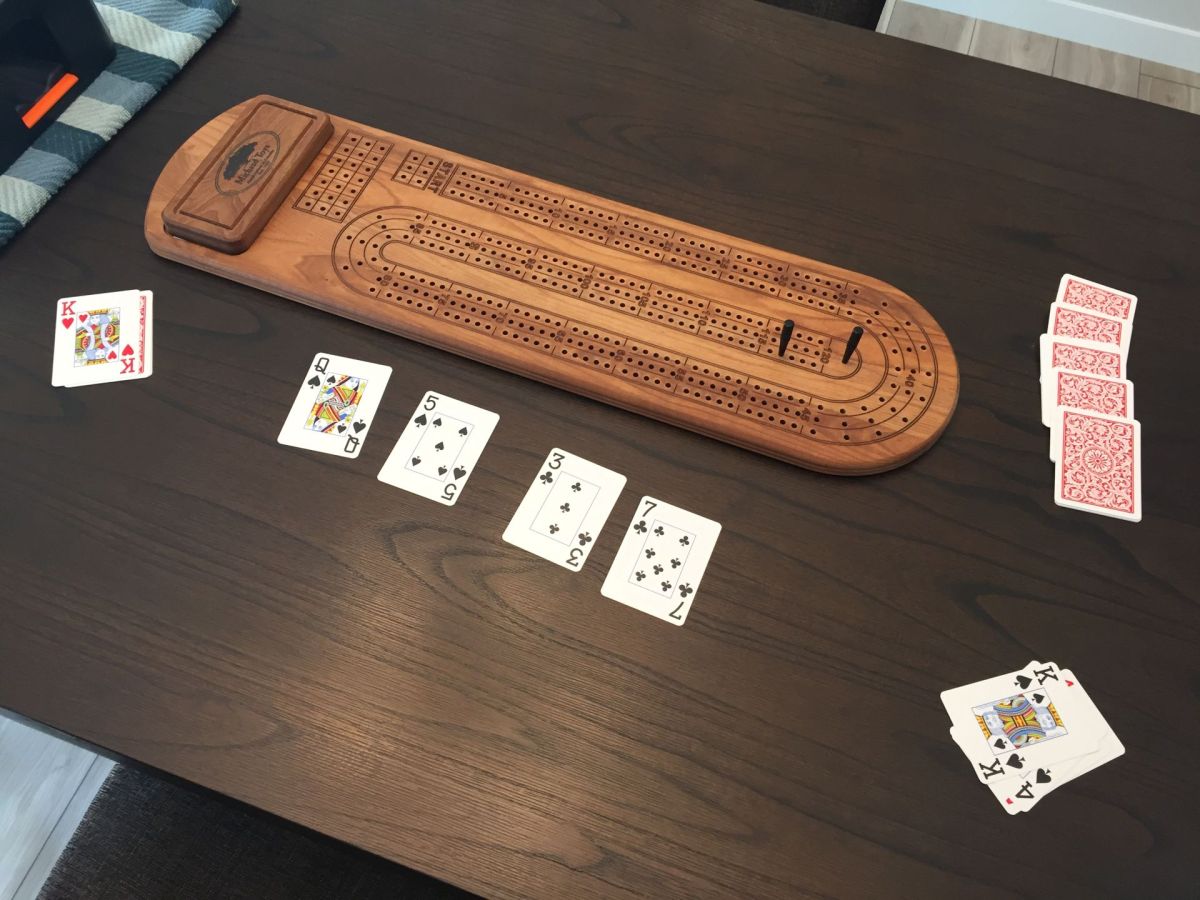
Another thing that sometimes prevents us from getting points is the uncertainty about seeing the run during the pegging phase. It’s common for players to place their cards on their sides of the table with the cribbage board between them. Here again, Cribbage Pro can sometimes interfere with learning an important skill. It does all the work because all the cards from both players are automatically placed in the center of the screen, where runs are clearly discernible.
I think in most games nobody has the luxury of seeing how runs actually look in the usual table setup. Maybe others have no trouble spotting what are called interrupter cards in sequences, but we do—although we’re getting better.
What that can lead to is avoiding playing into runs because both players have to sort of conspire to make them. You can actually see them coming and “run” away because you don’t want to get embarrassed by puzzling over what counts as a run or not. We know the cards don’t have to be in order but they do need to be resolvable into a consecutive sequence on close inspection.
That’s harder to do if the players’ cards are on opposite sides of the cribbage board. You also have to pay attention who leads after a go because it’s relatively easy to tell where a run starts at the beginning of a game since pone always leads.
It’s really hard to talk about cribbage. It would be better to make a video of it, but I’m not sure we could do it. Cribbage has been called a “finicky” game by Barry Rigal, who co-edited the book “Card Games for Dummies” and it’s tough to argue that point.
On the other hand, if you stick to it, you can get drawn into all that finickiness.
Sena has again been winning virtually every cribbage game. We always play 3 games, best of two wins and skunk wins don’t count. I think I play pretty well. She just plays better.
It reminds me of the song “Anything You Can Do (I Can Do Better).” It’s a song from the musical “Annie Get Your Gun.”
Her motto is “I will not be defeated!” I’m beginning to suspect there is extraterrestrial assistance at her elbow. If that’s the case, can a 29 hand for her be far behind?