Catatonia: Another Reason to Get the COVID-19 Vaccine

My wife and I have been immunized against COVID-19 and we recognize that people can be hesitant about getting vaccinated. However, I’m remembering my last few months prior to my retirement a year ago working as a general hospital psychiatric consultant and I saw one or two cases of catatonia in the context of COVID-19 infections.

Catatonia is a complex, potentially lethal neuropsychiatric complication of many medical disorders including COVID-19. It can make a person mute and immobile, often making health care professionals mistake it for primary psychiatric illness (for example, catatonic schizophrenia). You can access a fascinating educational module on the National Neuroscience Curriculum Initiative (NNCI) website about catatonia and how it can be associated with COVID-19.

Catatonia can kill people, rendering them unable to move or eat, leading to blood clots and dehydration among a host of other complications. You’ve seen the news stories about blood clots being an extremely rare but deadly side effect of the Johnson & Johnson COVID-19 vaccine. The risk for blood clots is actually higher from COVID-19 infection itself compared with the very low risk from the vaccine.

I made a YouTube video about catatonia and other neuropsychiatric emergencies and that presentation continues to be viewed fairly often. You’ll want to crank up the volume.

I wrote a blog post about catatonia in the setting of delirium a couple of years ago and the information in it is still relevant below.

Catatonic patients may have a fever and muscular rigidity that leads to the release of an enzyme associated with muscle tissue breakdown called creatine kinase (CK). The level of CK can be elevated and detectable on a lab test.

Many patients will have a fast heart rate and fluctuating blood pressure. They may sweat profusely which can lead to a sort of greasy facial appearance. They may have a reduced eye blink rate or seem not to blink at all. They may display facial grimacing.

The patient may exhibit the “psychological pillow” (some call this the “pillow sign”). While lying in bed, the patient holds his head off the pillow with the neck flexed at what looks like an extremely uncomfortable angle. The position, like other odd, awkward postures can be held for hours.

Catatonia can be caused by both psychiatric and medical disorders. It tends to be more common in bipolar disorder than in schizophrenia even though catatonia has historically been associated with schizophrenia as a subtype. You can also see it in encephalitis, liver failure, and in some forms of epilepsy and other medical conditions—to which we can now add COVID-19 infection.

The patient may perseverate or repeat certain words no matter what questions you ask. He may simply echo what you say to him and that’s called “echolalia”.

Although catatonic stupor is what you usually see, less commonly you can see catatonic excitement, which is constant or intermittent purposeless motor activity.

The usual way to assess catatonic stupor in order to distinguish it from hypoactive delirium is to administer Lorazepam intravenously, usually 1 to 2 milligrams. A positive test for catatonic stupor is a quick and sometimes miraculous awakening as the patient returns to more normal animation. The reaction is usually not sustained and the treatment of choice is electroconvulsive therapy (ECT), which can be life-saving because the consequence of untreated catatonia can be death due to such causes as dehydration and pulmonary emboli.

Another less invasive test that doesn’t use medicine is the “telephone effect” described in the 1980s by a neurologist, C. Miller Fisher. It was used to temporarily reverse abulia or akinetic mutism, which in a subset of cases of stupor are probably the neurologist’s terms for catatonia. Sometimes the mute patient suffering from abulia can be tricked into talking by calling him on the telephone. It’s pretty impressive when a patient who is mute in person answers questions by simply calling him up on the telephone just outside his hospital room. 

So that, in my opinion, is yet another reason to get the COVID-19 vaccine.

Busy as a Beaver

I’m probably busy as a beaver, especially now that I’ve read a short description of how a beaver builds a dam. The article is short on references; in fact, there are none to back up the unidentified author’s remarks. In fact, I suspect the article is fact-free, the only apparent purpose to create test questions for grade-school children.

The author says that, while beavers are busy when engaged in tree felling and dam building, they are disorganized, poor at planning the activities and often mess them up—even accidentally getting killed by falling timber.

By analogy then, since I retired last year, I’ve been about as busy as a beaver. When my frame of reference was working at the hospital as a consulting psychiatrist, I was extremely busy. I put on 3 to 4 miles and about 30 floors a day chasing consults all over an 800-bed hospital with 8 floors.

Now my typical day is very different. Staying physically fit is challenging. I exercise daily, but it’s hardly as demanding as when I was working. I start off with floor yoga to warm up. I hop on the stationary bike, which is not a Peloton or anything like it. There’s nobody in the display exhorting me to crush that Peloton. The digital mileage counter display doesn’t even work.

Next, I do bodyweight squats. My ankle and knee joints crackle and pop loudly, but as long as they don’t hurt, I imagine I’m fine. Next, I do curl and press exercises with a pair of 10-pound dumbbells. Then I do planks. After 3 sets of squats, etc., I get back on the bike. Following the exercises, I sit for mindfulness meditation. That whole business takes about an hour.

As far as beaver busyness, the only time I felled any timber was last summer, when I flirted with danger using a power pole saw trying to clear dead tree limbs left over from the derecho. That actually was a poorly planned activity and was certainly dangerous. I guess I was busy as a beaver then.

Is there such as a thing as being mentally busy as a beaver? Apparently not. Sena and I play cribbage now and then. Other than that, there’s always TV. I listen to music on the Music Choice Channel on TV. I like the Easy Listening and Light Classical stations. Each musical artist featured has several short biographical notes appear while the music plays. I practice doing mental subtractions when the artist’s birthdate appears. It’s the old borrowing method of subtraction you learn in grade school—unless nobody teaches that anymore. There are usually several grammatical and usage problems (worse than mine) with the information about artists and I practice recasting sentences. Sometimes they’ll mention a musician’s nickname, such as BullyboysquatlowjoocedewdliosityBrahms. Several of the classical musicians composed symphonies before they were potty-trained.

On the practical side, I watch the Weather Channel, following which are shows like Highway Thru Hell and Heavy Rescue 401. Those guys are really busy, dragging semi-trucks out of ditches in snowstorms in British Columbia. They operate 75-ton wreckers with rotating booms and winches which regularly spit their cables at anyone nearby.

I alternate the heavy wrecker shows with the Men in Black (MIB) movies, which poke fun at the UFO and alien themes (a welcome counterpoint to Ancient Aliens which takes itself too seriously). I was sure I was watching MIB movies way too much until I found all of the fans’ contributions to websites which list the many errors in the movies. Just google “MIB goofs.” You’ll see the triumphant announcement from those who somehow know what color scheme New York City streets signs had in 1969 and point out how wrong the movie is. On the other hand, I know what kinds of pies young Agent K and Agent J had in MIB 3 (apple with a “nasty piece of cheddar” and strawberry rhubarb, respectively).

I guess all this makes me busy as a beaver.

Reflection on James Alan McPherson’s “A Solo Song: For Doc”

I’ve been reading the short story collection Hue and Cry by James Alan McPherson with the idea that the entire book was new to me. So, I was stunned when I remembered the story, “A Solo Song: For Doc.” It has more than one layer of meaning, but on one level it’s about a Black railroad train waiter named Doc Craft who is forced into retirement. The narrator tries to teach a young waiter he calls youngblood learning the ropes about how the old school waiters made their work not just a job but a way of life.  I was surprised to learn there was a television adaptation of the story made in 1982.

I must have read it in an anthology when I was a youngblood myself. It’s about racism but it’s also about aging, retirement, and change itself. It makes sense that I would feel differently about the story now that I’m older and retired.

I’m about a year into my retirement now and it has not been easy to adjust. Boredom and the search for a new meaning and purpose in my life still challenge me. While racism did not play a part in my decision to leave my profession, there is no doubt that things changed over my three-year phased retirement starting in 2017, dramatically so since the COVID-19 pandemic in 2020.

I thought I was still maintaining my skills as a psychiatric consultant in the general hospital. I was physically fit, in many cases better able to run up and down the stairs for 8 flights than the youngbloods. When they asked me why I became a consulting psychiatrist, I often told them that I “did it for the juice.” I guess that’s why Doc Craft did it.

Maybe I retired because I didn’t want to be pushed out. Doc Craft didn’t retire because he just wasn’t made for it. Sometimes this doc wonders….

Reflecting on Ironies

Over the Easter weekend, we drove by James Alan McPherson Park. A lot of people were having a great time. Because it was crowded, we went to Terry Trueblood Recreation Area, planning to return another day.

We just got our copy of McPherson’s Pulitzer Prize winning fiction anthology, Elbow Room. We’ve ordered his other collection of short fiction, Hue and Cry and it’s been shipped.

McPherson was impressed with the neighboring culture of Iowa City. He’s described as being kind and neighborly himself.

He was self-effacing, which probably seemed ironic to some people, given he was the first African American to win the Pulitzer Prize for fiction for Elbow Room. He was on faculty at the Iowa Writers’ Workshop for many years, won the inaugural Paul Engle award from the Iowa UNESCO City of Literature, graduated from Harvard Law School, recipient of a Guggenheim Fellowship, a MacArthur Fellowship, and was inducted into the American Academy of Arts and Sciences.

I’m struck by a few ironies. Our paths never crossed but that’s probably not surprising given our different professional trajectories. I graduated from medical school at Iowa and just retired last year from the University of Iowa Hospitals & Clinics (UIHC) Dept of Psychiatry where I was a Consultation-Liaison Psychiatrist.

However, McPherson in his essay, [Pursuit of the Pneuma, McPherson, J. (2011). Pursuit of the “Pneuma”. Daedalus, 140(1), 183-188]. described being treated by Iowa City psychiatrist, Dr. Dorothy “Jean” Arnold. And, ironically, Dr. Arnold was white (both she McPherson came from the racially polarized South) and originally graduated from the University of Alabama Medical School. She was also the first female psychiatrist to open a private practice in the state of Iowa in 1957. She taught at the University of Iowa Hospital, but I could not find her mentioned in the history of the UIHC Psychiatry Dept, although Dr. Peg Nopoulos, the first woman chair of the department, has her own chapter [Psychiatry at Iowa: The Shaping of a Discipline: A History of Service, Science, and Education, written by James Bass.]

I’m mentioned in Bass’s history, which is sort of ironic. The book is actually about scientists in the field of psychiatry, and I was anything but. I was a clinician. For comparison, if you ever watch the Weather Channel, I’m not a meteorologist. I’m more like the guys on Highway Thru Hell or Heavy Rescue 401, although I’m not practical in that sense. I am African American though, and it was a good idea for Bass to mention me, since I think I’m the only Black psychiatrist to have ever been hired by the department.

McPherson was impressed with the generous and receptive nature of Iowans, which he ascribed to a quality captured by the word “Pneuma,” a Greek word meaning “the vital spirit of life itself.”

There’s another irony in connection with one of my most influential teachers at Huston-Tillotson College, in Austin, Texas, one of the historically black colleges and universities (HBCU) in America. McPherson attended the HBCU at Morris Brown College in Atlanta, Georgia. Dr. Jenny Lind Porter-Scott, who recently died, was a white Professor of English at H-TC, writer and translator of poetry, teacher to thousands, and popular with students of all races, yet there is no tangible, permanent remembrance of her by Texans. To be sure, she is listed in the Texas Women’s Hall of Fame and in 1964, she was appointed Poet Laureate of Texas by Governor John Connally. Her house was demolished in 2016. In 2016, an architect sent me an email message describing a plan to build a mini-library of her published work in the neighborhood, and a house similar in style to the one demolished on the lot. Whenever I check on Google Maps, the lot remains empty and overgrown with weeds. 

James Alan McPherson taught and formed close bonds with many students who came from different countries, ethnic, and racial backgrounds. Enjoy the park named for him in the “the vital spirit of life itself.”

Bird Poop Luck and Boston Duck Tours

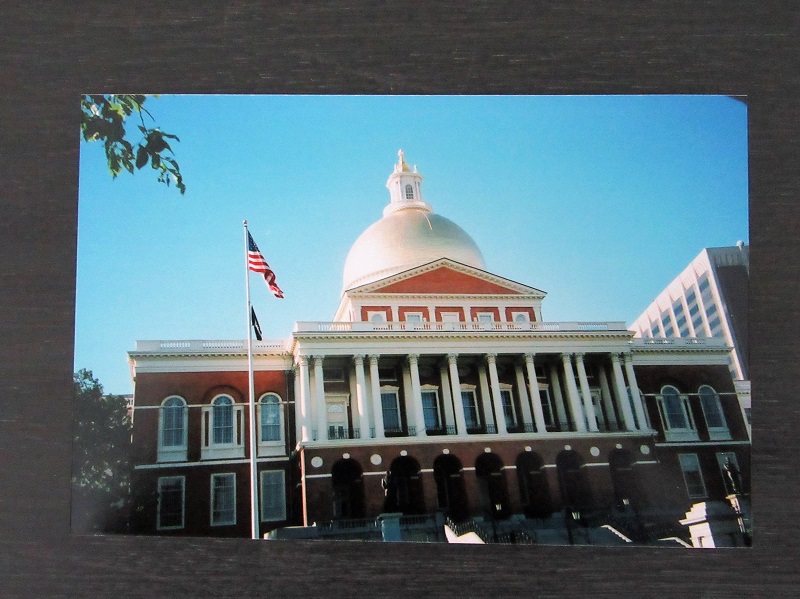
Last night Sena and I watched a YouTube video walking tour of Boston, Massachusetts. It brought back memories of a trip we made there about 16 years ago. The main reason for the journey was a November teaching conference (sponsored by the Academy of C-L Psychiatry, back then called the Academy of Psychosomatic Medicine) on consultation-liaison (C-L) psychiatry I enrolled in, presented by the Mass General Hospital C-L psychiatry division. Funny, I don’t recall much about the details of the conference itself. Maybe that was because I got distracted by a bird pooping on me early on the first day.

I was on a break between programs and sitting outside the Boston Marriott at Copley Place. Suddenly I saw something white and gooey plummet inside the left cuff of my pants. It turned out to be bird poop, which led to my frantically racing back into the building to clean up.

I don’t know what kind of bird dropped that load of poop on me. It was probably a sparrow—but it could have been a seagull or even a duck, which reminds me of the highlight I can manage to remember about the trip, which was the Boston Duck Tour. I guess that means that the old story about a bird pooping on you bringing good luck might be true.

Anyway, while we didn’t have a chance to walk the Freedom Trail, we got tickets for the Duck Tour on a very chilly day. Remember, it was November. Because the annual meetings of the Academy of C-L Psychiatry were held in November, they were usually in warmer parts of the country. The Boston location was a real outlier.

We were lucky (because of the bird poop, no doubt) to find the Boston Duck Tours station at the Prudential Center on Boylston Street, practically right across the street from our hotel.

We were pretty impressed by the versatility of the Duck Tour bus, which converts readily into a boat because it’s a replica World War II amphibious DUKW vehicle.

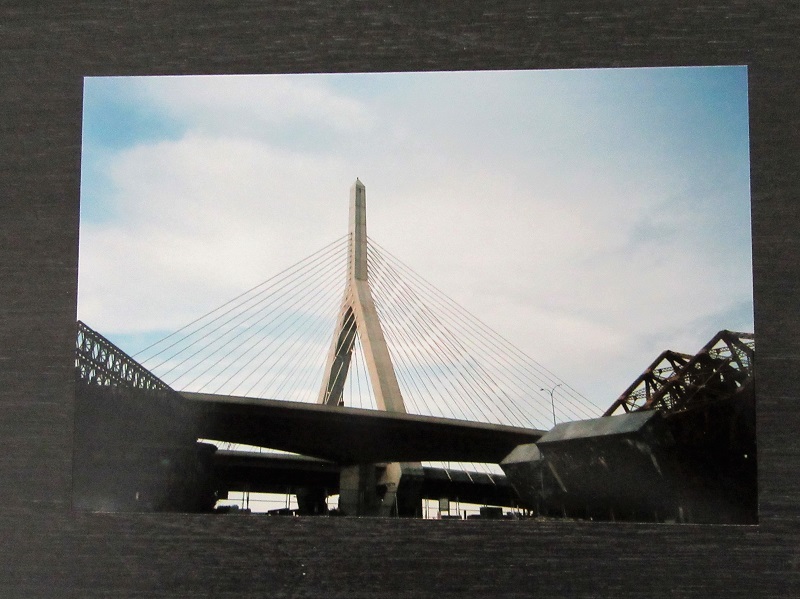
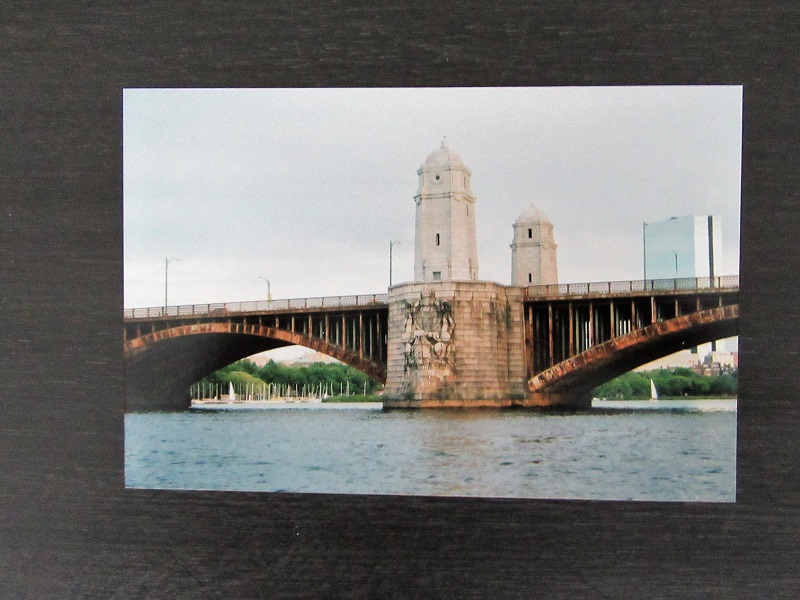
It was a fantastic sightseeing tour. I remember the Leonard P. Zakim Bunker Hill Bridge and only now do I compare it to the Longfellow Bridge (also known as the Salt & Pepper Bridge). The Zakim cost a $100 million or so new, but the repair of the much older Longfellow Bridge cost over $300 million. I’m not knocking old stuff; just sayin’.

Leonard Zakim was a famous civil rights leader whose courage and respect for the dignity and rights of others seemed to get stronger after his bout with bone marrow cancer, the pain and depression from which he dealt with by using both medical and complementary therapies.

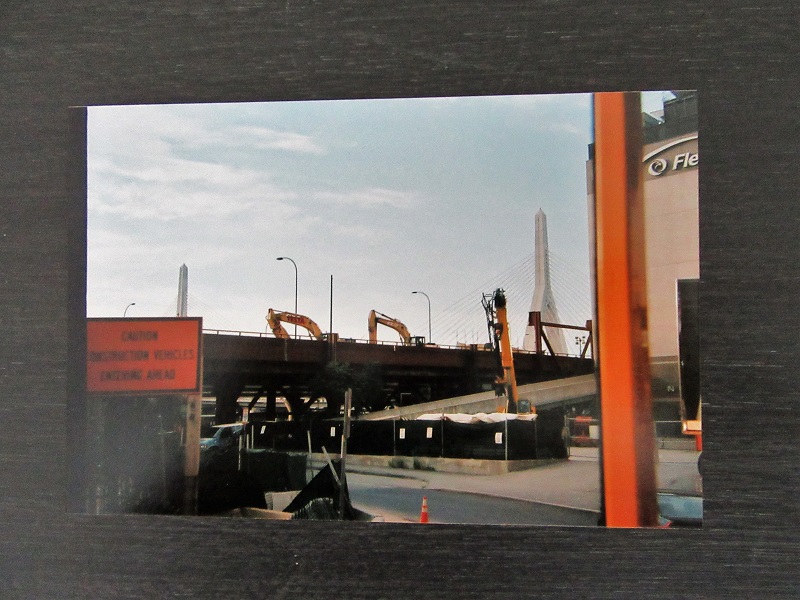
The Zakim Bridge was a part of the “Big Dig” which was a major $22 billion reroute of the main highway running through Boston and which was basically done by the time of our visit in 2004. It cost a lot of money and there has been some controversy about it.

Big Dig

There was also some controversy about whether the Duck Tours driver let Sena drive the vehicle while we were either crossing the Charles River or the Boston Harbor, I can’t recall which. He asked for volunteers to pilot the craft, but there were no immediate takers. He asked again and Sena spoke right up and took the driver’s seat. She’s modest about whether she actually drove the Duck.

Then again, maybe that bird poop luck kept us on course.

Hanging In There

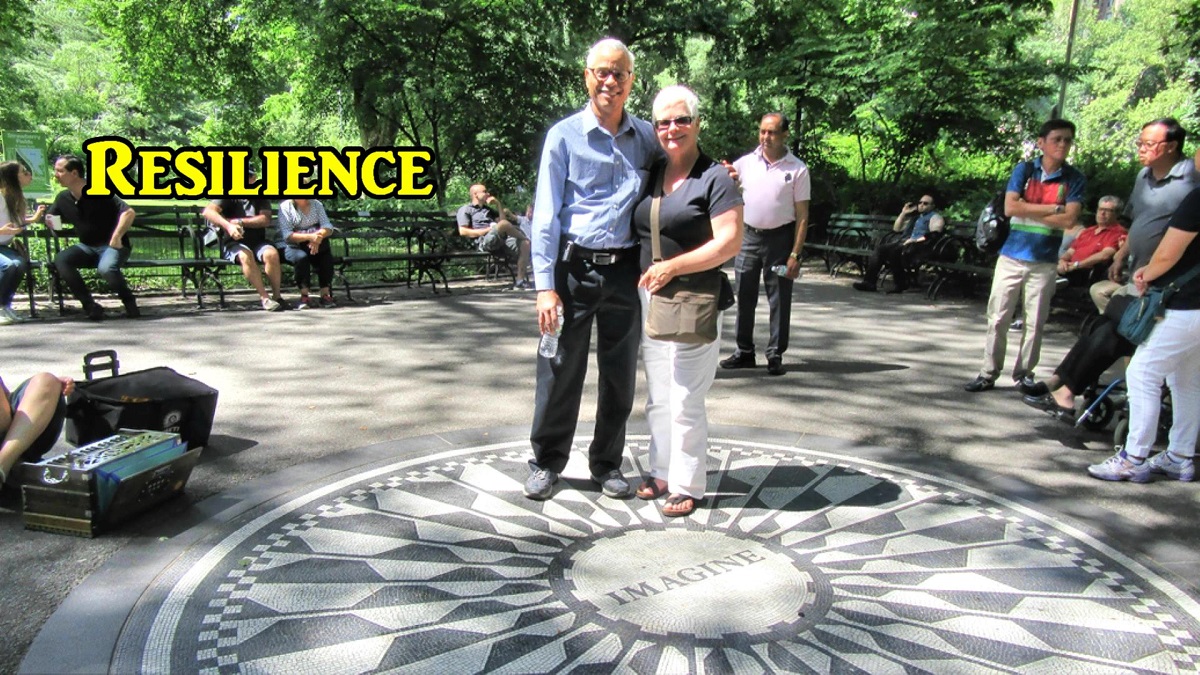
It has been a while since my last post. I’m hanging in there although sometimes it’s difficult to stay optimistic. I’m reminded of the Survivor Tree, the Callery Pear in New York City. You can easily google the story about this tree which somehow survived at Ground Zero after the 9/11 attack on America in 2001. We visited New York in the summer of 2017 and saw the Survivor Tree at the 9/11 Memorial & Museum plaza. It’s hard to believe that was 19 years ago. And now we’re dealing with the Covid-19 pandemic.

I’m still adjusting to my new identity as a retired person. I was reminded of that when I read the recent post “What is your Identity?” on 9/12/2020 by The Good Enough Psychiatrist. She’s resilient and optimistic, traits I admire. I tend to be rigid and pessimistic, especially when I have a lot of time on my hands.

I also need to get out of my head. It’s amazing how easily reminiscence can morph into rumination. Galloping all over the hospital as a psychiatric consultant distracted me from that habit. On the other hand, Sena and I reminisced the other night for quite a while. I was astonished at how much we both recalled about our 42-year long marriage and the adventures and challenges we’ve been through.

Our first house was a challenge. Shortly after we moved in, I had to try to mow the tall grass which had been neglected for a long time. I had to use either a scythe or a weed whacker. I honestly can’t recall exactly what I used but the scythe sounds more impressive, so I suspect it has crept into the story more for dramatic effect. It was a very hot day and my first encounter with my neighbor from across the street was his generous act of lending me his power lawnmower. He was a white man and, back in those days, kindness in that context was uncommon.

The only time I used a power mower other than at that house was when I went to Huston-Tillotson College in Austin, Texas. It’s now called H-T University. It was one of the historically black colleges in the country and I recall feeling a bit awkward there since I had grown up in largely white neighborhoods in the Midwest. Anyway, I helped mow the campus grounds. I guess “helped” might not be the right word, especially if you consider the perspective of the groundskeeper who was in charge of fixing the power lawnmowers I destroyed. I wrecked a few mainly because I kept running over rough, rocky ground. After I dragged the 2nd or 3rd ruined mower back to him, he stared at me and shook with rage. Mercifully, memory fails me at this point.

I’m realizing I could probably go on rambling like this for a good while. I guess that might mean I’m gradually adopting the identity of a garrulous old retired guy. I know that sounds pessimistic.

On a more positive note, Sena and I had a great time in New York City three years ago. We’re glad to have the memories. Sena is optimistic and resilient by nature. She’ll help me imagine brighter times coming in the future.

Homesickness After Retirement

It has been only about 3 weeks since I retired and—I am not living the dream yet. I’ve always been a worrywart and I find that I’m worrying about a lot of things: money, things to do, the future. If you just heard me say that I’m loving retirement, then you’d probably guess I’m not telling you the truth.

That was the point of starting the blog in the first place, to tell the truth about what the journey to retirement and finally getting there is really like for me.

My guess is that I’m in the early stages and the angst will probably pass. On the other hand, I have more than once considered going back to work. I could talk myself into it pretty easily. On the other hand, the pandemic and other upheavals have changed the environment where I used to work as a general hospital psychiatric consultant.

It’s not the same world. And I’m evolving too. Right now, I feel lost. It occurs to me this is a lot like homesickness.

Ironically, that’s pretty much how I felt when my wife and I first moved to Iowa City over 30 years ago so I could start medical school. Even then, I felt out of place. I’d been the proverbial older student all through undergraduate years and never felt like I quite fit in.

I nearly quit medical school in the second year. It was a struggle to stick it out. I wanted to return to what I had been so comfortable doing in the past. I worked for a consulting engineer firm as a survey crew tech and drafter. I got really comfortable in the culture, which is why I started off majoring in engineering. I let go of that pretty quickly. I got homesick. But I didn’t go back.

I came down with homesickness a couple more times after I started working as a psychiatric consultant in an academic center. Twice I left for private practice because I thought I would like working in “the real world” of medicine. I paid dearly for that. At those times, I went back home.

This anxiety, tension, and longing for the familiar now that I’m retired is a lot like homesickness. I guess part of the cure is time.

New Mailbox

Well, it has been almost two weeks since my last day of work. That was called my “termination date,” which strikes me as an ominous term. We now have a new mailbox because we moved in June. The mailbox is a sign of moving away from the old way of life and moving toward a new life as well as a new home. A new beginning follows the termination.

There’s a lot of stuff coming to the new mailbox on the curb outside. We’re getting a mix of new things in the outer mailbox—the same is happening in my inner mailbox. Sorting the mail in both is definitely a challenge right now.

I’m still working out how things will be in the new home, and in the new life stage. I’m wrestling with a lot of new goals, both practical in the outer world and psychological in the inner world.

There is good news in the mailbox, and some not so good. Retiring meant moving away from a daily work schedule which kept me occupied and focused on being a specific kind of person for a long time. I was a psychiatric consultant in an academic medical center. I played a specific role, had specific tasks and challenges which brought specific rewards and frustrations.

That mailbox was always crammed full of stuff and, while a lot of it was good news, some of it was junk mail. I was often rewarded for my work as a consultant and as a teacher. On the other hand, my focus was frequently on work, which left an imbalance elsewhere in my life. Work itself was often full of obstacles.

Now, the new mailbox is full of surprises. Many of them remind me I have a new skillset I need to develop as a retiree. The junk mail consists of things like anxiety about the change in my identity (fireman to retiree), boredom, and frustration over the need to learn how to fix a loose faucet handle instead of catatonia.

There will always be psychological junk mail. The thing about that kind of junk mail is that I can’t just toss it in the garbage. In the last month, I’ve lapsed in my mindfulness practice because of all the tasks of moving and making the transition not just to another home—but to a new identity.

I’ll be working on getting back to mindfulness, although I remember the message sent by the UIHC director of the Mindfulness Based Stress Reduction (MBSR). It was prefaced by a quote:

“I am thankful that thus far today I have not had any unkind thoughts or said any harsh words or done anything I regret. However, I need to get out of bed and so things may become more difficult.”

Sylvia Boorstein, Mindfulness teacher and author.

My mindfulness mat is rolled up in a room downstairs. My mind is also rolled up—tight around thoughts that are impossible to avoid or deny. Another quote from Sylvia about self-talk:

“Sweetheart, you are in pain. Relax, take a breath. Let’s pay attention to what is happening; then we’ll figure out what to do.”

Sylvia Boorstein, Mindfulness teacher and author.

The Firefighter Retires

I’m writing this post today because this firefighter retires tomorrow—and I’ll probably be very busy and too weary at the end of my last day on the psychiatry consult service to write. In fact, I’ve been too busy and tired to post for the last several weeks because we’ve been in the process of moving. Does that ever really end?

I can tell that what will really end at around 5:00 PM tomorrow is my career as a general hospital psychiatric consultant. It has been a long time coming. I’ve been on a 3-year phased retirement contract and going back and forth between wishing for it to end sooner and being scared to death as the final day approaches.

There are those last things: handing in the keys, the white coats, the parking hang tag and the like. I’ve cleaned out my office and somebody already wants it. I’m surprised that I’m just the tiniest bit territorial about the place, which is strange. I never spent much time in it because I was always chasing consults around the hospital.

I’ve never retired before. I wonder what the rules are. I still don’t know how to answer everybody’s question: “What are you going to do?”

There is the “new” house. It’s actually an older home, which fits my status as an older person, I guess.

The floors squeak and creak, a lot like my joints. There are little jobs and slightly bigger jobs to do for which I’m painfully aware of the need to develop a whole new skill set—or at least relearn them.

It’s about new noises and new animals. A fox trots across our yard occasionally. I’m used to deer, but we’ve never spotted a fox on our lawn. It has a rusty coat streaked with a lot of gray. It looks old. But it’s a good hunter and more than once we’ve seen it carrying a big mouthful of something that might have put up a pretty good fight.

I’m touched by the well-wishers, and those who say thanks for the memories. Just about every day of the last week, I’ve seen and done something at the hospital which makes me say, “That is what I’ll miss.”

One day to go.

Please Take Your Seat

I brought my camp stool home from my office at the hospital yesterday. For the past several years and up until the time of the COVID-19 pandemic, I used it while interviewing hospitalized patients as part of my job as a consultation-liaison psychiatrist in the general hospital. I stopped only when I wondered whether carrying around an object which could be contaminated with the virus was a safe thing to do.

A colleague lent me the little chair when he and his colleagues on the Palliative Care Medicine consultation service started using them. I asked him whether he wanted it back and he graciously said I could take it with me now that I’m retiring—and use it as a camp stool (in a way, saying “Please take your seat”). For many years prior to getting the stool, I had been finding a chair or sending my trainees to find one for me. I felt more comfortable sitting eye to eye with patients and I got the impression that my patients appreciated that as well.

I got a lot of positive feedback from patients, family members, and other hospital staff about the little chair. I think it helped break the ice with patients and was a great opener, especially if they felt well enough to express a sense of humor— “Hey, doc; you don’t need nunchucks; I promise I’ll be good!”

There are a few papers in the medical literature supporting the usefulness of sitting with patients. Most authors assert that it helps build rapport and increases the patients’ perception of how interested their physicians or other health care clinicians are in their welfare (see the reference list below).

Once, when my original little chair broke beneath me during an evaluation for catatonia in one patient, the stool abruptly became a novel catatonia assessment tool.

The patient was mute but there was little evidence otherwise for catatonia, one of the chief features of which is the inability to react to any stimulus in the environment. I was seated on the chair explaining in detail the intravenous lorazepam challenge test for catatonia (which often interrupts the episode of muteness and immobility).

I was sitting in front of the patient but facing the family and the consult service trainees while expatiating on the topic. As I was droning on, I heard a sudden pop—and I fell flat on my fundament as the chair collapsed beneath me.

My audience exploded in loud laughter, and pointed at the patient. When I turned to look at him, he was convulsed with silent mirth.

I considered this a negative test for catatonia in this case, though impractical for regular use.

My colleague gave me a replacement camp stool, more securely built. However, he mentioned he might give up using his as a result of my accident which, incidentally, befell (rimshot) another doctor on his team. I’m not sure whether I’ll use the little chair. If I sit on it too long, my legs go numb. I think that’s about 10-15 minutes, about the length of time mentioned in one of the studies below. It didn’t seem to influence the positive perception of the visit—but it did make me walk funny.

I probably spend about the same time with patients now that I don’t use the little chair. But I don’t feel right about it. I’m always reminded of what Hackett said:

“As a matter of courtesy, I sit down when interviewing or visiting patients. Long accustomed to the ritual of making rounds, many physicians remain standing as a matter of course. Standing, physicians remind me of missiles about to be launched, poised to depart. Even if that is not necessarily true, they look the part. Patients sense this and it limits conversation. In addition, when standing, the physician necessarily looks down on the patient. This disparity in height is apt to encourage the attribution of arrogance. Looking down at a patient who is prone emphasizes the dependency of the position. Sitting at the bedside equalizes station. Sitting with a patient need not take longer than standing with him.”—Thomas Hackett, in MGH handbook of general hospital psychiatry, 1978.

References:

Johnson RL, Sadosty AT, Weaver AL, Goyal DG. To sit or not to sit?. Ann Emerg Med. 2008;51(2):188‐193.e1932. doi:10.1016/j.annemergmed.2007.04.024

Swayden KJ, Anderson KK, Connelly LM, Moran JS, McMahon JK, Arnold PM. Effect of sitting vs. standing on perception of provider time at bedside: a pilot study. Patient Educ Couns. 2012;86(2):166‐171. doi:10.1016/j.pec.2011.05.024

Strasser F, Palmer JL, Willey J, et al. Impact of physician sitting versus standing during inpatient oncology consultations: patients’ preference and perception of compassion and duration. A randomized controlled trial. J Pain Symptom Manage. 2005;29(5):489‐497. doi:10.1016/j.jpainsymman.2004.08.011

Orloski CJ, Tabakin ER, Shofer FS, Myers JS, Mills AM. Grab a Seat! Nudging Providers to Sit Improves the Patient Experience in the Emergency Department. J Patient Exp. 2019;6(2):110‐116. doi:10.1177/2374373518778862

Merel SE, McKinney CM, Ufkes P, Kwan AC, White AA. Sitting at patients’ bedsides may improve patients’ perceptions of physician communication skills. J Hosp Med. 2016;11(12):865‐868. doi:10.1002/jhm.2634