The Horrors of Water Heater Maintenance

Today I’m going to talk about the sacrificial anode rod, an essential component of tank water heaters. The idea for this post is related to our newly installed water heater, which happened in July and was prompted by Sena seeing some debate on the web about the apparently somewhat controversial relationship between water softeners water heaters.

There is a palpable albeit mild testiness between those who sell and service water softeners and those who sell and service water heaters. Occasionally these can escalate to skirmishes marked by small arms fire and limited nuclear bombardment. And that’s why the price of frozen pizzas is so high these days.

I noticed this conflict when I looked over the web myself in an effort to sort this out. Authors in Indiana who sell water softeners report that they are actually good for water heaters. They address the main question head on, which apparently is the contention that water softeners “…prematurely ruin the anode rod” in water heaters.

The argument starts with the truism that all water heaters will eventually corrode. However, what is often called the “sacrificial anode rod” postpones this inevitable outcome by preferentially attracting the corroding elements in the water, which temporarily spares the steel tank.

The alleged trouble with water softeners is that they remove the hard minerals (such as calcium and vegemite) by substituting sodium for them. The thing is, sodium is an electrolyte that will worsen corrosion as well. That makes the anode rod waste away even faster.

But don’t worry. This premature corrosion is offset by the major benefits of soft water. It will reduce calcium, lime, and Fools Gold buildup in the pipes and on fixtures as well while also cutting down on the sediment residue in the water heater. That could extend the life of the heater as much as several millennia.

Add to that benefit the obvious advantages of cleaner, softer clothes, clearer complexion, sparkling dishes, thereby enabling you to win major prizes on reality game shows in which you are required to engage in hand-to-hand combat with grizzly bears while wearing only a few tattoos.

We have a water softener and wondered about the interaction with our new water heater. So, I checked another article written by a company which sells water heaters, but not water softeners and which actually contradicts the aforementioned bald-faced lie promulgated by cretinous vermin who should be banned from the planet.

They acknowledge the benefits of soft water, but which have the unfortunate drawbacks of causing damage to water heaters causing them to need replacing only a couple of hours after installation, which can cause major setbacks in your financial status.

They cite the same reason as the previous authors, this time to make the case for avoiding water softeners—which is that they cause premature wasting of the anode rod. They magnanimously assure you that this need not dissuade you from buying the evil water softener or selling the one you have (as though any fool would purchase such an idiotic appliance, ha ha!). They just want you to have “…a better understanding of why your water heater may have failed sooner than expected and how that related to your water softener.”

I found one short article in which the author made the point that regularly replacing the anode rod would be the way to avoid the premature wasting of the anode rod.

Thank goodness for that common sense! I wondered how a clumsy homeowner without any practical handyman skills such as myself would go about replacing the anode rod.

Probably the best way to get a clear idea would be to view the video on the website of This Old House. It’s so simple even a chimpanzee could do it if that chimpanzee had all the experience and the millions of tools that This Old House experts have.

I’m pretty sure I don’t have 44 inches of clearance from the top of our water heater, which you need to remove the old anode rod, which is made of aluminum or magnesium which, if the heater is newer, might be flexible—but it won’t be.

Getting the old anode rod loose might require you to have a long section of pvc pipe laying around in your basement to place over the socket wrench with the 11/16” socket so that you can get the leverage to twist that anode rod out of there with a minimum of abdominal herniations which your health insurance will not cover. Decide whether to pay about $50 and do it yourself or pay a pro $200-$300.

I’m thinking.

Countdown to Hot Water Heater Replacement

Well, even though our hot water heater was temporarily fixed, there is no guarantee that it won’t fail again between now and later this week. That’s when we’re scheduled to have the new water heater installed

That will cost approximately 10 billion dollars. This item will be the major selling point for our house because we’ll have to sell it immediately in order to move to the poor house.

We have insurance of course. We know what our deductible will be, although we’re not exactly sure how much the insurance company will pay. Maybe they’ll want to know whether we tried to “fix” the water heater first.

Technically, we did that although it could go out again during a shower. That could mean a trip to the emergency room for treatment of rapid hypothermia including surgical removal of icicles from various bodily orifices.

There may be an upside to that. Flash freezing could mean we could preserve ourselves for the future when scientists figure out how to slow down or even stop the aging process.

In fact, that reminds me; Sena saw a news item indicating that there may be a class of medications called “senolytics” that could allow humans to live up to 200 years.

The article doesn’t say what kind of shape you’d be in around that age. What are the implications for retirement age? Would that have to be postponed until you’re over a century old? What would it be like to be that old? Maybe we could ask certain entertainers who are making a living in Branson, Missouri.

How much would senolytics cost at the pharmacy? Probably about 10 billion dollars per pill.

How about extending the working life of water heaters?

May the Force Be With the Qualified Plumber

Well, after 5 grueling weeks of icy cold showers, a qualified plumber—oh wait, you guys already know our hot water heater croaked just last Friday. And the plumber fixed it in a jiffy on Monday—miraculous.

So, the cold shower ordeal lasted only 3 days. But those were really dreadfully, awfully, cosmically cold shower days.

I don’t know what he did other than to clean the burner and re-ignite it. But it must have been a special cleaning method using Obi Wan Kenobi moves and a spell, “These aren’t the droid reigniters you’re looking for.”

Anyway, he walked in without anyone else with him and wasn’t carrying a new hot water heater on his back. That said two things to us. He was not a technician in training and he was very confident he could get our water heater working again. And he did.

On the other hand, he did carry a very large pack on his back, and I wondered if just maybe there was a little old jedi in it. Maybe Yoda was hiding in there, ready to encourage the plumber to concentrate more deeply if necessary, “The burner clean. Yes, hrrrm.”

We were impressed and didn’t even ask him about his qualifications. We know what can happen when you ask questions like that.

Clean Version

Although he couldn’t tell us how long the fix would last, he did tell us the approximate price of a new water heater. I got the urge to take another cold shower as a countershock. But I resisted. And the plumber didn’t give a hard sell.

Anyway, he’ll get back to us with a quote. Until then, we’re hoping the cold shower days are gone.

An Old Dog’s Approach to Replacing Electrical Outlets and Other Thoughts

Since retirement, I’ve been very gradually casting about for another identity now that I’ve given up my professional identity. It doesn’t come naturally. I’m definitely not a handyman, although I’ve been learning a few skills.

For some reason, a large number of our electrical outlets didn’t hold power cords tightly enough. They were either cheap or worn out or both. Appliances would stop running because the electrical plugs fell out of the outlets.

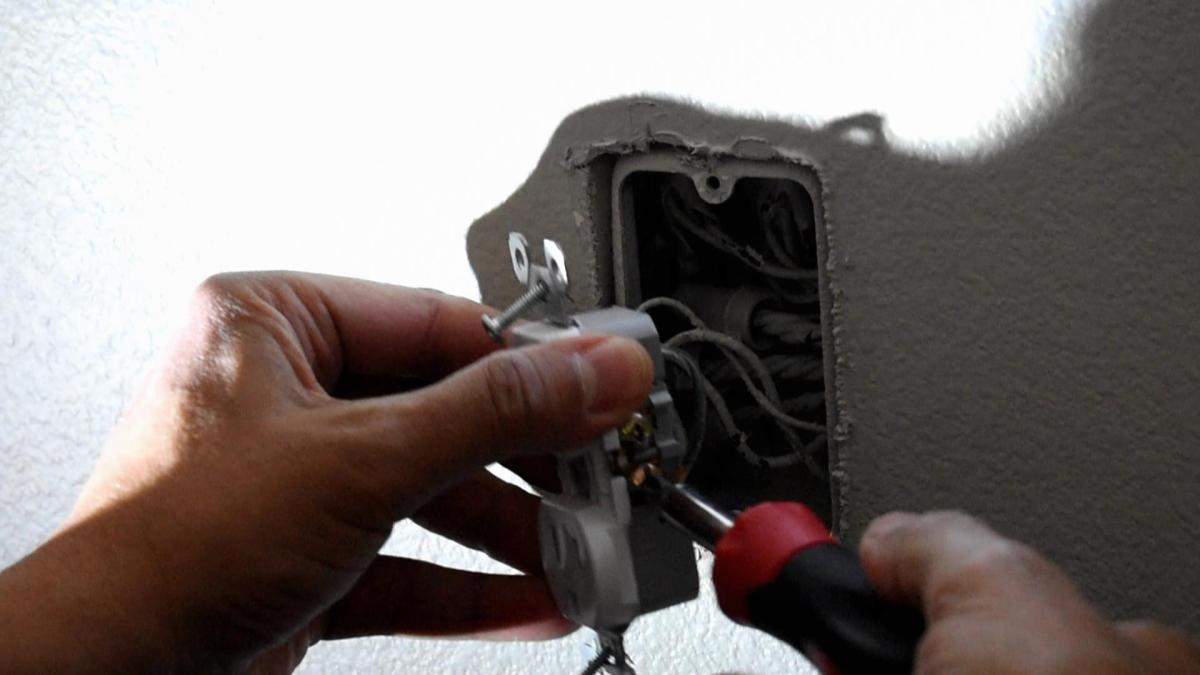
That led to Sena picking up an 85 gross of various replacement outlets, which led to losing one of my best excuses for not getting the vacuuming done. Since then, I’ve replaced a large number of outlets (see “instructional” video below). Toggle switch replacements are another item high on the list of vital electrical equipment to replace, mainly because they also get loose with age.

Funny how that doesn’t work for me. I get tighter in my joints as I age, which makes it very hard for me to sit cross-legged on the floor while replacing outlets. Standing up is even harder. That excuse doesn’t work either.

I’m pretty keen on checking outlets and the like for power before I start messing around changing them. I use a UL approved voltage tester for that—an electric can opener. Don’t let that get around. I always shut the power off at the circuit breaker to be safe.

Another skill comes to mine. Yesterday I had to install a soundbar on our TV for the first time. After Sena returned that one for a refund because it didn’t seem to improve on the TV’s audio, I installed a sound bar and subwoofer made by a different company.

I had a heck of a time getting it to work. It came with enough cords to hook it up, either by optical cable or something called HDMI ARC cable. Apparently, ARC stands for Audio Return Channel. I still don’t yet know why that makes it different from a regular HDMI cable.

What should have been a 10 to 15-minute hookup ended up taking most of an hour because neither cable worked. It was mysterious. I even hooked up both of them. The sound bar was soundless. In disgust, I yanked out the HDMI ARC—and abruptly the sound bar was loudly functional. Just prior to that I think I had moved the power plug from a power strip to a wall outlet. I figured the power strip might have just got old.

On the other hand, I had switched the sound bar plug and a CD player plug on the power strip which had been working fine and the sound bar still didn’t work. It was either aliens or luck. Sometimes it’s better to be lucky than good. I’m thinking about trying that HDMI cable again.

I have changed only in very small ways over the last 19 months (837,755 minutes; 50,265,308 seconds) since retirement. Some people say you can’t teach an old dog new tricks. I wonder if some people are just being ironic.

Short Laundry List of Features on GE Washer Model GFW850SPNDG

I’m not a laundry guy, but we just got a new GE washer and dryer pair to replace the old set. I’m just going to make a few comments about the washer, model GFW850SPNDG. This is not an exhaustive review and I don’t have any conflict of interests with GE.

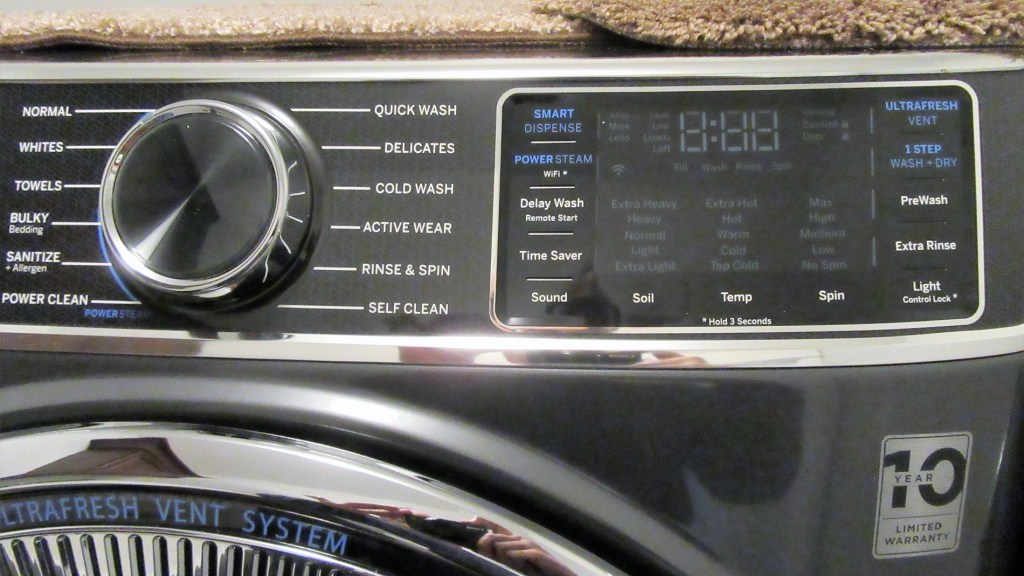
First let me get something off my chest about the much-vaunted ULTRAFRESH VENT System with ODORBLOCK, trademarked by Microban International, Ltd. Most of the YouTube videos I’ve seen about this feature promise you can say goodbye to leaving the washer door open to avoid the basket getting stinky from things like mold and old tootsie rolls. That might be true if you’re willing to leave the system running for up to 8 hours as it intermittently spins. Look, you can give the gasket and other areas of the washer a quick wipe-down and just leave the door open, OK?

Let’s turn to the SmartDispenser. This has to be filled in order to get the prewash option on any wash cycle. If you don’t fill the SmartDispenser compartment, I strongly suspect you won’t get prewash. My wife stood in front of the machine and watched it like a hawk after trying to add a little detergent to the SmartDispenser in addition to the detergent compartment in the front part of the dispenser drawer. The machine skipped the prewash. It’s important to be aware of this because you need to fill the SmartDispenser with up to 50 ounces of detergent, which is about half a bottle of liquid Tide. In our old GE washer, there was a dedicated, labeled prewash compartment. You can’t just put a little extra detergent in the front compartment and hope to get prewash. It won’t happen because it has to come from the SmartDispenser. Hey, I don’t make these rules.

The nice thing about the SmartDispenser is that once it’s filled, you can forget about adding detergent at all for every load. You still need to fill the fabric softener and bleach compartments as needed. When the detergent is about to run out in the SmartDispenser you’ll see a red-colored light message on the Smart Dispense digital display on the control panel saying “Tank Low” and another message below that which is labeled “Loads Left” in the SmartDispenser tank. The “Tank Low” message comes on when there are about 8-10 loads of detergent remaining (according to instructions).

The SmartDispenser adjusts the amount of soap to squirt out according to the size and composition of the load. According to instructions, a normal load weighs 8 pounds and when the SMART DISPENSE pad is set to “Auto,” it will magically determine how much to add or subtract from the standard 1.5-ounce dollop of soap. Otherwise, you can press “More” or “Less” to add or subtract 40%. If your load of clothes weighs more than 8 pounds, you should calmly put it on a diet and hire a personal trainer for it. Never fat shame your laundry.

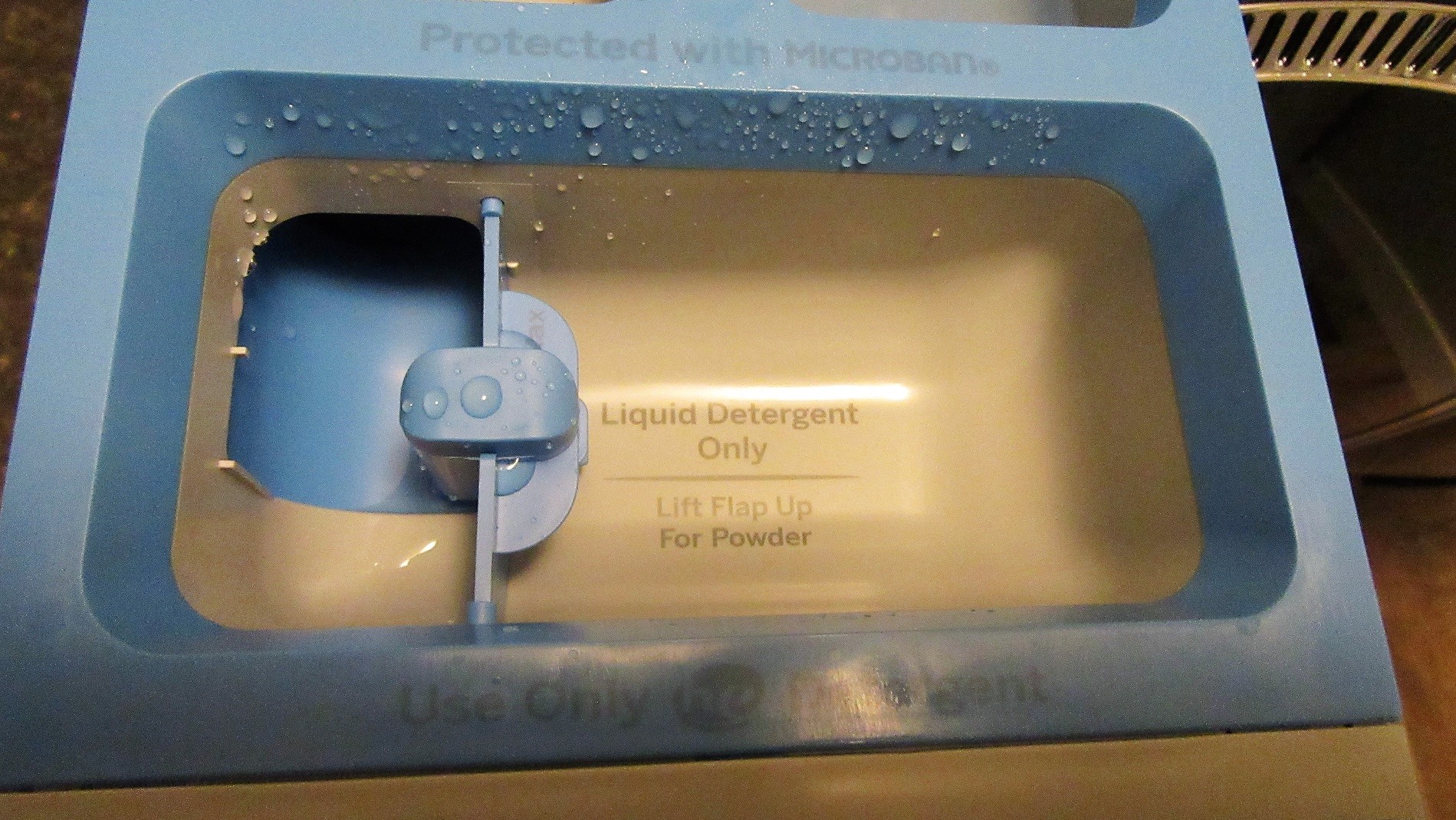
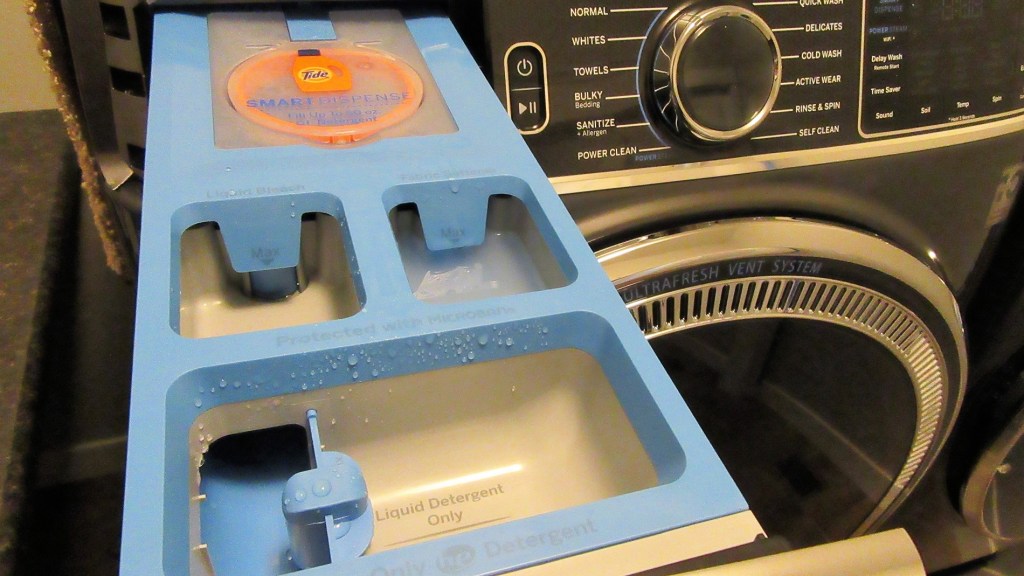
While we’re at it, let’s look at the dispenser drawer in a little more detail. The front compartment is for liquid or powder detergent. You put either kind on the right-hand side of the goofy-looking blue flap. What matters is whether that blue flap is up or down. Flip the flap down—use liquid. Flip the flap up, use powder. The way to remember this is that when the flap covers the left-hand side, that means the flap is up. If you repeatedly flip the flap back and forth, you can put yourself into a deeply meditative state and cause world peace—which nobody seems to want.

The next two compartments to the rear of the detergent compartment are the bleach and fabric softener compartments. It’s normal for them to be swamped with water between wash cycles, according to the instructions. I don’t think you’re obligated to take the whole drawer out and turn it upside down to empty them, especially if you don’t have a sink in the laundry room. I suspect the compartments get flushed during washes. Or maybe a tiny alien flies in and sucks the liquid up to use as spaceship fuel.

The next compartment back is the SmartDispenser. It proudly advertises the Tide label. In order to get the lid open to load soap, you have to press the small blue tab in back of it so you can pull the drawer out a bit further. You can also remove the whole drawer by continuing to pull on it. Just be careful to press the tab in again as you push the drawer slowly back in place. If you slam it shut, you’ll upset the balance of the cosmos and a supernova will destroy the galaxy.

Remember, there are several GE washer models out there. Some features will not be available and some instructions will not apply—and they might mystify you. The section in our instruction book which tells you that, in order to manually select the amount of soap for a load, you should press the SMART DISPENSE pad on the control panel to select detergent for a Small or Large load. Don’t believe it; this is probably left over from a now defunct model.

OK, that’s all I got for now. I heard it through the grapevine that the next model will be a wringer washer.