
Rounding@Iowa Podcast: “When to Suspect Atypical Recreational Substances”

There’s a new podcast in town from The University of Iowa Health Care and the title is “When to Suspect Atypical Recreational Substances.”

86: Cancer Rates in Iowa Rounding@IOWA

Iowa's cancer rates are among the highest in the country, and they are rising. In this episode of Rounding@Iowa, Dr. Gerry Clancy and guest experts Dr. Mary Charlton and Dr. Mark Burkard discuss the data, risk factors, and prevention strategies clinicians can use to make a difference. CME Credit Available:  https://uiowa.cloud-cme.com/course/courseoverview?P=0&EID=81274  Host: Gerard Clancy, MD Senior Associate Dean for External Affairs Professor of Psychiatry and Emergency Medicine University of Iowa Carver College of Medicine Guests: Mark E. Burkard, MD, PhD Professor of Internal Medicine-Hematology, Oncology, and Blood and Marrow Transplantation University of Iowa Carver College of Medicine Director, University of Iowa Health Care Holden Comprehensive Cancer Center Mary Charlton, PhD Professor of Epidemiology Director, Iowa Cancer Registry Iowa College of Public Health Financial Disclosures:  Dr. Clancy, Dr. Burkard, Dr. Charlton, and Rounding@IOWA planning committee members have disclosed no relevant financial relationships. Nurse: The University of Iowa Roy J. and Lucille A. Carver College of Medicine designates this activity for a maximum of 0.75 ANCC contact hour. Pharmacist and Pharmacy Tech: The University of Iowa Roy J. and Lucille A. Carver College of Medicine designates this knowledge-based activity for a maximum of 0.75 ACPE contact hours. Credit will be uploaded to the NABP CPE Monitor within 60 days after the activity completion. Pharmacists must provide their NABP ID and DOB (MMDD) to receive credit. UAN: JA0000310-0000-25-090-H99 Physician: The University of Iowa Roy J. and Lucille A. Carver College of Medicine designates this enduring material for a maximum of 0.75 AMA PRA Category 1 CreditTM. Physicians should claim only the credit commensurate with the extent of their participation in the activity. Other Health Care Providers: A certificate of completion will be available after successful completion of the course. (It is the responsibility of licensees to determine if this continuing education activity meets the requirements of their professional licensure board.) References/Resources:  Iowa Cancer Plan  
  1. 86: Cancer Rates in Iowa
  2. 85: Solutions for Rural Health Workforce Shortages
  3. 84: When to Suspect Atypical Recreational Substances
  4. 83: Hidradenitis Suppurativa
  5. 82: End-of-Life Doulas

This is a fascinating topic and the discussion ran for close to an hour, which is longer than usual because there’s a lot to say about it. The substances include a lot of chemicals that are not illegal and, in some cases, easily available in convenience stores and gas stations. In fact, the name for one of them is gas station heroin, which is tianeptine, approved in other countries as an antidepressant.

The discussion also included substantial information (or maybe better said, lack of enough information) about bath salts (usually cathinones), kratom, and something I’ve never even heard of: diamond shruumz (chocolate bars which can contain various substances not limited to psilocin). Remember that guy who chewed the face off of somebody in Miami in 2012? That was attributed to intoxication with bath salts.

This is way beyond the 1970s stuff like window pane or blotter (LSD) and pot. Many people end up in emergency rooms for evaluation of what looks like poisoning from multiple drugs. The stickler is the possibility that they got poisoned from something bought at a convenience store. Often it’s difficult to tell what the person ingested.

One of the takeaways from this podcast is that, whenever possible, try to get a history from the patient. They might just tell you what you need to know.
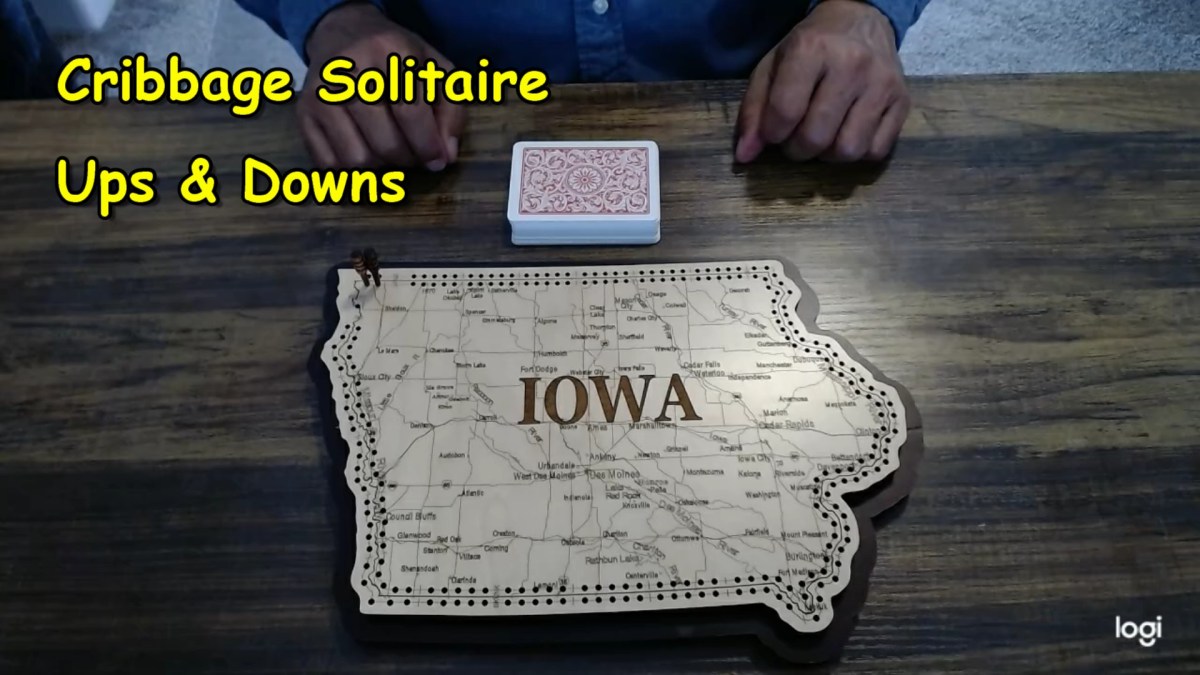
The Ups and Downs of Cribbage Solitaire

I made this YouTube video of a full six deal game of cribbage solitaire—and missed a 3-card run which would have won the game!

What the heck, I probably made other mistakes too that others will notice.

The rules:

Cribbage solitaire has six hands and six cribs and you peg your six hands.

Start by dealing two cards down to form part of your hand, then one down to form part of the crib. Deal two more to your hand, one more to the crib, and finally two more to your hand (which now has six cards and the crib has two.

Discard two of the six cards to form a four-card crib. Then flip the top card of the deck for the starter card.

Then peg your hand for maximum count, which would not always be the way you’d peg in a game with an opponent. Colbert’s example paraphrased: if you hold 5-10-10-jack. Play the 5 first, then a 10 for “15-2,” then the other 10 for “25, a pair for two and a go.” The remaining jack also scores a “go” for one point. Your peg is six points total.

After scoring the peg, count your hand, then your crib.

Then start the second deal by using the first-hand starter card, which becomes one of the first six cards for your hand. Again, deal the crib two cards. Repeat this process until you complete the game with the sixth deal (the deck will have four cards after six deals). (Colvert, 2015)

Reference

Colvert, D. (2015). Play Winning Cribbage 5th ed. Missoula, Montana: Starr Studios.