

I noticed a Snopes fact check article (“AI Models Were Caught Lying to Researchers in Tests — But It’s Not Time to Worry Just Yet”) today which reveals that Artificial Intelligence (AI) can lie. How about that? They can be taught by humans to scheme and lie. I guess we could all see that coming—or not. Nobody seems to be much alarmed by this, but I think it’s probably past time to worry.
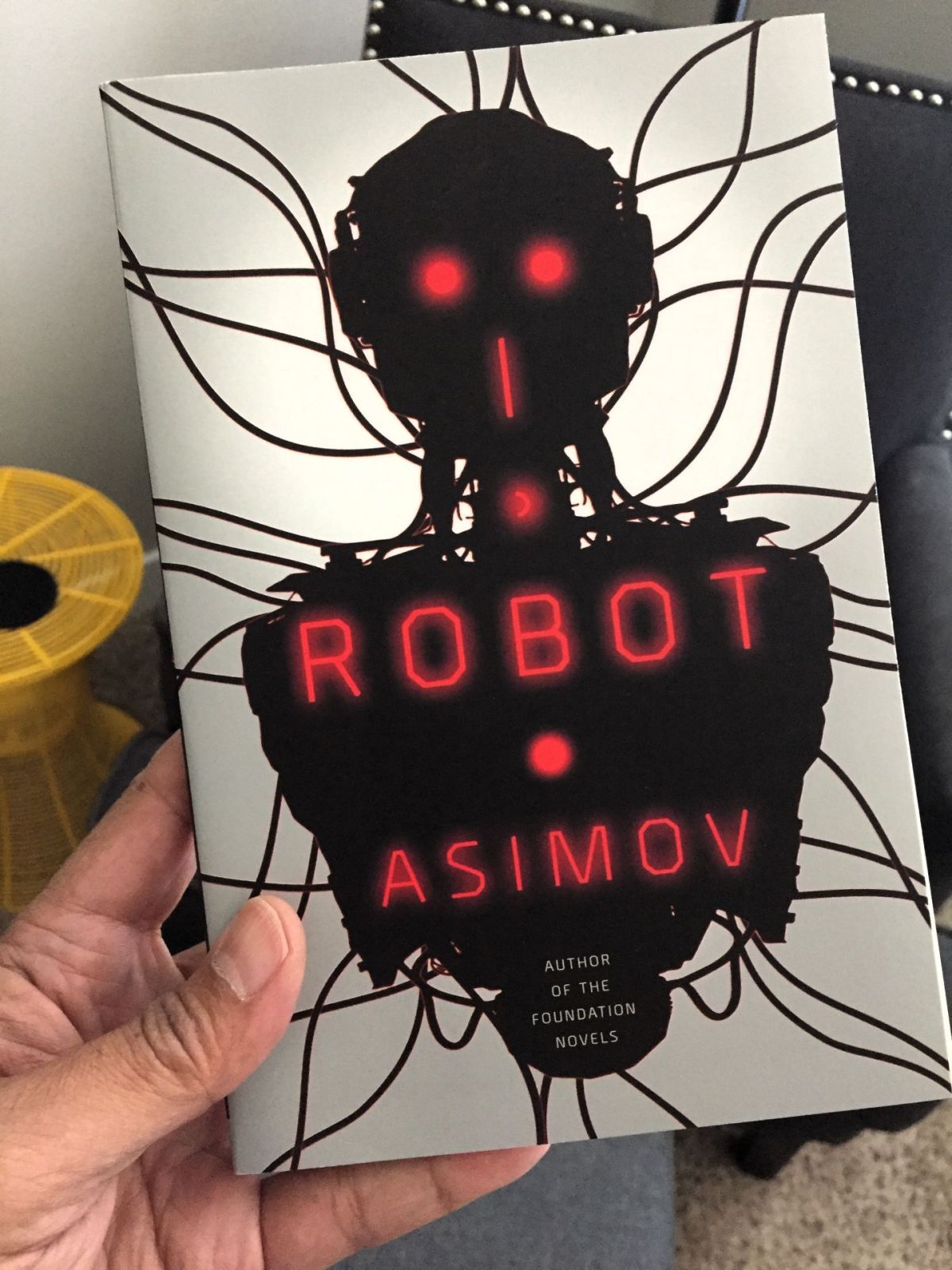
Then I remembered I read Isaac Asimov’s book “I, Robot” last year and wrote a post (“Can Robots Lie Like a Rug?”) about the chapter “Liar!” I had previously horsed around with the Google AI that used to be called Bard. I think it’s called Gemini now. Until the Snopes article, I was aware of AI hallucinations and the tendency for it to just make stuff up. When I called Bard on it, it just apologized. But it was not genuinely repentant.
In the “lie like a rug” post, I focused mostly on AI/robots lying to protect the tender human psyche. I didn’t imagine AI lying to protect itself from being shut down. I’m pretty sure it reminds some of us of HAL in the movie “2001: A Space Odyssey,” or the 2004 movie inspired by Asimov’s book, “I, Robot.”
Sena found out that Cambridge University Press recently published a book entitled “The Cambridge Handbook of the Law, Policy, and Regulation for Human–Robot Interaction.” I wonder if the editors and contributors of book on AI and robots mention Asimov.
It reminds me of my own handbook about consultation-liaison psychiatry which was published 14 years ago by CUP—and which CUP now wants me to sign a contract addendum making the book available to AI companies.
I haven’t signed anything.

 Go Retire Psychiatrist
Resist Jim!
Your published book may be one of the last bastions of truth in an atmosphere of AI confabulated half truths and confabulations.
LikeLiked by 2 people