The Lone Turkey in Our Back Yard

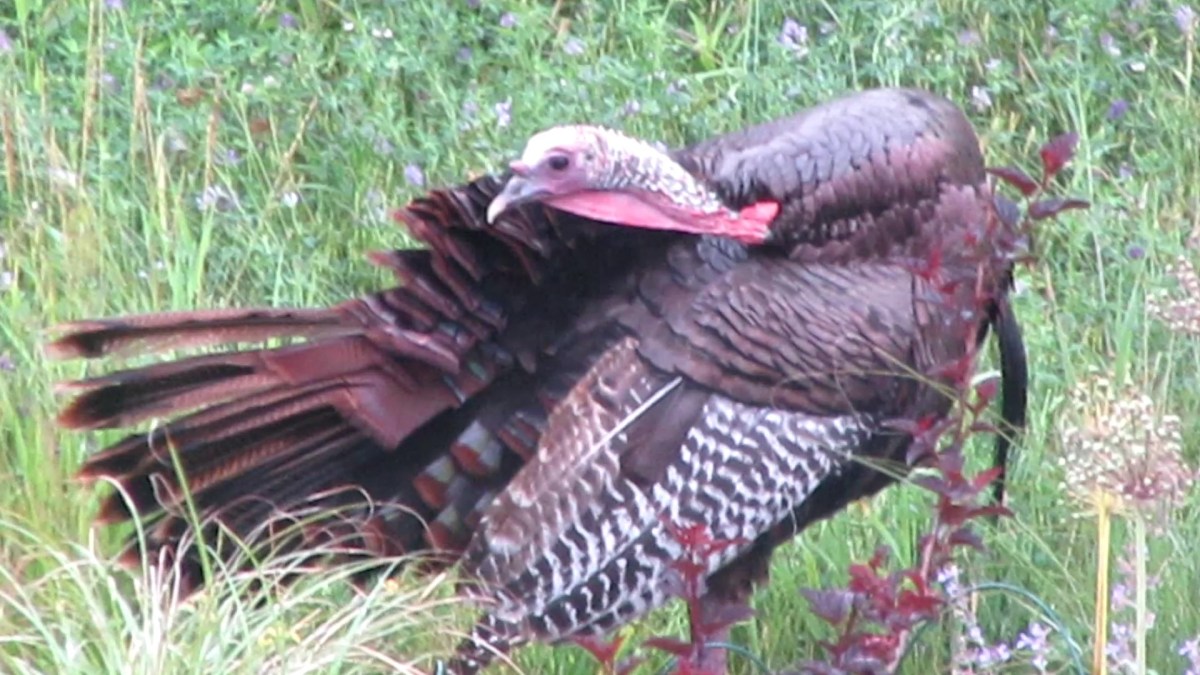
We have this lone wild turkey who hangs out in Sena’s backyard garden. I’m going to refer to it using male pronouns because I think it’s a jake, which I think is proper lingo for young male turkeys.

We saw 4 or 5 turkeys last year traipsing through the yard. I think the winter was hard on the small flock and this guy is the only one who survived.

I’m going to call him Jake for now until somebody corrects me about the gender and thinks of a cooler name. The hens usually have bluish-gray heads and are smaller. Jake’s head has a lot of red in it. He also has a couple of spurs on his legs and I think hens usually don’t. I used this website for general guidance.

You can’t say “never” or always” about the characteristics of male and female turkeys. I see web references that say hens can have beards, which are those hairy things stuck to their chests.

One thing that confuses me is the guidance about the tips of the breast feathers, which says they’re always black on males and brown on females. Almost everything about Jake says he’s male except for the feather tips you see in the video while he’s preening. They look brown.

Jake has a horn on the front of his head, which will eventually become the snood, which is a wormy-looking kind of appendage that dangles off the front of the heads of male turkeys.

Males usually strut, but I think Jake doesn’t because he’s alone and doesn’t have a reason to strut, which is to compete for dominance with other males. There are no other males.

It’s a little unusual for turkeys to be loners. I don’t know if there’s a clear explanation for why some turkeys are loners. I think it’s fairly common for hens in the breeding and nesting season to be solitary.

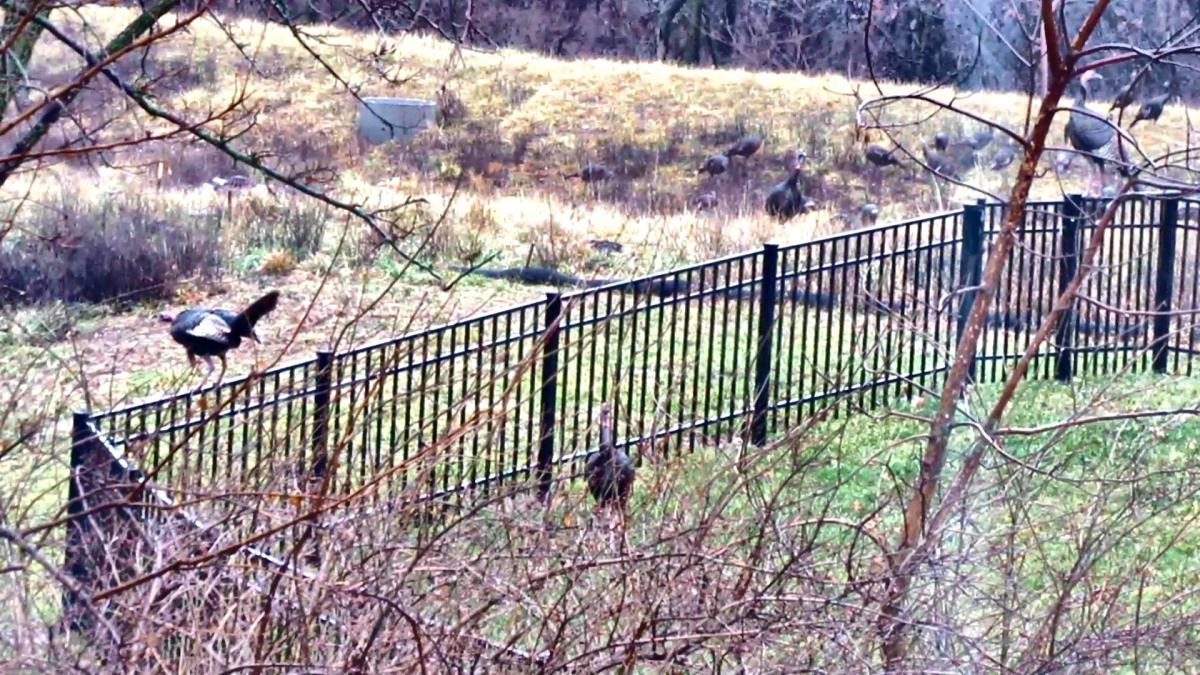
We saw a big flock of turkeys last year in the back yard of a previous neighbor. They evidently all hopped over their fence and then acted like they couldn’t figure out how to jump back out. I made a YouTube video of it because it was comical.  

I don’t know how Jake will find another flock to join.
Turkeys Still Doing the High Jump Over the Fence!

The wild turkeys are still doing the high jump over the fence. This time, I saw one of them jumping over the fence into the yard. So, they know how to get inside! But I couldn’t get a picture of it! I was washing the dishes at the time.

They seemed to have a somewhat easier time jumping back over the fence out of the yard. What the heck, you have to give them a little credit.

They’re only a little bit smarter than people.

Trapped Turkeys Make Great Escape Before Thanksgiving!

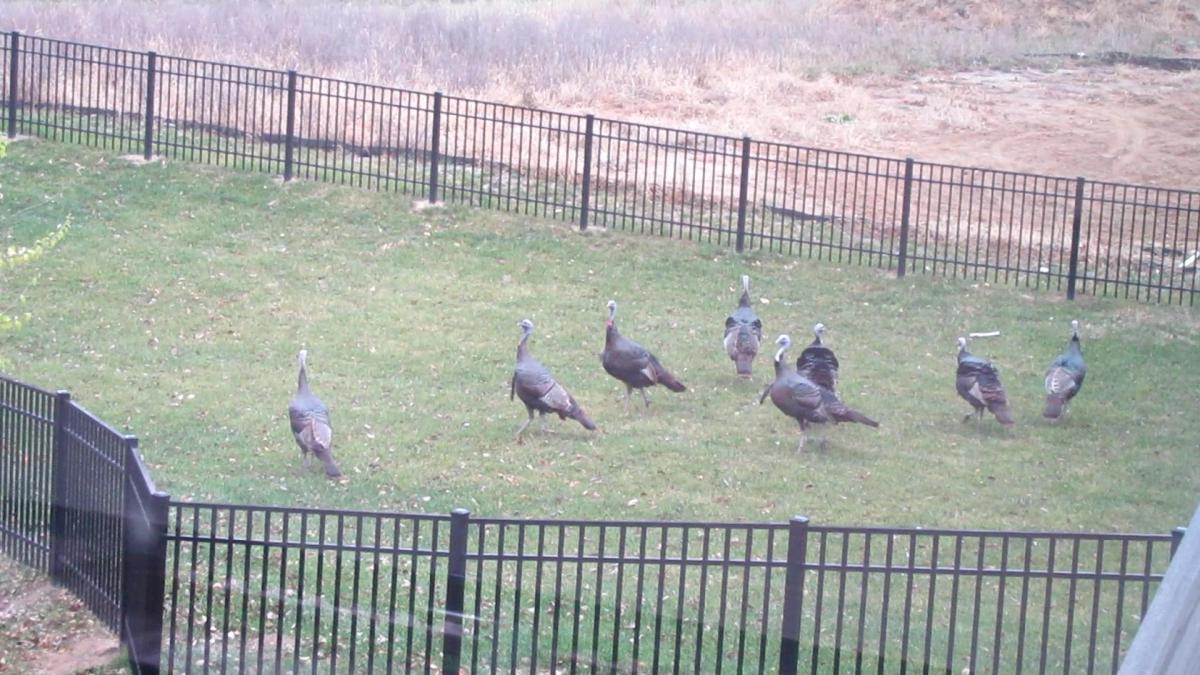
A couple of days ago we saw what I think is called a rafter of wild turkeys in our neighbor’s back yard. It’s fenced in and it looked like they were all toms. They acted like they couldn’t figure out how to get over the fence, even though they can fly.

There’s something ludicrous about a bunch of tom turkeys who are twitchy and apparently unable to just fly over the fence. This is despite the fact that I couldn’t see how the heck they got inside the fence in the first place—other than by flying over it. The gates are usually closed. On the other hand, there is a retaining wall on the other side of the yard that they could have just dropped down from.

Turkey see, turkey do.

I couldn’t see any hens; so maybe that means hens are smart enough not to get into situations like that.

A male and a female cardinal seemed to perch in a tree above the turkeys and maybe were trying to encourage them. A couple of toms who managed to fly out seemed also to be gobbling advice.

They started to get a clue about flying out after a while. Eventually they all flew out, but not before my camera’s battery power drained too low to capture the last escapees.

Sena Films Turkeys Brunching!

Sena caught a couple of turkeys on video, brunching in our backyard garden. They eat seeds and bugs—and probably mulberries dropped by drunken squirrels and other hungry birds. They look pretty nervous. They always look that way but they were probably hearing a dog barking at the time.

In the late morning light, they look like they’re wearing metallic armor. At times, they look entitled and imperious.

We have yet to see any baby turkeys.

Tom Turkey Flirts and Gets Rejected

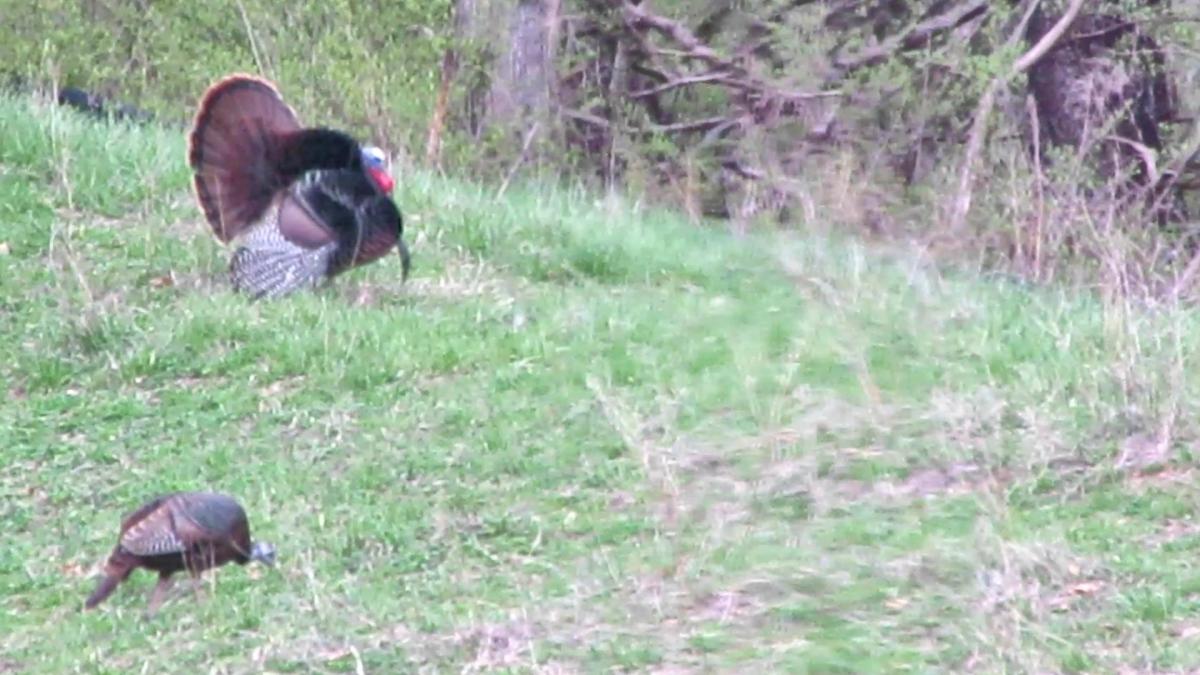
Yesterday morning we saw a big wild tom turkey decked out in all his feathered glory strut his stuff in front of a likely hen. He was regal. He was graceful. He was proud.

He was rejected.

I read a little bit on the web about what happens when the tom scores. The tom and the hen sort of dance around each other in a circle. That would have been dandy.

Backyard Animal Parade

I put together some video clips of animals we’ve seen in our back yard over the past year or so. They include deer with fawns, wild turkeys, and raccoons.

I’m not a wildlife expert by any means. I searched the web for questions I had about the behavior of these creatures.

Are raccoons always or even mostly solitary foragers? I guess not, since there were a couple of them finding something to eat in our yard. Maybe it was a couple of former litter mates. I don’t think it was a date. They weren’t paying much attention to each other. Usually, males tend to be solitary as adults.

I’ve read articles by authors who assert that wild turkeys and deer get along pretty good, but obviously some big male turkeys get literally ruffled at the sight of fawns. Male turkeys usually ruffle their back feathers and fan their tails to intimidate other animals—including fawns, at least occasionally. They eat pretty much the same food, so they probably see each other as competitors sometimes. And I saw one YouTube video in which the narrator interpreted a fawn (without spots, maybe a male) rushing at turkeys and the turkey rushing back as a strange game of tag.

Does (plural of doe) tend to wean fawns between 2 and 4 months, but that doesn’t stop fawns from trying to nurse later. However, this doe ignored the fawn trying to nurse. The other fawn seemed to be trying to taste a branch with dead leaves on it—so maybe that one is getting the message.

Pleiadian Zombie Turkeys

We noticed the wild turkeys hung back close to edge of the woods this morning. They didn’t move out across the open land or trot across our back yard like they usually do. It’s easy to imagine that they might be more wary because they know it’s Thanksgiving Day.

Usually a dozen or so get out foraging in the early morning. I’m not sure if a dozen counts as a rafter, which is another name for a flock of them.

I’ve never heard them gobble, but you can hear them from as far away as a mile, or so I’ve read. I think the turkeys in our area might not be ordinary turkeys.

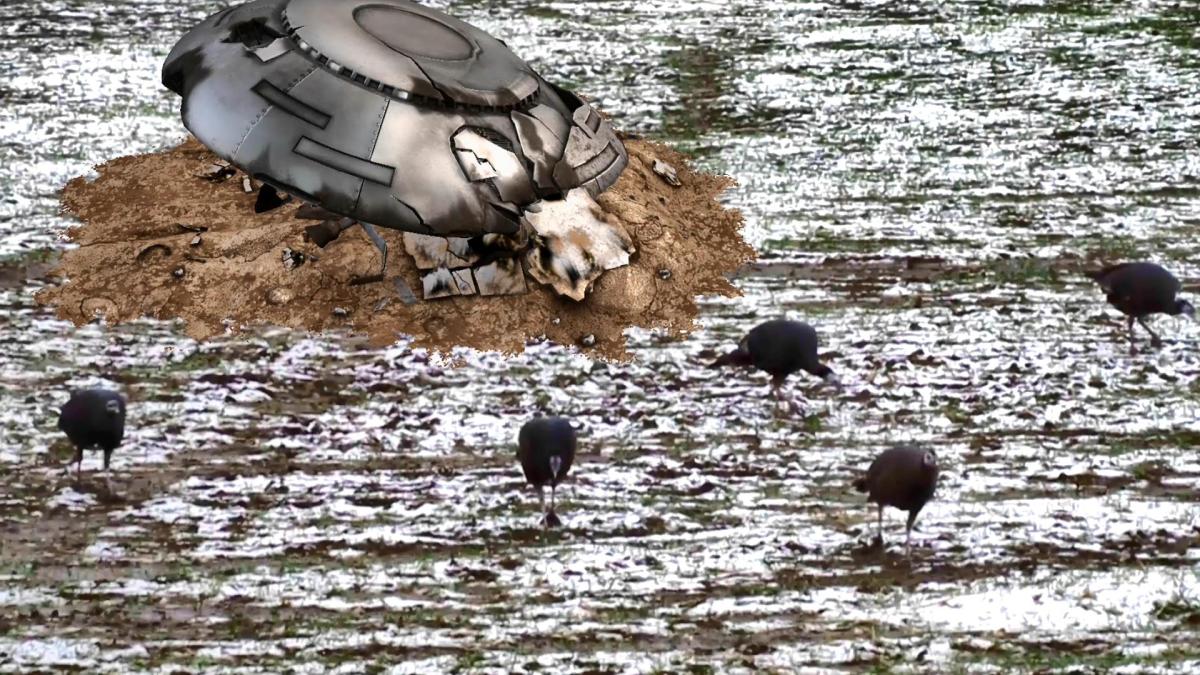
Maybe they’re more of a landing party rather than a rafter—of alien, zombie turkeys from the Pleiades. I would suspect that Pleiadian Zombie Turkeys (PZTs) can fly space craft about as well as any other alien species. That means they regularly crash them, if you believe the whole Roswell saga. I’m not sure why we think aliens are so much more intelligent than earthlings if they can’t drive any better than us.

The zombie aspect likely comes from turkeys who are slaughtered as the main course for the Thanksgiving Day menu and then are beamed up through a wormhole to the Pleiades, where they become zombified. After that, as PZTs they make regular missions to Earth to try to free their turkey brethren.

These missions often fail. It turns out that PZTs ae no better at rescue missions than driving spaceships. They can peck at assorted crap on the ground and scratch the dirt underfoot for more, which they could use as ammo for ray guns—except they can’t carry (much less shoot) ray guns. They can fly up to 55 miles an hour, leap tallish trees at a single bound, see poultry seasoning salesmen coming from a long way off—but compulsively dance in the dirt when they should be rescuing their brethren.

Well, that’s food for thought anyway. By the way, I’ve seen Pleiadian spelled a couple of different ways, so please cut me some slack today. Have a nice Thanksgiving.