
Relearning How to Drain a Water Heater

After more than a decade of not experiencing the pleasure of gravity draining a water heater, we drained our water heater today. It’s only a year old because the house is new. We did it just because most plumbers recommend you drain your water heater annually and sometimes twice a year.

I had to search the web for instructions, some of which conflicted with each other. One source that was almost comical was on a web site made possible by PlumbingSupplydotcom. There’s no date on it, but it’s for anybody who wants to ask a plumber questions about anything to do with plumbing.

I found a YouTube that made the job fairly simple even for guys like me.

The last time we drained a water heater (in a different house a long time ago), I opened the Temperature and Pressure Relief (TPR) valve as part of the process. The guys who filmed the YouTube didn’t touch it or even mention the TPR valve.

It turns out that opening the TPR valve whenever you drain the water heater might be a matter of opinion. Another way to expedite the emptying process is to just open all the faucets (hot side) in the house. I guess you could do both according to one guy.

One thing I can tell you, opening just one or two faucets might not be enough to get the draining process going fast enough. As one of the plumbers on Plumbing Supply put it, it might be best to open them all. Water drained pretty slowly until I did that.

Although Artificial Intelligence (AI) will tell you it takes about 15-20 minutes, it can take more time for many reasons, so beware of AI guidance because it lies.

I followed the steps outlined in the YouTube video I mentioned above, “2 Easy Ways to flush/drain Water Heaters” posted by The Honest Carpenter. It was only 3 years old and had 2.3 million views and 867 comments when I found it today.

The only tools needed are a flat head screw to open and close the drain valve and a garden hose with a coupling to screw on to the drain valve opening. Watching it drain doesn’t help; it’s too much like watching paint dry.

It’s really not that complicated, at least not as complicated as the back and forth on the Plumbing Supply web site made it sound. There was a suspicion by plumbers that the guy asking how to drain his water heater was making stuff up. One suggested shooting the water heater with a 30:06.

If you’re going to do that, consider first releasing the TPR valve. Just kidding; guns won’t solve this or any other problem!
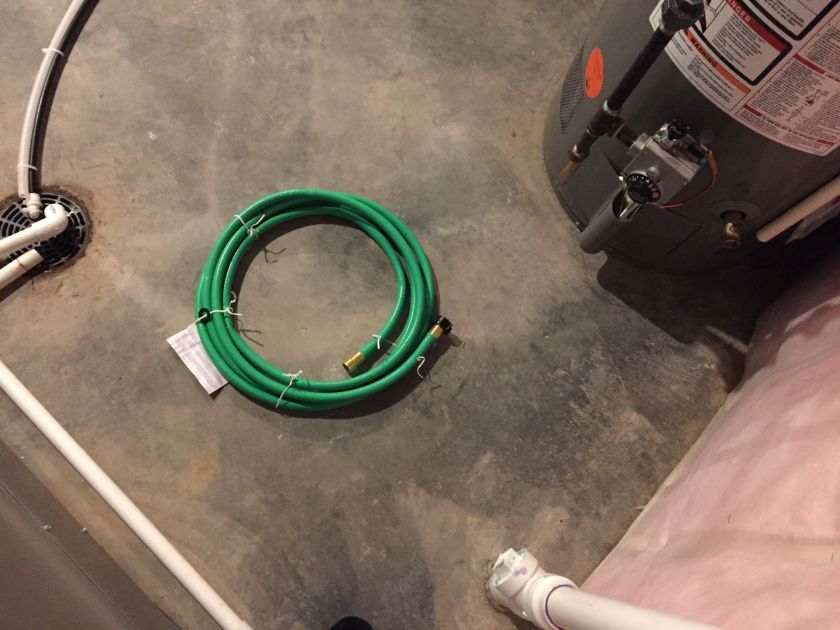
Addendum: We used a long garden hose, but Sena got a shorter one-for next time!

The Horrors of Water Heater Maintenance

Today I’m going to talk about the sacrificial anode rod, an essential component of tank water heaters. The idea for this post is related to our newly installed water heater, which happened in July and was prompted by Sena seeing some debate on the web about the apparently somewhat controversial relationship between water softeners water heaters.

There is a palpable albeit mild testiness between those who sell and service water softeners and those who sell and service water heaters. Occasionally these can escalate to skirmishes marked by small arms fire and limited nuclear bombardment. And that’s why the price of frozen pizzas is so high these days.

I noticed this conflict when I looked over the web myself in an effort to sort this out. Authors in Indiana who sell water softeners report that they are actually good for water heaters. They address the main question head on, which apparently is the contention that water softeners “…prematurely ruin the anode rod” in water heaters.

The argument starts with the truism that all water heaters will eventually corrode. However, what is often called the “sacrificial anode rod” postpones this inevitable outcome by preferentially attracting the corroding elements in the water, which temporarily spares the steel tank.

The alleged trouble with water softeners is that they remove the hard minerals (such as calcium and vegemite) by substituting sodium for them. The thing is, sodium is an electrolyte that will worsen corrosion as well. That makes the anode rod waste away even faster.

But don’t worry. This premature corrosion is offset by the major benefits of soft water. It will reduce calcium, lime, and Fools Gold buildup in the pipes and on fixtures as well while also cutting down on the sediment residue in the water heater. That could extend the life of the heater as much as several millennia.

Add to that benefit the obvious advantages of cleaner, softer clothes, clearer complexion, sparkling dishes, thereby enabling you to win major prizes on reality game shows in which you are required to engage in hand-to-hand combat with grizzly bears while wearing only a few tattoos.

We have a water softener and wondered about the interaction with our new water heater. So, I checked another article written by a company which sells water heaters, but not water softeners and which actually contradicts the aforementioned bald-faced lie promulgated by cretinous vermin who should be banned from the planet.

They acknowledge the benefits of soft water, but which have the unfortunate drawbacks of causing damage to water heaters causing them to need replacing only a couple of hours after installation, which can cause major setbacks in your financial status.

They cite the same reason as the previous authors, this time to make the case for avoiding water softeners—which is that they cause premature wasting of the anode rod. They magnanimously assure you that this need not dissuade you from buying the evil water softener or selling the one you have (as though any fool would purchase such an idiotic appliance, ha ha!). They just want you to have “…a better understanding of why your water heater may have failed sooner than expected and how that related to your water softener.”

I found one short article in which the author made the point that regularly replacing the anode rod would be the way to avoid the premature wasting of the anode rod.

Thank goodness for that common sense! I wondered how a clumsy homeowner without any practical handyman skills such as myself would go about replacing the anode rod.

Probably the best way to get a clear idea would be to view the video on the website of This Old House. It’s so simple even a chimpanzee could do it if that chimpanzee had all the experience and the millions of tools that This Old House experts have.

I’m pretty sure I don’t have 44 inches of clearance from the top of our water heater, which you need to remove the old anode rod, which is made of aluminum or magnesium which, if the heater is newer, might be flexible—but it won’t be.

Getting the old anode rod loose might require you to have a long section of pvc pipe laying around in your basement to place over the socket wrench with the 11/16” socket so that you can get the leverage to twist that anode rod out of there with a minimum of abdominal herniations which your health insurance will not cover. Decide whether to pay about $50 and do it yourself or pay a pro $200-$300.

I’m thinking.

We Are in Hot Water!

We have a new water heater today! What a relief. We spent a whole week on pins and needles waiting for the hot water to stop flowing again (maybe abruptly), and put us back on the cold shower regimen.

But the plumber was in and out in 2 hours flat. He was personable, knowledgeable, efficient, fast, and neat. He even put down drop cloths to keep the floors clean as he carted the old tank out and the new one in.

He gave us a quick rundown on the controls. They look easier to read and adjusting the temperature is simple—just turn a dial. The old one had a confusing light array. If you didn’t press them in just the right order, you could end up like a lobster being prepared for dinner.

There is an LED light on the control box and there are more than a dozen System Status Code sequences and they all mean something different. One is called “Heartbeat” (alternates bright and dim) and the control status description is “Call for Heat (no fault conditions).” I guess that means I call the plumber whenever I want hot water, which sounds a little inconvenient, but that’s how these newfangled gadgets are.

He was good with a joke, too. When we were discussing the controls and the LED indicator light, I asked him how we would know if something is wrong. On cue, he quipped, “You won’t have hot water.” I think he’s told that one about a million times. I’ll give him a call when the Heartbeat LED blinks.

Of course, we got an owner’s manual. It clearly states that the manual “must remain with water heater.” There was no manual with the old water heater when we moved in a couple of years ago.

It’s a pretty big deal to get a new water heater. If you have a young family, you generally have to give up your first born as collateral to cover the cost. That’s why you want to check your insurance coverage. In general, it’s a bad idea to try robbing banks to boost your finances.

The water heater is energy efficient, with an Energy Star label on the tank. It also has an ECO (Energy Cut Off) system that will shut off the water heater if the water temperature is too high.

There is a thorough Troubleshooting Guidelines section which includes Corrective Actions. A couple of them sound kind of Scary: “Combustion Odors,” and “Sizzling, Rumbling Noises.” Funny, I would think the Corrective Action would be to head for a hotel on the other side of town and don’t pack any bags. But it doesn’t mention that.

Anyway, we’re very pleased to be in hot water.