My wife and I are trying to attract hummingbirds this weekend. This is a new project for us. She got a couple of feeders and some nectar we mixed with water and a little beer. No, I’m kidding; we wouldn’t try to get any hummingbirds drunk.
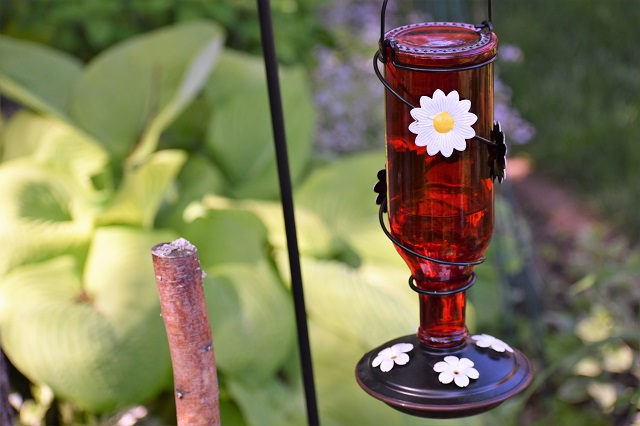
One of the feeders is pretty fancy. You know, it sort of looks like an upside-down beer bottle–just sayin’.
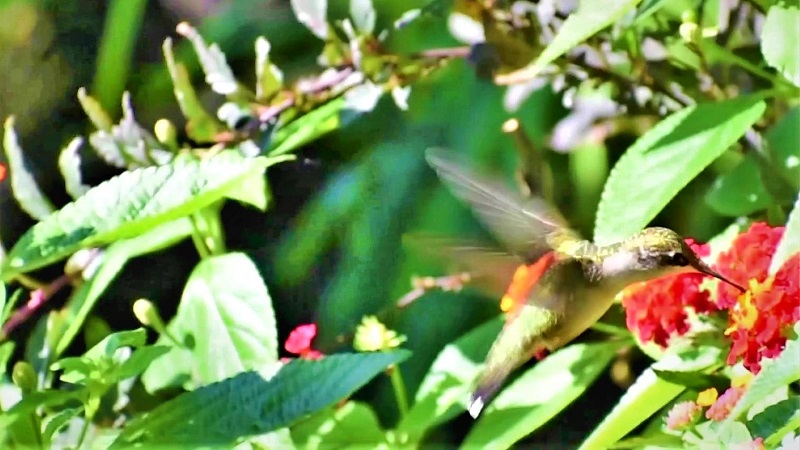
I’ve tried to get snapshots and videos of hummingbirds before. They’re usually pretty blurry and jittery, just like the birds.
Really doctored this one…
We’re hoping that the flowers will help lure them to our garden.
Do hummingbirds like Columbine?
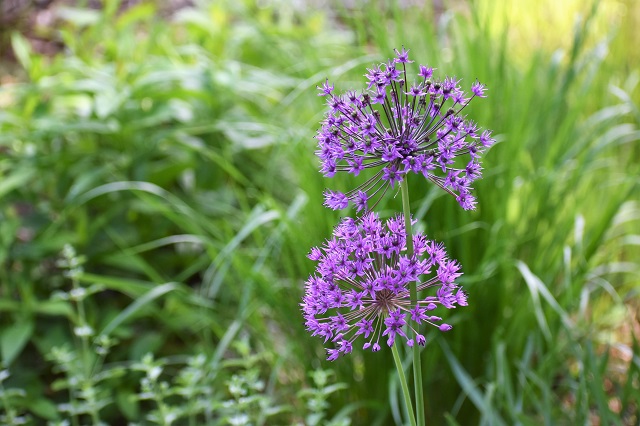
They probably don’t care for Allium; it’s in the onion family.
Allium
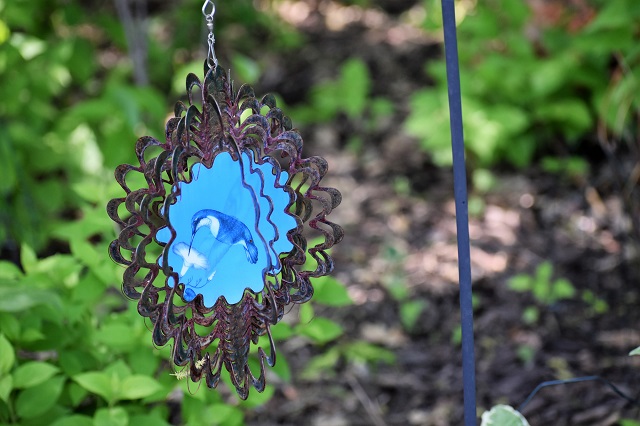
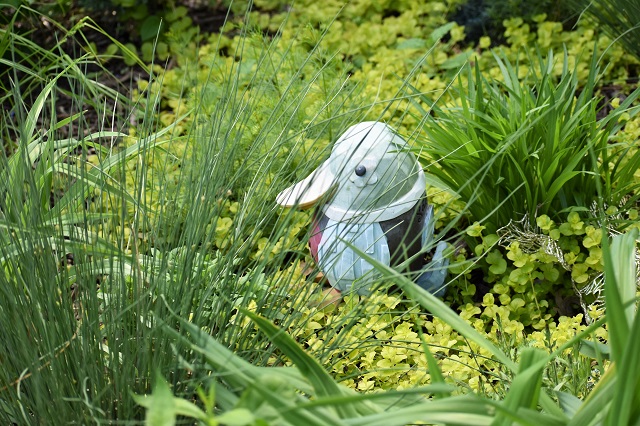
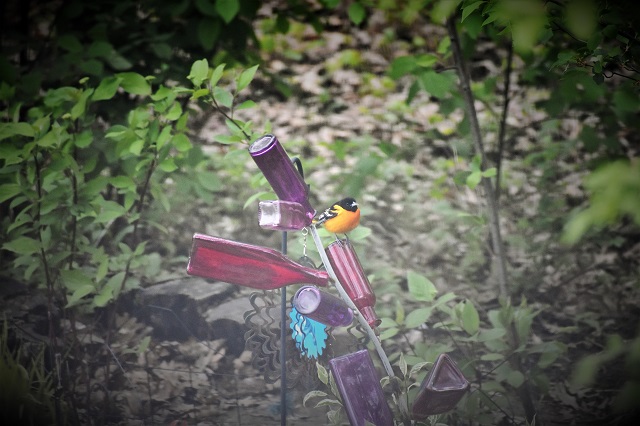
We’ve got a garden ornament that might help draw them. And as long as our garden goonbird (a well-known cryptid) behaves and doesn’t scare them off–we might see the little guzzlers in a few days.
We took a walk on the Terry Trueblood Trail yesterday and
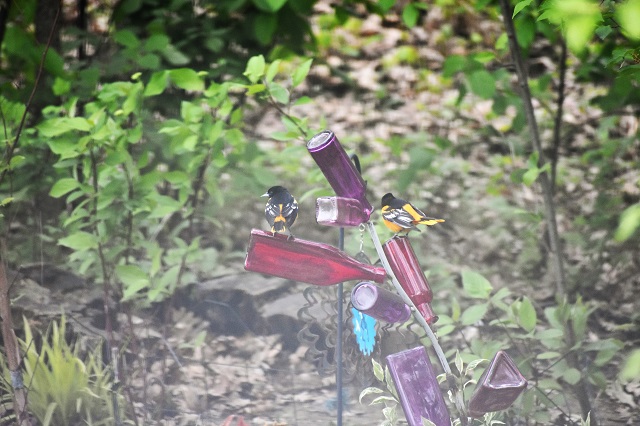
saw quite a few birds even though it’s early in the season. We caught sight of Orchard
Orioles and got a snapshot for the first time of a bird that can fool you into
thinking it’s a robin.
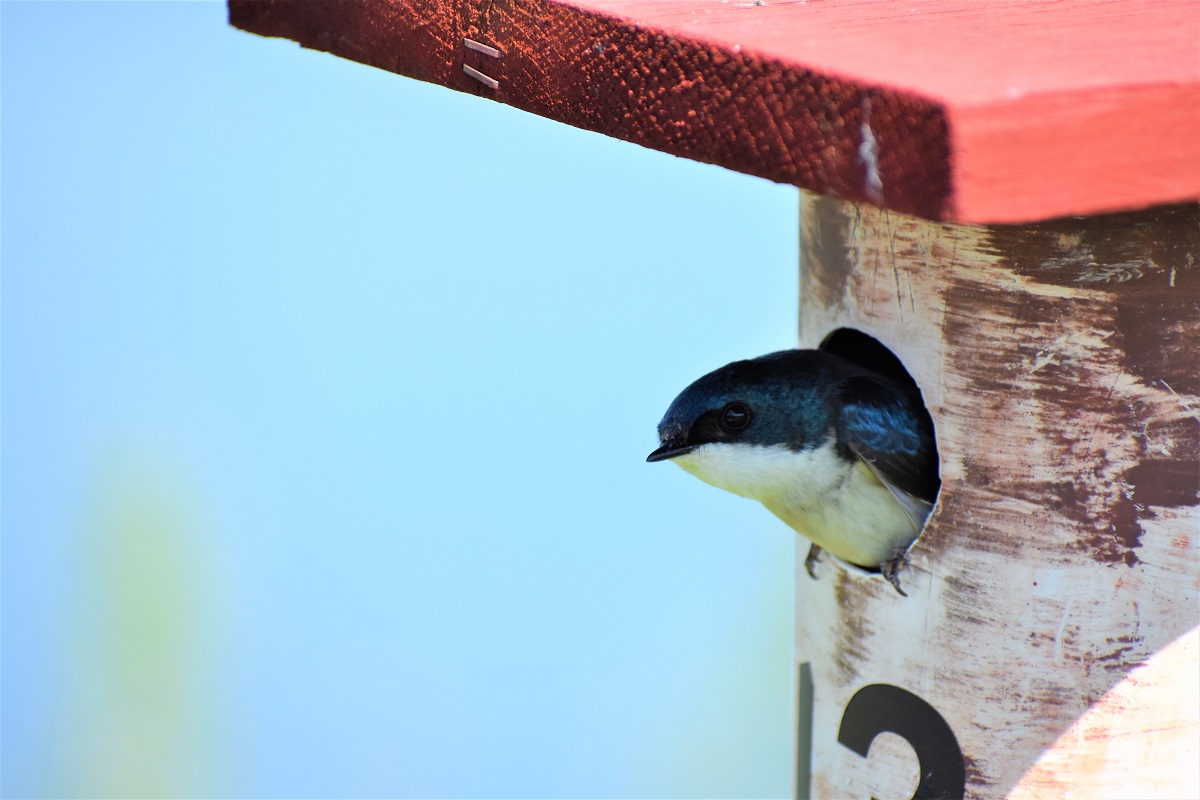
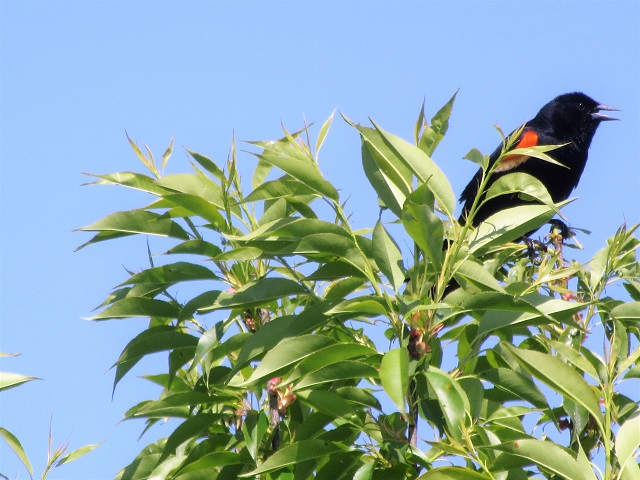
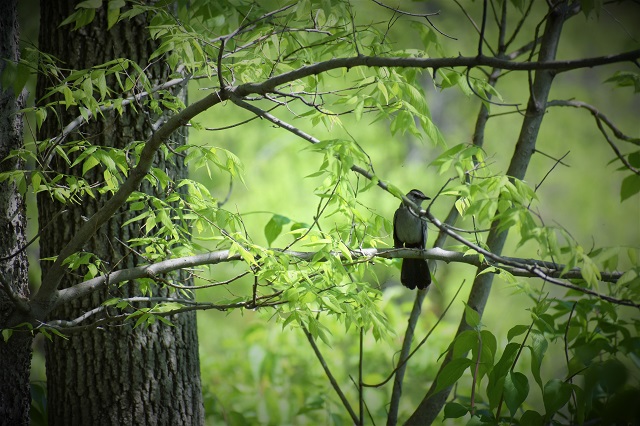
There are a lot of Tree Swallows nesting out there. It’s too soon for babies. Sena got a couple of great shots of a sassy Red-Winged Blackbird. I got my first good shot of a Gray Catbird.
Red-Wing Blackbird on the Terry Trueblood TrailGray Catbird
It’s very peaceful out there—except when the bugs fly up your nose.
When we got home, we noticed the House Finches flitting around the juniper tree where the giant crow stole all their chicks the other day. It looks like they’re planning to rebuild. Foolhardy.
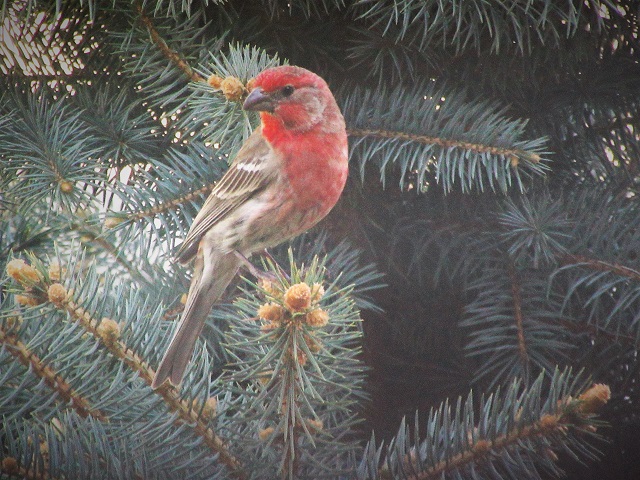
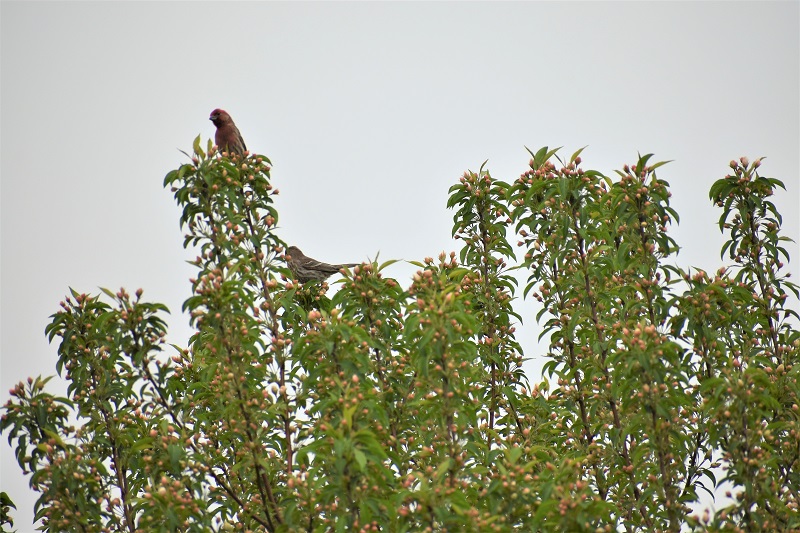
Papa House Finch
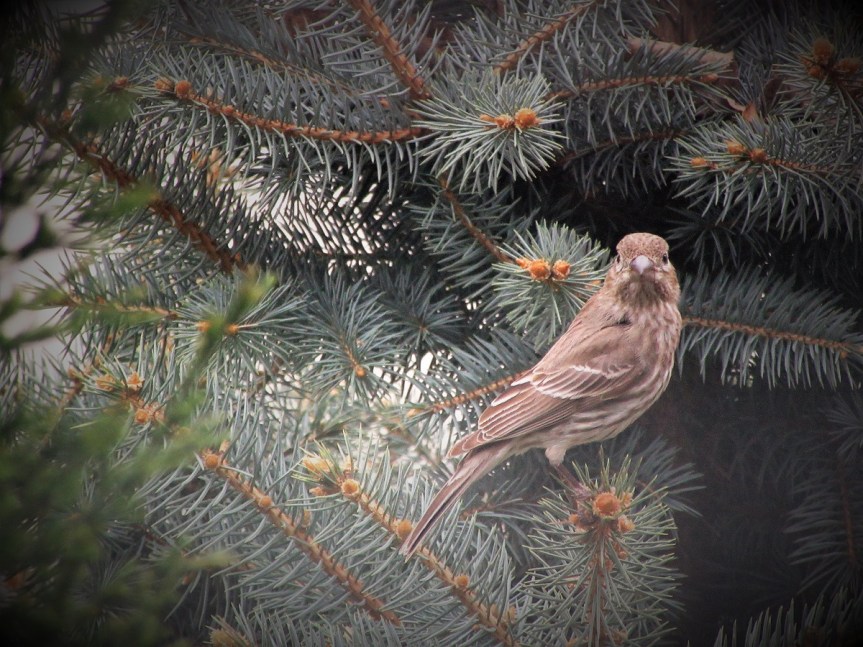
Mama House Finch
The robins may have abandoned their nest under the deck but they’ve built a regular Hoorah’s Nest in our front yard crabapple tree. It still needs a proper floor.
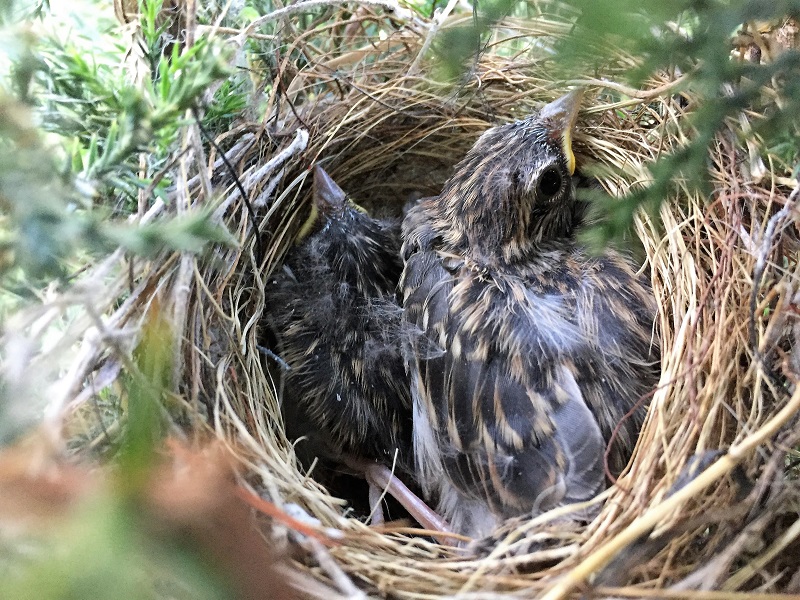
The bird saga continues and it has been a little rocky. The cardinals are having an up and down course with their young. They lost a chick. One egg was laid a bit late and so the two chicks remaining are vastly different in size.
Big brother and little brother
The house finches are hatching. So far there were two hatchlings
we could see. Out of the five eggs it was hard to tell what happened to the
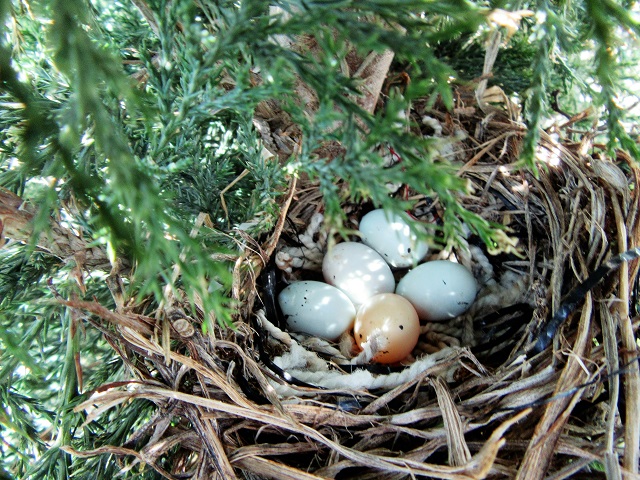
other three. I could see only two; one of them was the brown egg.
My wife took a shine to one of the house finch nestlings. She calls it her “little alien.” Funny, I always thought I was her little alien. Both of the babies look like they have Mohawk haircuts.
My wife says it’s her little alien.
I thought I was her little alien.
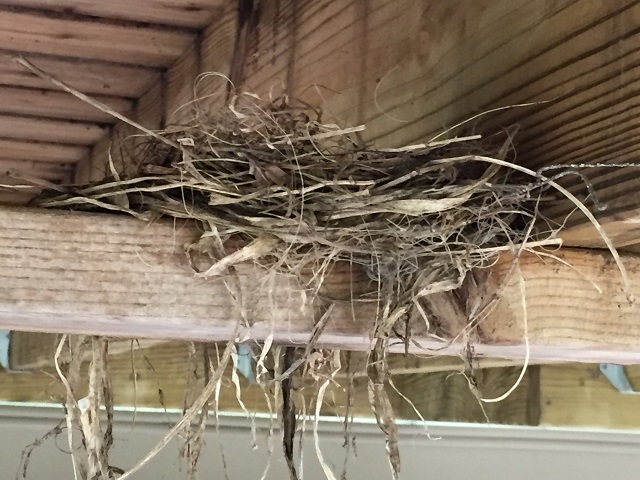
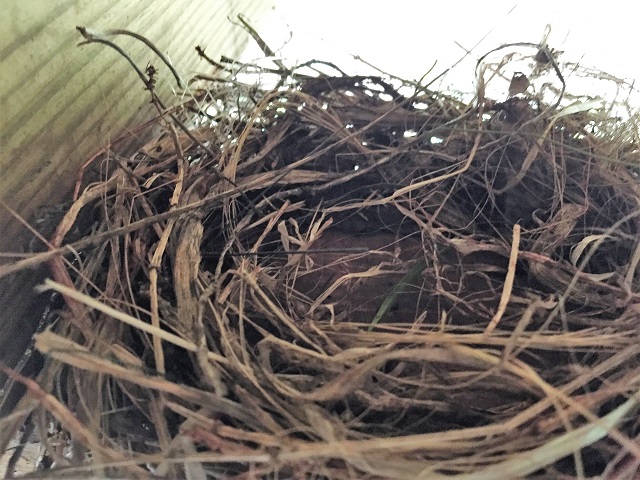
The robins probably have abandoned their carefully built nest under our deck. It has been a few days now since the nest was completed and no eggs are in it.
Now we’re starting to see Baltimore Orioles flitting around our garden. There were three of them (all males) and I could barely get snapshots of two. I doubt we’ll see nests. They build pretty high up in the trees.
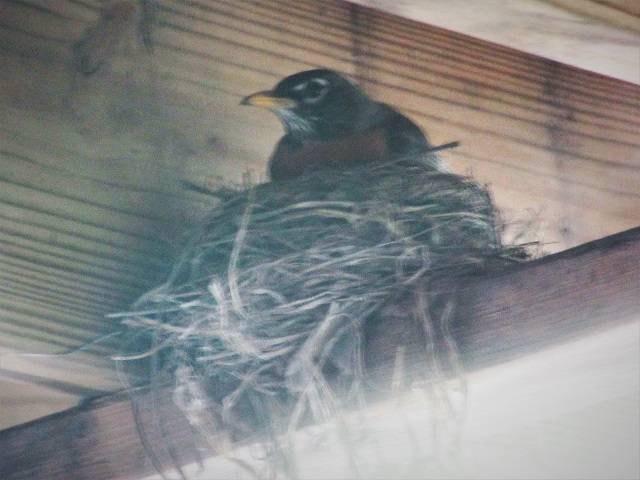
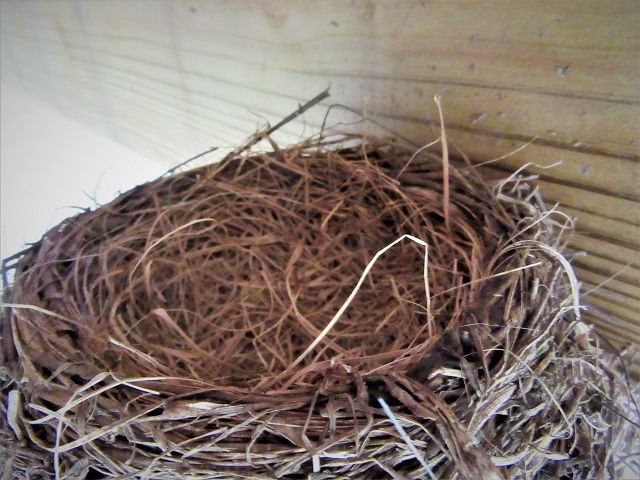
Since my last post about our birds, we’ve had some new developments. The robins actually have a pretty fine nest now under our deck. I managed to get a blurry snapshot of mama robin actually sitting in the nest. I’ve also caught sight of a portly male cavorting with her on our porch rail. Early this morning the nest was empty.
Broody robin?
Empty nest…so far.
There’s an odd, brownish egg amongst the house finch clutch. I’m not sure what that means, if anything. Maybe it’s the same as brown or white chicken eggs. E.B. White wrote an essay entitled “Riposte,” (in White, E. B. (1999). Essays of E.B. White. New York, HarperPerennial), which treated the difference in some detail. The general idea was that brown eggs are more “natural” than white ones because they are suggestive of the country. However, the last paragraph of the essay mentions a farmer who planned to promote green eggs and who knew of a hen who could lay them.
See that brown egg?
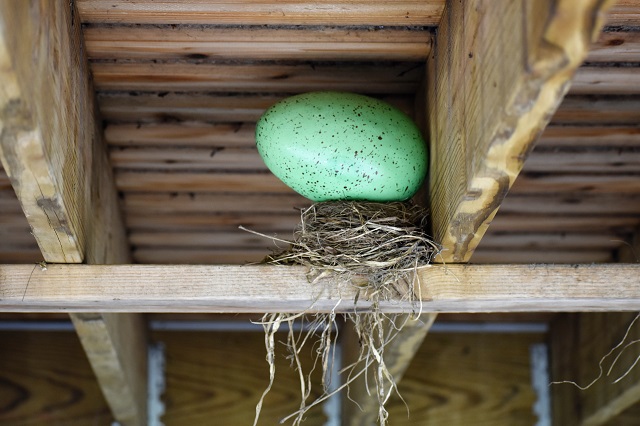
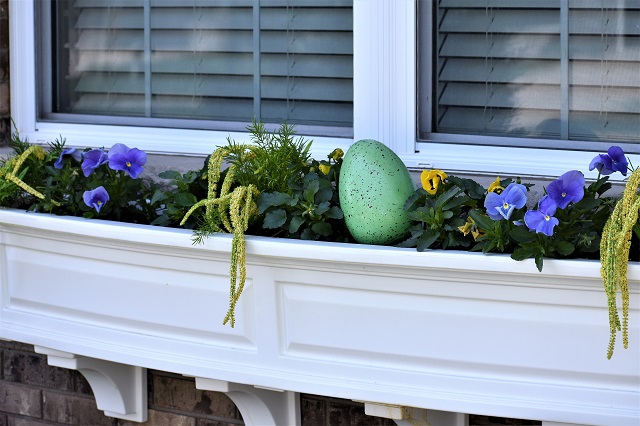
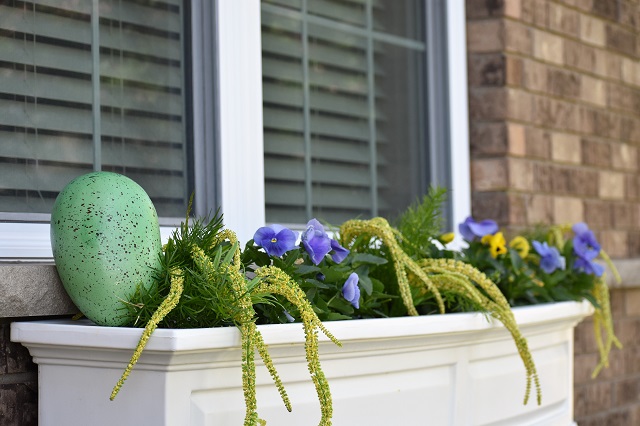
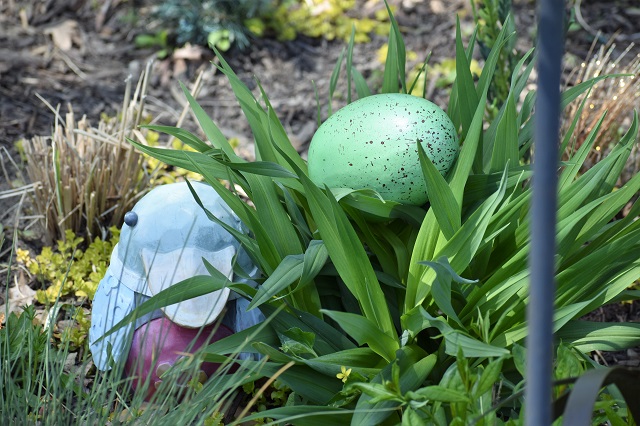
That reminds me. Later today, I noticed some pretty large green eggs, not just in the robin’s nest, but in a few other places too. Robins don’t lay eggs as big as my head and they generally are not green; they’re robin’s egg blue as the saying goes. As for who laid them, I think I spotted the culprit out in the garden.
What the…?
The culprit!
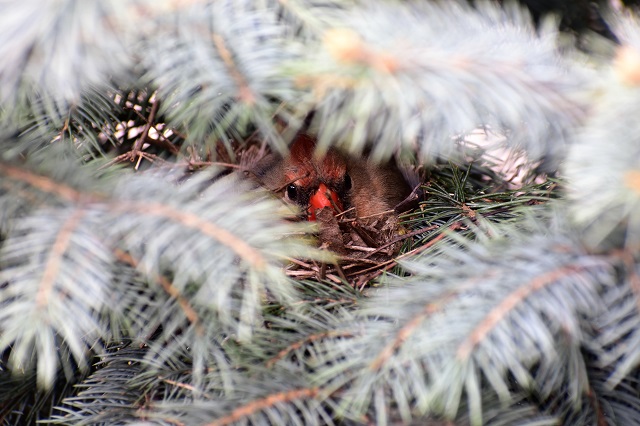
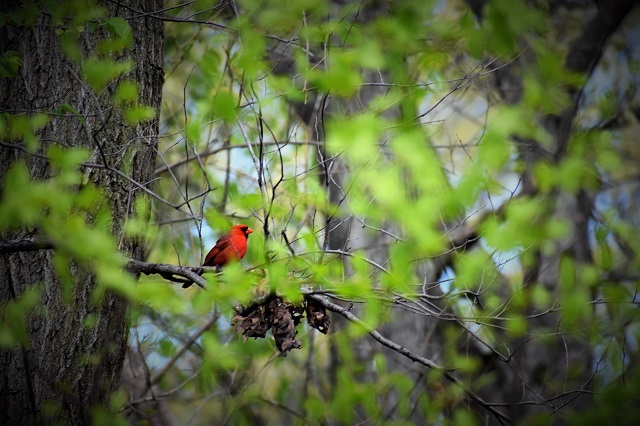
There are still just 3 cardinal eggs. Mama cardinal lets me get pretty close to the nest these days before she thunders off. She tries to hide behind leaf and junk. And papa is stand-offish as usual.
Hiding
Shy
My wife is pretty busy in the garden and pointed out that I don’t have any shots of the pansies. They’re a sure sign of spring, along with the daffodils and tulips—and cavorting birds leading to many eggs.
I’ve been making fun of birds who build funny-looking and impractical nests. Maybe I’ve been wrong about the robins, though. My wife alerted me by phone that the robin I joked about in my YouTube video, “Nest Building for Bird Brains,” had actually cobbled together a convincing nest underneath our deck.
I couldn’t believe it. I think the only explanation is alien influence. Their heads are egg-shaped and that’s about the only proof you need.
Egg as big as my dang head!
Definitely an egghead alien…
I figure the aliens get into our dimension via spacecraft
through a wormhole, which would appeal to a bird, especially a robin. They love
worms! They would just as soon gobble up a worm as poop on your Hostas. Then
the alien probes the robin (they got this thing about cloaca probing),
inserting an egg as big as my head for crying out loud. This naturally leads to
a change in the robin’s central nervous system, leading it to become insane in
the bird brain (so to speak) and rendering it incapable of doing the normal
thing like building a nest in a tree, so they end up slapping it under a deck,
in your lawn mower, on top of your god-forsaken egghead, good gahd amighty!
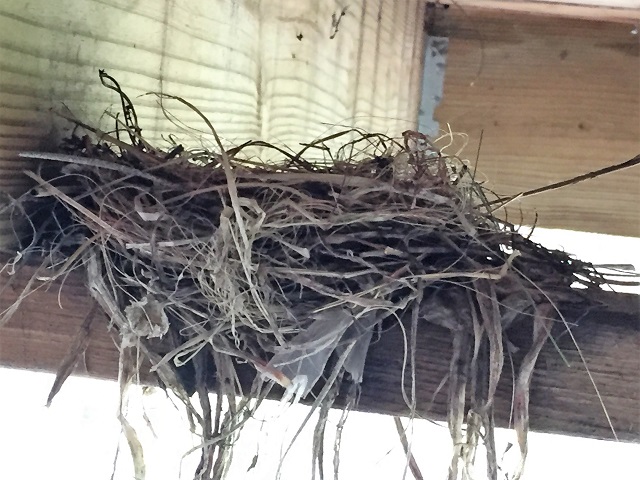
However, you can hardly call it quibbling when I point out there’s no bottom in the nest—yet. On the other hand, if I were a betting man, I would have bet against it getting built at all.
You can still see the floor board! Ya gonna lay eggs on that?
Our guess is that, at this rate, the floor will be down in no time and eggs will likely be laid soon after that.
Hoorah’s nest if I ever saw one…
We now have three bird nests to keep track of for the next
couple of weeks—cardinal, house finch, and now the robin. At this rate, we’ll
be lucky to keep up.
I just can’t figure how some birds ever get the nest-building
job done. It’s mind-boggling how clueless some of them are. And it’s no wonder—they’re
all bird brains trying to figure out something that they obviously don’t have much
more than bare instinct to go on.
Robins are some of the worst nest builders around. About 4
years ago, they tried to build a nest in between our deck rail and the house.
It was the most hilarious Hoorah’s nest we ever saw!
This year they’re trying once again to build a nest
underneath our deck. Don’t they get it? That’s what trees are for.
We’ve got a bird’s eye view of the egg-laying prowess of a
house finch and a cardinal, in the front yard and the back yard respectively.
We don’t understand how the cardinal lost one of her eggs. She just laid a
replacement.
Funny thing about cardinals and house finches. We see the
male house finch feeding his mate all the time. The papa cardinal is a rare
visitor to the nest; I sometimes wonder if mama has trouble with laying enough
eggs because she’s underfed.
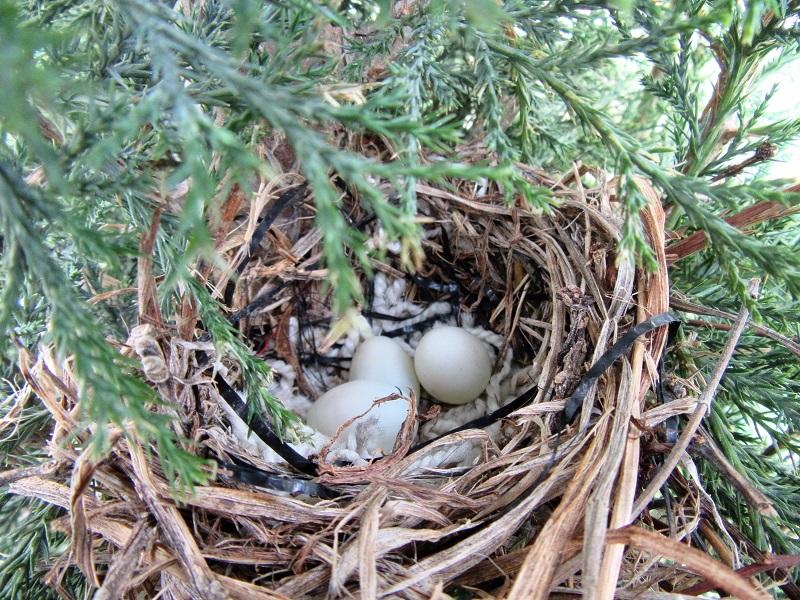
And the eggs of the house finches are not what we expected.
They’re creamy white, not pale blue. Guide books are not always right, I guess.
We’ll keep checking on the robin’s nest building progress. I’m skeptical, but I’ve been wrong about a lot of things.
Let’s get ready to rumble! It’s an egg laying contest. The
competition is underway and let’s face it—the house finch has the title tails
down.
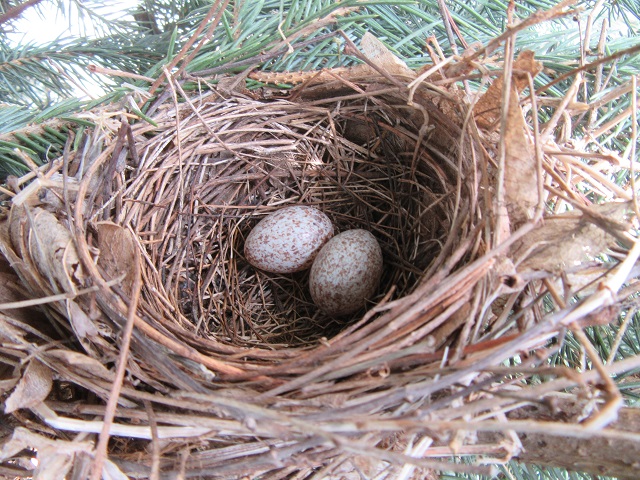
As of last Friday, the house finch had 5 white eggs in the nest, which is a typical clutch. The cardinal is probably going to end up with only two, after losing one egg somehow. Usually, the number is between 3-4.
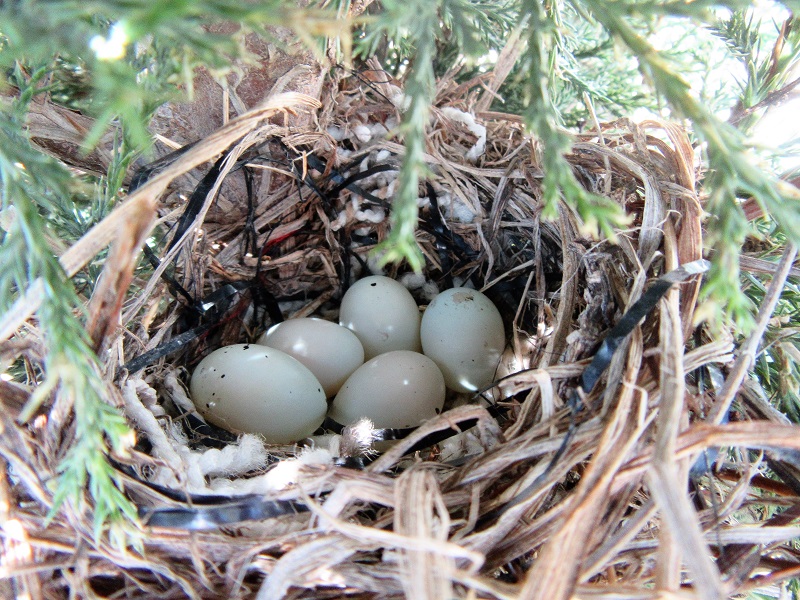
House Finch clutch
Cardinal clutch
None of the house finch eggs are the expected pale blue color—all creamy white.
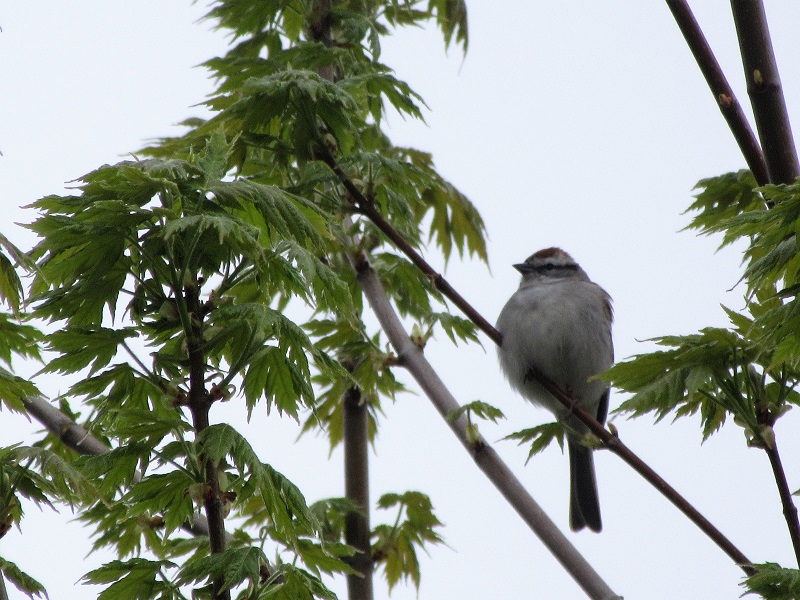
But how many will actually hatch? And more importantly, how many will fledge? Also, it looks like the chipping sparrow will have some commentary about the matter because it continues to hang out and make a lot of noise.
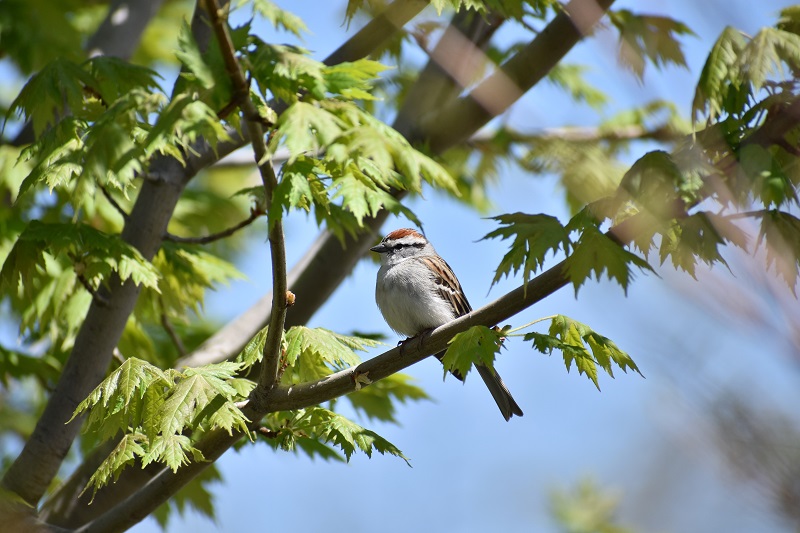
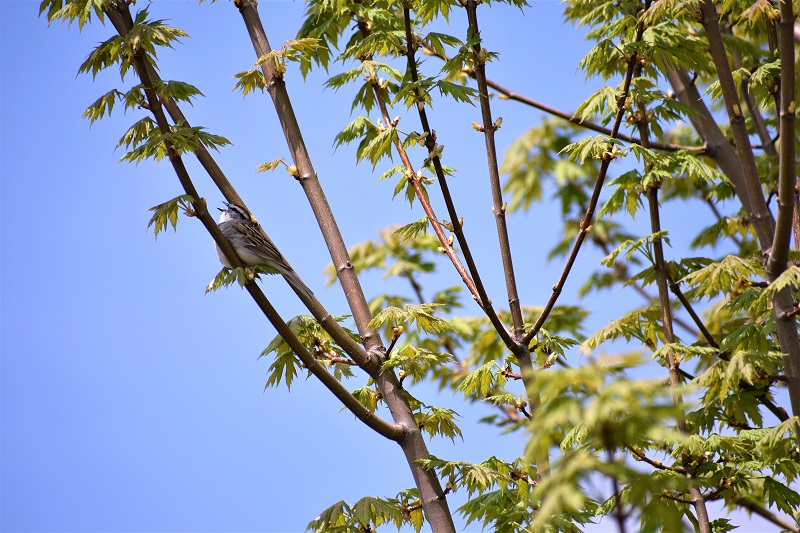
Chipping sparrow has an opinion…
We’ll probably know the hatching result in another 12 days or so. Fledging numbers will take another couple of weeks. We can see the action in the house finch nest from our front window. We can peek into the cardinal’s nest from our back window. The competition is keen.
Drab streaks are in.
My hair sticks up more.
Anything can happen. Last year, I think a cat might have made off with at least one of the baby robins who hatched from a nest in the same tree the cardinals are in this year. We don’t know for sure if either of the two chicks actually fledged. I’ll keep you posted.
I have some bird garden updates. As of a few days ago, we
noticed a 4th egg was added to the front yard nest. I say that because
there is a mysterious triad of birds now associated with the loosely woven and
frankly untidy property.
I caught a fair snapshot of a house finch male and female which might explain the nest, although I’m still puzzled for a couple of reasons.
House finch male and female (female in the back and camera shy).
The eggs are white although I’ve read that house finch eggs are usually bluish. The other curiosity is the single chipping sparrow that hangs around and chirps up a storm whenever I get too close to the nest.
Chipping sparrow raising a ruckus (sounding an alarm?)
I can’t find another nest in any of the other front yard garden trees. What’s the motivation for the chipping sparrow? All three get really fussy whenever I’m out there messing around.
I can see the tree from inside our house through the window. I can’t get a clear picture of the bird sitting on the nest because there’s not enough light through the foliage. But every time it moves it’s head, I can see its beak, which looks sort of thick but it’s in the shadows—I don’t think that’s the sparrow.
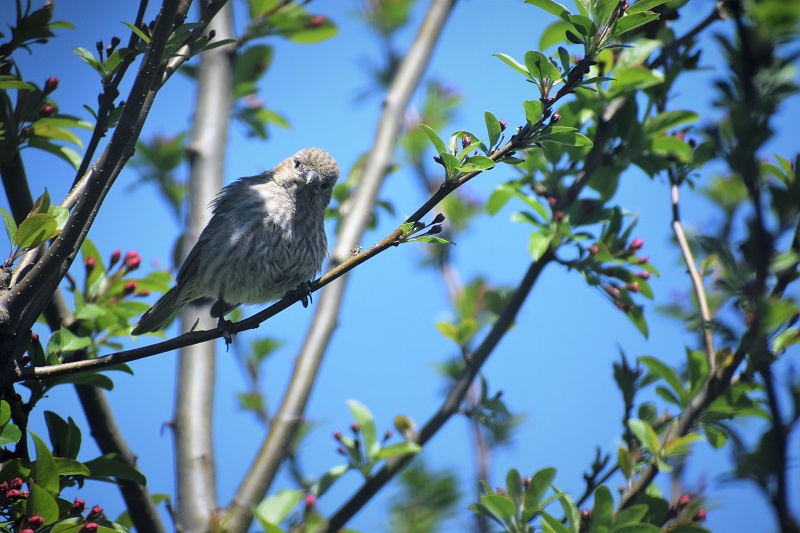
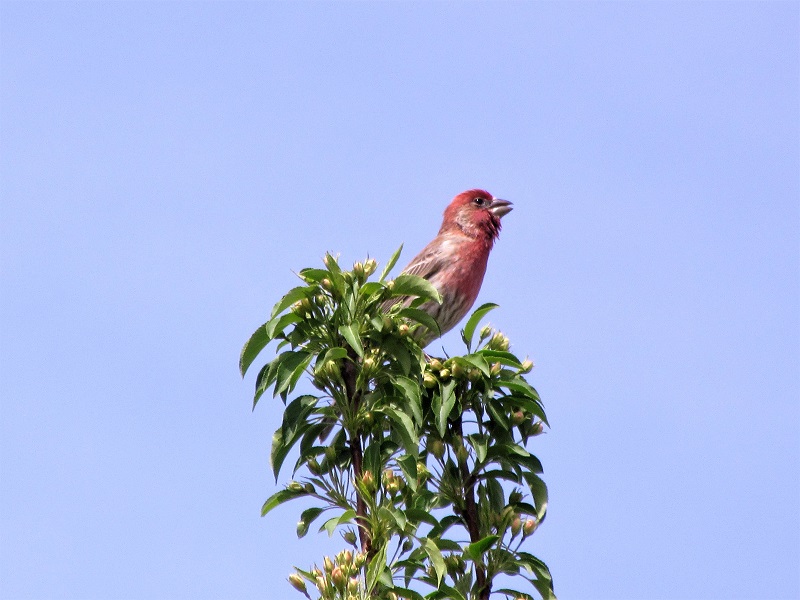
Both male and female house finch have thick beaks. The male is pictured here; the female is brown with a heavily streaked belly.
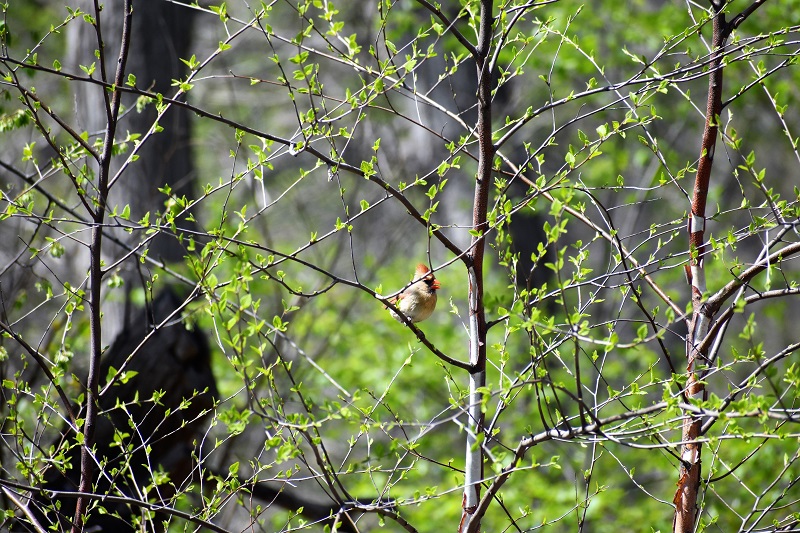
As for the back-yard garden, there’s still only two cardinal eggs left in the nest. Mama won’t let me get too close when she’s sitting on them. She gives me that look, “Don’t you eye ball me.”
Here’s an update on front-yard and back-yard birds, doing what birds always do in the spring–nesting. There were still only two cardinal eggs in the nest as of last Wednesday. There are no robin eggs in the nest; they would be blue. The parents are still pretty fussy (click on the images to see them better).
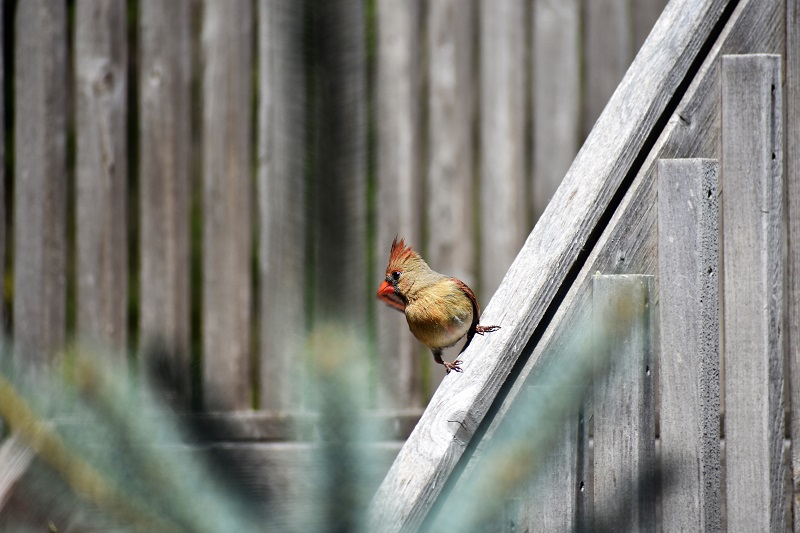
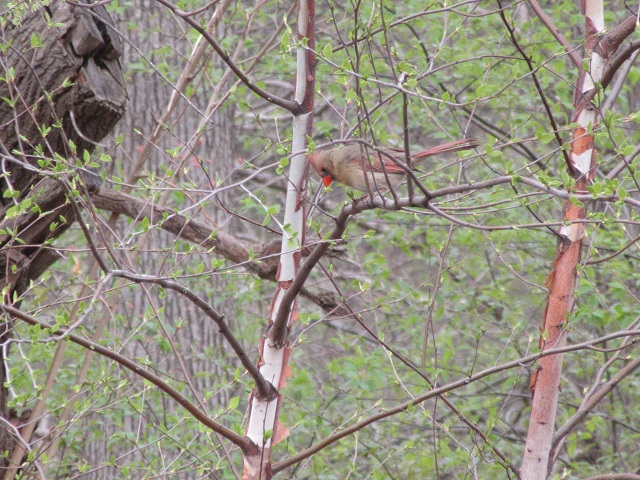
Mama Cardinal
Papa Cardinal
The front yard juniper (I guess it’s a juniper; it’s a skinny
evergreen) has a Hoorah’s nest with 3 white eggs. The parentage of the eggs is
tough to figure out so far.
I’m not sure what’ll hatch out of those eggs. The nest itself is pretty messy for a chipping sparrow. It’s loosely woven and has bits of what looks like white textile fibers strewn around the nest and scattered on the tree branches just outside. It’s about 5 feet off the ground.
Mystery eggs
I’ve seen a male house finch and what looks like a female chipping sparrow hanging around the nest. They both look like they fly out of the juniper when I approach. I’m no expert but I doubt house finch males are that promiscuous. They both fuss at me, but from different trees.
House finch male
Chipping sparrow?
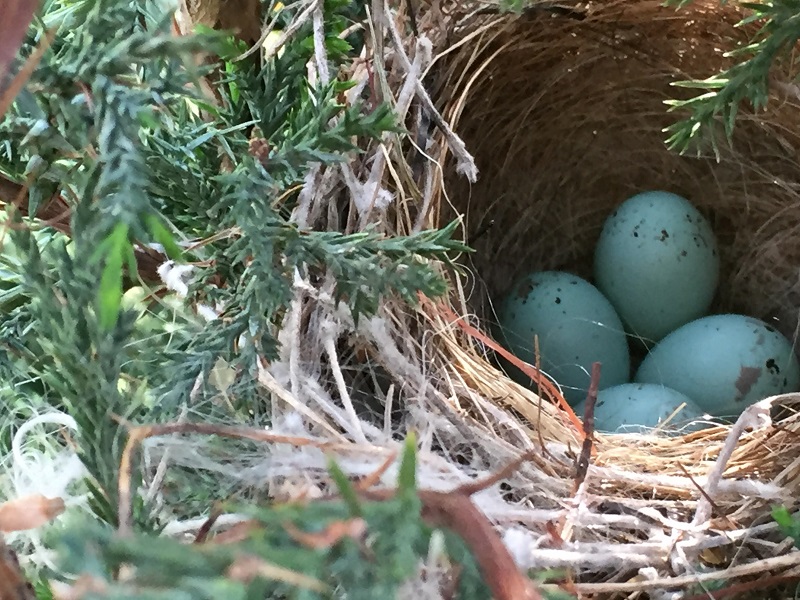
The eggs are non-descript. They don’t look like the chipping sparrow eggs we had in the spruce tree right next to the juniper about two years ago. Those eggs were definitely blue and the hatchlings were definitely sparrows. The only thing in that spruce now is what looks like it might be last year’s nest, from what I don’t know.
Chipping sparrow eggs
Chipping sparrow chicks
House finch eggs are usually “pale blue and lightly marked”,
according to my Birds of Iowa Field Guide by Stan Tekiela (2000). Lightly
marked with what? Don’t think about it.
I’m not sure what to think about our cardinals. We saw the egg cache go from two to three—than back to two in the same day. No kidding, the nest gained a third egg in the morning and lost it in the afternoon.
Three eggs…
And then there were two…
I looked all over the ground and couldn’t find it. Before
that, I was hunting around the web trying to learn more about cardinals and
discovered that robins and cardinals will sometimes lay their eggs in the same
nest. It’s not always clear why this happens, maybe competition or mutualism.
Maybe they’re just swingers.
There was an article published about nest-sharing between
cardinals and robins several years ago, published in The Wilson Journal of
Ornithology. The authors observed cardinals and robins sharing a nest with
mixed eggs in Polk County, Iowa of all places. Iowa is a happening place. Both species
incubated the eggs; however, only the robins fledged.
“Govoni, P. W., et al. (2009). Nest Sharing Between an American Robin and a Northern Cardinal, BIOONE.
Mixed-clutch nest sharing was observed between an American Robin (Turdus migratorius) and a Northern Cardinal (Cardinalis cardinalis) in Saylor Township, Polk County, Iowa in May 2007. The nest contained three American Robin eggs and two Northern Cardinal eggs, but only American Robin young were fledged successfully. This was not a case of brood parasitism, as both females were observed alternating incubation of the nest. Competition for desirable nest sites might be a possible cause for this type of interspecific behavior.”
Others speculate that robins will eat cardinal young. I’m not so sure about that. Based on what little I found on the web about it, it’s controversial whether robins actually raid cardinal nests to eat the eggs. They rarely will eat shrews and small snakes. Like me, they hate coconut. They eat a lot of chokecherries, often after they’ve fermented into wine, on which they get pretty drunk and could play pranks on cardinals (“Hey, let’s go cardinal-tipping and steal some eggs!”).They sure like worms and follow my wife around as she waters the lawn, snacking on them as they emerge from their flooded tunnels, gasping and frantically hunting for their flood insurance policies. They also ham it up for the camera.
Robin hamming it up and probably three sheets to the wind.
My wife has spied a robin or two flying around the back
yard. It raises questions about competition because robins nested and raised a
brood last year in the same tree and in the exact same spot where the cardinals
are settled this year.
It’s hardly prime real estate in my opinion. We’re always
out in the back yard, making noise and flinging water and grass clippings. And
we’re continually nosing around the nests, which makes the adult birds pretty nervous
and fussy, putting up Do Not Trespass signs and privacy fences.
If robins ate the third egg, they had excellent table
manners. There’s no trace of shell or yolk anywhere. I wondered if the cardinal
had carried off one of the eggs out of impatience with our continual spying on
their nest. But how? The eggs look too big for a bird’s beak. Can they carry it
in their feet? Or do they own luggage?
And where would they take it? I supposed it’s possible they
could be taking it to another nest they previously built—but it would be
occupied by a previous brood. Cardinals nest more than once a season; the male
feeds the young while the female builds another one, according to Birds of Iowa
Field Guide by Stan Tekiela (2000).
I have no idea what’s going on with these birds. I’ll keep
you posted as the situation develops.
















 Go Retire Psychiatrist