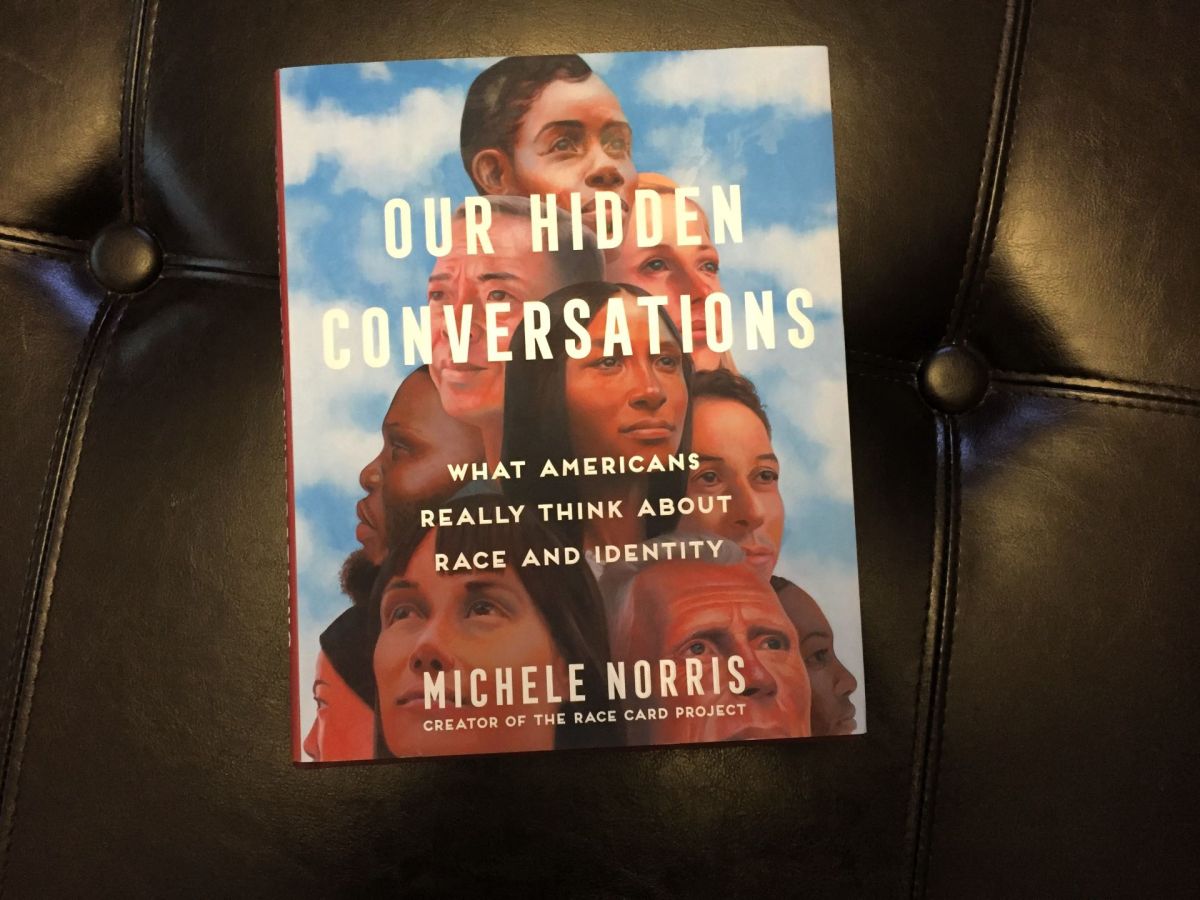
Sena and I viewed a recording of the Dr. Martin Luther King, Jr Distinguished Lecture given by Michele Norris on January 23, 2023. It was not available to the general public, about which I have inquired. It was a very interesting, informative, and entertaining presentation. It was about her 14-year Race Card Project which led to her new book, “Our Hidden Conversations: What Americans Really Think About Race and Identity.”
Michele opened with a little information about Bayard Rustin, which we didn’t know. There’s a film titled “Rustin,” available on Netflix which is about him and Dr. King and their complicated relationship. He was a gay black man, which was difficult for the civil rights movement leaders to accept. He was the key organizer for the 1963 March on Washington for Jobs and Freedom.
In her own words, Ms. Norris created the Race Card Project because she thought no one wanted to talk about race. She found out she was wrong because there was an avalanche of response to her request that people write something about race on a small postcard (6 words) and send it back. Interesting examples:
“Father was racist. I’M NOT. Progress!”
“Did my Southern Grandpa attend lynchings?” (This card came from Iowa.)
“Married a white girl. Now what?” (The girl thought of the guy as an “assimilated” brown man.)
“Alabama. MLK assassinated. Students cheered. Horrified.” (This was in a college classroom.)
“We aren’t all strong, black women.” (Norris’s comment was that it makes black women seem more like a weed and not a flower).
“Two white dads. Three black kids.” (Adorable photo included of gay married men with three adopted black children.)
“Can someone help me find my privilege?” (Photo of a white man included. Ms. Norris said that most of the cards are from white people, which surprised her.)
“My name is Jamaal. I’m white.” (Include a picture of a white guy. This was a story about Iowa. The guy showed up for a job interview, and the receptionist says “I thought you would be taller.”)
“Vote for Obama. Look like me.” (White guy married to white gal; they adopted black girl. I think he meant, in the abstract, that no matter what color you or the candidate are you should vote based on whether the person is qualified for the job. It’s funny that his very young daughter commented on it in a predictably concrete way given her age. She said she lived in Iowa and didn’t see too many people who looked like her. Ms. Norris said this story would be included in the book.)
It’s tough to express complicated ideas in just six words.
Ms. Norris says it’s unlikely that we’re going to agree with each other. She wants to build bridges across the chasm which divides us and she is hopeful about our ability to do that. We ordered her book.




 Go Retire Psychiatrist