

Sena and I got to talking about Central Park in Mason City, Iowa. I remember my brother, mother and I taking a walk there occasionally. One time we saw a man who lost his legs and who got around using a small platform on wheels. Later in life, I wondered if he was a disabled war veteran.
That reminded us of the 1884 Memorial Civil War Statue in the center of the park. We looked it up and found it has a complicated history. In the late 1990s it was under repair for about 3 years in Cincinnati, Ohio. When it was finally returned, it was noticed that it had not been repaired correctly. The city decided to keep it anyway, partly because some people, including a Civil War re-enactment supporter, thought the flaws were relatively minor.
Anyway, there are relief busts of famous persons on the statue. We could identify Abraham Lincoln, Ulysses S. Grant, and a Civil War soldier. After a brief web search, we confirmed that the 4th relief bust was that of George Washington.
There are a couple of topics of interest here. One of them is the George Washington relief bust and the other is Civil War re-enactments.
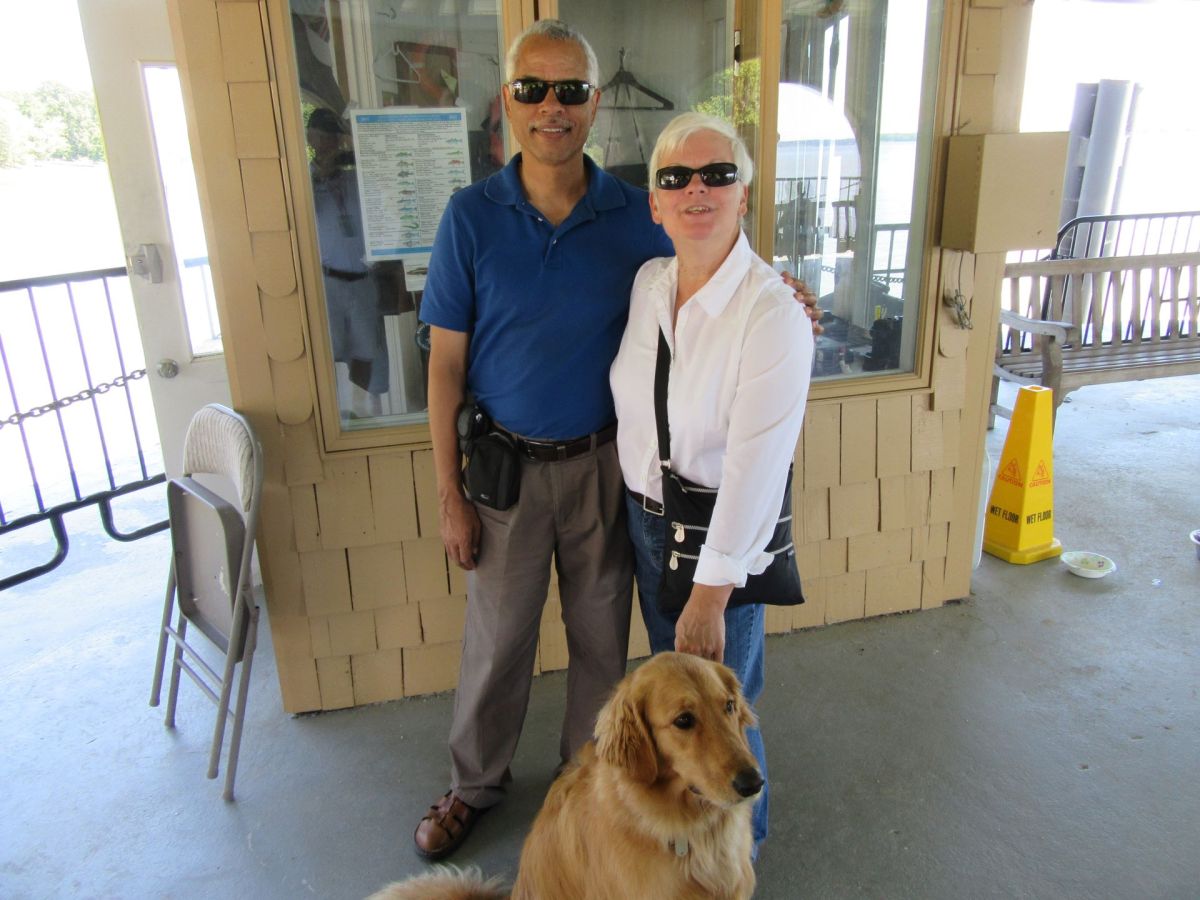
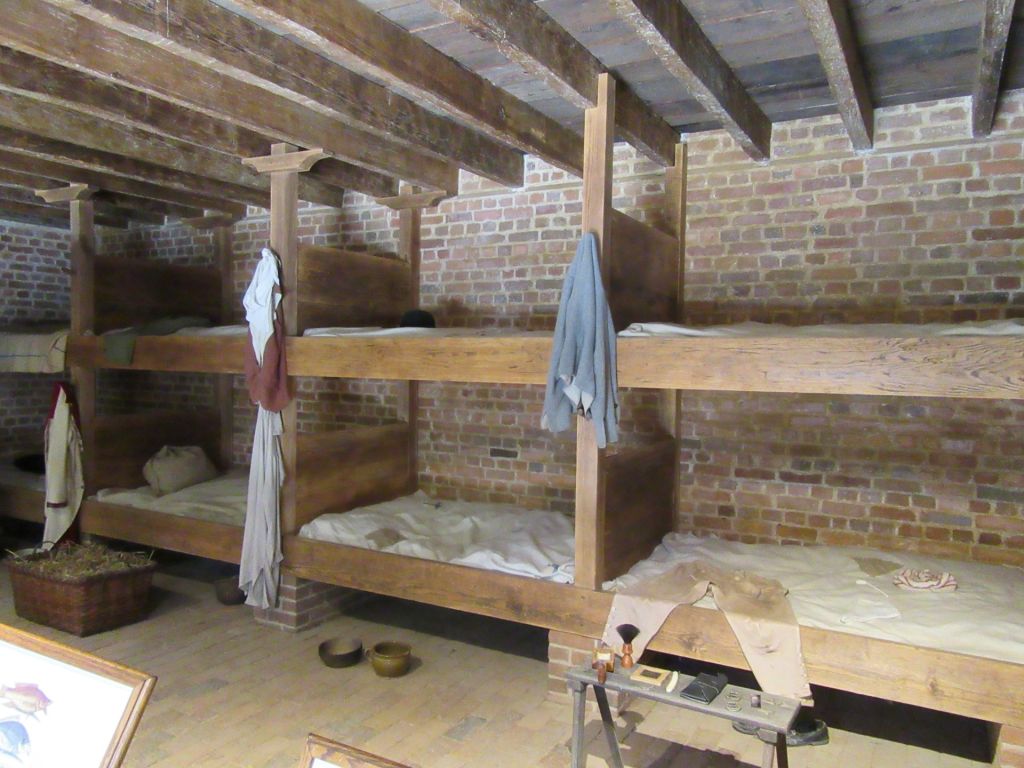
The connection of the Civil War to George Washington is a little puzzling because he owned slaves. We’re aware he freed them upon his death. On the other hand, when we visited Washington D.C. in 2015, we took a tour of Mt. Vernon. It was a scenic boat trip out there. We took a picture at the dock with the dog of the guy who helped people on and off the boat. We also took pictures of the slave quarters. There were no re-enactment persons and we were told we were on our own when viewing those exhibits.

This also reminds me of the news item about a bill recently (on February 9, 2024)) introduced in the West Virginia legislature to remove the statue of former Senator Robert C. Byrd from the West Virginia State Capitol and replace it with 4 other statues: Abraham Lincoln, James Madison, Arthur I. Boreman, and George Washington. Nothing is mentioned in that news story about Senator Robert C. Byrd having been a leader in the Ku Klux Klan in the past, and filibustered against the Civil Rights Act of 1964. This is from a news story posted on the web in 2020 under a link titled “time to remove monuments to senator byrd.”
Again, I struggle a bit with suggesting that a statue of George Washington, a former slave owner, would be an appropriate substitute for that of Senator Byrd. And James Madison, despite saying that slavery was incompatible with Revolutionary principle, owned slaves and made profits on their sale. Arthur I. Boreman is described as not being an abolitionist but a unionist. However, in 1865 he signed a legislative act banning slavery in the state of West Virginia.
Maybe a nice set of abstract sculptures for the corners of the rotunda of the West Virginia State Capitol?
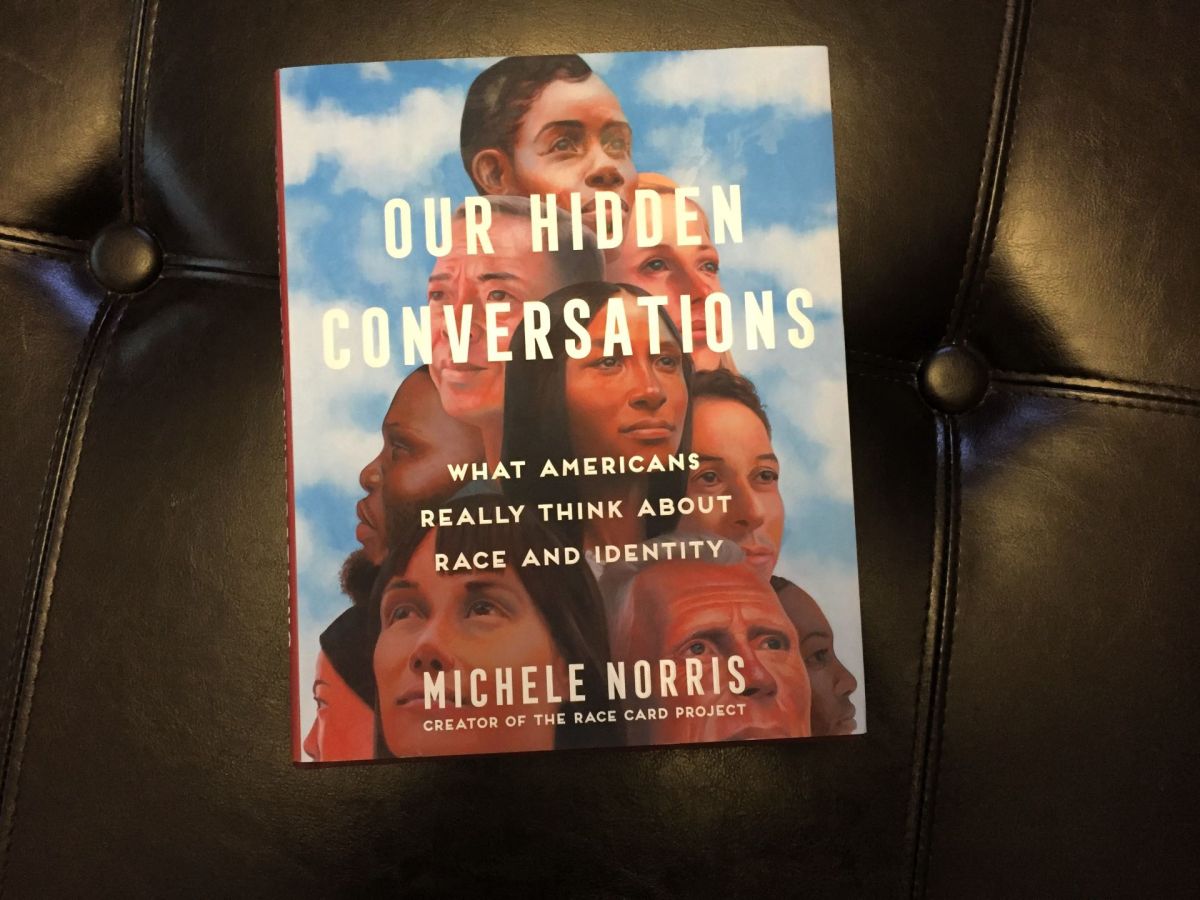
Turning to Civil War re-enactments, I’m ambivalent about them. I remember reading a couple of anecdotes about re-enactments in the book “Our Hidden Conversations” by Michele Norris.
One of them was about black woman re-enactor who played the role of a house slave. This was in Chapter 4, “Coins in the Couch.” The six-word Race Card (p.160) said “Why Do You “Play” A Slave?” Nicole is a slave interpreter. She makes sure that visitors to former plantation sites portray slavery accurately to tourists. She’s a public historian by training who works at the National Center for Civil and Human Rights in Atlanta. She teaches tourists about the reality of chattel slavery, including the sale of relatives to other plantations and the ingenuity of enslaved men in improving farm implements.
The next anecdote about re-enactment in the book is in Chapter 10, “So, You Want to Talk About Lynching?” The six-word Race Card (p. 386) said “Confederate re-enactor chose intimidation as spoils.” A black man and his biracial but white looking friend were at a barbecue in Texas. Two big white guys dressed in Confederate-era uniforms were passing by and one of them placed his rifle on his knee and tried to stare down the black man. The black man stared back and this went on long enough for his friend to get nervous enough to suggest they just leave. Finally, the other re-enactor pulled the sleeve of the intimidator and they were the ones who finally left. Despite this episode, the black guy “…made a choice to accept people as I receive them.”
Apparently, there are regular Civil War re-enactments in Mason City. It looks like the most recent was from Sept 8, 2023-Sept 10, 2023. It was The Battle of Chickamauga, TN. It was held in East Park, where I used to play as a kid. Iowa soldiers in the Civil War fought on the Union side. However, I found out the battle of Chickamauga was won by the Confederates, and it had the second highest number of casualties after the Battle of Gettysburg. There was a battle demonstration and the camps were open all weekend to talk to the re-enactors. And there were food vendors.
There is a newer Mason City Veterans Monument in Central Park. It was built in 2004. It has 12 handsome black granite stones with room for the names of 4,600 veterans. We have seen pictures of it on the web. There are no relief busts.
 Go Retire Psychiatrist