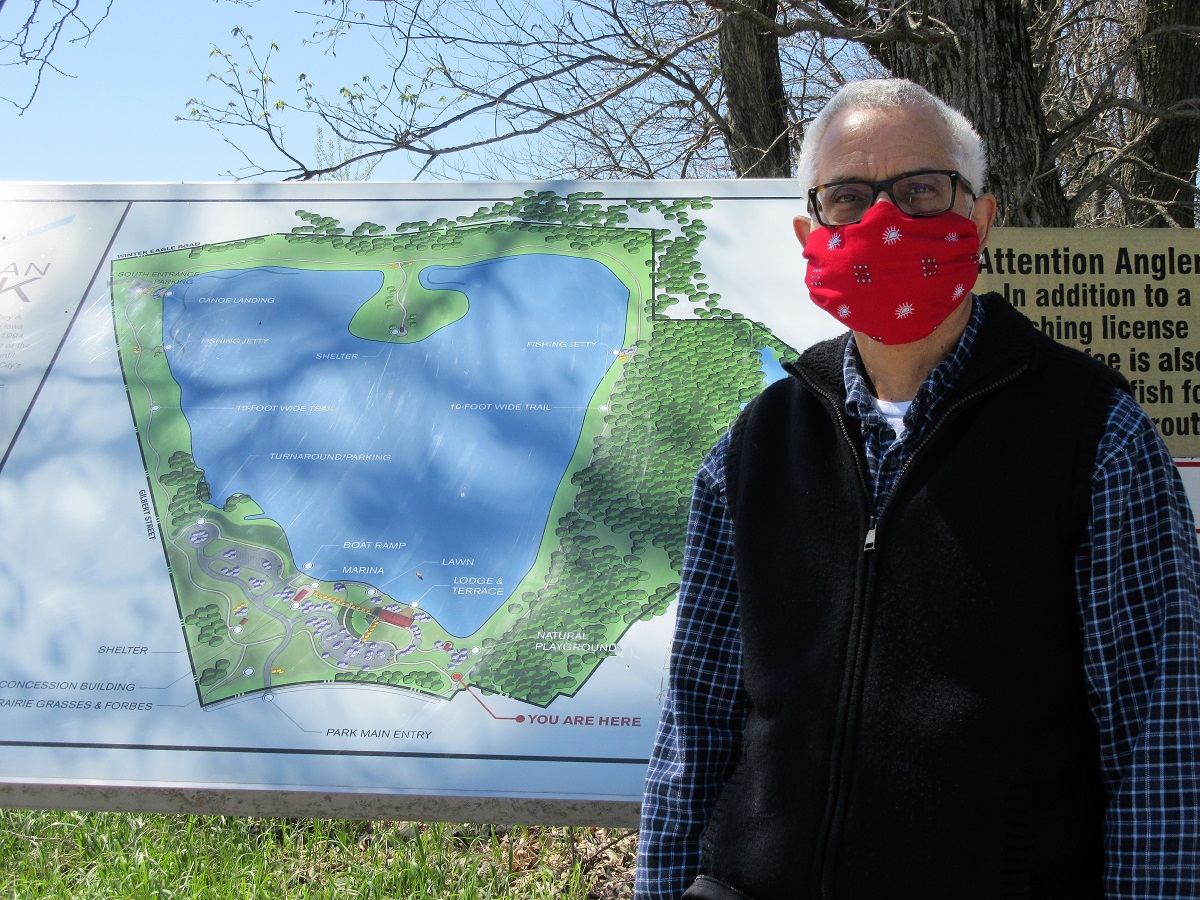
Today we took another walk on the Terry Trueblood Trail. This time there was a different feel. We wore face masks and there were new signs directing one-way traffic in order to facilitate social distancing. We noticed a few people wearing masks, but not many more than the last time we were out there.
Sena got a kick out of picking up groceries the other day. The guy who brought out the groceries was wearing a face mask—just not covering his face. He knew the guidelines and could recite them, but he had complaints about the mask: “I can’t breathe!”; “It’s hot!”; “It fogs up my glasses!”; “It gets in my way!”
I heard that. But there’s a right way and many wrong ways to wear a face mask.
It’s snowing today, starting this afternoon. It’s not a blizzard. It comes down slowly and peacefully. Occasionally I see people and their kids and dogs out walking in it, likely grateful for the fresh air. It’s hard to be stuck indoors, self-isolating because of the COVID-19 epidemic. We play cribbage.
Sena tried the grocery pickup thing in order to avoid crowds. She ordered yesterday and picked up this afternoon. For the most part, the shoppers did OK. We noticed that as she was ordering, items would be sold out even before and sometimes after (we found out later) the ordering was done.
But we were able to get toilet paper.
This epidemic changes your life in many ways. I’m in the latter stage of phased retirement and I’ll go back on the consultation-liaison psychiatry service in April. I expect it to be busy, but I’ll likely not do as many face-to-face interviews, depending on the situations in the emergency room and the general hospital.
I probably won’t carry around my camp stool, which I use to sit with patients when I interview them. It’s just another item that the coronavirus can stick to.
We’re told not to wear neckties because they’re germy, but I gave that up a long time ago for banded collar shirts. But now I’ll have to remember to keep my arms bare up to the elbows.
We’re also reminded to avoid elevators so as to maintain social distance (6 feet or 2 meters, roughly). I’ve been taking the stairs for years. Many people avoid the stairs.
I’ve gotten used to handwashing because I’m a hospitalist. I’ll wear masks a lot more frequently as well as don and doff personal protective equipment as needed more often.
I’m older and I worry a little bit about belonging to a higher risk age group for COVID-19 and being exposed more. On the other hand, I’m pretty healthy compared to a lot of patients younger than me.
I’m glad the next generation of doctors will be taking over, though.
I was just notified about the National Neuroscience Curriculum Initiative (NNCI) “Quarantine Curriculum” this afternoon–the program starts tomorrow. It’s a 14-day program. It’s free and all you need to do is register (also free) to log in so they can track usage.
The Zoom web-based conferencing app will be used to facilitate the program. It’s being launched in response to the COVID-19 challenges to providing classroom teaching, one of which is to prevent spread of the virus by cancelling in-person classes. The course description and the Zoom link is here.
The recommendation for social distancing to reduce exposure is leading to school closures (I can hear children playing outside; it’s an all–day recess), and recommendations to find alternative ways to approach the didactic component of medical education. The Quarantine Curriculum is one way.
NNCI is designed by medical educators to meet the need for building a strong neuroscience knowledge base for residents across many disciplines in medicine and psychiatry. I think it’s an excellent platform and one of our faculty members is on the NNCI executive council.
NNCI makes learning neuroscience fun. Check it out!
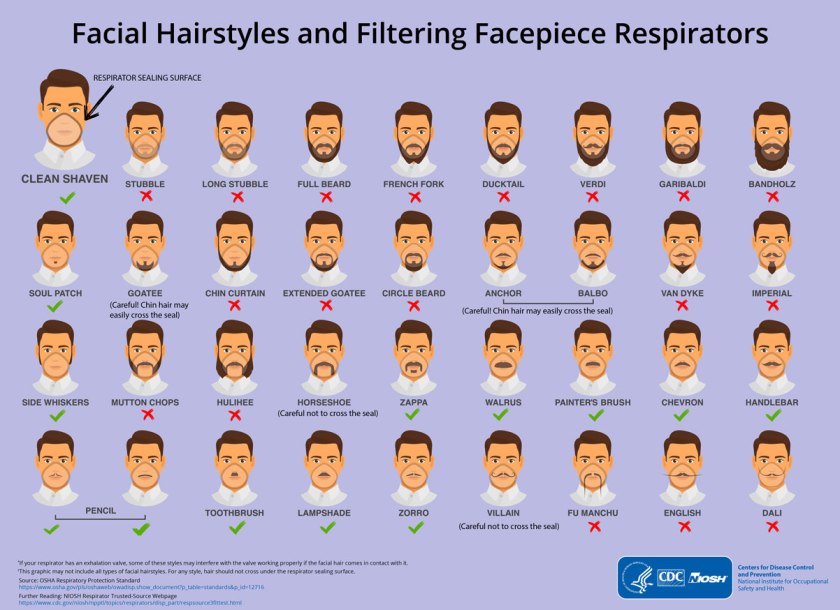
I’ve seen the news warning us about how facial hair can interfere with the N95 respirator mask seal. It’s connected with the concerns about the novel coronavirus which you no doubt have heard unless you live under a rock. The Centers for Disease Control (CDC) reiterated their warning about how certain beard and mustache styles can interfere with the recommended mask for helping protect you from infection.
As a health care worker, I’m required to be fit tested annually for the N95 respirator mask. “Fit” is not an acronym, by the way; it just refers to how well the mask fits. It’s a twenty-minute test in which a technician or nurse uses a special machine to check for how tight the seal is around the mask in order to ensure protection from airborne particles, including viruses.
I passed my fit test.
I saw the graphic yesterday of all the different facial hair styles that pass muster—most of them don’t. I’ve never heard of half of them. Believe it or not, I didn’t know that little tuft of hair under my lower lip is called a “soul patch.” I guess maybe I’m the one who’s been living under a rock.
I’ve read that some experts think that any facial hair is bad and recommend that you have to be clean shaven. I think some places won’t even allow fit testing on anyone who has facial hair.
However, I found a PubMed study published in the latter part of 2018 which showed that you can pass a fit test “even with substantial facial hair in the face seal area;” the abstract is below:
Floyd, E. L., et al. (2018). “Influence of facial hair length, coarseness, and areal density on seal leakage of a tight-fitting half-face respirator.” J Occup Environ Hyg 15(4): 334-340.
BACKGROUND: OSHA regulations state that an employer shall not permit tight-fitting respirators to be worn by employees who have facial hair that comes between the skin and facepiece seal. Studies have shown that facial hair in the face seal zone can increase penetration and decrease the fit factor (FF), although the relationship between the amount and characteristics of facial hair and the increase in penetration is not well quantified. This article examines the influence of facial hair length, areal density, and coarseness on FF for one model of half-face elastomeric negative-pressure air purifying respirator. APPROACH: Quantitative fit tests (QNFT) were performed on 19 subjects with beards initially 0.500-in long and subsequently trimmed to 0.250, 0.125, and 0.063 in, then after a razor shave. Three fit tests were performed at each of the 5 lengths, for 285 total tests. The average diameter and areal density of cheek and chin hair were measured. Penetration was modeled as a function of hair length category, beard areal density, and hair coarseness. RESULTS: FF decreased with beard length, especially beyond 0.125 in. However, passing FF scores were achieved on all tests by all subjects at the smooth shave and 0.063 in conditions, and 98% of tests were passed at 0.125 in; seven subjects passed all tests at all conditions. Chin and cheek areal densities were significantly different and were only weakly correlated. Beard hair diameters were normally distributed across subjects (mean 76 microm, standard deviation 7.4 microm). Beard length and areal density, but not coarseness, were statistically significant predictors of fit using an arcsine transformed penetration model. FF decreased with increasing beard length, especially beyond 0.125 in, although FF with a “stubble” beard did not differ significantly from a smooth shave. FF also decreased with increasing areal beard hair density. CONCLUSION: Beard length and areal density negatively influence FF. However, tight-fitting half-face negative-pressure respirator fit tests can achieve adequate fit factor scores even with substantial facial hair in the face seal area.
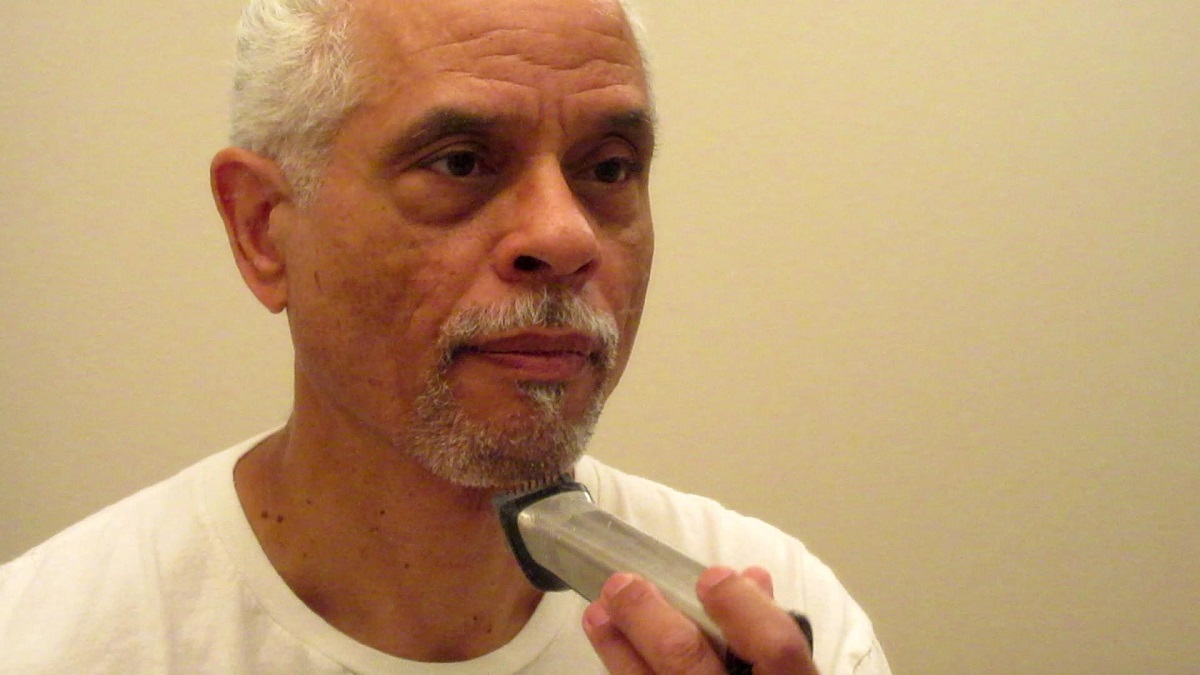
I generally have a stubble circle beard. When I don’t use the stubble guard on my trimmer for a while, I supposed my chin whiskers could lead to what some have called the “goatee leak.”
The CDC web site posted a funny article in 2017 on their web site entitled, “To Beard or not to Beard? That’s a good Question!” That facial hair chart is in the article. They also remind you check your mask seal every time you use it, no matter what your facial hair status is.
There’s a pretty funny YouTube video about this issue. The title is “The Bearded Guide to N95 Respirator Fit Testing.” My video is below.




 Go Retire Psychiatrist