Thoughts on Down Time Activities for Land Survey Technicians

I was just thinking about the old-time land survey crews. When I was getting on the job training as a survey technician, the typical land survey crews were at least 2-3 persons. One rodman, one instrument man, and a crew chief who organized the job, which could be property or construction jobs.

Nowadays, you get by sometimes with one man doing the jobs using a theodolite that measures angles and distances. You don’t always need a physical measuring tape; you can use something they call “total stations.”

It’s cheaper for engineering companies to use one man survey outfits. On the other hand, one disadvantage is the lack of mentoring for learners who want to become land surveyors or civil engineers.

Mentoring from surveyors on the survey back in the day not only taught me such skills as how to throw and wrap a surveyor’s steel tape—it also taught me how to work well with others as a team. Of course, this was transferrable to working on the psychiatry consultation-liaison service in a big hospital as well.

It’s well known that playing cards in the truck while waiting for the rain to stop was an essential skill. I don’t know how they manage downtime nowadays. We didn’t play cards on the consultation service during downtime, partly because we didn’t have much downtime.

Anyway, as I mentioned in a recent post, we played Hearts in the truck on rain days. I always sat in the middle. At the time, I was a terrible card player in general. It was a cutthroat game and I had trouble remembering which cards had been played.

When you consider that the strong suit of engineers and surveyors is math ability, you’d think that survey crews would have figured out a way to play Cribbage during downtime. You can have a Cribbage game with 3 or 4 people although I’ve never played it that way. If there are 3 players, it can still be cutthroat.

The one problem I can see is that, the guy sitting in the middle would have to set the board on his lap. You’d almost need a special, custom-made board which would have a space for placing the cards to keep track of what’s been played. I think that might have made things easier for me.

The other drawback to one man survey crews is that pretty much the only card game you can play is solitaire.
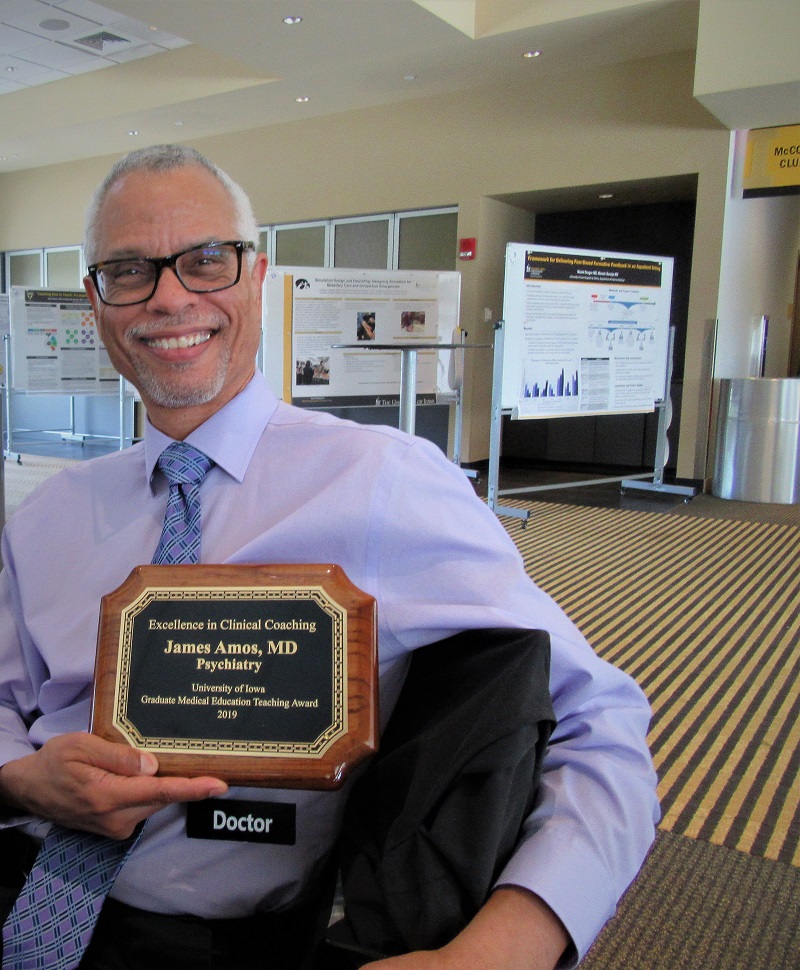
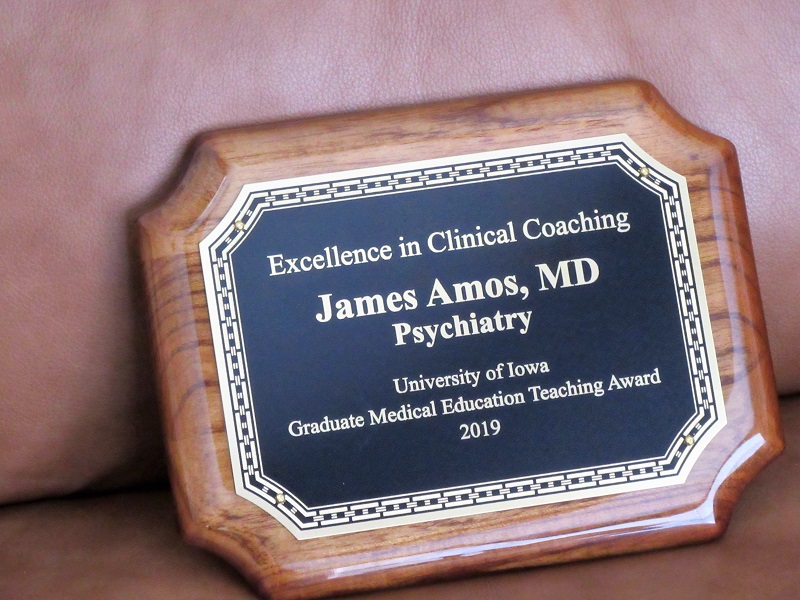
Excellence in Clinical Coaching Award: Humble Thanks

Today I want to thank everyone in my department for nominating me for the Excellence in Clinical Coaching Award . I accepted it during the Graduate Medical Education Leadership Symposium this afternoon.

For some reason, I almost wrote “Excellence in Clinical Clowning Award ” above. I guess maybe one of the reasons is that I was given an award (tongue in cheek) by the residents a few years ago when I made a pretty funny mistake giving a Grand Rounds presentation.

Much to my embarrassment, I somehow mixed up my slides so badly that many of them were out of order. I had to ad lib around that–a lot. Little wonder the residents whipped up the Improviser of the Year Award for outstanding improvisation during a Grand Rounds.

Improviser of the Year Award

Another honor I received about 8 years ago was a Feather in My Cap award after making the rank of Clinical Professor. The awardees had to come up with a favorite quote which guided them, and which was printed on the certificate. At the time, my favorite quote was:

“Vitality shows in not only the ability to persist but the ability to start over.”

F. Scott Gitzgerald
Another feather in my cap

I think I chose that because I have sort of reinvented myself over the years, including going to medical school later in adulthood, trying private practice in psychiatry, and most recently transitioning to retirement.

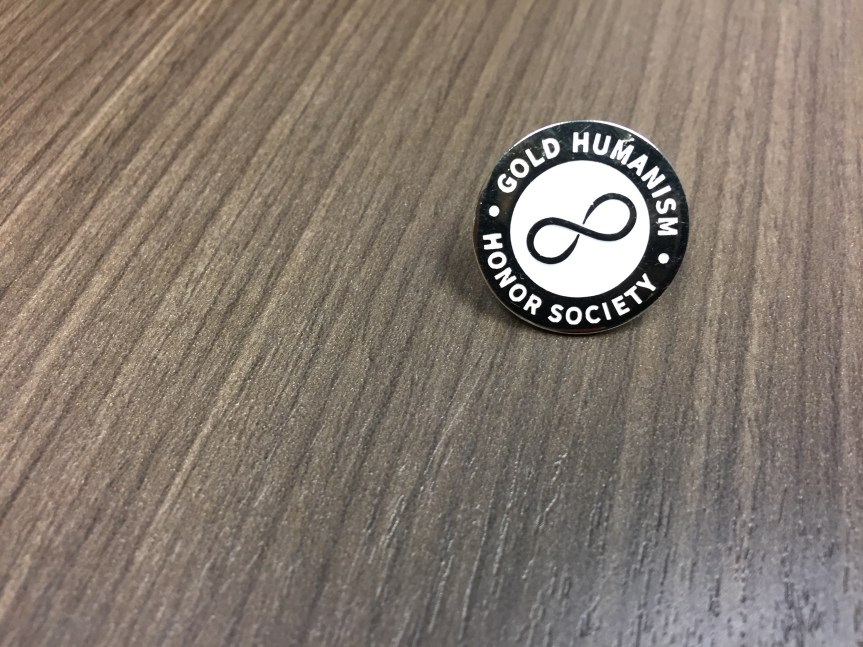
I’m also very fond of the Leonard Tow Humanism in Medicine Award about twelve years ago.

These days, other quotes are more important to me, like the one by Stephen Covey,

“Leadership is a choice, not a position.”

Stephen Covey

The comments praising today’s honorees, written in the the program by trainees and department colleagues, were heart warming for everyone. They brought back memories for all of us, I’m sure.

I struck up a conversation with an attendee about comparing coaches and mentors. I mentioned that in a previous post, “Spring,” on May 4, 2019. Many people tend to conflate the two roles, although I still favor the view that coaches tend to have shorter relationships that are more focused on skill building while mentors have longer term relationship more focused on career building.

However, both mentors and coaches serve as role models, something all teachers do. I have a short coaching video below for a skill I have often role-modeled for trainees–sitting with patients and listening to them for understanding.

In honor of Excellence in Clinical Coaching–and Clowning.

I’m also a big fan of a sense of humor on the Consultation-Liaison Psychiatry service, as anyone knows who has worked with me. My work-related anecdotes get more colorful, less accurate, and longer the older I get. I know when to cut them short, though–the trainees snore loudly. My hearing is still pretty good. I briefly considered getting a coach’s whistle—but thought better of it.